4 751 résultats
18413693Warsaw H. Bomberg Zvi Tsevi Ya'akov; Warszawie Drukarni J. Lebensona 1841. 1st Edition . Hardcover. . ~ ~ NOTE: THE PRICE OF THIS BOOK IS CURRENTLY REDUCED! ~ ~ . Octavo. Pp. 359 4. Handsome vignette illustration at end of approbations and introduction. Old stamps. HARDCOVER modern cloth shelf number on sine. A very good copy. ~ First part of three complete in its own. Second edition printed in the same year as the FIRST EDITION. To this edition which is practically identical to the first a decorative title-page has been added with a phrase from the Book of Job printed on verso. Also added here is a Rabbinical Approbation "Words of Praise from The Wise Men of the Censor of Warsaw" as well as a 4-page Subscribers' list bound at the end which are not present in the earlier edition. Written in Hebrew mostly in Rashi script. Joseph Schönhak was born at Tiktin 1812; died at Suwalki 1870. He led a retired life devoting his time to writing and study. He was the author of "Ha-Mashbir" or "Aruk he-Hadash" Warsaw 1858. His "Toldath Haaretz" Toledot ha-Arez is a natural history in three parts. The subjects are arranged and classified and a full description of each is given as to color form and habitat. Those that are mentioned in the Bible are given book chapter and verse; and so with those mentioned in the Talmud. The "Ha-Masbir" is an Aramaic-German rabbinical dictionary based on Nathan ben Jehiel's "Aruk" "Hamiluim oder Masbir Hachadasch. Aramäisch-rabinisch-deutsches Wörterbuch Ergenzung zu dem Hamasbir oder Aruch" Warsaw 1869. His "Sefer ha-Milluim" was published in Warsaw in 1869 "Sefer Ha-Miluim Le-Aruch: A dictionary to the Talmud and Midrashim based on the order of the Aruch with clarification of readings and sources from the Babylonian and Palestian Talmuds the Tannaitic Midrahsim ." was reprinted 1978 Jerusalem Makor. Bibliography: Ha-Maggid 1870 No. 49; Fuenn Keneset Yisrael 1866. See also Isidore Singer and Julius Gottlieb: The Jewish Encyclopedia. Rare. F-5 OUT <br/> <br/> Warsaw, H. Bomberg (Zvi [Tsevi] Ya'akov); Warszawie, Drukarni J. Lebensona hardcover
3689Warsaw H. Bomberg Zvi Tsevi Ya'akov; Warszawie Drukarni J. Lebensona 1841-59. 1st Edition . Hardcover. . ~ ~ NOTE: THE PRICE OF THIS BOOK IS CURRENTLY REDUCED! ~ ~ . Three volumes bound in one. Octavo. Pp. 359; 96; 40. Three title-pages present. Handsome vignette illustration at end of approbations and introduction. Contemporary ownership inscriptions stamps; browned occasionally stained in places. HARDCOVER bound in contemporary quarter calf and brown cloth gilt lettering-piece to spine cloth inner hinges. A moderately worn copy overall good. ~ FIRST EDITION. The complete work comprising of all 3 volumes: Zoology Botany Mineralogy. Written in Hebrew mostly in Rashi script. The second volume on botany includes many Latin names. Joseph Schönhak was born at Tiktin 1812; died at Suwalki 1870. He led a retired life devoting his time to writing and study. He was the author of "Ha-Mashbir" or "Aruk he-Hadash" Warsaw 1858. His "Toldath Haaretz" Toledot ha-Arez is a natural history in three volumes. The subjects are arranged and classified and a full description of each is given as to color form and habitat. Those that are mentioned in the Bible are given book chapter and verse; and so with those mentioned in the Talmud. The "Ha-Masbir" is an Aramaic-German rabbinical dictionary based on Nathan ben Jehiel's "Aruk" "Hamiluim oder Masbir Hachadasch. Aramäisch-rabinisch-deutsches Wörterbuch Ergenzung zu dem Hamasbir oder Aruch" Warsaw 1869. His "Sefer ha-Milluim" was published in Warsaw in 1869 "Sefer Ha-Miluim Le-Aruch: A dictionary to the Talmud and Midrashim based on the order of the Aruch with clarification of readings and sources from the Babylonian and Palestian Talmuds the Tannaitic Midrahsim ." was reprinted 1978 Jerusalem Makor. Bibliography: Ha-Maggid 1870 No. 49; Fuenn Keneset Yisrael 1866. See also Isidore Singer and Julius Gottlieb: The Jewish Encyclopedia. Rare. I-5 OUT <br/> <br/> Warsaw, H. Bomberg (Zvi [Tsevi] Ya'akov); Warszawie, Drukarni J. Lebensona, 1841-59. hardcover
New English Original bdg. HC. Folio. (34 x 24 cm). In English and Turkish. 70 p., ills. Togetherless.= Birliktesiz. Translated into English by Çiçek Öztek. Photos by Isil Kaya. 1000 copies were printed.
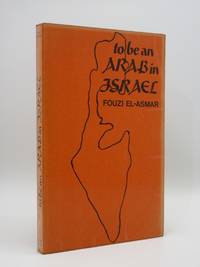
19751211J070London: Frances Pinter 1975. 1st Edition . Paperback. Printed pages: 215. Good Plus. 5.5 x 8.5 inches 14 x 21.5 cm. Orange card wraps with slight fading and a little bubbling to the laminate. Binding strained in a couple of places. Pages browned but otherwise clean throughout. Very scarce first printing. Overall condition is Good Plus. International postage will be less than the stated rate. Actual costs are Europe £11.00; USA £15.00; Oceania £16.00; Rest of World £18.00. A postage refund will be made after the order has been placed. Size: 5.5 x 8.5 inches 14 x 21.5 cm. Frances Pinter paperback
19282221958<p>First edition. Octavo. Color frontispiece by Saul M. Arkin frontispiece etching by Levon West 2 color plates by Konrad Meindl about 10 b/w drawings by Chauncy Howard Peters 32 sepia-tone photographs 2 facsimiles. Original full red cloth stamped gilt and dark blue on spine and upper cover t.e.g. No dust jacket. Very good rubbing to spine of blue background. 298 pages.</p><p>Inscribed presentation copy signed and inscribed by Chapple to Guy Edward Murchand on front free endpaper: ".with sincere regards of the author and an appreciation of the 'new models'.The Attic Boston 1926 sic!." No other signatures or bookplates.</p><p>Author's travel in Egypt Palestine Lebanon Syria and Iraq. Notable for Levon West's etched portrait of Mohammed something which could never be accomplished by any Islamic true believer.</p> Chapple Publishing Company, Limited hardcover books
Small folio (ca. 230 x 304 mm). (2), 62 pp. Original printed boards. Blue and white illustrated flyleaves. Signed, illustrated (with a portrait of Tintin and Milou/Snowy) and inscribed by the artist on the verso of the front flyleaf to Denis Jamin for his birthday, dated 3 September 1971. The recipient was the grandson of the Belgian caricaturist Paul Jamin (1911-95), an old friend of Hergé's. - An early Tintin adventure, set in the Middle East, where the young reporter attempts to uncover a militant group responsible for sabotaging oil supplies. First published in album form in 1950. The story was originally set in Palestine under the British Mandate, but Hergé's publisher requested several alterations, and the setting was transferred to the fictional state of Khemed. - Extremeties a little bumped and chipped, internally an excellent copy.
4to (170 x 240 mm). Persian manuscript on polished paper. 137 (instead of 143) ff. (lacking ff. 97-102) in elegant black nasta'liq script, 14 lines, 2 columns. With an illuminated shamsa on fol. 1r (specifying the name of the sponsor Khawaja Nasir as well as the place and date of production) and an illuminated 'unwan headpiece on fol. 1v. Light brown full morocco with blindstamped borders, corners and central ornaments. An elegantly executed Eastern Persian manuscript that chronicles the epic life and victories of one of history's most famous emperors and military leaders, Timur Leng (Tamerlane), from his birth near Samarqand in modern-day Uzbekistan in 1336. "Certainly the most famous of Hatefi’s poems [... The work] extols Timur’s deeds in accordance with the main works of Timurid historiography such as Sharaf-al-Din Yazdi's Zafar-nama [...] Hatefi’s Timur-nama became a model for subsequent poems. It certainly introduced a new genre which was developed further by Hatefi himself [...] Written in 1498, the Timur-nama has been published twice in India (1869, 1958)" (Encyclopaedia Iranica XII, 55-57). - Abdallah Hatefi (Hatifi) was the nephew of 'Abd-al-Rahman Jami, one of the greatest Persian poets and composers of Sufi mystical works. The Timur-nama, modeled after Nizami's "Iskandar-nama", appears to be his only completed work. The oldest extant copy was completed the year after Hatifi's death, 927 H (1521 CE), and was stored in the India Office Library. - Descended from the Mongol hordes of Genghis Khan, Timur participated in various military campaigns from a young age, and his victories quickly made him known as a highly skilled military leader. After a decade of internal political wrangling, he became ruler of the Timurid Empire in 1369. For the next 35 years, until his death in 1405, Timur continued to lead a number of great expeditions and wars; his conquests stretched as far west as Baghdad and the Black Sea, the shores of the Arabian Gulf, and far into modern Afghanistan and northwestern India; he took Herat, where this manuscript is written, in 1381. Timur began military campaigns against the Ottoman ruler Bayezid I and the Mamluks in Syria, as well as expeditions to Armenia and Georgia. His final campaign was in the winter of 1404, but he was stricken with fever and plague and died in February of the following year. His line continued through the glory of the Timurid period under his direct descendants, including Babur (1483-1531), the famous founder of the Mughal dynasty in India, who continued to rule until 1857. - An beautiful manuscript containing an illuminated headpiece of the greatest refinement; the illuminated border of the shamsah on fol. 1r. is a hallmark of Herati work. Surrounding the shamsa are several stamped waqf seals and various inscriptions by previous owners; fol. 140v has an inscription by Muhammad Taqi Qarakuzlu, dated 1237 H (1821 CE). - Provenance: Arts of the Islamic World, Sotheby's, 5 April 2006, lot 30. Sam Fogg, 2009.
Fine English Paperback. Pbo. Demy 8vo. (22 x 14 cm). In Turkish. 160 p., b/w ills. Timur'un günlügü. [= Tüzükat-i Timur]. Translated by Kutlukhan Sakirov, Adnan Aslan. Memoirs and diary of Tamerlane. MEMOIRS Tamerlane Rule Ottoman War Middle East Mongol Sultan Politic history.
1994004776Washington D.C.: Smithsonian Inst Pr. First edition. Hard cover in dust jacket. Published Washington D.C.: Smithsonian Inst Pr. 1994. 8vo. 358 pages illustrated b/w photos. Previous owner's blind stamp on title page else near fine in near fine dust jacket. . Near Fine. Hard. 1st. 1994. Smithsonian Inst Pr unknown
Translated by Lord Sudley - To Louis Victor Liotard Explorer...- Preface - Chap. 1-11 - Geographical Notes - Hydrology: The Sources of the Tong - Geographical Co-ordinates and Altitudes of a few Localities - Index of Tibetan and Chinese Words 1 22x14 cm., legatura in piena tea, , titoli in oro sul dorso, pp. (6), 206, 2 mappe del territorio della spedizione, 25 illustrazioni in bianconero su tavole in carta patinata, fuori testo, prima edizione, in inglese, leggeri segni del tempo, buon esemplare. Etichetta libreria
4to (164 x 244 mm). Persian manuscript on polished but unsophisticated laid paper. 352 leaves (misnumbered 347, numerous errors in pagination, but complete). 21 lines of black and occasional red Nast'aliq within blue and double red rules; a pretty gilt, red and lapislazuli 'unwan headpiece on the first page. Some marginal glosses throughout, likewise in black and red ink. 19th century Western-style codex binding with leather spine and cloth edges, using the original red morocco covers. An amplified Persian adaptation of the Arabic medical treatise "Sharh al-asbab" (completed in 1424) by the Persian physician Burhan addin Nafis ibn 'Iwaz al-Kirmani (d. ca. 1449), itself a commentary on Najib addin al-Samarqandi's (d. 619/1222) "Kitab al-asbab wa'l-'alamat". This medical compendium, later translated into Urdu and Sindhi, covers the symptoms and treatment of diseases specific to particular parts as well as general diseases. - The Indian medical writer Mohammad Akbar Arzani composed several works in Persian which circulated also through various Urdu translations and thus gained considerable diffusion among later physicians. "According to his own statement in the 'Tibb-i akbari', he had been a recluse in a convent (zawia), later on he studied the religious doctrines and finally dedicated himself to the study of medicine. He probably took part in the Mughal military campaign in the Deccan under Awrangzeb" (Encyclopedia Iranica, online). - Inherently brittle and fragile throughout with numerous edge tears, chips, marginal worming and other minor flaws, several paper breaks due to ink corrosion along the rules. One quire loosened, two leaves have old repairs with adhesive tape. Foliation erratic; leaf 196 (recte: 206) transposed before 194, but complete. Cf. GAL I, 491 & S I, 895 (for Nafis ibn 'Iwaz al-Kirmani's commentary).
198484864S. n. | s. l. [Paris] avril 1984 | 24 x 30.50 cm | une feuille
Oblong small folio (238 x 320 mm). Photo album with 197 albumen prints, mounted between 3 and 6 per page on 49 cardboard leaves. Various sizes, typically 70 x 100 mm. Some larger small-format panoramas. Captioned in ink. Contemporary full cloth with handwritten title-label. An interesting album recording the construction of new British military barracks at Abbassia, Cairo, shortly before World War I. Compiled by James Frazer Annan (1887-1957), a British engineer working for the contractor Henry Lovatt Ltd. in Abbassia between 1910 and 1913. Some 40 photographs depict construction at its various stages, showing workers and equipment, including a concrete mixer, details of walling blocks, column caps and shells, scaffolding, and a consignment of cement, as well as a panoramic view of the construction site from July 1910. - Other images show memorable events including the coronation ceremonies for King George V in 1911, Lord Kitchener presenting prizes at a Rifle Meeting, and the Mahmal passing through Cairo during the annual pilgrimage to Mecca. City views of Cairo and Heliopolis, street scenes "in the Mousky district" and "among the Bazaars", the Eshekieh Gardens, the Pyramids, the Nile barrage and dam, tombs of the Khalifs and "typical Mosque tombs": A few more personal scenes such as Christmas dinner 1910 and a picture of baby "James junior" complete this appealing collection. - Occasional light spotting and duststaining. Provenance: Peter Johnstone, whose paternal grandmother, Elsie Amelia Johnstone, was housekeeper to James Frazer Annan. Peter Johnstone numbered the pages and loosely inserted an autograph description of the album, dated 13 May 1996.
3 black-and-white photographs, ca. 15 x 12 cm each. Vintage gelatin silver prints. Photographed during an early 1970s state visit to Pakistan. All printed by Karachi's Eveready Studio with their name in the lower margin.
Oblong quarto. 371 photographs in 3 albums: 1) 121 original photographs ranging from small (70 x 100 mm) to medium (111 x 170 mm) and large (170 x 235 mm), mounted on 18 leaves (230 x 315 mm); 2) 178 original photographs ranging from small (70 x 50 mm) to medium (95 x 140 mm) and large (160 x 220 mm), mounted on 24 leaves (195 x 280 mm); 3) 72 original photographs ranging from small (65 x 90 mm) to medium (120 x 185 mm) and large (160 x 220 mm), mounted on 14 leaves (220 x 315 mm). Most photographs with manuscript captions beneath in white chinagraph pencil. With 6 additional photographs and a swimming certificate loosely inserted. Contemporary card covers with cord ties. Large collection of important photographs depicting RAF activity in Iraq during the late 1930s, demonstrating British imperial power by use of "Air Control": a policy designed to maintain the RAF as the independent third service of the British armed forces and enforce British imperial rule economically through the use of air power. - The current collection of photographs centres around the activities of 70 Squadron, providing heavy transport facilities and air ambulances and operating airmail routes between Cairo and Baghdad. Images include an armoured car with a mounted machine gun at Hinaidi; air-conditioned desert buses belonging to Nairn Transport Co going from Baghdad to Damascus, and the Flying Boat "Ceres" on Lake Habaniyah. The dangers of the operations are evident in the photos of a crash of the Flying Boat "Calpurnia" in Lake Habaniyah with the loss of five lives, the crash of Jonah Kyte No. 3 while landing, and the "Vincent" of 55 Squadron going up up in flames in Simel. The album captures well the cultural and military diversity of Iraq at the time. Not only are there bombers from the French Air Force on visit in both Dhibban and Habbaniya, but there are also photos of Iraqi "Gladiator" aircraft, Jewish women in Baghdad, and the Kurdish population spread across central Iraq. A 500-year-old church in Haiz is complemented by the photo of a priest with a 700-year-old Bible. As a foreigner abroad, the photographer gives the albums their healthy dose of tourist sites such as Alexandria (Egypt), the landscapes of Ser Amadia (while in a Summer Training Camp) and Ctesiphon Arch (530 CE). Aerial shots add bird's-eye views of the Golden Mosque of Khadimain (Baghdad), the crossing of the Suez Canal, and the Maude Bridge over the Tigris. The international and geopolitical importance of the photographs is further underscored in their documentation of the first Hinaidi-Singapore flight on 18 January 1937. - Extremities of albums slightly rubbed. 1 loose photograph creased at edge. A well preserved ensemble.
4to (180 x 220 mm). Persian manuscript on polished oriental paper. (16), 1 blank, (23), 1 blank, (13), 1 blank ff., 17-20 lines, per extensum, text enclosed by red and black rules. Black ink with red emphases. With numerous ink diagrams in the text. Contemporary blindstamped full calf, restored and spine rebacked. A mid-19th century Persian manuscript comprising three treatises on astronomical matters, illustrated throughout with diagrams in red and black ink and containing several tables. - Some worming throughout the text but not affecting legibility. Corners bumped. A loose slip of paper inserted at the beginning mentions three titles which do not appear to correspond to the works here contained.
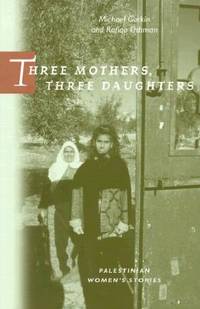
19962022ml1996. Hardcover. Good. Gd. condition / HB/. Palestinian culture . HI6A hardcover
Folio (215 x 300 mm). (4); (4); (2) pp. including blanks. (1) Letter in Italian, signed, from Pedro Alvarez de Toledo in Andria to Ferrante Gonzaga, 13 August 1539, with a 23 mm seal bearing Alvarez de Toledo's coat of arms (with a chain of flags) stamped on a slip of paper attached with red wax. (2) Letter in Spanish, signed, from Pedro Alvarez de Toledo in Andria to Ferrante Gonzaga, 3 September 1539, with the 45 mm imperial armorial seal stamped on a slip of paper attached with red wax. (3) Letter in Italian, signed, from Maria Osorio y Pimentel [in Andria] to Ferrante Gonzaga, 10 September 1539, with the remains of what appears to be her husband's 23 mm red wax seal. - Each letter, in brown ink, occupies one page, with the last page containing the address and the sender's seal. The two inside pages of the second and third letter are blank. Each formerly folded for posting, so that the address would have appeared on one side and the seal on the other. Three letters from Pedro Alvarez de Toledo (1484-1553), Duke of Alba and councillor to the Holy Roman Emperor Charles V, and his wife Maria Osorio y Pimentel (1498-1539) to Ferrante Gonzaga (1507-57), Viceroy of Sicily, who commanded the Imperial cavalry fighting the Ottomans in North Africa. They concern the Ottoman fleet marauding in the Mediterranean in 1539, thirteen years after the Ottoman victory at the Battle of Mohács gave them control of much of Hungary and roused Christian fears of their strong presence in Europe, and ten years after Barbarossa established his base in Algiers. The first letter, signed by Alvarez de Toledo, advises Gonzaga that, due to the recent loss of Castelnuovo to the Turks, he has given orders for vigilance and defensive preparations on the island of Lipari. He asks Gonzaga to supply any assistance the islanders require. The second letter, also from Alvarez de Toledo, advises Gonzaga that he has received a letter dated 30 August 1539 from Andrea Doria (1466-1560) in Brindisi, then Imperial admiral of the Holy League, urging a campaign against Barbary to be carried out forthwith, in order to avoid further damage from the Turks. This followed the defeat of Doria's fleet at the battle of Preveza in September 1538 by the fleet commanded by the Ottoman admiral Hayreddin Barbarossa (ca. 1478-1546), long feared in Europe as the infamous privateer Redbeard. The third letter is addressed to Gonzaga by Osorio y Pimentel, informing him that her husband has sent news that the Turkish fleet has been sighted off the Capo d'Otranto, some 150 sails having been observed. She also notes that she has informed Francisco de Tovar, governor of the port La Goleta at Tunis. Given that Barbarossa may direct his attention there, she requests that Gonzaga send a frigate to Tunis to warn de Tovar to remain vigilant. - The seal on Osorio y Pimentel's letter is damaged and can no longer be made out, but the faint visible traces appear to match the arms and flags of her husband's seal, and a small part of the imperial seal on his second letter is damaged, but all three letters are still in very good condition. Three letters of 1539 all important primary sources for hostilities between the Ottoman Empire and Christian Europe.
556859London, Macmillan, 1949. In-8 reliure éditeur pleine toile rouge, titre doré au dos, VI-294 pp.
556940Oxford, 1966. 3 brochures in-8, 16, 19 et 151 pp., 1 pl. en noir dans le 3e vol.
4to. 2 parts in 1 volume. (16), 235, (1), (14), (4), 33, (1). With 111 finely etched anonymous plates, an engraved allegorical title-vignette by Adolf van der Laan (1680/1700-42) dated 1736, a number of woodcut head and tail pieces and without the portrait of Burmann, as usual. Full contemporary gold tooled mottled calf, with mottled edges. First edition of the first illustrated description of the plants of Sri Lanka, based on the famous botanical collections of Paul Hermann and Jan Hartog in The Netherlands. The plants were taken from Sri Lanka, however most of these did not exclusively exist there but grew throughout the entire South Indian Ocean region, making this book relevant for more than just the island of Ceylon. Described and illustrated plants include the Malabar nut, amaranth, cinnamon, different types of jasmin etc. Johannes Burmann (1707-79), Dutch physician and botanist at Amsterdam, was well acquainted with Carl Linnaeus. While Burmann was working on the Thesaurus Zeylanicus he was helped by Linnaeus, who was staying at Burmann's house at the time. In the same period the monumental works of Linnaeus were published that would change science. The plates are referred to as engravings, but they are most likely finely etched. Plate 18 is numbered double, causing much confusion about the number of plates with it often being described as having 110 instead of 111 plates. The dedication on *2 has 2 different states: this one opens with Nicolao Sautyn. - Some annotations in pencil. Hinges worn and some wear to the boards. Plates a bit browned as usual. In very good condition. Hunt 501. Nissen BBI 303. Stafleu & Cowan 928.
Folio (221 x 352 mm). 5 parts in 1 vol. (10), 120, 192, 160 (but: 156), 288 (but: 388), (4), 115, (1) pp. (without 4 ff. of index). With engraved t. p., 26 double-page-sized engravings (mostly folding), 3 folding engr. maps, 3 folding woodcut plates, and numerous text engravings. Marbled pastedowns. Contemp. calf. A complete copy of the first edition, noted for its illustrations, half of which are devoted to the Islamic World. This exceptionally wide-ranging collection of politics and travel reports, anecdotes, scientific discoveries, and experiments is a testament to Happel's shrewd journalistic understanding of popular taste. The woodcuts constitute the principal work of Thomas Wiering (cf. Thieme/Becker XXXV, 537). "Has special interest for the American collector, as it consists of a series of 15 curious representations of the aborigines of America, all with detailed descriptions of their manners, customs, religion" (Sabin). Mainly concerned with the Turkish Wars in Europe (and also mentions the campaigns in southern Greece from 1684 to 1688). "The last part of the work is of particular interest in that it contains the first complete transcription of the Qu'ran into German language" (Koc, 164). - Engraved title page shows ink censorship to pudenda of allegorical figure; four-line ms. inscription (dated 1690). Several plates trimmed closely or remargined (occasional slight loss to image). Formerly in the Ottoman collection of the Swiss industrialist Herry W. Schaefer. VD 17, 39:131766W (citing 25 plates and 2 engr. maps). Ömer Koc Collction, I, 92 (pp. 163-173). STC H 315. Dünnhaupt 15.1. Borba de Moraes 393. Hayn/Gotendorf III, 84. Jantz 1291. Alden 688/117. Sturminger 1464. Sabin 30279. Graesse III, 208.
8vo. (8), 447, (1) pp. (48, last 4 blank), 66 pp. (last p. misnumbered 70, lacks last blank). Title with woodcut device. Contemporary reversed sheep, blank spine in five compartments. An Arabic-Syriac-Latin glossary arranged by subject, originally compiled in the 11th century by the Nestorian Elias bar Shinaja of Syria (known as Barsinaeus in the Latin tradition) as "Kitab at-targuman fi ta'lim lugat as-suryan". The present text and translation, prepared by the Franciscan Obicini, was posthumously published by the monk's student and successor Dominicus Germanus de Silesia, "himself also the author of an Arabic grammar, and an Italian-Arabic dictionary" (Smitskamp). "Not actually a thesaurus, but rather a nomenclator, arranged not by alphabet, but by subject" (cf. Schnurrer). The French punchcutter Robert Granjon cut the Arabic type used for the glossary. - Binding somewhat worn; minor foxing. Ownership stamp (Germain: Jacobins P.B.S.) and signature of De la Roche (marquis) on title, last page with another owner's inscription. From the library of Swedish antiquarian bookdealer Björn Löwendahl (1941-2013). Schnurrer p. 38 f. Smitskamp 223. Fück 77. NUC 425, p. 564. ICCU VEAE\003127.
8vo. (6), 447, (22) pp. Woodcut printer's device to title page. Contemp. vellum. First edition of this Syriac glossary (rather than a thesaurus proper), arranged by subject rather than by alphabet: "Neque vero thesaurus est, sed verius nomenclator, non quidem ordine alphabetico, sed per materias dispositus. Verus auctor est Elias Barsinaeus, Metropolita Sobae seu Nisibis, undecimo saeculo clarus" (Schnurrer). - Edited by Tommaso Obicini da Novara (1585-1632), "one of the figures at the background of the Propaganda Press, abbot of the Franciscan convent at Aleppo from 1613-16 and 1619-20, and in 1620 elected Custode di Terra Santa e Commissario Apostolico per tutto l’Oriente. In 1621 he returned to Rome, and became the first lector of Arabic in the St. Peter Convent at Rome" (Smitskamp 222). - Evenly browned throughout due to paper. Title page shows stamp of the Franciscan Convent of St. Anthony in Breslau-Karlowitz. BM-STC 624. Smitskamp 223. Schnurrer 63. Fück 77. Zaunmüller 372. Vater/Jülg 24. Graesse V, 1. Ebert 14920.
No marks or inscriptions. A very clean very tight copy with bright unmarked boards, wrinkling to one page fore-edge and no bumping to corners. Dust jacket not price clipped or marked or torn with crease to rear dust flap. 316pp. Detailed study of Lawrence around his twenties, his early life and what led up to the man becoming known as Lawrence of Arabia.