4 751 résultats
8vo. XVI, 424 pp. Folding map frontispiece and 2 full-page maps to the text, 2 as plates, 23 plates. Original sand buckram, title gilt to spine and upper board, top edge gilt, others uncut. First and only edition. Important regional study of the Arabian Gulf, published in response to the grant of the Baghdad Railway concession by the Ottoman Government to a German-backed consortium. Assesses the economic, military and political implications of rival claims in the various states of the area. - Whigham was a well-connected Scottish author who emigrated to America and worked as drama critic on the Chicago Tribune, and as a war correspondent at the Spanish-American and Russo-Japanese Wars. A close friend and correspondent of British Persian Gulf opinion-makers Lord Curzon and Sir Percy Cox, Whigham wrote the book, based on his extensive travels in the region, at the request of Lord Curzon, who had "advised [him] to go to the Gulf [and] instructed his subordinate officials in that part of the world to give me all the assistance in their power." Whigham is probably best remembered as a prominent amateur golfer, winner of the second and third US Amateur Championships, and author of "How to play Golf", the first golf instruction manual illustrated from action photographs. - Ink ownership stamp of Charles C. Sterrett, an American Presbyterian missionary to the Christian population in the region, to the front pastedown. Binding a little rubbed and spotted, endpapers foxed. Small inked library stamp and cancellation to the title page, otherwise very good. Diba Collection 1978, 227. Wilson 243. OCLC 2987283.
8vo. XVI, 424 pp. Folding map frontispiece and 2 full-page maps to the text, 2 as plates, 23 plates. Original sand buckram, title gilt to spine and upper board, top edge gilt. First and only edition. Important regional study of the Arabian Gulf, published in response to the grant of the Baghdad Railway concession by the Ottoman Government to a German-backed consortium. Assesses the economic, military and political implications of rival claims in the various states of the area. - Whigham was a well-connected Scottish author who emigrated to America and worked as drama critic on the Chicago Tribune, and as a war correspondent at the Spanish-American and Russo-Japanese Wars. A close friend and correspondent of British Persian Gulf opinion-makers Lord Curzon and Sir Percy Cox, Whigham wrote the book, based on his extensive travels in the region, at the request of Lord Curzon, who had "advised [him] to go to the Gulf [and] instructed his subordinate officials in that part of the world to give me all the assistance in their power". Whigham is probably best remembered as a prominent amateur golfer, winner of the second and third US Amateur Championships, and author of "How to Play Golf", the first golf instruction manual illustrated from action photographs. Diba Collection 1978, 227. Wilson 243. OCLC 2987283.
Small folio. 3 parts in 1 vol. (6), 106, 74 (but: 147), 82 pp. (wanting half-title and final advert leaf). With 32 engr. plates of Persian and Arabic type. Later brown cloth. Third edition. - Gladwin's Persian grammar, richly illustrated with plates in Persian and Arabic type. The first part is "The Persian Grammar"; the second ("Pleasant stories in an easy style") consists of parallel texts in English and Persian on opposite pages with duplicate numbering. The third part ("Phrases and dialogues in Persian and English") has the English and Persian in parallel columns. In the year of publication Gladwin was appointed first professor of Persian at the East India Company's College at Fort William. First published in 1795 at Calcutta, and again in 1800, but ABPC records only this 1801 edition at auction (one copy fetching £1,200 at Sotheby's in 1997). - Small neat stamp on verso of title page and terminal leaf. Some brownstaining; still a nice copy. Scarce. Ghani 482. Graesse III, 91.
8vo. VI, 261 pp. Original printed paper wrappers. Document printed by the government of the United States of America, concerning "the escalating level of arms sales to Gulf states" (p. V). Included are statements of witnesses, memorandums, tables and other important documents concerning the (illegal) arms trade. Occasionally a marginal annotation in red ink. Otherwise in very good condition.
8vo. (433)-445, (1) pp. With a map in the text. Original printed wrappers. Inscribed by the author. Includes an autograph letter signed by the author (Weymouth, 20 Feb. 1955, 2 pp. 8vo). Rare presentation offprint of this geographical description of Kuwait, Bahrain, Qatar, and the seven Trucial Sheikhdoms which today form the United Arab Emirates, and their boundary issues in the early 1950s. Signed and inscribed "To Edward + Irene Skinner with compliments" (20 Feb. 1955). Includes an autograph letter signed by Sir Rupert to "Dear Edward" accompanying the presentation offprint: "I enclose a copy of a recent paper of mine which you may be interested to see. I have finished the first draft of my book on the Persian Gulf but still have a good deal of revising to do [...]."
Small folio (190 x 268 mm). Eight issues and eight supplements (1 October 1957 to 1 August 1959), bound in one. Vol. 5 (nos. 1-4 & supplements 18-21): 234 pp.; vol. 6 (nos. 1-4 & supplements 22-25): 256 pp. Contemporary sand buckram; red and black labels with gilt lettering to spine, 'Foreign Office' stamped in black to upper cover. Two early volumes from the highly important "Persian Gulf Gazette", which ran from 1953 to 1972. Published in the final decades before the independence of the Gulf States, it is a fascinating record of the waning of direct British involvement in the governments of Kuwait, Bahrain, Qatar and the Trucial States (now the United Arab Emirates). - The Gazette was a quarterly publication containing notices of anything relevant to Britain's jurisdiction in the aforementioned States, from political appointments to new Orders and Regulations. It was sold at H.M. Political Agencies in Bahrain, Kuwait, Qatar and Dubai, as well as at H.M. Consulate, Muscat. Supplements were published with each issue, printing the Orders and Regulations in full. These include all manner of regulations - often created in response to rapidly developing infrastructure - covering, inter alia, employment, shipping, patents and the penal system. - Provenance: withdrawn from the Foreign and Commonwealth Office Library with stamps to endpapers. Some very minor dampstaining to the top edge of textblock, handwritten ink reference numbers to some title-pages, rest of interior clean and fresh. Very well preserved. Though fairly well-held institutionally, original issues (not to mention volumes and runs) are rare in commerce.
Large 4to. 2 vols. XII, 227, (1), 87, (3) pp. XII, (229)-559, (1), 83, (1). With engraved frontispiece in vol. 1, 8 engr. maps (6 folding), and 1 folding table. - (Bound with): The Voyage of Nearchus, and the Periplus of the Erythrean Sea. Oxford, Cadell & Davies, 1809. XV, (1), 119, (1) pp. With 1 plate. Contemporary giltstamped English full calf; spines rebacked with original gilt labels. First edition of this rare Middle Eastern geography, published in two parts: 1. From the Sea of Suez to the Coast of Zanguebar; 2. From the Gulph of Elana, in the Red Sea, to the Island of Ceylon. Includes an extensive discussion of the Arabian Peninsula, including sections on Myos Hormus, the Wealth of Arabia, the Coast of Yemen, Aden, Mokha and Oman, Oriental Commerce by the Gulph, etc. Among the plates are a map of the western Arabian coastline, a chart of the Red Sea, and al-Idrisi's famous world map, "a pinnacle of mediaeval cartography as well as of the history of geographical research" (cf. Lex. z. Gesch. d. Kartographie, p. 325; Tooley II, 405). William Vincent (1739-1815) served as headmaster and later Dean of Westminster, and "ancient geography was the subject which Vincent made his chief study" (DNB). Also includes Vincent's edition of the Greek text of the voyage of Nearchus. - Covers rubbed; corners bumped. Traces of old stamps, removed from title pages and half titles. Somewhat browned and brownstained. From the library of the antiquary and bookseller Francis Drake (1828-85), a descendant of the like-named English navigator and privateer, with his engr. bookplate to pastedowns. A good, wide-margined copy. Ibrahim-Hilmy II, 311. DNB LVIII, 364. Graesse VI/2, 325. OCLC 6388867. Not in Atabey, Blackmer, Aboussouan, Weber, Henze, etc.
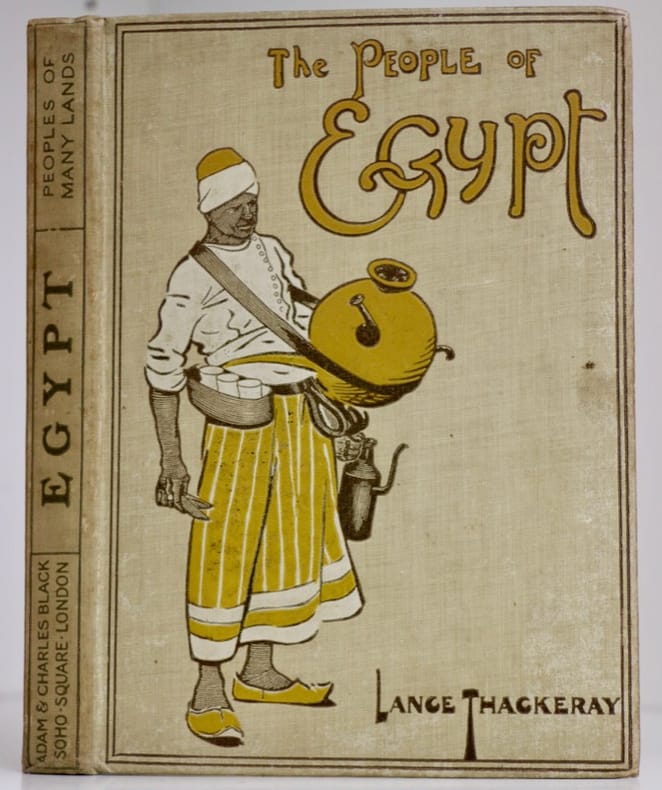
548210London, A. & C. Black LTD, 1916. In-8, cartonnage d'édition pleine-toile beige, décor polychrome sur le premier plat, titre en long sur le dos, VI-10 pp. de texte, 32 planches en couleurs et 37 dessins h.-t. en noir, qq. annotations à l'encre au contreplat.
19702829z1970. Hardcover. Good. Hardcover/pub. 1970/Gd. condition/406 pages - Telling their own stories are the people of Israel. AT22829z hardcover
Large 8vo. (16), 759, (1) pp. Heavily worn contemporary quarter calf over original boards. Register of proceedings containing the records of numerous important debates in the Commons on the French Revolution and Slavery, with the abolitionist William Wilberforce tirelessly campaigning and arguing for abolition through the promotion of a number of bills. In February 1793 he had narrowly lost a vote in the Commons where he had been hoping to put pressure on the Lords, and during the sessions of 1793 and 1794 he promoted his Foreign Slave Bill, which would have prohibited the use of British ships to carry slaves to the territories of other countries. The debates in this year also centre on the ongoing situation in France after the Revolution, with concerns that radical agitation would spread to Britain, and Wilberforce believing that insufficient efforts were being made to avoid war with France. - Partially unopened. Spine chipped and worn, boards slightly stained, worn and creased; minor dampstaining.
8vo. (2), 210, (2), 211-422, (2), 423-664 pp. With a wood-engraved title vignette. Contemporary half calf over marbled boards. Brown marbled endpapers. A volume from James Buckingham's important journal which he founded in January 1824 under the significant title, "The Oriental Herald and Colonial Review", though the subtitle was renamed "Journal of General Literature" the following year. Several pieces are of direct relevance to the Arab world and the Gulf region: the transcript of a Debate at the East India House on the Bombay Marine (pp. 146ff.) variously discusses the "pirates in the Persian Gulph", the climate and various mishaps befalling ships there, while a review of the 1826 book "Sketches of Persia" (pp. 77ff.) gives an account of the "burning sandy plain which skirts the gulf". Johann Gottfried Eichhorn's "Historical Sketch of the Trade with India Before the Age of Mohamed" (pp. 437ff.) includes a discussion of Arabian and Gulf-region trade in the third century, and literature is represented in reviews of the Arabian tales "Abassah" (pp. 239ff.) and "Karmath" (pp. 557ff.). - "Except for 'The Asiatic Journal', the official publication of the East India Company, England had no paper devoted to colonial affairs. 'The duty of nations to enlighten and improve the condition of the people they subjugate,' he said in an introductory essay, 'can scarcely be required to be enforced by argument.' From this point of view he proposed to treat colonial problems in terms of colonial interests and at the same time to show the English people that conditions in the colonies were related to their own welfare" (R. E. Turner, James Silk Buckingham, 1786-1855: A Social Biography [1934], p. 226). - Binding rubbed; extremeties bumped; occasional wrinkles to pages. Armorial bookplate of Richard Archdall on pastedown. Stamps of the Caesarean Dramatic Literary Society of the Royal Hall, Jersey.
Folio. Tinted lithographic additional title by Charles Parsons, printed by Endicott & Co., 20 chromolithographic plates by Parsons after van Lennep, all printed by Endicott & Co. of New York. Expertly bound to style in half dark green morocco over period patterned cloth covered boards, spine lettered and decorated in gilt. A rare and important colour-plate book: one of the relatively few American costume books, and certainly the best such created in 19th-century America. This is a notable and unusual instance of the taste for the Ottoman or "Turkish" which manifested itself in the furniture of the period but seldom in books. In terms of American color-plate books, this is one of the only large projects from the 1860s, when the Civil War seems to have curtailed production of such lavish enterprises. "The one really big chromolithographic book of this decade [...] the art is simple, but [Charles] Parson's hand is obvious in the good lithography, and Endicott's printing is well done for its time" (McGrath). "Endicott achieved a rich variety of color which demonstrated the increased technical ability of American printers in the medium" (Reese). Henry Van Lennep was born in Smyrna, the son of European merchants. Educated, on the advice of American missionaries, in the United States, he returned to Turkey as a missionary in 1840, and spent most of the next twenty years in various parts of the Ottoman Empire. Returning to the United States in 1861, he turned his superb original drawings of Middle Eastern life into the Oriental Album. The plates include two scenes of Jewish life in the Ottoman Empire. Included are plates of "A Turkish Effendi", "Armenian Lady (at home)", "Turkish and Armenian Ladies (abroad)", "Turkish Scribe", "Turkish Lady of Rank (at home)", "Turkish Cavass (police officer)", "Turkish Lady (unveiled)", "Armenian Piper", "Armenian Ladies (at home)", "Armenian Marriage Procession", "Armenian Bride", "Albanian Guard", "Armenian Peasant Woman", "Bagdad Merchant (travelling)", "Jewish Marriage", "Jewish Merchant", "Gypsy Fortune Telling", "Bandit Chief", "Circassian Warrior", "Druse Girl". Bennett, p. 108. Blackmer Catalogue 1715. Blackmer Sale 1500. DAB XIX, 200. McGrath, pp. 38, 115, 162. Reese, Stamped with a National Character 97. Atabey 1274.
New English Paperback. Pbo. Roy. 8vo. (24 x 17 cm). In English. [xii], 472 p., 8 p. b/w plts. Second Edition. The observatory in Islam and its place in the general history of the observatory. List of Plates., Introduction., Chapter I - Astronmy and Astrology in Islam., Chapter II - Al Mamûn's Observatory Building Activity General Considerations., Chapter III - Early Observatories of Islam; the Ninth and Tenth Centuries., Chapter IV - The Time of Al Birûni and Ibn Sina General Remarks and Al Birûni., Chapter V - The Eleventh and Twelfth Centuries., Chapter VI - The Maragha Observatory., Chapter VII - The Fourteenth Century and Minor Observatoies., Chapter VIII - The Samarqand and the Istanbul Observatories., Chapter IX - The World of Islam and the Observatory as a Specialized Institution., Chapter X - The World of Islam and its Place in the General History of the Observatory., Conclusion., Appendix I Appendix., II Bibliography., Index.
New English Paperback. Pbo. Roy. 8vo. (24 x 17 cm). In English. [xii], 483 p. b/w plts. The observatory in Islam and its place in the general history of the observatory. List of Plates., Introduction., Chapter I - Astronmy and Astrology in Islam., Chapter II - Al Mamûn's Observatory Building Activity General Considerations., Chapter III - Early Observatories of Islam; the Ninth and Tenth Centuries., Chapter IV - The Time of Al Birûni and Ibn Sina General Remarks and Al Birûni., Chapter V - The Eleventh and Twelfth Centuries., Chapter VI - The Maragha Observatory., Chapter VII - The Fourteenth Century and Minor Observatoies., Chapter VIII - The Samarqand and the Istanbul Observatories., Chapter IX - The World of Islam and the Observatory as a Specialized Institution., Chapter X - The World of Islam and its Place in the General History of the Observatory., Conclusion., Appendix I Appendix., II Bibliography., Index.
8vo. (16), 216 pp. With a folding map in the lower cover. Original printed cloth. First edition of this study of the traditional historical region of Al-Hasa near Dammam in eastern Saudi Arabia, created a World Heritage site in 2018. The anthropologist and surveyor Federico S. Vidal, an Aramco employee, would develop his work into a 3-volume Harvard Ph.D. thesis in 1964. - Handwritten ownership of Hazel D. Blair to front free endpaper. An excellent copy of this scarce work.
1973MS-4Beirut Lebanon: Al-Risalah 1973. Classic scholarly historical text contains early geographical writings from 800 to 1150 including descriptions of some localities in the Northern Hijaz by the Arab geographers of that period; descriptions of the pilgrim routes in that area; a general survey of information and characteristics; rise and decline of towns and villages in the Northern Hijaz; dependencies of Medina and Mecca; geographical poetry; etc. Includes a detailed fold-out map of the region. 486 pp. Dustjacket in mylar. Virtually no shelfwear. First Edition. Hard Cover. As New/As New. 8vo - over 7¾" - 9¾" tall. Al-Risalah Hardcover
Folio (230 x 368 mm). Title, (6) pp., single column, lithographed throughout, with large Persian coat of arms on the title page (by Abu’l-Hasan Gaffari). Early issue of Persia's official government newspaper. Traces of folds; some edge chipping and tears to folds. Removed from the City Library Association, Springfield, MA, with their stamp to the title an handwritten note "The 'Persian Gazette", one of the only two in Persia - printed at Teheran - The Persian Coat of Arms".
19220123911922. Hardcover. Good. Publisher: Charles Scribner's Sons 1922 Good HB 362 pp. W/MAP text off white ends of spine wear. hardcover
8vo. (4), 168 pp. Contemporary blue wrappers with original printed cover label. Second edition; rare: not in Copac or OCLC. The first edition appeared in 1817. Also includes the coasts of Syria, Egypt, and North Africa (Tripoli, Tunis, Algiers). John William Norie (1772-1843) was one of the most important hydrographic publishers of his time. - Some dog-earing, but still a good copy. OCLC 851876144.
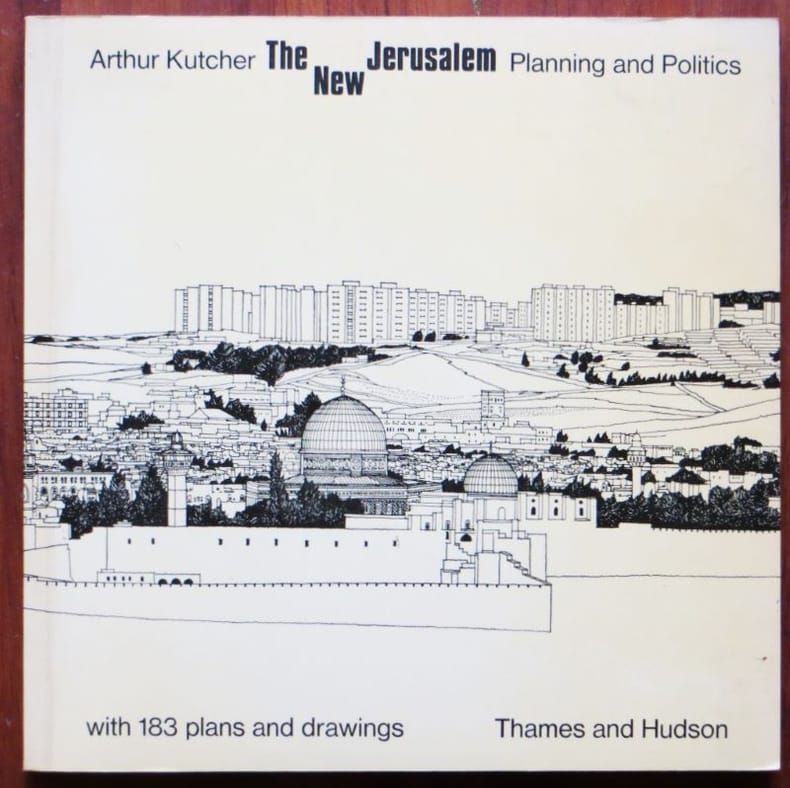
1973186651973 London, Thames and Hudson, 1973. Grand in-8 broché de format carré, 23 x 23 cm., 128 pp. Comprenant 183 plans et dessins de l'auteur. Couverture illustrée. Un léger pli de lecture au dos sinon très bon état. EN ANGLAIS
4to. (4 [instead of 10]), 464 [instead of 466] ff. (wants the first 6 ff. of prelims, final 2 ff. of text and the 6 ff. of "special advices" and index, all supplied in facsimile). With historiated woodcut initials. Splendid modern red morocco, both covers richly gilt, gilt fillets to raised bands. Stored in custom-made cloth clamshell box with gilt spine title. The first English edition of Ludovico di Varthema's famous travels to Arabia, Persia, and India: the highly important and adventurous narrative containing the first printed eyewitness account of any place in today's United Arab Emirates. On his return journey from Mecca (which he was the first Westerner to describe), Varthema visited Ras al-Khaimah ("Giulfar") and portrayed the city as "most excellent and abounding in everything", with "a good seaport", and whose inhabitants are "all Muslims". While Montalboddo's famous anthology of discoveries, printed in 1507, contained the first printed reference to the Arabian Gulf region, it was Varthema's work, published only three years later, that offered the first actual report from the region by a Western traveller who had visited the coast. All early editions of Varthema’s "Itinerario" are exceedingly rare (even the 2013 Hajj exhibition at the MIA, Doha, only featured the 1654 reprint; cf. below). - Varthema, a gentleman adventurer and soldier from Bologna, left Venice at the end of 1502. In 1503 he reached Alexandria and ascended the Nile to Cairo, continuing to Beirut, Tripoli, Aleppo and Damascus, where, adopting Islam and taking the name of Yunas, he joined a Mameluke escort of a Hajj caravan and began the pilgrimage to Mecca. Varthema was amazed by what he observed: "Truly I never saw so many people collected in one spot as during the twenty days I remained there", he begins, and arriving at the Great Mosque, continues, "it would not be possible to describe the sweetness and the fragrances which are smelt within this temple." Thanks to his knowledge of Arabic and Islam, Varthema was able to appreciate the local culture of the places he visited. Impressed and fascinated, he describes not only rites and rituals, but also social, geographical, and day-to-day details. "I determined, personally, and with my own eyes", he declares in the prefatory dedication, "to ascertain the situation of places, the qualities of peoples [...] of Egypt, Syria, Arabia Deserta and Felix, Persia, India, and Ethiopia, remembering well that the testimony of one eye-witness is worth more than ten hear-says." His good fortune did not continue unabated, however: after embarking at Jeddah and sailing to Aden, he was denounced as a Christian spy and imprisoned. He secured his release and proceeded on an extensive tour of southwest Arabia. Stopping in Sanaa and Zebid as well as a number of smaller cities, he describes the people, the markets and trade, the kind of fruits and animals that are plentiful in the vicinity, and any historical or cultural information deemed noteworthy. Returning to Aden, and after a brief stop in Ethiopia, he set sail for India. In addition to visiting Persia, Varthema explored the coasts of Malabar and Coromandel, including a stay at Calicut at the beginning of 1505. He also purports to have made extensive travels around the Malay peninsula and the Moluccas. Returning to Calicut in August 1505, he took employment with the Portuguese at Cochin and, in 1508, made his way back to Europe via the Cape of Good Hope. - First published in 1510, Varthema's account became an immediate bestseller. In addition to his fascinating account of Egypt, Syria, the Arabian Peninsula, and the holy Muslim cities, "Varthema brought into European literature an appreciation of the areas east of India [...] which it had previously not received from the sea-travelers and which confirmed by firsthand observations many of the statements made earlier by Marco Polo and the writers of antiquity" (Lach, I. i. 166). "Varthema was a real traveller. His reports on the social and political conditions of the various lands he visited are reliable as being gathered from personal contact with places and peoples. His account of the overland trade is of great value in that we are made to see it before it had begun to give way to the all-seas route. He even heard of a southern continent and of a region of intense cold and very short days, being the first European probably after Marco Polo to bring back the rumor of Terra Australis" (Cox I, 260). - Published as an extensive part of "The History of Travayle in the West and East Indies" - one of the first English versions of the significant collection edited by Pietro Martire d'Anghiera (Peter Martyr, 1457-1526). The first independently published English translation would not appear until 1863: Varthema's travelogue was included for the first time in the present translated edition of Martyr's "History". The translation, with some omissions, is that of Decades I-III of "De Orbe Novo" by Martyr, with additions from other sources, edited by Richard Eden and Richard Willes. Willes was a member of the Jesuits from 1565 to 1572 and was familiar with Maffei, the Jesuit chronicler whose account he drew on for this work. Under the benefaction of the Earl of Bedford, Willes expanded Eden's translation to include, apart from Varthema's travels, four Decades and an abridgement of Decades V-VIII; Frobisher's voyage for a Northwest Passage, Sebastian Cabot's voyages to the Arctic for the Moscovy Company, Cortez's conquest of Mexico, Pereira's description of China, 1565, Acosta and Maffei's notices of Japan, 1573, and the first two English voyages to West Africa. Also, this is the first account in English of Magellan's circumnavigation, as well as the first printed work to advocate a British colony in North America. - First 6 and final 8 ff. supplied in facsimile. Occasional faint contemp. marginalia. 19th c. calligraphic note, quoted from Brunet, on flyleaf. From the library of Sir Arthur Helps (1813-75), English writer, dean of the Privy Council, and Cambridge Apostle, with his armorial bookplate and autograph ownership. Howgego M65. Brunet I, 294. OCLC 5296745. LCCN 02-7743. European Americana 577/2. Church 119. Streeter Sale 24. Arents 23. Borba de Moraes, p. 33. Hill 533. BM-STC 649. Sabin 1562. Cordier, Japonica 71. Field 485. Cf. exhibition cat. “Hajj - The Journey Through Art” (Doha, 2013), p. 90 (1655 Dutch ed. only). Macro, Bibliography of the Arabian Peninsula, 2239f. (other editions only). Not in the Atabey or Blackmer collections.
4to. (10), 466, (6) ff. With historiated woodcut initials. Splendid modern full navy blue morocco, bands on spine with title showing faded gilt, covers double-ruled gilt. The first English edition of Ludovico di Varthema's famous travels to Arabia, Persia, and India: the highly important and adventurous narrative containing the first printed eyewitness account of any place in today's United Arab Emirates. On his return journey from Mecca (which he was the first Westerner to describe), Varthema visited Ras al-Khaimah ("Giulfar") and portrayed the city as "most excellent and abounding in everything", with "a good seaport", and whose inhabitants are "all Muslims". While Montalboddo's famous anthology of discoveries, printed in 1507, contained the first printed reference to the Arabian Gulf region, it was Varthema's work, published only three years later, that offered the first actual report from the region by a Western traveller who had visited the coast. All early editions of Varthema’s "Itinerario" are exceedingly rare (even the 2013 Hajj exhibition at the MIA, Doha, only featured the 1654 reprint; cf. below). - Varthema, a gentleman adventurer and soldier from Bologna, left Venice at the end of 1502. In 1503 he reached Alexandria and ascended the Nile to Cairo, continuing to Beirut, Tripoli, Aleppo and Damascus, where, adopting Islam and taking the name of Yunas, he joined a Mameluke escort of a Hajj caravan and began the pilgrimage to Mecca. Varthema was amazed by what he observed: "Truly I never saw so many people collected in one spot as during the twenty days I remained there", he begins, and arriving at the Great Mosque, continues, "it would not be possible to describe the sweetness and the fragrances which are smelt within this temple." Thanks to his knowledge of Arabic and Islam, Varthema was able to appreciate the local culture of the places he visited. Impressed and fascinated, he describes not only rites and rituals, but also social, geographical, and day-to-day details. "I determined, personally, and with my own eyes", he declares in the prefatory dedication, "to ascertain the situation of places, the qualities of peoples [...] of Egypt, Syria, Arabia Deserta and Felix, Persia, India, and Ethiopia, remembering well that the testimony of one eye-witness is worth more than ten hear-says." His good fortune did not continue unabated, however: after embarking at Jeddah and sailing to Aden, he was denounced as a Christian spy and imprisoned. He secured his release and proceeded on an extensive tour of southwest Arabia. Stopping in Sanaa and Zebid as well as a number of smaller cities, he describes the people, the markets and trade, the kind of fruits and animals that are plentiful in the vicinity, and any historical or cultural information deemed noteworthy. Returning to Aden, and after a brief stop in Ethiopia, he set sail for India. In addition to visiting Persia, Varthema explored the coasts of Malabar and Coromandel, including a stay at Calicut at the beginning of 1505. He also purports to have made extensive travels around the Malay peninsula and the Moluccas. Returning to Calicut in August 1505, he took employment with the Portuguese at Cochin and, in 1508, made his way back to Europe via the Cape of Good Hope. - First published in 1510, Varthema's account became an immediate bestseller. In addition to his fascinating account of Egypt, Syria, the Arabian Peninsula, and the holy Muslim cities, "Varthema brought into European literature an appreciation of the areas east of India [...] which it had previously not received from the sea-travelers and which confirmed by firsthand observations many of the statements made earlier by Marco Polo and the writers of antiquity" (Lach, I. i. 166). "Varthema was a real traveller. His reports on the social and political conditions of the various lands he visited are reliable as being gathered from personal contact with places and peoples. His account of the overland trade is of great value in that we are made to see it before it had begun to give way to the all-seas route. He even heard of a southern continent and of a region of intense cold and very short days, being the first European probably after Marco Polo to bring back the rumor of Terra Australis" (Cox I, 260). - Published as an extensive part of "The History of Travayle in the West and East Indies" - one of the first English versions of the significant collection edited by Pietro Martire d'Anghiera (Peter Martyr, 1457-1526). The first independently published English translation would not appear until 1863: Varthema's travelogue was included for the first time in the present translated edition of Martyr's "History". The translation, with some omissions, is that of Decades I-III of "De Orbe Novo" by Martyr, with additions from other sources, edited by Richard Eden and Richard Willes. Willes was a member of the Jesuits from 1565 to 1572 and was familiar with Maffei, the Jesuit chronicler whose account he drew on for this work. Under the benefaction of the Earl of Bedford, Willes expanded Eden's translation to include, apart from Varthema's travels, four Decades and an abridgement of Decades V-VIII; Frobisher's voyage for a Northwest Passage, Sebastian Cabot's voyages to the Arctic for the Moscovy Company, Cortez's conquest of Mexico, Pereira's description of China, 1565, Acosta and Maffei's notices of Japan, 1573, and the first two English voyages to West Africa. Also, this is the first account in English of Magellan's circumnavigation, as well as the first printed work to advocate a British colony in North America. - Sympathetically washed but not pressed; some minor repairs to title not affecting printed surface. Some remaining toning and staining in small areas of a few leaves. Generally a wide-margined and appealing copy. - Provenance: acquired from Quaritch in 1975 by Gregory S. Javitch (1898-1980), a Russian-born, Canadian leader in the land reclamation sector in Ontario. Javitch formed an important collection of 2,500 items entitled "Peoples of the New World", encompassing both North and South America, which was acquired by the Bruce Peel Special Collections at the University of Alberta. It was considered the finest such private collection in Canada at the time and formed the cornerstone of the library’s Special collections. The present volume remained in Javitch's private collection was acquired directly from his heirs. Howgego M65. Brunet I, 294. OCLC 5296745. LCCN 02-7743. Alden, European Americana 577/2. Church 119. Streeter Sale 24. Arents 23. Borba de Moraes, p. 33. Hill 533. BM-STC 649. Sabin 1562. Cordier, Japonica 71. Field 485. Cf. exhibition cat. “Hajj - The Journey Through Art” (Doha, 2013), p. 90 (1655 Dutch ed. only). Macro, Bibliography of the Arabian Peninsula, 2239f. (other editions only). Not in the Atabey or Blackmer collections.
Large 8vo (165 x 240 mm). 40 volumes, prettily gilt to covers and spines. With more than 400 engraved and aquatint plates, maps, charts and portraits (many by Nicholas Pocock). Marbled endpapers. The complete 40-volume run of the "Naval Chronicle", the most influential maritime publication of its time and today a key source for British maritime and military history. Founded by the Royal Navy chaplain James Stanier Clarke and the naval officer James Stanier Clarke, the monthly periodical ran for two full decades from January, 1799 to December, 1818. It contains a wealth of information about the Royal Navy of the United Kingdom, including biographies, histories, anecdotes and news, essays on nautical subjects, as well as poems and ballads on a variety of related topics. - Several volumes include material on events in the Arabian Gulf and Sea, often recounting episodes of "piracy" against British vessels, such as the capture of the East India Company's ships "Shannon" and "Trimmer" on 1 Dec. 1804 (an account is found in vol. XV, pp. 24f.) or the Arab raid on the "Minerva" on 29 May 1809, during which the crew were massacred and the vessel converted into the Al-Qasimi flagship (reported in vol. XXIII, p. 281f.; vol. XXIV, p. 30f.). Such events provoked the British "Persian Gulf" campaign of 1809, in which a large British force was deployed to destroy Al-Qasimi bases and ships. The Battle of Ras al-Khaimah, fought on 11-13 Nov. 1809, is reflected in reports printed in vol. XXIV (pp. 73 and 363), and renewed interest in the region and its history, customs and religion prompted a lengthy article on "The Wahebite Arabs" (vol. XXIV, pp. 293ff.; 371ff.), or "the Wahebbi, whose name is much connected with the Iowassimi pirates". A decade later, the British Navy would return in another massive operation against Ras Al Khaimah, which would lead to the signing of the General Maritime Treaty of 1820 between the British and the Sheikhs of the coast which today comprises the United Arab Emirates. - Bindings variously rubbed and bumped, some quite severely with hinges split and extremeties chipped; some spines rebacked, some labels lost. Occasional brownstaining throughout, but largely confined to tissue guards and opposite pages. In all a worn but still appealingly bound set, often encountered in separate volumes only. Sabin 52076. ZDB-ID 1053834-3.
4to. 2 vols. XXIV, 446, XXIII, (3) pp. VII, (1), 430, XXXIV, (26) pp. With engraved frontispiece and 20 numbered engraved plates (5 of which folded) on 19 sheets. Contemporary full calf with giltstamped spine labels. All edges red. Second edition of this authoritative account of Aleppo and Ottoman life and manners, based on Russell's experience as physician to the British factory in Aleppo from 1740 to 1753. Enlarged with 3 additional plates compared to the 1756 first edition. Includes an engraved frontispiece with a view of the city, a plan by Carsten Niebuhr (vol. I, plate I), and an additional plate showing fish (vol. II, plate VI). Apart from the Syrian flora and fauna as well as the local climate, Russell's monograph discusses the everyday life of the local population, including that of European merchants living in Aleppo, the organisation of their trade activity, and their social life. Also includes a section on the plague and other epidemic diseases in the 1740s. The descriptions of the education system, of the production of manuscripts, and of the commercial activity in Syria are unusually detailed and can be considered unique in contemporary travel literature on the Ottoman Empire (cf. Chatzipanagioti-Sangmeister). The botanical plates were produced by G. D. Ehret, and one plate of fish bears the name of W. Skelton, while the remainder of plates, including the ones depicting birds and domestic life, are unsigned, but were probably produced by Russell himself. - Binding lightly scuffed; interior fresh and extremely well preserved. A charmingly bound set documenting an era of scientific and economic prosperity in Syria. Blackmer 1458. Nissen BBI 3534. Navari 1458. Cox I, 227. Chatzipanagioti-Sangmeister 893. ESTC T149605. Cf. Atabey 1064 (1762 Dutch edition).
592988Gothenburg, Paul Aströms, 1973. In-4 br., 129 pp., 3 cartes en noir hors-texte dont une au frontispice, bibliographie.