4 751 résultats
8vo. XIII, (3), 286, (2) pp. With 1 map of the Hadhramaut printed on green paper, 20 double-sided plates, 3 illustrations in the text on pp. 76, 77 and 85, a few small tail pieces throughout, and a green ornament on the title-page. Green cloth with gold lettering on spine. Third part of Freya Stark's (1893-1993) autobiography, in which she describes her life and especially the travels she undertook between 1933 and 1939. During this time, her first four works were published, starting with "The Valley of the Assassins" in 1934. The present account focuses mostly on Stark's travels in South Arabia and is illustrated with images of photographs she took herself. It is a very personal account of her life and travel experiences, alongside significant historical, political, geographical and anthropological information about the places she visited. This writing style was quite unique and unusual for her time, but since she was one of the first European travellers in parts of Southern Arabia, "unique and unusual" were, in a positive way, accurate descriptors. - Edge at the head of the book is green and the edge at the foot is untrimmed. Small marking in blue ink on p. 79, lacking dust jacket, otherwise in very good condition. Blackmer 1470. Howgego IV, S 61. Shapero, The Islamic World (2003), 458. Cf. article "Freya Stark" in Encyclopaedia Britannica.
8vo. XI, (1), 257, (1), (2, advertisements) pp. With photographic frontispiece and 12 photographic plates. Publisher's green cloth with gilt vignette of a dervish to front cover, spine lettered in gilt. First edition of this study of Sufi practice in Eastern Anatolia, Northern Iraq and Cyprus. From the library of Vittorio Emanuele III, King of Italy, extensively underlined and marked by the king with the inscription "Villa Savoia - 21.2.15" to last page; shelfmark label of the royal library to spine. The king terminated this book only three months before Italy declared war on Austria-Hungary, de facto entering WWI. Villa Savoia was first purchased by the house of Savoy in 1872. Subsequently sold to count Telfner, the royal family's financial administrator, Villa Savoia, which in the meanwhile had been renamed Villa Ada (as it is still known today) after Telfner's wife, was purchased back in 1904 by Vittorio Emanuele III, who admired its vast park and secluded location, making it perfect as a private retreat within Rome for the royal family, as well as a safe refuge during WWII (an elaborate bunker was built within the estate). In 1946 King Umberto II gifted the villa to Egypt, as a symbol of gratitude for the hospitality received during his and his father's exile; the villa now hosts the embassy of the Arab Republic of Egypt. - Some very light scattered foxing, but a very good copy. Rare. OCLC 82156703.
5H1859640710<p>Mint condition. Never read or opened. Still in original publisher's wrap. No remainder mark. 5-2H1859640710</p> Garnet Publishing, Ltd hardcover
1999MS-1<p>Israel: Ministry of Defense and Yad Izhak Ben-Zvi Press 1999. Comprehensive expanded reference text presents a comparative view of the country between the River Jordan and the Mediterranean Sea from the second decade of the turbulent twentieth century to the present. Includes approximately seventy aerial photos taken by German British and Australian aviators during WWI and newer color photos of the same seventy sites taken between 1930-1990 to show a comparative study of the physical changes. 208 pgs. Illustrated. Dustjacket in mylar. First Edition. Hard Cover. Fine/Fine. Folio - over 12" - 15" tall.</p> Ministry of Defense and Yad Izhak Ben-Zvi Press hardcover
8vo. (4), XI, (1), 198 pp., 1 blank leaf, (199)-207, (1) pp. Original cloth-backed printed wrappers. First complete English edition. - One of the few written sources about the Arab conquest of Sindh (now in Pakistan) and the origins of Islam in India, translated from a 13th century Persian text by Ali, son of Muhammad Kufi, itself the translation of an undated Arabic manuscript. A chronicle of the Chacha dynasty, following the demise of the Rai dynasty and the ascent of Chach of Alor to the throne, down to the Arab conquest by Muhammad bin Qasim, it narrates the Arab inclusions into Sindh of the 7th to 8th centuries, concluding with an epilogue on the tragic end of the Arab commander Muhammad ibn al-Kasim and of the two daughters of Dahir, the defeated king of Sindh. Co-opted by various interest groups for centuries, the Chach Nama has significant implications for modern imaginings about the place of Islam in South Asia, that remain disputed to this day. - Handwritten ownership in ink to upper wrapper. Light foxing to covers and variously throughout. Altogether a good copy of a rare work; no copy in auction records. OCLC 315332365. Not in Ghani or Wilson. Cf. Asif, A Book of Conquest (2016); Friedmann, The origins and significance of the Chach Nama, in: Islam in Asia: South Asia (1984), pp. 23-37.
Folio (387 x 242 mm). 49 hand-coloured illustrations on 6 plates and hand-coloured folding lithographed backdrop (desert scene; ca. 580 x 224 mm). Original blue wrappers with lithographed cover label. Charming Mignon Theatre of the kind popularized by the Viennese publisher Trentsensky around the mid-19th century and distributed throughout England by their London agent Myers, & Co. on the corner of Oxford and Berners Street. The desert landscape backdrop is to be populated by the pilgrims, camels, resting horses, etc., with plants, a large tent, a cooking fire, and many other details, all to be cut out from the present set of plates. Issued as "Exercises in Colouring", this set was clearly coloured by a trained contemporary artist rather than a dilettante. - The front cover is stained, spine splitting, but the plates are clean and well-preserved. Rarely encountered complete, well-coloured, and in the original state. Another example, prominently featured in the 2012 Hajj exhibition at the British Museum, was cut and mounted. Hajj. Journey to the heart of Islam. London, British Museum 2012, p. 125 (fig. 125).
VII, (1), 335, (1) pp. Original blindstamped maroon cloth, title and author in gilt on front board and spine; top edge gilt. 8vo. First edition. Chapters include characteristics and temperament, species, breeding, feeding, loading, marching, ailments, equipment, purchasing, etc. - Professional repairs. OCLC 254041139.
4to. 267, (1) pp. Publisher's cloth. Dustjacket. First published in 1924, during Arnold's professorship for Arabic and Islamic Studies at the School of Oriental Studies at the London University, a position he assumed after teaching in Aligarh, Lahore and Punjab for several years, as well as acting as Adviser to the Secretary of State for India from 1917 to 1920. The 1967 re-edition includes an additional chapter by the historian and editor of the academic journal "Middle Eastern Studies", Sylvia Haim: "The abolition of the Caliphate and its aftermath". - Small nick to lower edge of top cover, else very good in edge-worn and slightly scuffed dustjacket.
Oil on wood. Signed and dated. Framed (455 x 258 mm). Museum-quality panoramic painting of Istanbul with steamships and sailboats on the Golden Horn and the Hagia Sophia in the background. The foreground is dominated by the Grand Vezier Hüseyin Avni Pasha in a coach, escorted by horsemen, surrounded by a crowd. - The Regensburg-born Heinrich Lang, noted painter of horses and battles as well as writer and illustrator, studied with Karl Steffek in Berlin, Friedrich Voltz and Franz Adam in Munich and Adolf Schreyer in Paris. He travelled to Greece and Turkey and proved himself a careful observer of Ottoman costume and culture. His colourful paintings of Turkish tradesmen, camel drivers, donkey-drawn wagons and splendidly decorated carriages show his great attention to detail and were greeted by contemporaries as a much-welcomed relief from the grey military scenes that had dominated the previous years (cf. ADB Ll, 551).
Four Volumes. Small 4to. Original full blue cloth bindings, spines gold lettered. Original dust jackets, slightly soiled. Hardbound set. Second printing. Very good. This set would make a nice gift. ISLAM BOX 3
(2) Burton, Richard F. Supplemental Nights. (3) Burton, Richard F. [Autograph manuscript book review of an 1881 Panchatantra edition]. 16 volumes (including 6 supplements). 8vo. With an original manuscript leaf written by Burton (with the manuscript heading: "Proof to Sir R.F.B. Hotel des Bains, Aigle, Canton Vaud, Switzerland" and a note "Long Primer Pressig.") and each volume with a different frontispiece in two states (coloured and uncoloured). Contemporary richly gold-blocked green morocco, boards with Arabic script in gold, spine with raised bands, gold-tooled turn-ins, marbled paste-downs. The so-called "manuscript edition" of Richard Burton's celebrated translation of Alf Laylah Wa Laylah, commonly known in English as the Arabian nights. These Arabic tales, cherished in Europe since the early 18th century, are often erotic in content, and in Burton's unexpurgated translation they outraged Victorian England. Burton included numerous footnotes and a scholarly apparatus, offering a vivid picture of Arabian life, which set his translation apart from earlier English renderings. - The present edition (limited to 99 sets, the present being copy no. 49) includes a manuscript leaf from a text by Burton. In the present copy this is a book review by Burton, of a French translation of Johannis de Capua's Latin translation of a Hebrew translation of the Panchatantra, a Sanskrit frame story written several centuries before the Arabian nights. The notes at the head show that it was used as printer's copy. - The title-page of volume one uses the correct main title, The book of the thousand nights and a night, but confusingly mixes it with part of the subtitle of the Supplemental nights: "to the book of the thousand one nights with notes anthropological and explanatory". To add further confusion it says "volume three", though the content is that of volume one. The volume number is clearly a printer's error, apparently corrected early in the press run. - Ross dates the (regular copies of the) present edition ca. 1940. This later date is supported by the fact that this edition is not included in Penzer's thorough bibliography published in 1923. - Some minor browning to the endpapers, those of the first volume partly detached and with a small pieces torn off, the binding has some very minor wear to the hinges, and a few headbands have been carefully repaired. A fine set. Scheherazade's Web: The 1001 Nights & Comparative Literature, J. Ross 10 & 11. Cf. Penzer, pp. 126-132 (other Burton club editions).
4to. 32 pp., 1 blank leaf, (54) ff., 1 blank leaf, (34) ff. Contemporary full vellum with blindstamped covers, giltstamped spine and spine-title. First and only edition. An "excellent facsimile publication" (cf. Souhart) of the famous Book of St Albans, the last of eight books printed in England by the St Albans Press in 1486, containing three essays on hawking, hunting, and heraldry. Prefaced to this is an introduction by the English printer and bibliographer William Blades (1824-90) discussing the authorship and printing of the work, which saw numerous editions between 1486 and 1810. The arms illustrating the treatise on heraldry are reproduced in black and white. - Only three perfect copies of the 1486 first edition of the Book of St Albans are known to exist. The original edition credits the book, or at least the part on hunting, to Juliana Berners, who is believed to have been the prioress of Sopwell Priory near Saint Albans, an attribution at the end of the work reading: "Explicit Dam Julyans Barnes in her boke of huntyng". The Book of St Albans is, however, not an original composition, but a compilation from earlier manuscripts. The hawking treatise is considered to be adapted from the "Booke of Hawkyng after Prince Edwarde Kyng of Englande", a manuscript of the reign of Edward IV of England (BL Harley Collection 2340). It is not intended as a full practical treatise on falconry, but introduces technical terms and describes feeding and illnesses. The essay on hunting, in particular, is attributed to Dame Juliana Berners. It is in fact a metrical form of much older matter, going back to a manuscript from the reign of King Edward II, and written in French: "Le Art de Venerie" by the huntsman Guillaume Twici. - Small portion of spine chipped. Occasional foxing to interior. Provenance: handwritten ownerships of the English cleric and author Morgan George Watkins (1835-1911, dated Barnoldby le Beck, 1881), of Humphrey B. Watkins (gift from Watkins, dated April 1906), and of Charles Henry Stanley Garton (b. 1920, dated Kingswood, Medmenham, Bucks., 12 Sept. 1942) to flyleaf. Loosely inserted: a clipping from the "Athenaeum" (11 Sept. 1880); a publisher's advertisement for a facsimile edition of the fishing treatise added to the Book in 1496; and a five-page typescript catalogue of a private collection of falconry literature. Two newspaper clippings on the Book of St Albans are mounted to pastedown. - A good copy of this celebrated facsimile edition of what is considered "the earliest English printed book" (Harting). Huth 379. Souhart 48ff. Schwerdt I, 63. Harting 1. OCLC 841882817.
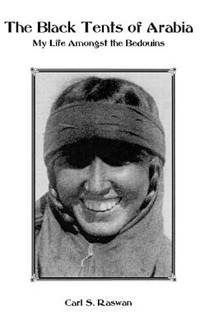
004762Boston MA: Little Brown & Co. 1935. 280 24pp.ads. With illustrations. "Carl Raswan is one of the few men who have penetrated the unexplored desert of Northern Arabia. He lived with the warlike Bedouins not as a foreigner but as one marked by the rite of blood-brotherhood with their Sheiks. He shared in the migration of over 30000 people hundreds of tents and thousands of camels seeking water and grazing land experiencing with them the eternal struggle against hunger and drought." Clean. 1st Printing. Cloth. Very Good/No Jacket. 8vo - over 7¾" - 9¾" tall. Little Brown & Co. hardcover
8vo. XIII, (1), 558 pp. With 105 photo illustrations, 91 maps and text-figures (some folding), and 2 folded full-colour maps in back cover pocket. Original giltstamped green cloth. Geographical Handbooks Series (for official use only) B.R. 522 (Restricted). In-depth, profusely illustrated discussion of the Congo region. Produced during WWII for use of the Naval Intelligence Division, "to provide, for the use of Commanding Officers, information in a comprehensive and convenient form about contries which they may be called upon to visit, not only in war but in peace-time". The book's contents are, "however, by no means confined to matters of purely naval interest. For many purposes (e.g. history, administration, resources, communications, etc.) countries must necessarily be treated as a whole, and no attempt is made to limit their treatment exclusively to coastal zones" (1942 preface). - Spine and covers faded; edges and spine bronwstained. From the library of the English linguist Malcolm Guthrie (1903-72), arguably one of the most important Bantu scholars of his century, with his ms. ownership to flyleaf. His magnum opus, "Comparative Bantu", appeared in four volumes between 1967 and 1971.
Small folio. (4), XII, (3)-172 pp. With engraved portrait frontispiece, engraved title page, 85 steel engravings (after William H. Bartlett) and 1 map. Splendid contemporary giltstamped green morocco with fillets, dentelle border, and a central pointillé ornament adorned with flower buds. Spine, leading edges and inner dentelle attractively gilt. All edges gilt. Third edition. The British travel writer Julia S. H. Pardoe (1806-62), who, suffering from consumption, had been taken south early in her youth, accompanied her father to Constantinople in 1835 and was famous for her literary reports on Portugal and the Near East even as a child. "Since Lady Mary Wortley Montagu probably no woman has acquired so intimate a knowledge of Turkey [... Her] works, written [...] in a pleasant and graceful style, attracted a large share of notice, and, as popular history, may still be read with pleasure" (DNB). - First published in 1838 with only 78 plates; later editions were published under the title "Picturesque Europe" (1854 and 1874). The pretty views are engraved after William Henry Bartlett (1809-54), whose series of oriental and American topography were then very popular (cf. Thieme/B. II, 554). - Occasionally slightly browned or foxed (more so in four plates). Binding insignificantly rubbed at corners and raised bands, otherwise very nicely preserved. BLC 246, 438. DNB 15, 201, 5. Cf. Aboussouan 711 (first ed. 1838). Weber I, 1151 (1850).
4to. Engraved title with circular vignette, 18 hand-coloured etched plates, uncut in original boards, worn at joints at extremities. First edition. An uncut copy in original pictorial boards of the first book published under Alken's name. He mentions his "habit of riding young and violent horses with fox-hounds", and of having a mare which caused him "four or five falls a day upon an average, and all in consequence of her violent bucking leaps." - Provenance: Prince Henry, Duke of Gloucester (bookplate). Schwerdt I, 12. Mennessier de la Lance 14. Huth 85. Mellon/Snelgrove 73. Tooley, Coloured Plates 20.
8vo. XXIV, 195 pp., final blank page. With 25 numbered illustrations mainly depicting falcons and hunting and hawking scenes, including frontispiece and of which several full-page. Contemporary full cloth with giltstamped spine-title and illustration of a hunt to front cover. First edition. One of 500 copies of this rare Persian treatise on falconry, giving a detailed account of falcons as well as hunting-birds in general, translated by Douglas Craven Phillott. The translator's introduction gives an account of the author, a prince of Persia (d. 1874), and his book. "An excellent translation [...] A valuable addition to a falconer's library, whether or not he be interested in hawking in the East" (Barber). - Corners and spine ends lightly bumped; small tears to cloth in the upper part of the spine. Bookplate of G. J. B. Barry, depicting a falcon, to pastedown. A rare and very important work by a falconer who flourished in the middle of the 19th century. Schwerdt IV, 92. Barber 14.
19768676Hayward Gallery, London 1976. 396 S. mit 16 Farbtafeln, zahlr. Abbildungen u. 1 Karte. Gr.-8°. Kart. Gering berieben u. bestoßen. Gutes Exemplar.
4to. (8), 79, (1) pp. With woodcut headpiece on t. p. and initials. 19th century orange-red crushed morocco by Riviere with leading edges gilt and elaborate gilt inner dentelle, rebacked. All edges gilt. The exceedingly rare first edition of one of the earliest English treatises on horsemanship, derived in part from Xenophon, Federico Grisone's "Ordini di cavalcare", and other authors, and in part from Astley's own experience. This is, in fact, the first translation into English of Xenophon's treatise "Peri hippikes" ("On horsemanship"). - The publication of Astley's "Art of Riding", perhaps his single most lasting achievement, came late in his life as an Elizabethan courtier. Here, he relays the doctrine of the Italian riding schools as he and other Gentleman Pensioners understood it, particularly on training the horse to respond to the hand. Astley was on friendly terms with Thomas Blundeville, whose Grisone translation two decades earlier counts as the first treatise on horsemanship to be published in English. - First three leaves slightly browned, with the upper right corner of each leaf imperceptibly restored from another copy; a closed tear to f. A4. Altogether a remarkable clean and crisp copy in an English master binding. The Fitzwilliam-Gloucester copy, bound with a common companion piece, Claudio Corte's "Art of Riding" (also published by Denham in the same year) commanded £14,400 at Christie's in 2006. The catalogue notes that the scarcity of these two work "at auction varies markedly; ABPC records some 5 copies of Corte's work at auction since 1975, but none of Astley's". Huth p. 11. STC 884. Mellon/Podeschi 12. Hoffmann III, 609 (s. v. Xenophon).
4to. (2), CX, 637, (1) pp. With 2 coloured plates (including a portrait frontispiece) and 184 black and white plates (1 of which not included in pagination). Original full cloth with giltstamped spine and spine-title. Second edition of this important English translation of the famous Latin treatise on ornithology and falconry written in the 1240s by the Holy Roman Emperor Frederick II. It was prepared by the Canadian ophthalmologist and comparative zoologist C. A. Wood (1856-1942), who studied animal vision, especially that of birds, and was first published in 1943 by Stanford University Press. The plentiful illustrations include a portrait frontispiece of Frederick II, photographs of various decorative manuscript pages from "De arte venandi cum avibus", falconer's equipment, and landmarks associated with the Emperor, including Castel del Monte and his tomb in Palermo, as well as drawings and photographs of various species of falcons and hawks, and a map of southern Italy and Sicily showing the Emperor's castles and hunting lodges. - Giltstamping somewhat faded; edges very slightly foxed. A very good copy of this second edition, never seen at auction. Oelgart 24B. U.S. Air Force Academy Library, Special Bibliography Series 81, 192. OCLC 459570612.
Various sizes (folio, 4to, 8vo). A total of 460 typescript and 177 manuscript pp. (9 of which comprise merely 2 lines) in 26 fascicles, assembled as 11 portfolios. With a few newspaper clippings as well as 1 photograph each of Hagia Sophia and the gate of Dolmabahce Palace, mounted on cardboard as postcards. A highly important and extensive archive from the secret personal papers of General Auguste Sarrou, France's chief spymaster in the Levant and Turkey during the critical period between 1917 and 1923, when the Near and Middle East were completely re-ordered following the demise of the Ottoman Empire. It features numerous "top secret" spy reports, correspondence and dossiers of political analysis, providing stellar insights into France's central role in shaping the destiny of Syria, Lebanon and Turkey, working to counteract the forces unleashed by Lawrence of Arabia during the Arab Revolt. - The present archive consists of dozens of classified intelligence reports, political masterplans and field notes. Most of the documents are typescripts or carbon copies of typescripts (many written by Sarrou), intended for distribution amongst only the most senior French military and political officials. The documents span Sarrou’s entire career, dating from 1908 to the 1960s, although the bulk of the documents concern the critical period from 1917 to 1923. It includes a typescript copy of Sarrou’s autobiography, written at the end of his 60-year-long career in espionage and diplomacy in Turkey, the Balkans and the Middle East; a series of papers relating to Sarrou’s time serving as a gendarme in Macedonia in the decade prior to World War I, when he notably befriended many leaders of "Young Turks"; and a further series of papers outline his secret "Mission d’Orient", a grand operation to support French ambitions in Syria, Lebanon and Anatolia. Furthermore, a series of highly important and secret analytical reports written by Sarrou provide a "game plan" for how France was to rule Syria and Lebanon (importantly, the Quay d’Orsay largely followed Sarrou’s advice as matters unfolded). Notable is Sarrou’s brutally unflattering assessment of Emir Faisal, Lawrence of Arabia’s old comrade. Additionally, there is an intriguing manuscript report of a meeting held between Arab intellectuals and Djemal Pasha, the Ottoman War Minister, the day before the fall of Damascus, as well as a series of fascinating reports concerning the 1921 attempt on the life of General Henri Gouraud, the French High Commissioner for Syria and Lebanon. Another series of 25 typescript "Secret" intelligence reports compiled by the Service des informations de la Marine dans le Levant (S.I.L.) in Port Said in 1918 and 1919 contain fascinating raw field intelligence on Anti-French elements throughout the Middle East, as well as the efforts of French assets to counteract these forces through counterespionage and propaganda. A diverse collection of typescript and manuscript research documents, as well as correspondence from key assets, assembled by Sarrou from 1919 to 1922, is supplemented by a series of highly insightful typescript reports, written by Sarrou to advise the French government on the situation in Turkey from 1921 to 1931, covering the rise of Atatürk’s new republic and French efforts to gain influence in Ankara. Finally, there is a collection of letters, documents and postcards from Sarrou’s mid to later career, from the late 1920s until his retirement in the mid-1960s. - Many of the elements of the present archive are likely unique survivors, while a couple examples of some of the typescripts may exist in various French official archives. A detailed list is available upon request.
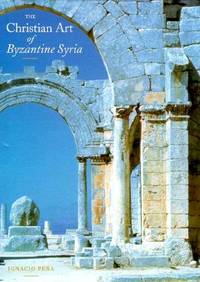
Colour map and 111 plates and plans, some collotype, one double-page, 4 pp. advertisements at end. Original cloth. First and only edition of this study of mainly Hindu and Jaina architecture in the state of Gujarat on the western coast of India, superbly illustrated with collotypes. Published as volume IX of the Archaeological Survey of Western India. - The Scottish archaeologist James Burgess (1832-1916), founder of "The Indian Antiquary", did educational work in Calcutta, 1856 and Bombay, 1861, and was Secretary of the Bombay Geographical Society 1868-73. He was Head of the Archaeological Survey, Western India, 1873, and of South India, 1881. From 1886 to 1889 he was Director General of the Archaeological Survey of India. - With light foxing to first few leaves, binding slightly rubbed.
250 p. 8vo. Rebound in plain red cloth binding. Hardbound. Third edition. The Richards Lectures delivered at the University of Virginia. HOLYLAND BOX 2
1987AN-50Washington D.C.: Smithsonian Institution Press 1987. Scholarly comprehensive text reviews the archaeology of western Iran from the first Neolithic villages through the earliest political states from the archaic and Persian empires to the profound influences of the Greek and Roman civilizations and finally to the fall to Islamic invaders. Text adopts a geographic approach concentrating on settlement patterns and the inferences that can be made from them concerning population changes the function of sites in regional social networks and regional interactions. 332 pgs. Illustrated. Tiny faint scuff to outer edge. Minimal shelfwear. First Edition. Hard Cover. Very Good/Very Good. 4to - over 9¾" - 12" tall. Smithsonian Institution Press Hardcover
8vo. 372 pp. With frontispiece portrait, 4 maps (1 folding) & 17 plates. Publisher's gilt cloth with chipped and spotted dustjacket. First edition of this overview of Arab history and culture work that draws upon the author's own experience in the region and includes some of T. E. Lawrence's exploits. - Inscribed on the front free endpaper in the year of publication: "To the Rt Hon and Mrs L.S. Amery, With respects, Bertram Thomas, May 1937". - Bertram Thomas's (1892-1950) "first crossing of the Empty Quarter, albeit by the shortest and easiest route, assured him a permanent place in the history of European exploration of Arabia. He was admired by T. E. Lawrence (who wrote a preface to one of his books) and by his successor Wilfred Thesiger, who found twenty years later that Thomas was remembered by the Bedouin as an honourable, brave, and tolerant man" (ODNB). Leopold Amery (1873-1955) served a Colonial Secretary as well as Secretary of State for India and Burma in Churchill's war ministry. - A few minor spots, but still a very good copy. Macro 2186.