WOOD RobertMareMagnum

1 301 résultats
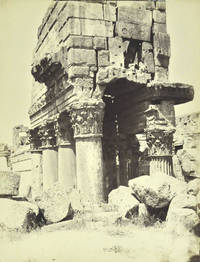
In folio (mm. 540 x 363), bella legatura in p. pelle coeva (alone al piatto anter.), pregevoli cornici dorate e a secco ai piatti, dorso a cordoni (rifatto) con fregi e tit. oro, dentelle dorata ai risg., tagli marmorizzati, pp. (2), 8, magnificamente illustrato da 46 i.e. 47 tavole (una - la tav. 3 - è due volte a doppia pagina e 9 sono ripiegate), inc. in rame da P. Foudrinier e Thomas Major su disegno dell’Arch. Borra, tutte descritte. "Prima edizione" di questa stupenda opera architettonica (nello stesso anno fu pubblicata a Londra anche in versione francese). L’archeologo irlandese Robert Wood (1717 ca.-1771), compì viaggi ed esplorazioni scientifiche insieme a J. Bouverie, J. Dawkins e all’artista italiano Giovanni Battista Borra, in Grecia e in Asia Minore, specialmente nei luoghi omerici, pubblicando volumi sulle rovine di Palmira (1753), di Baalbek (1757) e studi sul problema omerico in relazione alla topografia della Troade (1769, 1775). Fu sottosegretario di stato dal 1756 al 1763. Wood descrive le rovine di Baalbek, in Libano, come tra le più audaci opere di architettura dell'antichità. Erano ancora in piedi nove colonne del tempio di Giove, ma tre crollarono, probabilmente in occasione del terremoto del 1759. Cfr. The Mark Millard Architectural Collection”,II,93: “The text of "The ruins of Balbec" was written by Wood, with a history of the site, an account of the ‘Journey from Palmira to Balbec’, and an analysis of the inscriptions found.. The volume was, in many ways, even more appreciated than the first (Palmira), and more influential.. Many of the details of the temples at Baalbek were taken up by English architects; the ‘Circular Temple’ was twice imitated, by William Chambers at Kew, in 1761, and Henry Flitcroft, a few years later, at Stourhead”. Cfr. anche Fowler,444 (English ed.) - Berlin Cat,I,1887 / Cicognara,2723 e Brunet,IV,1457: “Ouvrage d’une exécution remarquable” per l’ediz. in francese del 1757. Solo lievi uniformi ingialliture e qualche lieve fiorit. margin., ma complessivam. esemplare ben conservato.
In-8°, (24cc), 400pp, testo greco e latino a fronte su colonne, frontespizio con marca tipografica (una sirena), iniziali e finalini xilografici, legatura in piena pergamena rigida coeva, titolo su tassello al dorso. Dedica in greco a Urbano VIII. In-8°, (24cc), 400pp, Latin and Greek two-column text, title page with printer’s mark (a siren), wood engraved initials and tails, full vellum contemporary binding, title on label at the spine.
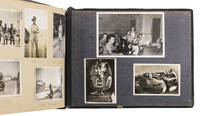
1940ABC_484251940. Contemporary embossed brown calf with flowers on the front and back board and an aluminium view of David's Tower and Jerusalem's old city wall embedded in the front board. Oblong album 30 x 20 cm. With 128 gelatin silver prints most ca. 6.5 x 9.5 cm. Beautiful album with 128 photographs of Egypt and Palestine present day Israel and the West Bank during the British Mandate. It was likely compiled by a British soldier who was stationed in the Middle East during the 1940s. Some of the photographs are numbered in the negative and may have been made by important photographers active in the area at the time like G. Eric Matson and his wife Edith the founders of the Matson Photo Service. The images show Cairo and various locations in Palestine including Jerusalem Bethlehem Nazareth Tiberias Sea of Galilee Nathanya Tel Aviv the Jordan river Haifa Beirut and the Dead Sea. Other than important locations like churches and gates the photographs also show many locals including for example street barbers in Cairo shepherds and farmers in Palestine and beautifully dressed women in Haifa. In the back of the work a few dried leaves from local plants have been mounted namely orange lemon fig eucalyptus grapevine and mulberry. The eucalyptus leaf still retains some of its scent.The edges and vorners of the boards are somewhat scuffed with some loss of material at the head and foot of the spine and around the edges of the embedded aluminium plate. The photographs mounted on the inside of the front board are slightly stained the fig leaf mounted on one of the final pages is damaged and the cyprus leaf is missing. Otherwise in good condition. unknown
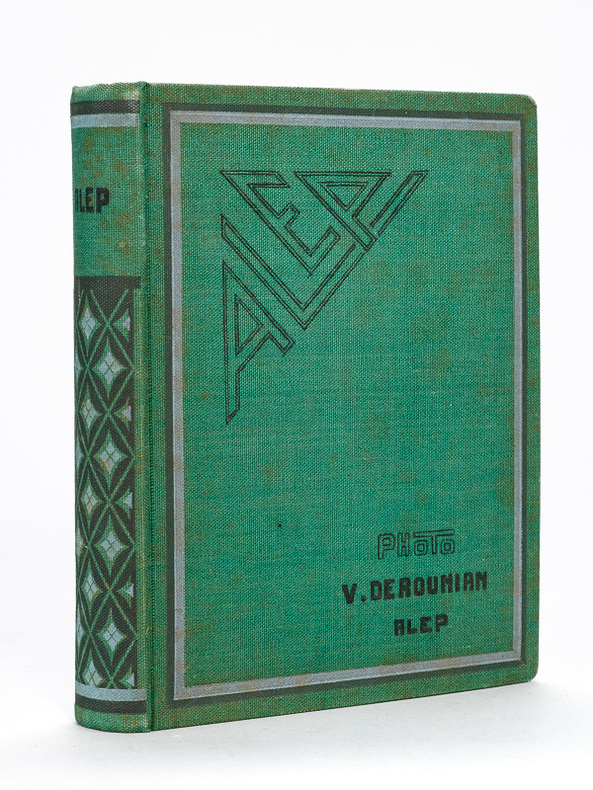
1 album pleine toile verte, format 21,5 x 18 cm, avec 22 photos format 17 x 11 cm, circa 1918-1937, Vartan Derounian Bel album en parfait état, réunissant 22 photographies par Vartan Dérounian, l'un des plus grands photographes arméniens du Proche-Orient de l'Entre-Deux-Guerres. Né à Arapkir en Turquie en 1888, décédé en 1954 à Beyrouth (Liban), Vartan Arounian y débute sa carrière de photographe chez les frères Sarafian en 1911. Il part à Karthoum où il forme son frère Agop. Etabli au Caire pendant la Première Guerre Mondiale, il travaille auprès du suisse Heinzelmann, photographe de la cour égyptienne du sultan d'Egypte et futur roi Fouad Ier. Sitôt la guerre terminée, Vartan et son frère Philippe reparte à Alep, où il épouse la fille du photographe Krikor Missirlian. Photographe reconnu, il se voit confier de nombreuses missions par le Haut-Commissariat français en Syrie et au Liban. Vartan Derounian quittera Alep pour Beyrouth en 1937. Français
76449c.1865. . Seven albumen prints. Very good tonal range and in good condition pasted on orginal card.<br /> <br /> [c.1865]. unknown
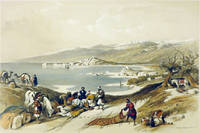
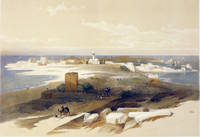
184626567London: F.G. Moon and Co. 1846. From the Standard Folio First Edition limited to 500 sets only. A single original hand-coloured lithographic plate drawn on stone by Louis Haghe after David Roberts' paintings done on location in 1838. Printed on a single folio sheet 24" x 17" the captioned image is 20" x 14" now presented in cream mounting boards 30" x 24" glazed behind clear mylar. Beautifully hand-coloured to the highest standards of the time. An example in excellent condition clean fresh beautifully preserved. FROM One of the most desirable of all travel and COLOURplate books. A handsome wide view of the fishing and port city of Sidon. The city is laid out against a mountainous background and the Sidon sea-castle and bridge are clearly visible. In the foreground group of travelers with wares are approaching the city by road.<br> We have a good number of impressive images from the Standard Folio Edition of this classic work available for purchase. As well as Sidon there are many views available of Egypt Nubia Petra Sinai the Jordan Tyre and Baalbec. Please inquire for further details.<br> In the course of two and a half months in 1838 traveling some 800 miles south from Cairo Roberts recorded the monumental temple sites along the Nile in more than a hundred sketches. As the first British artist to sketch the monuments of Ancient Egypt set on "Plains so vast.that until you come near them you have no idea of their magnificence" Roberts was well aware of the stir his drawings would create in London. According to John Ruskin writing in PRAETERITA Roberts's drawings "were the first studies ever made conscientiously by an English painter not to exhibit his own skill but to give true portraiture of scenes of historical and religious interest. F.G. Moon and Co. hardcover
1930552451 album pleine toile verte, format 21,5 x 18 cm, avec 22 photos format 17 x 11 cm, circa 1918-1937, Vartan Derounian
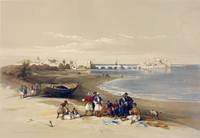
184626566London: F.G. Moon and Co. 1846. From the Standard Folio First Edition limited to 500 sets only. A single original hand-coloured lithographic plate drawn on stone by Louis Haghe after David Roberts' paintings done on location in 1838. Printed on a single folio sheet 24" x 17" the captioned image is 20" x 14" now presented in cream mounting boards 30" x 24" glazed behind clear mylar. Beautifully hand-coloured to the highest standards of the time. An example in excellent condition clean fresh beautifully preserved. FROM One of the most desirable of all travel and COLOURplate books. A handsome general view of the fishing and port city of Sidon. It is a beautifully colour plate featuring people fish dogs boats buildings the Sidon sea-castle and bridge and the Mediterranean.<br> We have a good number of impressive images from the Standard Folio Edition of this classic work available for purchase. As well as Sidon there are many views available of Egypt Nubia Petra Sinai the Jordan Tyre and Baalbec. Please inquire for further details.<br> In the course of two and a half months in 1838 traveling some 800 miles south from Cairo Roberts recorded the monumental temple sites along the Nile in more than a hundred sketches. As the first British artist to sketch the monuments of Ancient Egypt set on "Plains so vast.that until you come near them you have no idea of their magnificence" Roberts was well aware of the stir his drawings would create in London. According to John Ruskin writing in PRAETERITA Roberts's drawings "were the first studies ever made conscientiously by an English painter not to exhibit his own skill but to give true portraiture of scenes of historical and religious interest. F.G. Moon and Co. hardcover
184626563London: F.G. Moon and Co. 1846. From the Standard Folio First Edition limited to 500 sets only. A single original hand-coloured lithographic plate drawn on stone by Louis Haghe after David Roberts' paintings done on location in 1838. Printed on a single folio sheet 23" x 17.5" the captioned image is 19.25" x 13" now presented in cream mounting boards 30" x 24" glazed behind clear mylar. Beautifully hand-coloured to the highest standards of the time. An example in excellent condition clean fresh beautifully preserved. FROM One of the most desirable of all travel and COLOURplate books. This is an especially well-coloured and atmospheric plate of a broad view of Tyre showing both ancient ruins and more recent inhabited buildings.<br> We have a good number of impressive images from the Standard Folio Edition of this classic work available for purchase. As well as Tyre there are many views available of Egypt Nubia Petra Sinai the Jordan Sidon and Baalbec. Please inquire for further details.<br> In the course of two and a half months in 1838 traveling some 800 miles south from Cairo Roberts recorded the monumental temple sites along the Nile in more than a hundred sketches. As the first British artist to sketch the monuments of Ancient Egypt set on "Plains so vast.that until you come near them you have no idea of their magnificence" Roberts was well aware of the stir his drawings would create in London. According to John Ruskin writing in PRAETERITA Roberts's drawings "were the first studies ever made conscientiously by an English painter not to exhibit his own skill but to give true portraiture of scenes of historical and religious interest. F.G. Moon and Co. hardcover
1930151871Beirut: Imp. Jeanne D'Arc 1930. A scarce handbook of French colonial rule in the Middle East First edition first impression of this scarce aide-mémoire compiled by the French High Commission for colonial administrators in its Syrian and Lebanese mandates. Copies appear in just eight institutions five French on WorldCat and in the Qatar National Library. The work opens with information on the costume character finances and nomadic patterns of different peoples followed by sections offering detailed discussion of tribes grouped into regions such as Damascus and its environs Alleppo Deir ez Zor and the Djebel Druze. To assist French colonial officials the work outlines the leadership and intertribal relations of each group while the map depicts where tribes are expected to be in winter and summer according to their nomadic patterns. With the size of each tribe's name on the map corresponding to their importance colonial officials could see at a glance how seasonal changes would impact French governance. The fluidity of nomadic movements across the boundaries of the mandate highlights the arbitrary and theoretical nature of colonial territory and borders and the extent to which French imperial authority was "illegitimate and thus unstable" Khoury p. 4. This copy is intriguingly inscribed on the front free endpaper in French "De la part de votre tout dévoué Dictionnaire géographique Beyrouth 23-12-31 Clerris " "On behalf of your totally devoted Geographical Dictionary Beirut 23-12-31 Clerris " with another ownership inscription below. Octavo 225 x 150 mm. Folding map 500 x 578 mm unfolded in rear pocket. Contemporary black cloth-backed snakeskin boards. Rubbing and wear to extremities small split at foot of front inner hinge professionally strengthened with adhesive moderate foxing to top edge and contents folding map toned with crease to bottom right corner slightly affecting printed area map pocket well-preserved. A very good copy. Philip Shukry Khoury "Syria and the French Mandate: The Politics of Arab Nationalism 1920-1945" 2014 1987. hardcover
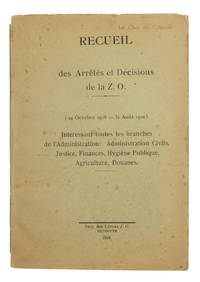
1918ABC_45213Beirut 1918. 8vo. Impimerie des Lettres J. G. Original printed wrappers. 188 pp. 2 final blank leaves. First edition of ac ollection of laws and regulations for Lebanon Zone Ouest passed by the French under their mandate for Syria and the Lebanon from October 1918 until the end of August 1920 two days prior to the declaration of independence of Greater Lebanon. A compact primary source on French administration in the Middle East this rare manual contains decrees for administrative issues such as the division of Lebanon into three zones sanitary measures against the plague but also detailed regulations concerning everything from travel permits and the organisation and surveillance of prisons to the application of the metric system the trade in carrier pigeons the prices for ice 2 piastres for 400 grams wholesale 3 piastres retail alcoholic drinks 16 piastres for a litre of table wine and tramway fares and the circulation of vehicles. A few marginal flaws to the wrappers occasional minor edge flaws. A good clean copy with provenance stamp "Le Chef de Cabinet" on the upper cover. ABE CAT Agriculture unknown
13969078Paris: Chez Cailleau, 1763 in-12, titre gravé, xii-310-[2] (fautes à corriger)-26 pages (table des matières), carte se dépliant (carte pour servir à l'histoire des Druses, Peuple des environs du Liban dressée par le Sr. DeLafosse, géographe, 1763), 4 planches (la princesse épouse du Grand Emir ; le Grand Emir des Druses, Facardin ; le camp de l'Emir des Druses prés de Barut (dépliante); un cavalier Druse). Reliure veau d'époque, dos à nerfs orné, coiffe supérieure restaurée, cependant bel exemplaire. Cette deuxième édition comprend les planches qui ne figurent pas dans celle de 1762. L'ouvrage comprend 3 parties: Etat ancien des Druses; Etat actuel des Druses; Du commerce des Druses.
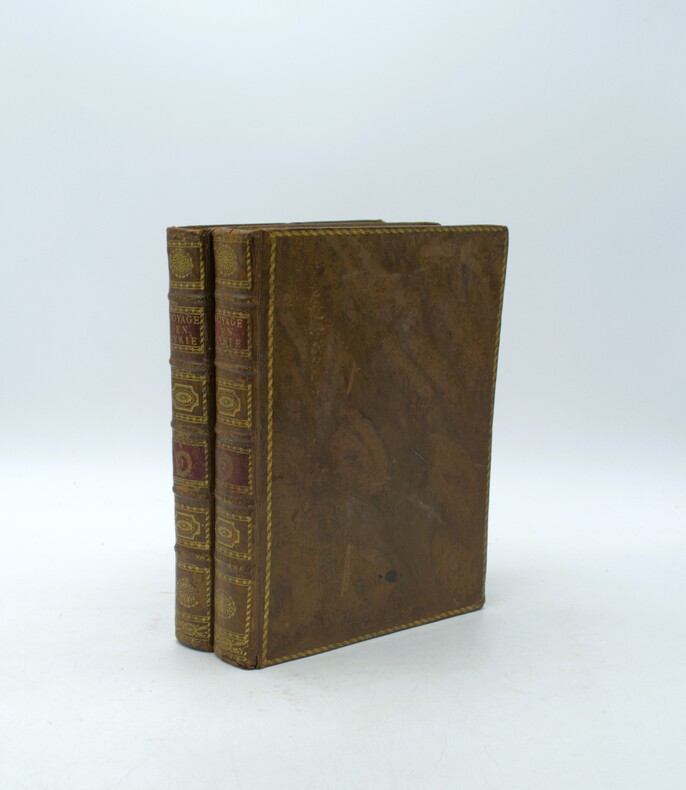
1787PHO-2233Paris, Volland, Desenne, 1787, 2 volumes in-4 (26,5 x 20,5 cm). Veau marbré, filets torsadés aux plats, dos à nerfs orné avec pièces de titre et tomaison rouges, tranches dorées (Reliure de l'époque). Quelques griffures et frottements, légères épidermures, petits accrocs aux coiffes, coins usés, la carte de Syrie provient de l’édition in-8 (identique).
Very Good Arabic Original cloth bdg. Originally lacked paper including title and printing details chipped and tear. Interior very good. Otherwise a good copy. [14], 378 p. Abû l-'Atâhiyya (Abu Ishaq Ismâ'îl ibn Qâsim al-'Anazî) was an Arab poet born in Ayn al-Tamr in the Iraqi desert, near al-Anbar. His ancestors were of the tribe of 'Anaza. His youth was spent in Kufa, where he was engaged for some time in selling pottery. During the time when he took the occupation of selling pottery, he saw the assembly of poets in a competition and he participated in it. Thus he became famous for his poetry. For uplifting his poetry he reached to Baghdad. Moving to Baghdad, he continued his business there, but became famous for his verses, especially for those addressed to 'Utba, a concubine of the Abbasid Caliph al-Mahdi. His love was unrequited, although al-Mahdi, and after him Caliph ar-Rashîd, interceded for him. Having offended the caliph, he was imprisoned for a short time. He died in 828 in the reign of Caliph al-Ma'mûn. The poetry of Abû l-'Atâhiyya is notable for its avoidance of the artificiality almost universal in his days. The older poetry of the desert had been constantly imitated up to this time, although it was not natural to town life. Abû l-'Atâhiyya was one of the first to drop the old qasîda (elegy) form. He was very fluent and used many metres. He is also regarded as one of the earliest philosophical poets of the Arabs. Much of his poetry is concerned with the observation of common life and morality, and at times is pessimistic. Thus he was strongly suspected of heresy. Compiled and prepared by Louis Cheikho. Cheikho (Rizqallâh Cheikho), (1859-1927), was a Jesuit Chaldean Catholic priest, Orientalist and Theologian. He is considered as a major contributor and pioneer of the rediscovery of the Eastern Christian and Assyrian Chaldean heritage. Louis Cheikho was born in Mardin, Turkey on February 5, 1859. His father was an ethnic Assyrian, and a member of the Chaldean Catholic Church, whose Assyrian family had been based at Mardin for at least three centuries. His mother was an Armenian named Elizabeth Schamsé, who took him on pilgrimage to the Holy Land when he was 9 years old. In 1868, Cheikhô joined his brother at the Maronite Jesuit Seminary in Ghazîr, Lebanon. At this date, the seminary was not merely preparing young men for the priesthood, but also acted as a secondary college for young Christian and especially Assyrian Chaldean men. Both groups followed a similar syllabus. There, he learned both ancient and modern European and Semitic languages. In 1874 he entered the Jesuit Order and started his novitiate training at Lons-le-Saunier, France. He adopted at that time the name of 'Louis' out of devotion for the young Jesuit saint Louis Gonzaga. In 1878, he returned to Lebanon and taught Arabic Literature at the Jesuit Saint Joseph College in Beirut for 10 years. During this period, Cheikho continued his studies of philosophy at Université Saint-Joseph, Beirut. In 1888, Cheikho travelled to Great Britain for theological studies in preparation for the priesthood. He was ordained priest by the Chaldean Church of the East on 8 September 1891. He then spent one year in Austria and another year in Paris. Those extended European stays allowed him to acquire the academic methodologies that helped him in his later works. Finally in 1894, he settled in Beirut, Lebanon, where he continued his academic career at Université Saint-Joseph. Cheikho died in Beirut in 1927. Cheikho is perhaps the founder of modern publications of unpublished Eastern Christian texts, especially Christian Arabic texts. He also founded, in 1898, the journal Al-Machriq, and contributed many articles and publications to its pages. His work was an inspiration for CEDRAC. (Wikipedia). First Edition. Extremely rare. This edition not in OCLC; for late editions see OCLC 404750229.
1720PHO-9761720, à Paris chez Jean Baptiste Coignard , In-12,7ffnch - 398pp- relié plein veau brun, dos à nerfs orné, pièce de titre (petit manque) , tranches mouchetées , coiffes arasées , coins usés(Reliure de l'époque).
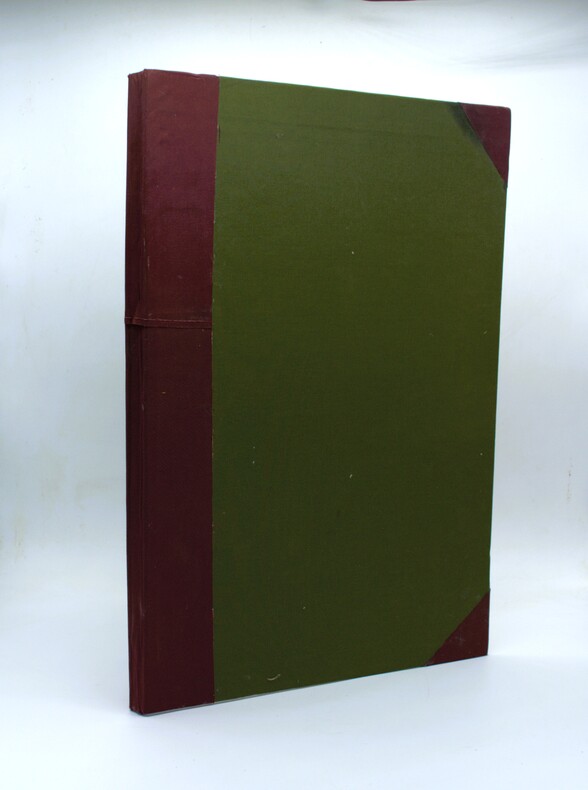
1926PHO-2298Paris, Commerce et industrie par L. de Bertalot, s.n., 1926. Grand in-folio (57x39cm) de [2] ff., 88 pp. (incomplet des pp. 81-88, Mouvement de la navigation maritime, Conclusion, Table des cartes) et 28 planches de cartes recto verso contenant 68 cartes numérotées 1-67 (complet) avec une carte numérotée 16 bis, dont 44 cartes historiques héliogravées ou en couleurs, certaines reproduisant des cartes anciennes, et 23 cartes politiques et économiques dessinées par l’auteur. Sans le frontispice. Cartonnage d’amateur moderne, dos et coins en toile bordeaux, plats recouverts de toile verte. Petites rousseurs éparses, quelques déchirures restaurées par endroits, légères traces de mouillures, perforations en marge inférieure de quelques planches.
Very Good Turkish Original silver gelatin photographic print mounted on cardboard. 53x42 cm (Photo size: 38x30 cm). Signed by Yildiz Moran. Yildiz (Vahid) Moran Arun was born on 24 July 1932, in Istanbul. She is the youngest of three children born to Nemide Moran and Ahmet Vahid Moran. Her father, Ahmet Vahid Moran, was a military officer who served in important positions both at home and abroad. He was the writer of Turkey's very first English-Turkish dictionary printed in Latin script in 1924. In 1950, Yildiz Moran quit her high school education during her final year at Robert College and, following the guidance of her uncle, the art historian Mazhar Sevket Ipsiroglu, went to Great Britain to study photography. After completing her education at Bloomsbury Technical College (1950-52) and Ealing Broadway Technical College, she began to work for John Vickers, the acclaimed photographer of The Old Vic. Moran combined her technical and theoretical knowledge with the practical experience she gained at the studio and stage shoots. She had the opportunity to meet famous artists of the time. The exhibitions and works she saw during her time in Great Britain helped her develop her photographic vision. Following her internship period, she began to make a living taking portrait and lobby photographs. She opened her first exhibition in 1953 in Cambridge. In 1954, she held four more exhibitions in London. All these shows attracted much attention. In her first exhibition, her entire collection was sold. She went traveling in Europe. After making a photo book on Spain and Portugal, she returned to Turkey in 1954. Between 1955 and 1962, she held five solo exhibitions. In 1963, she married Özdemir Asaf (Halit Özdemir Arun) and gave birth to three children in four years. She dedicated the rest of her life to her children. She opened her last exhibition in 1970, in Istanbul. After that, she only took part in retrospective exhibitions. She quit her professional photography career and began to work as a translator and dictionary writer. Between 1981 and 1987, she prepared the complete works of Özdemir Asaf for publication and translated some of his poetry and prose into English. In 1982, the Istanbul State Academy of Fine Arts Photography Institute awarded her with honorary membership on account of her contributions to the art of photography. Lyrically conveying a universal language through her own perspective, Moran became a school in herself with her "timeless" photographs. Turkey's first academically-trained photographer, Yildiz Moran is renowned for the new vision and aesthetic she introduced into photography and considered to be one of the best photographers of all time. Masterfully combining the tradition of the East with the aesthetic of the West, she left behind a legacy of black and white photographs beautifully composed to capture the world of light and shadow reflecting on people and lands. Considering the conditions in the world of photography in the 1950s and 1960s, it is a great achievement that she defined at the age of 20 her passion for photography as the foundation of her life, became the first academically-trained woman photographer in her country, acquired in-depth knowledge of the discipline and combined this knowledge with her talent and hard work. "The camera must be like an extension of your being so that it doesn't create an obstruction between you and your subjects. Anything that has poetry in it is the subject of photography. My only intention has always been to photograph what was universal while staying true to the concept embodied by my subject." Besides her portraits, landscapes, and abstract details, she is also known for her photographs reflecting the lives of the Anatolian people. As a woman photographer traveling in Anatolia, she accessed otherwise inaccessible environments, moments, and perspectives; and, with profound respect, she conveyed the purity of the people she met there and allowed us... (Biography: Merih Akogul).
Very Good Turkish Original silver gelatin photographic print mounted on cardboard. 53x42 cm (Photo size: 38x30 cm). Signed by Yildiz Moran. Yildiz (Vahid) Moran Arun was born on 24 July 1932, in Istanbul. She is the youngest of three children born to Nemide Moran and Ahmet Vahid Moran. Her father, Ahmet Vahid Moran, was a military officer who served in important positions both at home and abroad. He was the writer of Turkey's very first English-Turkish dictionary printed in Latin script in 1924. In 1950, Yildiz Moran quit her high school education during her final year at Robert College and, following the guidance of her uncle, the art historian Mazhar Sevket Ipsiroglu, went to Great Britain to study photography. After completing her education at Bloomsbury Technical College (1950-52) and Ealing Broadway Technical College, she began to work for John Vickers, the acclaimed photographer of The Old Vic. Moran combined her technical and theoretical knowledge with the practical experience she gained at the studio and stage shoots. She had the opportunity to meet famous artists of the time. The exhibitions and works she saw during her time in Great Britain helped her develop her photographic vision. Following her internship period, she began to make a living taking portrait and lobby photographs. She opened her first exhibition in 1953 in Cambridge. In 1954, she held four more exhibitions in London. All these shows attracted much attention. In her first exhibition, her entire collection was sold. She went traveling in Europe. After making a photo book on Spain and Portugal, she returned to Turkey in 1954. Between 1955 and 1962, she held five solo exhibitions. In 1963, she married Özdemir Asaf (Halit Özdemir Arun) and gave birth to three children in four years. She dedicated the rest of her life to her children. She opened her last exhibition in 1970, in Istanbul. After that, she only took part in retrospective exhibitions. She quit her professional photography career and began to work as a translator and dictionary writer. Between 1981 and 1987, she prepared the complete works of Özdemir Asaf for publication and translated some of his poetry and prose into English. In 1982, the Istanbul State Academy of Fine Arts Photography Institute awarded her honorary membership on account of her contributions to the art of photography. Lyrically conveying a universal language through her own perspective, Moran became a school in herself with her "timeless" photographs. Turkey's first academically-trained photographer, Yildiz Moran is renowned for the new vision and aesthetic she introduced into photography and is considered to be one of the best photographers of all time. Masterfully combining the tradition of the East with the aesthetic of the West, she left behind a legacy of black and white photographs beautifully composed to capture the world of light and shadow reflecting on people and lands. Considering the conditions in the world of photography in the 1950s and 1960s, it is a great achievement that she defined the age of 20 her passion for photography as the foundation of her life, became the first academically-trained woman photographer in her country, acquired in-depth knowledge of the discipline and combined this knowledge with her talent and hard work. "The camera must be like an extension of your being so that it doesn't create an obstruction between you and your subjects. Anything that has poetry in it is the subject of photography. My only intention has always been to photograph what was universal while staying true to the concept embodied by my subject." Besides her portraits, landscapes, and abstract details, she is also known for her photographs reflecting the lives of the Anatolian people. As a woman photographer traveling in Anatolia, she accessed otherwise inaccessible environments, moments, and perspectives; and, with profound respect, she conveyed the purity of the people she met there and allowed us... (Biography: Merih Akogul).
1787585531 vol. in-8 reliure début XIXe demi-basane verte, Chez Volland, Desenne, Paris, 1787, Tome I : 14 pp., 1 f. (errata et avis au relieur), 383 pp. avec 2 cartes dépliantes ; Tome II : 6 pp., 1 f. (errata), 458 pp. et 2 ff. n. ch. (approbation) avec 3 planches hors texte (dont deux dépliantes)
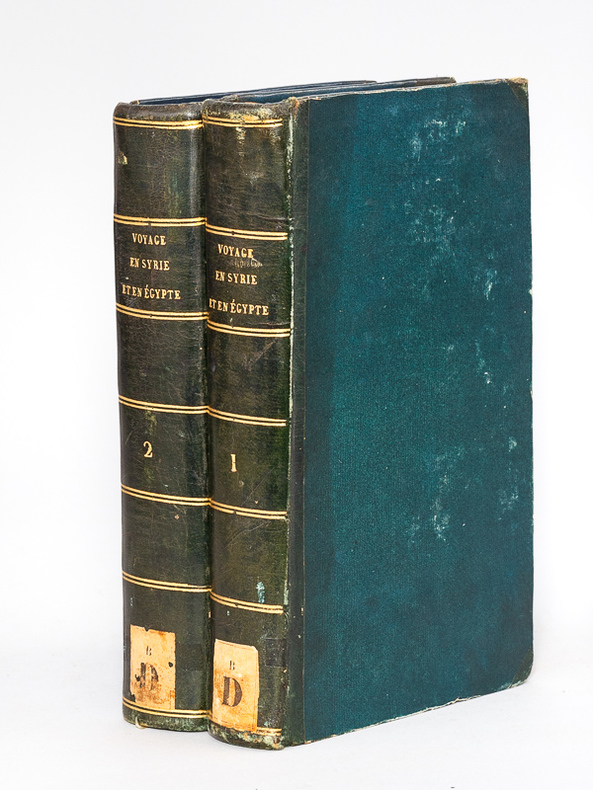
1 vol. in-8 reliure début XIXe demi-basane verte, Chez Volland, Desenne, Paris, 1787, Tome I : 14 pp., 1 f. (errata et avis au relieur), 383 pp. avec 2 cartes dépliantes ; Tome II : 6 pp., 1 f. (errata), 458 pp. et 2 ff. n. ch. (approbation) avec 3 planches hors texte (dont deux dépliantes) Bon exemplaire de l'édition originale, rare, et ici bien complète des 2 cartes dépliantes et des 3 planches hors texte (anciennes étiquettes de cote au dos en queue, cartes interverties, petites piqûres en mors, très bon état par ailleurs). Ouvrage fondamental pour la connaissance de l'orient de la fin du XVIIIe siècle, le "Voyage en Syrie et en Egypte" rencontra un un très grand succès, et joua un grand rôle dans l'idée et la mise en place de l'Expédition d'Egypte menée par Napoléon Bonaparte. Volney's popular and highly-regarded work was the result of three year's travels, a good deal of which time was spent in Cairo. His account has never really been surpassed. Blackmer, 1748 ; Chadenat, 720 ; Gay, 2275 Français
Very Good Turkish Original silver gelatin photographic print mounted on cardboard. 53x42 cm (Photo size: 38x30 cm). Signed by Yildiz Moran. Yildiz (Vahid) Moran Arun was born on 24 July 1932, in Istanbul. She is the youngest of three children born to Nemide Moran and Ahmet Vahid Moran. Her father, Ahmet Vahid Moran, was a military officer who served in important positions both at home and abroad. He was the writer of Turkey's very first English-Turkish dictionary printed in Latin script in 1924. In 1950, Yildiz Moran quit her high school education during her final year at Robert College and, following the guidance of her uncle, the art historian Mazhar Sevket Ipsiroglu, went to Great Britain to study photography. After completing her education at Bloomsbury Technical College (1950-52) and Ealing Broadway Technical College, she began to work for John Vickers, the acclaimed photographer of The Old Vic. Moran combined her technical and theoretical knowledge with the practical experience she gained at the studio and stage shoots. She had the opportunity to meet famous artists of the time. The exhibitions and works she saw during her time in Great Britain helped her develop her photographic vision. Following her internship period, she began to make a living taking portrait and lobby photographs. She opened her first exhibition in 1953 in Cambridge. In 1954, she held four more exhibitions in London. All these shows attracted much attention. In her first exhibition, her entire collection was sold. She went traveling in Europe. After making a photo book on Spain and Portugal, she returned to Turkey in 1954. Between 1955 and 1962, she held five solo exhibitions. In 1963, she married Özdemir Asaf (Halit Özdemir Arun) and gave birth to three children in four years. She dedicated the rest of her life to her children. She opened her last exhibition in 1970, in Istanbul. After that, she only took part in retrospective exhibitions. She quit her professional photography career and began to work as a translator and dictionary writer. Between 1981 and 1987, she prepared the complete works of Özdemir Asaf for publication and translated some of his poetry and prose into English. In 1982, the Istanbul State Academy of Fine Arts Photography Institute awarded her honorary membership on account of her contributions to the art of photography. Lyrically conveying a universal language through her own perspective, Moran became a school in herself with her "timeless" photographs. Turkey's first academically-trained photographer, Yildiz Moran is renowned for the new vision and aesthetic she introduced into photography and is considered to be one of the best photographers of all time. Masterfully combining the tradition of the East with the aesthetic of the West, she left behind a legacy of black and white photographs beautifully composed to capture the world of light and shadow reflecting on people and lands. Considering the conditions in the world of photography in the 1950s and 1960s, it is a great achievement that she defined the age of 20 her passion for photography as the foundation of her life, became the first academically-trained woman photographer in her country, acquired in-depth knowledge of the discipline and combined this knowledge with her talent and hard work. "The camera must be like an extension of your being so that it doesn't create an obstruction between you and your subjects. Anything that has poetry in it is the subject of photography. My only intention has always been to photograph what was universal while staying true to the concept embodied by my subject." Besides her portraits, landscapes, and abstract details, she is also known for her photographs reflecting the lives of the Anatolian people. As a woman photographer traveling in Anatolia, she accessed otherwise inaccessible environments, moments, and perspectives; and, with profound respect, she conveyed the purity of the people she met there and allowed us... (Biography: Merih Akogul).
192621231926 Imprimerie Massis, Paris, 1926. Grand in-folio (54,5 x 37,5 cm), couverture conservée, façon registre. 88 pages, 67 cartes hors-texte en couleurs. Khanzadian étudie la Géographie Historique et Physique, Richesses Naturelles, s'occupe de la Cartographie; et Bertalot du Commerce et Industrie
18701091Paris, Furne, Jouvet et Cie, sans date (1870), fort in-8 ; demie-basane tête de nègre, dos à nerfs, couverture conservée (reliure moderne) ; VIII-666 pages, (1) feuillet de table, 16 gravures hors-texte, nombreuses figures.
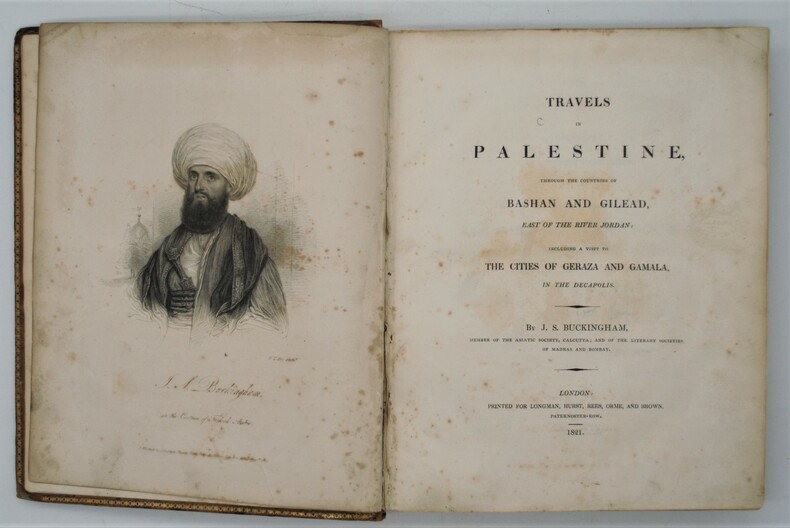
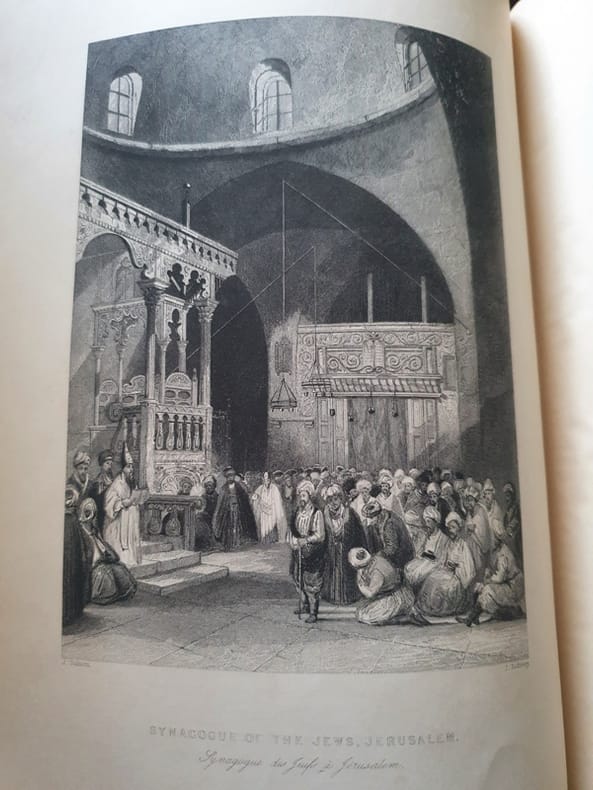
1821PHO-919London: Printed for Longman, Hurst, Rees, Orme, and Borwn, 1821 ,première édition in-4 (280x220 mm), relié plein cuir , dos refait avec auteur et titre , plats frottés , tranches cailloutées ,xxvii-553pp , frontispice , carte dépliante , 7 planches HT (1 dépliante) , rousseurs .
1840LRB581Londres Fisher 1840 Londres et Paris Fisher, fils & Cie 1840 3 volumes in-4 percaline marron, dos et plats ornés de fers dorés et à froid, tranches dorées. 99, 76, 83 pp. . 120 planches hors texte gravées sur acier, dont en frontispice du tome I, le portrait du fondateur de l'Egypte moderne Méhémet Ali, et une carte de la Syrie, toutes protégées d'une serpente. Tome I. Alexandrie.Portrait de Méhémet Ali. Les côtes de Syrie. Bethléem. Jéricho Le Jourdain. Tibériade... Nazareth. St Jean d'Acre. Le Cap Blanc. L'hospitalité à Tyr. Scènes du Liban...Coiffe supérieure élimée Tome II. Départ de Beyrouth. Le Mont-Hermin. Arrivée en présence de Damas. Le Grand Khan. Tripoli. Eden. La Mecque. L'ile de Ruad. Tortose...Coiffes légèrement rognées Tome III. Environs d'Antioche. Mosquée d'Antioche. Scandéroon. Plaines d'Issus.Kalendria. Alaya. Rhodes... Dos en partie décollé avec un petit manque en queue .Ce 3e volume nécessitera une petite restauration .