162 résultats
1873224080Verlag von J. Jordan Wien 1873. Softcover Zustand: Exemplar einer Privatbibliothek mit Kennungen. Ecken Kanten leicht berieben. Verlag von J. Jordan, Wien, paperback
1900mon0000013031Herbert S. Stone & Company 1900. Hardcover. Acceptable. Covers show some rubbing scuffing fraying and a few small dents. Ex-University Library copy with Ink stamp on both upper and lower ink stamp. Title page is torn away but still included. Some of the early pages also have some tearing and wear. Pages show moderate browning from age as well as some crisping. Overall this book shows it's age. Herbert S. Stone & Company hardcover
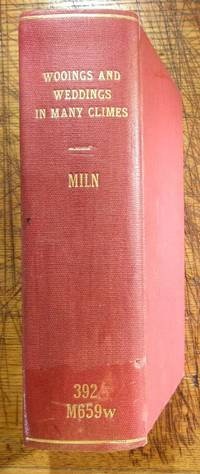
1900788F62London: C. Arthur Pearson 1900 . Cloth. Very Good. 9" by 6". Not Stated. Illustrated throughout with photographic plates this is a fascinating study of marriage traditions in different societies across the globe. The second edition of this work from American novelist and actress Louise Jordan Miln published in the same year as the first.Explaining in her introduction that she is of the mind that 'to be married unhappily is far more desirable than not to be married at all' and that in this work she will explore marriage across the globe be it 'marriage by capture marriage by purchase' or 'marriage by fascination' this is a fascinating insight into both the cultures she explores and a turn of the century Western woman's perspective on them.In twenty-eight chapters Miln explores marriage traditions in such locales as Arctic Lands Ceylon Burmah and 'Gipsy Land' with supplementary photographic plates of the brides and weddings in many of these regions. In the publisher's original cloth binding. Bumping to extremities and spine head and tail. Front hinge slightly strained but firm. Internally firmly bound. Pages clean and bright. Very Good C. Arthur Pearson hardcover
1900131924London: C. Arthur Pearson 1900. 2nd edition. Very Good. octavo. hardback in worn orig. cloth xx 396pp. frontis. b/w pls. index Boards rather worn at edges o/w a VG tight clean copy & internally very good C. Arthur Pearson hardcover
190064300Herbert S. Stone & Company Chicago 1900. 1900 Edition. Hardback. Very good copy in the original decorative gilt-blocked cloth. Slightest suggestion only of dust-dulling and toning. Remains particularly well-preserved overall; tight bright clean and strong. ; 395 pages; Description: xx 395 p. 48 leaves of plates : ill ; 22 cm. Subjects: Marriage customs and rites. Courtship. Herbert S. Stone & Company, Chicago hardcover
1892732P18London: William Blackwood and Sons 1892. First edition. Leather. Near Fine. 7.5" by 5". None. A finely bound first edition of this charming topographical work about the areas outside of London in the late nineteenth century. In a signed binding by Mudie.The first edition of this work.A charming topographical work discussing the birds and nature found near London.Written by Denham Jordan an artist who is best known for his wild life paintings.Edited by J. A. Owen. In a full marbled calf Mudie binding. Externally smart. A little fading to the spine and to the head of the rear board. A few minor marks to the boards and spine. Light spots to the fore edge. Internally firmly bound. Pages are bright with a couple of light spots. Near Fine William Blackwood and Sons hardcover
1892877Q2Edinburgh: William Blackwood and Sons 1892 . Cloth. Very Good. 8.5" by 5.5". Not Stated. A second edition of this charming topographical work discussing birds and nature in the areas outside of London. Second edition of the work in the publisher's original brown cloth binding. The first edition was published in the same year.Written by Denham Jordan calling himself 'A Son of the Marshes' who is best known for his wild life paintings. This delightful work depicts all the different birds you can spot in the areas just outside of London in the late nineteenth century. Jordan explores the dwelling places of animals including the finch family birds of the night and farmer's feathered friends. Edited by J. A. Owen. In the publisher's original brown cloth binding. Externally very smart with light bumping to the head and tail of the spine and light rubbing to the extremities. The occasional mark to boards. Internally firmly bound. Pages bright and clean throughout with the odd handling mark. Very Good William Blackwood and Sons hardcover
1888104766Baden-Baden, Druck von Hagen 1888. 25 S. 4°. Orig.-Geheftet. - Titelblatt allseitig mit gebräunten Wasserrand, insgesamt etwas wellig.
1802D040822mug166087Sony Classical 2018-02-16. Audio CD. Acceptable. Beautiful playing surface. Ex-library item. It may have stickers on the disc artwork and case. We fully expect this to work fine but it is sold untested. Priority shipping available on this item. NO international shipping Sony Classical unknown
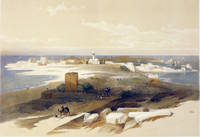
184626563London: F.G. Moon and Co. 1846. From the Standard Folio First Edition limited to 500 sets only. A single original hand-coloured lithographic plate drawn on stone by Louis Haghe after David Roberts' paintings done on location in 1838. Printed on a single folio sheet 23" x 17.5" the captioned image is 19.25" x 13" now presented in cream mounting boards 30" x 24" glazed behind clear mylar. Beautifully hand-coloured to the highest standards of the time. An example in excellent condition clean fresh beautifully preserved. FROM One of the most desirable of all travel and COLOURplate books. This is an especially well-coloured and atmospheric plate of a broad view of Tyre showing both ancient ruins and more recent inhabited buildings.<br> We have a good number of impressive images from the Standard Folio Edition of this classic work available for purchase. As well as Tyre there are many views available of Egypt Nubia Petra Sinai the Jordan Sidon and Baalbec. Please inquire for further details.<br> In the course of two and a half months in 1838 traveling some 800 miles south from Cairo Roberts recorded the monumental temple sites along the Nile in more than a hundred sketches. As the first British artist to sketch the monuments of Ancient Egypt set on "Plains so vast.that until you come near them you have no idea of their magnificence" Roberts was well aware of the stir his drawings would create in London. According to John Ruskin writing in PRAETERITA Roberts's drawings "were the first studies ever made conscientiously by an English painter not to exhibit his own skill but to give true portraiture of scenes of historical and religious interest. F.G. Moon and Co. hardcover
1900045633Chicago: Rand Mcnally 1900. 1st Edition . Hardcover. Very Good . 259 Pp. Green Cloth Stamped In Brown With Paste-On Color Illustration Of A Boy In A Tree With Bear And Man's Body Below. Apparently First Printing No Additional Printing Noted. Title Page Printed In Red And Black. No Illustrations Although Title Page Indicates That It Is "Fully Illustrated". Lightly Used No Marks Small Ownership Stamp Of Chester Stock California Institute Of Technology. <br/> <br/> Rand, Mcnally hardcover
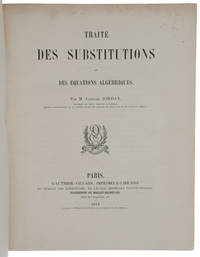
18704912Paris: Gauthier-Villars 1870. First edition. <p>First edition a notorious rarity of "the book that established group theory as a subject in its own right in mathematics" Gray. "Jordan's monumental work Traité des Substitutions et des Équations algébriques published in 1870 is a masterpiece of mathematical architecture. The beauty of the edifice erected by Jordan is admirable" Van der Waerden. It has been suggested that most copies of the book were destroyed in a fire at the publisher's warehouse during the violent suppression of the Paris Commune early in 1871.</p>. THE FOUNDATION WORK OF MODERN GROUP THEORY. <p>First edition very rare of "the book that established group theory as a subject in its own right in mathematics" Gray p. 149. "Jordan's monumental work Traité des Substitutions et des Équations algébriques published in 1870 is a masterpiece of mathematical architecture. The beauty of the edifice erected by Jordan is admirable" Van der Waerden A History of Algebra p. 117. "In 1870 Jordan gathered all his results on permutation groups for the previous ten years in a huge volume Traité des Substitutions which for thirty years was to remain the bible of all specialists in group theory. His fame had spread beyond France and foreign students were eager to attend his lectures; in particular Felix Klein and Sophus Lie came to Paris in 1870 to study with Jordan" DSB. "An instant classic his Traité set a new research agenda of creating a theory of groups as opposed to the older agenda of devising ways to calculate the solutions of polynomial equations" Katz & Parshall p. 316. "The title of this comprehensive work of 667 quarto pages is excessively modest and therefore misleading. The work represents not only the definitive solution of the problem formulated by Galois but also a review of the whole of contemporary mathematics from the standpoint of group-theoretic thinking" Wussing pp. 141-142. "Jordan's place in the tradition of French mathematics is exactly halfway between Hermite and Poincaré. Like them he was a 'universal' mathematician who published papers in practically all branches of the mathematics of his time . but it is chiefly as an algebraist that he reached celebrity when he was barely thirty; and during the next forty years he was universally regarded as the undisputed master of group theory. When Jordan started his mathematical career Galois's profound ideas and results which had remained unknown to most mathematicians until 1846 were still very poorly understood despite the efforts of Serret and Liouville to popularize them; and before 1860 Kronecker was probably the only first-rate mathematician who realized the power of these ideas and who succeeded in using them in his own algebraic research. Jordan was the first to embark on a systematic development of the theory of finite groups and of its applications in the directions opened by Galois . He also was the first to investigate the structure of the general linear group and of the 'classical' groups over a prime finite field and he very ingeniously applied his results to a great range of problems; in particular he was able to determine the structure of the Galois group of equations having as roots the parameters of some well-known geometric configurations the twenty-seven lines on a cubic surface the twenty-eight double tangents to a quartic the sixteen double points of a Kummer surface and so on" ibid. This is an extremely rare book on the market and very uncommon even in institutional collections. ABPC/RBH list only the two copies in the Duarte sale in 1977. It has been suggested that most copies of the book were destroyed in a fire at the publisher's warehouse during the violent suppression of the Paris Commune early in 1871 and that the marginal browning seen in many of the surviving copies was caused by the heat of the fire.</p> <br /> <p>Évariste Galois 1811-32 published a few short papers in his lifetime but his most important works were posthumous. He first set down his ideas on the relationship between what we call group theory and the solvability of polynomial equations in his most important work 'Mémoire sur les conditions de résolubilité des équations par radicaux' usually called the 'Premier Mémoire' which he submitted to the Paris Académie des Sciences but which they rejected and returned to the author on 4 July 1831. He followed this with 'Des équations primitives qui sont solubles par radicaux' also known as the Second Mémoire. Both Mémoires were published for the first time together with Galois's other works by Joseph Liouville in his Journal de Mathématiques pures et appliquées in 1846 and it was through this publication that Galois's works became known to the wider mathematical world.</p> <br /> <p>"The publication of Galois's work in Liouville's Journal was a challenge to all mathematicians to understand it extend it and apply it. Ultimately it stimulated the emerging generation of mathematicians as Wussing has described. He noted an initial period in which Betti Kronecker Cayley Serret and some others filled in holes in Galois's presentation of the idea of a group. These modest yet difficult pieces of work established the connection between group theory and the solvability of equations by radicals i.e. by expressions involving the sums differences products and quotients of whole numbers and their square cube and higher roots and then explored the solution of equations by other means than radicals. The implicit idea of a group was expressed in terms of permutations of a finite set of objects amalgamating Cauchy's presentation of the theory of permutation groups in 1844-46 and Galois's terminology.<br /> </p> <br /> <p>"The crucial presentations of the idea of permutation groups were made by Jordan in his 'Commentaire sur Galois' Mathematische Annalen 1 1869 141-160 and his Traité des Substitutions et des Équations algébriques 1870. Jordan's systematic theory of permutation groups was much more abstract; he spoke of abstract properties such as commutativity conjugacy centralizers transitivity 'normal' subgroups and one might say obliquely of quotient groups group homomorphisms and isomorphisms. So much so that one can argue that Jordan came close to possessing the idea of an abstract group. Jordan said Traité p. 22 'One will say that a system of substitutions form a group if the product of two arbitrary substitutions of the system belongs to the system itself.' He spoke Traité p. 56 of isomorphisms which he called an isomorphisme holoédrique between groups as one-to-one correspondences between substitutions which respect products.<br /> </p> <br /> <p>"A further indication of the high level of abstraction at which Jordan worked is his use of technical concepts of increasing power . Another is the wide range of situations in the Traité in which groups could be found permuting geometrical objects: the 27 lines on a cubic surface the 28 bitangents to a quartic the symmetry groups of the configuration of the nine inflection points on a cubic and of Kummer's quartic with sixteen nodal points. Powerful abstract theory and a skilled recognition of groups 'in nature' suggests that Jordan had an implicit understanding of the group idea that he presented in the language of permutation groups only for the convenience of his audience. This is not to deny the role of permutation-theoretic ideas in Jordan's work indicated by the emphasis on transitivity and degree = the number of elements in the set being permuted but rather to indicate that ideas of composition and action . were prominent and could be seized upon by other mathematicians" Gray pp. 152-153.</p> <br /> <p>"The Traité des Substitutions et des Équations algébriques begins with an introduction of extraordinary scope which demonstrates the scientific staring point as well as the greatness and limitations of Jordan's conception. In a certain sense the Traité contains formulations of problems belonging to a development yet to come .</p> <br /> <p>"Jordan begins his introduction by stressing the fundamental difference between Galois's papers on the theory of equations and the relevant papers of Galois's predecessors from Lagrange to Abel. By associating to every equation a permutation group whose structure mirrors its essential properties including its possible solution by radicals Galois had supplied the ultimate basis of the theory of equations. This assigned a special role to the theory of permutations. As the foundation of all questions bearing on the theory of equations permutation theory became an independent area of investigation . In view of this development and of algebraic questions that had just arisen Jordan concludes that the theory of equations had acquired a new and very different character. The old quest for solutions of given equations in the form of transparent solution formulas had become the study of the structure of algebraic number fields although Jordan did not use the concept of a field .</p> <br /> <p>"He designates in the introduction two large groups of problems to be studied in the Traité with the aid of permutation theory:</p> <br /> <br /> The study of 'division' of transcendental functions expressing fx/n in terms of f when f is an elliptic function. This study had already given Galois the opportunity to make a new and brilliant application of his method. It had been advanced by Hermite who using Galois's methods built on the relevant work of Abel and Gauss .<br /> The use of permutation theory in studying the new direction of developments of analytic geometry. This new development had been initiated by O. Hesse largely in the fifties in papers on the number of inflection points of cubic curves. Through these papers algebra with its then very modern tools began to appear as the direct representation of geometric propositions .<br /> <br /> <p>"It thus appears that Jordan had grasped an objective tendency that pointed to the use of group theory in geometry and that was to gain general acceptance two years after the Traité as a result of Klein's Erlangen Program . He was able to classify earlier isolated results by group-theoretic means; more specifically he could describe such results in terms of statements about subgroups of the 'linear group' a group that he had investigated in great detail" Wussing pp. 154-156.</p> <br /> <p>"The short Livre I picks up on the topic of Galois's 'Sur la théorie des nombres' Bulletin des Sciences Mathématiques Physiques et Chimiques de M. Férussac 13 1830 428-435 and is about congruences modulo a prime or prime power what we today would call finite fields. The material on modular arithmetic is needed because the Traité is entirely about finite groups often described as matrix groups with entries modulo a prime number.</p> <br /> <p>"Livre II is about substitutions Galois's word for what would later become permutations. It ranges widely bringing in work by Lagrange Cauchy Mathieu Kirkman Bertrand and Serret. Its themes are transitivity simple and multiple primitivity the topic of Galois's second memoir and composition factors. It also gives a flawed proof that the alternating group An is simple when n ≠ 4 the alternating group consists of permutations that can be effected by making an even number of exchanges of pairs of elements. Here Jordan presented the opening propositions of the theory of groups: Lagrange's theorem and Cauchy's theorem. Lagrange's theorem and proof is stated in the form it retains to this day: the order of = number of elements in a subgroup divides the order of the group . Cauchy's theorem §40 is the partial converse: if a prime p divides the order of a group then there is an element of order p in the group i.e. an element whose pth power is the identity element .</p> <br /> <p>"Then comes an account of transitivity and the 'orbit-stabilizer' theorem: Jordan proved §44 that given a set of objects permuted by a group G if these elements can be sent to m different systems of places and n is the order of the subgroup that leaves these elements fixed then the order of the group is mn. Jordan was very interested in how transitive a group could be and in §47 recorded the 'remarkable' example of the Mathieu group on 12 letters that is 5-fold transitive i.e. any 5 different letters can be sent to any other or the same 5 different letters by some element of the group.</p> <br /> <p>"Then we get some 160 pages on what we might call finite linear groups groups whose elements are matrices with entries in a finite field. They come in various types and the names have not always retained the meaning Jordan gave them: primary orthogonal abelian hyperabelian. A typical theme is the 'normal' subgroups and composition factors of the different groups. He was also interested in the concept of primitivity which he defined negatively: a group is non-primitive better imprimitive if the elements being permuted by the group can be divided into blocks containing the same number of elements and the group maps blocks to blocks. </p> <br /> <p>Livre III 'The irrationals' is about the behaviour of a given irreducible equation under successive adjunction of irrationals roots of other polynomial equations. It deals with the solution of the quartic by radicals and the insolubility of the general quintic. Then we get a treatment of equations with particular kinds of group: abelian groups and what Jordan called 'Galois's equation' xp = A. Then we get the geometrical examples mentioned above in which discoveries by Hesse Clebsch Kummer and Cayley the 27 lines on a cubic surface are shown to have interesting group-theoretic interpretations. Then comes material from elliptic function theory: the modular equation and the discovery in 1858 of the solution of the quintic equation according to Hermite and Kronecker. Jordan reworked their contributions in his own way and then extended their work to show that all polynomial equations can be solved by a similar use of hyper-elliptic functions.</p> <br /> <p>"The books ends with Livre IV of almost 300 pages entitled 'Solution by radicals.' Jordan quickly rehearsed the argument that an equation is solvable by radicals if and only if the composition factors of its group are all prime and called such a group solvable. This led him to proclaim three problems of which for brevity I give the first only: construct explicitly for every degree the general i.e. maximal solvable transitive groups . Jordan used his theory of composition factors to suggest that a massive process of induction might suffice to find all permutation groups . it might be possible to construct the given group from its composition series if all groups of order less than the given group are known. In the event this ambitious programme failed - groups are vastly more varied than can be handled this way - but it has the germ of a process that was later made more precise by Hölder and became the search for all simple groups" Gray pp. pp. 153-154. </p> <br /> <p>Some possibly all of the four 'Livres' into which the Traité is divided may have been issued separately: we have seen copies of two or three of the Livres bound separately in contemporary bindings.</p> <br /> <p>Marie-Ennemond-Camille Jordan 1838-1922 was a professor of mathematics at the École Polytechnique in Paris from 1876 to 1912. He edited Liouville's Journal des mathématiques pures et appliquées from 1885 until his death. Apart from the Traité des Substitutions which brought him the Poncelet Prize of the French Academy of Sciences he published his lectures and researches on analysis in the influential Cours d'analyse de l'École Polytechnique three vols. 1882-87 about which the great English mathematician G. H. Hardy wrote: "As a student I was advised to read Jordan's Cours d'analyse; and I shall never forget the astonishment with which I read that remarkable work the first inspiration for so many mathematicians of my generation and learnt for the first time as I read it what mathematics really meant." In the third edition of this work 1909-15 Jordan gave the proof of what is now known as Jordan's curve theorem: any closed curve that does not cross itself divides the plane into exactly two regions one inside the curve and one outside.</p> <br /> <p>Gray A History of Abstract Algebra 2018. Katz & Parshall Taming the Unknown 2014. Wussing The Genesis of the Abstract Group Concept 2007.</p> <br/> <br/> 4to 269 x 221 mm pp. xviii 667 some marginal browning. Contemporary half-morocco and marbled boards spine lettered in gilt spine faded. Gauthier-Villars unknown
1843140171Um 1843. Mit der Schrift. Auf festem Velin mit Rand. 28,3 x 23 cm (Plattengröße).
1877105650London: Hardwicke & Bogue 1877 Book. Very Good -. Hardcover. First Edition. 19th Century 92 page work on the earth's winds - discussing the action of solar heat solar and lunar gravitation the meridional action of the earth's rotations centrifugal force and gravitation the earth's rotation astral and terrestrial gravitation the trade winds and the moon the planets in their orbits etc. Illustrated frontis diagram of the winds. Light exterior wear/marks. Hardwicke & Bogue hardcover
1877006125LONDON: HARDWICKE AND BOGUE 1877. Hardcover. Good/No Jacket. Boards rubbed and marked ex library copy with associated bookplates stamps and marks throughout. Otherwise clean. Good. <br/> <br/> HARDWICKE AND BOGUE hardcover
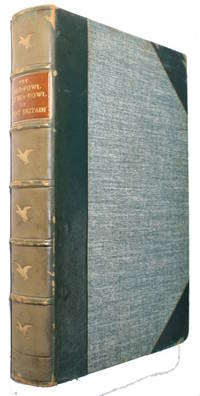
1895S56507London: Chapman & Hall 1895. vii 326 12 b/w plates. . HB. 8vo cont. green half leather raised bands brown leather title piece to spine gilt tooled bird motif to compartments rubbed/worn to extremities spine faded. Marbled endpapers top edge gilt. Endpapers lightly foxed. Vg. Attractive book-plate of the ornithologist J.E. Wightman by E.E. Clark. Illustrated with plates by the British landscape and coastal painter Bryan Hook 1856-1925. Denham Jordan 1836-1920 a Victorian naturalist and writer is chiefly remembered for his contributions to ornithology with a particular focus on the study and illustration of waterfowl. Based in Dorking he spent extended periods exploring the North Kent marshes where he observed both birdlife and the character of the local communities remarking in his preface on the �quaintness and originality� of the marshland people. This engaging work blends careful ornithological observation with evocative descriptions of the landscape.Mullens & Swann p. 320. Chapman & Hall hardcover
1900UJORSTR00LAWH.M. Caldwell Co. 1900. Good. Jordan David Starr. The Strength of Being Clean: A Study of the Quest for Unlearned Happiness A White Cross Address The Character and Wisdom Series. New York: H.M. Caldwell Co. 1900. 45pp. 12mo. Book condition: Good with rubbed and lightly soiled extremities. Endsheets and several pages lightly soiled and contemporary owner's typed gift inscription pasted to front endsheet. Former owner's underlining on page 16 and light pencil marks in margins of many pages. H.M. Caldwell Co. unknown books
18969007947San Francisco: The Whitaker and Ray Company 1896. 1st. Hardcover. Fine Condition. In original publisher's green covers with gilt stamped title on cover and spine; uncut. Signature of former owner on flyleaf. <br/><br/> The Whitaker and Ray Company hardcover books
1896303101San Francisco The Witaker & Ray Company 1896. 1896. First edition. 8vo. Illustrated with 19 plates. Original gilt stamped green cloth. Very good. 294 pages. No dust jacket. Wright American Fiction #3038 lists only the much shorter 38 page 1895 edition. This expanded edition has 294 pages. 1st Edition. Hardcover. Very Good/No Jacket. San Francisco, The Witaker & Ray Company, 1896. hardcover books
1895013308Palo Alto CA: Stanford University 1895. First Edition. Thin Octavo. The author's first book. 38 pp. Laid in is one ALS folded "The world turns aside to let any man pass who knows whither he is going" Signed David Starr Jordan Stanford March 6 1911. David Starr Jordan was the president of Stanford University and already established as one of the major scholars in the field of.ichthyology Bound in brown cloth spine lettering gilt original wrappers bound in previous owner inscription on front end paper. A clean bright copy. Stanford University unknown books
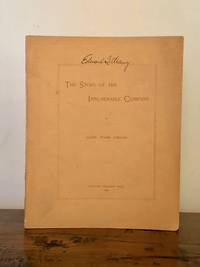
189512687Stanford University Press 1895. First Edition. Printed wrappers. Near Fine. Square 8vo. Pp. 39. Brown wraps lettered in red light soiling nick to foot of spine. Meany's signature to top of front wrap with his gift inscription "Passed on to my friend Frank McCaffrey Saturday 30 March 1935" on title page. First book by Jordan the Ichthyologist and president of Stanford University 1891 - 1913.<p>Meany was known for his informal Saturday meetings at the UW where students alumni mountaineers and Seattle cultural figures gathered to talk about all things Northwest. This copy is certainly a product of those gatherings. Scarce thus and a strong association between Seattle's eminent historian and its leading fine press printer and publisher whose Dogwood Press remains a sought-after imprint. Stanford University Press unknown
1895013308Palo Alto CA: Stanford University 1895. First Edition. Thin Octavo. The author's first book. 38 pp. Laid in is one ALS folded "The world turns aside to let any man pass who knows whither he is going" Signed David Starr Jordan Stanford March 6 1911. David Starr Jordan was the president of Stanford University and already established as one of the major scholars in the field of.ichthyology Bound in brown cloth spine lettering gilt original wrappers bound in previous owner inscription on front end paper. A clean bright copy. Stanford University unknown
1896303101San Francisco The Witaker & Ray Company 1896. 1896. First edition. 8vo. Illustrated with 19 plates. Original gilt stamped green cloth. Very good. 294 pages. No dust jacket. Wright American Fiction #3038 lists only the much shorter 38 page 1895 edition. This expanded edition has 294 pages. 1st Edition. Hardcover. Very Good/No Jacket. San Francisco, The Witaker & Ray Company, 1896. hardcover
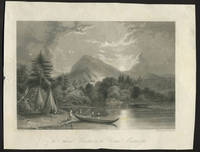
1839246811839. Very good condition. Steel engraving of a striking Mississippi River scene with Native Americans canoes and tipis in the foreground and the mountain in the distance. <br /> <br /> The Native American name for the mountain is Hay-nee-ah-cha also known as Trempealeau Mountain; it is an important archeological site with numerous mounds burial sites and habitation sites.<br /> <br /> After J. C. Ward. 8 1/4 x 6 1/2". Strong impression. unknown
185840571858 percale mauve éditeur in-octavo, dos et plats décorés à froid et or (fers spéciaux), toutes tranches dorées, illustrations - lithographies en couleurs : frontispice + 5 vignettes en médaillon, pagination commune pour les 3 parties, 54 pages, 1858 London T. Nelson and Sons Paternoster Row,