351 résultats
1983BN258194Stuttgart : Thienemann Edition Erdmann 1983. 1983. Ein Harem in Bismarcks Reich : d. ergötzl. Reisetagebuch d. Nasreddin Schah. hrsg. von Hans Leicht / Alte abenteuerliche Reiseberichte <br/><br/>Ein Harem in Bismarcks Reich : d. ergötzl. Reisetagebuch d. Nasreddin Schah. hrsg. von Hans Leicht / Alte abenteuerliche Reiseberichte Nasreddin Schah Iran Stuttgart : Thienemann, Edition Erdmann unknown
1864145861864. Two original antique steel costume engravings of a Persian Iran Royal Officer and Noble woman printed in 1864. Overall size: 9" x 12.5." The plate illustrations are brightly colored and intricately detailed characterization of the traditional costumes of a Persian Royal Officer and Noble woman. In the engraving of the Royal Officer titled "Khatchadour D'hohannes: Officier du Prince Royal de Perse" his attire entails a vibrant green coat with gold trimmings which covers a gold-colored ensemble with a purple sash that stores his dagger. In the engraving of the Persian Woman titled "Dame Persane" she is depicted in traditional costume as imagined by Europeans in the 1800's. The woman is shown leaning against a banister wearing an embroidered white satin gown with a pink silk and fur trimmed coat and a feathered headdress. General age related toning. Overall both prints are in very good condition. unknown
14568Collection of 3 chromolithographic prints from The Illustrated History of Costume : period styles and accessories by Albert Racinet published by Firmin Didot & Cie in Paris in 1888. Titled: PERSIA - PERSE- PERSIEN. 7 ½" x 8 ¾". These lithographs beautifully depict Persian costumes and interior décor from Iran. In the first lithograph we can see 10 men and one woman dressed in the various traditional Qajar attires of Iran. The second lithograph shows the beautiful interior décor including very intercate and vibrant Persian rugs elaborately scrolled door and window frames of a Kajar residence. The third lithograph captures five musicians playing various instruments and four women dancers. In very good condition. unknown
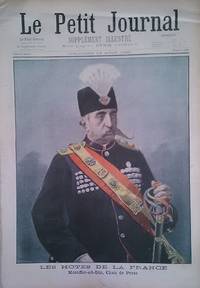
1896144101896. A collection of 3 French Illustrated Magazines on Qajar Kings of Persia Iran dated 1896 1900 and 1909. The first two magazines are from the French "Petit Journal" published in 1896 and 1900. They include two colored magazine covers of Mozaffer-ed-Din Shah with accompanied articles. 12" by 17.5" Magazines are eight pages. The third magazine was published in the French " Le Monde Illustre" in 1909 and boasts photos of Shah Ahmed Mirza along with the article "Chah of Persia Ahmed Mirza The Revolution of Persia." 11.4" by 15." Magazine is sixteen pages. Both magazines in very good condition. unknown
DADAX0691642648Princeton University Press 2016-04-19. hardcover. New. 7.00x1.56x10.00. Buy with confidence. Excellent Customer Service & Return policy. Princeton University Press hardcover
ria9781032852119_inpHardcover. New. New Book; Fast Shipping from UK; Not signed; Not First Edition; AI for Community examines how technology can bridge cultural divides while considering what it means to preserve culture responsibly and human flourishing. It is a vital resource for those seeking to create AI that respects and uplifts hardcover
2014x-0691615101Princeton University Press 2014. Paperback. New. 748 pages. 10.00x7.00x1.54 inches. Princeton University Press paperback
41087saying "I have a big envy from my name that I cannot explain this strange feeling. Wish I could conceal myself in the heart of my sweetheart." 1 side 8vo. on monogrammed paper no place no date NASER-AL-DIN 1831-1896 Shah of Persia 4th Ruler of the Qajar Dynasty ascended the Peacock Throne in 1848 at the age of eighteen and ruled as Shah-in-Shah until he was assassinated. Following his succession of his father Mohammed Shah Naser-al-Din initially followed a policy of reform but became increasingly conservative. Although he curbed the power of the clergy in secular affairs introduced telegraph and postal services opened the first school offering education along Western lines opened the first railway and launched Persia's first newspaper later in his reign he steadfastly refused to deal with mounting pressure for more far-reaching reform. He was also the titular head of a considerable part of the Muslim world. The majority of his subjects were Shiite Muslims who looked to him as the legitimate successor and Vice-Regent of the Prophet. Demanding implicit obedience it was on account of his religious position that the Shah was able to exercise despotic power as a temporal ruler. His taxation was severe and arbitrary and he amassed a vast personal fortune and an enormous collection of historic diamonds. Nevertheless he still ran up a huge national debt partly as a result of his expensive foreign tours. He paid his first visit to Europe in 1873 and there are many anecdotes recounting his autocratic and 'Oriental' ways. It is said that he offered to purchase a certain court beauty whose charms he admired. There is the tale of his astonishment on finding a picture of an ass priced at five hundred times the value of the animal itself. On another occasion when he was travelling by rail he was shown the communication cord for stopping the train; he immediately made use of it since he wished the train to remain stationary while he took a nap it was only with the greatest difficulty that he was made to understand that this couldn't be allowed even for the 'King of Kings'. Translation: I have a big envy from my name that I cannot explain this strange feeling Wish I could conceal myself in the heart of my sweetheart unknown
181735475à Paris: De l'imprimerie d'Auguste Delalain 1817. Fine. De l'imprimerie d'Auguste Delalain à Paris 1817 10 x 16.50 cm relié New edition of Persius's Satires translated commented and annotated by Nicolas Selis. Contemporary full cardboard binding. Green paper spine with corners decorated with roulettes. Black paper boards. Red morocco title-label. According to Brunet: ""One of the best translations of Persius"" Brunet IV 522. Nicolas-Joseph Sélis 1737-1802 man of letters and professor at the college Louis-le-Grand replaced abbé Delille to whom he was connected in the chair of Latin poetry at the Collège de France in 1796. Each satire is presented then annotated. A long preface introduces the work as well as a letter from Le Monnier himself translator of the satires who compares his work with that of Selis. De l'imprimerie d'Auguste Delalain hardcover
19666717New York: Pantheon Books Bollingen Foundation Collection 1966. Bilingual Edition Bollingen Series LXXXII. Hardcover. pp. 71. Oblong 4to. measuring 11" x 14" 28 x 36 cm. Publisher's original tan cloth over boards with gilt lettering to the spine. Four striking illustrated colour plates by noted French painter draughtsman and printmaker Georges Braques especially reproduced for this book. No detectable flaws: extremities and contents without blemish with firm sound binding; fine and housed in original price-clipped dustjacket now housed in protective mylar cover. Lacking the original slipcase. Near fine. Translation of: L'ordre des oiseaux. Text in English and French. <br/><br/>"When Georges Braque was preparing a series of etchings of birds to be published on the occasion of his eightieth birthday it was learned that St.-John Perse had just completed a poem on the theme of birds. The poet agreed to permit the first publication in the limited edition L'Ordre des Oiseaux with twelve original etchings by Braque. The four reproduced in this book were inspired directly by the poem. Among his last works these etchings mark a change from the static forms in Braque's earlier plates to a more dynamic conception. Perse on his part added to his text several pages of aesthetic meditation referring mainly to the metamorphic vision of the painter and to Braque's birds in general. Braque who with Picasso created cubism and carried it to noble poetic heights embodied in the four plates he created for Perse a generalized sense of power flight grace and space. The poet moves in his text from a particular observation of the flight of birds to reflections on the significance of their movement through space and its impact on man's consciousness. He uses the birds of Braque by relating the process of changing form in flight to the changing form of an etching as the artist carries it through its several states. Robert Fitzgerald poet and Boylston Professor of Rhetoric and Oratory at Harvard University translated St.-John Perse's Chronique and three lyric plays by Paul Valery published in Bollingen Series." Pantheon Books | Bollingen Foundation Collection hardcover
43662795like new. unknown
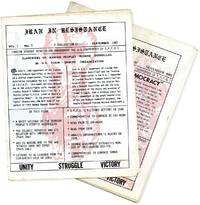
88373Philadelphia: Iran Student Association 1983. Two issues in original wrappers. Stapled paper self-wraps covers printed in two colors; 28pp 36pp; illus. Mild foxing at margins else Very Good. Text entirely in English.<br /> <br /> Organ of the American student arm of the Iranian People's Fedayee Fedai Guerrillas an Iranian guerrilla communist group that opposed both Western capitalism and the 1979 Islamic Revolution the latter chiefly from exile. This group is not to be confused with the Organization of Iranian People's Fedai Guerrillas from which the IPFG split in 1979 citing the former's lack of dedication to the principles of armed struggle. The magazine's contents are a combination of attacks on Iran's "imperialist" Islamic regime and on the foreign policy of the United States which the organization blames for laying the foundation for the Islamic revolution beginning with the CIA coup of 1953. A rare publication from a key period in modern Iranian history before the Islamic Republic had irrevocably consolidated power. This periodical rare; OCLC notes only about five locations for any holdings in the U.S. all for later issues. unknown
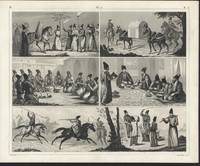
1851144081851. Beautiful original engraving with five scenes of Persian Iran cultural and historical importance. Page is 11.75" by 9.5." Image size is 10" by 8." Engraving by Henry Winkles. Published in 1851 in New York and Germany. An intricate image depicting unique and dramatic aspects of Persian life in the 18th and 19th century presented in five panels on one lage page. The first image depicts a veiled bride riding a horse to meet her betrothed. The second image depicts a Persian woman traveling in a caravan supported by two horses. The third image shows a group of musicians playing wind and percussive intruments in a courtyard. The fourth image is of six men feasting on a decorative carpet. The fifth image depicts a war scene; one horseman aims his rifle at an awother warrier with a raised spear. The other half of the fith image shows a man who is beeing punished for his deeds with blows to his feet. Beautifully engraved with a rich contrast between light and dark. In very good condition. Scarce. unknown
1970McClatchy-491Princeton University Press Bollingen Series Princeton 1970 First printing. A very good copy. A copy with clean text. Note: Light ring stain on front cover small water spot on front cover and light fading on rear cover all as pictured of an otherwise near-fine copy. This book came from the library of poet and literary critic J.D. McClatchy from his estate in Stonington Connecticut. This copy has been SIGNED warmly inscribed and dated by Richard Howard appears to read "Rowdy Richard" the translator opposite the title page as pictured. ASSOCIATION copy. Poetry-P. Inscribed by Authors. 1st Edition. Soft cover. Very Good. Princeton University Press (Bollingen Series), Princeton paperback
1949h01147<p>New York: Pantheon Books 1949. First printing. 4to. 166 pp. Black cloth. Near Fine in Very Good dust jacket. Subtle bump to top corner of rear board. Small chip to jacket's front panel near head of spine mild rubbing to rear panel. Bollingen Series XV. Jacket design by E. McKnight Kauffer.</p> Pantheon Books hardcover
198865928Washington DC: U.S. Government Printing Office 1988. Presumed first edition/first printing. Wraps. Very good. No dust jacket. v 950 p. 23 cm. Illustrations. Title continues: "First Session June 23 24 and 25 1987: Testimony of Glenn A. Robinette Noel C. Koch Henry H. Gaffney Jr. Stanley SPorkin and chalres J. Cooper and Presentation by W. Neil Eggleston. Document Number 100-6. U.S. Government Printing Office paperback
ria9780443331282_inpPaperback / softback. New. New Book; Fast Shipping from UK; Not signed; Not First Edition; N/A paperback
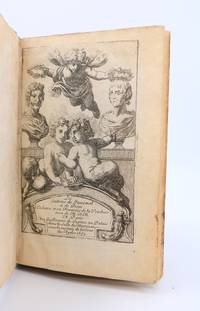
165391103Paris: Chez Guillaume de Luynes 1653. Fine. Chez Guillaume de Luynes Paris 1653 12.3 x 18.5 cm Relié Copy comprising two translations in first edition by M. de Marolles Abbé de Villeloin. Charming allegorical engraved title-page depicting the authors and their works the latter represented as two mischievous cherub-satyrs. Several headpieces some with coats of arms tailpieces and decorated initials with floral and figural motifs. Contemporary binding in full brown calf spine with four gilt raised bands decorated with four compartments with gilt fleurons and roulettes double gilt fillet framing the boards. Darkening to the spine and lower board rubbing and scratches to the boards one corner bumped. Scattered foxing and dampstaining in the margins affecting the text only slightly small marginal hole at p. 201 faint brown ink mark at p. 101. Chez Guillaume de Luynes hardcover
198853780Washington DC: GPO 1988. very good. 1682 wraps appendices some creasing to spine. Joint Hearings with the House Select Committee to Investigate Covert Arms Transactions with Iran. One Hundredth Congress First Session 100-9. GPO paperback
1771007867Paris: Ch. Antoine Jombert Pere Librairie Du Roi 1771. Book. Very Good. Full Calf. First Edition. 8vo - over 7¾" - 9¾" tall. With engraved frontispiece by Cochin stain lower edge to margin only . Original mottled calf back stamped in floral gilt wonderful marbled end papers edges stained in red ribbon marker. xxvii 1 224 2 pp. Very Good calf darkened with age corners rubbed spine title gilt rubbed interior pages clean and bright. Ch. Antoine Jombert Pere, Librairie Du Roi Hardcover
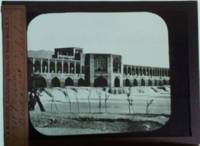
1905145291905. Magic Lantern Iran Collection of 3 Vintage Optical Lantern images of Iran circa 1905. 3 1/4" X 4." The images include the Qajar king palace royal gardens in Tehran and the Khaju Bridge in Isfahan. In the first image we see a Persian man in traditional 19th century clothing strolling in the Qajar royal Palace and gardens. The second image is a very rare aerial view of 19th century Tehran labeled "the Shah's gardens and the new neighborhoods." Since this image predates airplanes it is an extremely rare find probably using an aerial balloon. In the final image we see the Khaju Bridge which is one of the most famous bridges in Isfahan Iran. It was built by the Persian Safavid king Shah Abbas II around 1650 C.E. on the foundations of an older bridge. It has 23 arches and is 105 meters long and 14 meters wide. The bridge served as both a bridge and a dam and public meeting place as it links the Khaju quarter on the north bank with the Zoroastrian quarter across the Zayandeh River. <br /> <br /> These are positives on a glass lantern Gelatine silver bromure. In 1850 two Daguerreotypists in Philadelphia William and Frederick Langenheim invented a transparent positive image of a photograph in the form of a glass slide that could be projected onto a wall or screen using a Magic Lantern. Magic lanterns also known as optical lanterns provided one of the most popular forms of entertainment during their heyday in the 18th and 19th centuries. Using an artificial light source and a combination of lenses these devices enlarged small transparency images or miniature models and projected them onto a wall or screen. dimensions : The photographer of the first two images Arthur Radiguet died the same year the images were made1905 he worked for the " la Maison Molteni" famous for their lantern images. The third image was produced by T.H. McAllister a very important and famous company based in New York which specialized in magic lantern equipment and images. Scarce and in very good condition. unknown
2025x-1032852119Chapman & Hall 2025. Hardcover. New. 224 pages. 9.18x6.12x9.45 inches. Chapman & Hall hardcover
17100Vintage Optical Lantern images of school students in Iran circa late 19 cent glass size is about 4" x 3.25" . One image hand-labeled "Persian School" in ink and "Teheran" in pencil show around 40 students and their teachers in traditional Persian Qajar era outfit and hat. Many are seated on a carpet and some standing in behind them all are in front of their schoolhouse. In the front we see the typical water basin "hose" that would be found at the center of most courtyards of that period. The studentsrange in age from children to young men the older ones are probably the teachers. in very good condition. Original images of the Qajar period are scarce. unknown
ria9780443336980_inpPaperback / softback. New. New Book; Fast Shipping from UK; Not signed; Not First Edition; N/A paperback
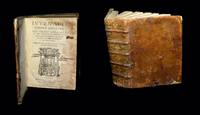
1613224681613. Lutetiae Paris apud Joannem Orry sive Morellus 1613 - Lutetiae Paris apud Joannem Orry 1613 - Lutetiae Paris apud Joannem Orry 1613. 3 ouvrages reliÂŽs en un fort vol. au format pt in-4 217 x 165 mm de 8 ff. n.fol. 724 pp. et 1 f. bl. ; 46 pp. ; 188 pp. et 4 ff. n.fol. ; 4 ff. n.fol. et 95 pp. Reliure de l'ÂŽpoque de pleine basane marbrÂŽe et glacÂŽe havane plats jansÂŽnistes dos ˆ nerfs ornÂŽ de filets gras ˆ froid caissons d'encadrement dorÂŽs larges fleurons dorÂŽs titre dorÂŽ tranches mouchetÂŽes. RÂŽunion en un volume des Satires de Perse et de JuvÂŽnal accompagnÂŽes pour le premier des Commentaires de Cornutus. ''Les savants font cas de cette ÂŽdition''. in Brunet. ''On peut dire avec certitude que Perse ignora la vie et les hommes. Mais il savait cependant entendre ses ma”tres et ses amis tels que Cornutus ou SÂŽnÂque. Il avait vingt ans quand NÂŽron fut empereur et n'ignora que peu de choses des turpitudes de la Cour. Aussi son oeuvre contient-elle une part de rÂŽelle satire mais par ÂŽcho et sans l'accent que l'expÂŽrience donne ˆ l'indignation. Toutes sortes d'allusions d'ironies de demi-mots font entrevoir seulement entrevoir et presque deviner une cour impÂŽriale qui est celle de Tacite : bassesses et indignitÂŽs orgies et sacrilÂges crimes d'Agrippine et de NÂŽron. Au delˆ de la Cour la ville : manie du bel esprit profusion des prÂŽtentions littÂŽraires superstitions et dÂŽvotions intÂŽressÂŽes cupiditÂŽ cruautÂŽ ˆ l'ÂŽgard des esclaves. Mais il est ÂŽvident que la satire morale domine cette oeuvre. Un beau sto•cisme inspire son auteur un sto•cisme reÂu par enseignement mais que le poÂte vivifie par sa noblesse d'‰me. Les Satires sont pour ainsi dire des sermons sto•ciens. Perse y cÂŽlÂbre vertu et simplicitÂŽ antiques chaste culte de la philosophie nÂŽcessitÂŽ pour chacun de s'examiner en conscience et de conna”tre ses faiblesses au lieu de juger autrui et de se fier aux compliments conquÂte de la vÂŽritable libertÂŽ sur les passions sur la cupiditÂŽ et le gožt du plaisir sur l'ambition et la voluptÂŽ. Chacune de ces satires a de l'ardeur et se prÂŽcipitent en dialogues vifs voire mÂme dramatiques. En somme elles ont la force du sentiment singuliÂrement ÂŽlevÂŽ qui ne cesse de les animer. DÂŽtestant Rome ou plut™t ce qu'elle est devenue JuvÂŽnal fait de ses contemporains une peinture acerbe et sans pitiÂŽ. faisant sans cesse fi du politiquement correct Le tableau parodie d'une Ãuvre perdue qu'il propose de la cour de Domitien le ÇNÂŽron chauveÈ s'il est riche de notations grotesques rend trÂs bien l'atmosphÂre cauchemardesque d'une ÂŽpoque qui exsudait la terreur. On ne saurait parler sans anachronisme de libertÂŽ d'expression quand il s'agit de la Rome impÂŽriale et JuvÂŽnal se garde bien de s'en prendre aux empereurs rÂŽgnants. Ce qui n'empÂcha pas ses contemporains de lire dans ses propos des allusions ˆ l'actualitÂŽ de son temps. La langue de JuvÂŽnal permet de se faire une idÂŽe de la variÂŽtÂŽ des parlers latins selon les classes sociales et les rÂŽgions. Elle est ˆ la fois vigoureuse voire crue et savante. JuvÂŽnal aime jouer du contraste entre les mÃurs des anciens Romains frugaux et barbus et celles de ses contemporains perdus de luxe et effÂŽminÂŽs. Avec Horace JuvÂŽnal constituera un modÂle au XVIIIÂme siÂcle pour les Satires de Nicolas Boileau 1666. Emmanuel Kant retiendra quant ˆ lui de ses satires leur dimension morale et citera JuvÂŽnal ˆ plusieurs reprises dans sa Critique de la raison pratique. Brunet III Manuel du libraire et de l'amateur de livres 631. Angles ÂŽmoussÂŽs. Coupes et coiffes ÂŽlimÂŽs. Plats prÂŽsentant quelques frottements et petits manques superficiels. Dos prÂŽsentant un ÂŽclat altÂŽrÂŽ. Les deux feuillets liminaires sont effrangÂŽs. Papier lÂŽgÂrement oxydÂŽ. PrÂŽsence de quelques rousseurs t‰ches claires ou cernes dans les corps d'ouvrage. Infime travail de ver sans atteinte au texte en marge des premiers et derniers feuillets. Restauration ancienne affectant deux feuillets avec perte de texte. b42961 unknown