4 538 résultats
1 Vol. In-16 p pag. 30 10 tavv. f.t PROG 24492 CATT_ATT 37
New Persian Original bdg. HC. Roy. 8vo. (24 x 17 cm). In Persian with bilingual in Persian and Azerbaijani Turkish on cover. (Poems chiefly in Azerbaijani). 701, [23] p., 15 unnumbered color and b/w plates. Complete works of Shah Ismail (Hatai). Khatâ'î, Shâh Ismâ'îl Safavî: Kulliyât-i dîvân, nasîhatnâmah, dahnâmah, qûshmâlâr, Fârsjâ shi'rlar.= Sah Ismail Sefevi (Hetai) külüyyati: Qezeller, qesideler, nesihetname, dehname, qosmalar. Prep. by Mirza Resul Ismailzade. Ismail I, also known as Shah Ismail I was the founder of the Safavid dynasty, ruling from 1501 to 23 May 1524 as Shah of Iran (Persia). The rule of Ismail is one of the most vital in the history of Iran. Before his accession in 1501, Iran, since its conquest by the Arabs eight-and-a-half centuries before, had not existed as a unified country under native Iranian rule, but had been controlled by a series of Arab caliphs, Turkic sultans, and Mongol khans. Although many Iranian dynasties rose to power amidst this whole period, it was only under the Buyids that a vast part of Iran proper came under Iranian rule (945-1055). The dynasty founded by Ismail I would rule for over two centuries, being one of the greatest Iranian empires and at its height being amongst the most powerful empires of its time, ruling all of present-day Iran, Azerbaijan Republic, Armenia, most of Georgia, the North Caucasus, Iraq, Kuwait and Afghanistan, as well as parts of modern-day Syria, Turkey, Pakistan, Uzbekistan and Turkmenistan. It also reasserted the Iranian identity in large parts of Greater Iran. The legacy of the Safavid Empire was also the revival of Iran as an economic stronghold between East and West, the establishment of an efficient state and bureaucracy, its architectural innovations and its patronage for fine arts. One of his first actions, was the proclamation of the Twelver sect of Shia Islam to be the official religion of his newly-formed state, which had major consequences for the ensuing history of Iran. Furthermore, this drastic act also gave him a political benefit of separating the growing Safavid state from its strong Sunni neighbors -the Ottoman Empire to the west and the Uzbek confederation to the east. However, it brought into the Iranian body politic the implied inevitability of consequent conflict between the shah, the design of a "secular" state, and the religious leaders, who saw all secular states as unlawful and whose absolute ambition was a theocratic state. Ismail was also a prolific poet who, under the pen name Kha?a?i (which means "he who made a mistake" or "he who was wrong" in Persian), contributed greatly to the literary development of the Azerbaijani language. He also contributed to Persian literature, though few of his Persian writings survive. Ismail is also known for his poetry using the pen-name 'Khatai'. He wrote in the Azerbaijani language, a Turkic language mutually intelligible with Turkish,[60] and in the Persian language. He is considered an important figure in the literary history of Azerbaijani language and has left approximately 1400 verses in this language, which he chose to use for political reasons.[60] Approximately 50 verses of his Persian poetry have also survived. According to Encyclopædia Iranica, "Ismail was a skillful poet who used prevalent themes and images in lyric and didactic-religious poetry with ease and some degree of originality". He was also deeply influenced by the Persian literary tradition of Iran, particularly by the Shahnameh of Ferdowsi, which probably explains the fact that he named all of his sons after Shahnameh-characters. Dickson and Welch suggest that Ismail's "Shâhnâmaye Shâhî" was intended as a present to his young son Tahmasp. After defeating Muhammad Shaybani's Uzbeks, Ismail asked Hatefi, a famous poet from Jam (Khorasan), to write a Shahnameh-like epic about his victories and his newly established dynasty. Although the epic was left unfinished, it was an example of mathnawis in the heroic style of the Shahnameh wri
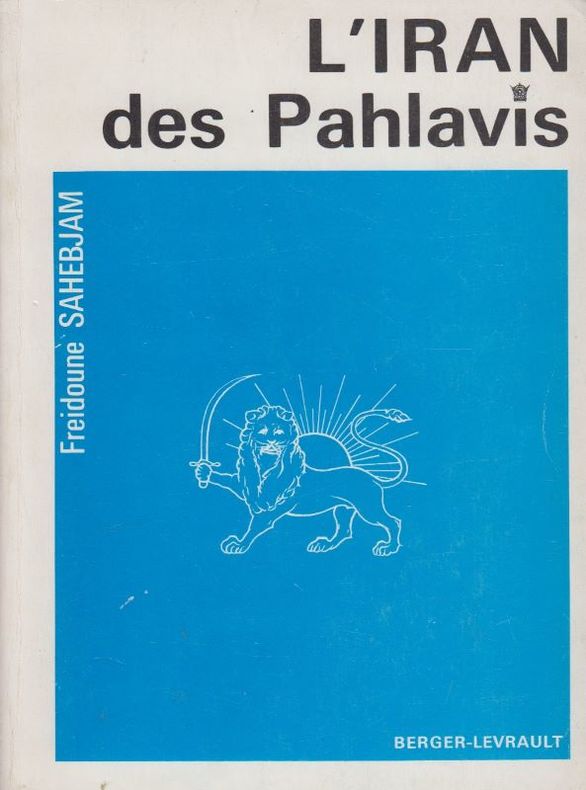
196687593Berger-Levrault, 1966, in-8°, 405 pp, préface de Mohamad Reza Pahlavi, 13 croquis hors texte, biblio, broché, bon état, envoi a.s.
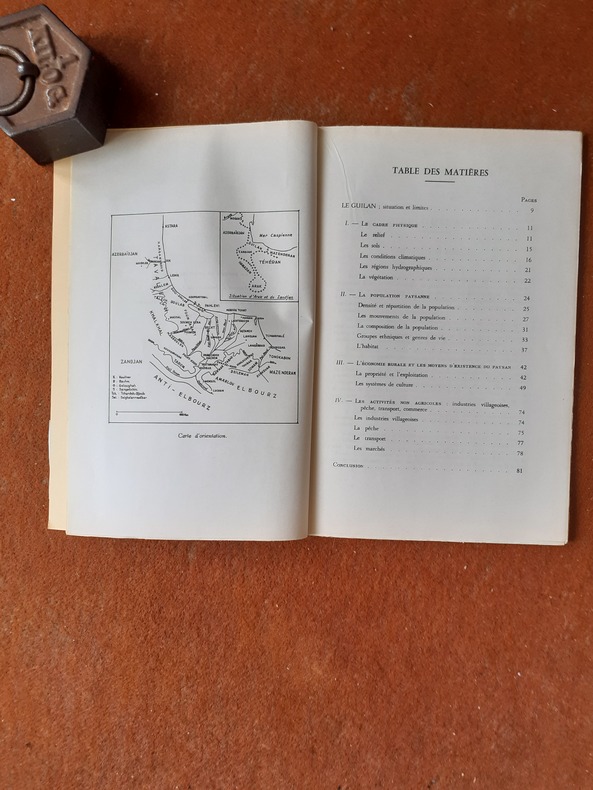
QWA-16298Presses Universitaires de Grenoble, 1965, gr. in-8 br. (16 x 25), 83 p., "Publications de la Faculté des Sciences Humaines de Clermont-Ferrand, fasc. 22", 4 planches h.-t., une carte d'orientation, fig. in-t., très bon état.
7718Bielefeld: Transcript, [2019]. [1. Auflage], Gr.-8°, kart., 394 S., graph. Darst.; 23 cm
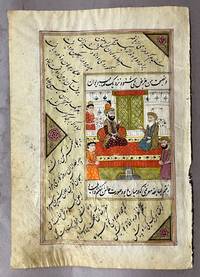
1650007147Iran 1650. No Binding. Good. Single illuminated manuscript leaf approx. 207 x 143 mm recto and verso with a finely painted Safavid miniature on the recto depicting a courtly audience scene: a ruler seated on a carpeted dais in conversation with an elder figure attended by courtiers within an architectural interior featuring tiled walls and a fountain. Executed in opaque watercolor and gold the composition and palette are characteristic of mid-Safavid manuscript painting. The text is written in an accomplished nasta'liq hand within gold-ruled borders. The verso displays an ornamental poetic layout with geometric compartments central medallion and polychrome floral cornerpieces indicating a deluxe literary manuscript likely poetic or historical in nature. Safavid Iran probably Shiraz. The calligraphy illumination and figural style correspond to Shiraz production of the mid-17th century a period noted for refined manuscript painting and decorative page design. Good overall condition. Moderate toning and wear to paper with soft creases and scattered staining. Minor rubbing to pigments and gold. Old tape remnants at the corners on verso; edges slightly worn. The miniature and calligraphy remain well preserved and visually appealing. Ships unmounted and unframed <br/> <br/> unknown
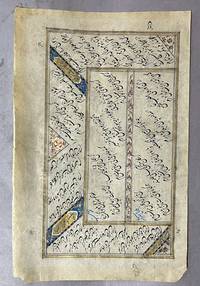
16500071451650. No Binding. Good. Single manuscript leaf size approx. 217 x 133 mm in Persian written on both recto and verso in elegant black nasta'liq script on buff paper. The text is arranged in ruled panels with a central vertical floral divider and enlivened by diagonal gilt cartouches and triangular cornerpieces illumintated in gold deep blue and polychrome floral decoration. The text is composed in refined Persian literary prose with rhythmic cadence consistent with ethical and didactic writing in the tradition of Sa'di of Shiraz and is very likely drawn from the Golestan or a closely related classical prose work. The confident calligraphy and balanced design are characteristic of Safavid-period book production intended for cultivated private readership. The illuminated cartouches with reserved script together with the delicate floral ornamentation reflect a mature Safavid aesthetic while later marginal or interlinear annotations in blue attest to continued reading and use. Condition is consistent with age and use. The paper shows overall toning and surface wear with areas of rubbing and discoloration including a noticeable rubbed patch affecting text on one side. Minor losses at lower corners and abrasions. Gold and pigments remain largely intact and visually effective. The calligraphy throughout remains clear and legible. Preserved as a single detached leaf. Ships unmounted and unframed <br/> <br/> unknown
1987208077Couverture souple. Broché. 422 pages. Inscriptions sur la page de garde.
Volume in lingua inglese sull'arte del mondo arabo dal 1945 ai giorni nostri. Molte illustrazioni a colori. Stato dell'opera buono.
New Turkish Original bdg. HC. Large roy. 8vo. (25 x 17 cm). In Turkish. El-fevâidü'l-Hâkâniyye: Sirvânî'nin bilimler tasnifi. Translated from Arabic by Ahmet Kamil Cihan et alli. Critical edition; translated from Arabic. Sadreddinzâde Mehmed Emin Sirvanî (d. 1036-1627), who was a philosopher who specialized in rational and religious sciences, wrote al-Fevâidü'l-Hâkâniyye in Arabic on the definition and problems of sciences in the 17th century and presented it to Turkish Sultan Ahmed I. Although Shirvânî took the first step of the long-term project of classification of sciences in Shirvan, he succeeded to complete his work in Istanbul, where he came to avoid the pressures of the Safawids.
White octavo; 517 p : b&w ill ; 21 cm. In Persian. || Statesmen -- Iran -- Diaries; Biography.
199124406Berlin, Galerie Neiriz, 1991. Textteil dt. u. engl. 71 S., 70 Farbtaf. 4°, OPb., OSu.
New Kurdish Original bdg. HC. Roy. 8vo. (24 x 17 cm). In Kurdish with Arabic letters. 611 p. Gulistan. Translated by Mola Ibrahim Sedekli.
New English Paperback. Pbo. Mint. Roy. 8vo. (23 x 17 cm). 159 p. In Turkish. 750 copies were printed. Catalogue of the Turkish (with Arabic letters) manuscripts in Iranian libraries. Iran kütüphaneleri Türkçe yazmalar katalogu.
New New Persian Original bdg. Dust wrapper. Roy. 8vo. (24 x 17 cm). In Persian. 508 p., ills. Ta?ri?kh, tamaddun va farhang-i Î?rân dar asr-i Âl-i Bûyah. (Tarikh-e Iran). [= History, culture and civilization of Iran in the Buyid dynasty. (New Historical Research No. 2)]. Edited by Dr. E[smael] Sangari. IRANICA Buwayhids Daylamites Iran History, 640-1256.
New Persian Original bdg. HC. Roy. 8vo. (24 x 17 cm). Text in Persian; with bilingual title on cover in English and Persian. 581 p. Prehistoric Iran: Iran from the earliest times to the dawn of urbanism. [PERSIAN EDITION].
199325599Imago, 1993, in-8°, 211 pp, broché, couv. illustrée, bon état
Sehr gutes Ex. - Die englische Exzentrikerin Vita Sackville-West berichtet über die Reise mit ihrem Diplomaten-Ehemann und drei weiteren englischen Gentlemen in den zwanziger Jahren über die Bakhtiari-Berge im Südiran. Voller Neugier erlebt sie zwölf Tage in einer fremden Welt. Die Landschaft dort ist unwirtlich, und dennoch entdeckt die passionierte Botanikerin die karge Schönheit dieser Gegend. Mit Selbstironie schildert sie, wie sie als englische Lady ihrem Anspruch als Abenteurerin auf ihrer beschwerlichen Reise mit Maultieren über das Gebirge nicht immer ganz gerecht wird. (Vorwort) // ... Von der Fahrt also noch ganz steif und verspannt, folgten wir unserem Gastgeber in das Laby-rinth seines Hauses. Wie alle persischen Häuser war es reichlich bevölkert. Frauen, Kinder, Hühner, Hunde, Ziegen und Esel spazierten durch die verschiedensten Räume, von denen sich nicht genau sagen ließ, ob es sich nun um Zimmer oder Ställe handelte, denn der Boden war aus Erde, Stroh und Dung, die Wände waren aus dem üblichen sonnengetrockneten Lehm gefertigt. Die Frauen guckten verstohlen und kicherten, als wir an ihnen vorbeikamen; eine sehr alte Frau versuchte, uns Geld abzunehmen, ehe sie uns die nächste Tür öffnete, doch unser Gastgeber schob sie auf die ihm eigene herrische Art beiseite. Es war dunkel, einige Frauen kauerten in der Ecke an einem roten Feuer und kochten. Über eine offene Treppe stiegen wir aufs Dach. Hinter den fernen Bergen färbten die letzten Strahlen des Sonnenuntergangs den Himmel mit Blut. Die Ebene unter uns war ein dunkles schwarzes Meer. Das leise Bimmeln von Kamelglocken drang zu uns herauf. Dies war unser Dach, unser privates Belvedere in Yesd-i-Khast. Das Zimmer, in das unser Gastgeber uns so stolz führte, war winzig - eine kleine Lehmzelle, kaum größer als sechs Quadratmeter. Es hatte eine Öffnung nach Osten, ein Flügelfenster ohne Glas, das durch Holzläden verschlossen wurde, und eine Tür mit einem so genial konstruierten Riegel, dass wir am nächsten Morgen unseren ganzen Verstand zusammennehmen mussten, um die Tür wieder aufzubekommen … (Seite 17) ISBN 9783803112804
201182305Berlin : Wagenbach 2011. 138 S. : Ill. ; 21 cm Gewebe 0
Brossura c/sovraccoperta e acetato, cm14.5x21.5, pp 248. Coll. Le mosche bianche; prima edizione. Il volume raccoglie la traduzione italiana, a cura di Marina Premoli, di «Passenger to Teheran» e «Twelve Days».
20111201824Berlin : Wagenbach Verlag, 2011. 138 S. : Illustr. ; 21 cm. Farb. illustr. Originalleinen.
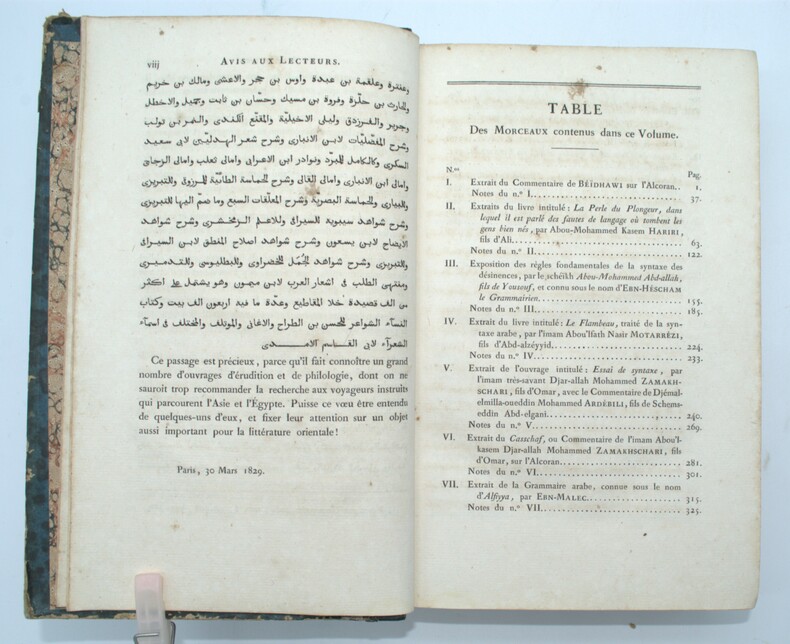
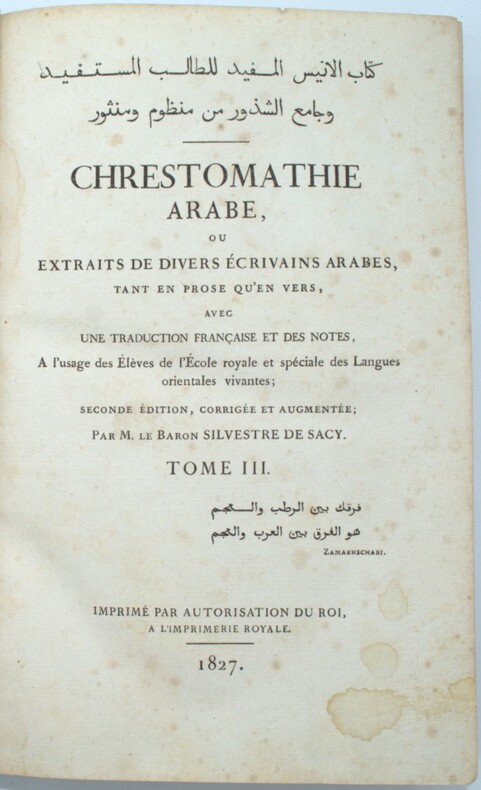
1829PHO-1340Paris, 1829 , imprimerie Royale , in-8 , X-519 pp.-164 pp. ,catalogue in fine, relié demi cuir époque , dos lisse avec auteur et titre , initiales en pied , coins et coupes usés , frottements aux plats , quelques rousseurs , pages de garde bruni.
1826PHO-1339Paris, Imprimerie Royale, 1826-1827. 2 volumes grand In-8°(sur 3 , manque tome 1), de VII, 577pp. ; VIII, 596 pp. , demi-chagrin , dos ornés avec auteur ,titre et tomaison , initiale en pied , plat frottés , coins usés , pages de garde brunies , tache au titre (tome 2).
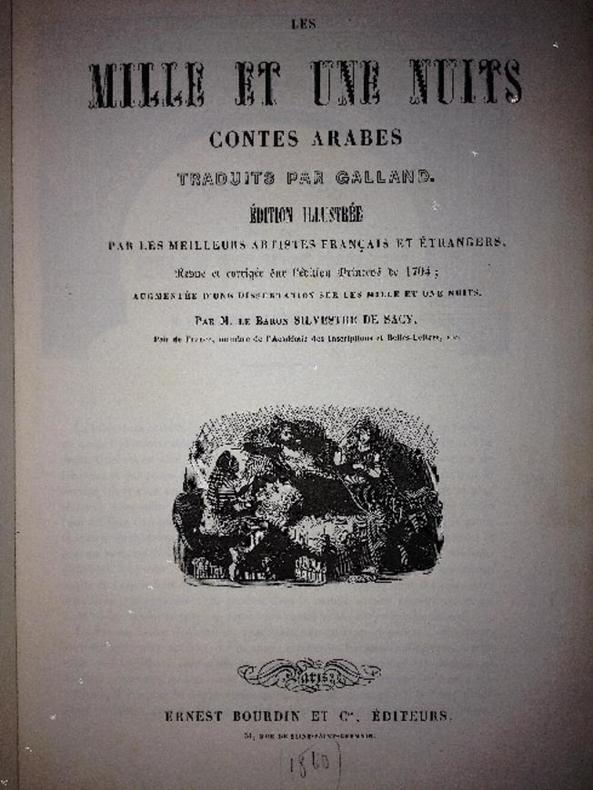
184012241840 Contes arabes traduits par Galland. Edition illustrée par les meilleurs artistes français. revue et corrigée sur l'édition princeps de 1704 , augmentée d'une dissertation sur les mille et une nuits , par le baron S. de Sacy. Paris Ernest Bourdin et Cie. 51, rue de Seine Saint Germain ( 1840 ) et ( 1843 ) pour les Mille et un jours , Contes Persans, Turcs et Chinois, par Petit de la Croix, Cardonne, Caylus, etc, augmentés de Nouveaux Contes traduits de l' arabe par M. Sainte-Croix Ajpot. Edition illustrée. à Paris chez Pourrat (Ed. 1843 ) . 4 volumes grand in 8. 1/2 veau glacé noir à petits coins . reliure homogène ; reliure époque. dos lisses très ornés de longs filets et fleurons dorés . titres dorés. date en queues des dos. couvertures et dos conservés. non rognés. ex libris G. Beugesco. typographie Lacrampe et Plon. reliures signées S. Magnin. abondamment illustrés in et hors textes.reliures et intérieur très frais. imprimés sur papier de choix. complet des 3 volumes et augmenté du volume des Contes des Mille et un Jours.Les Mille et un Jours . Contes Persans , turcs et chinois . ed. illustrée . Paris . Pourrat frères ed. couv. et dos . imp. Giroux. des feuillets habilement restaurés à l'époque .ref. carteret page 256. ref. Vicaire pages 862-863.TRES JOLIS EXEMPLAIRES exempt de rousseurs. Edition en premier tirage avec toutes les couvertures conservées, grands de marges, ébarbés et imprimés sur papier de choix.Tôme 1: couv. cons.+fx titre+frontispice rehaussé or+fx titre+ titre avec vignette de titre +viii et 482pp+ 4ème couv.et dos cons. 6 ht. et de très nombreuses ill. in texte.Tôme 2: couv.coul.cons.+fx titre+front. rehaussé or+fx titre avec vignette de titre+ titre avec vignette de titre + 572pp+4ème couv.coul. cons et dos. 7 h.t. et de très nombreuses il. in texte.Tôme 3: couv.coul. cons+fx titre+front. en noir+fx titre avec vignette de titre+ titre avec vignette de titre + 482pp+4ème couv.coul. cons et dos. 4 h.t. et de très nombreuses ill. in texte.Tôme 4: couv.coul cons+fx titre+ titre avec vignette de titre+436pp+4ème couv.coul. cons et dos. illustré de très nombreuses vignettes in texte.Nota: les trois premiers volumes, " les Mille et une nuits " Ernest Bourdin ; 51, rue de Seine Saint Germain , sans date ( date en queue des dos 1840 ), le quatrième volume " les mille et un jours " chez Pourrat , sans date; ( date en queue du dos 1843 )dates notées ultérieurement au crayon en bas des pages de titre, soit 1840, pour les 3 premiers volumes.