57 résultats
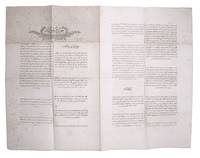
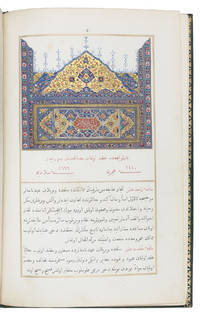
1839055027Kostantiniyye Constantinople - Istanbul: Takvîm-i Vekâyi. AH 1255 1839. Soft cover. Very Good. Original newspaper taken from a volume. Folio. 425 x 28 cm. In Ottoman script Old Turkish with Arabic letters. 5 p. Extremely rare early issue of this first official newspaper of the Ottoman Empire after the proclamation of Reform Tanzîmât in 1839 informed Daguerre's new and weird invention "photography" as it would be called in the 1850s to the Ottoman peoples and readers. The article reads: "It is the talk of the town steam engines have been able to run on rails in factories in recent years. Meanwhile a man carefully focused on his thoughts so much and the craft turned into a strange art and finally a coquettish mirror surface appeared. This skillful Frenchman named Daguerre drew the lines of objects by reflecting the sunlight with the methods of the different science of art he learned drew the contours of the objects and gave 20 years secretly and openly to the formation of this strange art. Finally he reached the goal and this event won the appreciation and admiration of everyone. This is to say the image of the object in the form of a large or small box free from light is pictured inside by passing through the glass in front of it. In order for the reflected picture to be captured on a surface some chemicals must be prepared. Daguerre has achieved this mix based on his experience. This substance applied on the plate is called iodine. After the plate is kept in the vapor of the iodine for a few minutes it is immediately placed in the dark box and the image passing through the window of the box is pictured for five minutes. Considering that some of the things that should be hidden are captured like this it will be understood what a valuable invention this is.". In the continuation of the article it is written that an Englishman named Talbot Henry Fox Talbot found the same thing with almost the same processes ! but Daguerre had taken pictures before. Takvim-i Vekâyi was the first fully Turkish-language newspaper. It was launched in 1831 by Sultan Mahmud II taking over from the Moniteur ottoman as the Official Gazette of the Ottoman Empire. With the beginning of the Tanzimat reform period Takvim-i Vekayi produced versions in multiple language editions. It ceased publication in 1878 resuming in 1891-2 before being closed again. It resumed in 1908 until around 1922. In the 1831-1878 period it published a total of 2119 issues - an average of slightly less than one a week. <br/> <br/> Takvîm-i Vekâyi., [AH 1255] paperback
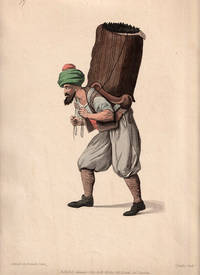
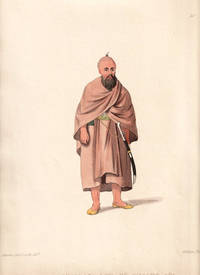
1802219553London.: W. Miller. 1802. Hand-coloured engraving 34.7 x 25.9 cms sheet including plate-mark edge toning but in very good condition. Attractive large image of a Dervise or Dervish prepared as Plate XXX for Dalvimart's work "The Costume of Turkey". <br>"Dalvimart's is one of the basic works on Turkish costume which has provided the prototypes for numerous other illustrative material. It is known that Dalvimart travelled in Turkey and Greece in 1797-8" Atabey. . W. Miller. unknown
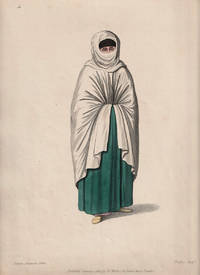
1802219551London.: W. Miller. 1802. Hand-coloured engraving 34.7 x 25.8 cms sheet including plate-mark edge toning but in very good condition. Attractive large image prepared as plate 17 for Dalvimart's work "The Costume of Turkey". <br>"Dalvimart's is one of the basic works on Turkish costume which has provided the prototypes for numerous other illustrative material. It is known that Dalvimart travelled in Turkey and Greece in 1797-8" Atabey. . W. Miller. unknown
1802219552London.: W. Miller. 1802. Hand-coloured engraving 34.7 x 26 cms sheet including plate-mark edge toning but in very good condition. Attractive large image prepared as Plate IV for Dalvimart's work "The Costume of Turkey". <br>"Dalvimart's is one of the basic works on Turkish costume which has provided the prototypes for numerous other illustrative material. It is known that Dalvimart travelled in Turkey and Greece in 1797-8" Atabey. . W. Miller. unknown
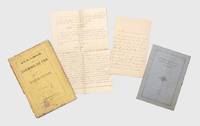
1849052077Edirne - Adrianople: AH: 1265 1849. No Binding. Very Good. Original autograph manuscript letter sent to Haci Giray family for condolences on Haci Giray's death. 38x21 cm. On a special paper with 'ahar'. Sealed. 1 p. Has six lines. With a legible script and fine calligraphic style. It starts with 'huve'. He was a Turkish statesman governor and member of state council according to Sicill-i Osmânî by Süreya and Türkischer Biographischer Index. The House of Giray Crimean Tatar: Geraylar Turkish: Âl-i Cengiz also Girays were the Genghisid/Turkic dynasty that reigned in the Khanate of Crimea from its formation in 1427 until its downfall in 1783. The dynasty also supplied several khans of Kazan and Astrakhan between 1521 and 1550. Apart from the royal Girays there was also a lateral branch the Choban Girays Çoban Geraylar. Before reaching the age of majority young Girays were brought up in one of the Circassian tribes where they were instructed in the arts of war. The Giray khans were elected by other Crimean Tatar dynasts called myrzas mirzalar. They also elected an heir apparent called the qalgha sultan qalga sultan. In later centuries the Ottoman Sultan obtained the right of installing and deposing the khans at his will. Giray family settled in Adrianople Edirne city in 17th century. <br/> <br/> AH: [12]65 unknown
1878052130Washington: Epeude Vradeus Letterhead 1878. No Binding. Very Good. Original manuscript handwritten letter ALS signed as a Turkish / Ottoman minister in Washington addressed 'Cher Monsiuer' evidently taking in hand the arrangements for his correspondent's visit to Constantinople. 18x11 cm. In French. 3 p. Washington 25 January 1878. Folds lightly toned some mnor blemmishes. Embossed crest with Greek inscription 'Epeude Vradeus'. Gregory "Ligor" Aristarchis also known as Aristarchi Bey was an Ottoman diplomat of Phanariote Greek ethnicity compiler of a corpus of Ottoman legislation. Originally a provincial jurist he became the director of foreign correspondence of Crete beginning in 1861 and then from 1867 the Smyrna Izmir directeur politique "political director" and vice-governor. He served as Ottoman Minister in Washington from 1873 to 1883 with Alexandros Mavrogenis. The Ottoman government dismissed him from his post. Sinan Kuneralp the author of "Ottoman Diplomatic and Consular Personnel in the United States of America 1867-1917" argued that his relationship with Midhat Pasha was the "more likely" reason why he was fired while the official accusation was that Aristarchis misused money from a weapons deal. After 1883 he lived in Paris where he worked as an advisor to Alfred Nobel. After the fall of Abdul Hamid II he served as an Ottoman envoy to the Netherlands where he died. He composed one of the first collections of the Ottoman law in 7 volumes in the French language: "egislation ottomane ou Recueil des lois reglements ordonnances traités capitulations et autres documents officiels de l'Émpire Ottoman" Constantinople: Imprimerie Frères Nicolaides. <br/> <br/> Epeude Vradeus Letterhead unknown
1867052131Ellenborough House Roehampton 1867. No Binding. Very Good. Original manuscript handwritten letter ALS signed as an Turkish / Ottoman ambassador in the UK addressed 'Mrs. Darby Griffith' wife of Christopher Darby Griffith M.P. who was a British politician and a Member of the Parliament of the United Kingdom for Devizes 1857-1868. 18x12 cm. In English. 2 p. Deep black borders the Ambassador's personal seal in black wax transferred from an envelope to the first page. With the separate engraved visiting - business card of l'Ambassador de Turquie. Ellenborough House Roehampton 31 August 1867. Konstantinos Mousouros also known as Kostaki Musurus Pasha was an Ottoman Greek diplomatic official of the Ottoman Empire who served as ambassador to Greece Austria Great Britain Belgium and the Netherlands. He was born in 1807 in Constantinople Istanbul to a distinguished Phanariote family. His brother Pavlos Mousouros also became a diplomat. Mousouros became the first ambassador of the Ottoman Empire to the newly independent Kingdom of Greece in 1840 a position he kept until 1848. In 1847-48 he was a central figure in the events known as Mousourika which led to his temporary recall and the breakdown of relations between the two states. On his return to Athens he survived an assassination attempt leading to his transfer to Vienna. In 1850 he took up the post of Ottoman ambassador to the Great Britain and Ireland which he kept for 35 consecutive years until his retirement in 1885. During the same period he also served as ambassador to the Netherlands 1861-77 and Belgium 1861-75. In 1876-78 he was ex officio a member of the short-lived Senate of the Ottoman Empire. Well educated in 1883 Mousouros translated Dante's Divine Comedy into ancient Greek. He was married and had a son Stephanos Mousouros who later became Prince of Samos. <br/> <br/> unknown
1877050824Paris - Istanbul: H.: 1293 1877. No Binding. Very Good. Original handwritten autograph letter signed 'Refet' sent to his brother 'Mahmud Fehim Bey' who was the Second Secretary of the Turkish Embassy in Paris like it's written on envelope as bilingual in French and Ottoman Turkish: 'Paris Sefâret-i Seniyyesi Ikinci Serkâtinbi = Seconde Secrétaire de l'Ambassade de Turquie en ParisSeconde Secrétaire de l'Ambassade de Turquie Paris'. Folded in its original envelope. Letter open size: 20x25 cm; envelope size: 11x14 cm. In Ottoman script. 3 p. full. Dated Hegira 27 Ramazan 1293 = Gregorian: 1877. They were sons of Bastirmali Sadrazam -Ottoman Grand Vizier- Mehmed Esad Safved Pasha 1814-1883 and one of the signatories of the Treaty of Ayastefanos -Treaty of San Stefano-. Mehmed Refet Bey was 'Hariciyye Mektubçusu' which was an important part of foreign relations of Ottoman diplomacy and their duty was dealing with legal cases between Ottoman citizens and foreigners. <br/> <br/> [H.: 1293] unknown
1885051539Istanbul: Bâb-i Fetva Daire-i Seyhülislâm. H.: 1301 1885. No Binding. Very Good. 8vo - over 7¾ - 9¾" tall. Original manuscript handwritten letter ALS signed 'Ahmed Es'ad'. Oblong: 19x24 cm. In Ottoman script. Letterhead of 'Bâb-i Fetva Daire-i Seyhülislâm'. AH: 1301 = AD: 1885. With elqab includes three lines. Written on salary increase of 'Imam-i Sânî Rasid Efendi hazretleri'. Folded. In elqab it starts with 'Faziletlü efendim hazretleri' after 'Hüve'. Uryânîzâde Ahmed Esad Efendi was 117th sheikh al-islam of the Ottoman Empire in the period of Sultan Abdulhamid 2. He was son of Mehmed Said who was one of qadis judge of Sultan Mahmud II. He was descend from Osman el-Uryânî who was a Kilis city-born. <br/> <br/> Bâb-i Fetva Daire-i Seyhülislâm., [H.: 1301] unknown
1898055584Istanbul: Mahmud Bey Matbaasi. AH 1315 1898. 1st Edition . Leather. Very Good. 8vo - over 7¾ - 9¾" tall. In contemporary handsome 1/3 leather bdg. Raised five bands to the spine. The third and fourth compartments have a lettered gilt title and a personal name Fikri in Ottoman script. Other ones have decorated gilts. Cr. 8vo. 20 x 14 cm. In Ottoman script Old Turkish with Arabic letters. 359 p. First and only edition of Süleyman Tevfik's eyewitness travel account to Thessaly who participated in the Turco-Greco War in 1897 as a war correspondent in the Thessaly Front between April 27 - May 20 1897. The Greco-Turkish War of 1897 or the Ottoman-Greek War of 1897 also called the Thirty Days' War and known in Greece as the Black '97. It was a war fought between the Kingdom of Greece and the Ottoman Empire. Its immediate cause was the question over the status of the Ottoman province of Crete whose Greek majority had long desired union with Greece. Despite the Ottoman victory on the field an autonomous Cretan State under Ottoman suzerainty was established the following year because of the intervention of the Great Powers after the war with Prince George of Greece and Denmark as its first High Commissioner. This was the first war effort in which the military and political personnel of Greece were put to test in an official open war since the Greek War of Independence in 1821. For the Ottoman Empire this was also the first war effort in which the reorganized military personnel were put to the test. The Ottoman army was under the guidance of a German military mission led by Colmar Freiherr von der Goltz who had reorganized it after the defeat in the Russo-Turkish War 1877-1878. In Thessalian Front war was declared on 18 April when the Ottoman ambassador in Athens Asim Bey met with the Greek foreign minister announcing the cutting of diplomatic ties. Heavy fighting occurred between the 21-22 April outside the town of Tyrnavos but when the overwhelming Ottoman forces converged and pushed together the Greek general staff ordered a general withdrawal spreading panic among soldiers and civilians alike. Larissa fell on 27 April while the Greek front was being reorganized behind the strategic lines of Velestino in Farsala. Nevertheless a division was ordered to head for Velestino thus cutting Greek forces in two 60 km apart. Between 27 and 30 April under the command of Col. Konstantinos Smolenskis Greek forces checked and halted the Ottoman advance. On 5 May three Ottoman divisions attacked Farsala forcing an orderly withdrawal of Greek forces to Domokos while on the eve of those events Smolenskis withdrew from newly recaptured Velestino to Almyros. Volos fell into Ottoman hands on 8 May. At Domokos the Greeks assembled 40000 men in a strong defensive position joined by about 2000 Italian "Redshirt" volunteers under the command of Ricciotti Garibaldi son of Giuseppe Garibaldi. The Ottoman Empire had a total of about 70000 troops of whom about 45000 were directly engaged in the battle. On 16 May the attackers sent part of their army around the flank of the Greeks to cut off their line of retreat but it failed to arrive in time. The next day the rest of their army made a frontal assault. Both sides fought ferociously. The Ottomans were held at bay by the fire of the defending infantry until their left flank defeated the Greek right. The Ottoman formation broke through forcing a renewed withdrawal. Smolenskis was ordered to stand his ground at the Thermopylae passage but on 20 May a ceasefire went into effect. Özege 20762.; OCLC 65794449 / 775132812. <br/> <br/> Mahmud Bey Matbaasi., [AH 1315] hardcover
1897050830Istanbul: 'Sadaret-i Uzma Dairesi' Letterhead H.: 1313 1897. No Binding. Very Good. Original manuscript autograph letter signed 'Sadrazam Rifat' sent to Tophâne-i Âmire müsiri Mustafa Zeki Pasa i.e. Grand master of Turkish artillery. 38x24 cm. In Ottoman script. Folded. 1 p. It's an official celebration for Mustafa Zeki Pasha's achievements in the Turco-Greco War in 1897-1898. It's written in a beautiful riq'a script. Halil Rifat Pasha was an Ottoman statesman and a Grand Vizier for six years between 1895 until his death in 1901 during the reign of Abdul Hamid II. He was born in Serres Serez and received education in an Islamic type parish school in Salonica Selanik then continued to Mekteb-i Mülkiye in Constantinople. After his education years he started to work as a mailing clerk in Vidin then worked as secretary in the office of the Governor of Salonica. He advanced by degrees and was appointed to higher official positions by passage of time including at Rustchuk. In 1882 he was appointed as mutasarrif of Vidin then in 1886 he was appointed as governor of Sivas where he started a road-building programme. He was subsequently appointed governor of Aidin 1889 and later of Monastir where he fought brigandage units which was rife in the province. He was appointed as minister of internal affairs in 1893 . Then he was appointed as grand vizier in November 1895 . The most important events in his era as grand vizier were the riots of Sason in 1895 and in Crete in 1897 as well as the Greco-Turkish War of 1897 which ended with Ottoman victory. His motto in the road building campaign was "Any place where you can't go is not yours"! Gidemedigin yer senin degildir!. Zeki Pasha was one of the most trusted Ottoman generals and statesmen of the Sultan Abdulhamid II. He served as Tophane Counselor for 18 years during the reign of Sultan Abdülhamid II. In 1899 Italian architect Alexandre Vallaury built the 'Tophane Müsiri Zeki Pasa Mansion Yali' one of the most valuable estates of Istanbul on his behalf. In 1908 he fell out of favor with the declaration of the Second Constitutional Monarchy by Union and Progress Society Ittihat ve Terakki Cemiyeti and was deported first to Büyükada and then to Rhodes. Source: Wikipedia. Slightly chipped. A very good manuscript paper. <br/> <br/> 'Sadaret-i Uzma Dairesi' Letterhead [H.: 1313] unknown
1842352080Istanbul: Matbaa-yi Ceride-yi havadis 1842. Ornamental title piece. Text in Turkish. 4 pp. 1 vols. Folio. Old folds some toning. very good. Ornamental title piece. Text in Turkish. 4 pp. 1 vols. Folio. Representative issue of this long-running Turkish newspaper first published in 1840 appearing thrice monthly from its found in 1840 until 1847 and weekly thereafter. Includes coverage of domestic political events foreign news and advertisements. Matbaa-yi Ceride-yi havadis] unknown
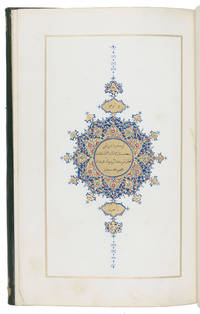
1846JBDBKGMJ1PXZVienna 1846. Large 8vo. Dar tiba al-imberaturiyy k. k. Hof- und Staatsdruckerei Contemporary green morocco with a fore-edge flap gold-stamped boards with an oriental design gilt edges. Printed in black with red headings within printed gilt rules. Illuminated head-piece and unwan printed in three colours and gilt in imitation of manuscript illumination. Gilt tail-piece. 88 pp. The full text of 19 trade treaties in Ottoman Turkish throughout closed between the Roman/Austrian and the Ottoman Empire between 1110/1699 Peace of Karlovac and 1259/1844. An Italian-language edition had appeared in 1844 "Raccolta dei Trattati e delle principali convenzioni concernanti il commercio e la navigazione dei sudditi Austriaci negli Stati della Porta Ottomana".Occasional insignificant foxing; altogether very well preserved. A splendidly bound copy.l Zenker BO II 805. hardcover
1846JBDC1K1DW82QVienna: Dar tiba al-imberaturiyy k. k. Hof- und Staatsdruckerei 1846. Contemporary green morocco binding with fore-edge flap covers giltstamped with an oriental design. All edges gilt. Large 8vo. Printed in black with red headings within printed gilt rules. Illuminated head-piece and unwan printed in three colours and gilt in imitation of manuscript illumination. Gilt tail-piece. With: Raccolta dei trattati e delle principali convenzioni concernanti il commercio e la navigazione dei sudditi Austriaci negli Stati della Porta Ottomana. Vienna Dar tiba al-imberaturiyy k. k. Hof- und Staatsdruckerei 1844. The full text of 19 trade treaties in Ottoman Turkish throughout closed between the Austrian and the Ottoman Empire between 1110/1699 Peace of Karlovac and 1259/1844. Bound in the same volume is the 1844 Italianlanguage edition containing the texts of the various treaties in their respective original European language with an Italian translation on the opposite pages.Ownership "C Fr Jelinek 1855" signed to endpaper. The Turkish text shows occasional insignificant foxing as common; altogether very well preserved. A splendidly bound copy.l Zenker BO II 805. Dar tiba al-imberaturiyy (k. k. Hof- und Staatsdruckerei), unknown
1874141678Turkey: 1874-86. Constantinople to Vienna Fascinating group of documents relating to Baron Maurice de Hirsch's concessions to build and operate the Ottoman Empire's railway lines from Constantinople to Vienna dating to the time the agreements were revised 1872 to when he was seeking to extricate himself 1887: 1. Covering letter to the annotated Actes 1874 document addressed to Baron Hirsch 1887 2. Actes 1874 covering the revised 1872 agreements annotated in 1887 for Baron Hirsch 3. Further amendments from the Ottoman Minister of Works for Hirsch c1887-88 4. Agreement to advance funds to the Sublime Porte to finance a military response to Bulgarian annexation of Eastern Rumelia 1885-86 The Ottoman rail network was constructed to boost trade maintain imperial control and facilitate Hajj and relied to a great extent on foreign private finance and expertise. First ventures in the 1860s included the Chernovoda to Constanza line connecting the Danube to the Black Sea and the Rustchuk to Varna line taking cargo to the Danube and Black Sea. The latter built by a British group was owned by the Rustchuk-Varna Railway Company under a 99 year concession which leased it in 1873 to Austrian banker Baron Maurice de Hirsch 1831-1896. In 1869 the Porte granted its most important concession to Hirsch to build 2 500 km of main and branch lines connecting Constantinople and Vienna; and in 1870 Hirsch founded the Societe Imperiale des Chemins de Fer de la Turquie d'Europe to build the lines and Compagnie pour l'exploitation des Chemins de Fer de la Turquie d'Europe to operate them. The venture was financed by the Turkenlose 3% Turkish Lottery Bond designed by Hirsch himself and German and Austrian bank loans. Over the 99 year concession Societe Imperial would receive 14000 francs rent per completed kilometre from the Porte and 8000 from the Compagnie. Grand Vizir Mehmed Emin Ali Paca 1815-71 a moderniser who wanted closer ties with Western Europe signed the agreement for the Porte. However he died in 1871 and his successor Mahmoud Nedim Paça 1818-83 whose appointment was influenced by General Nikolai Ignatieff Russia's ambassador at Constantinople preferred a link with Russia via Romania. Mahmoud Paca's efforts to cancel the concession were however unsuccessful due partly to Hirsch's appointment of Ralph Earle former British MP and secretary to Lord Beaconsfield who renegotiated the agreements signed off on 18 May 1872 item 2. By 1872 four disconnected lines "stumps" had been built and the Turkenlose had not raised sufficient funds. Under the new agreements the Porte took back the building concession including the most difficult and costly parts in the process reducing the distance to 1250km with the Societe Imperial as its contractor and cutting the Compagnie's concession from 99 to 50 years. Small archive of original documentation as above. Overall in very good condition. unknown
1837055364Bulak Egypt: Bulaq Printing House / Matba'at Sâhib al-Sa'âdah al-Abadîyah. AH 1253 1837. 1st Edition . Leather. Very Good. 4to - over 9¾ - 12" tall. Contemporary quarter brown leather. Marbled boards. The title of the book is written at the bottom of the pages. Small 4to. 26 x 17 cm. In Ottoman script Old Turkish with Arabic letters. 20 1 blank page 17 2 blank pages 43 2 blank pages 131 2 blank pages 16 1 blank page 97 61 3 blank pages p. Fading and foxing on some pages and edges. Slight chippings on the boards' extremities. The front pastedown and the first blank page are glued. Overall a fresh copy in near fine condition. First edition of this remarkable collection of Vehbi's poems in Arabic Persian and Turkish including his "Lotfiyyah" posthumously printed in Bulaq Printing House as an early Bulaq imprint presented to Sultan Selim III written under his patronage in Istanbul besides other important Ottoman statesmen and clerics in the 18th century such as Shaikh al-Islam Esadefendizâde Mehmed Serif Efendi Râghib Pasha and Halil Hamîd Pasha. This book is one of the 259 Turkish books published from the establishment of the printing house in 1820 to 1851. The voluminous divan consists of six sections respectively titled Sebeb-i Telîf i.e. the reason for writing Farsî i.e. Persian Ibtidâ-yi Kasâîd i.e. Qasidahs Ibtidâ-yi Tevârîh i.e. Histories Ibtidâ-yi Gazeliyyât i.e. Ghazals Lütfiyye-i Vehbi i.e. Lotfiyyah. After the introductory part of the work there are Arabic odes and couplets respectively Persian divancha including a eulogy written for Sultan Mustafa III and other eulogies dates and ghazals under separate headings. Lotfiyyah is a verse book of 1181 couplets that the poet wrote for his son. The Bulaq or El-Amiriya Press is the first official and governmental printing press to be established in Egypt and functions according to an industrial printing basis causing not just a qualitative but also a quantitative and knowledgeable leap in science throughout the Arab region. It was established in 1820 by Muhammad Ali Pasha of Egypt and Sudan 1769-1849 and it was part of Muhammad Ali's inclusive development plans for the modernization of Egypt. Özege 4242.; Ipekten & Isen pp. 106.; OCLC 644318943 & 602407077. <br/> <br/> Bulaq Printing House / Matba'at Sâhib al-Sa'âdah al-Abadîyah., [AH 1253] hardcover
1882054004Istanbul: Mihran Matbaasi. AH 1299 1882. 1st Edition . Hardcover. Very Good. 8vo - over 7¾ - 9¾" tall. Paperback with original wrappers. Restored wrappers and spine masterfully. Roy. 8vo. 24 x 17 cm. In Ottoman script Turkish with Arabic letters. 171 1 p. Maps are missing. First and Only Edition of this early naval guide to the Mediterranean and Aegean Islands and shores prepared by Ottoman Admiral Süleyman Faik. Süleyman Faik 1845-1909 was a general after admiral and Chairman of the Turkish / Ottoman Navy General Staff divisional. A comprehensive early printed guide to the Cezâyir-i Bahr-i Sefid i.e. Ottoman Province of Archipelago including the Aegean shores the Archipelago the Dardanelles Rhodes Cyprus et alli. Only six copies in OCLC: 773143926 67075343.; Özege 16579.; Not in ATYB: Askerî Tarih Yayinlari Bibliyografyasi = Bibliography of Turkish History of Military Books. <br/> <br/> Mihran Matbaasi., [AH 1299] hardcover
1882054723Istanbul: Mihran Matbaasi. AH 1299 1882. 1st Edition . Hardcover. Very Good. 8vo - over 7¾ - 9¾" tall. Contemporary handsome quarter leather binding raised four bands and gilt lettering to spine. Roy. 8vo. 24 x 17 cm. In Ottoman script Old Turkish with Arabic letters. 171 1 p. 15 folded maps. First and only edition of this early naval guide to the Mediterranean and Aegean Islands and shores prepared by the Ottoman Admiral Süleyman Faik. A comprehensive early printed guide to the Cezâyir-i Bahr-i Sefid i.e. Ottoman Province of the Archipelago including the descriptions of all islands in the Archipelago such as Patmos Peraka Paros Delos Ipsara Acina Sekino Mikonos Bozcaada Tenedos Istanköy Kos Imroz Crete Anti Paros Alosis Islands with West and East of the Archipelago and Edremit Bay Doris Bay Rafti Port Aynaroz Bay; and Anatolian shores such as Izmir Smyrna Kusadasi Gallipoli. This rare book has 15 folded portolan maps of Marmaris Port Makri Port Naghos Port Karaagach Ptelea Evros in Greece Port Kakuve and Tertumos Ports portolan of Iskenderun Alexandrietta portolan of Lazkiye Al-Lazkiyya in Syria portolan of Avret Island and Trablus-Sam and portolan of Beirut and Sida. Süleyman Faik 1845-1909 was a general and afterwards an admiral and a Chairman of the Turkish / Ottoman Navy General Staff divisional. Only six copies in OCLC: 773143926 67075343.; Özege 16579.; Not in ATYB: Askerî Tarih Yayinlari Bibliyografyasi = Bibliography of Turkish History of Military Books. <br/> <br/> Mihran Matbaasi., [AH 1299] hardcover
1883047387Post-1883 1883. Hardcover. Very Good. 4to - over 9¾ - 12" tall. Original gold gilt envelope hand-written description. Framed. Extremities chipped slightly repaired and framed. Frame size: 30x36 cm; paper size: 17x23 cm. Hand-written text in Ottoman Turkish with Arabic letters. Envelope of Turkish medal issuance order by state sultan to Ahmed Ahmet Tevfik Pasha. He was the Ottoman statesman and the last Ottoman grand vizier. After serving 14 years as the Minister of Foreign Affairs of the period of Abdülhamid II. Abdulhamid II and the continuation of the reign of Mehmed V between April 13 1909 and May 5 1909 during the reign of Mehmed VI and during the occupation of Istanbul between November 11 1918 - March 3 1919 and between 21 October 1920 and 4 November 1922 he served as a grand vizier for two years four months and twenty nine days in three periods mainly five terms. The son of the Crimean Tatari who was based on the Giray Dynasty was the son of Ferik Ismail Hakki Pasha. He left the military officer and entered the Babiâli The Sublime Porte Translation Chamber. After 1872 he served in various foreign missions and after serving in Rome Vienna St. Petersburg and Athens he served as an ambassador for 18 years in Berlin. This medal mejidie order was given to him while he was serving as ambassador in Athens. <br/> <br/> [Post-1883] hardcover
1880052063Istanbul: Matbaa-i Âmire. AH: 1297 1880. 1st Edition . Leather. Very Good. 8vo - over 7¾ - 9¾" tall. Original 1/4 leather bdg. Cr. 8vo. 20 x 14 cm. In Ottoman script. 5 3 357 p. Subhi Pasha who was the implementer of the reforms and a typical highbrow bureaucrat appeared in various positions of the Ottoman bureaucracy. He was also father of Hamdullah Subhi Tanriöver 1885-1966 and first Turkish numismatist. He is also known for his special interest in books and antiquities. Sanayi-i Nefise School Fine Arts Faculty and the Müze-yi Humayun Istanbul Archeology Museum were established as a result of his efforts. He is brother of Samipasazade Sezai who was the author of the first Turkish novel as well. Wikipedia. This book is the first volume of the early history of Islam running from Mohammad to the death of 'Alî; the second volume which was to continue up to the year 82 AH has never been published. All published. Özege 6620.; GOW 369. First Edition. <br/> <br/> Matbaa-i Âmire., [AH: 1297] hardcover
1871055863Istanbul: Matbaa-i Âmire. 1288 AH 1871. 1st Edition . Soft cover. Very Good. 8vo - over 7¾ - 9¾" tall. An extremely rare first edition of the earliest account of Muslims in Brazil documenting the second voyage to the American continent ever undertaken by the Ottoman navy and by any Muslim seafarers or travelers following Piri Reis in the 15th-16th century. The travel log that Abdurrahman Efendi wrote in Arabic after he came back to Istanbul from Brazil was translated into Ottoman Turkish by Antepli Mehmed Serif Efendi and published in 1288/1871. In this account the transit to Brazil is mentioned briefly since the writer's main focus was not on the voyage but rather on the situation of the Muslims in Brazil a group formed mostly by African slaves and their descendants who were enslaved by Portuguese and British colonists. Abdurrahman Efendi describes the lessons he gave a booklet in Portuguese with Arabic letters he prepared to outline the basics of Islam the city of Rio de Janeiro the plantations near the port some tropic fruits in Brazil vast forests from Brazil to the south of the continent the city of Ebaiye i.e. Salvador and Marnempugo diamond mining area called Lugabiryanti besides the daily life of Muslims in 19th-century Brazil such as the students' houses of worship tribal chiefs whom they call "Fa" or "Imam" etc. His Brazil travel log gives his route of return and the main points he visited like Lisbon Cordoba Gibraltar Tanca Jeddah and Mecca on his way back to Istanbul. With regard to this account two Ottoman warships bearing the names "Bursa" and "Izmir" left Istanbul en route to their new duty station in the Persian Gulf on 12 September 1865. The ships passed through the Mediterranean Sea and the Strait of Gibraltar into the Atlantic Ocean planning to follow the African shoreline to Basra. After visiting Cadiz and the Canary Islands they set sail from the Cape Verde Islands but on 19 May they encountered a storm that threw them in the Atlantic and this 17-day voyage of uncertainty ultimately brought them to the shores of Brazil where they laid anchor at the port of Rio de Janeiro. Original wrappers. Red cover. Foolscap 8vo. 18 x 12 cm. In Ottoman script. 44 p. Occasionally foxing on cover and pages. Otherwise a very good copy. Hegira: 1288 = Gregorian: 1871. OCLC 805941733. Özege 20671. <br/> <br/> Matbaa-i Âmire., [1288 AH] paperback
1885052354Lonndon: William And Norgate 1885. 1st Edition . Hardcover. Very Good. 8vo - over 7¾ - 9¾" tall. Original decorative cloth bdg. with Dante's portrait gilt on front board and spine. Black cloth with red decorative borders. Gilt on spine with Greek letters 'Dantou o Paradeisos . Metaphrasis Konstantinou Mousourou' and gilt publisher's name in English on lower. A small etiquette on lower spine. Some little wormholes on cloth and several pages. Pages are partly opened uncut and untrimmed. Slightly faded on cloth's board. A stamp on first page. Otherwise a very good copy. Roy. 8vo. 23 x 16 cm. In Greek Modern. xiv 334 p. 14 p. 'prologos' by Musurus. Konstantinos Mousouros also known as Kostaki Musurus Pasha was an Ottoman Greek diplomatic official of the Ottoman Empire who served as ambassador to Greece Austria Great Britain Belgium and the Netherlands. He was born in 1807 in Constantinople Istanbul to a distinguished Phanariote family. His brother Pavlos Mousouros also became a diplomat. Mousouros became the first ambassador of the Ottoman Empire to the newly independent Kingdom of Greece in 1840 a position he kept until 1848. In 1847-48 he was a central figure in the events known as Mousourika which led to his temporary recall and the breakdown of relations between the two states. On his return to Athens he survived an assassination attempt leading to his transfer to Vienna. In 1850 he took up the post of Ottoman ambassador to the Great Britain and Ireland which he kept for 35 consecutive years until his retirement in 1885. During the same period he also served as ambassador to the Netherlands 1861-77 and Belgium 1861-75. In 1876-78 he was ex officio a member of the short-lived Senate of the Ottoman Empire. Well educated in 1883 Mousouros translated Dante's Divine Comedy into ancient Greek. He was married and had a son Stephanos Mousouros who later became Prince of Samos. Wikipedia. He is known as the first translator of Dante's Divine Comedy into modern Greek. Musurus Pasha had an intellectual identity. One of the most important occupations of Musurus Pasha in the last years was the translation of Dante's Divine Comedy from Italian to Greek. Being able to translate a work of Italian classics and masterpieces of western literature should be an indication of Musurus Pasha's performance and intellectual dimension. Due to negative statements about Muhammad and Ali in Dante's work the book was not allowed to be published within the Ottoman Imperial borders. Despite this Musurus Pasha asked him to be permitted to publish his translation but it was not accepted. Source: Bir Tanzimat diplomati Kostaki Musurus Pasa 1807-1891. NURDAN SAFAK. Dante's Divine Comedy originally called Comedia and later christened Divina by Giovanni Boccaccio is widely considered the most important poem of the Middle Ages and the greatest literary work in the Italian language. This is only 'Paradiso' book from the set. It's signed and inscribed by Musurus Pasha with a dedication in French to Monseigneur Auguste Bonetti as "A la grandeur Monseigneur Bonetti Hommage de veneration Musurus". Bonetti was in 1887 after the appointment of Monsignor Rotelli to the Vatican Ambassador to Paris the new Constantinople patriarch appointed by Rome for him. First Greek Edition. Extremely rare. <br/> <br/> William And Norgate hardcover
1884052629London: William And Norgate 1884. 1st Edition . Hardcover. Very Good. 8vo - over 7¾ - 9¾" tall. Original decorative cloth bdg. with Dante's portrait gilt on front board and spine. Black cloth with red decorative borders. With a new cloth spine. Some little wormholes on cloth and several pages. Pages are partly opened uncut and untrimmed. Slightly faded on cloth's board. A stamp on first page. Otherwise a very good copy. Roy. 8vo. 23 x 16 cm. In Greek Modern. 18 324 p. 'prologos' by Musurus. Konstantinos Mousouros also known as Kostaki Musurus Pasha was an Ottoman Greek diplomatic official of the Ottoman Empire who served as ambassador to Greece Austria Great Britain Belgium and the Netherlands. He was born in 1807 in Constantinople Istanbul to a distinguished Phanariote family. His brother Pavlos Mousouros also became a diplomat. Mousouros became the first ambassador of the Ottoman Empire to the newly independent Kingdom of Greece in 1840 a position he kept until 1848. In 1847-48 he was a central figure in the events known as Mousourika which led to his temporary recall and the breakdown of relations between the two states. On his return to Athens he survived an assassination attempt leading to his transfer to Vienna. In 1850 he took up the post of Ottoman ambassador to the Great Britain and Ireland which he kept for 35 consecutive years until his retirement in 1885. During the same period he also served as ambassador to the Netherlands 1861-77 and Belgium 1861-75. In 1876-78 he was ex officio a member of the short-lived Senate of the Ottoman Empire. Well educated in 1883 Mousouros translated Dante's Divine Comedy into ancient Greek. He was married and had a son Stephanos Mousouros who later became Prince of Samos. Wikipedia. He is known as the first translator of Dante's Divine Comedy into modern Greek. Musurus Pasha had an intellectual identity. One of the most important occupations of Musurus Pasha in the last years was the translation of Dante's Divine Comedy from Italian to Greek. Being able to translate a work of Italian classics and masterpieces of western literature should be an indication of Musurus Pasha's performance and intellectual dimension. Due to negative statements about Muhammad and Ali in Dante's work the book was not allowed to be published within the Ottoman Imperial borders. Despite this Musurus Pasha asked him to be permitted to publish his translation but it was not accepted. Source: Bir Tanzimat diplomati Kostaki Musurus Pasa 1807-1891. NURDAN SAFAK. Dante's Divine Comedy originally called Comedia and later christened Divina by Giovanni Boccaccio is widely considered the most important poem of the Middle Ages and the greatest literary work in the Italian language. This is only 'Purgatorio' book from the set. It's signed and inscribed by Musurus Pasha with a dedication in French to Monseigneur Auguste Bonetti as "A la grandeur Monseigneur Bonetti Hommage de veneration Musurus". Bonetti was in 1887 after the appointment of Monsignor Rotelli to the Vatican Ambassador to Paris the new Constantinople patriarch appointed by Rome for him. First Greek Edition. Extremely rare. <br/> <br/> William And Norgate hardcover
1874055638Kostantiniyye Constantinople - Istanbul: Basiret Matbaasi. AH 1291 1874. 1st Edition . Leather. Very Good. 8vo - over 7¾ - 9¾" tall. Contemporary fine half and quarter calf. The title "Tarih-i Yemen" lettered gilt on spine of the first volume with volume no and four decorative elements gilt on the compartments; the second volume's spine is decorated fully. Bindings are not homogeneous. Roy. 8vo. 24 x 17 cm. In Ottoman script Old Turkish with Arabic letters. 2 volumes set: 3 322 20 p.; 6 374 p. no illustrations and maps. Occasional foxing on pages a very good set. Extremely rare first edition of this two-volume set including Lieutenant General Ahmed Rashid Pasha's firsthand account of a fourteen-month expedition of Yemen he participated in with the Ottoman army between 1871-1874. The book also enlarged with the author's detailed eyewitness descriptions of the South Arabian Peninsula's agricultural and natural resources geographical structure climate various sects and beliefs of the region as well as a history of the Ottoman rule in Yemen from the beginning in 1495. This exceptional book starts with the author's reason for writing the book sebeb-i telîf and a list of the Arabic sources he used. In addition to the author's diary in the form of a travelogue Isa ibn Lütfullah's Rawha al-Rûhad which has detailed information about the Zaydis and includes the history of Yemen between 1494 and 1620 as well as Tekmilet al-Ravha al-Rûh Tibb al-Kesâ Jami al-mutun bi Ahbari Yemen al-Maymun and Al-Deyba's Qurrat al-'Uyûn fî Akhbâr al- Yemeni'l-Maymûn were used as sources. The first volume is published in AH 1291 Cemâziyelâhir i.e. July-August 1874 and the second volume is published in AH 1291 Zilhicce i.e. January-February 1875 in Basiret Publishing House in Constantinople. After the publishing first volume the author presented it to the Ottoman Sultan Abdülaziz and he was awarded the Medjidi Order of the third rank. In the book the activities of the Ottoman Empire in the region since 1495 the region's becoming a province the governors who ruled the land the important rebellions and wars in Yemen as well as the 14-month Ottoman Expedition between 1871-1874 which also the author participated in are explained in detail. At the end of this operation the division of the Yemen Province into four liwâs named Sana'a Taizz Hudayda and Asir and their restructured administrative organization with the situation of peoples and Arab tribes in the region are also valuable firsthand details in the work. Ahmed Rashid Pasha collected the historical documents of the events between 1680-1844 related to Yemen and Arabia during his duty in Yemen. In the second volume the author presented himself as "Mirliva" i.e. Brigadier General three years later 3 July 1877 he was promoted to the rank of "Ferîk" i.e. Lieutenant General. Ahmed Rashid Pasha was promoted to the rank of Major in 1870 when he was the Clerk of the fourth battalion of chefs in Medina in 1862. While he was under the command of Muhtar Ahmed Pasha as a Major he was given the rank of district governor of the first "Ihtiyât" army of the Hejaz Firkasi due to his activities in Benî Teym. OTTOMAN RULE IN YEMEN Since the Ottoman conquest of Yemen in 1517 it has been known as the Yemen Eyalet. After the Tanzimat reforms in the Ottoman Empire Yemen Vilayet was established from most of the former Eyalet in 1872. In the 1830s aided by the collapse of the Zaidi Imamate due to internal division and the adoption of modern weaponry after the Crimean War the Ottomans moved into northern Yemen eventually taking San'a and making it the capital of the Yemen Vilayet in 1872. Even then Ottoman control was largely confined to cities and the Zaidi imam's rule over Upper Yemen was formally recognized. Starting in 1872 after the Sana'a region was firmly under control Ahmed Muhtar Pasha set about restructuring the administration of the Yemen vilayet dividing it into four sanjaks with San'a city serving as the capital of the vilayet. Asir became a sanjak of Yemen in 1872. Tu <br/> <br/> Basiret Matbaasi., [AH 1291] hardcover
1882053643Ottoman Manuscript Document. 1298 AH 1882. No Binding. Very Good. Original Ottoman birth certificate. 31x18 cm. In Ottoman script. 2 p. Faded on paper. A good paper. On verso some handwritten annotations in Ottoman Turkish and Greek. GREEK MINORITY "Devlet-i Aliyye Nüfus Tezkîresi" Early Ottoman birth certificate of Kostaniniyye'li Yorgi Papa oglu Hedezgâr Mihail stamped by Sehremâneti in 1298 AH 1882 AD with the tughra of Sultan Abdülhamid II. <br/> <br/> Ottoman Manuscript Document., [1298 AH] unknown