199 résultats
1839055027Kostantiniyye Constantinople - Istanbul: Takvîm-i Vekâyi. AH 1255 1839. Soft cover. Very Good. Original newspaper taken from a volume. Folio. 425 x 28 cm. In Ottoman script Old Turkish with Arabic letters. 5 p. Extremely rare early issue of this first official newspaper of the Ottoman Empire after the proclamation of Reform Tanzîmât in 1839 informed Daguerre's new and weird invention "photography" as it would be called in the 1850s to the Ottoman peoples and readers. The article reads: "It is the talk of the town steam engines have been able to run on rails in factories in recent years. Meanwhile a man carefully focused on his thoughts so much and the craft turned into a strange art and finally a coquettish mirror surface appeared. This skillful Frenchman named Daguerre drew the lines of objects by reflecting the sunlight with the methods of the different science of art he learned drew the contours of the objects and gave 20 years secretly and openly to the formation of this strange art. Finally he reached the goal and this event won the appreciation and admiration of everyone. This is to say the image of the object in the form of a large or small box free from light is pictured inside by passing through the glass in front of it. In order for the reflected picture to be captured on a surface some chemicals must be prepared. Daguerre has achieved this mix based on his experience. This substance applied on the plate is called iodine. After the plate is kept in the vapor of the iodine for a few minutes it is immediately placed in the dark box and the image passing through the window of the box is pictured for five minutes. Considering that some of the things that should be hidden are captured like this it will be understood what a valuable invention this is.". In the continuation of the article it is written that an Englishman named Talbot Henry Fox Talbot found the same thing with almost the same processes ! but Daguerre had taken pictures before. Takvim-i Vekâyi was the first fully Turkish-language newspaper. It was launched in 1831 by Sultan Mahmud II taking over from the Moniteur ottoman as the Official Gazette of the Ottoman Empire. With the beginning of the Tanzimat reform period Takvim-i Vekayi produced versions in multiple language editions. It ceased publication in 1878 resuming in 1891-2 before being closed again. It resumed in 1908 until around 1922. In the 1831-1878 period it published a total of 2119 issues - an average of slightly less than one a week. <br/> <br/> Takvîm-i Vekâyi., [AH 1255] paperback
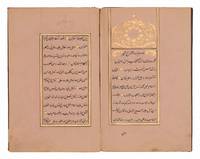
052108Istanbul : Manuscript. 19th century. 2nd Edition . Soft cover. Very Good. 16mo - over 5¾ - 6¾" tall. Original ketebe page and last page of a manuscript written by Ottoman / Turkish calligrapher Hasan Hüsni Efendi 1840-1914. 16x8 cm. In Arabic. 2 p. Written on a watermarked paper. Well-trained in the educational and instructional curricula of the day anda member of the class of religious scholars Hasan Hüsnü Effendi attended dasses in calligraphy under the Üsküdar Mawlawi sheikh Zeki Mehmed Dede from whom he received his diploma and became one of the best representatives of this art. Hasan Hüsnü Effendi who taught the Persian style of calligraphy nasta'lik or naskh-i ta'lik in the law school Medresetü'l Kuzat trained a number of artists like Hulusi Yazgan and Kemal Batanay and attained da place of importance in the history of the Turkish art of calligraphy. A Neglected Cultural Treasure: Calligrapher Karînâbatli Hasan Hüsnü Effendi MUHITIN SERIN. <br/> <br/> Manuscript., [19th century] paperback
1909055883Trabzon: Mesveret Matbaasi. AH 1325 1909. 1st Edition . Soft cover. Very Good. 8vo - over 7¾ - 9¾" tall. Original wrappers. Cr. 8vo. 20 x 11 cm. In Ottoman script Old Turkish with Arabic letters. 15 p. Restored spine by special tape chippings on extremities of the front cover uncut pages. Overall a good copy. The first and only edition of this epic poem written in memory of Turkish Unionist Captain Ilyas from Trabzon one of the first to fall when the sultan's supporters opened fire at the bridgehead in Galata Istanbul during the outbreak of the March 31 Incident. The poem which can also be regarded as an elegy for the Captain contains severe accusations against Sultan Abdulhamid II. The book was published by the Mesveret Printing House sharing its name with the Unionist and anti-sultan newspaper that had been published in Trabzon since the 1890s. It was written in 66 verses using an 11-syllable meter. The identity behind the pen name "Maçka Sairi" which appears at the end of the poem remains undetermined. He was likely a member of the Mesveret newspaper staff a close acquaintance of Captain Ilyas and a staunch opponent of Sultan Abdülhamid as well as a supporter of the Committee of Union and Progress. According to historical sources Captain Ilyas from Trabzon was the first person killed during the March 31 Incident. Due to this significant distinction an extensive poem was composed in his honor. While detailed information about Captain Ilyas is scarce it is believed that he was either a native of Trabzon or became affiliated with Mesveret while serving there. He was likely an Ottoman soldier who shared the same political views as the poem's author. Özege 25512. As of February 2025 we couldn't trace any copies in the OCLC. <br/> <br/> Mesveret Matbaasi., AH 1325 paperback
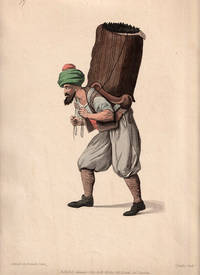
1802219553London.: W. Miller. 1802. Hand-coloured engraving 34.7 x 25.9 cms sheet including plate-mark edge toning but in very good condition. Attractive large image of a Dervise or Dervish prepared as Plate XXX for Dalvimart's work "The Costume of Turkey". <br>"Dalvimart's is one of the basic works on Turkish costume which has provided the prototypes for numerous other illustrative material. It is known that Dalvimart travelled in Turkey and Greece in 1797-8" Atabey. . W. Miller. unknown
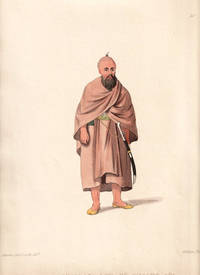
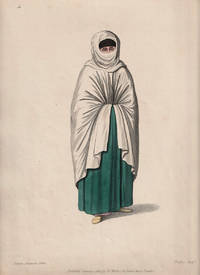
1802219551London.: W. Miller. 1802. Hand-coloured engraving 34.7 x 25.8 cms sheet including plate-mark edge toning but in very good condition. Attractive large image prepared as plate 17 for Dalvimart's work "The Costume of Turkey". <br>"Dalvimart's is one of the basic works on Turkish costume which has provided the prototypes for numerous other illustrative material. It is known that Dalvimart travelled in Turkey and Greece in 1797-8" Atabey. . W. Miller. unknown
1920054028Baku: P. V. CH. Hükümet Matbaasi i.e. Government Presss. AH 1336 1920. 1st Edition . Soft cover. Very Good. Original wrappers. Demy 8vo. 21 x 14 cm. In Ottoman script Turkish with Arabic letters. 3 158 p. Occasionally minor age-toning on pages and cover. Spine restored. Uncut and untrimmed copy with sensitive extremities. Otherwise a good copy. First Edition and extremely rare Baku imprint of Karabekir's book including his advices to children printed in Baku in the same year when the Red Army captured Azerbaijan. Printing types are peculiar to the Caucasus imprints. The author wrote this book in his own words to teach children "the first facts of life". Kâzim Karabekir Pasha who took care of thousands of children who lost their parents during the First World War is a statesman and soldier who was also closely interested in the education of these children. "My Advice" book purposes to reach teachers and parents as well as primary and secondary school students. The rights and wrongs that every child should know about life are explained in a sweet way. The book contains more than a hundred moral and other advices on issues such as the importance of being friendly how to spend money hospitality rules spies paying attention to cleanliness helping each other and respecting elders. Musa Kazim Karabekir Pasha was a Turkish general and politician. He was the commander of the Eastern Army of the Ottoman Empire at the end of World War I and served as Speaker of the Grand National Assembly of Turkey before his death. Karabekir was appointed commander of the 2nd Corps on the Caucasian front Erzurum Kars and Baku and fought bitterly against the Russian and Armenian forces for almost ten months. In September 1917 he was promoted to brigadier general by a decree of the Sultan. OCLC 13180947.; Özege 16062. <br/> <br/> [P. V. CH.] Hükümet Matbaasi [i.e. Government Presss]., [AH 1336] paperback
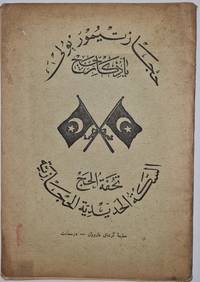
1913000166Very rare brochure printed in Armenian house in İstanbul 1913. In English Ottoman Turkish Arabic Russian and Urdu. 10 p. Text with 11 plates. In the printer wrappers. Archak Garoyan paperback
1802219552London.: W. Miller. 1802. Hand-coloured engraving 34.7 x 26 cms sheet including plate-mark edge toning but in very good condition. Attractive large image prepared as Plate IV for Dalvimart's work "The Costume of Turkey". <br>"Dalvimart's is one of the basic works on Turkish costume which has provided the prototypes for numerous other illustrative material. It is known that Dalvimart travelled in Turkey and Greece in 1797-8" Atabey. . W. Miller. unknown
63854Ottoman Empire dated 1266 AH/1849-50 AD. Arabic manuscript on paper 308 leaves plus 4 fly-leaves 15 lines to the page written in naskh in black ink verses separated by gold and polychrome illuminated rosettes within gold and black rules hizb sajda and juz' marked by illuminated floral marginal devices surah headings in white thuluth on gold and polychrome illuminated panels f.1b and 2a illuminated in gold and polychrome with rococo floral decoration against a gold ground pin-pricked with cintamani motifs the colophon within similarly illuminated panels in Ottoman gilt dark brown leather binding with flap with fitted box. Text panel: 8 by 5.1cm. Leaf: 12.5 by 8.2cm. Isma'il Najib is recorded as a pupil of Ahmed Zarifi and teacher to Tentene-zade Seyyid Hasan Vehbi Stanley 2009 p.248. Further Qur'ans by the scribe have sold in Christie's London 26 April 2018 lot 177; 26 October 2017 lot 229 and 12 October 1978 lot 7 and another was sold at Sotheby's London 21 November 1985 lot 390. The latter example is illuminated in a very similar manner to the present lot in a fully Rococo style unlike the typical Shumen style of illumination. In the 19th century one of the most important places of Ottoman manuscript production was Shumen a strategically-important fortress in what is today Bulgaria. Tim Stanley and Süheyl Ünver have independently worked on the corpus of manuscripts there identifying more than fifty Qur'anic scribes from the town apparently divisble into three groups according to their original teacher: Seyyid Mehmed Nuri Ahmed Zarifi and Ahmed Nazifi Tim Stanley The Decorated Word volume II. Oxford 2009 p.226. By the 1850s Qur'ans from Shumen had come to be remarkably homogenous: all observe the principle of ayet ber kenar in which every page ends with a completed Qur'anic verse; all are written with 15 lines of text to a page; all have between 300 and 310 pages. The dimensions of these manuscripts are also fairly constant. Although these manuscripts were produced in quantities to make them available to many relatively prosperous subjects of the Ottoman Empire Shumen Qur'ans were presented by Ottoman sultans to important figures including Ali Rif'at Pasha the Khedive of Egypt and al-Husayn Sharif of Mecca. The production of Qur'ans in Shumen came under increasing pressure with the rise of lithographic printing and came to a complete stop with Bulgarian indepedence in 1878. For a fuller discussion of the Shumen school of calligraphy see Tim Stanley "The Shumen Phenomenon" The Decorated Word volume II. Oxford 2009 pp.222-51. The illumination of Shumen manuscripts - though united by a Baroque idiom and a bright pastel colour palette - exhibits some variety suggesting that there were several different schools of illumination in the city alongside the numerous calligraphers. Ottoman Empire, dated 1266 AH/1849-50 AD. hardcover
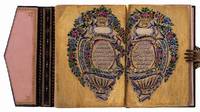
65596Ottoman Empire: Signed Hajj Isma'il Haqi Ibn Mohammed Islamboli first Imam of Sultan Selim Mosque and head of shiekh reciters and dated the fourteenth of Jumada al-Akhirah in the year one thousand two hundred and ninety-four of hijra 1294 AH 1877 AD. Arabic manuscript of 9 leaves of pink polished paper plus 3 blank leaves at the end 11 lines of neat black naskh per page text framed within gilt borders gold roundel verse markers with catchwords decorative endpapers first leaf decorated with illuminated headpiece comprised of saz-style floral sprays and three different varieties of flowers including roses and tulips final leaf likewise decorated with gilt ornamentation and with round stamp of the 'Chief of the Sheikhs of Qur'an Reciters Sayyid Ismail'. Housed in contemporary purple morocco binding with prominent gilt filets to sides. Folio: 18.2 cm. Text Panel: 11.5 x 6.3 cm. Some light rubbing to exterior outer margins with some light wrinkling toning and a few nicks generally a very good example in a handsome leather binding. In the Ottoman tradition a Qur'an school certificate is known as an Ijaza. It is a formal license granted by a teacher to a student certifying that they have mastered the recitation or memorisation of the Qur'an and are now qualified to transmit that knowledge to others. These were prestigious manuscripts granted to students who had mastered the components of Qur'anic sciences such as recitation 'Tajwid' and memorisation 'Hifz' and often include as here a chain of transmission 'Sanad' listing the pupil's teachers. Ottoman Empire: Signed Hajj Isma'il Haqi Ibn Mohammed Islamboli first Imam of Sultan Selim Mosque and head of shiekh reciters, a hardcover
1980KOS01300381Commonplace Publishing 1980. Soft Cover. Fine. KOS01300381 Commonplace Publishing paperback
0483240230.Ghardcover. Good. Access codes and supplements are not guaranteed with used items. May be an ex-library book. hardcover
0364201460.Ghardcover. Good. Access codes and supplements are not guaranteed with used items. May be an ex-library book. hardcover
0483209155.Gpaperback. Good. Access codes and supplements are not guaranteed with used items. May be an ex-library book. paperback
0483240710.Ghardcover. Good. Access codes and supplements are not guaranteed with used items. May be an ex-library book. hardcover
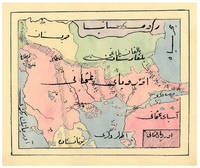
1910ABC_47241Ottoman Empire 1910. Gold-stamped cloth with the tughra of Mehmed V ruled 1908-18 on the front board when reading right to left and "Album" on the back board the front when reading left to right with an inscription below the tughra and the European numerals 16 and 2 flanking an ornament below the inscription the whole framed by 4 large floral cornerpieces. Oblong 4to 26.5 x 19.5 cm. 14 leaves with 10 pen-and-ink maps hand coloured with watercolours. Tissue guards. An album of hand-drawn maps forming an atlas of the western mostly European parts of the Ottoman Empire with legends in Ottoman Turkish written in the Arabic script. The overview map shows Albania Kosovo Macedonia and the Ottoman controlled northern parts of Greece coloured together with Thrace and the northwest parts of Anatolia shown treating them as a single unit while Serbia and Bulgaria like the small parts of territories outside Ottoman control are coloured separately. Most of the other maps give more detailed views of some of these regions including the Bosporus the Dardanelles Halkidiki Chalcidice Albania etc. but there is also a map of Crete not in the overview map.In fine condition. hardcover
H10772Very Good. Quarto half black leather marbled boards title stamped in gilt on spine. Offprints from the Reichs-Gesetz-Blatt of 1856 and 1878 bound together paginated 209-249; 177-209 very good light rubbing to leather. Important pair of treaties: the Paris 1856 treaty effectively concluded the Crimean War. The Western European powers pledged to maintain the integrity of the Ottoman Empire and restored the respective territories of the Russian and the Ottoman Empires to their prewar boundaries. They also neutralized the Black Sea for international trade: it was a huge setback for Russian influence in the region. The Treaty of Berlin 1878 came at the conclusion of the Russo-Turkish war and was a remapping of the Balkans pushing back Russian claims and forcing the Ottomans to accept the loss of major European holdings in a plan largely orchestrated by Bismarck. From 1849 to 1918 the Reichsgesetzblatt legal abbreviation: RGBl. was the official publication organ of the Imperial Patents Laws Regulations and State Treaties of the Austrian monarchy--at the time of these treaties under Franz Josef I. Although not stated owned by Ulysses Grant-Smith 1870-1959 a lifelong diplomat who was stationed in Vienna as part of the American Legation through WWI and who was later the American signatory of the US-Hungarian Peace Treaty of 1921 which had to be done separately because the US senate refused to be part of the Treaty of Trianon. These two treaties would have been good historical preparation for his approach to the 1921 treaty. unknown
1901052829Constantinople: I. Camondo & Cie Constantinople Letterhead. 17 Janvier 1901 1901. No Binding. Very Good. Original autograph letter signed ALS by P.pon "We hereby declare that Ms. L. Cassinelli occupied our house located in Pera Rue Hodja Ali No 19. On December 1 1887 and left him on September 30 1899. That during all time he did not pay me the tax. P. pon de la succession de feu le Comte A. de Camondo. i.e. On behalf of the succession of Count Abraham Salomon Camondo 1781-1873. Probably it's signed by his advocate of Moise de Camondo. Recipient is not defined. Letter indicates one of Camondo family's houses in Pera Constantinople. 265x21 cm. Completely in French. 14 lines. On a paper watermarked "William Brown & Co. London". William Brown and Co. were located in London in this 'St. Mary Axe and 40 to 41 Old Broad Street London E.C.' address according to Grace's guide to British industrial industry; they worked on 'Lithographic and Letterpress Printers'. 1887 Registered as a Limited Company. Count Moïse de Camondo 1860-1935 was an Ottoman Empire-born French banker and art collector. He was a member of the prominent Camondo family. As a child Camondo moved with his family from their home in Constantinople Ottoman Empire to Paris around 1869 where he grew up and continued the career of his father Nissim de Camondo 1830-1889 as a banker. He was born into a Sephardic Jewish family that owned one of the largest banks in the Ottoman Empire established in France since 1869. Starting in 1911 he completely rebuilt the family's Parisian mansion on the Parc Monceau in order to house his collection of 18th-century French furniture and artwork. Working closely with the architect René Sergent he created a palatial home conforming to certain 18th-century traditions even planning the room dimensions to match exactly the objects in his collection. The entryway is inspired by the Petit Trianon of Versailles. The home includes a kosher kitchen with separate sections for meat and dairy. The dining room includes a beautifully-carved green marble fountain in the shape of a shell with a dolphin spigot for the ritual washing of hands before eating a meal. Some highlights of his collection include a French silver service that had been ordered by Russian Empress Catherine the Great a set of Buffon porcelain with exact reproductions of ornithological drawings from the Sèvres manufacturer and perhaps the only existing complete set of Gobelin royal tapestry sketches. He married Irène Cahen d'Anvers daughter of Louis Cahen d'Anvers in 1891. They separated in August 1897 after her affair with de Camondo's stable master Count Charles Sampieri whom she would later marry and divorce. The children Nissim and Beatrice remained with de Camondo. The mansion was completed in 1914 but his son did not reside there very long as he rejoined the French Army to fight in The Great War. It had been de Camondo's great hope that his son whom he adored would take over the family empire. Following Nissim's death in 1917 de Camondo closed all banking activities. He largely withdrew from society and devoted himself primarily to his collection and to hosting dinners for a club of gourmets at regular intervals. Camondo died in 1935 and the museum opened the following year. He donated the home to Paris's Decorative Arts society as a museum Musée Nissim de Camondo in honor of the loss of his son Nissim in World War I. In addition to the collection the meticulously-restored service areas elevator and woodwork of the mansion are noteworthy. During the German occupation of France during World War II his daughter Béatrice his son-of-law Léon Reinach and their children Fanny and Bertrand were deported from France and died in the Auschwitz concentration camp. As a result the de Camondo family died out. <br/> <br/> I. Camondo & Cie, Constantinople Letterhead., 17 Janvier 1901 unknown
1849052077Edirne - Adrianople: AH: 1265 1849. No Binding. Very Good. Original autograph manuscript letter sent to Haci Giray family for condolences on Haci Giray's death. 38x21 cm. On a special paper with 'ahar'. Sealed. 1 p. Has six lines. With a legible script and fine calligraphic style. It starts with 'huve'. He was a Turkish statesman governor and member of state council according to Sicill-i Osmânî by Süreya and Türkischer Biographischer Index. The House of Giray Crimean Tatar: Geraylar Turkish: Âl-i Cengiz also Girays were the Genghisid/Turkic dynasty that reigned in the Khanate of Crimea from its formation in 1427 until its downfall in 1783. The dynasty also supplied several khans of Kazan and Astrakhan between 1521 and 1550. Apart from the royal Girays there was also a lateral branch the Choban Girays Çoban Geraylar. Before reaching the age of majority young Girays were brought up in one of the Circassian tribes where they were instructed in the arts of war. The Giray khans were elected by other Crimean Tatar dynasts called myrzas mirzalar. They also elected an heir apparent called the qalgha sultan qalga sultan. In later centuries the Ottoman Sultan obtained the right of installing and deposing the khans at his will. Giray family settled in Adrianople Edirne city in 17th century. <br/> <br/> AH: [12]65 unknown
1928051573Yozgat: Yozgad Vilâyeti 1928. Soft cover. Very Good. Original autograph letter ALS signed 'Yozgad Valisi Ali Riza' with his original b/w portrait photograph. 1 p. including four lines in Ottoman script. Dated June 21 1928. <br/> <br/> Yozgad Vilâyeti paperback
1878052130Washington: Epeude Vradeus Letterhead 1878. No Binding. Very Good. Original manuscript handwritten letter ALS signed as a Turkish / Ottoman minister in Washington addressed 'Cher Monsiuer' evidently taking in hand the arrangements for his correspondent's visit to Constantinople. 18x11 cm. In French. 3 p. Washington 25 January 1878. Folds lightly toned some mnor blemmishes. Embossed crest with Greek inscription 'Epeude Vradeus'. Gregory "Ligor" Aristarchis also known as Aristarchi Bey was an Ottoman diplomat of Phanariote Greek ethnicity compiler of a corpus of Ottoman legislation. Originally a provincial jurist he became the director of foreign correspondence of Crete beginning in 1861 and then from 1867 the Smyrna Izmir directeur politique "political director" and vice-governor. He served as Ottoman Minister in Washington from 1873 to 1883 with Alexandros Mavrogenis. The Ottoman government dismissed him from his post. Sinan Kuneralp the author of "Ottoman Diplomatic and Consular Personnel in the United States of America 1867-1917" argued that his relationship with Midhat Pasha was the "more likely" reason why he was fired while the official accusation was that Aristarchis misused money from a weapons deal. After 1883 he lived in Paris where he worked as an advisor to Alfred Nobel. After the fall of Abdul Hamid II he served as an Ottoman envoy to the Netherlands where he died. He composed one of the first collections of the Ottoman law in 7 volumes in the French language: "egislation ottomane ou Recueil des lois reglements ordonnances traités capitulations et autres documents officiels de l'Émpire Ottoman" Constantinople: Imprimerie Frères Nicolaides. <br/> <br/> Epeude Vradeus Letterhead unknown
1910053412Istanbul: Bafrali Yanko. ca. 1910 1910. Soft cover. Very Good. Original autograph manuscript prescription signed by Yanko. 19 x 12 cm. Latin script medicines with partly print letterhead and addresses are in Ottoman script. 2 p. Pharmacy stamp on verso. Chipped on margins weak extremities slight stains on paper. A good paper. 1311 AH dated and then dated 1937 in another stamp. It's written Yanko's surgery clinic opposite the Kanaat Publishing House at the Sublime Port. Dr. Yanko of Bafrais one of the Ottoman / Turkish historians who carried out political essays literary stories and translations as well as books and manuscripts he wrote about medicine as a physician. Also known as Bafrali Orduluoglu Dr. Yanko worked at the Bab-i Vâlâ-yi Seraskerî Hospital and he was a member of the Cemiyet-i Tibbiye-i Osmaniye which was established in 1867 and operated as a medical association of the period. Turkey Association is now known as the Academy of Medicine. The name Yanko of Bafra is mentioned in the 1867/1911 records of this organization. He was in the publishing board of the first pediatrics magazine published in Turkey titled 'Emraz-i Pediatri' and who agreed his patients at the number 22 in Mahmudiya Street office retired from being a doctor lieutenant colonel and died in Istanbul on 28 December 1936. In addition he wrote his travel memories titled 'Yozgat Seyahatnamesi' published in 1889 AH 1306. Source: DR. YANKO OF BAFRA AND HIS YOZGAT JOURNEY BOOK by Ulutürk Muammer. <br/> <br/> Bafrali Yanko., [ca. 1910] paperback
1929052076Ankara: Anadolu - Bagdad Demiryollari Müdür-i Umumiyesi Anatolian - Baghdad Railways Directorate 1929. No Binding. Very Good. 8vo - over 7¾ - 9¾" tall. Original manuscript handwritten letter ALS signed 'Nafia Vekili Behiç' i. e. Minister of Public Works Behiç Erkin. 235x145 cm. In Ottoman script. 1 p. Dated November 28 1929. He wrote it when he was manager of Anatolian - Bagdad Railways. Letterhead 'Anadolu - Bagdad Demiryollari Müdür-i Umumiyesi Anatolian - Baghdad Railways Directorate'. Addressed to Mavridis Brothers in Istanbul. Behiç Erkin was a Turkish career officer first director 1920-1926 of the Turkish State Railways nationalized under his auspices statesman and diplomat of the Turkish Republic who helped save almost 20000 ethnic Jews in France during World War II. He was Minister of Public Works 1926-1928 and deputy for three terms; and an ambassador. He served as Turkey's ambassador to Budapest between 1928-1939 and to Paris and Vichy between August 1939-August 1943. As Turkish ambassador in France under the German Occupation after June 1940 Erkin used the power of his office and nation's neutrality to save Jews who could document a Turkish connection however slight from the Holocaust. Other Turkish diplomats in France and elsewhere were also active in this rescue effort. The consulate staff under Necdet Kent in Marseille was particularly involved. <br/> <br/> Anadolu - Bagdad Demiryollari Müdür-i Umumiyesi [Anatolian - Baghdad Railways Directorate] unknown
1945049571Istanbul 1945. Soft cover. Very Good. Original autograph letter. 2 p. No letterhead on paper. In Ottoman script. Sent to Hayri Bey Efendi. Dated February 25 1945. A fine script. Sent from abroad to Turkey before one year of his return. Damat Mehmet Serif was a Turkish statesman Ottoman Minister of Interior author translator and the groom of Sultan Abdulaziz. He graduated Mulkiye School and worked in various government services. In 1901 he married Emine Sultan who was the daughter of Sultan Abdülaziz. Therefore he was groom Damat of Ottoman Court in the last period of the Ottoman Empire. He was translator of 'Voyages of Ibn-i Battuta' into Turkish from Arabic language and 'The Prince' by Machiavelli. from French. Source: Türk meshurlari -1946- Ibrahim Alaettin Gövsa. He's known with his a negative attitude towards the Turkish War of Independence. After that he became one of the people disrupting the national unity in the Speech by Mustafa Kemal Atatürk. When the War of Independence was successful he was fled and banished. He returned from exile to Turkey in 1946. <br/> <br/> paperback
1955051571Istanbul 1955. Soft cover. Very Good. Original autograph letter and one original press photography of Damad Mehmed Serif Pasha Çavdarlioglu; two items together. Photograph taken in 1914 according to the seal on verso. Sealed and photo by French photographer Dupuy & Cie. of Paris. This photo used by 'Meurisse' for a reportage there is another seal by 'Meurisse' of Paris. 14x9 cm. Text in French. Autograph letter by Mehmed Serif written a fine in Ottoman script addressed to an unnamed person. He mentions on this letter 'Nizamülmülk's Siyasetnama i.e. Book of politics he wanted to translate it however he wrote in his letter that he's afraid of translation. Damat Mehmet Serif was a Turkish statesman Ottoman Minister of Interior author translator and the groom of Sultan Abdulaziz. He graduated Mulkiye School and worked in various government services. In 1901 he married Emine Sultan who was the daughter of Sultan Abdülaziz. Therefore he was groom Damat of Ottoman Court in the last period of the Ottoman Empire. He was translator of 'Voyages of Ibn-i Battuta' into Turkish from Arabic language and 'The Prince' by Machiavelli. from French. Source: Türk meshurlari -1946- Ibrahim Alaettin Gövsa. He's known with his a negative attitude towards the Turkish War of Independence. After that he became one of the people disrupting the national unity in the Speech by Mustafa Kemal Atatürk. When the War of Independence was successful he was fled and banished. He returned from exile to Turkey in 1946. Dated 1955 after nine years of his return from exile. Extremely rare. <br/> <br/> paperback