James, SyrieBiblio.com

1 644 résultats
1720143706.Gpaperback. Good. Access codes and supplements are not guaranteed with used items. May be an ex-library book. paperback
195387627Beyrouth (Liban), Imprimerie Catholique 1953 In-4. Reliure éditeur toile grège, 239 pp., illustrations en noir & blanc, 1 carte archéologique et historique de la Syrie ancienne repliée in fine. Bon exemplaire sans jaquette.
Prima edizione.Contiene 64 tavv.fotografiche e una carta.Legatura editoriale tutta tela,decorata al piatto.Ottima copia.Pp.276
377 p., [4] leaves of plates Hardcover Very good condition
Mm 140x220 Collana "Problemi e ricerche di storia antica". Brossura originale con sovracoperta, 511 pagine con disegni nel testo. Indice dei luoghi in chiusura. Ottima copia; spedizione in 24 ore dalla conferma dell'ordine.
89472Ravenna, Edizioni del Girasole 1988, 235x160mm, XV - 380pagine, in brossura. Etichetta citazione sul retro. Timbro della biblioteca. Buone condizioni.
8vo., Second Edition, with numerous photographs in the text; red cloth, gilt back, a near fine copy in unclipped dustwrapper. A standard reference, first published in 1996.
1400116724.GaudioCD. Good. Access codes and supplements are not guaranteed with used items. May be an ex-library book. unknown
1929134765Paris, Argo 1929 In-12 19 x 12 cm. Broché, couverture de J. C. Duval, 249 pp., table des matières.
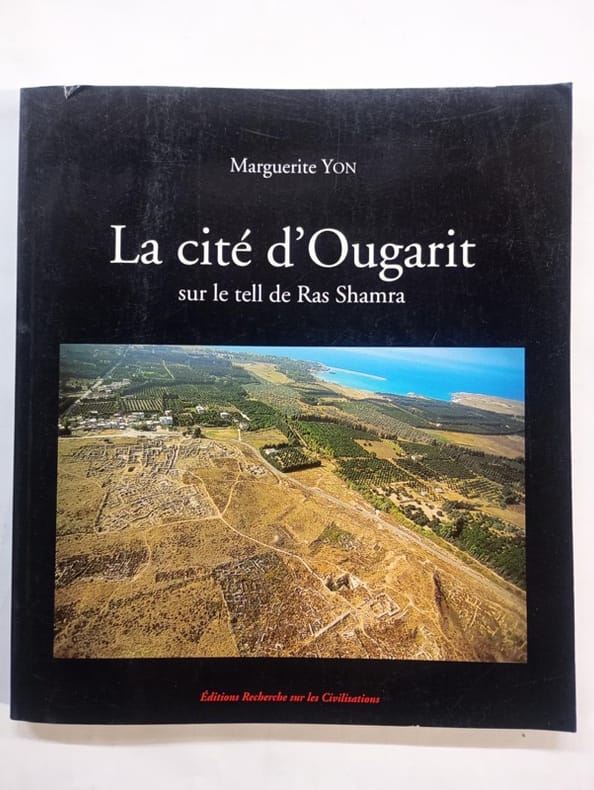
1998138487Etudes et Recherche sur les Civilisations, coll. « Guides archéologiques de l'Institut français d'archéologie du Proche-Orient », n° 2 1998 In-8 broché 24 cm sur 21. 190 pages. Petit accroc en tête du premier plat, intérieur frais. Bon état d’occasion.
DISPONIBILITÀ GARANTITA AL 99%; SPEDIZIONE ENTRO 12 ORE DALL'ORDINE. RIMANENZA DI MAGAZZINO PARI AL NUOVO. MAI SFOGLIATO, LIEVISSIMI SEGNI DEL TEMPO. In questo volume sono raccolti alcuni dei saggi dedicati da questo studioso tra i massimi esperti della storia dell'arte medievale dei nostri tempi, al cruciale tema dell'arte medievale europea e alle sue radici nel mondo a oriente del Mediterraneo: a Bisanzio, in Siria e in Persia, regioni a loro volta profondamente intercorrelate nella dinamica degli eventi artistici. L'autore analizza in dettaglio e nello stesso tempo dilata panoramicamente la sua ricerca su oggetti d'arte di particolare rilievo per la dimostrazione di questo assunto: per esempio la cassetta eburnea di Troyes o la brocca smaltata di St. Maurice d'Agaune, dove l'apporto delle civiltà persiana, islamica, bizantina si fondono in una forma artistica carica anche di precisi messaggi simbolici o, comunque, in un'espressione di altissimo livello qualitativo. Nel suo saggio sull'arte siriaca, l'autore ha tracciato un pionieristico disegno del ruolo svolto da questa civiltà figurativa tanto sul mondo bizantino strettamente inteso, quanto soprattutto sul Medioevo europeo. A questo saggio si richiama l'ultimo di quelli qui raccolti dove l'autore traccia una preziosa sintesi dell'apporto siriaco al mondo medievale. Essenziale apertura alla comprensione della civiltà medievale, ancor oggi troppo disinvoltamente incompresa all'ombra di pregiudiziali impostazioni critiche misurate sulla gloria della successiva pittura e arte toscana fra 200 e 300, questi testi segnano una tappa fondamentale della ricerca storico-artistica sul Medioevo figurativo europeo e, nel contempo, italiano. Integrazione essenziale del volume è l'apparato illustrativo, ricco di oltre 200 tavole con più di 300 fotografie, che costituiscono un'eccezionale visualizzazione dei fenomeni artistici presi in esame e di tutte le loro implicazioni storiche. Descrizione bibliografica Titolo: Persia, Siria e Bisanzio nel Medioevo artistico europeo Autore: Géza De Francovich Curatore: Valentino Pace Editore: Napoli: Liguori, 1984 Lunghezza: 208 pagine; 22 cm; illustrato ISBN: 8820711672, 9788820711672 Collana: Volume 25 di Nuovo Medioevo, Biblioteca Soggetti: Movimenti e stili artistici, Arte bizantina e medievale dal 500 d.C., arte medievale europea, Bisanzio, Influssi, Oriente, Orientalismo, Occidente, Costantinopoli-Ravenna-Roma, Relazioni internazionali, Cultura, Persia sasanide, Est, Asia, Impero romano, Islam, Storia antica, Archeologia, Siria, Syria, Nicea, Costantinopoli, Pittura, Mosaici, Arte miniatoria, Troyes, Budapest, Saint-Maurice, Bema, Regalità, Macedonia, Cassetta eburnea, Corona, Costantino IX, Monomonaco, Brocca d'oro, Reperti archeologici, Tesori, Agaune, Tessuti, Iconoclastia, Fotografie, Bibliografia, Arte sasanide, achemenide, Ravennate, Palatium di Teodorico, Frigia, Scultura
1665108320.GaudioCD. Good. Access codes and supplements are not guaranteed with used items. May be an ex-library book. unknown
Very Good German Paperback. Large roy. 8vo. (25 x 17 cm). In German. 29-64 pp. Die Nusairî im heutigen Syrien. 'The Nusairi' in today's Syria. Rare.
Very Good Turkish Paperback. Roy. 8vo. (24 x 17 cm). In Turkish. [xi], [3], 77 p. Suriye-Roma kodu ve Islâm hukuku (Mecmû al-Fikh sistematigile). First and Only Edition.
mon0000678440Siria Gomez. paperback. Good. 0.3937 in x 10.9055 in x 8.4252 in. Crease on cover and a few pages Siria Gomez paperback
New English Paperback. Pbo. Roy. 8vo. (24 x 17 cm). In English. 424 p. Ottoman diplomatic documents on "the Eastern Question" IV: Reforms and foreign intervention: Rumeli and Syria, 1859-1862. Preface. Editor's Note. Introduction. Index of writers of telegrams and despatches. Documents. Subject index. Name index. OTTOMANIA Archives Eastern question Balkans Roumelia Syria Middle East Politic history Last period of Ottoman Empire.
Vol. tre in-16° pp. 206-224-247 con moltissime ill. n.t. Bross. edit.
1995R77587Rome, Mar Thoma Yogam (St.Thomas Christian Fellowship) 1995 xix + 296pp., softcover, 24cm., VG, R77587
xix + 296pp., softcover, 24cm., VG, R77587
Large 8vo. Pp. x,166, numerous photos on 82 plates, many drawings and tables in text, refs. Orig. wrappers.
Original single-sheet steel engraving of a very fine quality. Overall size ca. 215 x 270 mm. Image size ca. 130 x 190 mm. A two-line caption engraved at bottom in elegant handtooled open-face and italic types. Engraved Artist's and Engraver's signatures underneath image. Engraved Publisher's line below. The print is in its original state, trimmed and gilded on three sides. It is printed with warmer ink, somewhat more dramatic in mood, with fine, crisp detail, subtlety and elegance. In overall fine condition. Preserved in pH-balanced, acid-free Renaissance archival paper. ~ A delicately executed steel engraving, representing a major illustrative work on 19th century Palestine, Syria, and Asia Minor. William Henry Bartlett (born London, 1809) was one of the foremost illustrators of topography of his generation. He travelled extensively throughout Britain, the Americas, and the Middle East, producing his work on location. In 1854 he made his last trip to the Holy Land; he died of fever on board a French ship on his return voyage to England. Bartlett's primary concern was to extract the picturesque aspects of a place and render "lively impressions of actual sights", as he wrote in the preface to "The Nile Boat" (London, 1849). His work became widely known through the numerous engravings after the original drawings and paintings he made. The interest in these engravings today is as much for the exquisite quality of the rendering and presentation of the architecture of the period, as it is for the representation of the landscape. Published in 1836 by Peter Jackson, Late Fisher, Son & Co. of London, it was originally accompanied by descriptions written by John Carne.
Original single-sheet steel engraving of a very fine quality. Overall size ca. 215 x 270 mm. Image size ca. 130 x 190 mm. A two-line caption engraved at bottom in elegant handtooled open-face and italic types. Engraved Artist's and Engraver's signatures underneath image. Engraved Publisher's line below. The print is in its original state, trimmed and gilded on three sides. It is printed with warmer ink, somewhat more dramatic in mood, with fine, crisp detail, subtlety and elegance. In overall fine condition. (Some marginal spotting.) Preserved in pH-balanced, acid-free Renaissance archival paper. ~ A delicately executed steel engraving, representing a major illustrative work on 19th century Palestine, Syria, and Asia Minor. William Henry Bartlett (born London, 1809) was one of the foremost illustrators of topography of his generation. He travelled extensively throughout Britain, the Americas, and the Middle East, producing his work on location. In 1854 he made his last trip to the Holy Land; he died of fever on board a French ship on his return voyage to England. Bartlett's primary concern was to extract the picturesque aspects of a place and render "lively impressions of actual sights", as he wrote in the preface to "The Nile Boat" (London, 1849). His work became widely known through the numerous engravings after the original drawings and paintings he made. The interest in these engravings today is as much for the exquisite quality of the rendering and presentation of the architecture of the period, as it is for the representation of the landscape. Published in 1836 by Peter Jackson, Late Fisher, Son & Co. of London, it was originally accompanied by descriptions written by John Carne.
Original single-sheet steel engraving of a very fine quality. Overall size ca. 215 x 270 mm. Image size ca. 130 x 190 mm. A two-line caption engraved at bottom in elegant handtooled open-face and italic types. Engraved Artist's and Engraver's signatures underneath image. Engraved Publisher's line below. The print is in its original state, trimmed and gilded on three sides. It is printed with warmer ink, somewhat more dramatic in mood, with fine, crisp detail, subtlety and elegance. In overall fine condition. (Some spotting.) Preserved in pH-balanced, acid-free Renaissance archival paper. ~ A delicately executed steel engraving, representing a major illustrative work on 19th century Palestine, Syria, and Asia Minor. William Henry Bartlett (born London, 1809) was one of the foremost illustrators of topography of his generation. He travelled extensively throughout Britain, the Americas, and the Middle East, producing his work on location. In 1854 he made his last trip to the Holy Land; he died of fever on board a French ship on his return voyage to England. Bartlett's primary concern was to extract the picturesque aspects of a place and render "lively impressions of actual sights", as he wrote in the preface to "The Nile Boat" (London, 1849). His work became widely known through the numerous engravings after the original drawings and paintings he made. The interest in these engravings today is as much for the exquisite quality of the rendering and presentation of the architecture of the period, as it is for the representation of the landscape. Published in 1836 by Peter Jackson, Late Fisher, Son & Co. of London, it was originally accompanied by descriptions written by John Carne.
Original single-sheet steel engraving of a very fine quality. Overall size ca. 215 x 270 mm. Image size ca. 130 x 190 mm. A two-line caption engraved at bottom in elegant handtooled open-face and italic types. Engraved Artist's and Engraver's signatures underneath image. Engraved Publisher's line below. The print is in its original state, trimmed and gilded on three sides. It is printed with warmer ink, somewhat more dramatic in mood, with fine, crisp detail, subtlety and elegance. In overall fine condition. (Few marginal spots, not affecting image.) Preserved in pH-balanced, acid-free Renaissance archival paper. ~ A delicately executed steel engraving, representing a major illustrative work on 19th century Palestine, Syria, and Asia Minor. William Henry Bartlett (born London, 1809) was one of the foremost illustrators of topography of his generation. He travelled extensively throughout Britain, the Americas, and the Middle East, producing his work on location. In 1854 he made his last trip to the Holy Land; he died of fever on board a French ship on his return voyage to England. Bartlett's primary concern was to extract the picturesque aspects of a place and render "lively impressions of actual sights", as he wrote in the preface to "The Nile Boat" (London, 1849). His work became widely known through the numerous engravings after the original drawings and paintings he made. The interest in these engravings today is as much for the exquisite quality of the rendering and presentation of the architecture of the period, as it is for the representation of the landscape. Published in 1836 by Peter Jackson, Late Fisher, Son & Co. of London, it was originally accompanied by descriptions written by John Carne.
Original single-sheet steel engraving of a very fine quality. Overall size ca. 215 x 270 mm. Image size ca. 130 x 190 mm. A two-line caption engraved at bottom in elegant handtooled open-face and italic types. Engraved Artist's and Engraver's signatures underneath image. Engraved Publisher's line below. The print is in its original state, trimmed and gilded on three sides. It is printed with warmer ink, somewhat more dramatic in mood, with fine, crisp detail, subtlety and elegance. In overall fine condition. Preserved in pH-balanced, acid-free Renaissance archival paper. ~ A delicately executed steel engraving, representing a major illustrative work on 19th century Palestine, Syria, and Asia Minor. William Henry Bartlett (born London, 1809) was one of the foremost illustrators of topography of his generation. He travelled extensively throughout Britain, the Americas, and the Middle East, producing his work on location. In 1854 he made his last trip to the Holy Land; he died of fever on board a French ship on his return voyage to England. Bartlett's primary concern was to extract the picturesque aspects of a place and render "lively impressions of actual sights", as he wrote in the preface to "The Nile Boat" (London, 1849). His work became widely known through the numerous engravings after the original drawings and paintings he made. The interest in these engravings today is as much for the exquisite quality of the rendering and presentation of the architecture of the period, as it is for the representation of the landscape. Published in 1836 by Peter Jackson, Late Fisher, Son & Co. of London, it was originally accompanied by descriptions written by John Carne.