358 résultats
New English Original bdg. HC. 4to. (31 x 23 cm). In English. 152 p., color ills. "This book focuses on the banknotes of Kazakhstan with respect to their cultural, historical and technical content. It also tells the little known history of how Kazakhstan became one of the best producers of banknotes in the world in less than 20 years time." "Kazakhstan has been an eager adopter of innovative anti-counterfeiting technologies, including many firsts in world banknotes. Collectors everywhere will appreciate adding this book to their numismatic libraries as the first specialized reference to the nation's beautiful and groundbreaking new notes." (Owen W. Linzmayer, Publisher of the Banknote Book). Contents: Introduction.; Acknowledgements.; H. E. Nursultan Nazarbayev the First President of the Republic of KAzakhstan, his bright vision on the news technologies and innoivation.; Mr. Grigoriy Marchenko, the governor...; Historical characters depicted on the banknotes of Kazakhstan.; Technical definitions of the Security Features used on the banknotes of Kazakhstan.; Regular issues: 1993 - Tenge, 1993 Tiyn, 1994, 1996, 1998, 1999, 2000, 2001, 2003, 2006, 2011-2012 issue: Commemorative banknotes of Kazakhstan...".
17835Fixot, 1992. Format 16x24 cm, broche, 308 pages. Tres bon etat.
1982AUB-3353Lausanne, éd. 24 Heures 1982. Bel exemplaire broché, couverture ornée d'éd., in-8, 183 pages avec carte et table.
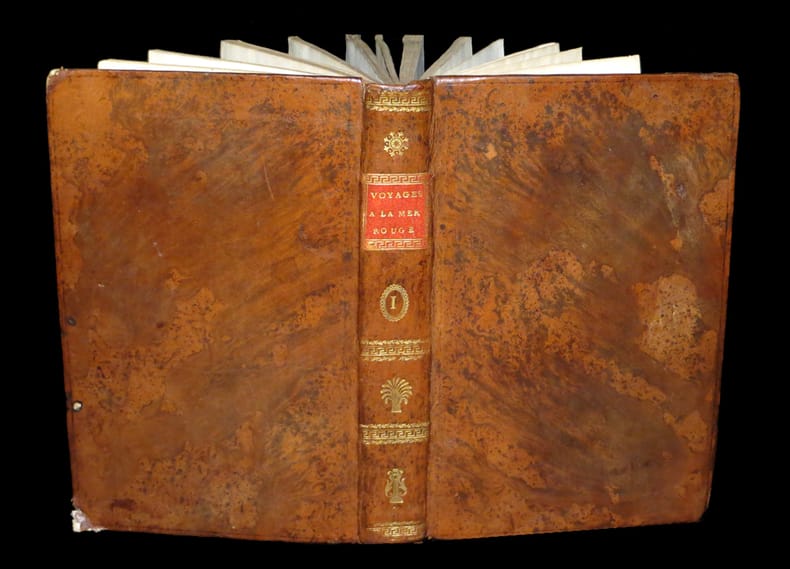
179221421A Paris, chez Briand, 1792. Un fort vol. au format in-8 (201 x 132 mm) de 2 ff. n.fol., vi - 440 pp. Reliure de l'époque de pleine basane racinée brune, filet à froid encadrant les plats, dos lisse orné de filets dorés, roulettes dorés, larges fleurons stylisés dorés, pièce de titre de maroquin cerise, titre doré, tranches mouchetées.
0071586873.Gpaperback. Good. Access codes and supplements are not guaranteed with used items. May be an ex-library book. paperback
1987AUB-6850Editions AGEP / Éd. Olizane 1987. Bel exemplaire relié, reliure pleine toile, jaquette conservée, gd in-4 ((33x28), non paginé (plus de 140 pages).
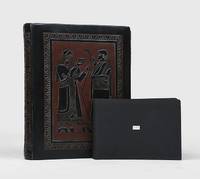
1935169367Aden: 1935-36. A superb window onto Yemen in the 1930s Two albums depicting the experiences of British servicemen stationed in Yemen around the time of the Second Italo-Abyssinian War 1935-7 mixing the documentary and the personal. The images include very rare contemporary aerial photographs of towns including Aden Ta'izz and Shibam graphic pictures of war in Addis Ababa urban military and agricultural scenes and records of free time on the RAF base at Khormaksar. Nearly all carry explanatory manuscript captions. Aden was of crucial strategic importance to the British Empire having been brought under the control of the East India Company in 1839. After the opening of the Suez Canal in 1869 it became one of the world's busiest ports. The RAF maintained a base at Khormaksar now Aden International Airport which played host to numerous squadrons throughout the 1930s. Of these No. 8 Squadron was stationed at Khormaksar for the longest period of time maintaining a policing and day-bombing role. Photographs of military aircraft belonging to No. 8 Squadron can be seen in these albums alongside pictures of planes flown by Nos 203 41 and 55 Squadrons. The photographs give a vivid impression of the volume of air and maritime traffic - mostly British but also French and Dutch - which passed through Aden after Mussolini's invasion of Ethiopia. Aerial shots show Fairey MK IIIs and Vickers Vincent planes flying in formation as well as night and day bombers and flying boats. There are also detailed close-ups of ships including British aircraft carriers. It seems probable that the photographer who assembled these albums was involved in surveying: there are fine aerial shots of Aden and Crater the Sultan's palace at Lahij Shuqra Shibam Tarim Ibb al-Mukalla and Ta'izz giving an outstanding sense of how these towns looked in the early 20th century. The pictures of Ethiopia include one aerial photograph of Addis Ababa a number of ground shots of an execution the wounded and the dead and images of buildings on fire. There is only one photograph captioned as having been taken in Somaliland but this provides a further clue that the photographer was sent from Yemen to the Horn of Africa with the intention of documenting Italian military activities there. As a result of the Second Italo-Abyssinian War Ethiopia was incorporated into Italian East Africa consisting of Italian Somalia Ethiopia and Eritrea. Britain ruled British Somaliland and France controlled French Somaliland Djibouti. Many of the images may have been taken when the photographer was off duty. There are several almost touristic shots of everyday life in Crater showing children playing and Friday prayers images taken on the beach and in the salt pans around Aden pictures of Yemeni pastoralists with their cattle and photographs of Yemeni Indian and Somali women. A significant minority of the pictures show downtime at Khormaksar with a string of images depicting airmen in fancy dress playing football and drinking. There are even two photos of the squadron's dog in a cap and glasses and with a pipe in its mouth. 2 albums. Album I with 175 silver print photographs of various dimensions 100 x 65 mm - 240 x 180 mm mounted on card. Album II with 55 silver print photographs all c.100 x 150 mm or c.75 x 100 mm. Almost all photographs with period ink captions. Album I: quarto 290 x 230 mm. Original cloth covers spine and sides decorated with pictorial designs in relief marbled endpapers 36 card stock leaves. Album II: landscape octavo 130 x 187 mm. Contemporary black card wrappers "Aden" title sticker on front cover 22 card stock leaves. Album I: superficial rubbing to spine and rear cover short splits to inner hinges fore edges nicked. Album II: rear inner hinge split glue residue to gutters. Photographs all in very good condition. hardcover
B9781732845954Paperback / softback. New. paperback
43437629like new. unknown
B9781951364076Paperback / softback. New. paperback
B9781951364052Paperback / softback. New. paperback
B9781732845916Paperback / softback. New. paperback
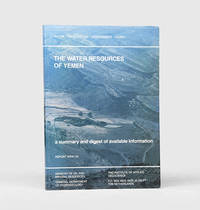
167682Sana'a and Delft: Printed for Ministry of Oil and Mineral Resources General Department of Hydrology; TNO Institute of Applied Geoscience 1995. With attractive maps and cross-sections First edition first printing consolidating hydrological data on Yemeni geography information sources climate monitoring networks and surface- and groundwater with a particular focus on evapotranspiration and flash flows. An institutional search locates only seven copies in Europe and the US. The Yemen Arab Republic formed the General Department of Hydrogeology GDR in 1978 and the Yemeni-Dutch Water Resources Assessment Yemen WRAY programme was launched four years later. WRAY investigated the water resources while building a public database and its fourth phase began in 1990 to ensure the GDR's self-reliance and consolidate earlier findings. The study focuses on western areas such as Tihama Al Jauf and Marib while the east is largely limited to the Wadi Hadhramaut. It looks at ancient water systems such as the old Marib Dam the collapse of which is noted in the Koran. Also shown is spate irrigation illustrated by Van der Gun's map of Wadi Surdud. Ghayls open canals capturing groundwater are identified as future study potential. Modern projects are assessed including the new Marib Dam and irrigation project and the increasing challenges of groundwater depletion are examined. Folio. With 6 colour folding maps and colour geological cross-section illustrations in the text. Original illustrated wrappers front wrapper lettered in white. Some rubbing of extremities soiling of rear wrapper end edges of text block internally clean. A very good copy. unknown
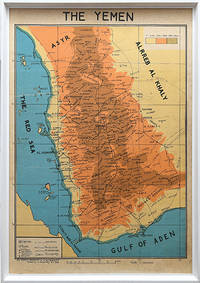
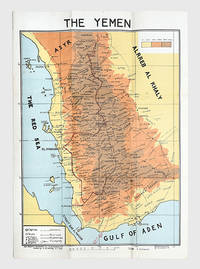
1976168409San a: Yemen Arab Republic Government 5 January 1976. Second edition labelled here as "The Yemen". It is drawn by the elusive cartographer usayn Abd All h Dham r here appearing as H. Althamary who also produced a map of San a . We have identified only six institutional copies on WorldCat at Exeter Leiden NLS Cornell LoC US Geological Survey. The first edition was published in Egypt in 1972 while an Arabic edition appeared in 1976. The map is in idiosyncratic English and marks the strategically important governorates of Taiz al-Bayda and Ma rib. Several words are misspelled including "drawen" "boundries" and "vally." The eastern border is left blank excluding the independent People's Democratic Republic of Yemen. A brief border war took place in October 1972 ending with the Cairo Agreement which proposed unification of the two Yemeni states. Each was backed by opposing Cold War powers: Saudi Arabia supported the Yemen Arab Republic while the Soviet Union backed the other. The two states ultimately united in 1990 as the Republic of Yemen. Colour lithographed map 655 x 450 mm scale 1:1000000; later laid down on board; white wooden frame overall 690 x 490 mm; text in English. Slightly toned some creasing one small hole: a very good copy. Warren P. Aston "The Origins of the Nihm Tribe of Yemen: A Window into Arabia's Past" in Journal of Arabian Studies: Arabia the Gulf and the Red Sea 4:1 2014 pp. 134-148. unknown
178175Egypt: M. Louts 5 January 1972. With manuscript route annotations First edition here labelled "The Yemen". It is drawn by the elusive cartographer usayn Abd All h Dham r appearing as H. Althamary who also produced a map of San a . Only three institutional copies are recorded in WorldCat at Leiden the Library of Congress and Michigan. An Arabic edition and a second English edition were published in 1976. The map is in idiosyncratic English and marks the strategically important governorates of Taiz al-Bayda and Ma rib. Several words are misspelled including "drawen" "boundries" and "vally." The eastern border is left blank excluding the independent People's Democratic Republic of Yemen. A brief border war took place in October 1972 ending with the Cairo Agreement which proposed unification of the two Yemeni states. Each was backed by opposing Cold War powers: Saudi Arabia supported the Yemen Arab Republic while the Soviet Union backed the other. The two states ultimately united in 1990 as the Republic of Yemen. The route annotations in red pen stretch from Najran in the north to the Bab al-Mandab Strait in the south. Colour map 660 x 463 mm scale 1:1000000 text in English. Old fold marks a few small holes at folds small chip to head not affecting text a little offsetting at lower margin: a very good copy. Warren P. Aston "The Origins of the Nihm Tribe of Yemen: A Window into Arabia's Past" in Journal of Arabian Studies: Arabia the Gulf and the Red Sea 4:1 2014 pp. 134-148. unknown
1994BN100253Mainz am Rhein : von Zabern 1994. 1994. Les fortifications d'Arabie méridionale du 7e au 1er siècle avant notre ère. par. Deutsches Archäologisches Institut Sana / Archäologische Berichte aus dem Yemen ; BD 8 1.80 <br/><br/>Les fortifications d'Arabie méridionale du 7e au 1er siècle avant notre ère. par. Deutsches Archäologisches Institut Sana / Archäologische Berichte aus dem Yemen ; BD 8 1.80 Mainz am Rhein : von Zabern unknown
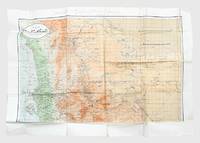
1962171426Sana'a: c.1962. Mining the border between north and south Yemen First and sole edition of this map of North Yemen with unique additions marked "top secret" in Arabic and annotated Kharitah tanbih mawaqi' al-algham "mashru' rif'at" "A map of briefing of the locations of mines of the Rifaat Plan". Although the map itself is undated and information about the "Rifaat Plan" is not publicly available it is possible that the strategy was connected to the Egyptian military officer Kamal Rifaat who visited the Yemen Arab Republic along with Anwar Sadat just after its establishment in 1962. Subsequently the Egyptians provided the YAR with a great deal of military support and advice as Abd Allah al-Sallal the country's first president fought the Federation of South Arabia later South Yemen. The long period of confrontation between North and South Yemen extended throughout the 1970s from the First Yemenite War of 1972 to the Second Yemenite War of 1979. Mines were also laid on the border before the two countries were unified in 1990 and have continued to be planted in subsequent conflicts until the present day. The map shows schematic clusters of minefields beginning due east of Sana'a around Meghdal extending in a line northwards to Wa'ir and then northwest to Jabal Mara' on the border with Saudi Arabia. The consequence of laying these minefields would have been to entrench the border between North and South Yemen the course of which they mirror almost exactly. It is annotated in pencil and colour pencil. Colour map 1000 x 690 mm. Text in Arabic. Creased where folded short closed tears and holes along fold lines and extremities a little soiled in places: a very good copy. unknown
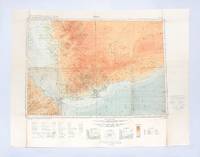
1930182334London: Geographical Section General Staff War Office 1930. Later impression overprinted with a Cassini grid in 1930 following the first edition of 1926. This map of the Aden Protectorate and its neighbours was produced for the International Map of the World a project that aimed to create a complete world map at a 1:1000000 scale. It covers South Yemen and the Hadhramaut as well as the tip of French Somaliland. The International Map of the World or the Millionth Map of the World was first proposed by German geographer Albrecht Penck in 1891. The project was adopted by ten countries in 1909 who agreed to follow consistent rules and standards for mapping their own territories. While countries like the US and UK made strides at first "production was slow in the earlier years since it was first necessary to complete basic surveys for the required data and during and after World War II there was little interest in pursuing the project" Ency. Brit. Colour lithograph map 648 x 856 mm linen-backed perhaps not as issued key printed on recto; text in English and French. A little foxed dust-soiling slight wear and a few small holes along fold lines: a very good copy. unknown
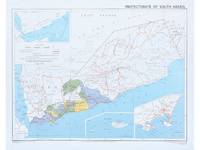
1964182178Surrey: Directorate of Overseas Surveys 1964. Later edition printed in the second year of the protectorate. In addition to showing the states of Kathiri Mahra and Qu'aiti it also highlights the members of the Federation of South Arabia in colour and features three inset maps which show the entire region the island of Socotra and the State of Aden. The Directorate of Overseas Surveys was established in 1946 with responsibility for surveying parts of the British Empire that did not have the resources to otherwise map themselves. "The Directorate was charged with two key tasks. It was to provide national geodetic frameworks throughout the British Empire that would contribute to understanding the size and shape of the earth and constitute the basis for accurate mapping. It would also produce mapping using modern methods based on aerial photography. This would in turn help to inform the development and administration of each country" Natural Collection of Aerial Photography. This copy is the fourth edition. Colour map 324 x 406 mm printed on recto only key on recto. Map bright a little bowed sometime folded with a vertical crease at centre slightly creased at edges: a very good copy. National Collection of Aerial Photography "Directorate of Overseas Surveys". unknown
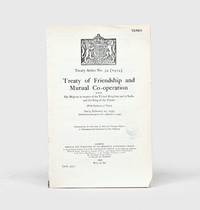
1934164042London: His Majesty's Stationery Office 1934. First English-Arabic edition first impression of the diplomatic agreement which acknowledged "the complete and absolute independence of His Majesty the King of the Yemen the Imam and his kingdom in all affairs of whatsoever kind" p. 2. In June 1934 shortly after this agreement was concluded Ibn Saud and Imam Yahya signed the Treaty of Taif which brought an end to armed hostilities between the two countries. In this development Britain had played a major part with its support for Yemen and comparatively lukewarm stance vis-à-vis Ibn Saud helping to both precipitate military conflict and ultimately bring it to an end. The English text of the treaty without the ratifications was first published earlier in the year as HMSO Yemen No. 1. Octavo 232 x 151 mm pp. 11. Royal coat of arms of the UK on first page. Sometime disbound with no subsequent stitching. Small faint Admiralty ink stamp dated 14 December 1934 on first page. Light creasing and skinning where previously bound a few nicks small chip at foot of first leaf text bright. A very good copy. unknown
1997271959Paris: Flammarion 1997. hardcover. near fine/very good. Extensively illustrated with color photographs. 239 pages with text in French. 4to gray boards d.w.; minor edgewear and fading to top margin of dust wrapper. Paris: Flammarion 1997. A near fine copy in a very good dust wrapper.<br/> <br/> Instiut du Monde Arab<br/> <br/> Flammarion unknown
1997271959Paris: Flammarion 1997. hardcover. near fine/very good. Extensively illustrated with color photographs. 239pp. 4to cloth d.w.; minor edgewear to top margin of dust wrapper. Paris:Flammarion 1997. A near fine copy in a very good dust wrapper.<br/><br/> Instiut du Monde Arab<br/><br/> Flammarion unknown books
1852X114460Göttingen, Dieterichschen Buchhandlung 1852 Complete in 2 parts in one physical volume, [4] + [82] + [106] pp. (containing resp. 24 and 27 genealogical tables), in oblong (23x32cm.), solid modern amateur hardcover (marbled boards, spine in cloth), pages are clean and bright, good condition, [N.B. The "Register" to this work, published in 1853, is not included], weight: 1kg., X114460
1952Y1357Mainz, Verlag der Wissenschaften und der Literatur, 1952. Kartoniert, 8°, 166 S., Mit 19 Abbildungen im Text, 12 Tafeln, einer einfarbigen und einer zweifarbigen Karte, Nr. 4 der »Geistes- und sozialwissenschaftlichen Klasse«
199439673ABStuttgart-Zürich, Belser Verlag, 1994. 4° (32x24), 128 S., mit zahlr. fotograf Aufnahmen, Übersichtskarte, OPbd mit fotoill OU, DiplomatenStempel auf Vorsatz, sonst nahezu ungelesen, fest sauber und gepflegt,