FREDOL AlfredLivre Rare Book
1 884 résultats
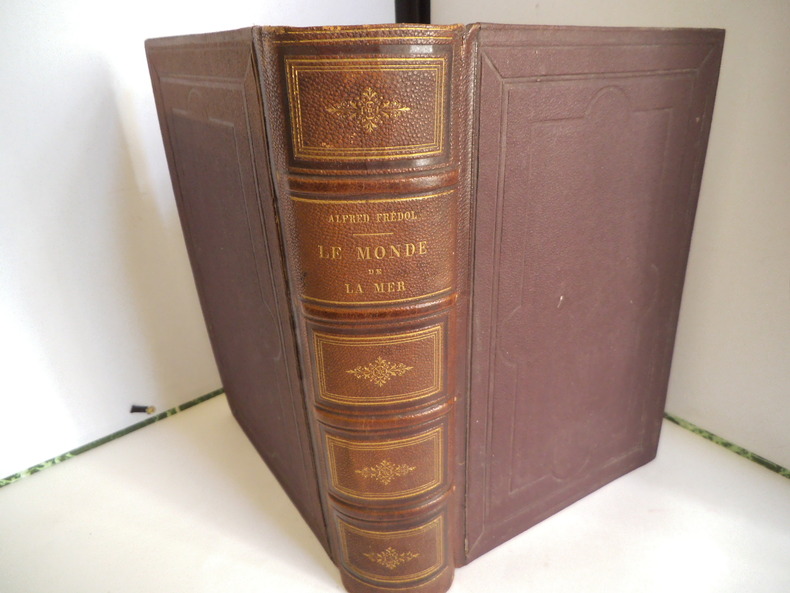
8760(Alfred Moquin-Tandon)deuxième édition.In 4 demi-chagrin marron à nerfs, titre et caissons dorés. Plats percaline chagrinée, filets à froid en encadrement, faux-titre, frontispice en couleur, sous serpente, titre VII, 693 pages, tranches dorées, 22 planches en couleurs, hors-texte, sous serpentes, 14 planches en noir, hors-texte, 320 vignettes dans le texte, Paris L. Hachette é Cie 1866. Très bon état.
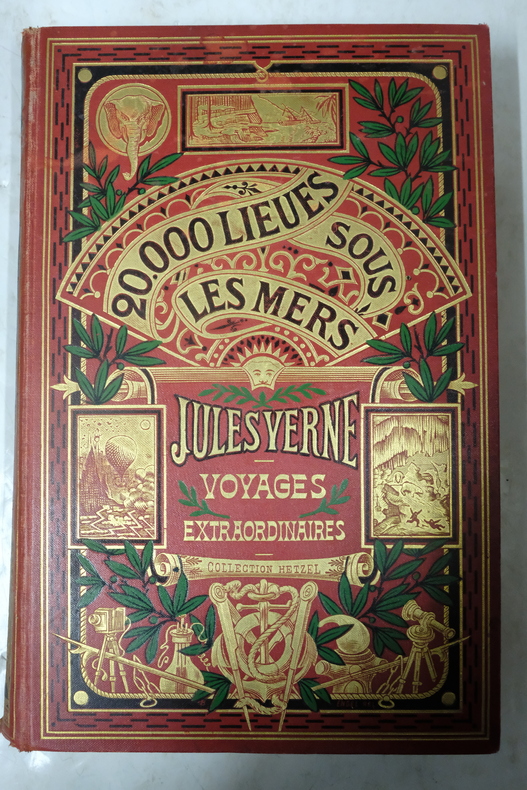
1905LIT9659M1905, J. Hetzel et Cie, relié, 434 pages, tranches dorées, bon état général, quelques légères marques du temps et rousseurs.
9256description-organisation-histoire. In 8 pleine toile rouge, chagrinée, de l’éditeur. Titre doré. Filets à froid en encadrement. Faux-titre, titre, 283 pages. Complet de la grande carte, en couleurs, dépliantes de B. ROBLET, en fin de volume. Tranches dorées. Paris Librairie Charles Delagrave 1895. Edition originale. Une petite déchirure, sans gravité page
1969737552PN. New. 1969. Soft Cover. Date is original print. This is a reprint edition. . PN paperback
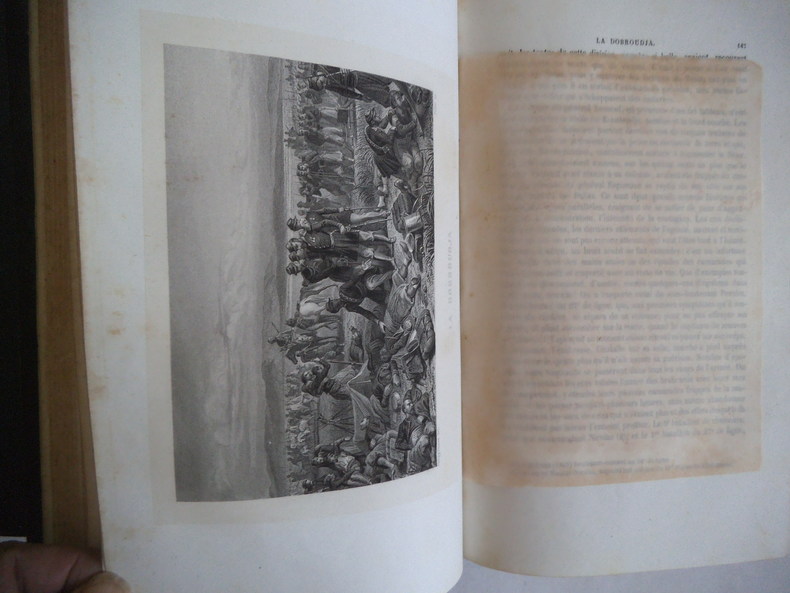
9721Publié sous la direction du Contre Amiral DUMONT D’ URVILLE. Nouvelle édition revue, corrigée. Deux tomes en deux volumes in 4 demi-cuir rouge. Titre et caissons dorés. Larges filets à froid sur les plats. Tome1 : faux-titre, frontispice gravé, sous serpente, titre XI, 550 pages, 1 page de table des chapitres, tranches mouchetées. 21 gravures sur acier, hors-texte, sous serpente, y compris le frontispice, Une grande carte dépliante Tour du Monde. Furne & Cie 1848. Rousseurs, importantes, fortes à certaines pages ainsi qu’au verso de certaines gravures. Une mouillure à l’ange supérieur droit. Tome 2 : faux-titre, frontispice gravé sous serpente« mort du Capitaine COOK », 542 pages, 20 gravures sur acier, hors-texte , sous serpente, y compris le frontispice. Grande carte dépliante des Iles TAHITI pour les voyages autour du monde ; 1 page de table des chapitres. Rousseurs, fortes et concentrées à certaines pages, ainsi qu’au verso de certaines gravures. Furne et Cie 1848
11673dans la mer noire et sur la mer d’Azov, dans la mer baltique et la mer blanche, et dans l’océan pacifique en Moldo Valaquie et en Bulgarie. Dans la Péninsule de Crimée, et le gouvernement de Kherson, dans l’Asie subcaucasienne et l’Arménie Turque, écrite au point de vue politique, stratégique et critique sur les documents comparés, français, anglais, russes, allemands, italiens et d’après la correspondance du colonel du génie GUERIN et de nombreux renseignements manuscrits avec un précis des progrès militaires de la puissance Russe. Deux tomes en deux volumes in 8 demi chagrin vert à nerfs, titre, tomaison, fers, roulette dorés. Tome premier : faux-titre, frontispice gravé, sous serpente, titre, VIII, 406 pages, 1 page de table des matières. Gravures hors-texte d’après PHILIPPOTEAU, sur chine contrecollé sur vélin. A la suite précis de l’histoire de l’agrandissement de la puissance russe et des tendances des Czars vers Constantinople pour servir d’introduction à l’histoire de la dernière guerre de Russie. LXXIV- 1 page de nota Tome second : faux-titre, titre, frontispice titre 569 pages, 1 pages nota, 1page de table des matières, 1 page de classement des gravures, cartes et plans (complet) 2 pages erratum important. Paris Dufour, Mulat et Boulanger éditeurs 1859. Rousseurs à certaines pages.
564 pages. Geographical and subject indeces. "Provides detailed descriptions of the different life phases through which each of the seven species passes... Some of the topics covered are geographic distribution, transplants, freshwater life, ocean life, development, growth, feeding, diet, migration, and spawning behaviour. The text is richly supplemented by numerous maps, illustrations, colour plates and tables." - from dust jacket. Clean, bright and unmarked with negligible wear. Dust jacket now preserved in archival-grade Brodart. An excellent copy. Book
193160944Syracuse NY: Empire New England Company Inc. 1931. One large 6-panel dissected colour linen-backed map featuring one hemisphere map of Pacific Ocean 34 inches in diameter within larger 40 x 52 in. colour-printed wall map with scale at Equator of 1:23300000 folding down to 19.5 x 17.25 brass grommets mounted for hanging at upper fore-edge minor edgewear rubbing at crease folds minor age toning light fraying to the linen still VG copy. Second printing of this scarce linen-backed dissected wall map reflecting the extent of Imperialist Colonial spheres of influence in the Pacific just 10 years before the outbreak of World War II. These educational maps served as key instructional tools for detailing Japanese British Dutch French Portuguese and U.S. colonies dependencies and mandated territories demarcated here in respective colours spanning from Asia to the Americas and include British holdings in Antarctica. Worldcat locates 1 copy Boston Public. Empire New England Company, Inc., unknown
19266543New York: Compagnie Generale Transatlantique 1926. First Thus. Printed Wrappers Stapled. Very Good. Although undated we've posited 1926 as publication date based on the style of the cover and photographs. 8vo measures 6 x 9.25 inches. Unpaginated 24 pp. Promotional brochure intended for American travelers. Frontis. illustration. Substantially illustrated with black-and-white photography mostly interior shots along with a couple exterior views featuring passengers strolling on decks. Borders of photos are enhanced with line drawings. Bound in folded blue stock with three-color design printed on the front cover. Saddle-stapled with staples oxidized at the centerfold with slight migration of rust. A well preserved copy. A superb brochure for one of the fabled ocean liners of the Jazz Age the S.S. France of the French Line fleet operated by Compagnie Generale Transatlantique. She entered into service the week following the sinking of the Titanic. Following WWI the France was "Weekly Express Service" between New York and England or France. Published in New York for discriminating Yank travelers many of whom enjoyed transatlantic travel as an escape from Prohibition constricts and indeed showed a club-like allegiance to The France. <p>In somewhat breathless prose "she isn't as big as the biggest but neither is the Ritz . In speed she is one of the fastest liners on the Atlantic - and one of the most luxurious" the swanky attributes of the ship are extolled as well as the refined company one would keep among fellow passengers. Photos promote first class cabins staterooms and suites the grand salon dining salon smoking room children's playroom gymnasium and deck activity including a tennis match. The cover is an exquisite exercise in restrained French styling presenting an art-deco porthole vignette of the ship's red funnels. A charming publication quite scarce: No copies were located by OCLC. Now housed in a removable clear archival sleeve with an acid-free backing.</p> . Compagnie Generale Transatlantique unknown
197277592Washington DC: United States Department of the Navy Maury Center for Ocean Science 1972. Presumed First Edition First printing. Spiral bound. Good. 4 210 pages. Consists of data graphically displayed. Arrival Angle. DB Loss Noise DB and Depth in meters. This is part of the Long Range Acoustic Propagation Project. There is a distribution limitation statement at the bottom of the front cover "This document may be further distributed by the holder only with the specific prior approval of the Director Long Range Acoustic Propagation Project ONR Code 102-OS" However it is understood that this limitation no longer applies due to the passage of time and advances in technology. Passive Sonar is a device that detects the source of acoustic vibrations or noise and determines the direction or bearing to the source. It is used as a hydroacoustic direction finder. Passive sonars operate in the range of sonic ultrasonic and infrasonic frequencies. They are used on submarines on surface vessels in containers lowered from helicopters and on buoys Passive sonars consist of sonic detector compensator filter amplifier and display device. Anti-submarine warfare ASW or in older form A/S is a branch of underwater warfare that uses surface warships aircraft or other submarines to find track and deter damage or destroy enemy submarines. Successful anti-submarine warfare depends on a mix of sensor and weapon technology training and experience. Sophisticated sonar equipment for first detecting then classifying locating and tracking the target submarine is a key element of ASW. To destroy submarines both torpedoes and naval mines are used launched from air surface and underwater platforms. ASW also involves protecting friendly ships. United States, Department of the Navy, Maury Center for Ocean Science unknown
197277594Washington DC: United States Department of the Navy Maury Center for Ocean Science 1972. Presumed First Edition First printing. Spiral bound. Good. 4 180 pages. Consists of data graphically displayed. Arrival Angle. DB Loss Noise DB and Depth in meters. This is part of the Long Range Acoustic Propagation Project. There is a distribution limitation statement at the bottom of the front cover "This document may be further distributed by the holder only with the specific prior approval of the Director Long Range Acoustic Propagation Project ONR Code 102-OS" However it is understood that this limitation no longer applies due to the passage of time and advances in technology. Passive Sonar is a device that detects the source of acoustic vibrations or noise and determines the direction or bearing to the source. It is used as a hydroacoustic direction finder. Passive sonars operate in the range of sonic ultrasonic and infrasonic frequencies. They are used on submarines on surface vessels in containers lowered from helicopters and on buoys Passive sonars consist of sonic detector compensator filter amplifier and display device. Anti-submarine warfare ASW or in older form A/S is a branch of underwater warfare that uses surface warships aircraft or other submarines to find track and deter damage or destroy enemy submarines. Successful anti-submarine warfare depends on a mix of sensor and weapon technology training and experience. Sophisticated sonar equipment for first detecting then classifying locating and tracking the target submarine is a key element of ASW. To destroy submarines both torpedoes and naval mines are used launched from air surface and underwater platforms. ASW also involves protecting friendly ships. United States, Department of the Navy, Maury Center for Ocean Science unknown
197277591Washington DC: United States Department of the Navy Maury Center for Ocean Science 1972. Presumed First Edition First printing. Spiral bound. Good. 4 240 pages. Consists of data graphically displayed. Arrival Angle. DB Loss Noise DB and Depth in meters. This is part of the Long Range Acoustic Propagation Project. There is a distribution limitation statement at the bottom of the front cover "This document may be further distributed by the holder only with the specific prior approval of the Director Long Range Acoustic Propagation Project ONR Code 102-OS" However it is understood that this limitation no longer applies due to the passage of time and advances in technology. Passive Sonar is a device that detects the source of acoustic vibrations or noise and determines the direction or bearing to the source. It is used as a hydroacoustic direction finder. Passive sonars operate in the range of sonic ultrasonic and infrasonic frequencies. They are used on submarines on surface vessels in containers lowered from helicopters and on buoys Passive sonars consist of sonic detector compensator filter amplifier and display device. Anti-submarine warfare ASW or in older form A/S is a branch of underwater warfare that uses surface warships aircraft or other submarines to find track and deter damage or destroy enemy submarines. Successful anti-submarine warfare depends on a mix of sensor and weapon technology training and experience. Sophisticated sonar equipment for first detecting then classifying locating and tracking the target submarine is a key element of ASW. To destroy submarines both torpedoes and naval mines are used launched from air surface and underwater platforms. ASW also involves protecting friendly ships. United States, Department of the Navy, Maury Center for Ocean Science unknown
197277593Washington DC: United States Department of the Navy Maury Center for Ocean Science 1972. Presumed First Edition First printing. Spiral bound. Good. 4 240 pages. Consists of data graphically displayed. Arrival Angle. DB Loss Noise DB and Depth in meters. This is part of the Long Range Acoustic Propagation Project. There is a distribution limitation statement at the bottom of the front cover "This document may be further distributed by the holder only with the specific prior approval of the Director Long Range Acoustic Propagation Project ONR Code 102-OS" However it is understood that this limitation no longer applies due to the passage of time and advances in technology. Passive Sonar is a device that detects the source of acoustic vibrations or noise and determines the direction or bearing to the source. It is used as a hydroacoustic direction finder. Passive sonars operate in the range of sonic ultrasonic and infrasonic frequencies. They are used on submarines on surface vessels in containers lowered from helicopters and on buoys Passive sonars consist of sonic detector compensator filter amplifier and display device. Anti-submarine warfare ASW or in older form A/S is a branch of underwater warfare that uses surface warships aircraft or other submarines to find track and deter damage or destroy enemy submarines. Successful anti-submarine warfare depends on a mix of sensor and weapon technology training and experience. Sophisticated sonar equipment for first detecting then classifying locating and tracking the target submarine is a key element of ASW. To destroy submarines both torpedoes and naval mines are used launched from air surface and underwater platforms. ASW also involves protecting friendly ships. United States, Department of the Navy, Maury Center for Ocean Science unknown
197277590Washington DC: United States Department of the Navy Maury Center for Ocean Science 1972. Presumed First Edition First printing. Spiral bound. Good. 4 240 pages. Consists of data graphically displayed. Arrival Angle. DB Loss Noise DB and Depth in meters. This is part of the Long Range Acoustic Propagation Project. There is a distribution limitation statement at the bottom of the front cover "This document may be further distributed by the holder only with the specific prior approval of the Director Long Range Acoustic Propagation Project ONR Code 102-OS" However it is understood that this limitation no longer applies due to the passage of time and advances in technology. Passive Sonar is a device that detects the source of acoustic vibrations or noise and determines the direction or bearing to the source. It is used as a hydroacoustic direction finder. Passive sonars operate in the range of sonic ultrasonic and infrasonic frequencies. They are used on submarines on surface vessels in containers lowered from helicopters and on buoys Passive sonars consist of sonic detector compensator filter amplifier and display device. Anti-submarine warfare ASW or in older form A/S is a branch of underwater warfare that uses surface warships aircraft or other submarines to find track and deter damage or destroy enemy submarines. Successful anti-submarine warfare depends on a mix of sensor and weapon technology training and experience. Sophisticated sonar equipment for first detecting then classifying locating and tracking the target submarine is a key element of ASW. To destroy submarines both torpedoes and naval mines are used launched from air surface and underwater platforms. ASW also involves protecting friendly ships. United States, Department of the Navy, Maury Center for Ocean Science unknown
197277589Washington DC: United States Department of the Navy Maury Center for Ocean Science 1972. Presumed First Edition First printing. Spiral bound. Good. 4 189 1 pages. Consists of data graphically displayed. Arrival Angle. DB Loss Noise DB and Depth in meters This is part of the Long Range Acoustic Propagation Project. There is a distribution limitation statement at the bottom of the front cover "This document may be further distributed by the holder only with the specific prior approval of the Director Long Range Acoustic Propagation Project ONR Code 102-OS" However it is understood that this limitation no longer applies due to the passage of time and advances in technology. Passive Sonar is a device that detects the source of acoustic vibrations or noise and determines the direction or bearing to the source. It is used as a hydroacoustic direction finder. Passive sonars operate in the range of sonic ultrasonic and infrasonic frequencies. They are used on submarines on surface vessels in containers lowered from helicopters and on buoys Passive sonars consist of sonic detector compensator filter amplifier and display device. Anti-submarine warfare ASW or in older form A/S is a branch of underwater warfare that uses surface warships aircraft or other submarines to find track and deter damage or destroy enemy submarines. Successful anti-submarine warfare depends on a mix of sensor and weapon technology training and experience. Sophisticated sonar equipment for first detecting then classifying locating and tracking the target submarine is a key element of ASW. To destroy submarines both torpedoes and naval mines are used launched from air surface and underwater platforms. ASW also involves protecting friendly ships. United States, Department of the Navy, Maury Center for Ocean Science unknown
197277595Washington DC: United States Department of the Navy Maury Center for Ocean Science 1972. Presumed First Edition First printing. Spiral bound. Good. 4 150 pages. Consists of data graphically displayed. Arrival Angle. DB Loss Noise DB and Depth in meters. This is part of the Long Range Acoustic Propagation Project. There is a distribution limitation statement at the bottom of the front cover "This document may be further distributed by the holder only with the specific prior approval of the Director Long Range Acoustic Propagation Project ONR Code 102-OS" However it is understood that this limitation no longer applies due to the passage of time and advances in technology. Passive Sonar is a device that detects the source of acoustic vibrations or noise and determines the direction or bearing to the source. It is used as a hydroacoustic direction finder. Passive sonars operate in the range of sonic ultrasonic and infrasonic frequencies. They are used on submarines on surface vessels in containers lowered from helicopters and on buoys Passive sonars consist of sonic detector compensator filter amplifier and display device. Anti-submarine warfare ASW or in older form A/S is a branch of underwater warfare that uses surface warships aircraft or other submarines to find track and deter damage or destroy enemy submarines. Successful anti-submarine warfare depends on a mix of sensor and weapon technology training and experience. Sophisticated sonar equipment for first detecting then classifying locating and tracking the target submarine is a key element of ASW. To destroy submarines both torpedoes and naval mines are used launched from air surface and underwater platforms. ASW also involves protecting friendly ships. United States, Department of the Navy, Maury Center for Ocean Science unknown
197277588Washington DC: United States Department of the Navy Maury Center for Ocean Science 1972. Presumed First Edition First printing. Spiral bound. Good. 4 240 pages. Consists of data graphically displayed. Arrival Angle. DB Loss Noise DB and Depth in meters. Rear cover & last page has tear. This is part of the Long Range Acoustic Propagation Project. There is a distribution limitation at the bottom of the front cover "This document may be further distributed by the holder only with the specific prior approval of the Director Long Range Acoustic Propagation Project ONR Code 102-OS" It is understood that this limitation no longer applies due to the passage of time and technology advances. Passive Sonar detects the source of acoustic vibrations or noise and determines the direction or bearing to the source. It is used as a hydroacoustic direction finder. Passive sonars operate in the range of sonic ultrasonic and infrasonic frequencies. They are used on submarines on surface vessels in containers lowered from helicopters and on buoys Passive sonars consist of sonic detector compensator filter amplifier and display device. Anti-submarine warfare ASW or in older form A/S is a branch of underwater warfare that uses surface warships aircraft or other submarines to find track and deter damage or destroy enemy submarines. Successful anti-submarine warfare depends on a mix of sensor and weapon technology training and experience. Sophisticated sonar equipment for first detecting then classifying locating and tracking the target submarine is a key element of ASW. To destroy submarines both torpedoes and naval mines are used launched from air surface and underwater platforms. ASW also involves protecting friendly ships. United States, Department of the Navy, Maury Center for Ocean Science unknown
Very Good Turkish, Ottoman (1500-1928) Original color map. Elephant folio. (59x75 cm). In Ottoman script. [OTTOMAN MILITARY MAP of PATAGONIA and FALKLAND ISLANDS: ROUTE of DRESDEN] Alman kruvazörü Dresden'in takîbi ve tahrîbi. SMS Dresden cruiser's routes between 1913-1915 (World War 1) on the Patagonian shelf; western shores of South America, Patagonia and Falkland Islands. Dresden spent much of her career overseas. After commissioning, she visited the United States in 1909 during the Hudson-Fulton Celebration, before returning to Germany to serve in the reconnaissance force of the High Seas Fleet for three years. In 1913, she was assigned to the Mediterranean Division. She was then sent to the Caribbean to protect German nationals during the Mexican Revolution. In mid-1914, she carried the former dictator Victoriano Huerta to Jamaica, where the British had granted him asylum. She was due to return to Germany in July 1914, but was prevented by the outbreak of World War I from doing so. At the onset of hostilities, Dresden operated as a commerce raider in South American waters in the Atlantic, then moved to the Pacific Ocean in September and joined Maximilian von Spee's East Asia Squadron. Dresden saw action in the Battle of Coronel in November, where she engaged the British cruiser HMS Glasgow, and at the Battle of the Falkland Islands in December, where she was the only German warship to escape destruction. She eluded her British pursuers for several more months, until she put into Robinson Crusoe Island in March 1915. Her engines were worn out and she had almost no coal left for her boilers, so the ship's captain contacted the local Chilean authorities to have Dresden interned. She was trapped by British cruisers, including her old opponent Glasgow. The British violated Chilean neutrality and opened fire on the ship in the Battle of Más a Tierra. The Germans scuttled Dresden and the majority of the crew escaped to be interned in Chile for the duration of the war. The wreck remains in the harbor; several artifacts, including her bell and compass, have been returned to Germany.
2025013358UK: Jonathan Cape. A fine UK first edition first printing hardback - in a fine dustjacket - All my books are always securely packed with plenty of bubblewrap in professional boxes and promptly dispatched within 2-3 days - SIGNED LINED & DATED BY THE AUTHOR - Pictures available upon request. . Fine. Hardcover. 1st Edition. 1st Printing. 2025. Jonathan Cape hardcover
2023x-1646475739Hayle Medical 2023. Hardcover. New. 255 pages. 11.25x8.75x0.75 inches. Hayle Medical hardcover
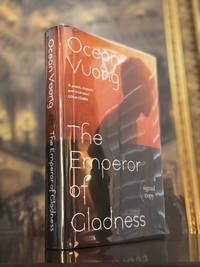
20251682<p><em><strong>SCARCE SIGNED! FIRST EDITION</strong></em> first printing. Full number line present. Book is brand new and unread. Personally hand signed by Ocean Vuong directly to the full title page. NOT inscribed to anyone. NOT a bookplate. NOT a tip in. Dust jacket hand covered in protective archival grade Mylar for many worry free years of reading/collecting!</p><p>Oprah's Book Club Pick • Ocean Vuong returns with a bighearted novel about chosen family unexpected friendship and the stories we tell ourselves in order to survive</p><p>"Stunning . . . A heartfelt and powerful examination of those living on the fringes of society and the unique challenges they face to survive and thrive." —Oprah Winfrey</p><p>"Magnificent . . . In writing this book Vuong may have joined the ranks of an elite few great novelists." —Leigh Haber Los Angeles Times</p><p>The hardest thing in the world is to live only once…</p><p>One late summer evening in the post-industrial town of East Gladness Connecticut nineteen-year-old Hai stands on the edge of a bridge in pelting rain ready to jump when he hears someone shout across the river. The voice belongs to Grazina an elderly widow succumbing to dementia who convinces him to take another path. Bereft and out of options he quickly becomes her caretaker. Over the course of the year the unlikely pair develops a life-altering bond one built on empathy spiritual reckoning and heartbreak with the power to transform Hai's relationship to himself his family and a community on the brink.</p><p>Following the cycles of history memory and time The Emperor of Gladness shows the profound ways in which love labor and loneliness form the bedrock of American life. At its heart is a brave epic about what it means to exist on the fringes of society and to reckon with the wounds that haunt our collective soul. Hallmarks of Ocean Vuong's writing—formal innovation syntactic dexterity and the ability to twin grit with grace through tenderness—are on full display in this story of loss hope and how far we would go to possess one of life's most fleeting mercies: a second chance.</p> Jonathan Cape hardcover
1972745463PN. New. 1972. Soft Cover. Date is original print. This is a reprint edition. . PN paperback
1972745466PN. New. 1972. Soft Cover. Date is original print. This is a reprint edition. . PN paperback
1972745457PN. New. 1972. Soft Cover. Date is original print. This is a reprint edition. . PN paperback