Vuong, OceanBiblio.com

474 résultats
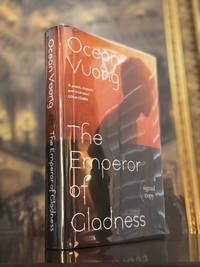
202518108NY: Penguin Press 2025. 1st Edition. Hardcover. New/New. 6th printing w/number line. Signed intials by author. Request free DJ mylar by emailing seller. Features: Price on Product. Physical Info: 1.4" H x 9.2" L x 6.3" W 1.35 lbs 416 pages. Unclipped DJ w/price $30.00 crisp tight new book is wrapped in shipping paper & wrapped in bubble wrap and then boxed with tracking number. Thank you. One late summer evening in the post-industrial town of East Gladness Connecticut nineteen-year-old Hai stands on the edge of a bridge in pelting rain ready to jump when he hears someone shout across the river. The voice belongs to Grazina an elderly widow succumbing to dementia who convinces him to take another path. Bereft and out of options he quickly becomes her caretaker. Over the course of the year the unlikely pair develops a life-altering bond one built on empathy spiritual reckoning and heartbreak with the power to transform Hai's relationship to himself his family and a community on the brink. Following the cycles of history memory and time The Emperor of Gladness shows the profound ways in which love labor and loneliness form the bedrock of American life. At its heart is a brave epic about what it means to exist on the fringes of society and to reckon with the wounds that haunt our collective soul. Hallmarks of Ocean Vuong's writing--formal innovation syntactic dexterity and the ability to twin grit with grace through tenderness--are on full display in this story of loss hope and how far we would go to possess one of life's most fleeting mercies: a second chance.<br /> Audie Award Nominee for Literary Fiction & Classics and for New Voice 2026 Los Angeles Times Book Prize Nominee for Audiobook 2025 Goodreads Choice Award Nominee for Fiction 2025 The Rooster -- The Morning News Tournament of Books Nominee for Longlist 2026 Dublin Literary Award Nominee for Shortlist 2026 She Reads Best of Award Nominee for Book of the Year and Literary Fiction 2025. Penguin Press hardcover
25434Letter from 'S. S. Transylvania' en route from Glasgow to New York 24 26 and 29 November 1928. Postcard undated but contemporaneous. TSS Transylvania the prefix stands for ‘Twin Screw Steamship’ was built in Glasgow for the Anchor Line and launched in 1925. She had three funnels but two were redundant only serving to render the ship more attractive to prospective passengers. In 1940 she requisitioned by the Royal Navy and the following year she was torpedoed by the Germans sinking with the loss of 36 lives. The letter is 13pp 12mo; with neat single-space typing on thirteen leaves. It contains three line diagrams and on a separate 12mo leaf is an ink drawing with captions titled ‘As the Herrewich sic appeared when we last saw her’. Also present is a sepia postcard of ‘T.S.S. TRANSYLVANIA’. The letter and diagram are in fair condition aged and worn but with text clear and entire. The postcard is good with light aging. Signed in type ‘Alex.’ With manuscript diagrams and salutation to ‘Dear Mother and Father’. A well written missive the use of catch-words implies a good education beginning: ‘It is surprising that now more than five days after leaving Glasgow we should be only about 1000 miles from home. The explanation is probably well known to you all: but although you will have had newspaper accounts of the great storm and of the wreck we stood by I’m quite sure that some amplifications in the form of our personal experiences will be both welcome and of interest. In the first place let me hasten to assure you that none of us came to any harm. In the main we are all well. Mary has not been able to be out of bed much so far but on the other hand she has been free from sickness - which is a very remarkable thing considering our experiences.’ After news of ‘Anne’ and ‘Virginia’ ‘Mary’ and ‘Aunt Mima’ are also referred to he reports that they ‘arrived at Moville about midnight on Monday and spent a great night in Lough Foyle. At 10.00 o’clock next morning the Londonderry tender came alongside and we took 350 passengers and their baggage on board - making the total passenger compliment about 1100. There are about 25 in the first class.’ He finds the Transylvania ‘a splendid ship for watching the sea from. The forward extension of B. deck in front of the bridge is very clear of truck and there are no boats on it as there are on the others’. The account of the journey continues followed by a seven-page account of the storm and rescue beginning: ‘In the evening of Tuesday it was apparent that the sea was rising higher and higher as was the wind: and through the night it was obvious that something unusual in the way of weather was blowing up. / Now I’ve thought previously that we have been in Atlantic storms before. Two years ago on the “Cameronia†was a bad time: and one day last year the “Caledonia†was thrown about considerably: but our in pencil ‘my’ farthest stretch of imagination - even my wildest fears - have never pictured anyting so in pencil ‘as’ tremendous as we awoke in pencil ‘the situation’ to on Wednesday morning.’ He gives a vivid description of the ship ‘riding out the storm magnificently’ as he is caught by ‘plants flowerpots chairs and so on’: ‘The second and third class passengers were locked in and battened down for about two days. The stern of the ship was almost completely under water and the hatchways to the steward’s quarters were stove in during the night and all the stewards woke up to find themselves invaded by a foot or two of water.’ The storm subsides and she comes across the wreck of a ‘large German tramp’ he calls the ‘Herrenwich’ ‘a poignant and pathetic spectacle; and more so was the view we had of the hapless crew clinging to what was left on the bare decks. We gradually got the story bit by bit as it filtered through the bridge where it was picked up I suppose by signals. A great wave had landed on the “Herrenwich†and had stove in the hatch of No. 3 hold on the forward well deck. This hold was full of water and the restraining bulkheads were bulging. The captain sent out his S. O. S. and immediately there - after another sea came on board and carried off bodily the bridge the wireless the wireless room and all the boats save one which was stove in. The captain and a quartermaster were swept overboard with the bidge and were lost immediately.’ He describes ‘a masterly exposition magnificently executed of the tactics of sea rescue. It was obviously impossible to go right up to the ship but sometimes we were not more than 100 yards away and communication by megaphone was possible. It was equally impossible for us simply to take up a position on the nether side and so act as a breakwater. The manoeuvre which was carried out time after time therefore was to circle the wreck as quickly as possible and to drift past her on the weather side and so give her a certain degree of intermittent protection. This meant that twice in every circuit the captain had to bring the “Transylvania†broadside on to the seas and every time this happened there came the sickening sense of going over on our beam ends - as I believe many less seaworthy and splendid ships would have done. And each time of course until everything was secured anything movable was thrown about in the wildest way. Oil was poured on the water with each circuit and the difference it made was wonderful.’ The seven-page account of the storm and rescue ends with the information that ‘the bridge is 62 feet from the waterline and when we were in the trough 19 out of every 20 waves were seen to be on a level with or higher than the bridge’. It reflects: ‘I’ve often told myself that I wanted to experience a real Atlantic storm. Now I have experienced it. I’d like it again but never again would I like to take Mary and the children into it.’ The letter finishes with two two-page updates from 26 and 29 November the last beginning with the information that the ship has ‘passed Nantucket light ship and may therefore expect to reach quarantine to-night’. See Image. Letter from 'S. S. Transylvania' (en route from Glasgow to New York), 24, 26 and 29 November 1928. Postcard undated, but contemp unknown
348795McGruder Publishing 2019. 2019 REPRINT HELMET COVER VARIANT LACKS FOIL WRAPPER DISC TO MIDDLE BLONDE ALBUM STREAMING VERSION elephant folio illus light card wrappers black & coloured lettering to spine 364pp 4 illus/photos Near FINE McGruder Publishing (?) 2019 unknown
2010126197Ocean House 2012-01-01. hardcover. Like New. 11x10x1. Signed by Author. Signed by three of the chefs with a fourth signature on the title page. Looks new and unread but for scratch to front panel of the jacket. Oversized hardcover illustrated throughout. Please email for photos. Ocean House hardcover
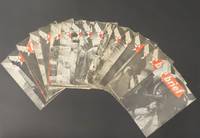
19455514<p>Set of 17 issues of Brief all from 1945. Each issue includes a full page photo of a pin-up girl on the back cover. Models include: Marguerite Chapman Virginia de Luce Lana Turner Belita Dorothy Morris Ava Gardner and many others. In addition to being a news and information publication Brief also strives to acquaint the men with the accomplishments of the personnel of AAFPOA. Creasing and occasional fold lines down middle a few have some water staining to back wrap see images. 18 pp. 9 x 12 inches. Complete list of issue dates: 9 Jan 6 Feb 13 Feb 20 Feb 27 Feb 6 March 13 March 5 June 12 June 19 June 26 June 3 July 10 July 24 July 7 Aug 14 Aug 28 Aug.</p> Information and Education Division of AAFPOA paperback
2019010050London: Jonathan Cape. A fine UK first edition first printing hardback in a fine unclipped dustjacket - All my books are always securely packed with plenty of bubblewrap in professional boxes and promptly dispatched within 2-3 days - SIGNED LINED & PUBLICATION DATED BY THE AUTHOR - Pictures of the book are available upon request. . Fine. Hardcover. 1st Edition. 1st Printing. 2019. Jonathan Cape hardcover
2019013357US: Penguin Press. A fine US first edition first printing hardback in a fine unclipped dustjacket - All my books are always securely packed with plenty of bubblewrap in professional boxes and promptly dispatched within 2-3 days - SIGNED LINED & DATED BY THE AUTHOR - Pictures of the book are available upon request. . Fine. Hardcover. 1st Edition. 1st Printing. 2019. Penguin Press hardcover
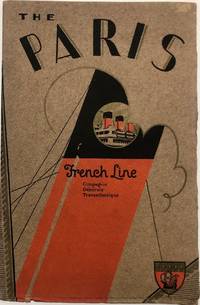
19266542New York: Compagnie Generale Transatlantique 1926. First Thus. Printed Wrappers Stapled. Very Good. Although undated we've posited 1926 as publication date based on the styles of the cover and photographs and the history of the ship. 8vo measures 6 x 9.25 inches. Unpaginated 24 pp. Promotional brochure intended for American travelers. Frontis. illustration. Substantially illustrated with black-and-white photography mostly interior shots along with a couple exterior views featuring passengers strolling on decks. Borders of photos are enhanced with line drawings. Bound in folded brown stock with two-color art-deco design printed on the front cover. Slight edge-wear light dampstain spanning the gutter of all leaves and with slight abrasion smaller than a US dime at the top right corner of the cover. A well preserved copy. A superb art deco brochure for one of the fabled ocean liners of the Jazz Age the S.S. Paris of the French Line fleet operated by Compagnie Generale Transatlantique. We suspect this brochure was produced prior to sinking after a 1929 fire; although refloated activity was chastened by the Great Depression; promoting luxurious travel with lavish collateral was likely limited. However in the mid- to late-'20s she was providing "Weekly Express Service" between New York and England or France. Published in New York for discriminating Yank travelers many of whom enjoyed transatlantic travel as an escape from Prohibition constricts. <p>In somewhat breathless prose "how delightfully life is arranged on the Paris! You Madame may desire to entertain in the exclusive individuality of your own luxe suite . " the swanky attributes of the ship are extolled as well as the refined company one would keep among fellow passengers. Photos promote first class cabins staterooms and suites the grand salon dining salon smoking room children's playroom gymnasium and deck activity. The cover is an exquisite exercise in restrained art-deco styling presenting a porthole glimpse of the ship set as a vignette within a single funnel amid wispy smoke and rigging lines. A charming publication quite scarce: No institutional copies are located by OCLC. Now housed in a removable clear archival sleeve with an acid-free backing.</p> . Compagnie Generale Transatlantique unknown
BN262397PLAYMOBIL-Jubiläums-Magazin Blue Ocean Entertainment AG <br/><br/>PLAYMOBIL-Jubiläums-Magazin Blue Ocean Entertainment AG PLAYMOBIL-Jubiläums-Magazin Blue Ocean Entertainment AG unknown
1969737552PN. New. 1969. Soft Cover. Date is original print. This is a reprint edition. . PN paperback
193160944Syracuse NY: Empire New England Company Inc. 1931. One large 6-panel dissected colour linen-backed map featuring one hemisphere map of Pacific Ocean 34 inches in diameter within larger 40 x 52 in. colour-printed wall map with scale at Equator of 1:23300000 folding down to 19.5 x 17.25 brass grommets mounted for hanging at upper fore-edge minor edgewear rubbing at crease folds minor age toning light fraying to the linen still VG copy. Second printing of this scarce linen-backed dissected wall map reflecting the extent of Imperialist Colonial spheres of influence in the Pacific just 10 years before the outbreak of World War II. These educational maps served as key instructional tools for detailing Japanese British Dutch French Portuguese and U.S. colonies dependencies and mandated territories demarcated here in respective colours spanning from Asia to the Americas and include British holdings in Antarctica. Worldcat locates 1 copy Boston Public. Empire New England Company, Inc., unknown
19266543New York: Compagnie Generale Transatlantique 1926. First Thus. Printed Wrappers Stapled. Very Good. Although undated we've posited 1926 as publication date based on the style of the cover and photographs. 8vo measures 6 x 9.25 inches. Unpaginated 24 pp. Promotional brochure intended for American travelers. Frontis. illustration. Substantially illustrated with black-and-white photography mostly interior shots along with a couple exterior views featuring passengers strolling on decks. Borders of photos are enhanced with line drawings. Bound in folded blue stock with three-color design printed on the front cover. Saddle-stapled with staples oxidized at the centerfold with slight migration of rust. A well preserved copy. A superb brochure for one of the fabled ocean liners of the Jazz Age the S.S. France of the French Line fleet operated by Compagnie Generale Transatlantique. She entered into service the week following the sinking of the Titanic. Following WWI the France was "Weekly Express Service" between New York and England or France. Published in New York for discriminating Yank travelers many of whom enjoyed transatlantic travel as an escape from Prohibition constricts and indeed showed a club-like allegiance to The France. <p>In somewhat breathless prose "she isn't as big as the biggest but neither is the Ritz . In speed she is one of the fastest liners on the Atlantic - and one of the most luxurious" the swanky attributes of the ship are extolled as well as the refined company one would keep among fellow passengers. Photos promote first class cabins staterooms and suites the grand salon dining salon smoking room children's playroom gymnasium and deck activity including a tennis match. The cover is an exquisite exercise in restrained French styling presenting an art-deco porthole vignette of the ship's red funnels. A charming publication quite scarce: No copies were located by OCLC. Now housed in a removable clear archival sleeve with an acid-free backing.</p> . Compagnie Generale Transatlantique unknown
197277592Washington DC: United States Department of the Navy Maury Center for Ocean Science 1972. Presumed First Edition First printing. Spiral bound. Good. 4 210 pages. Consists of data graphically displayed. Arrival Angle. DB Loss Noise DB and Depth in meters. This is part of the Long Range Acoustic Propagation Project. There is a distribution limitation statement at the bottom of the front cover "This document may be further distributed by the holder only with the specific prior approval of the Director Long Range Acoustic Propagation Project ONR Code 102-OS" However it is understood that this limitation no longer applies due to the passage of time and advances in technology. Passive Sonar is a device that detects the source of acoustic vibrations or noise and determines the direction or bearing to the source. It is used as a hydroacoustic direction finder. Passive sonars operate in the range of sonic ultrasonic and infrasonic frequencies. They are used on submarines on surface vessels in containers lowered from helicopters and on buoys Passive sonars consist of sonic detector compensator filter amplifier and display device. Anti-submarine warfare ASW or in older form A/S is a branch of underwater warfare that uses surface warships aircraft or other submarines to find track and deter damage or destroy enemy submarines. Successful anti-submarine warfare depends on a mix of sensor and weapon technology training and experience. Sophisticated sonar equipment for first detecting then classifying locating and tracking the target submarine is a key element of ASW. To destroy submarines both torpedoes and naval mines are used launched from air surface and underwater platforms. ASW also involves protecting friendly ships. United States, Department of the Navy, Maury Center for Ocean Science unknown
197277594Washington DC: United States Department of the Navy Maury Center for Ocean Science 1972. Presumed First Edition First printing. Spiral bound. Good. 4 180 pages. Consists of data graphically displayed. Arrival Angle. DB Loss Noise DB and Depth in meters. This is part of the Long Range Acoustic Propagation Project. There is a distribution limitation statement at the bottom of the front cover "This document may be further distributed by the holder only with the specific prior approval of the Director Long Range Acoustic Propagation Project ONR Code 102-OS" However it is understood that this limitation no longer applies due to the passage of time and advances in technology. Passive Sonar is a device that detects the source of acoustic vibrations or noise and determines the direction or bearing to the source. It is used as a hydroacoustic direction finder. Passive sonars operate in the range of sonic ultrasonic and infrasonic frequencies. They are used on submarines on surface vessels in containers lowered from helicopters and on buoys Passive sonars consist of sonic detector compensator filter amplifier and display device. Anti-submarine warfare ASW or in older form A/S is a branch of underwater warfare that uses surface warships aircraft or other submarines to find track and deter damage or destroy enemy submarines. Successful anti-submarine warfare depends on a mix of sensor and weapon technology training and experience. Sophisticated sonar equipment for first detecting then classifying locating and tracking the target submarine is a key element of ASW. To destroy submarines both torpedoes and naval mines are used launched from air surface and underwater platforms. ASW also involves protecting friendly ships. United States, Department of the Navy, Maury Center for Ocean Science unknown
197277591Washington DC: United States Department of the Navy Maury Center for Ocean Science 1972. Presumed First Edition First printing. Spiral bound. Good. 4 240 pages. Consists of data graphically displayed. Arrival Angle. DB Loss Noise DB and Depth in meters. This is part of the Long Range Acoustic Propagation Project. There is a distribution limitation statement at the bottom of the front cover "This document may be further distributed by the holder only with the specific prior approval of the Director Long Range Acoustic Propagation Project ONR Code 102-OS" However it is understood that this limitation no longer applies due to the passage of time and advances in technology. Passive Sonar is a device that detects the source of acoustic vibrations or noise and determines the direction or bearing to the source. It is used as a hydroacoustic direction finder. Passive sonars operate in the range of sonic ultrasonic and infrasonic frequencies. They are used on submarines on surface vessels in containers lowered from helicopters and on buoys Passive sonars consist of sonic detector compensator filter amplifier and display device. Anti-submarine warfare ASW or in older form A/S is a branch of underwater warfare that uses surface warships aircraft or other submarines to find track and deter damage or destroy enemy submarines. Successful anti-submarine warfare depends on a mix of sensor and weapon technology training and experience. Sophisticated sonar equipment for first detecting then classifying locating and tracking the target submarine is a key element of ASW. To destroy submarines both torpedoes and naval mines are used launched from air surface and underwater platforms. ASW also involves protecting friendly ships. United States, Department of the Navy, Maury Center for Ocean Science unknown
197277593Washington DC: United States Department of the Navy Maury Center for Ocean Science 1972. Presumed First Edition First printing. Spiral bound. Good. 4 240 pages. Consists of data graphically displayed. Arrival Angle. DB Loss Noise DB and Depth in meters. This is part of the Long Range Acoustic Propagation Project. There is a distribution limitation statement at the bottom of the front cover "This document may be further distributed by the holder only with the specific prior approval of the Director Long Range Acoustic Propagation Project ONR Code 102-OS" However it is understood that this limitation no longer applies due to the passage of time and advances in technology. Passive Sonar is a device that detects the source of acoustic vibrations or noise and determines the direction or bearing to the source. It is used as a hydroacoustic direction finder. Passive sonars operate in the range of sonic ultrasonic and infrasonic frequencies. They are used on submarines on surface vessels in containers lowered from helicopters and on buoys Passive sonars consist of sonic detector compensator filter amplifier and display device. Anti-submarine warfare ASW or in older form A/S is a branch of underwater warfare that uses surface warships aircraft or other submarines to find track and deter damage or destroy enemy submarines. Successful anti-submarine warfare depends on a mix of sensor and weapon technology training and experience. Sophisticated sonar equipment for first detecting then classifying locating and tracking the target submarine is a key element of ASW. To destroy submarines both torpedoes and naval mines are used launched from air surface and underwater platforms. ASW also involves protecting friendly ships. United States, Department of the Navy, Maury Center for Ocean Science unknown
197277590Washington DC: United States Department of the Navy Maury Center for Ocean Science 1972. Presumed First Edition First printing. Spiral bound. Good. 4 240 pages. Consists of data graphically displayed. Arrival Angle. DB Loss Noise DB and Depth in meters. This is part of the Long Range Acoustic Propagation Project. There is a distribution limitation statement at the bottom of the front cover "This document may be further distributed by the holder only with the specific prior approval of the Director Long Range Acoustic Propagation Project ONR Code 102-OS" However it is understood that this limitation no longer applies due to the passage of time and advances in technology. Passive Sonar is a device that detects the source of acoustic vibrations or noise and determines the direction or bearing to the source. It is used as a hydroacoustic direction finder. Passive sonars operate in the range of sonic ultrasonic and infrasonic frequencies. They are used on submarines on surface vessels in containers lowered from helicopters and on buoys Passive sonars consist of sonic detector compensator filter amplifier and display device. Anti-submarine warfare ASW or in older form A/S is a branch of underwater warfare that uses surface warships aircraft or other submarines to find track and deter damage or destroy enemy submarines. Successful anti-submarine warfare depends on a mix of sensor and weapon technology training and experience. Sophisticated sonar equipment for first detecting then classifying locating and tracking the target submarine is a key element of ASW. To destroy submarines both torpedoes and naval mines are used launched from air surface and underwater platforms. ASW also involves protecting friendly ships. United States, Department of the Navy, Maury Center for Ocean Science unknown
197277589Washington DC: United States Department of the Navy Maury Center for Ocean Science 1972. Presumed First Edition First printing. Spiral bound. Good. 4 189 1 pages. Consists of data graphically displayed. Arrival Angle. DB Loss Noise DB and Depth in meters This is part of the Long Range Acoustic Propagation Project. There is a distribution limitation statement at the bottom of the front cover "This document may be further distributed by the holder only with the specific prior approval of the Director Long Range Acoustic Propagation Project ONR Code 102-OS" However it is understood that this limitation no longer applies due to the passage of time and advances in technology. Passive Sonar is a device that detects the source of acoustic vibrations or noise and determines the direction or bearing to the source. It is used as a hydroacoustic direction finder. Passive sonars operate in the range of sonic ultrasonic and infrasonic frequencies. They are used on submarines on surface vessels in containers lowered from helicopters and on buoys Passive sonars consist of sonic detector compensator filter amplifier and display device. Anti-submarine warfare ASW or in older form A/S is a branch of underwater warfare that uses surface warships aircraft or other submarines to find track and deter damage or destroy enemy submarines. Successful anti-submarine warfare depends on a mix of sensor and weapon technology training and experience. Sophisticated sonar equipment for first detecting then classifying locating and tracking the target submarine is a key element of ASW. To destroy submarines both torpedoes and naval mines are used launched from air surface and underwater platforms. ASW also involves protecting friendly ships. United States, Department of the Navy, Maury Center for Ocean Science unknown
197277595Washington DC: United States Department of the Navy Maury Center for Ocean Science 1972. Presumed First Edition First printing. Spiral bound. Good. 4 150 pages. Consists of data graphically displayed. Arrival Angle. DB Loss Noise DB and Depth in meters. This is part of the Long Range Acoustic Propagation Project. There is a distribution limitation statement at the bottom of the front cover "This document may be further distributed by the holder only with the specific prior approval of the Director Long Range Acoustic Propagation Project ONR Code 102-OS" However it is understood that this limitation no longer applies due to the passage of time and advances in technology. Passive Sonar is a device that detects the source of acoustic vibrations or noise and determines the direction or bearing to the source. It is used as a hydroacoustic direction finder. Passive sonars operate in the range of sonic ultrasonic and infrasonic frequencies. They are used on submarines on surface vessels in containers lowered from helicopters and on buoys Passive sonars consist of sonic detector compensator filter amplifier and display device. Anti-submarine warfare ASW or in older form A/S is a branch of underwater warfare that uses surface warships aircraft or other submarines to find track and deter damage or destroy enemy submarines. Successful anti-submarine warfare depends on a mix of sensor and weapon technology training and experience. Sophisticated sonar equipment for first detecting then classifying locating and tracking the target submarine is a key element of ASW. To destroy submarines both torpedoes and naval mines are used launched from air surface and underwater platforms. ASW also involves protecting friendly ships. United States, Department of the Navy, Maury Center for Ocean Science unknown
197277588Washington DC: United States Department of the Navy Maury Center for Ocean Science 1972. Presumed First Edition First printing. Spiral bound. Good. 4 240 pages. Consists of data graphically displayed. Arrival Angle. DB Loss Noise DB and Depth in meters. Rear cover & last page has tear. This is part of the Long Range Acoustic Propagation Project. There is a distribution limitation at the bottom of the front cover "This document may be further distributed by the holder only with the specific prior approval of the Director Long Range Acoustic Propagation Project ONR Code 102-OS" It is understood that this limitation no longer applies due to the passage of time and technology advances. Passive Sonar detects the source of acoustic vibrations or noise and determines the direction or bearing to the source. It is used as a hydroacoustic direction finder. Passive sonars operate in the range of sonic ultrasonic and infrasonic frequencies. They are used on submarines on surface vessels in containers lowered from helicopters and on buoys Passive sonars consist of sonic detector compensator filter amplifier and display device. Anti-submarine warfare ASW or in older form A/S is a branch of underwater warfare that uses surface warships aircraft or other submarines to find track and deter damage or destroy enemy submarines. Successful anti-submarine warfare depends on a mix of sensor and weapon technology training and experience. Sophisticated sonar equipment for first detecting then classifying locating and tracking the target submarine is a key element of ASW. To destroy submarines both torpedoes and naval mines are used launched from air surface and underwater platforms. ASW also involves protecting friendly ships. United States, Department of the Navy, Maury Center for Ocean Science unknown
2025013358UK: Jonathan Cape. A fine UK first edition first printing hardback - in a fine dustjacket - All my books are always securely packed with plenty of bubblewrap in professional boxes and promptly dispatched within 2-3 days - SIGNED LINED & DATED BY THE AUTHOR - Pictures available upon request. . Fine. Hardcover. 1st Edition. 1st Printing. 2025. Jonathan Cape hardcover
2023x-1646475739Hayle Medical 2023. Hardcover. New. 255 pages. 11.25x8.75x0.75 inches. Hayle Medical hardcover
20251682<p><em><strong>SCARCE SIGNED! FIRST EDITION</strong></em> first printing. Full number line present. Book is brand new and unread. Personally hand signed by Ocean Vuong directly to the full title page. NOT inscribed to anyone. NOT a bookplate. NOT a tip in. Dust jacket hand covered in protective archival grade Mylar for many worry free years of reading/collecting!</p><p>Oprah's Book Club Pick • Ocean Vuong returns with a bighearted novel about chosen family unexpected friendship and the stories we tell ourselves in order to survive</p><p>"Stunning . . . A heartfelt and powerful examination of those living on the fringes of society and the unique challenges they face to survive and thrive." —Oprah Winfrey</p><p>"Magnificent . . . In writing this book Vuong may have joined the ranks of an elite few great novelists." —Leigh Haber Los Angeles Times</p><p>The hardest thing in the world is to live only once…</p><p>One late summer evening in the post-industrial town of East Gladness Connecticut nineteen-year-old Hai stands on the edge of a bridge in pelting rain ready to jump when he hears someone shout across the river. The voice belongs to Grazina an elderly widow succumbing to dementia who convinces him to take another path. Bereft and out of options he quickly becomes her caretaker. Over the course of the year the unlikely pair develops a life-altering bond one built on empathy spiritual reckoning and heartbreak with the power to transform Hai's relationship to himself his family and a community on the brink.</p><p>Following the cycles of history memory and time The Emperor of Gladness shows the profound ways in which love labor and loneliness form the bedrock of American life. At its heart is a brave epic about what it means to exist on the fringes of society and to reckon with the wounds that haunt our collective soul. Hallmarks of Ocean Vuong's writing—formal innovation syntactic dexterity and the ability to twin grit with grace through tenderness—are on full display in this story of loss hope and how far we would go to possess one of life's most fleeting mercies: a second chance.</p> Jonathan Cape hardcover
1972745463PN. New. 1972. Soft Cover. Date is original print. This is a reprint edition. . PN paperback