1 884 résultats
Hardcover. Some marks on plastic wrapper. Library sticker on spine foot and FEP. Lending history on FEP. Signed by the author on title page.. Ex - Library
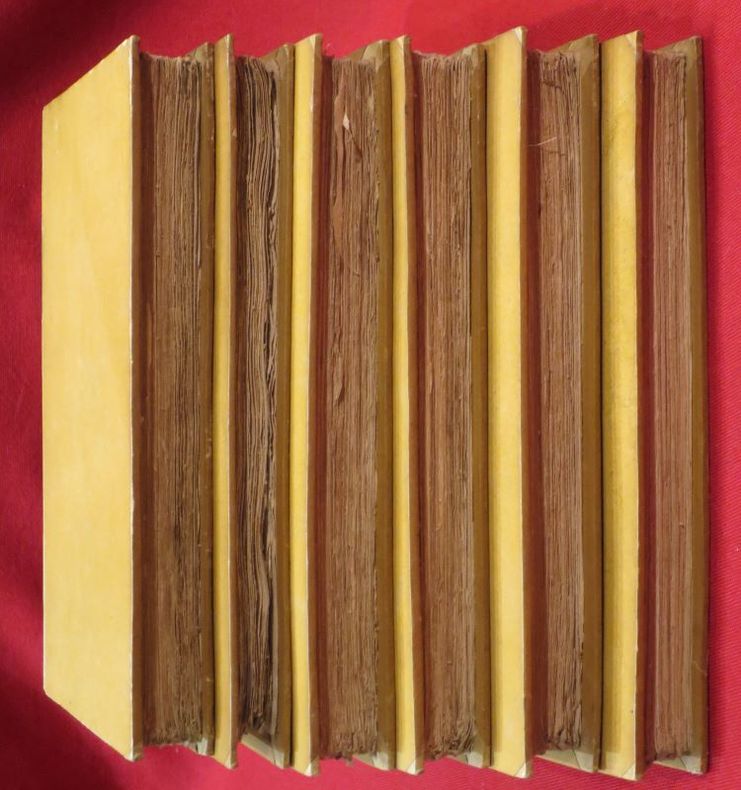
104239De l'Imprimerie Didot Jeune, An X (1801-1802), 5 volumes +1atlas in-8 de 220x140 mm environ, viij-341 pages - 384 pp., - 381 pp., - 368 pp.,- 438 pp., dernier volume-atlas contenant 17 vues sous serpentes et 9 cartes dont 8 dépliantes, cartonnage de l'éditeur portant titres et tomaisons dorés sur le dos. Feuillets non rognés. Dos insolés, frottements sur les coins et coiffes, petits défauts de marge sur quelques pages sans atteinte au texte, sinon bon état.
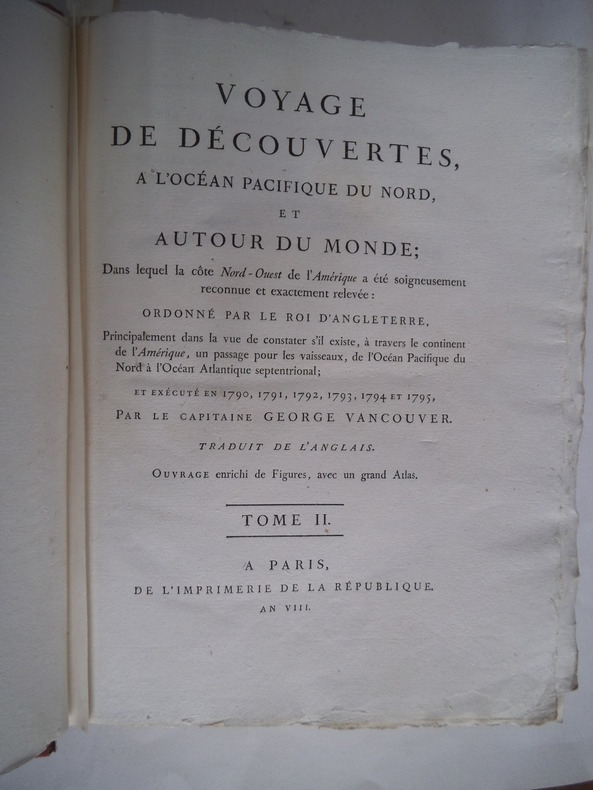
8186dans le quel la côte Nord-ouest de l’Amérique a été soigneusement reconnue et relevée ordonnée par le Roi d’Angleterre, principalement dans la vue de constater s’il existe,à travers le continent de l’Amérique,un passage pour les vaisseaux,de l’Océan pacifique du nord à l’Océan atlantique septentrional et exécuté en 1790,1791,1792,1793 par le capitaine George VANCOUVER traduit de l’anglais. Ouvrage enrichi de figures.Trois tomes en trois volumes petit in folio,reliure cartonnée, postérieure,avec étiquette de titre imprimée.Tome premier:faux-titre,titre, XII,491 pages 7 gravures hors-texte sous serpente.I) village indien désert II)4 mâts singuliers fichés en terre III) Mont Rainier IV) village d’une tribu d’indiens V) village de Cheslakées VI) la découverte VII) Anse des amis. Tome second : faux-titre titre 516 pages 5 planches hors-texte sous serpente petites déchirures réparées en marge inférieure de la table des matières. Planche I) La mission Carlos près de Monterey II) cartes des iles d’Hergest, III) Anse des Saumons, dans l’entrée de l’observatoire. IV) New-Eddystone, dans le canal de Behm. V) le Présidio de Monterey Tome troisième : faux-titre, titre 562 pages, une déchirure réparée à la dernière page de la table des matières ainsi qu’à la page de garde. 5 planches hors-texte sous serpente planche I) cratère d’un volcan au sommet du Mont Worroway dans l’ile d’Owhyhée. II) Port Dick pris à l’entrée de Cook avec une flotille de pirogues indiennes III) Le mont saint Elie IV) Montagne remarquable près de la rivière de Monterey VI) le village d’Almandrel dans la baie de Valparaiso.La vue de Valparaiso,annoncée,n’était pas jointe à ce volume.Grandes marges.Sans l'atlas.Edition originale de la traduction française. A Paris de l’Imprimerie de la République An VIII
8vo (cm 24 x 16,5 ca); cartonato editoriale con dorso in tela, sovraccoperta illustrata a colori, sguardie illustrate in b/n; p. IX 289, con numerose illustrazioni in b/n nel testo. Trascurabili tracce d'uso alla sovraccoperta. Buona copia. Prima edizione italiana: traduzione dall'inglese di Carlo Coardi, riveduta e integrata da Rinaldo Caddeo.
Milano, Bompiani, 1948, in-8, legatura editoriale in mezza tela, titolo in oro al dorso, piccola immagine impressa in oro al centro del piatto anteriore, sovraccoperta illustrata a colori, sguardie figurate, pp. IX, [3], 289, [3]. Con antiporta e numerose figure n.t. Ottimo esemplare (solo un minimo difetto alla sovraccoperta).
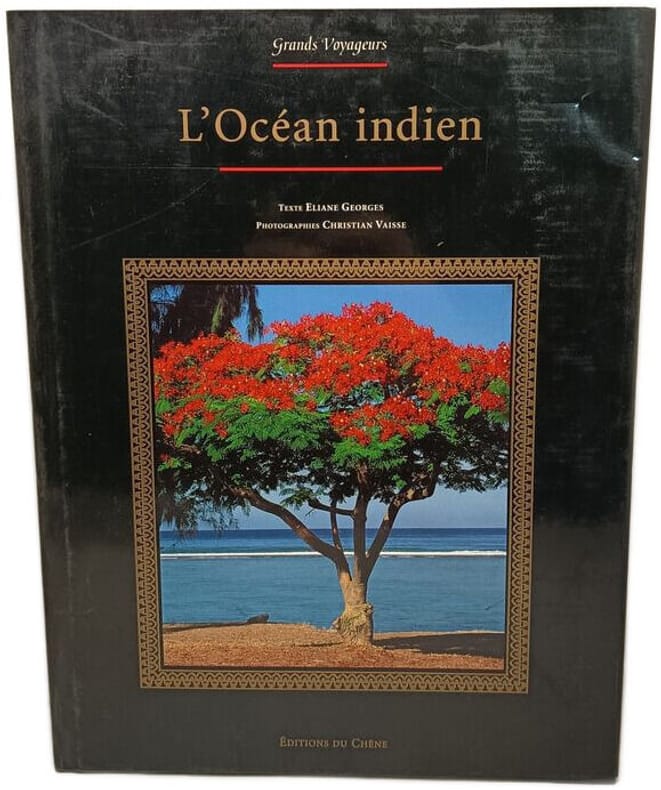
19978313Editions du Chêne 1997 157 pages 23 4x2x30 2cm. 1997. cartonnage editeur avec jaquette. 157 pages. Cet ouvrage illustré présente les principales îles de l'Océan Indien (Madagascar La Réunion Maurice les Seychelles) à travers leurs paysages leur histoire et leur culture. Le texte d'Éliane Georges est accompagné des photographies de Christian Vaisse qui partage sa passion pour cette région où il s'est installé
1961LFA-126725610Un ouvrage de 503 pages, format 215 x 300 mm, illustré, relié simili cuir sous jaquette, publié en 1961, Librairie Larousse, bon état
19451518n.p.: U.S. Pacific Fleet 1945. fair. 423 wraps text in Japanese only the introduction and index have been translated covers worn and soiled. This handbook was originally published in 1901 by the Keigansha Governmental Research Bureau with corrections including No. 94 to 1943. The U.S. Pacific Fleet reproduced this book because it was the latest material at hand on the political organization of Japan. The handbook was marked "Restricted " but that classification was crossed out by hand on the cover and changed to "Unclassified--1945-6. " U.S. Pacific Fleet paperback
19455514<p>Set of 17 issues of Brief all from 1945. Each issue includes a full page photo of a pin-up girl on the back cover. Models include: Marguerite Chapman Virginia de Luce Lana Turner Belita Dorothy Morris Ava Gardner and many others. In addition to being a news and information publication Brief also strives to acquaint the men with the accomplishments of the personnel of AAFPOA. Creasing and occasional fold lines down middle a few have some water staining to back wrap see images. 18 pp. 9 x 12 inches. Complete list of issue dates: 9 Jan 6 Feb 13 Feb 20 Feb 27 Feb 6 March 13 March 5 June 12 June 19 June 26 June 3 July 10 July 24 July 7 Aug 14 Aug 28 Aug.</p> Information and Education Division of AAFPOA paperback
580665Paris, Presses Universitaires de France, 1963. In-8 broché, 138pp, 36 illustrations, index des principaux noms et mots malgaches, table des matières. (Pays d'Outre-Mer, Cinquième série: Art et Littéraire 2)
197277592Washington DC: United States Department of the Navy Maury Center for Ocean Science 1972. Presumed First Edition First printing. Spiral bound. Good. 4 210 pages. Consists of data graphically displayed. Arrival Angle. DB Loss Noise DB and Depth in meters. This is part of the Long Range Acoustic Propagation Project. There is a distribution limitation statement at the bottom of the front cover "This document may be further distributed by the holder only with the specific prior approval of the Director Long Range Acoustic Propagation Project ONR Code 102-OS" However it is understood that this limitation no longer applies due to the passage of time and advances in technology. Passive Sonar is a device that detects the source of acoustic vibrations or noise and determines the direction or bearing to the source. It is used as a hydroacoustic direction finder. Passive sonars operate in the range of sonic ultrasonic and infrasonic frequencies. They are used on submarines on surface vessels in containers lowered from helicopters and on buoys Passive sonars consist of sonic detector compensator filter amplifier and display device. Anti-submarine warfare ASW or in older form A/S is a branch of underwater warfare that uses surface warships aircraft or other submarines to find track and deter damage or destroy enemy submarines. Successful anti-submarine warfare depends on a mix of sensor and weapon technology training and experience. Sophisticated sonar equipment for first detecting then classifying locating and tracking the target submarine is a key element of ASW. To destroy submarines both torpedoes and naval mines are used launched from air surface and underwater platforms. ASW also involves protecting friendly ships. United States, Department of the Navy, Maury Center for Ocean Science unknown
197277594Washington DC: United States Department of the Navy Maury Center for Ocean Science 1972. Presumed First Edition First printing. Spiral bound. Good. 4 180 pages. Consists of data graphically displayed. Arrival Angle. DB Loss Noise DB and Depth in meters. This is part of the Long Range Acoustic Propagation Project. There is a distribution limitation statement at the bottom of the front cover "This document may be further distributed by the holder only with the specific prior approval of the Director Long Range Acoustic Propagation Project ONR Code 102-OS" However it is understood that this limitation no longer applies due to the passage of time and advances in technology. Passive Sonar is a device that detects the source of acoustic vibrations or noise and determines the direction or bearing to the source. It is used as a hydroacoustic direction finder. Passive sonars operate in the range of sonic ultrasonic and infrasonic frequencies. They are used on submarines on surface vessels in containers lowered from helicopters and on buoys Passive sonars consist of sonic detector compensator filter amplifier and display device. Anti-submarine warfare ASW or in older form A/S is a branch of underwater warfare that uses surface warships aircraft or other submarines to find track and deter damage or destroy enemy submarines. Successful anti-submarine warfare depends on a mix of sensor and weapon technology training and experience. Sophisticated sonar equipment for first detecting then classifying locating and tracking the target submarine is a key element of ASW. To destroy submarines both torpedoes and naval mines are used launched from air surface and underwater platforms. ASW also involves protecting friendly ships. United States, Department of the Navy, Maury Center for Ocean Science unknown
197277591Washington DC: United States Department of the Navy Maury Center for Ocean Science 1972. Presumed First Edition First printing. Spiral bound. Good. 4 240 pages. Consists of data graphically displayed. Arrival Angle. DB Loss Noise DB and Depth in meters. This is part of the Long Range Acoustic Propagation Project. There is a distribution limitation statement at the bottom of the front cover "This document may be further distributed by the holder only with the specific prior approval of the Director Long Range Acoustic Propagation Project ONR Code 102-OS" However it is understood that this limitation no longer applies due to the passage of time and advances in technology. Passive Sonar is a device that detects the source of acoustic vibrations or noise and determines the direction or bearing to the source. It is used as a hydroacoustic direction finder. Passive sonars operate in the range of sonic ultrasonic and infrasonic frequencies. They are used on submarines on surface vessels in containers lowered from helicopters and on buoys Passive sonars consist of sonic detector compensator filter amplifier and display device. Anti-submarine warfare ASW or in older form A/S is a branch of underwater warfare that uses surface warships aircraft or other submarines to find track and deter damage or destroy enemy submarines. Successful anti-submarine warfare depends on a mix of sensor and weapon technology training and experience. Sophisticated sonar equipment for first detecting then classifying locating and tracking the target submarine is a key element of ASW. To destroy submarines both torpedoes and naval mines are used launched from air surface and underwater platforms. ASW also involves protecting friendly ships. United States, Department of the Navy, Maury Center for Ocean Science unknown
197277593Washington DC: United States Department of the Navy Maury Center for Ocean Science 1972. Presumed First Edition First printing. Spiral bound. Good. 4 240 pages. Consists of data graphically displayed. Arrival Angle. DB Loss Noise DB and Depth in meters. This is part of the Long Range Acoustic Propagation Project. There is a distribution limitation statement at the bottom of the front cover "This document may be further distributed by the holder only with the specific prior approval of the Director Long Range Acoustic Propagation Project ONR Code 102-OS" However it is understood that this limitation no longer applies due to the passage of time and advances in technology. Passive Sonar is a device that detects the source of acoustic vibrations or noise and determines the direction or bearing to the source. It is used as a hydroacoustic direction finder. Passive sonars operate in the range of sonic ultrasonic and infrasonic frequencies. They are used on submarines on surface vessels in containers lowered from helicopters and on buoys Passive sonars consist of sonic detector compensator filter amplifier and display device. Anti-submarine warfare ASW or in older form A/S is a branch of underwater warfare that uses surface warships aircraft or other submarines to find track and deter damage or destroy enemy submarines. Successful anti-submarine warfare depends on a mix of sensor and weapon technology training and experience. Sophisticated sonar equipment for first detecting then classifying locating and tracking the target submarine is a key element of ASW. To destroy submarines both torpedoes and naval mines are used launched from air surface and underwater platforms. ASW also involves protecting friendly ships. United States, Department of the Navy, Maury Center for Ocean Science unknown
197277590Washington DC: United States Department of the Navy Maury Center for Ocean Science 1972. Presumed First Edition First printing. Spiral bound. Good. 4 240 pages. Consists of data graphically displayed. Arrival Angle. DB Loss Noise DB and Depth in meters. This is part of the Long Range Acoustic Propagation Project. There is a distribution limitation statement at the bottom of the front cover "This document may be further distributed by the holder only with the specific prior approval of the Director Long Range Acoustic Propagation Project ONR Code 102-OS" However it is understood that this limitation no longer applies due to the passage of time and advances in technology. Passive Sonar is a device that detects the source of acoustic vibrations or noise and determines the direction or bearing to the source. It is used as a hydroacoustic direction finder. Passive sonars operate in the range of sonic ultrasonic and infrasonic frequencies. They are used on submarines on surface vessels in containers lowered from helicopters and on buoys Passive sonars consist of sonic detector compensator filter amplifier and display device. Anti-submarine warfare ASW or in older form A/S is a branch of underwater warfare that uses surface warships aircraft or other submarines to find track and deter damage or destroy enemy submarines. Successful anti-submarine warfare depends on a mix of sensor and weapon technology training and experience. Sophisticated sonar equipment for first detecting then classifying locating and tracking the target submarine is a key element of ASW. To destroy submarines both torpedoes and naval mines are used launched from air surface and underwater platforms. ASW also involves protecting friendly ships. United States, Department of the Navy, Maury Center for Ocean Science unknown
197277589Washington DC: United States Department of the Navy Maury Center for Ocean Science 1972. Presumed First Edition First printing. Spiral bound. Good. 4 189 1 pages. Consists of data graphically displayed. Arrival Angle. DB Loss Noise DB and Depth in meters This is part of the Long Range Acoustic Propagation Project. There is a distribution limitation statement at the bottom of the front cover "This document may be further distributed by the holder only with the specific prior approval of the Director Long Range Acoustic Propagation Project ONR Code 102-OS" However it is understood that this limitation no longer applies due to the passage of time and advances in technology. Passive Sonar is a device that detects the source of acoustic vibrations or noise and determines the direction or bearing to the source. It is used as a hydroacoustic direction finder. Passive sonars operate in the range of sonic ultrasonic and infrasonic frequencies. They are used on submarines on surface vessels in containers lowered from helicopters and on buoys Passive sonars consist of sonic detector compensator filter amplifier and display device. Anti-submarine warfare ASW or in older form A/S is a branch of underwater warfare that uses surface warships aircraft or other submarines to find track and deter damage or destroy enemy submarines. Successful anti-submarine warfare depends on a mix of sensor and weapon technology training and experience. Sophisticated sonar equipment for first detecting then classifying locating and tracking the target submarine is a key element of ASW. To destroy submarines both torpedoes and naval mines are used launched from air surface and underwater platforms. ASW also involves protecting friendly ships. United States, Department of the Navy, Maury Center for Ocean Science unknown
197277595Washington DC: United States Department of the Navy Maury Center for Ocean Science 1972. Presumed First Edition First printing. Spiral bound. Good. 4 150 pages. Consists of data graphically displayed. Arrival Angle. DB Loss Noise DB and Depth in meters. This is part of the Long Range Acoustic Propagation Project. There is a distribution limitation statement at the bottom of the front cover "This document may be further distributed by the holder only with the specific prior approval of the Director Long Range Acoustic Propagation Project ONR Code 102-OS" However it is understood that this limitation no longer applies due to the passage of time and advances in technology. Passive Sonar is a device that detects the source of acoustic vibrations or noise and determines the direction or bearing to the source. It is used as a hydroacoustic direction finder. Passive sonars operate in the range of sonic ultrasonic and infrasonic frequencies. They are used on submarines on surface vessels in containers lowered from helicopters and on buoys Passive sonars consist of sonic detector compensator filter amplifier and display device. Anti-submarine warfare ASW or in older form A/S is a branch of underwater warfare that uses surface warships aircraft or other submarines to find track and deter damage or destroy enemy submarines. Successful anti-submarine warfare depends on a mix of sensor and weapon technology training and experience. Sophisticated sonar equipment for first detecting then classifying locating and tracking the target submarine is a key element of ASW. To destroy submarines both torpedoes and naval mines are used launched from air surface and underwater platforms. ASW also involves protecting friendly ships. United States, Department of the Navy, Maury Center for Ocean Science unknown
197277588Washington DC: United States Department of the Navy Maury Center for Ocean Science 1972. Presumed First Edition First printing. Spiral bound. Good. 4 240 pages. Consists of data graphically displayed. Arrival Angle. DB Loss Noise DB and Depth in meters. Rear cover & last page has tear. This is part of the Long Range Acoustic Propagation Project. There is a distribution limitation at the bottom of the front cover "This document may be further distributed by the holder only with the specific prior approval of the Director Long Range Acoustic Propagation Project ONR Code 102-OS" It is understood that this limitation no longer applies due to the passage of time and technology advances. Passive Sonar detects the source of acoustic vibrations or noise and determines the direction or bearing to the source. It is used as a hydroacoustic direction finder. Passive sonars operate in the range of sonic ultrasonic and infrasonic frequencies. They are used on submarines on surface vessels in containers lowered from helicopters and on buoys Passive sonars consist of sonic detector compensator filter amplifier and display device. Anti-submarine warfare ASW or in older form A/S is a branch of underwater warfare that uses surface warships aircraft or other submarines to find track and deter damage or destroy enemy submarines. Successful anti-submarine warfare depends on a mix of sensor and weapon technology training and experience. Sophisticated sonar equipment for first detecting then classifying locating and tracking the target submarine is a key element of ASW. To destroy submarines both torpedoes and naval mines are used launched from air surface and underwater platforms. ASW also involves protecting friendly ships. United States, Department of the Navy, Maury Center for Ocean Science unknown
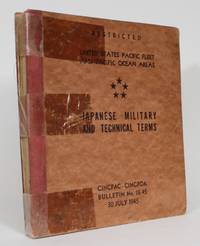
1945013178United States: CINCPAC-CINCPOA 1945. Soft cover. Good. 8vo. With Kanji translations. Quarter red cloth russet stiff card boards duotang binding. x 360 pp. Spine reinforced with packing tape . Damp staining to interior. The distribution list at rear indicates that 462 copies went to the Army 243 copies went to the Navy and 250 copies to the Marines. CINCPAC-CINCPOA unknown
1332301096.Gpaperback. Good. Access codes and supplements are not guaranteed with used items. May be an ex-library book. paperback
1332301045.Gpaperback. Good. Access codes and supplements are not guaranteed with used items. May be an ex-library book. paperback
0265277523.Ghardcover. Good. Access codes and supplements are not guaranteed with used items. May be an ex-library book. hardcover
1945997147 August 1945 Edition: United States Pacific Fleet and Pacific Ocean Areas. Very Good. 1945. Softcover. Book in metal brad stiff board pictorial US CINCPAC covers. RESTRICTED Bulletin No. 159-45. ; 345 pages . United States Pacific Fleet and Pacific Ocean Areas paperback
197965988United States 1979. Presumed first edition/first printing. Hardcover. Very good. No dust jacket. viii 801-1333 p. Includes: illustrations diagrams. Volume 2 ONLY. This sumposium was cosponsored by the Defense Mapping Agency and the National Ocean Survey. It was hosted by the Aplied Research Laboratories and held at the University of Texas at Austin. Volume II includes Session IV on Terrestrial Adjustments Session V on Advanced Systems the Closing Session and the Symposium Scrapbook of photographs countries representated and the list of attendees. United States hardcover
B9789401089807Paperback / softback. New. Oceans have been the subject of scientific inquiry for hundreds of years but significant study of mineral occurrences on the deep ocean floor has only begun to take place. paperback