813 résultats
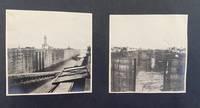
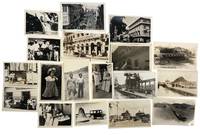
1900225611900. Latin America Panama City and the Canal Zone at the beginning of the 20th century photo archive featuring a range of architectural infrastructural and cultural subjects reflecting the western urbanization and colonial history of the area. Archive of 15 sepia toned real photo postcards. Each 3.5" x 5.5". The archive documents the transformation of Panama during the era of U.S. construction and administration of the Panama Canal and the subsequent urban growth of the capital. Many are captioned at the bottom in the negative.<br /> <br /> The collection includes multiple views of the Panama Canal itself such as "Opening Gates Pedro Miguel Locks" "Miraflores Locks Panama Canal" and a wide-angle vista from the Pacific side capturing the engineering marvel that reshaped global commerce. Urban scenes emphasize both civic life and colonial remnants: the "American Cabaret" façade crowded with pedestrians the Panama City railway station with carriages at its entrance and the Cathedral Plaza shown both from street-level and aerial perspectives. Religious heritage appears in the richly photographed "Golden Altar of San José" a baroque altar famously saved from pirate depredation by being painted black. Other views include the Old Spanish Fort tower ruins panoramic shots of the city grid ships moored in Balboa harbor and even the bullfighting ring situating Panama as both modernizing and deeply layered with colonial past. Minor handling wear and faint edge toning to some images remain crisp and clean. Overall very good condition. This archive offers a rich visual record of Panama at a pivotal historical moment combining imagery of U.S. imperial engineering with local cultural life and colonial heritage making it a valuable resource for scholars of Latin American history U.S.-Panama relations and the history of global infrastructure. unknown
Abundant black and white illustrations and reproductions of photos. Features: Lost in the Pacific - John Edwin Hogg attempted to take a small boat to Panama from some islands 90 miles off the coast, but encountered treacherous seas; On Niagara's Brink - Orrin E. Dunlap, the unofficial historian of Niagara Falls, describes the area's most thrilling adventure, that of a barge and two men, Lofberg and Harris, who drifted to the verge of Horseshoe Falls - article with photos; An Englishwoman in Upper Egypt - Part I - Oxford Anthropology student Winifred S. Blackman relates her experiences in three winters of living with the people of Upper Egypt - article with photos; Captain Doudera's Bet - The amazing photo-illustrated story of Captain Frank Doudera, of Brooklyn, New York, and his quest to obtain a timber wolf pelt within six weeks; The Head-Hunters of the Sepik - Part II - Beatrice Grimshaw travelled up the Sepik River of New Guinea, where she dealt with the local cannibals - article with photos; Chippin' Paint - An amusing sea story; To Afghanistan in Disguise - Part II - A British officer's remarkable journey, disguised as an Oriental, across a large part of India and finally into forbidden Afghanistan and beyond, living among the natives as one of themselves; The Treasure of Tristan Da Cunha - Photo-illustrated article about a hoard of gold and jewels said to have been hidden here by pirates in 1810; Photo of a literal river full of logs in British Columbia; The Three Angleteers - Part IV - Three bored Englishmen travel to Europe for trouble and adventure; In the British Guiana Jungle - A vividly-written photo-illustrated account of an eventful boat-journey into the interior of British Guiana with a motion picture camera, culminating with a visit to the mighty Kaietuerk Falls, the greatest cataract in the world, five times higher than Niagara; The Secret of the Wilds - photos of wild animals which resemble those of prehistoric times; "Grip" and I - Part II - A bull-terrier spared from death by its new owner Count Nils Cronstedt returns the favour by saving him multiple times during his stay in West Africa as Commander of H.M.S. Heron and Assistant Marine Superintendent in Northern Nigeria; One Night - the story of a hunt in the darkness and a panther who stood his ground; and more. 88 pages plus 24 pages of nice vintage ads. Clean and unmarked with light wear. A quality copy of this excellent vintage issue. Book
Pages 354-440 plus 24 pages of nice vintage advertisements. Features: The Bullet-proof Scotchman - an adventure of John Mundell in the Pampas of Uruguay; ; A Woman's Travels in Unknown Asia - part I - wonderful photos in China; An Exciting Trading Trip - efforts to trade with a warlike tribe in East Africa; Some Strange WWI Escapes from Germany - part II; Interesting photo and short article of Dog Rib Indians in Canada receiving their annual grant of one pound, as well as presents, from the Canadian government; Among the Wild Tribes of Darien - exploring the native tribes of Panama - with great photos; Stories of the War - Thirty Hours in No Man's Land - in WWI an Australian trooper on the Western Front is wounded and must make his way back to his own lines; Siringa's Last Battle - a native boy helps in one of the first fights in German East Africa, A Week in a Lens Dungeon - McLean and Ebbs of the 87th Canadian Battalion hid in a cellar for a week before making their way back to their lines; Miraculous Escapes from Sunken Submarines; An Adventurous Hunt After Man-eating Crocodiles - in Victoria Nyanza; The Mountain Warriors of France - excellent photos; The Zulu Love Medicine - part II of what happend when Zulus killed an Englishman to use his body for love medicine; Wonders of Northern Syria - article with many great photos of architectural remains; Carter's Exoneration - a stirring story of the Australian Mounted Police. Great multi-page advertising feature on the Waterproof Products Corporation. Average wear. Small protective pieces of tape at each end of backstrip. Binding intact. Unmarked. A sound vintage copy. Book
Abundant black and white illustrations and reproductions of photos. Features: Kidnapped by the "Gavilleros"- the British administrator of a large sugar estate on the West Indian island of Santo Domingo is kidnapped; An Island Paradise - photo-illustrated article on the 'progress, civilized, and thoroughly lovable people' of Fiji; Looking Backwards - 25th Birthday of this publication; An Adventure With a Mad Buffalo; Jimmy's Reformation - Jimmy Boncelek used to be the terror of Stigler, Oklahoma; Seeking the Copper Mountain - photo-illustrated account of an eventful journey through the little-known province of Veraguas, part of the Republic of Panama; A Woman in Unknown Albania - Part II - Rose Wilder Lane describes her adventures among the remote northern mountains, a picturesque country where the tribal blood-feud still flourishes - article with photos; Three Asses in the Pyrenees - Part V - a tramp with a donkey cart, avoiding all modern luxuries; The Tobacco Smugglers of the Belgian Border - photo-illustrated report; A Soldier of Fortune - Part II - remarkable personal narrative smuggled from a man presently incarcerated in a French prison; Splitting the Herd - A cowboy adventure from the Texas plains; Photos of Chinese cave temple at Gunong Rapat in the federated Malay States; and more. 88 pages plus 16 pages of nostalgic ads. Clean and unmarked with light wear. A quality copy of this excellent vintage issue. Book
Album fotografico cm 22,5 x 19,5, contenente 21 fotografie originali cm 17 x 12,5 applicate sui fogli dell'album. Legatura in tela con al piatto anteriore in oro la dicitura 'Album G. Manfredi'. Il nome G. Manfredi compare anche in calce a tutte le fotografie che hanno a loro volta una didascalia stampata sulla foto stessa. La raccolta presenta le immagini di: Lima (Puente de piedra; Plaza de S. Ana; Palacio Exposition; Puente Verrugas ferrovia de Oroya; Darsena Callao). Kingston, Giamaica (Parco Vittoria; Raccolta dei Banani; Vista generale; Via della Chiesa; Montegobay (3); Falmouth; Callerey (2); Panama (Calle de Soles; Costa; costruzioni e scavi probabilmente legati alla realizzazione del canale). Le fotografie presentano una uniforme sbiaditura che pero' non ne compromette la leggibilita'. Il fatto che a margine di un supporto in cartone sul quale non e' stata applicata alcuna fotografia, compaia a stampa l'indicazione: Foto G. Manfredi - Vestigne' (Ivrea), puo' far identificare l'autore in Giuseppe Manfredi, autore nel 1913 dei Ricordi storici di Vestigne'.
1910226891910. Unknown photographers early twentieth-century Panama photo archive circa 1910s to 1920s documents Panama during the decades surrounding the completion and early operation of the Panama Canal supporting research into U.S. engineering influence urban modernization Indigenous representation tourism waterfront labor and the transformation of Panama City and Colón into canal-era commercial spaces. The Panama Canal was completed and opened in 1914 linking the Atlantic and Pacific through one of the period's most consequential engineered waterways and the Gatun Locks formed part of the lock system that lifted vessels to Gatun Lake before lowering them at the opposite end of the route. These photographs record not only canal machinery and civic streets but also the human geography around the canal: tourists workers traders children waterfront activity ruins and leisure businesses appear together in a visual record of Panama's modernization under strong American commercial and infrastructural presence.<br /> <br /> Fifteen pieces comprising fourteen silver gelatin photographs and real photo postcards with one printed business advertisement card Panama circa 1910s to 1920s measuring approximately 2½ x 3¾ inches to 4 x 6 inches. The canal views include "Operating Emergency Dam Gatun Locks Panama Canal" and a view captioned "Gatun Locks" showing massive steel gates and early twentieth-century bridgework. Urban scenes include "Street Scene Panama City on Southern Cruise 1923" with American tourists Model T automobiles and colonial façades and "The Plaza Panama City" showing palm trees streetcar tracks and civic space. Local and historical subjects include a real photo postcard captioned "Circular Stairway in Old Panama ruins of Old Panama standing at the foot and looking directly up" documenting Panama Viejo the site of the original Panama City founded in 1519 and later recognized as part of a UNESCO World Heritage site. Other images include "Panama Water Front at High Tide" with fishing boats and market activity; dockworkers and traders near the canal's edge; and "Children in San Blas Panama" foregrounding Indigenous presence during the Canal era. The San Blas Islands are associated with the Guna an Indigenous people of Panama and Colombia whose communities are strongly identified with Guna Yala and the San Blas archipelago. <br /> <br /> The advertisement card reading "When in Colon Visit the Café Hollywood" places the photographic group within the leisure and service economy that grew around canal traffic tourism and foreign presence. Together the images clarify the different but connected worlds of early twentieth-century Panama: the engineered landscape of Gatun Locks the colonial and modern streets of Panama City the ruins of Old Panama the working waterfront Indigenous children in San Blas and the commercial culture of Colón. Minor corner wear and toning; images sharp and well preserved very good overall. Cohesive Panama Canal era archive documenting the intersection of American engineering urban transformation Indigenous life waterfront labor and tourist commerce in the early decades of the Canal Zone. unknown
1920217831920. Archive of photographs documenting the Panama Canal and Indigenous communities in Panama in the early twentieth century ranging from the industrial landscape of the canal's construction and operation to the daily lives of Indigenous Panamanian peoples. The photographs reflect two intertwined yet often contrasting aspects of Panamanian history: the rise of industrial imperialism and the endurance of Indigenous culture. Archive of 33 silver gelatin photographs. Each measure between 4.5" x 2.5" to 3.5" x 2.25". <br /> <br /> The series prominently features engineering achievements along the canal route. Images include multiple angles of locks and lift bridges such as the Miraflores Pedro Miguel and Gatun Locks as well as steamships and freighters navigating through the canal and moored along its edges. Several views capture drawbridges in operation mechanical infrastructures like lock control houses and long rail-lined chambers used to elevate ships across Panama's central isthmus. A few aerial or elevated shots emphasize the canal's monumental scale revealing vast water channels and industrial zones carved through jungle terrain. A second subset of photographs focuses on the Welland Ship Canal in Ontario Canada suggesting a comparative or thematic link between North American waterway engineering and the Panama Canal project-possibly compiled by a traveler engineer or canal enthusiast.<br /> <br /> In contrast the ethnographic photographs document Indigenous Panamanian groups-most likely Guna Kuna and Emberá-Wounaan peoples-living in thatched-roof villages dressed in traditional textiles body paint and adornments. Several portraits show children and adults standing in front of woven bamboo huts while others portray groups in ceremonial or communal settings. The camera's perspective suggests a Western possibly touristic or anthropological gaze reflecting the era's colonial attitudes toward Indigenous populations. The Panama Canal completed in 1914 under U.S. control after a failed French attempt was one of the most ambitious engineering projects of the 20th century. It transformed global maritime trade by connecting the Atlantic and Pacific Oceans through Central America. The canal's construction required the displacement of communities massive deforestation and the recruitment of tens of thousands of laborers primarily from the Caribbean who worked under harsh and segregated conditions.<br /> <br /> Indigenous populations in the canal zone and surrounding regions were deeply affected by this transformation. Their lands were often appropriated for canal infrastructure military zones or settler expansion. Cultural disruptions ecological degradation and restricted access to traditional territories became ongoing challenges. At the same time Indigenous communities-especially the Guna-resisted assimilation and maintained distinct cultural practices leading to moments of organized resistance like the 1925 Guna Revolution which asserted political autonomy in the face of Panamanian and U.S. pressures. This archive preserves a multifaceted visual history of Panama at a time of profound transition. The industrial photographs document the ambitions and outcomes of a modern imperial project while the ethnographic images capture Indigenous identities that persisted despite external pressures. Together they offer insight into the tensions between modernization and tradition progress and displacement-narratives that continue to shape Panama's national story today. unknown
136457aafs.d. (ca. 1882 ?), photo: 26 x 39 cm. construction avec locomotif et ouvriers (noirs), sans aucun indication. montées sur carton gris (36 x 49 cm.)
190710701Paris, Dunod et Pinat, 1907 ; in-8, broché ; (4), 305, (3) pp., grande planche dépliante (profils en long des 3 projets), figures et 11 planches hors-texte dont 2 plans et 9 photographies, couverture brique imprimée.
27874PARIS, Hachette, 1886 - In-4 - Reliure 1/2 basane à coins - Dos à nerfs - 1 plat fragilisé - Couverture conservée - Envoi manuscrit de l'auteur au Colonel Marchand (*) - frontispice, 399 pages + Table - Bien complet des cartes plans et tableau synoptique des divers projetsPARIS, Lib. A. Heymann - 1891 - Couverture conservée - Grande carte dépliante in-fine - 154 pages - rousseurs éparses POISSY, imp; Typ. de S. Lejay & cie - 1893 - couverture conservée - 54 pages - Bon exemplaire - Envoi rapide et soigné
PARIS, Hachette, 1886 - In-4 - Reliure 1/2 basane à coins - Dos à nerfs - 1 plat fragilisé - Couverture conservée - Envoi manuscrit de l'auteur au Colonel Marchand (*) - frontispice, 399 pages + Table - Bien complet des cartes plans et tableau synoptique des divers projets PARIS, Lib. A. Heymann - 1891 - Couverture conservée - Grande carte dépliante in-fine - 154 pages - rousseurs éparses POISSY, imp; Typ. de S. Lejay & cie - 1893 - couverture conservée - 54 pages - Bon exemplaire - Envoi rapide et soigné (*) Jean-Baptiste Marchand , Thoissey, 22 novembre 1863 , Paris, 13 janvier 1934, Mlitaire et Explorateur, célèbre pour avoir commandé la mission Congo-Nil.
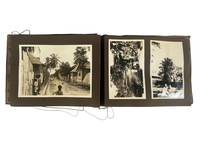
1904182051904. Photograph album circa 1904-1914 documenting maritime activity canal construction and social life in Panama during the period of American engineering control of the Panama Canal project. The images center on a group of American men traveling aboard a small yacht identified in several photographs by the presence of the American yacht ensign indicating a private pleasure vessel rather than a military or commercial ship. Several photographs appear to show large-scale excavation and infrastructure consistent with canal construction situating the album within the decade of intensive labor and engineering that culminated in the canal's completion in 1914. Alongside these scenes are numerous images of local life including Indigenous children and adults along coastal and riverine environments as well as built landscapes featuring plantation-style houses adapted to tropical climates. The album provides visual evidence of the intersection of American presence large-scale infrastructure development and local communities in early twentieth-century Panama.<br /> <br /> Photograph album containing images mounted on black pages within a black leather-bound volume measuring approximately 10 x 7 inches and comprising 86 pages. The photographs depict shipboard life including crew members steering and managing vessels group portraits of men in bathing attire and social gatherings such as shared meals. Additional images show coastal scenes with canoes swimmers and shoreline activity as well as occasional figures in military dress. The composition of the album reflects both travel documentation and informal social photography capturing a range of maritime domestic and environmental subjects.<br /> <br /> 86-page album with photographs mounted throughout; one page partially clipped and one page removed with small tears to several pages not affecting images. Light sunning to some photographs; overall very good condition. A cohesive visual record of American maritime travel and canal-era activity in Panama documenting both infrastructure development and everyday life in the region. unknown
1915224481915. Unknown photographer Panama Canal Zone and local life photo archive 1915 documents Panama during the first year after the canal's opening to traffic and supports research into U.S. imperial administration Canal Zone settlement travel photography military protection of infrastructure and the visual ordering of colonial space. The Panama Canal opened to traffic on August 15 1914 after U.S. construction created a strategic interoceanic route administered through the Canal Zone and Balboa Heights became a key administrative and residential center for the U.S.-controlled canal system. These photographs capture the built and natural environment through which American authority was made visible: locks river landscapes official buildings hilltop housing city views and naval practice appear together as evidence of a recently completed engineering project becoming an occupied administrative territory.<br /> <br /> Twenty-four original silver gelatin photographs including two real photo postcards dated 1915 with some undated images several with handwritten inscriptions in English on versos and some with printed captions on rectos. Photographs measure approximately 3½ x 5 inches to 5½ x 7 inches. The archive includes views of the Chagres River the largest river in the Panama Canal drainage basin and a major part of the canal water system together with photographs of the Gatun Locks canal gates aerial views of Panama City the main city plaza a bull ring and Balboa Heights. The Balboa Heights images show American-style bungalows arranged along curving terraced roads with broad verandas raised foundations and landscaped grounds visual evidence of the residential hierarchy attached to U.S. canal administration. Additional images show the Administration Building at Balboa Heights completed in 1914 and positioned above the town as a central administrative landmark while a real photo postcard captioned "Ready to Fire-Division Practice" shows U.S. naval boats in formation off the coast connecting sightseeing views to the military protection of the newly opened canal.<br /> <br /> The archive's research value lies in its combination of personal travel documentation official-looking captioned views urban and infrastructural scenes and military imagery from the early Canal Zone era. Its views of Balboa Heights are especially significant because U.S. canal society was organized through racialized and occupational distinctions including the "gold roll" and "silver roll" labor categories that separated white American workers from largely Black Caribbean and Latin American workers and shaped housing pay and privilege within the zone. Light edge wear legible inscriptions and preserved image surfaces very good overall. Cohesive Panama Canal Zone photo archive documenting the immediate post-opening landscape of U.S. power in Panama through canal infrastructure river systems segregated administrative space urban views and naval readiness. unknown
1930WRCAM55194San Antonio: E.O. Goldbeck National Photo & News Service 1930. Two panoramic photographs 10 x 48 1/2 inches and 10 x 34 1/2 inches. Minor edge wear and creasing. Very good. An interesting pair of panoramic photographs relating to the Panama Canal Zone around 1930. The photographs were produced by the prolific panoramist E.O. Goldbeck during one of his many jaunts to record American military installations in exotic locales. One is dated June 1930 but it is reasonable to assume Goldbeck photographed both subjects around the same time since the Panama Canal Zone is no short trip from San Antonio. The pair of panoramas include: <br> <br> 1 CULEBRA CUT - PANAMA CANAL ZONE. 10 x 48 1/2 inches. A well-composed image showing a steamship rounding a corner of the Culebra Cut an artificial valley cutting through the Continental Divide in Panama and one of the greatest engineering projects of the late- 19th and early-20th centuries. Begun in 1881 by the French and not finished until 1913 by the United States the Culebra Cut known for most of its life as the Gaillard Cut is an eight-mile-long artificial channel forming part of the Panama Canal. It connects Gatun Lake to the Gulf of Panama providing a link from the Atlantic to the Pacific. The Culebra Cut resulted from the blasting and excavation of the Culebra mountains by 6000 workers employing hundreds of steam drills and shovels 60 million pounds of dynamite and thousands of trains loaded with debris and bound for landfill dumps. The present image captures the awesome scope of the project completed less than twenty years earlier. <br> <br> 2 FT. AMADOR. C.Z. JUNE 1930. CAPT. R.J. VAN BUSKIRK. COMDG. 10 x 34 1/2 inches. A panoramic photograph featuring Company B of the 65th Air Defense Artillery Regiment of the United States Army. The 65th regiment was active in providing air defense in the Panama Canal Zone from July 1924 to April 1932. Fort Amador was primarily an infantry and artillery support base providing air defense to American merchant ships traveling through the Pacific side of the Panama Canal. The image captures over eighty members of Company B ranged on each side of their trophies and their regimental guidon. <br> <br> A complementary pair of panoramic photographs highlighting the scale of the project in the Culebra Cut and American military interests in the Panama Canal Zone in the interwar period. E.O. Goldbeck, National Photo & News Service unknown books
1930224461930. Caribbean and Panama travel photograph album. circa early 1930s. This album documents interwar travel through the Panama Canal Zone and Jamaica recording maritime transit canal infrastructure and rural Caribbean life as observed by Western travelers. The photographs provide primary visual evidence of the Panama Canal as a site of industrial activity and international movement alongside scenes of Jamaican village life and landscape establishing a contrast between engineered environments and colonial rural settings. The material is particularly strong in its depiction of canal operations and the presence of local populations within these spaces.<br /> <br /> Album containing 29 silver gelatin photographs mounted on black leaves with individual prints measuring approximately 3.5 x 4.5 to 5 x 7 inches housed in a string-bound album measuring approximately 7 x 9.5 inches. The opening sequence shows passengers aboard a steamship with men and women posed along deck rails and views of ships navigating canal locks and docking areas. Additional images depict cranes drawbridges canal cuts and small boats in the water along with dock workers and uniformed personnel visible among travelers. Architectural and infrastructural views include colonial-style buildings and mechanical equipment associated with canal operation concluding with a monument identified as that of Vasco Núñez de Balboa in Panama City. The Jamaica sequence includes landscape views of hillsides and gardens along with images of Black Jamaican residents posed in village settings. One photograph bears the caption "Kingston Jamaica 10 -- S.S. 'Reliance' West Indies Cruise" showing children and adults gathered along a dirt road lined with wooden and metal-roofed structures. Other images show groups assembled beneath trees and within rural surroundings.<br /> <br /> Produced during a period when the Panama Canal served as a major conduit for global shipping under U.S. administration and Caribbean travel formed part of organized cruise itineraries the album reflects established routes of interwar tourism. The juxtaposition of canal engineering and Jamaican village scenes situates the photographs within broader patterns of travel that linked industrial infrastructure with colonial landscapes. Minor water rippling to pages and photographs; images remain clear; overall very good. A coherent travel album documenting canal operations and Caribbean life in the early twentieth century. unknown
47555Paris Carilian-Goery et Vve Dalmont, Editeeurs 1845 in 8 (23x13,5) 1 volume reliure basane havane, dos lisse orné de filets dorés, pièce de titre de cuir vert, VIII et 233 pages, avec 2 cartes dépliantes in fine, quelques rousseurs éparses sur les premières et les dernières pages. ex-libris R. V. F. Edition originale. Bel exemplaire ( Photographies sur demande / We can send pictures of this book on simple request )
1825368803Burdeos Bordeaux: en casa de Lawalle Jóven y Sobrino 1825. 155pp. 12mo. Modern red morocco and cloth front cover off original printed wrappers bound in. 155pp. 12mo. Bolivar propose the Congress which took place in 1826. en casa de Lawalle Jóven y Sobrino unknown
Précieux tiré à part des Comptes rendus des séances de l'Académie des Sciences qui constitue l'acte de naissance du tracé du canal de Panama. "L'opuscule reproduit le discours lu par Ferdinand de Lesseps le 2 juin 1879, où il plaide en faveur de l'exécution de son projet de construction du canal interocéanique au Panama, et du lancement d'un appel national de capitaux s'élevant à 400 milions de francs. Lesseps évoque les études faites par Wyse et Reclus, lieutenants de vaisseau, et Celler, ingénieur en chef des Ponts et Chaussées, ainsi que plusieurs autres ingénieurs étrangers envoyés par une société d'études française.Il parle enfin de la seconde exploration de Wyse et Reclus et de leur projet, "parfaitement étudié" qui fixe le tracé du canal entre Colon-Aspinwal et Panama en suivant le tracé du chemin de fer sur une ligne de 73 km." Cf Catalogue vente Zoummeroff, Piasa, 2005.
(Al fin:) Aranjuez a 23 de Abril de 1768, 30 x 19 cm., hol. piel moderna con puntas, 3 folios. (Es obra muy rara. El catálogo Colectivo registra sólo dos ejemplares).
1920230431920. Panama City photograph archive ca. 1920s documenting the urban environment of the Panamanian capital and the infrastructure of the Panama Canal during the decades following the canal's opening in 1914. The photographs record the interconnected worlds of canal engineering international commerce tourism and everyday street life that developed as Panama City became a strategic hub of global shipping and American geopolitical influence in the Caribbean basin. Urban scenes depict commercial storefronts streetcars automobiles and pedestrian activity along central avenues while other photographs capture the canal's mechanical landscape of locks spillways and industrial structures. Together the images illustrate the transformation of Panama City into a cosmopolitan port city shaped by canal traffic international trade and the presence of the U.S. Canal Zone administration.<br /> <br /> Archive of eighteen original silver gelatin photographs depicting Panama City and surrounding canal infrastructure. Each measure approximately 3.5 x 5.5 inches. Several images show major canal engineering features including a photograph captioned "Purifying Plant and Spillway - Panama Canal" as well as views of lock systems and canal transport routes where cargo vessels pass through the waterway. Urban photographs record commercial and entertainment districts including a façade marked "American Cabaret" a busy street labeled "Street Scene - Panama City" and a view of the Hotel Central along a principal thoroughfare lined with automobiles and electric streetcars. One photograph bears the caption "264 - President's Palace on day of Riot Panama 2-28-." showing crowds gathered along balconies and streets near the presidential residence during a moment of public unrest. Additional photographs document daily life and local commerce including outdoor market scenes pedestrians and vendors workers posing near canal machinery and residents standing beside storefront displays. Landscapes and travel images appear as well including a waterfall and rural roadside scenes with automobiles indicating the expansion of modern transportation and tourism into the Panamanian countryside during the early twentieth century.<br /> <br /> The photographs collectively capture the layered social and industrial landscape that emerged in Panama after the completion of the Panama Canal when the city became a focal point of hemispheric trade and international transit. The canal drastically shortened maritime routes between the Atlantic and Pacific Oceans and reshaped the economy of the Caribbean and Pacific coasts of the Americas. Panama City consequently developed a complex urban culture combining local Panamanian communities canal workers foreign merchants travelers and U.S. officials connected to canal administration. Light surface wear and minor edge handling visible on several prints overall very good condition. These images document that environment through views of transportation infrastructure entertainment venues commercial streets and civic spaces offering a visual record of Panama City during the formative decades of the canal era. Photographs measure approximately postcard size. unknown
Features: Steel Bridge Across Chehalis River at Aberdeen Formally Opened - article with photo; The Panama Canal Route for Canadian Northwest Shipping; Photo of Charles M. Hays, president of the Grand Trunk Railway; Address to General Passenger Agents by Howard Elliott, president of the Northern Pacific Railway (four pages); Brief business biography of George W. Hibbard, General Passenger Agent of the C.M. & P.S., with photo; Bernard N. Baker's Steamship Line a Golden Opportunity; Puget Sound Tugboat Co. on the Columbia River; New Boilers for North Vancouver Ferries; Steamer Maunganui Launched; Review of the Charter Market; Casualties to Pacific Coast Shipping; Modern Aids to Navigation Demanded for Alaskan Waters - article including lengthy list of vessels lost; Excellent illustrated centerfold makes the case for lighthouses in Alaskan waters; Review of Marine Insurance and Shipping Law; Address by president of the San Francisco Merchants' Exchange, Robert Dollar, entitled "The American Merchant Marine As It Affects Our Foreign Commerce" - with photo of Dollar; and more. 44 pages including several pages of nostalgic ads, some illustrated in black and white, featuring local marine and rail interests. Printed upon glossy coated stock. Average wear. Binding intact. Few library markings to front cover. A well-preserved copy of this highly-informative memento of Pacific Northwest transportation over a century ago. 12" x 9". Magazine
Features: Reasons Why the Canadian Pacific is So Prosperous; Spokane Rate Decision Eagerly Awaited; Value of Steel Equipment Demonstrated in Wreck of the Crack Milwaukee Train, Columbian on May 30th east of Ralston, WA; Continued Smuggling of Opium into West Coast Ports Aboard Trans-Pacific Steamships; Professional Biography of Joseph H. Young, President of Alaska Steamship Co. - with photo; Contracts Let for Coaling Plants in Seattle and Tacoma - article with two photos; $1 Million Available for Improvements at Moran Shipyards; Record Run Between Puget Sound and Callao by Schooner Wilbert L. Smith; After 20 Years on the Seattle-Tacoma Run, Steamer Flyer is Sold - Feature article with photo; Review of Marine Insurance and Shipping Law; Photo of Steamer Tampico Submerged in Seattle Harbor; Photo of New Boilers for Steamer Charmer built by Commercial Boiler Works of Seattle; Effects of the Panama Canal on Pacific Coast - Oriental Trade; News of Tacoma; Launching of the Titanic - 1/3 page article including photo of the Titanic in drydock with man standing below her massive 100-ton rudder; Charming one-page illustrated ad for The Shasta Limited, "The Finest Train in the West" which connected Seattle with San Francisco; and more. 44 pages including several pages of nostalgic ads, some illustrated in black and white, featuring local marine and rail interests. Printed upon glossy coated stock. Average wear. Binding intact. Few library markings to front cover. A well-preserved copy of this highly-informative memento of Pacific Northwest transportation over a century ago. 12" x 9". Magazine
1892A61972Paris, Masson 1892 176 + (i) pp.+ 49 planches hors-texte (des vues photographiques, plans & cartes - qqs.unes en couleurs) & II: Atlas à part ("plans annexés") contenant 2 grandes cartes dépliantes: Plan général du canal (projet de la Compagnie, Projet de la Commission d'études, Projet proposé) & Profils en long sur l'axe du canal (id.), Edition originale de 1892, 31cm., peu commun, bon état, [Ouvrage complet mais sans l'annexe "Le traffic" publiée la même année]
176 + (i) pp.+ 49 planches hors-texte (des vues photographiques, plans & cartes - qqs.unes en couleurs) & II: Atlas à part ("plans annexés") contenant 2 grandes cartes dépliantes: Plan général du canal (projet de la Compagnie, Projet de la Commission d'études, Projet proposé) & Profils en long sur l'axe du canal (id.), Edition originale de 1892, 31cm., peu commun, bon état, [Ouvrage complet mais sans l'annexe "Le traffic" publiée la même année]