(BINDINGS - FINELY BOUND SETS). (INDIA)Biblio.com
3 357 résultats
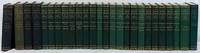
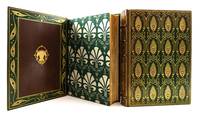
1906ST20132London: Printed by the Edinboro Press for the Grolier Society 1906-07. Edition magnifique letter J of 26 lettered sets. 260 x 180 mm. 10 1/4 x 7". Nine volumes volume II bound without two-page Appendix IV Jackson A. V. Williams. <br/> SPLENDID CONTEMPORARY EMERALD GREEN MOROCCO lavishly gilt and with delicate scarlet morocco inlays forming a repeating peacock feather motif surrounded by Art Nouveau twining vines all within a gilt French fillet spine similarly decorated raised bands BROWN MOROCCO DOUBLURES with a central inlaid and gilt triple elephant motif within a wide green morocco frame adorned by gilt peacock feathers with indigo morocco inlays unusually elaborate floral silk flyleaves top edge gilt other edges untrimmed. WITH 153 PLATES including 72 photographic reproductions on shiny paper and 81 plates in three states with printed tissue guards: one hand colored; one tipped on in black & white; and one sepia; plus numerous black & white illustrations 68 of these being full-page; and one double-page map. Spines uniformly sunned to a light tan but bindings otherwise lustrous and virtually unworn; one tissue guard stuck to the plate facing p. 150 in volume IV a few corner creases other trivial imperfections but very clean and fresh with some leaves still unopened.<br/> <br/> This nine-volume history of India features a luxurious binding with sparkling gilt and vibrant morocco inlays forming motifs that perfectly suit its contents. Intended to present the history of India from the "earliest times" through the British Raj this profusely illustrated work was written by some of the most prominent Victorian scholars on the subject and edited by an esteemed professor of Indo-Iranian languages at Columbia University. Volume I "From the earliest times to the sixth century B.C." is the work of native Calcutta historian Romesh Chunder Dutt 1848-1909 author of major works on the cultural and economic history of the country. Volume II "From the sixth century B.C. to the Mohammedan conquest" is the contribution of Irish antiquarian Vincent Arthur Smith 1848-1920 who wrote the "Oxford History of India" which DNB says "was to exert a vast influence over generations of students." Volumes III and IV "Medieval India from the Mohammedan conquest to the reign of Akbar the Great" and "From the reign of Akbar the Great to the fall of the Moghul empire" come from British orientalist and numismatics expert Stanley Lane-Poole 1854-1931 praised by DNB as "a versatile writer able to produce both academic reference works . . . and popular versions of his biographies and introductions to historical subjects." Volumes V-VIII were written by former administrators of the Raj who had taken up Indian history as an avocation. Volume V "The Mohammedan period as described by its own historians" was prepared by editors from earlier works by Sir Henry Miers Elliot 1808-53. Volumes VI and VII "From the first European settlements to the founding of the English East India Company" and "The European struggle for Indian supremacy in the seventeenth century" were penned by Sir William Wilson Hunter 1840-1900 who spent 25 years in the Indian Civil Service before retiring to write about the history of colonialism in India. The penultimate volume "From the close of the seventeenth century to the present time" was written by someone who actually lived key parts of that history Sir Alfred Comyn Lyall 1835-1911 survivor and hero of the Indian Mutiny lieutenant-governor of the North-Western Provinces and longtime member of the Council on India. In the final volume editor Abraham Valentine Williams Jackson 1862-1937 compiles "Historic accounts of India by foreign travellers classic oriental and occidental." All volumes are copiously illustrated with photo plates of life in Victorian India many taken from Jackson’s own photographs and with examples of Indian art architecture and crafts. Though unsigned the spectacular bindings were clearly the work of a master possibly Sangorski & Sutcliffe. The quality of materials skill of finishing and elaborate motifs are consistent with those produced by that outstanding bindery or another of equal skill and taste. While the work occurs with some regularity on the market it is extremely rare in such a beautiful decorative dress as seen here. Printed by the Edinboro Press for the Grolier Society unknown
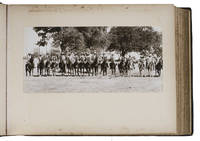
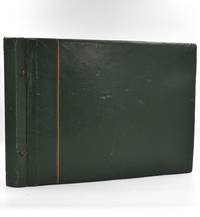
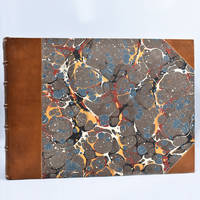
1933ABC_45905Cambridge Mumbai New Delhi: Scott & Wilkinson Clifton & Co Hamilton Studios and Kinsey Bros. 1933. Oblong half morocco photograph album by W. Johnson & sons London. With 105 photographs mounted in the album ranging from 16 x 28 cm to 4 x 6 cm 2 photographs loosely inserted and a watercolour mounted at the back 11.5 x 21 cm. Unique photograph album showcasing the vigorous "fox" hunting scene in British India in the early 1930s particularly around Delhi. Most of the photographs show members of the British upper class in India often mounted on horses or posing for a group photograph and accompanied by hounds. The album contains no titles captions or inscriptions and the photographs do not seem to figure recurring individuals which suggests that it was probably compiled to commemorate the hunting and or riding club and its activities in the early 1930s. Numerous photographs show groups of mostly men posing with hounds at lunches and possibly a hunt ball or mounted on horses at jumping events and even a few cup trophies. The very first photograph is by Scott & Wilkinson in Cambridge active before 1933 and was therefore probably taken in England. The other inscribed photographs are by Clifton & Co. and Hamilton Studios from Bombay and Kinsey Bros. which started in New Delhi in 1935.British life in India mirrored life in native Britain and included popular equestrian activities such as hunting. Starting in the second half of the 19th century foxhounds were imported from Britain and subsequently bred in India. Regiments and brigades kept their own packs but at the beginning of the 20th century these had morphed into local hunts. Hounds were kept at over 12 hunting clubs which included Delhi Meerut Narbuda Vale Jaora Poona Bombay Bangalore Ooty Madras Lahore Quetta Peshawar and Karachi. Although the Indian silver fox was sometimes hunted the most common prey was the golden jackal.A different type of hunting popular in India was pig sticking: the chase of a wild boar on horseback with the spear. Several photographs in the album show pig sticking parties either posing or in action and sometimes accompanied by spectators on elephants. In contrast to the jackal-hunt parties the pigstick groups are composed of more military looking men and also include Indian men as opposed to the British-only hound groups.Most photographs show the area around Delhi and include a hunt near Shah Alam's Tomb. A photograph of this event is loosely inserted in the album and dated 1933/34 on the back. Other photographs show the Rashtrapati Bhavan one group shows the Earl later Marquess of Willingdon India's Governor-General from 1931 to 1936. Two images show the monumental Gateway of India completed in 1924 in Bombay Mumbai which can also be seen in an aerial photograph. Several photographs show what is probably the airfield at Karachi as it shows two airplanes loading mail on apparently the first voyage of the Indian Transcontinental Airways. Imperial Airways liner "Hanno" departing from Croydon had left for Karachi on 1 July 1933 via Bahrain and Sharjah. In Karachi the cargo was transferred to the Transcontinental airliner "Arethusa" as can be seen on the photographs.It is unclear why only half of the album was used. It is possible the compiler transferred to Kut in British Mesopotamia Kut al-Imara in modern Iraq. A watercolour on the final page of the album is captioned "A river bank north of Kut".Binding slightly rubbed and worn at the edges. Album leaves foxed throughout but most of the photographs in very good condition. The paper of the large photograph of the group near Shah Alam's Tomb is heavily damaged at the top and left side but the image itself is undamaged. A unique collection of British-Indian hunting photographs in very good condition.l Cf. Hamid "Riding with the Peshawar Vale hunt" thefridaytimes.com; Hunt "Delhi" in: Ten cities that made an empire; "1933 Eastwards: Karachi to Calcutta" indianairmails.com; Lucas Hunt and working terriers pp. 116-120; Mitter et al. The artful pose. Scott & Wilkinson, Clifton & Co, Hamilton Studios and Kinsey Bros., unknown
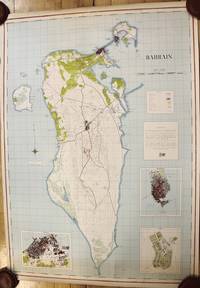
1951M9730London c.1951-1953. Very Good mounted on contemporary linen. Notes: A very scarce wall map of Bahrain published jointly by the Royal Geographical Society and the Bahrain Petroleum Company. The map depicts roads tracks buildings cultivated areas marshland and the Bahrain Refinery. Major cities as Awali Manama Town and Muharraq Town are shown in detail. The map has three large insets of Muharraq Awali and Manama.<br><br>Bahrain small Arab state situated in a bay on the southwestern coast of the Persian Gulf. It is an archipelago consisting of Bahrain Island and some 30 smaller islands. Its name is from the Arabic term al-baḥrayn meaning “two seas.†The economy has long relied on processing crude oil from neighbouring countries and more recently the financial commercial services and communications sectors have grown markedly as has tourism.<br>Britain’s decision to withdraw all of its forces from the gulf in 1968 led Bahrain’s independence in August 1971. A treaty of friendship was signed with the United Kingdom terminating Bahrain’s status as a British protectorate.<br> Size : 925x655 mm 36.42x25.79 Inches Coloring: Hand Colored Category: Maps Asia Middle East Persian Gulf; unknown
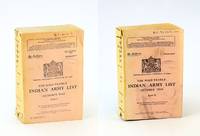
1943223j2732New Delhi India: The Manager of Publications India. Fair with No dust jacket as issued. 1943. First Edition. Paperback. An encyclopedic reference "detailing British and Indian officers including names ranks commissions promotions unit assignments and war services during WWII. Served as an official reference for appointments awards and casualties within the Indian Army." - Google AI. 2790 pages in two volumes. Interesting vintage advertisements. Few markings to covers. Above-average wear. Bindings intact. A rare example of this extraordinarily informative WWII reference. ; Sm 4to . The Manager of Publications, India paperback
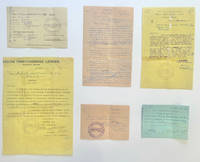
1943010675Kyaiklat Burma British India 1943. Handwritten. Very Good. Loose Leaf. 4to - over 9¾ - 12" tall. Correspondence from Chettiar in Tamil from IIL in English. 9 letters from Chettiar and IIL in manuscript and typescript; 10 pieces of correspondence from IIL on note cards with IIL letterhead; 1 IIL membership card for Chettiar. CONDITION: Overall Very Good old folds some splitting and tape repairs along folds of documents by IIL but Chettiar's letters largely free of wear or tear text legible throughout. All documents now housed in sleeves that are mounted onto backing but it remains easy to remove documents from enclosures. This collection contains English translations of Chettiar's letters presumably made by the previous owner who also wrote captions describing each piece of correspondence on their respective mounts. An evocative collection of correspondence document- ing an Indian nationalist organization's coercion of funds from a member of a prominent money-lending Burmese-Tamil family. These letters show the Indian Independence League's attempt to extort money from a wealthy man whom they had identified as being in a position to help "free India from bondage and for the maintenance of the Indian National Army." This was M.S.M. Somasundarum Chettiar a 63-year-old merchant who operated his business on Strand Road in Kyaiklat a town in the Pyapon District of Burma. A recent historical study by Suppiah and Raja on the Chettiar families of Burma suggests that Somasundaram was part of a "distinguished ethnic group comprising the business class among Malaysian Indian-Tamils" who made their fortunes by lending money to the Indian working class in Burma. The Chettiar ethnic group boasted "a centuries long tradition as an indigenous banking caste in South India" and thus due to a combination of "stringent business regulations during British colonialism in the Madras Presidency and economic opportunities in the newly opened British colonies in Southeast Asia" both the Indian working class in Burma and members of the Straits Settlement Chinese utilized "Chettiar agents in order to conduct bank transactions.in the middle of the nineteenth century." This reliance upon the Chettiar's services only increased by the turn of the twen- tieth century as the demand rose for rubber and tin made in Southeast Asia. As "local Chinese and Malays with only small and medium capital sources relied on loans from Chettiar agents to develop land plant rubber and open mines.Chettiar agents" became "known as the leading moneylenders" in late-colonial Burma. Somasundaram would thus have been part of a known community of capitalists "who accumulated capital for further expansion of their activities at the expense of the Indian working class." The Indian Independence League and the Indian National Army were closely intertwined movements during WWII both led by Subhas Chandra Bose and governed by the Azad Hind Provisional Government in Exile.They worked to unite the Indian diaspora in Southeast Asia to support the cause of independence and sought military support from Japan to facilitate an armed wing for their movement. Primary source documentation of the Azad Hind government's activities is scant institutionally. We locate a scrapbook created by a member of the Indian National Army held at the Institute of Social Research in the Netherlands and a letter from Subhas Chandra Bose asking for a loan from the Hikari Kikan of Syonan held by the National Library Board of Singapore. This would be the only comparable collection held in North America.A rich collection of correspondence highlighting the conflicting poles between Indian diasporic wealth and Indian nationalists' aspirations for the nation's self-rule listing credit Pico Banerjee Peek A Boo Rare Books & Ephemera . unknown
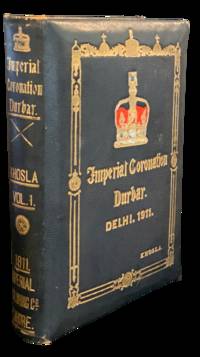
19114764Lahore Punjab: The Imperial Publishing Co. Khosla Bros. 1911. First edition. Folio 34 x 26cm 4 i iv 3 481 1pp. Presentation binding full black morocco over padded beveled edged boards stamped in gilt on covers and spine with lettering elaborate border and Imperial Crown g. e. Crown is hand painted in red blue and white. Gilt dentelles blue silk endpapers platinum photographs throughout printed red borders of different shades and black lettering on thick glossy paper. Letter of presentation from the publisher to The Hon'ble Sir Harvey Adamson K.C.S.I. M.A. L.L.D. Lieutenant-Governor of Burma printed in gilt on red silk and mounted to front free endpaper. Some rubbing to corners and spine ends some paint loss to the crown front endpaper lightly chipped along the lower edge with a few silk threads of the letter of presentation becoming unwound else clean internally. A large heavy volume in nearly fine condition. <br /> <br /> Printed as a memento of the historic Imperial Coronation Durbar at Delhi 1911 honoring King George V and Queen Mary as Emperor and Empress of India. In the presentation letter to Harvey Adamson the publishers lay out the intent of the volume which is "graced by Your Honor's portrait" as giving a "bird's-eye view of the present political condition of India" through "historical and biographical sketches of the various Ruling Chiefs and Princes of India.suitable memoirs of distinguished personages.and of men famous in Literature Science Art and other spheres of useful activity accompanied with their portraits as far as possible." The book is indeed lavishly produced and illustrated with roughly 600 biographical sketches most with photographs many of which are credited including several from Bourne and Shepherd of Calcutta the official photographers of the Durbar. <br /> <br /> The last of three Durbars the others in 1877 and 1903 the 1911 assembly was notable as only one attended by the King and Queen the first time a British monarch had visited India the crown jewel of empire. The event was held at Coronation Park in Delhi from December 7th-16th and was attended by the vast majority of ruling princes and noblemen making it the largest of its kind. Underneath the pomp and regalia however were the roots of resentment and stirrings of independence. The scandal of the Durbar came when the Gaekwar of Baroda Maharajah Sayajirao III briefly bowed only once instead of the required three times when approaching the emperor and then turned his back to walk to his seat instead of walking backwards. This and other happenings of the Durbar were captured on film most famously and in color by Charles Urban the British-American producer and film maker. "With Our King and Queen through India" became the first color cinematography to be viewed by the majority Western audiences. <br /> <br /> <br /> Sir Harvey Adamson served as Lieutenant Governor in Burma from 1910 when he was appointed Knight Commander of the Order of the Star of India until 1915. Of interesting note a steamship built for the British India Steam Navigation Company in 1914 and named after the General went missing at sea along with its 269 passengers in 1947. <br /> <br /> An immense trove of photographic evidence of a time and place being the crest of British Imperialism in India the book is institutionally scarce. Our research finds only a few copies of either volume held worldwide the book on offer with a tangible and important provenance. The Imperial Publishing Co. (Khosla Bros.) unknown
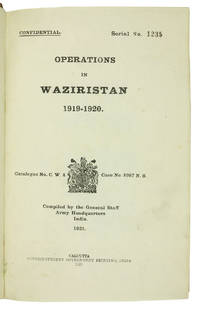
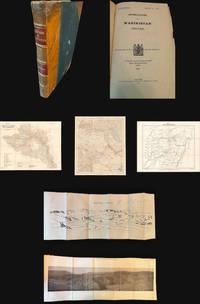
1921ABC_45215Calcutta: Superintendent of Government Printing 1921. Contemporary half calf green cloth sides gold-stamped red spine labels. 8vo. With frontispiece 31 plates 7 maps 3 in pocket on inside of back board and 8 panoramas mostly folding. First edition of the British-Indian armys official account of the 1919-20 Waziristan campaign marked "Confidential" on the title-page. The operations followed unrest that arose in the aftermath of the Third Anglo-Afghan War; they were conducted in the mountainous region of Waziristan now in Pakistan by British and Indian forces against the fiercely independent Waziri and Mahsud tribesmen that inhabited it. Since the 1870s the British government agencies were assiduous in compiling internally published histories of their military frontier operations with the intention of providing a "valuable guide" to such British commanders and policymakers as "might have future dealings with these turbulent neighbours" as the Punjab Government phrased it in 1866.The title-page reports the catalogue number and location of what may be the original report: Catalogue no. C.W. 4 - Case no. 8987 N.S..Serial No. 1235 stamped on the title-page. Occasional light marginal staining. A few edge flaws consistent with army use repaired by a contemporary owner. Otherwise in very good condition.l WorldCat 11497145. Superintendent of Government Printing, hardcover
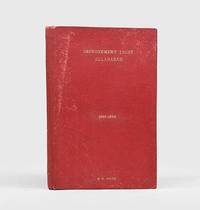
1925180767Allahabad: Improvement Trust 1925-30. From the personal collection of the chairman First editions of these rare reports charting the overhaul of the infrastructure in the "City of Prime Ministers" a center of Indian nationalism. They were collected by Baldev Ram Dave Chairman of the Improvement Trust and cover the first five years of his tenure. This set documents the projects of the Allahabad trust over half a decade with multiple maps tables and illustrations of the progress. Such projects include the extension of Allahabad University the construction of Sir Harcourt Butler Market and the establishment of multiple housing schemes for those evicted from their homes. The number of volumes in the complete run is unclear but we have traced only one other set on WorldCat: 11 volumes held in Harvard University Library. In addition to the reports are three pamphlets. A Brief Note on the Improvement Trust of Allahabad gives an overview of its early history with blueprints to illustrate major projects. The addresses to Sirs William Malcom Hailey and Alexander Muddiman both governors of the United Provinces of Agra and Oudh in 1928 lay out the trust's goals and request further central funding. Rai Bahadur Pandit Baldev Ram Dave 1863-1942 was the trust's second chairman from 1925. The loosely inserted documents all relate to his projects including a hand-drawn sketch of the expansion of Zero Road up to Sheocharanlal Road a typescript letter from the notable engineer Raja Jwala Prasad discussing various initiatives and a government report on the efficiency of the trust in 1930. Dave is mentioned in an article in the Times of India from 11 November 2014 which notes that his department was responsible for the demolition of Nehru's family home in 1931. He reportedly took the last photograph of the building which was later gifted to Prime Minister Indira Gandhi. 8 works bound in 1 vol. quarto 327 x 210 mm. With 15 half-tone photographic plates 1 folding 19 hand-coloured maps 14 folding heliozincographed folding map 5 folding blueprints; tables in text. Contemporary red cloth front board lettered in gilt. With 5 loosely inserted letters reports and sketches. Light wear and silverfishing three maps repaired with archival tape two plates tipped in Brief Note front wrapper chipped with loss foxing internally: a very good collection. hardcover
1909312711N.p. India 1909. 126 tipped in gelatin photographs 63 in each volume; with four manuscript sketch maps 2 in each volume. 153 pp.; 7 numbered a-g 124 ff. including blanks. 2 vols. 8vo and 4to. Contemporary full brown morocco covers ruled and lettered in gilt black coated endpapers by Thacker & Co. Bombay with their red ticket at the back. Corners bumped faintest traces of rubbing. 126 tipped in gelatin photographs 63 in each volume; with four manuscript sketch maps 2 in each volume. 153 pp.; 7 numbered a-g 124 ff. including blanks. 2 vols. 8vo and 4to. Substantial detailed and extensively illustrated chronicle of travel and sport in the area north and east of Simla Sutlej River Adampur Jhansi and elsewhere in India including a trip in the Himalayas.<br /> The author was Lawrence Christian Gordon a major in the artillery; at this time he was staioned in Jhansi.<br /> The first volume is divided in three parts:<br /> Part I. Trip near Adampur after black buck and gazelle pp. 1-26 dated 23 December 1906 to 3 January 1907<br /> Part II. Near Jhansi after black buck pp. 27-37<br /> Part III. Himalayas after burhel and ibex pp. 39-153 dated April to July 1907 up the Sutlej river from Simla with mention of Asirang Lipi Jangi<br /> <br /> The second volume is a continuous narrative describing short shooting and fishing trips in 1908 and one longer account of three months' shooting leave March to June 1909 in the terrain upriver from Simla close to the border with Tibet and indeed many of the villages and monasteries passed were of TIbetan culture. The photographs are well composed and printed; burhel was the chief game hunted. Gordon writes candidly with many observations on local conditions and weather. Provenance: Norman James Anderson Galleries 9 November 1928 lot 784; Harvard Travellers Club in May 1934 bookplates unknown
19155787Punjab, 1915. 1915 7 vol. de format in-8° et in-12° (130 x 185 mm à 175 x 270) garnis de 348 tirages albuminés de divers format (de 55 x 35 mm à 145 x 100 mm) : I. 87 photos et [8] ff. in-folio de légende manuscrites à lencre bleue, II. 46 photos. 3 31 photos ; IV. 32 photos, V. 32 photos, VI. 69 photos et [5] ff. in-folio de légendes manuscrites à lencre bleue, VII. 51 photos et [3] ff. in-folio de légende manuscrites à lencre bleue. Les photos des albums I-II-V-VI et VII sont légendées en anglais. (quelques photos manquantes). 3 albums recouverts de toile grise et bordeaux et 4 albums recouverts de papier gris imprimé sur le premier plat " The public schools. Drawing book. Reeves abd Sons, LTD., London". (défauts d'usages et petits manques).
19472117Harvard University Press. 1947. Hardcover. Good in No Dust Jacket dust jacket. Ex-library set with usual stamps call numbers and pockets. Text is clean of marks. Volume I is in good condition with half inch tear to cloth at top of spine and moderate edgewear to back board top edge. Bumping to corners. Volume II is in VG- or G condition with stamps on textblock deleted with black marker. Minor 1cm cut to cloth along edge of spine. Minor edgewear. Scuffing to boards. Text is clean of marks. Volume III: is in VG condition with stamps on textblock deleted with black marker. Scratches and scuffing to boards.; Volume 1: The District of Chiu-Chên during the Han Dynasty: General Considerations and Plates 1947. Vol. 2: The District of Chiu-Chên during the Han Dynasty: Description and Comparative Study of the Finds 1951. Vol. 3: The Ancient Dwelling Site of Dông-So'n Thanh-Hoá Annam : General Description and Plates 1957 vol. 3 Published at St-Catherine Press at Bruges.; 3 Volume Set; The expedition was conducted between the years 1934 and 1939 under the Auspices of the École Française D'Extrême-Orient the Museums of Paris & the Harvard Yenching Institute. The main historical significance of Dr. Janse's archaeological documents is to be found in the fact that they not only introduce to us the Chinese conquerors of what was to become Vietnam at the very moment when they were laying its foundations as a civilized nation buy they also reflect on Chinese culture and conditions even at home and may help to give us a clearer idea of what the Chinese were about the beginning of our era and what their quest was so far south of the Honanese cradle of their civilization. . Harvard University Press hardcover
1940ZB394384Linguistic Society of India. 1940-1973. volumes 1-34; lacks volume 27. 1940-1973. partly bound library markings textually clean & tight PRICE IS FOR THE LOT. - If you are reading this this item is actually physically in our stock and ready for shipment once ordered. We are not bookjackers. Buyer is responsible for any additional duties taxes or fees required by recipient's country. Photos available upon request. Linguistic Society of India. unknown
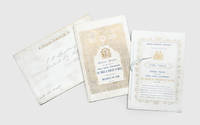
1905153020Lahore: Printed at the North Western Railway Press 1905-06. The Raj by rail Lavishly produced souvenirs of a six-month tour of India by the future George V and Queen Mary. Both are scarce: in the UK Cambridge holds a copy of each and we have traced a further copy of Time Table at Leiden. The 1905-06 royal visit was an opportunity for the prince and princess to broaden their imperial experience. The ambitious program included visits by rail to all four corners of India - Peshawar Rangoon Mysore and Karachi - and represented the most wide-ranging survey undertaken in India by any member of the royal family. "As with his father in 1875-6 he the prince was struck by the complacent sense of superiority of many of the white civil servants and on his return made a speech calling for 'a wider sympathy' on the part of the Indian Civil Service" ODNB. The success of the trip set the stage for the couple's return in 1911 for the coronation durbar the only durbar attended by a British monarch. The two brochures cover the legs from Bhatindi to Umballa Cantonment 28 November - 11 December 1905 and Delhi to Karachi Cantonment 8-17 March 1906 the last part of the tour. Besides detailed itineraries each includes views taken along the route such as the tomb of Ranjit Singh at Lahore the tunnel into the Upper Bolan Pass and the Chappar Rift Bridge. Special Trains also has portraits of local inhabitants. Provenance: Herbert Henry Spalding 1874-1943 District Locomotive Superintendent Bhatuda with his address on the mailing envelope. Spalding was born in India his father worked as an engineer on South Indian Railway in the 1870s and 1880s and joined the colonial civil service in 1897. In 1922 he was appointed Locomotive and Carriage Superintendent Indian State Railways retiring in 1929. Though unmarked as such these copies were subsequently owned by Major David Cecil Underwood Jr. 1970-2023 who compiled an extensive collection of material relating to royal visits to India. Two works large octavo ff. 17; ff. 9. Special Trains with 12 collotype views laid down on leaves with printed captions and ornamental borders 5 letterpress leaves; Time Table with 12 collotype views mounted 2-to-a-page on leaves with printed captions and ornamental borders 3 letterpress leaves. Both printed in blue and gold internally and interleaved with tissue guards. Original decorative wrappers printed in gold and lettered in blue stitched with blue cord Special Trains glued into wrappers as issued. With original envelope 300 x 195 mm. Covers lightly creased and soiled more so to rear wrapper of Time Table cockling caused by mounting adhesive as usual collotypes well preserved: very good copies. unknown
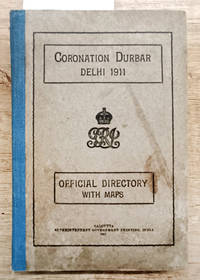
1911Biblio17<p> <em>Official Directory with Maps 1911 </em><em>2 folding maps in pocket at end</em><em> maps measure 365 x 340mm and 490 x 270mm</em><em> 3 Indian postage stamps with ink-stamps dated 15th December to title previous owner's ink signature original cloth-backed printed boards a little rubbed slight bumping to corners and extremities</em></p> Superintendent Government Printing, India hardcover
193021210841930. India. c. 1930-31 Oblong folio. Cord-bound and cloth-covered album with over 200 mostly original photographs including 27 photographic postcards mounted recto-verso on 25 dark brown album cards neat manuscript captions in white; album a little worn and with replaced cords. An interesting album documenting the life and travels of a soldier during the twilight years of the 'British Raj'. Collection opens and closes with the panoramic views of the Himalayas followed by detailed images of Ghurkas and other Tribal Hill people travelling vendors snake charmer camel transport bed of nails absent a fakir Jubbulpore views Meerut street scenes Temples Mosques 'A Vultures Tea Party' 'Elephant Bridge' 'Christmas Decorations. Royal Signal men's mess' and 'The Barrack 3rd Indian Division Signals'; 'Hindu Gods' at a religious festival captured in Ranickhet ; Studies of Naini Tal Lake and Temple on the bank ; Delhi illuminated by night studies of Lutyen's 'Imperial Delhi' the Jumna Bridge and other engineered structures 'Kutab Minar' views of the Old City from the Jumna Masjid Chandi Chowk Clocktower; Jhansi tombs and ruins. Other images of interest to the compiler show 'Types of wells used in Indian irrigation systems' and several shots recording the famed cricketers Jack Hobbs and Herbert Sutcliffe on their tour of India at the Roshana Cricket Club in Delhi organised by the Maharajkumar of Vizianagram. Professional photos also depict the Taj Mahal and a memorial at Cawnpore. Military subjects in addition to Meerut soldiers mess include 'The Kings Birthday Parade Ranikhet 1931'; 'Mounted Sports Royal Deccan Horse Meerut 1930'; military personalities such as RSM Biggs Major General Ironside and General Sir P. Chetwode; a Ghurka soldier; a sequence documenting 'The Viceroy's visit to Meerut February 1930' arrival in a biplane; Attock camps bridge construction 'Armoured Car' and 'Machnine Gun Outpost'. 'With the Sappers and Miners Khajuri Plain North West Frontier during the Afridi trouble 1930-31'. hardcover
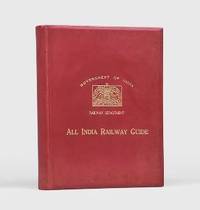
1929173000Bombay: Published for the Railway Board by the Great Indian Peninsula Railway 1929. Untraced institutionally The second iteration of this ambitiously comprehensive publication. The large folding map in the end pocket distinguishes between general and deluxe section services and shows broad metre and narrow gauge lines steamer routes and roads. The insets concern Delhi Calcutta and other interchange destinations. While passengers already had access to Newman's Indian Bradshaw and other commercially published guides the All-India Time-Table was the first official attempt at an encyclopaedia of the country's railway services. Compilation was overseen by the head office of the Great Indian Peninsula Railway following the government's assumption of the company's management in 1925. The timetable was periodically updated and reissued. This iteration was succeeded by the version that came into force in September 1929. Copies were sold at India's main railway stations. Quarto. Large folding network map in rear pocket 37 charts and plans and many tables in text; advertisements at front and rear. Some leaves printed on blue or green paper. Original red calf bevelled boards front cover lettered and with British Government arms in gilt purple marbled endpapers. A few minor abrasions to binding skinning from removed label on first blank text browned as expected couple of leaves proud at fore edge: a near-fine copy. hardcover
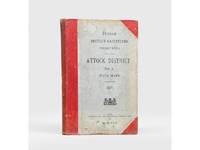
1909179531Lahore: Punjab Government printed at the "Civil and Military Gazette" Press 1909. With the scarce maps First edition compiled only three years after the district's formation and including a plan of the civil station of Campbellpore. We have traced only ten copies on WorldCat four of which are in the UK: University of Birmingham Edinburgh University Manchester University and Oxford University. Attock has been inhabited since the classical period and was the location where Alexander the Great crossed the Indus. In the early 19th century it was occupied by the Sikh Kingdom under Ranjit Singh but was taken by the British East India Company in the Second Sikh War in 1849. It was then renamed as Campbellpore District after Sir Colin Campbell Commander-in-Chief of India. The district was annexed by the British government in 1858 and constituted as a distinct administrative body on 1 April 1904. This work contains comprehensive information on the district from its physical geography and history to its agriculture rent prices wages administrative divisions policing and education. It pays particular attention to the local tribes and their history while providing precise data on population patterns land ownership statistics and trade. The maps show the borders of the district's local communities. Octavo. With 4 heliozincographed folding maps printed in black and orange tables in text. Original red half cloth spine lettered in gilt grey paper boards lettered in black edges untrimmed. Binding worn spine sunned maps re-tipped to stubs and with light foxing and a few worm holes: a very good copy. hardcover
1906321920Poona and Bombay India 1906. Comprising 17 album leaves with approximately 84 mounted photographs ranging in size from 16 full page and 8 half page photographs to smaller snapshots mounted with some thought many with detailed captions identifiers and dates in ink. 1 vols. Oblong folio 10-3/4 x 14 inches. Modern three quarter brown morocco and marbled boards new endpapers a.e.g. Some toning to a few album leaves the photographs generally clean and fresh. Comprising 17 album leaves with approximately 84 mounted photographs ranging in size from 16 full page and 8 half page photographs to smaller snapshots mounted with some thought many with detailed captions identifiers and dates in ink. 1 vols. Oblong folio 10-3/4 x 14 inches. A nice little family album of foxhunting and equestrian scenes relating to the Poon and Bombay Hunts as well as views of landscape and family life. The paterfamilias is identified in captions as A.W.S. a British officer and his wife R.A.S. even while numerous others members of hunts or parties are identified by name and rank. "Ruth" and "Baby" complete the family unit and RUth can be seen seated among a line of children in hunting kit at the "Children's Fancy Dress Party / Given by Poona Bachelors / Poona Gymkhana" and then mounted on a pony in panoramic Hunt portraits. One leaf with six photographs depicts the stages of a meet from draw to check to who'oop! with the central image captioned "Ruth's first brush given by J.A. Lord Esq. M.F.H. / Snapshots by Capt. Jennings" and another contemporary hand has added in pencil " run near Saula Creek Bombay Hunt . 1905". Other groups of images show views at "Singhur 1901-1905" and domestic scenes. unknown
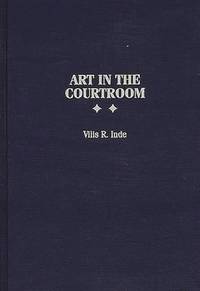
199828919Westport Connecticut U.S.A.: Praeger Pub Text. New. 1998. Hardcover. 0275959716 . FREE UPGRADE to Courier/Priority Shipping Upon Request - IN STOCK AND IMMEDIATELY AVAILABLE FOR SHIPMENT - FLAWLESS COPY BRAND NEW PRISTINE NEVER OPENED - Description: "Providing legal analysis and touching upon social history and art history themes this work offers an objective review of five art trials. Spanning the last 20 years specific areas of law are examined with each trial: First and Fifth Amendments copyright law contract law valuation of art and misrepresentation. Art outside of the legal vacuum has been embroiled in a battle initiated by social conservatives to promote decency. Three trials involving this struggle and the National Endowment of the Arts are analyzed. The valuation of art is examined in the context of Andy Warhol's estate and copyright law is considered because of the appropriation of contemporary images by Jeff Koons. Although each trial is reviewed distinctly all are interwoven to present major issues relating to contemporary art." -- with a bonus offer-- . Praeger Pub Text hardcover
1961127885New Delhi India: Lalit Kala Gallery. As New. 1961. Paperback. FREE UPGRADE to Courier/Priority Shipping Upon Request IN STOCK AND IMMEDIATELY AVAILABLE FOR SHIPMENT - Text pristine & unmarked crisp tight to the spine - Text in English. FIVE 5 VOLUME SET 1961-1965 : Vol. I: 32 pp. With 10 ills. Vol. II: 36 pp. With 10 ills. Vol. III: 32 pp. With 10 ills. Vol. IV: 32 pp. With 10 ills. Vol. V: 36 pp. With 10 ills. 18 x 22 cm. -- with a bonus offer-- . Lalit Kala Gallery paperback
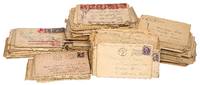
1924426129Missouri Illinois Maine New Jersey Colorado Washington DC Kansas New York 1924. Unbound. Near Fine. A collection of 209 letters from 1914 through 1924 from a young man sailor writing home to his wife with some later correspondence. Near fine with small tears and some age toning most on the envelopes.<br /> <br /> The majority of the letters are written from Garnett Blair Martin to his wife India Faye Martin née Gentry with some written from India to Garnett while he was serving in the Navy during World War I. He was stationed in several different base camps and moved around frequently as the letters are from various places in the United States including Missouri Illinois Maine New Jersey Colorado Washington DC Kansas New York among others. <br /> <br /> A large portion of the letters are holiday and birthday cards along with a few postcards sent to Martin’s daughter explaining he will be home soon. However most of the letters are written affectionately to Martin’s wife and with her letters replying in kind. Some of the letters discuss Martin’s experience at the army bases from packing and moving constantly to having physical ailments such as poor eyesight sores and cuts. He also critiques the living situations while at war “it’s cold and cramped here I can’t even smoke a cigarette without blowing it in someone’s face.†Most of the letters somehow find a way back to lovelorn acclamations to his wife about how “a sweet kiss from your dear lips could cure it soon.†Accompanied by a few letters and postcards from friends.<br /> <br /> A collection of romantic correspondence from a wife and husband separated during the World War. unknown
1907223716Oxford.: Clarendon Press. 1907 19081909 1931. 26 volumes including the Index and Atlas frontispiece map of "The Indian Empire" in vols I-XXV neatly strengthened to the verso in a few volumes 26 other folding maps or plans the Atlas volume with 66 double page coloured maps or plans Vol II with inked name of an early owner “K. Shama Ras…Benares 21st July 1911” and the blind stamp of the bookseller Ram Narain Lal Allahabad Vols III and IV with the inked stamp of the Ruskin Library; endpapers rather age-toned throughout scant foxing; original green cloth gilt lettered on the spines 22 x 14 cms occasional rubbing and wear the cloth to the second volume faded and rubbed at the corners with some loss the hinges of a couple of volumes starting but sound a very good set of the complete third edition. <br> <br>A complete collation is available on application. A magisterial survey of Empire. This "New" edition issued in twenty-six volumes by the Clarendon Press Oxford constitutes the definitive third iteration of this landmark administrative and geographical record. Produced under the editorial guidance of Sir Herbert Hope Risley and James Sutherland Cotton the work expanded upon the foundational work of Sir William Wilson Hunter. The first four volumes "The Indian Empire" offer an exhaustive analysis of the subcontinent’s historical economic and administrative frameworks. The twenty succeeding volumes of alphabetical entries offering close statistical and descriptive accounts of specific regions and localities. The collection is formally concluded by a comprehensive index and a concluding atlas volume the latter featuring maps by J. G. Bartholomew. . Clarendon Press. hardcover
192197075Calcutta: Superintendent Government Printing India 1921. Hardcover. Very Good. Half bound calf leather on dark blue cloth. Banded spine with red leather title and date panels. Marked " Confidential Serial No 1830" An extremely scarce copy of this detailed account of the army operation in Waziristan. The book is fully illustrated with monochrome plates and detailed maps and plans see photographs for details. 2 full fold out maps in pocket to rear. Copy belonged to Capt. H. Schofield The Welch Regiment. Copy belonged to Capt. H. Schofield of the Welch Regiment and is dated Razwack Sept. 1923. <br/> <br/> Superintendent Government Printing India hardcover
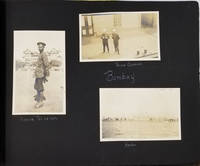
1920238521920. Photography. Very good condition. A wonderful large album of 127 post card size venacular photographs each captioned depicting the everyday life of people in the streets villages and country side; these are authentic images of real life in India at the time. Also includes images of Bombay and the Palace at Amber. The photographer is unidentified; probably an American couple on an Indian tour.<br /> <br /> The majority of the photographs concern life in India from people at work in a wide range of trades to women of different castes to wonderful marketplace scenes including children at play holy men wrestlers a carousel captioned "a Merry-Go-Round" and traveling artists.<br /> <br /> 40 images of rural India include: native houses village streets & centers a potter at work village shops village "bazarrs" sic showing all manner of sidewalk vendors and stalls village wells women walking to market with large baskets carried on their heads holy men sweet and bread sellers selling "pop" soft drinks from a cart burial of a distinguished person "a bride and her maids pay visits to relatives part of the 3 day wedding ceremony".<br /> <br /> 11 images titled "Women of India" show Hindu Jain and Mohammedan women women spinning women carrying goods stacked on their heads women with children and high caste women. <br /> <br /> 28 images of Indian men include an image title rather mysteriously "rural native police English Providence" porters young boys high diver gate keeper cook shoe mender snake charmer street musician clown traveler traveling artist traveling school teacher tobacco seller "by the puff" holy men of India "fakirs" wrestlers and a transvestite the image titled "an efeminate sic gentleman Indian man dressed in a sari.<br /> <br /> 21 images of the stunning Amber Palace and Fort in northwest India the oldest surviving palace in India built of red sandstone and white marble whose architecture shows a blend of Muslim and Hindu influences. Images include walls and grand entrances ceremonial elephants stunning interior views of the palace and its rich alabaster carvings and views of the surrounding landscape taken from the Palace walls. The Jas Mandir is also pictured; this is the most beautiful structure at Amber divided in three parts: the Hall of the Private Audience on the ground floor the Glass Palace and the Hall of Glory on the upper floor.<br /> <br /> 15 images of Bombay with : a native policeman 2 colonial police officials the harbor Bombay city streets including shots of a large double decker tram the "red light" district Hindu Caves at Garapuri and Elephanta Island interiors of the carved caves and vultures "who devour the Parsi's dead in the Towers of silence".<br /> <br /> 12 images titled "Travel in India" include an elephant with howdah for carrying passengers ox drawn carts horse drawn carts and carriages railway carriages including one with a train door marked "Servants" a train station and a colonial postal box.<br /> <br /> A large photograph album 15 x 11 1/2". Black stiff cloth covers cord bound. Hand lettered "No. 5" at upper left corner front cover. Images measure 5 1/2 x 3 1/2" laid down 3 or 4 per page with captions hand lettered in white. The first 2 leaves detached loosely inserted. The photographs in fine condition.<br /> <br /> An album of evocative images of the life experienced by Indians living in colonial India. Images probably taken by an American traveller as soda is referred to as "pop" harbor is spelled without the "u" and the album itself is made in the USA. unknown
1921NL-02287<p><strong>Frontier warfare and colonial cartography: 1921 Survey of India "Confidential" atlas documenting the British campaign in Waziristan.</strong></p><p>This highly detailed 1921 confidential British-Indian general staff report produced by the Survey of India documents the Waziristan military operations of 19191920 along the volatile frontier of the Northwest Boundary. The publication includes a frontispiece 31 plates seven maps three of which are pocket-folded and eight folding panoramic illustrations that chronicle both the terrain and troop dispositions. The maps provide tactical clarity on routes native strongholds topographic obstacles and British positions. At the same time the accompanying text analyzes operational strategy lessons learned and the emergent use of air power in tribal warfare.</p><p>Waziristan now in Pakistan had long been viewed by the British as a strategically critical and persistently unstable frontier region inhabited by fiercely autonomous Waziri and Mahsud tribes. The 19191920 campaign followed the Third Anglo-Afghan War during which boundary tensions and local insurrections compelled renewed military intervention. This report presents not just the operational narrative but also the institutional mindset of early 20th-century colonial warfare combining detailed cartography with doctrinal reflection.</p><p>Cartographers:</p><p>The <strong>Survey of India</strong> established in 1767 under Major James Rennell and expanded during British rule served as the paramount cartographic and geodetic agency in India. By 1921 it had become central to mapping the subcontinent for both civil administration and military planning. In this instance the Survey's maps reflect the dual imperative of geographic precision and strategic control making this report an indispensable source for scholars of South Asian military history cartography and colonial frontier dynamics.</p><p>Condition Description</p><p>Good. Some wear on cover. Fold lines and some marginal imperfections on maps views and illustrations.</p> Survey of India