2 832 résultats
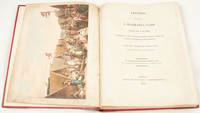
elala6164London: 1804. The second Anglo-Maratha War 1803-05 saw the British gain significant territories and influence including regions around Delhi and in present-day Gujarat falling into direct Company rule. The two rulers who fought the EIC were Daulat Rao Sindhia 1779-1827 and Raghuji Bhonsle II d. 1816. General Gerard Lake and General Arthur Wellesley commanded the EIC army. Included here are the texts of government dispatches government correspondence with the secret committee of the EIC agents ministers and military officers commanding in the field and correspondence and proceedings with the Maratha Princes of States. The plates include two maps of India by A.Arrowsmith and six plans showing General Lake’s encampment at Secundra Aug. 26 1803 the battle of Assye Sept. 23 1803 the attack on Perron's Camp before Allyghur Aug. 29 1803 the entrance into the fort on Sept. 4 the Battle of Delhi Sept. 11 1803 and the Battle of Laswaree November 1 1803. “At the Battle of Assaye on 23 September 1803 General Sir Arthur Wellesley 1769-1852 the future Duke of Wellington masterminded victory for the EIC over the Maratha army of Daulat Rao Sindhia head of the Gwalior state. The cause was greatly helped by Wellesley first steadily building up supplies and then bribing British and Anglo-Indian mercenary officers in the Marathas' employ not to fight. When the Marathas heard of this subterfuge they promptly dismissed all their European officers believing them all of suspect loyalty. The unfortunate consequence for the Marathas was that their army now had no command structure and was routed but not before their artillery had caused tremendous damage to the British. The costs for the EIC victory in this bloody battle were high with around one-third of its army killed or wounded. 6000 Maratha soldiers were killed at Assaye. The experienced British officers were all in agreement that the Maratha artillery was as well organized and deadly as that of any European army they had ever faced. There was some consolation for the human losses in the capture of 98 Maratha cannons. Wellesley then won another battle at Argaum aka Argaon in November 1803 but at the end of his career and even after defeating Napoleon Bonaparte at Waterloo in June 1815 Wellesley declared that his greatest ever military challenge had been at Assaye. On 1 November 1803 the EIC won another decisive victory at the Battle of Laswari this time with a force of 10000 men under the able command of General Gerard Lake 1744-1808 a veteran of the American War of Independence. Again the costs of victory were high with around 838 EIC troops killed or wounded. The EIC then took over Delhi and its surrounding territory. There were a few minor Maratha successes such as the defence of Bhurtpore aka Bharatpur against multiple British attacks in early 1805 but with the large losses in central India to Wellesley and in northern India to Lake the Maratha Confederacy was now but a shadow of its former self. The Hindu princes were largely obliged to follow EIC policies and put up with a permanent resident backed by sepoys EIC Indian troops. However there would be one more conflict to come in a doomed effort to regain the Marathas' lost independence.†Mark Cartwright The World History Encyc. folio. pp. xix 1 587. 2 folding hand-coloured maps & 6 folding partly hand-coloured plans. modern half calf a few minor marks on spine. elala6164 [London]: 1804 unknown
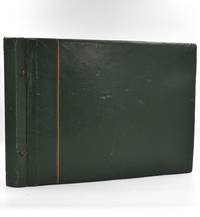
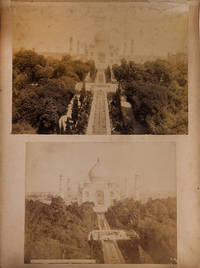
64137c. 1880s. . Landscape album 33 x 43 cm; 126 albumen prints app. from 7.5 x 7.2 cm to 22 x 27.5 cm some photographs with number and title in negative several with credit of Fry and Rahn Company in negative some light spotting some photographs faded; contemporary gilt ruled half black morocco spine joints professionally restored green pebbled cloth boards spine in five gilt compartments all edges gilt overall in very good condition.<br /> Photographic album depicting the diverse places and peoples of Northern India. Includes an extensive series presenting the prominent buildings of Agra - the Taj Mahal Tombs of I'tim d-ud-Daulah and Sheikh Salim Chisti and Fatehpur Sikri Palace - and Dehli - the Red Fort Jama Masjid and Mausoleum of Sufour Jung - from various viewpoints. <br /><br />The album's range of portraits documents India's social diversity featuring a mixture of Western colonists and Indian gentry cavalry and natives. This is highlighted in two extended series of images - one at outdoor festivities and the other presenting the erection of grand buildings by Indian workers overseen by colonists. Also included are thumbnails of Indian landscapes and curiously some engine blueprints and photographs.<br /> c. 1880s. hardcover
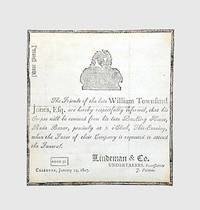
1807122432Calcutta: Star Press 24 January 1807. Haunting piece of Company-rule ephemera announcing the funeral of William Townsend Jones c.1757-1807 attorney on the council of the Supreme Court of Judicature at Fort William the highest court of British India from its foundation in 1774 until 1862. Jones's name is now usually connected with his indictment in December 1789 for flogging to death one Sheriut Allah the brother of his durwan gate-porter whom he suspected of stealing one of his dogs which was "an unlikely crime for a Muslim" Franklin. He was acquitted by the Supreme Court who concluded that Sheriut Allah had died by suicide by eating opium. The affair arose only two years after the impeachment of Warren Hastings in 1787 whose fall from grace had begun with a similar miscarriage of justice involving the execution of a native East India Company administrator Nandakumar. Jones is also a recurring character in the recently published diaries of Calcutta surveyor and builder Richard Blechynden 1759-1822 which reveal that he was also rumoured to have killed another of his servants his mater sweeper. The undertaker Peter Lindeman 1771-1856 of Scottish descent worked from premises at 144 Durrumtollah; from 1803 the Calcutta Missionaries held services in his house on Cossitollah Street until the completion of a new chapel at Lall Bazar in 1809 of which he became a trustee. Single sheet of laid paper 130 x 139 mm printed on one side. Mourning border motif of urn on an altar. Contemporary signature "T. R. R" on verso shaved; the leaf sometime removed from an album or mount adhesive markings and 3 strips of adhesive paper verso 3 faint creases from folding minute hole to one intersection of folds. In excellent condition. Franklin "Orientalist Jones": Sir William Jones Poet Lawyer and Linguist 1746-1794 pp. 300-1; Robb "Memory Place and British Memoirals in Early Calcutta" in Rashkow et al. eds Memory Identity and the Colonial Encounter in India online accessed 4/11/2017; see further Robb ed. Sex and Sensibility: Richard Blechynden's Calcutta Diaries 1791-1822 online. unknown
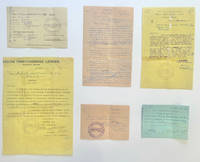
1943010675Kyaiklat Burma British India 1943. Handwritten. Very Good. Loose Leaf. 4to - over 9¾ - 12" tall. Correspondence from Chettiar in Tamil from IIL in English. 9 letters from Chettiar and IIL in manuscript and typescript; 10 pieces of correspondence from IIL on note cards with IIL letterhead; 1 IIL membership card for Chettiar. CONDITION: Overall Very Good old folds some splitting and tape repairs along folds of documents by IIL but Chettiar's letters largely free of wear or tear text legible throughout. All documents now housed in sleeves that are mounted onto backing but it remains easy to remove documents from enclosures. This collection contains English translations of Chettiar's letters presumably made by the previous owner who also wrote captions describing each piece of correspondence on their respective mounts. An evocative collection of correspondence document- ing an Indian nationalist organization's coercion of funds from a member of a prominent money-lending Burmese-Tamil family. These letters show the Indian Independence League's attempt to extort money from a wealthy man whom they had identified as being in a position to help "free India from bondage and for the maintenance of the Indian National Army." This was M.S.M. Somasundarum Chettiar a 63-year-old merchant who operated his business on Strand Road in Kyaiklat a town in the Pyapon District of Burma. A recent historical study by Suppiah and Raja on the Chettiar families of Burma suggests that Somasundaram was part of a "distinguished ethnic group comprising the business class among Malaysian Indian-Tamils" who made their fortunes by lending money to the Indian working class in Burma. The Chettiar ethnic group boasted "a centuries long tradition as an indigenous banking caste in South India" and thus due to a combination of "stringent business regulations during British colonialism in the Madras Presidency and economic opportunities in the newly opened British colonies in Southeast Asia" both the Indian working class in Burma and members of the Straits Settlement Chinese utilized "Chettiar agents in order to conduct bank transactions.in the middle of the nineteenth century." This reliance upon the Chettiar's services only increased by the turn of the twen- tieth century as the demand rose for rubber and tin made in Southeast Asia. As "local Chinese and Malays with only small and medium capital sources relied on loans from Chettiar agents to develop land plant rubber and open mines.Chettiar agents" became "known as the leading moneylenders" in late-colonial Burma. Somasundaram would thus have been part of a known community of capitalists "who accumulated capital for further expansion of their activities at the expense of the Indian working class." The Indian Independence League and the Indian National Army were closely intertwined movements during WWII both led by Subhas Chandra Bose and governed by the Azad Hind Provisional Government in Exile.They worked to unite the Indian diaspora in Southeast Asia to support the cause of independence and sought military support from Japan to facilitate an armed wing for their movement. Primary source documentation of the Azad Hind government's activities is scant institutionally. We locate a scrapbook created by a member of the Indian National Army held at the Institute of Social Research in the Netherlands and a letter from Subhas Chandra Bose asking for a loan from the Hikari Kikan of Syonan held by the National Library Board of Singapore. This would be the only comparable collection held in North America.A rich collection of correspondence highlighting the conflicting poles between Indian diasporic wealth and Indian nationalists' aspirations for the nation's self-rule listing credit Pico Banerjee Peek A Boo Rare Books & Ephemera . unknown
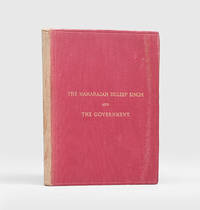
1884189408London: Printed by the Ballatyne Press "For Private Circulation" 1884. Duleep Singh reclaims his throne First and only edition privately issued of this controversial presentation of the maharajah's grievances against the British Government's claims to the Punjab. Decidedly uncommon around 14 copies traced institutionally just a couple at auction. An excellent copy of a fragile fugitive and highly desirable work here in a variant binding to the black skiver usually encountered. The child king Duleep Singh 1838-1893 Maharajah of Lahorewas carried into exile following defeat in the Second Anglo-Sikh War 1848-9 converting to Christianity in 1854 obtaining a royal audience and becoming "an immediate success" with the Queen and eventually settling in Elveden Suffolk with Bamba Müller his "part-Ethiopian part-German" ODNB wife who he had met in Cairo when returning from his mother's funeral in India; "Duleep Singh loved Elveden and rebuilt the church cottages and the school. His fame as a shooter of game was revived in the grounds of the great estate". However "amid European glamour the spirit that had tasted sovereignty was hibernating somewhere in the mind of Duleep Singh. Prompted initially by his mother then by his cousin Thakur Singh Sandhanwalia and finally by the supposed prophecies of the tenth Sikh guru Duleep Singh began a battle with the British government asserting the illegality of the annexation of the Punjab and demanded to be reinstated as maharajah. In 1886 he tried to return to India to place himself as the prophesied head of the Sikh people but was arrested at Aden. Here he was received back into the Sikh faith". From Paris he made himself the centre of various plots to overthrow British rule in the Punjab scheming with Russian and Irish revolutionaries to force the Khyber Pass but all of these conspiracies came to nothing. Increasingly dogged by ill health he sought a reconciliation with Victoria who "responded with a full pardon through the secretary of state on 1 August 1890". He died in Paris in 1893 and was carried back to his beloved Elveden and buried in the graveyard of St Andrew's and St Patrick's Church. The present work represents the historical groundwork to his campaign for reinstatement to the throne and was distributed solely to those who he felt could be of influence to that end. It was "compiled partly from historical sources and partly from private information and documents furnished" Preface by Duleep Singh himself and encompasses a sketch of the early history of the Punjab; a biographical narrative of the Maharajah; and an explanation "of the peculiar Relations in which the Maharajah stands towards the Government and the causes of the differences between them". Octavo. pp. viii 183. Original moderate red cloth over flexible boards title gilt to the front cover single fillet blind panel to both covers grey-blue decorative endpapers. Slightly rubbed the spine sunned; endpapers a little browned pale toning to the text-block else a very good copy. hardcover
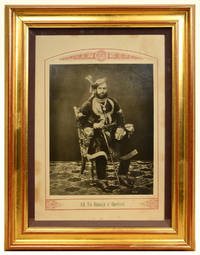
87916Waterlow 1903. . A collection of 6 portraits of princely rulers of India woodburytypes on original mounts with identifying captions within printed borders image size: 24.5 x 19.5cm.<br /> This group comprises the majority of the portraits published with text by Jehangir Sorabji under the title Princes and Chiefs of India. It includes the reigning rulers and sometimes the predecessor of the following states: Radhanpur; Charkhari; Wankaner; Gondal; Datia; Darbhanga; Sitamau and Virpur.<br /> Waterlow, [1903]. unknown
116512Calcutta Superintendent Government Printer India February 1917. . Second enlarged edition; 8vo 18 x 13 cm; folding lithographic map of Lower Mesopotamia in pocket 3 folding tables; early issue without the later published index pamphlet original green cloth wallet binding spine and upper panel lettered in black little wear to extremities a very good copy; 4 326 1pp.<br /> The second enlarged edition of this scarce intelligence guide produced for the British Indian Army operating in Mesopotamia Iraq and the Arabian peninsular during the First World War with the improved colour-printed lithograph map extending from Samarra in the North to Hafar al-Batin in the South and from the Wadi al-Khair in the West to Kuwait in the East as well as additional information on the Saudi family Nedj and Al Hasa.<br /><br />Designed for official use only the map and guide put particular emphasis on routes and rivers but also provides an interesting overview of the region's history and an assessment of its current political climate. Qatar and Kuwait which 'now flies a flag of its own' in the region both receive early mentions p.4.<br /><br />A glossary located to the rear provides helpful definitions of local words like 'Ghazi. A champion of Islam' and 'Qalib. A well with a wide mouth and very broad near the water. Men often descend into it to fill their water-skins'. Interestingly Arab is translated as 'A man of one of the Arab tribes but not necessarily a Bedouin. The plural Aarab denotes the people the nation. When applied to a Shaikh as "Zaid's Aarab" it means followers'.<br /> Calcutta, Superintendent Government Printer India, February, 1917. hardcover
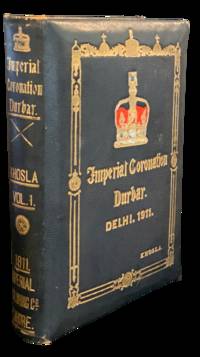
19114764Lahore Punjab: The Imperial Publishing Co. Khosla Bros. 1911. First edition. Folio 34 x 26cm 4 i iv 3 481 1pp. Presentation binding full black morocco over padded beveled edged boards stamped in gilt on covers and spine with lettering elaborate border and Imperial Crown g. e. Crown is hand painted in red blue and white. Gilt dentelles blue silk endpapers platinum photographs throughout printed red borders of different shades and black lettering on thick glossy paper. Letter of presentation from the publisher to The Hon'ble Sir Harvey Adamson K.C.S.I. M.A. L.L.D. Lieutenant-Governor of Burma printed in gilt on red silk and mounted to front free endpaper. Some rubbing to corners and spine ends some paint loss to the crown front endpaper lightly chipped along the lower edge with a few silk threads of the letter of presentation becoming unwound else clean internally. A large heavy volume in nearly fine condition. <br /> <br /> Printed as a memento of the historic Imperial Coronation Durbar at Delhi 1911 honoring King George V and Queen Mary as Emperor and Empress of India. In the presentation letter to Harvey Adamson the publishers lay out the intent of the volume which is "graced by Your Honor's portrait" as giving a "bird's-eye view of the present political condition of India" through "historical and biographical sketches of the various Ruling Chiefs and Princes of India.suitable memoirs of distinguished personages.and of men famous in Literature Science Art and other spheres of useful activity accompanied with their portraits as far as possible." The book is indeed lavishly produced and illustrated with roughly 600 biographical sketches most with photographs many of which are credited including several from Bourne and Shepherd of Calcutta the official photographers of the Durbar. <br /> <br /> The last of three Durbars the others in 1877 and 1903 the 1911 assembly was notable as only one attended by the King and Queen the first time a British monarch had visited India the crown jewel of empire. The event was held at Coronation Park in Delhi from December 7th-16th and was attended by the vast majority of ruling princes and noblemen making it the largest of its kind. Underneath the pomp and regalia however were the roots of resentment and stirrings of independence. The scandal of the Durbar came when the Gaekwar of Baroda Maharajah Sayajirao III briefly bowed only once instead of the required three times when approaching the emperor and then turned his back to walk to his seat instead of walking backwards. This and other happenings of the Durbar were captured on film most famously and in color by Charles Urban the British-American producer and film maker. "With Our King and Queen through India" became the first color cinematography to be viewed by the majority Western audiences. <br /> <br /> <br /> Sir Harvey Adamson served as Lieutenant Governor in Burma from 1910 when he was appointed Knight Commander of the Order of the Star of India until 1915. Of interesting note a steamship built for the British India Steam Navigation Company in 1914 and named after the General went missing at sea along with its 269 passengers in 1947. <br /> <br /> An immense trove of photographic evidence of a time and place being the crest of British Imperialism in India the book is institutionally scarce. Our research finds only a few copies of either volume held worldwide the book on offer with a tangible and important provenance. The Imperial Publishing Co. (Khosla Bros.) unknown
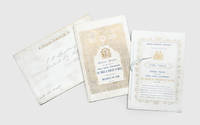
110625London Waterlow and Sons Ltd. 10 May 1893 & 17 May 1893. . Two over-sized colour-printed illuminated card invitations numbered addressed in pen & ink 22.7 x 31.2 cm; 16.5 x 32.6 cm; a printed manila envelope for replying to 'The Secretary / Imperial Institute / London SW'; a letter printed in red on Imperial Institute 4to headed paper requesting a reply to the invitation to the opening ceremony in order to reserve seats; single folio sheet 'General Outline of the Ceremonial' for the opening; 2 copies of printed folio sheet verso blank 'General Arrangements for the Reception of HRH the Prince of Wales. Wednesday May 17th 1893'.<br /> The first of these two over-sized invitations received by Louisa Da Costa was to the opening of the Imperial Institute on 10th May 1893 with Queen Victoria and the Prince of Wales in attendance. Since the Great Hall of the Institute wasn't completed in time a temporary hall was constructed for the opening. The second evening invitation from HRH the Prince of Wales invites Miss Da Costa and a friend to an evening reception from 9pm with 'Instrumental and Vocal Music. and Refreshments' in the illuminated gardens of the Imperial Institute in South Kensington - now the site of Imperial College London. The accompanying 'General Arrangements.' sheet give details of the evening's entertainments as well as travel arrangements special trains on the Inner Circle Line at 1am and 1:30am and the arrangements for 'Cold Suppers'.<br /><br />Louisa Da Costa was the sister of Mr Benjamin Mendes Da Costa both being descendants of the well-known wealthy Portuguese-Jewish trading dynasty. After his great success with real estate in Adelaide Australia Mr Da Costa sold his business there and sailed to England together with his sister. He died in Brighton in 1868 and his sister was the sole beneficiary of his will. Miss Da Costa died in 1898 bequeathing all her real estate in Adelaide to the Governor of South Australia to establish a Samaritan fund for convalescents from the Adelaide Hospital - the Louisa DaCosta Trust still operating today.<br /> London, Waterlow and Sons Ltd., 10 May 1893 & 17 May 1893. unknown
1777390089London : East India Company 1777. 1st edition. Hardcover. Finely bound in modern half tan buckram over contrasting fine ribbed-cloth boards. Particularly well-preserved; tight bright clean and strong. Further scans images and additional bibliographical material available on request. Physical description 3 v. Subjects; Appendix. East India Company. Tanjore. London : East India Company hardcover
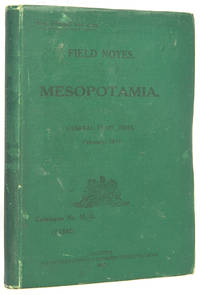
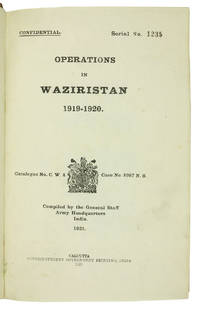
1921ABC_45215Calcutta: Superintendent of Government Printing 1921. Contemporary half calf green cloth sides gold-stamped red spine labels. 8vo. With frontispiece 31 plates 7 maps 3 in pocket on inside of back board and 8 panoramas mostly folding. First edition of the British-Indian armys official account of the 1919-20 Waziristan campaign marked "Confidential" on the title-page. The operations followed unrest that arose in the aftermath of the Third Anglo-Afghan War; they were conducted in the mountainous region of Waziristan now in Pakistan by British and Indian forces against the fiercely independent Waziri and Mahsud tribesmen that inhabited it. Since the 1870s the British government agencies were assiduous in compiling internally published histories of their military frontier operations with the intention of providing a "valuable guide" to such British commanders and policymakers as "might have future dealings with these turbulent neighbours" as the Punjab Government phrased it in 1866.The title-page reports the catalogue number and location of what may be the original report: Catalogue no. C.W. 4 - Case no. 8987 N.S..Serial No. 1235 stamped on the title-page. Occasional light marginal staining. A few edge flaws consistent with army use repaired by a contemporary owner. Otherwise in very good condition.l WorldCat 11497145. Superintendent of Government Printing, hardcover
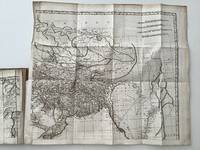
180019106AB1800. Paris Poignee An VIII 1800 Four large folding engraved maps six engraved foloding maps and one plan. The four large folding engraved maps are forming the 'Carte de L'Indostan ou de L'Empire Mogol' the oulines contemporary hand-coloured. First French edition with maps revised by Jean Nicholas Buache incorporating the four maps that compose Rennell's "second great work. the construction of the first approximately correct map of India" DNB. "The Father of Indian Surveying" Gole "Early Maps of India" Rennell charted the currents through the India Ocean and around Africa and later surveyed the Indian interior. He recognized Europe's growing fascination with India: "As almost every particular relating to Hindoostan is become an object of popular curiosity it can hardly be deemed superfluous to lay before the public an improved system of its geography" Rennell Preface. With Rennell's first map of Hindoostan the result of 500 separate surveys and stretching from the Himalayas in the north to Ceylon in the south and the "Great Sandy Deserts" in the west. Born in Chudleigh in Devon England James Rennell who was to become one of the mosst celebrated cartographers of his time joined the British Navy as a midshipman at the age of 14. Amidst the Seven Years' War 1756-1763 he travelled the world and learned marine surveying and hydrography. This led to his appointment at age 24 as surveyor of the British East India Company's dominions in Bengal. In 1765 Rennell began surveying India. By this time the British East India Company had maintained its foothold on the region for over one hundred years but it was still another century before Queen Victoria would set her eyes eastward and Rennell's explorations and accounts helped to fill that gap in time. Rennell combined data from British Army columns with Ain-e-Akbari 1598 a translation of Islamic geography of the empire which helped him acquire information about old divisions he therefore subdivided the country according to the Mughal provinces of 'subas'. unknown
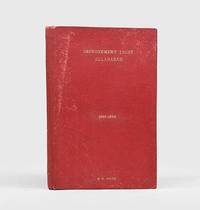
1925180767Allahabad: Improvement Trust 1925-30. From the personal collection of the chairman First editions of these rare reports charting the overhaul of the infrastructure in the "City of Prime Ministers" a center of Indian nationalism. They were collected by Baldev Ram Dave Chairman of the Improvement Trust and cover the first five years of his tenure. This set documents the projects of the Allahabad trust over half a decade with multiple maps tables and illustrations of the progress. Such projects include the extension of Allahabad University the construction of Sir Harcourt Butler Market and the establishment of multiple housing schemes for those evicted from their homes. The number of volumes in the complete run is unclear but we have traced only one other set on WorldCat: 11 volumes held in Harvard University Library. In addition to the reports are three pamphlets. A Brief Note on the Improvement Trust of Allahabad gives an overview of its early history with blueprints to illustrate major projects. The addresses to Sirs William Malcom Hailey and Alexander Muddiman both governors of the United Provinces of Agra and Oudh in 1928 lay out the trust's goals and request further central funding. Rai Bahadur Pandit Baldev Ram Dave 1863-1942 was the trust's second chairman from 1925. The loosely inserted documents all relate to his projects including a hand-drawn sketch of the expansion of Zero Road up to Sheocharanlal Road a typescript letter from the notable engineer Raja Jwala Prasad discussing various initiatives and a government report on the efficiency of the trust in 1930. Dave is mentioned in an article in the Times of India from 11 November 2014 which notes that his department was responsible for the demolition of Nehru's family home in 1931. He reportedly took the last photograph of the building which was later gifted to Prime Minister Indira Gandhi. 8 works bound in 1 vol. quarto 327 x 210 mm. With 15 half-tone photographic plates 1 folding 19 hand-coloured maps 14 folding heliozincographed folding map 5 folding blueprints; tables in text. Contemporary red cloth front board lettered in gilt. With 5 loosely inserted letters reports and sketches. Light wear and silverfishing three maps repaired with archival tape two plates tipped in Brief Note front wrapper chipped with loss foxing internally: a very good collection. hardcover
1909312711N.p. India 1909. 126 tipped in gelatin photographs 63 in each volume; with four manuscript sketch maps 2 in each volume. 153 pp.; 7 numbered a-g 124 ff. including blanks. 2 vols. 8vo and 4to. Contemporary full brown morocco covers ruled and lettered in gilt black coated endpapers by Thacker & Co. Bombay with their red ticket at the back. Corners bumped faintest traces of rubbing. 126 tipped in gelatin photographs 63 in each volume; with four manuscript sketch maps 2 in each volume. 153 pp.; 7 numbered a-g 124 ff. including blanks. 2 vols. 8vo and 4to. Substantial detailed and extensively illustrated chronicle of travel and sport in the area north and east of Simla Sutlej River Adampur Jhansi and elsewhere in India including a trip in the Himalayas.<br /> The author was Lawrence Christian Gordon a major in the artillery; at this time he was staioned in Jhansi.<br /> The first volume is divided in three parts:<br /> Part I. Trip near Adampur after black buck and gazelle pp. 1-26 dated 23 December 1906 to 3 January 1907<br /> Part II. Near Jhansi after black buck pp. 27-37<br /> Part III. Himalayas after burhel and ibex pp. 39-153 dated April to July 1907 up the Sutlej river from Simla with mention of Asirang Lipi Jangi<br /> <br /> The second volume is a continuous narrative describing short shooting and fishing trips in 1908 and one longer account of three months' shooting leave March to June 1909 in the terrain upriver from Simla close to the border with Tibet and indeed many of the villages and monasteries passed were of TIbetan culture. The photographs are well composed and printed; burhel was the chief game hunted. Gordon writes candidly with many observations on local conditions and weather. Provenance: Norman James Anderson Galleries 9 November 1928 lot 784; Harvard Travellers Club in May 1934 bookplates unknown
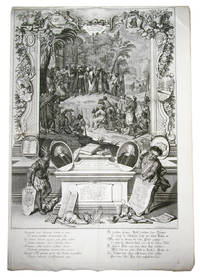
1730ABC_47423Augsburg 1730. 86 x 59 cm. Copperplate engraving. A grand engraving commemorating the achievements of the August Protestant Church in India features various scenes and elements. In the background there are mountains palm trees houses and people including a Chinese person. The foreground shows deciduous and palm trees with a lit grotto holding an idol inscribed with "Brama". In front of the grotto an evangelical missionary preaches to a large congregation of natives while holding a book of music in his left hand and pointing to Brama with his right hand. The missionary wears a turban a priest's cloak and has flappers. The audience under the hill is depicted in interesting groups with some closer to us appearing larger and clearer. At the bottom of the engraving there is an art altar with several books including the "Biblia Malabarica" "Catechism Malabaricus" and the hymnal "Liber Cantion. Malabar." The engraving was made by the German engraver painter draughtsman and art publisher Johann Elias Ridinger 1698-1767. He trained in Ulm and Augsburg under Christoph Resch and Johann Falch and learned engraving from Georg Philipp Rugendas. Ridinger later spent three years in Regensburg where he developed his style through coursing and visits to the riding school. His ornamental works show Rococo stylistic tendencies and he founded his own publishing house in Augsburg. His precise and tasteful drawings were highly regarded and transferred to decoration porcelain and ceramics.With two minor tears one partly repaired the other one not affecting the engraving. Overall in very good condition.l Thienemann Leben und Wirken des unvergleichlichen Thiermalers und Kupferstechers Johann Elias Ridinger 913; Thienemann "Nachträge Zusätze und Berichtigungen C. L. zu : Leben und Wirken des unvergleichlichen Thiermalers und Kupfer stechers Johann Elias Ridinger etc." in Archiv für die zeichnenden Künste 5 1859 pp. 148-149. unknown
1839223681London.: Smith Elder and Co. Cornhill. 1839. Engraved handcoloured frontispiece opposite the additional engraved title page sketch map and 7 other full-page illustrations one folding and 5 hand-coloured text illustrations 2 half-title xvii including both the engraved and printed title pages 283pp; original blind-stamped pebbled green cloth boards 23 x 14.5 cms re-backed mounting the original gilt-lettered backstrip endpapers renewed scant spotting the boards faded and the backstrip chipped at the foot with the neat inked inscription of a previous owner but in very good condition. Scarce. Pioneering account beautifully illustrated after sketches by the author. Marianne Postans travelled to India in 1833 with her husband Thomas Postans a Captain in the 15th Regiment of the Bombay Native Infantry where he was posted to Cutch Kutch the northwestern region of modern-day Gujarat. They both shared a deep interest in the people and traditions of India. Marianne's account attempts to describe the culture of the region its bards and bardic literature including specific songs and stories of Kutchi bards arts and crafts and agriculture and trade. She also describes in detail rituals such as infanticide and the practise of sati. <br>The beauty of the Rann awed her: “The distant aspect of the Runn resembles that of the ocean at ebb tide; and as some water always remains on it the refraction of light produces the most beautiful and mysterious effects decorating it with all the enchantments of the most lovely specimens of mirage whose magic power exerting itself on the morning mists indues this desert tract with the most bewitching scenes…”. . Smith, Elder and Co. Cornhill. hardcover
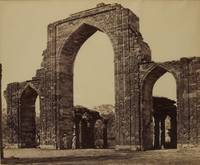
186632820551<p><b>This is a splendid pair of Samuel Bourne views of the Qutb complex in Delhi.</b></p><p>The first photograph shows the Delhi minaret and "victory tower" at the Qutb complex the tallest minaret in the world built of bricks. "The Qutb Minar is one of the most famous monuments in India and one of the most significant examples of early Indo-Islamic architecture. It is a tower of victory which also served as a minaret for the adjacent Quwwat al-Islam Might of Islam mosque. It was begun by Qutb-ud-Din Aybak ruled 1206-1210 the first Sultan of Delhi and founder of the Mamluk or Slave Dynasty and continued by Shams-ud-Din Iltutmish ruled 1211-1236. It is 72.5 m 238 ft high and rises in five tapering fluted" British Library.</p><p>The second photograph shows the screen of the Quwwat-ul-Islam mosque. "The screen which is often referred to as the 'Great Arch' is 6.7 metres wide and 16 metres high. An inscription on the central arch states that it was built in 1199 by Qutbuddin Aibak. It was one of the first Islamic monuments to be built by Hindu craftsmen in India. The craftsmen used the traditional method of laying blocks of stone horizontally and rounding the sides of individual stones to create the curve of the arch. The screen was ornately decorated with carved calligraphy and repeating scroll-like designs" Victoria and Albert Museum. The iron pillar at the left is cropped as issued. The dark tones and strong contrast wonderfully highlight the intricate carvings.</p><p>British photographer Samuel Bourne traveled throughout India from 1863-1870 photographing monuments people and landscapes. "By the time Bourne left India in 1870 to return to England he had produced over 2500 views mostly of architecture and landscapes which distributed by his partner Charles Shepherd constitute the most exhaustive record made in India by a single photographer. Bourne's carefully thought-out meticulously crafted images were collected by tourists archaeologists and botanists alike" Metropolitan Museum of Art.</p>
27279New Delhi: S. Chand & Co. Good in Good dust jacket; Ex-Lib with markins. No pub date. Hardbound. 235 pages . S. Chand & Co. hardcover
1717576<p>Autograph letter 2pp. folded signed "G. Johnstone" to Sir David Dundas contemporary ink stain not affecting text marginal toning 17 September 1774</p><p>The autograph letter from George Johnstone the Director of the East India Company regarding George Vansittart 1745-1825 "quitting the service of the East India Company". The letter goes on to discuss Warren Hastings the Treaty of Banaras and reformations. Beginning with a politically motivated embezzlement:</p><br /><p>"You will now judge what reformations are likely to take place under such a General who in a very inferior station cut out with 100000£ and endeavoured to support evidence on the reform action attempted by General Claverings besides furthering by his own confession in a manner so very unworthy a public officer…". General Clavering was appointed Commander in Chief in India in 1774 shortly after Warren Hastings was appointed Governor General. By the 1770s Hastings had already made many political enemies in the East India Company. </p><br /><p>The letter goes on to state: </p><p>"I am not surprised that Mr. Hastings and his friends should wish for a success for the only person who was privy to the Treaty at Banaras for exterpating the Rohilla… but why Pitt should adopt him I shall never wonder more." </p><br /><p>The Treaties of Banaras of 1773 was an agreement regulating relations between the British Government of Bengal and the ruler of the Muslim state of Oudh modern day Ayodya. Warren Hastings ceded Allahabad and Kora to the states ruler and promised to support him against the menacing Afghan Rohillas in return for cash payments. This move designed to strengthen Oudh as a buffer state between Bengal and the Marathas led to the Rohilla War of 1774 which later became a major factor in Hastings's impeachment 1788–95.</p><br /><p>The mention of Pitt is referring to Prime Minister William Pitt's Regulating Act of 1773. The Act was intended to overhaul the management of the East India Company's rule in India. Although it was not a long term solution to the concerns over the company's affairs it marked the first step towards parliamentary control over the company and centralised administration in India. </p><br /><p>George Johnson was an officer of the Royal Navy who served during the War of Austrian Succession the Seven Years War and the American War of Independence rising for a time to the position of Commodore of a squadron. Adaptable in his career Johnson also served as a member of Parliament a member of the Carlisle Peace Commission a Director of the East India Company and the first Governor of West Florida from 1763 until 1767. Early in his service he revealed both the positive and negative aspects of his character. He was praised for his bravery when confronting the enemy but censured for disobedience. He rose through the ranks to his own commands and had some success with small cruisers against privateers. Throughout his life he rotated between his political career and his service in the Royal Navy. He became a director of the East India Company towards the end of his life before illness forced him to retire from business and politics shortly before his death in 1787.</p><br /><p>An important letter revealing the Director of the East India Company's concern over the actions of Warren Hastings. </p>
19472117Harvard University Press. 1947. Hardcover. Good in No Dust Jacket dust jacket. Ex-library set with usual stamps call numbers and pockets. Text is clean of marks. Volume I is in good condition with half inch tear to cloth at top of spine and moderate edgewear to back board top edge. Bumping to corners. Volume II is in VG- or G condition with stamps on textblock deleted with black marker. Minor 1cm cut to cloth along edge of spine. Minor edgewear. Scuffing to boards. Text is clean of marks. Volume III: is in VG condition with stamps on textblock deleted with black marker. Scratches and scuffing to boards.; Volume 1: The District of Chiu-Chên during the Han Dynasty: General Considerations and Plates 1947. Vol. 2: The District of Chiu-Chên during the Han Dynasty: Description and Comparative Study of the Finds 1951. Vol. 3: The Ancient Dwelling Site of Dông-So'n Thanh-Hoá Annam : General Description and Plates 1957 vol. 3 Published at St-Catherine Press at Bruges.; 3 Volume Set; The expedition was conducted between the years 1934 and 1939 under the Auspices of the École Française D'Extrême-Orient the Museums of Paris & the Harvard Yenching Institute. The main historical significance of Dr. Janse's archaeological documents is to be found in the fact that they not only introduce to us the Chinese conquerors of what was to become Vietnam at the very moment when they were laying its foundations as a civilized nation buy they also reflect on Chinese culture and conditions even at home and may help to give us a clearer idea of what the Chinese were about the beginning of our era and what their quest was so far south of the Honanese cradle of their civilization. . Harvard University Press hardcover
1940ZB394384Linguistic Society of India. 1940-1973. volumes 1-34; lacks volume 27. 1940-1973. partly bound library markings textually clean & tight PRICE IS FOR THE LOT. - If you are reading this this item is actually physically in our stock and ready for shipment once ordered. We are not bookjackers. Buyer is responsible for any additional duties taxes or fees required by recipient's country. Photos available upon request. Linguistic Society of India. unknown
1813222916London.: John Murray. 1813. 10 hand coloured aquatints xiv 358pp ii Directions to the Binder lacks half title later half morocco red linen covered boards gilt-lettered spine 26.5 x 20.7 cms margins trimmed one plate with slight loss to the publisher's signature title page strengthened at the hinge small chip at the lower corner two leaves with short sealed edge tears text unaffected fifteen leaves stained at the gutter with loss to the inner margin of one plate final leaf with soft creases and a short sealed tear text unaffected the margins of the plates rather dusty and browned good condition. Firsthand account by Thomas Duer Broughton 1778-1835 a British army officer of the East India Company appointed military resident with the Mahrattas in 1802. Compiled from a series of letters to his brother Broughton's account includes detailed descriptions of festivals and ceremonies. Nine of the ten fine handcoloured plates are notable for being after sketches by Indian artist "Deen Alee". . John Murray. hardcover
1905153020Lahore: Printed at the North Western Railway Press 1905-06. The Raj by rail Lavishly produced souvenirs of a six-month tour of India by the future George V and Queen Mary. Both are scarce: in the UK Cambridge holds a copy of each and we have traced a further copy of Time Table at Leiden. The 1905-06 royal visit was an opportunity for the prince and princess to broaden their imperial experience. The ambitious program included visits by rail to all four corners of India - Peshawar Rangoon Mysore and Karachi - and represented the most wide-ranging survey undertaken in India by any member of the royal family. "As with his father in 1875-6 he the prince was struck by the complacent sense of superiority of many of the white civil servants and on his return made a speech calling for 'a wider sympathy' on the part of the Indian Civil Service" ODNB. The success of the trip set the stage for the couple's return in 1911 for the coronation durbar the only durbar attended by a British monarch. The two brochures cover the legs from Bhatindi to Umballa Cantonment 28 November - 11 December 1905 and Delhi to Karachi Cantonment 8-17 March 1906 the last part of the tour. Besides detailed itineraries each includes views taken along the route such as the tomb of Ranjit Singh at Lahore the tunnel into the Upper Bolan Pass and the Chappar Rift Bridge. Special Trains also has portraits of local inhabitants. Provenance: Herbert Henry Spalding 1874-1943 District Locomotive Superintendent Bhatuda with his address on the mailing envelope. Spalding was born in India his father worked as an engineer on South Indian Railway in the 1870s and 1880s and joined the colonial civil service in 1897. In 1922 he was appointed Locomotive and Carriage Superintendent Indian State Railways retiring in 1929. Though unmarked as such these copies were subsequently owned by Major David Cecil Underwood Jr. 1970-2023 who compiled an extensive collection of material relating to royal visits to India. Two works large octavo ff. 17; ff. 9. Special Trains with 12 collotype views laid down on leaves with printed captions and ornamental borders 5 letterpress leaves; Time Table with 12 collotype views mounted 2-to-a-page on leaves with printed captions and ornamental borders 3 letterpress leaves. Both printed in blue and gold internally and interleaved with tissue guards. Original decorative wrappers printed in gold and lettered in blue stitched with blue cord Special Trains glued into wrappers as issued. With original envelope 300 x 195 mm. Covers lightly creased and soiled more so to rear wrapper of Time Table cockling caused by mounting adhesive as usual collotypes well preserved: very good copies. unknown
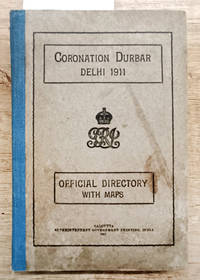
1911Biblio17<p> <em>Official Directory with Maps 1911 </em><em>2 folding maps in pocket at end</em><em> maps measure 365 x 340mm and 490 x 270mm</em><em> 3 Indian postage stamps with ink-stamps dated 15th December to title previous owner's ink signature original cloth-backed printed boards a little rubbed slight bumping to corners and extremities</em></p> Superintendent Government Printing, India hardcover
193021210841930. India. c. 1930-31 Oblong folio. Cord-bound and cloth-covered album with over 200 mostly original photographs including 27 photographic postcards mounted recto-verso on 25 dark brown album cards neat manuscript captions in white; album a little worn and with replaced cords. An interesting album documenting the life and travels of a soldier during the twilight years of the 'British Raj'. Collection opens and closes with the panoramic views of the Himalayas followed by detailed images of Ghurkas and other Tribal Hill people travelling vendors snake charmer camel transport bed of nails absent a fakir Jubbulpore views Meerut street scenes Temples Mosques 'A Vultures Tea Party' 'Elephant Bridge' 'Christmas Decorations. Royal Signal men's mess' and 'The Barrack 3rd Indian Division Signals'; 'Hindu Gods' at a religious festival captured in Ranickhet ; Studies of Naini Tal Lake and Temple on the bank ; Delhi illuminated by night studies of Lutyen's 'Imperial Delhi' the Jumna Bridge and other engineered structures 'Kutab Minar' views of the Old City from the Jumna Masjid Chandi Chowk Clocktower; Jhansi tombs and ruins. Other images of interest to the compiler show 'Types of wells used in Indian irrigation systems' and several shots recording the famed cricketers Jack Hobbs and Herbert Sutcliffe on their tour of India at the Roshana Cricket Club in Delhi organised by the Maharajkumar of Vizianagram. Professional photos also depict the Taj Mahal and a memorial at Cawnpore. Military subjects in addition to Meerut soldiers mess include 'The Kings Birthday Parade Ranikhet 1931'; 'Mounted Sports Royal Deccan Horse Meerut 1930'; military personalities such as RSM Biggs Major General Ironside and General Sir P. Chetwode; a Ghurka soldier; a sequence documenting 'The Viceroy's visit to Meerut February 1930' arrival in a biplane; Attock camps bridge construction 'Armoured Car' and 'Machnine Gun Outpost'. 'With the Sappers and Miners Khajuri Plain North West Frontier during the Afridi trouble 1930-31'. hardcover