2 832 résultats
24731One item from ‘Allen’s Indian Mail’ 28 March 1887. Three items marked as from the periodical ‘India’ 1902 1903 and 1906. Another ‘Reprinted from “INDIA†August 16 1901.’. Five galley-proofs of articles written during the high-point of the Raj by leading Victorian journalist in India W. Martin Wood editor of the Times of India founder and editor of the Bombay Review. Ephemeral items creased and worn but with text clear and entire. ONE: Headed ‘ALLEN’S INDIAN MAIL / THE LATE MR. EDWARD BROOME C.E. / Mr. M. Martin Wood writes to us as follows: -’. Sixty-two lines in small print follow beginning: ‘Some little time back your “Domestic Occurrences†contained the name of Mr. Edward Broome Civil Engineer as having died at Southport something under 60 years of age. It struck me then that a note of Mr. Broome’s quiet work in India ought to be made’. TWO: Annotated at head by Wood ‘India Sep 16th. 1902’. Sixty-eight lines of small print. Three sections concerning drought ‘in Gujerat and the Deccan’. The first begins: ‘An esteemed correspondent writes: Telegrams from India during the last few weeks have told us very little about the suspension and in certain districts what almost threatens failure of the later monsoon rains.’ The second starts: ‘But this passive creed is nto that of their masters from the West’. The third: ‘Meantime what has become of the Scott-Moncrieff comprehensive Water-Supply and Irrigation Report’ THREE: Headed ‘INDIA’S CHRONIC DEFICIT. / FROM AN ANGLO-INDIAN CORRESPONDENT. Annotated by Wood at head: ‘From India Feb. 13th. 03’. Beginning ‘Those few of our official financiers at Simla or in the palace overlooking St. James’s Park who are at all sensitive to Press criticism must have felt happy when in the last Financial Statement they recorded the line - “the entry under Exchange has become of minor importance.â€â€™ Ninety-three lines of text. FOUR: Headed ‘INDIA’S SEABORNE TRADE: / BALANCED ONLY BY DEADWEIGHTS.’ Annotated at head by Wood: ‘From India Jan 15. 06’. Begins: ‘Only within the last fortnight have come to hand detailed returns of India’s trade with the outside world during the first six months of its current financial year - April 1 to September 30.’ Eighty-one lines in small print. FIVE: Headed ‘Reprinted from “INDIA†August 16 1901. / INDIAN LOANS GUARANTEE. / AN EMERGENT ILLUSTRATION. / BY AN ANGLO-INDIAN.’ Beginning ‘The miscarriage of the proposed Indian sterling loan of £3000000 last month must have recalled attention to the often pressed always postponed demand for a British Treasury guarantee in support of the public debt of India.’ Sixty-five lines of small print. One item from ‘Allen’s Indian Mail’, [28 March 1887]. Three items marked as from the periodical ‘India’, [1902], 1903 unknown
24732One item from ‘Allen’s Indian Mail’ 28 March 1887. The other ‘Reprinted from “INDIA†August 16 1901.’. Two galley-proofs of articles by leading Victorian journalist in India W. Martin Wood editor of the Times of India founder and editor of the Bombay Review. Ephemeral items creased and worn but with text clear and entire. ONE: Headed ‘ALLEN’S INDIAN MAIL / THE LATE MR. EDWARD BROOME C.E. / Mr. M. Martin Wood writes to us as follows: -’. Sixty-two lines in small print follow beginning: ‘Some little time back your “Domestic Occurrences†contained the name of Mr. Edward Broome Civil Engineer as having died at Southport something under 60 years of age. It struck me then that a note of Mr. Broome’s quiet work in India ought to be made’. TWO: Annotated at head by Wood ‘India Sep 16th. 1902’. Sixty-eight lines of small print. Three sections concerning drought ‘in Gujerat and the Deccan’. The first begins: ‘An esteemed correspondent writes: Telegrams from India during the last few weeks have told us very little about the suspension and in certain districts what almost threatens failure of the later monsoon rains.’ The second starts: ‘But this passive creed is nto that of their masters from the West’. The third: ‘Meantime what has become of the Scott-Moncrieff comprehensive Water-Supply and Irrigation Report’ THREE: Headed ‘INDIA’S CHRONIC DEFICIT. / FROM AN ANGLO-INDIAN CORRESPONDENT. Annotated by Wood at head: ‘From India Feb. 13th. 03’. Beginning ‘Those few of our official financiers at Simla or in the palace overlooking St. James’s Park who are at all sensitive to Press criticism must have felt happy when in the last Financial Statement they recorded the line - “the entry under Exchange has become of minor importance.â€â€™ Ninety-three lines of text. FOUR: Headed ‘INDIA’S SEABORNE TRADE: / BALANCED ONLY BY DEADWEIGHTS.’ Annotated at head by Wood: ‘From India Jan 15. 06’. Begins: ‘Only within the last fortnight have come to hand detailed returns of India’s trade with the outside world during the first six months of its current financial year - April 1 to September 30.’ Eighty-one lines in small print. FIVE: Headed ‘Reprinted from “INDIA†August 16 1901. / INDIAN LOANS GUARANTEE. / AN EMERGENT ILLUSTRATION. / BY AN ANGLO-INDIAN.’ Beginning ‘The miscarriage of the proposed Indian sterling loan of £3000000 last month must have recalled attention to the often pressed always postponed demand for a British Treasury guarantee in support of the public debt of India.’ Sixty-five lines of small print. One item from ‘Allen’s Indian Mail’, [28 March 1887]. The other ‘Reprinted from “INDIA,†August 16, 1901.’ unknown
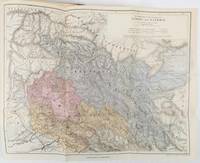
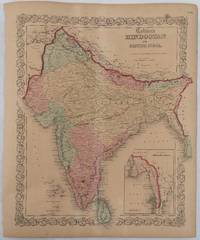
1859224156New York.: J. H. Colton. 1859. Hand-coloured map 40 x 33 cms inset map "Continuation of British India" 12 x 9.3 cms showing Burma elaborate decorative burst border a few spots sheet age-toned inner margin a little chipped not affecting the map and small split in the outer margin no loss text "Farther India or Indo-China" from Colton's atlas on the verso an attractive map in good condition. Attractively hand-coloured map showing different districts presidencies and independent kingdoms with contrasting pastel pinks yellows greens and blues. Major Presidencies Bengal Bombay and Madras are shown alongside extensive detail on river networks the Himalayan range roads and early railway lines connecting major trading hubs. Published a year after the East India Company was stripped of its governing powers following the tumultuous events of the 1857 Indian Rebellion Sepoy Mutiny. This 1859 map is one of the very first American atlas sheets printed to reflect the formal establishment of direct British Crown rule the Raj. It illustrates a subcontinent transitioning from a corporate-held trade monopoly into the crown jewel of Queen Victoria's empire neatly delineating newly pacified administrative boundaries. . J. H. Colton unknown
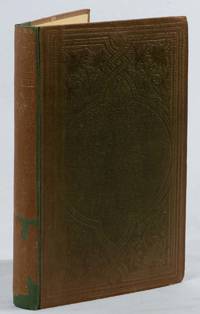
1839223681London.: Smith Elder and Co. Cornhill. 1839. Engraved handcoloured frontispiece opposite the additional engraved title page sketch map and 7 other full-page illustrations one folding and 5 hand-coloured text illustrations 2 half-title xvii including both the engraved and printed title pages 283pp; original blind-stamped pebbled green cloth boards 23 x 14.5 cms re-backed mounting the original gilt-lettered backstrip endpapers renewed scant spotting the boards faded and the backstrip chipped at the foot with the neat inked inscription of a previous owner but in very good condition. Scarce. Pioneering account beautifully illustrated after sketches by the author. Marianne Postans travelled to India in 1833 with her husband Thomas Postans a Captain in the 15th Regiment of the Bombay Native Infantry where he was posted to Cutch Kutch the northwestern region of modern-day Gujarat. They both shared a deep interest in the people and traditions of India. Marianne's account attempts to describe the culture of the region its bards and bardic literature including specific songs and stories of Kutchi bards arts and crafts and agriculture and trade. She also describes in detail rituals such as infanticide and the practise of sati. <br>The beauty of the Rann awed her: “The distant aspect of the Runn resembles that of the ocean at ebb tide; and as some water always remains on it the refraction of light produces the most beautiful and mysterious effects decorating it with all the enchantments of the most lovely specimens of mirage whose magic power exerting itself on the morning mists indues this desert tract with the most bewitching scenes…”. . Smith, Elder and Co. Cornhill. hardcover
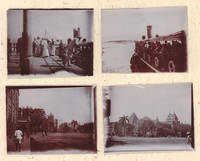
1906181023Mumbai. Circa 1906. Four silver albumen prints with pencilled captions on the verso approx. 7.4 x 10 cm fading and edge wear one minor tear but in good condition.<P> Group of private tourist photos taken around 1906 as captioned a street scene and one looking towards Dadabhai Naoroji Road with impressive architectural skyline and two of well-dressed European passengers on board a tug heading towards a "British India Steamer". <br> <br>From the Estate of the late collector and scholar Arthur Hacker.<P> <b>When referring to this item please quote stockid 181023</b> . unknown
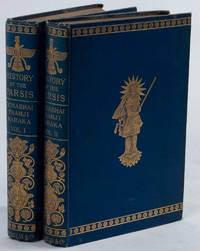
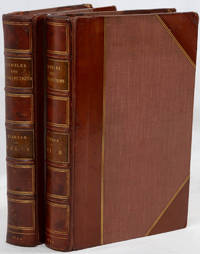
1884223672London.: Macmillan & Co. First Edition. 1884. Two volumes 8 full -page illustrations including 4 chromolithograph plates two photographic illustrations tipped in and two black and white steel engravings xxxiii 332pp; viii 350pp the final leaf unopened original azure linen cloth-covered boards elaborately gilt with a cover vignette and highly embellished spine gilt lettered extremities a trifle rubbed and bumped scant foxing a highly attractive copy in very good condition. Foundational work on the Parsis for a Western audience by influential Indian newspaper editor and adminstrator Dosabhai Framji Karaka 1829-1902. . Macmillan & Co. hardcover
1887215585London.: W. H. Allen & Co. Limited. First Edition. 1887. Two volumes. Two coloured folding maps coloured frontispiece in each volume profusely illustrated some plates in colour original tipped-in photographic portrait of Sir Salah Jung without the specimen handwriting two panoramic sketches from the Takht-I-Sulaiman. Volume I: xxvii 314pp; Volume II: viii 303pp. Original mint green cloth covered boards ruled and decorated in black spines lettered in gilt head of spine to Vol I strengthened cloth a little worn and dusty hinges tender but holding a few gatherings unopened top edges uncut a good set of this handsome first edition. With the book tickets of noted collector and bibliographer Benton L. Hatch and bookplates of Vernon Howard Californian bookseller and mountaineer in each volume. 22.5 x 14 cm. A descriptive illustrated guide and history drawn from the memoirs of British colonial administrator Sir Richard Temple 1826-1902 Governor of Bombay from 1877 to 1880 and from his extensive travels throughout Kashmir Sikkim and Nepal over almost thirty years. Edited by his Indian-born son Richard Carnac Temple an amateur anthropologist and in his later career Chief Commissioner of the Andaman and Nicobar Islands. . W. H. Allen & Co., Limited hardcover
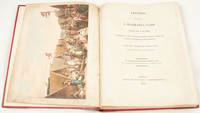
1813222916London.: John Murray. 1813. 10 hand coloured aquatints xiv 358pp ii Directions to the Binder lacks half title later half morocco red linen covered boards gilt-lettered spine 26.5 x 20.7 cms margins trimmed one plate with slight loss to the publisher's signature title page strengthened at the hinge small chip at the lower corner two leaves with short sealed edge tears text unaffected fifteen leaves stained at the gutter with loss to the inner margin of one plate final leaf with soft creases and a short sealed tear text unaffected the margins of the plates rather dusty and browned good condition. Firsthand account by Thomas Duer Broughton 1778-1835 a British army officer of the East India Company appointed military resident with the Mahrattas in 1802. Compiled from a series of letters to his brother Broughton's account includes detailed descriptions of festivals and ceremonies. Nine of the ten fine handcoloured plates are notable for being after sketches by Indian artist "Deen Alee". . John Murray. hardcover
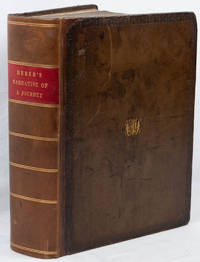
1828214811London.: John Murray Albemarle Street. First Edition. 1828. First Edition two volumes in 1: xvi 4 xvii-xlviii 632pp; full-page map coloured in outline 5 plates 21 wood engravings in text List of Subscribers etc. last blank; viii 516pp 5 plates 4 wood engravings in text contemporary calf boards scuffed sympathetically rebacked with the gilt monogram of the Church Missionary Society 27 x 20cm considerable foxing to plates & adjacent leaves with small waterstain to several plates in Volume I neat sealed tears to five leaves in the Appendix of Volume II otherwise clean with the label of the Church Missionary Society and of Kumars the Calcutta Booksellers to the front pastedown neat ownership inscription of W. R. Crocker to the front free endpaper a good copy. A seminal work describing India's geography and people with an interesting provenance. Sir Walter Russell Crocker KBE 1902 – 2002 was an Australian ambassador and he authored a well-received biography of Jawaharlal Nehru: "Nehru: A Contemporary's Estimate" 1966. He was ambassador or high commissioner to eleven countries including India twice Indonesia Canada Italy Belgium Nepal the Netherlands Ethiopia Kenya and Uganda. He headed the Department of International Relations at the Research School of Pacific and Asian Studies Australian National University 1949–1954 and was a Lieutenant-Governor of South Australia for more than nine years. . John Murray, Albemarle Street. hardcover
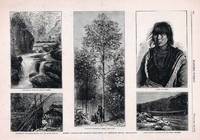
1872195548New York.: Harper's Weekly. 23 November1872. Five engravings in three columns 23.5 x 10 cms; on a single newspaper leaf 28.7 x 40.8 cm unrelated text on the verso lower margin creased with a small central tear affecting the caption no loss the image sin very good condition. Engravings from Harper's Weekly in November 1872 all centred on the quinine production in Darjeeling. Production began in the 1860s from seeds sent by the famed botanist Sir Joseph Dalton Hooker. Quinine proved indispensable to British rule in India and they invested heavily in plantations to sure up supply.The anti-malarial was vital for colonial expansion "quinine coursed through the bloodstream of empire" Townsend Middleton "Becoming after: The Lives and Politics of Quinine’s Remains" in Cultural Anthropology Vol. 36 Issue 2 pp. 282-311 2014 although probably known more to the readers of Harper's Weekly as an essential for gin and tonic. <br> <br>The five engravings: <br>Foot-Bridge over the River Rungbee <br>Buttress of Suspension Bridge over the River Teestah <br>Cinchona Succirubra Thirty Feet High signed but indecipherable <br>Native of Sikkim <br>Cane Suspension Bridge over the Great Runjeet. . Harper's Weekly. unknown
1844223122London.: J. Hatchard and Son. 1844. Two volumes hand-coloured chromolithograph portrait frontispiece to each volume 30 plates including 6 botanical plates in the second volume lacking the tissue guards: xii 475 pp ; vii List of Illustrations 459 pp; contemporary half calf spine gilt-ruled between compartments raised bands gilt lettered title labels edges fully gilt 23.5 x 16 cms professionally re-backed mounting the original spine corners a little rubbed and bumped title and frontispiece to each volume rather spotted and affecting a number of the plates some age toning but a good handsome copy. Sir William Henry Sleeman 1788–1856 was a British soldier and administrator in India and "his most memorable achievement was an exposure of the practices of the thugs an organised fraternity of professional murderers.In February 1839 additional duties being assigned to his office he became commissioner for the suppression of Thuggi and dacoity. During the next two years he was actively engaged in investigating and repressing criminal organisations in Upper India. During 1826 and 1835 over fourteen hundred thugs were hanged or transported for life." DNB. At the time of writing Sleeman was political resident in Gwalior. His readable observations touch on a myriad of subjects and places and illustrate many facets of Indian life including suttee witchcraft influence of electricity on vegetation corn dealers the Kohinoor diamond transit duties Delhi Indian Police and military discipline. . J. Hatchard and Son hardcover
1813222915London.: Edward Orme. 1813. 20 hand coloured aquatint plates 149pp x Index including the Half Title and List of Plates; contemporary half calf over marbled boards spine gilt-lettered in compartments marbled edges 28.2 x 22 cms the first plate a trifle spotted with a small chip from the bottom margin slight age-toning and minor spotting in very good condition. Scarce suite of finely hand coloured aquatints depicting domestic colonial life in British India: the Europeans at their leisure attended by Indian servants. Doyley's compositions are often quietly satirical: Plate IV "A Gentleman Dressing Attended by His Head-Bearer and Other Servants" shows a young man in his gown relaxed seated and reading while an Indian servant washes his feet another in the background pours his drink and yet another makes his bed all overseen by the "Head-Bearer". The artist Charles Doyley was illustrating and observing a world in which was an intimate participant he had been born in India into a family that had long served in India himself serving as a member of the Bengal Civil Service from 1797 to 1838. <br> <br>Abbey Travel 435; Tooley 185 . Edward Orme. hardcover
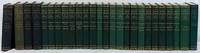
1907223716Oxford.: Clarendon Press. 1907 19081909 1931. 26 volumes including the Index and Atlas frontispiece map of "The Indian Empire" in vols I-XXV neatly strengthened to the verso in a few volumes 26 other folding maps or plans the Atlas volume with 66 double page coloured maps or plans Vol II with inked name of an early owner “K. Shama Ras…Benares 21st July 1911” and the blind stamp of the bookseller Ram Narain Lal Allahabad Vols III and IV with the inked stamp of the Ruskin Library; endpapers rather age-toned throughout scant foxing; original green cloth gilt lettered on the spines 22 x 14 cms occasional rubbing and wear the cloth to the second volume faded and rubbed at the corners with some loss the hinges of a couple of volumes starting but sound a very good set of the complete third edition. <br> <br>A complete collation is available on application. A magisterial survey of Empire. This "New" edition issued in twenty-six volumes by the Clarendon Press Oxford constitutes the definitive third iteration of this landmark administrative and geographical record. Produced under the editorial guidance of Sir Herbert Hope Risley and James Sutherland Cotton the work expanded upon the foundational work of Sir William Wilson Hunter. The first four volumes "The Indian Empire" offer an exhaustive analysis of the subcontinent’s historical economic and administrative frameworks. The twenty succeeding volumes of alphabetical entries offering close statistical and descriptive accounts of specific regions and localities. The collection is formally concluded by a comprehensive index and a concluding atlas volume the latter featuring maps by J. G. Bartholomew. . Clarendon Press. hardcover
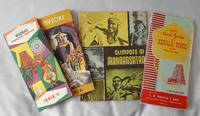
1960223133Circa1960s. Two brochures a map and a book. <br> <br>"Madras. Mahabalipuram-Kanchipuram" and "Mysore": Published by the Government of India. Folding brochures with colour and black and white map and photographic illustrations. 23 x 10cm. <br> <br>"Latest Road Guide of Kerala State": Published by S. B. Makhija & Bros. Large folding map accopanied a 14pp guide in stapled wrappers each adhered to pastedowns of original wrappers. 24.8 x 12.5cm. Repaired closed tears at spine of worn wrappers. <br> <br>"Glimpses of Maharashtra": Prepared by the Government of Maharashtra. Black and white photographic plates 104pp. 24 x 18.5cm. Binding starting a prior owner's signature front pastedown a little worn original wrappers. <br> <br>Overall in good to very good condition. . unknown
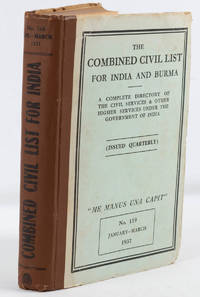
1937179540Lahore.: Civil and Military Gazette Limited. 1937. Brown cloth covered spine lettered in black printed papered boards prior owner name and chop on the front free endpaper endpapers browned and text block age-toned at the edges and corners bumped but a firmly bound copy. xii adverts 618pp plus 3pp adverts. 24 x 15.5cm With an index of the Viceroy and Governor-General and a gradation list covering Assam Bengal Bihar Bomboy Burma Central Provinces Madras North-West Frontier Province Orissa Punjab Sind and United Provinces together with a complete list of the departments of the Government of India. . Civil and Military Gazette, Limited. hardcover
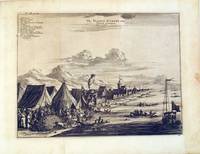
173221951London: Printed for Awnsham and John Churchill 1732. Very good condition. Copper engraved view of the Indian Coromandel coast pearl fishing port Tuticorin or Thoothukudi. A numbered key at the upper left describes the various buildings and people including; "Governors house" "a Heap of Pearle Oyster Shells" "Marchants of divers Nations" and "Tents where all sorts of provisions are sold while ye Pearle Fishery Continues". <br /> <br /> A view of the coastline showing pearl fishermen unloading oysters in front of the provision tents as traders look on. European buildings and many boats pulled up along the shore recede into the distance. From Awnsham & John Churchill's "A Collection of Voyages and Travels" engraved by Johannes Kip. Image 14 1/2 x 11" on paper 19 1/4 x 14". Two small chips at left edge. Strong impression bright and clean. Printed for Awnsham and John Churchill unknown
48671presented to the Lords States Generall of the united Provinces in defence of the said Company touching the bloudy proceedings against the English Merchants executed at Amboyna. Together with the Acts of the Processe against the sayd English and the Reply of the English East India Company to the said Remonstrance and Defence. Published by Authority. London : printed by John Dawson for the East India Company 1632. Three parts in one volume small quarto modern panelled calf in period style spine in compartments with gilt decoration and lettering; pp. 8 29 1 blank; 2 separate title-leaf 38; 47; 1; with a full-page woodcut depicting the torture of one of the English merchants at Ambon bound in at the end of the preliminaries in effect as a frontispiece to the first part; main title with woodcut armorial device woodcut initials head- and tailpieces; some mild browning a fine copy. Together the three parts of this work provide a summarised account of the so-called Amboyna or Ambon massacre a watershed event that occurred at a time of growing rivalry between the English and Dutch East India Companies over control of the lucrative spice trade. In early 1623 at the Dutch garrison of Fort Victoria on the island of Amboyna in the Moluccas the local Dutch governor ordered the arrest of ten English merchants suspected of plotting to take over the garrison; they confessed under torture and were executed in February 1623. The English reacted by branding the event a massacre. This volume is sometimes found bound with another that was published in London the same year which also presents the controversy from an English perspective A True Relation of the Unjust Cruell and Barbarous Proceedings against the English at Amboyna in the East-Indies by the Netherlandish Governor and Councell there. Both publications helped fuel a rising tide of anti-Dutch sentiment; it would not be long before animosity would give way to open hostility with the outbreak of the First Anglo-Dutch War in 1652. Rare especially in such fine condition. STC 7450a unknown
1792911831792. London. 1792. Dark green cloth gilt type to spine. Sugar report 64 pages followed by six appendices 1789-1790; together with "Thanks to Lord Cornwallis and the Officers Serving in India" and debate 1793 161 pages;"Regulations Proposed to form the By-Laws" 27 pages; "The Debates at the East India House on the 18th of June 1794 on the Consideration of the Report of the Committee of By-Laws and on Mr Twining's Motion . . . " reported by William Woodfall with an Appendix containing letters etc. necessary to elucidate the subject 1794 52 pages; "The Debates at the East India House on Wednesday the 21st of January 1795 on the mode of forming into a by-law Mr Twining's motion . . . which had been carried by Ballot and also on the subject of the Company's Shipping" reported by William Woodfall 1795 134 pages. Corners a little bumped spine and margins of boards sl. damp-mottled edges of boards rubbed. A few marks in blue and red pencil to title-page of Sugar Report. hardcover
1924AQ32179Simla: Government of India Press 1924. vii 1 181pp 1. Original publisher's printed powder blue wrappers. Heavily rubbed and marked spine worn several small worm-tracks. Inked ownership inscription and later coloured pencil shelf-marks to title page. The comprehensive report of a royal commission charged with enquiring into the organisation and general conditions of the Civil Services in India financial and otherwise; the possibility of transferring any of their present duties and functions to services constituted on a provincial basis; and the best methods for ensuring and maintaining the recruitment of Europeans and Indians respectively. . First edition. 8vo. [Government of India Press] unknown
5104Without place or date circa 1820. One page octavo. Very good. On paper with 'C TAYLOR' Britannia watermarked paper. Possibly an East India Company document. Of obscure meaning headed 'List of Different Houses' and consisting of two columns the left-hand one of sixteen lines and the right-hand of eleven. Includes 'Moorshedabad' 'Massulipatam' 'Poona the Money paid to Mr. Mallet' 'Ahumabad the Residency of their Correspondent's' and 'The Mahratta Army'. With 'Exd: W D' in bottom left-hand corner. Docketed on reverse of second leaf of bifolium with reference 'No. 149. A. Entd at Dell <d.> " - MS'. Scan on application. Without place or date [circa 1820?]. unknown
1796ABC_49403Various places including Saudi Arabia and Yemen 1796. Contemporary or slightly later half black morocco marbled boards. Small folio ca. 19 x 30.5 cm. English manuscript on watermarked paper. With a loosely inserted manuscript map titled A Chart shewing the Track of HMS Ship Myrtle of the Bay of Biscay and Portugal and a hand-coloured manuscript signal chart. A detailed description of the voyage of the East India company vessel the Swift from 1794-1795 featuring visits to both Saudi Arabia and Yemen. Twelve pages of observations are dedicated to Jeddah alone witnessed at the height of the influx of pilgrims during the Hajj followed by a description of Mocha also Mokha in Yemen. Other ports visited include those of Brazil South Africa India the Nicobar Islands Malaysia and Sri Lanka.Jeddah the author says "has a very pleasant appearance as you approach it from the sea . The houses are all of stone of the coral kind." However as the Swift had arrived in the midst of the Hajj and its crew found provisions difficult to acquire as thousands of pilgrims poured into Jeddah: "It is astonishing the number of Mahometans arriving from all parts of the world to attend the yearly ceremony at Mecca called Hadgi from thence to Medina." Several accounts are given of particular Muslim practices through occasionally somewhat confused British eyes: "When near Geddah all the Pilgrims going their first journey altered their dress assuming what is called the Ihhram a piece of linnen ! which is wrapped round the loins leaving the rest of the body naked in this state they proceed through the rest of the pilgrimage till they have visited the Kaaba at Mecca; the other garment they are then suffered to wear is a cloth of linen over their shoulders. . Some of them carry a trade of muslins and some other little articles which if they are not robbed by the Bedouins wild Arabs they make out tolerably well . The landing of the pilgrims with their wives and household utensils would have been an excellent view for the inimitable Hogarth."The Swift appears to be one of the ships which accompanied the Suffolk a 64-gun ship to escort a convoy to India under the command of Captain Peter Rainier 1741-1808 later Admiral of the Blue and namesake of Mount Rainier. This particular voyage was in itself notable as a trial for the implementation of a citrus diet for sailors to ward off scurvy which was ultimately successful and became Admiralty policy the following year. On the first page of the account we find the following: "The beer being expended ordered the Company to be served wine mixed with 1oz of sugar and oz of lemon juice to every pint it was very nice tipple."The boards show mild traces of use. With a few small smudges on some of the leaves. Otherwise in excellent condition. hardcover
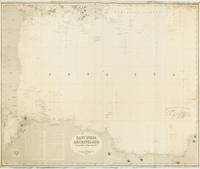
1881143683London: James Imray and Son 1881. Good. London James Imray and Son 1881. A very large engraved chart in two sheets combined printed surface 1039 × 1240 mm overall sheet size 1039 × 1264 mm with minimal hand-colouring mounted together on the original blue backing paper with the publisher's title-label on the verso. Minor chipping at the edges with minimal loss to the headline title above the top border; a few light stains and creases; a short sealed tear to the middle of the left and right sides one extending about 100 mm into the printed surface; a few old pencil annotations; in good condition. A very large and detailed blueback chart of the western part of the Java Sea the passages connecting it to the Indian Ocean the Sunda Strait and the South China Seas the Karimata Gaspar and Bangka Straits and Batavia Jakarta. Lighthouses are highlighted with spots of red and yellow colouring. <p>The publisher's inkstamp dated 1882 appears near the imprint. The title-label on the verso reads 'Chart No. 161. Western Route to China. In Six Charts. Chart No 1. Price 7s. 6d.'. James Imray and Son unknown
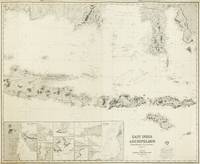
1881143682London: James Imray and Son 1881. Very Good. London James Imray and Son 1881/ 1863. A very large engraved chart in two sheets combined size approximately 1040 × 1285 mm with minimal hand-colouring mounted together on the original blue backing paper with the publisher's title-label on the verso. Head and foot slightly cropped with slight loss to the text outside the border; some marginal chips and tears with two that extend slightly into the printed surface now expertly sealed; short left-hand portion of the top margin a little waterstained not affecting the printed surface; a few trifling spots of foxing and some unobtrusive creases; overall in very good condition. A very large and detailed blueback chart of the Java Sea including the eastern half of the Indonesian archipelago and the southern coasts of Borneo and Sulawesi. It includes twelve inset charts: the Baly Bali Strait; Sapie Bay; Labuan Tring Bay; Tafel Hoek; Segoro Wedie Bay; Beliling and Sangsit Roads; Bunkolan and Lirang Roads; Koeboe Road; Amok Bay and Padang Cove; Tiulik Road; Oedyon Road; and Macassar. Lighthouses are highlighted with small spots of red and yellow colouring. <p>The publisher's inkstamp dated 1882 appears below the title. The title-label on the verso reads 'Chart No. 171. Eastern Passages to China & Japan in Nine Charts. Chart No 1. Price 7s. 6d.'. James Imray and Son unknown
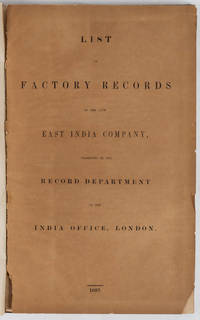
1897219014London.: The India Office. 1897. xxviii 91pp. Black cloth covered boards lettered in silver on the spine housing the original report in paper wrappers front wrapper detached. Wrappers fragile but contents very good. 32 x 19cm. Short check list style listings of the correspondence of many locations of East India Company interest in India and beyond including: Borneo Celebes Ceylon China and Japan Dacca Egypt and Red Sea Java Persia and Persian Gulf St. Helena Siam Straits Settlements and Sumatra. . The India Office. hardcover
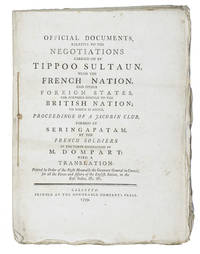
1799ABC_45147Calcutta: Honorable Companys Press 1799. Never bound but side stitched through 3 holes. Super Royal 4to 33.5 x 25 cm. A British propaganda publication printed in Calcutta transcribing secret documents that the British supposedly found in the palace of Seringapatam: primarily Tipu Sultans correspondence with the French considered a betrayal of the British. Tipu Sultan 1750-1799 ruler of the Kingdom of Mysore in southern India took part in a long-standing military feud with the British but made peace with them in 1792. When the French under Napoleon made a push for India in 1798 the British attacked Tipus forces once again starting the Fourth Anglo-Mysore War and eventually killing Tipu Sultan in the attack on Seringapatam. He had a fearsome reputation as the Tiger of Mysore and the present publication attempts to discredit him as a traitor. His supposed affiliation with the French Jacobin Club would have especially concerned British readers. Most of the correspondence between Tipu Sultan the French and their allies including Zaman Shah Durrani ruler of what was to become Afghanistan is printed in parallel columns in English and French. Also included is the text of a letter from Tipu Sultan printed letterpress in Persian in the nastaliq script: 9 lines of type apparently set in the nastaliq type cut under the direction of Charles Wilkins 1749-1836 who served the East India Company in India and became their leading orientalist. It was first used at Calcutta in 1781. The only earlier type for the script that has been clearly documented is thought to have been cut in the 1590s for the Propaganda Fide in Rome who used it around 1633. Neil Benjamin Edmonstone translated the Persian and G.G. Keble the French. Although the book is a true very large quarto point holes along the fold at the head and deckles at the foot and fore-edge the chainlines are vertical though one would not expect sheets this large to be made in double moulds the usual reason for chainlines parallel to the long axis of the sheet.In good condition. Wholly untrimmed and with most bolts unopened and the point holes present.l Shaw Printing in Calcutta 359; Shaw SABREB sab00086; not in Cat. East-India Comp. Honorable Companys Press, unknown