125 résultats
In-8 (cm. 27.50), cartonato editoriale, sovracoperta editoriale illustrata, pp. 466, (2), con illustrazioni a colori nel testo, numerose ripiegate. Text in English. Catalogo dell’Asta svoltasi a Ginevra presso l’Hotel des Bergues il 19 Novembre 1996. Allegato un fascicolo di pp. 11, (1), con illustrazioni in bianco e nero nel testo, inerente il Lotto 236A, Braccialetti di zaffiro del Kashmir; sempre in lingua inglese. Minime macchie al dorso. Tracce di polvere ed ingiallimento alla sovracoperta; peraltro, volume ed allegato in ottimo stato (nice copy).
189976605London 1899. 4to. Originalt dekorert blått helshirtingbind. Topp gullsnitt. xvi 163 s. Rikt illustrert i teksten. Med 12 plansjer utenom pagineringen. 4to. Publishers blue decorated cloth. T. e. g. xvi 163 pp. Illustrated throughout. With 12 plates apart from pagination. Sands & Company. Engelsk. hardcover
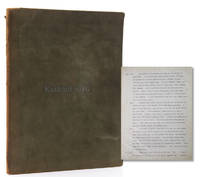
1921314728N.p. 1921. 21 interleaved pp.; typescript. 4to 11 x 8-1/2 inches. Contemporary full green reverse calf blind-stamped title to upper cover Spine worn away pale staining and toning to boards minor foxing. 21 interleaved pp.; typescript. 4to 11 x 8-1/2 inches. Typescript detailing a trip through Kashmir from August 14-October 13 1921. A "Table of Marches" appears at the end of the volume with the number of miles traversed including Srinagar to Islamabad 34 miles Khistwar to Palamir Camp 15 miles Keshwan to Hadu'll 12 miles Malshaibagh to Srinagar road 14 miles etc. Bear hunting on p. 16-18. unknown
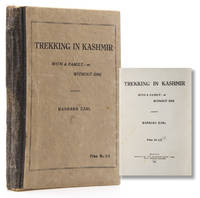
1930314737Lahore: Civil and Military Gazette" Press by E.A. Smedley Manager 1930. First edition the issue without folding map. Illustrated with plates after photographs by the author. iv 98 1 ads pp. 1 vols. 12mo 7 x 4 3/4 inches. Publisher's cloth-backed grey paper-covered boards ad on back cover. Srinagar bookseller stamp. Some wear to spine. First edition the issue without folding map. Illustrated with plates after photographs by the author. iv 98 1 ads pp. 1 vols. 12mo 7 x 4 3/4 inches. Yakushi E01 Civil and Military Gazette" Press by E.A. Smedley, Manager unknown
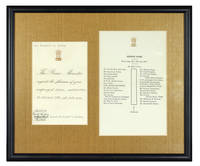
19491247721949. New Delhi: February 1949. <br /> <br /> Printed invitation on a letterhead sheet with typewritten additions approximately 10 x 15 cm. Printed dinner seating plan on letterhead sheet approximately 12 x 19 cm. In fine condition attractively framed together. Frame measures 32 x 27 cm. Not examined out of frame. Original mailing envelope for the invitation is affixed to the back of the frame in a plastic sleeve. <br /> <br /> § Carefully preserved mementos of a large formal dinner held by Jawaharlal Nehru Prime Minister India belonging to one of the guests Mr Franklin Holley a member of the United States Foreign Service. The dinner took place a year and a half after the partition of India at a time when India was still a dominion in the British Commonwealth of Nations and the United Nations was engaged in an ill-fated attempt to mediate the dispute between India and Pakistan over Kashmir.<br /> <br /> Thirty guests are named on the seating plan; a spread of nationalities and an almost even mix of men and women. The identity of Mr Holley has proved elusive but it is clear that many of the others present were closely involved in the question of Kashmir including the Prime Minster of Jammu and Kashmir Sheikh Mohammad Abdullah Deputy Prime Minister Ghulam Mohammad Baskshi and former Prime Minister N. Gopaliswami Ayyangar then Nehru's Minister of Transport. Also present were members of the United Nations Commission for India and Pakistan: Erik Colban Norway Dr. Alfredo Lozano Colombia Carlos Alberto Leguizamon Argentina Harry Graeffe Belgium and the Americans J. Klahr Huddle and Robert Van de Kherchove.<br /> <br /> Other guests included Ward P. Allen advisor to the United States delegation to the United Nations Robert Macatee former US Consul General in Jerusalem and a 19 year old Lady Pamela Mountbatten.<br /> <br /> The reason for Mr Franklin Holley's presence at this illustrious gathering is so far a mystery. The only small trace of him we have found is a short news item in the April 1950 issue of The Foreign Service Journal: "Last year Franklin Holley FSS Foreign Service Specialist contracted polio while stationed in New Delhi India. He was replaced be Miss Cleo B. Hall. Now fully recovered Mr. Holley has been assigned to Madras India. He replaces his former replacement Miss Cleo B. Hall! unknown
191543278Washington D.C.: James William Bryan Press 1915. Tall 8vo. 232 2 pp. Colour frntsp. numerous colour plates photo plates illusts. Beige linen embssd gilt & blue lozenge armorial on frnt cvr gilt lettrng NF copy w/ frmr ownrshp signature on frnt pstdn. First edition of this wonderfully illustrated social history and travelogue through Kashmir just before World War I. James William Bryan Press, unknown
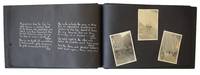
19332881<p>7 x 11-3/4 inches. 28 leaves containing 52 b&w photographs and three blue photographs as well as 17pp of holograph poetry written in white on the black leaves and two hand-painted color illustrations. Black hardcover post-bound album stamped in gilt. A few photos starting to come loose else fine. Very Good or better.</p><p>An exquisite photograph album about the travels through Kashmir of one man and two women -- all white possibly British inscribed only to "Auntie Gillmore" -- filled with vernacular photographs of the countryside and local people. Nearly all of the photographs are captioned and the three blue photos appear to be made after the method devised by Frank A. Perrett to photograph volcanoes in the early 1900s rather than being cyanotypes.</p><p>The trio's journey is narrated in rhymed poetry written by the man of the group as revealed on the last page: "The author of the photographs / And also of the paragraphs / Is standing on the Kamri Pass / Complete with alpenstock and glass. / He hears you say 'The verse might be / A little better' but you see / His job lies not in making rhymes / It's more prosaic and the times / When he is bold enough to write / His thoughts in measured words are quite / Rare and few and far between: / Hence all the nonsense you have seen."</p><p>The poetry in this cataloguer's estimation could indeed be better but it nevertheless illuminates the trio's travels which begin in Srinagar and proceed through the Sind Valley and the Kamri Pass. Included are gorgeous shots of Mt. Nanga Parbat Srinigar waterways a market stall a rice barge converted into a houseboat Gurais and much more. Additionally two illustrations one of a flower and one of a pair of colorful hummingbirds have been painted with a deft hand on two leaves.</p><p>A handsomely-produced record of a remarkable journey through 1930s Kashmir.</p> hardcover
1332024572.Gpaperback. Good. Access codes and supplements are not guaranteed with used items. May be an ex-library book. paperback
Mm 240x310 Brossura editoriale di pp. 92, con belle immagini in bianco e nero e a colori, anche a piena pagina. In buono stato di conservazione, minimo distacco al dorso. SPEDIZIONE IN 24 ORE DALLA CONFERMA DELL'ORDINE.
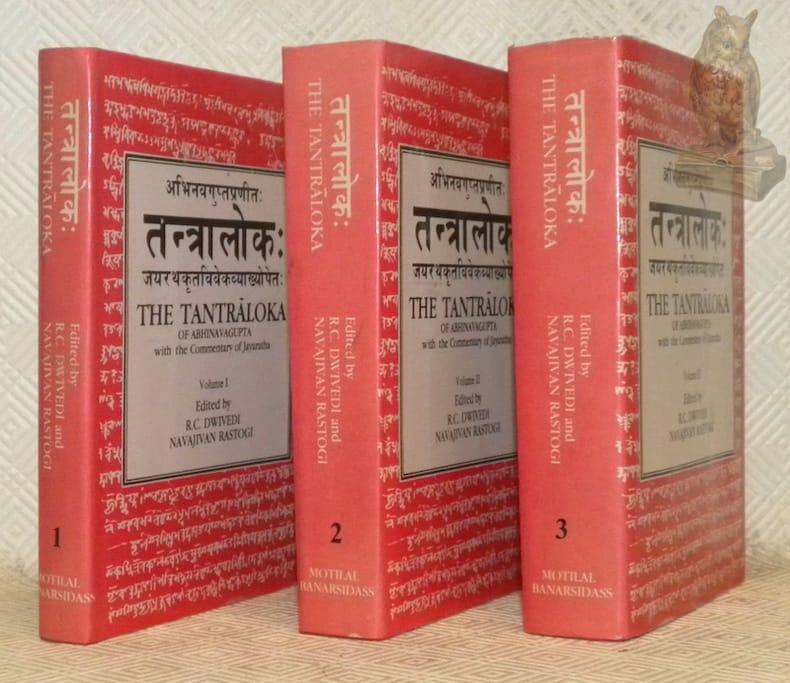
119342Delhi, Motilal Banarsidass 1987, 185x125mm, XXIX + XVII + XXVII - 1350pages, editor's binding with jacket. Book in good condition.
1988S96835Woodbridge, Antique Collector's Club 1988 347pp., with 86 colour illustrations and 262 bl/w illustrations, revised edition, 28cm., publisher's hardcover in green cloth, dustwrapper, good condition, ISBN 1-85149-079-5, S96835
1 lingua: inglese Legat. edit. rigida in tela con sovrac. illustrata, cm 28x22, pag. 376, con 172 tavole a col. e 172 illustraz. in b.n. - A cura di Frank Ames - Third edition 1997 - Monografia sul tessuto del Kashmir che conobbe nell'800 una forte popolarità in Europa. Terza edizione arricchita di capitoli sulla creazione di tessuti di ispirazione indiana in Francia e in Inghilterra - This book tells the full story of the Kashmir shawl, how it migrated to Europe in the 1800s and how the key pattern of the boteh evolved. With its beginnings under the Mughal emperors in Kashmir, the industry continued under Afghan rule, with an explosion of new designs during the Sikh period, until it fell into decline under the rule of the Dogra Rajahs. Frank Ames, a textile dealer himself, stresses the importance of the French connection in the nineteenth century and the cross fertilisation of ideas engendered by the strong demands of European fashion whose love of the Oriental produced the rival Jacquard shawl. Changing fashions at the end of that century saw the demise of the shawl. The shawls are classified by stylistic period and an illustrated guide is included in the book to show the chronological development of designs - Perfetto stato.
347pp., with 86 colour illustrations and 262 bl/w illustrations, revised edition, 28cm., publisher's hardcover in green cloth, dustwrapper, good condition, ISBN 1-85149-079-5, S96835
197524263Kyoto, Senshoku to Keikatsusha Pub. Co., 1975. Text engl. u. japan. - 1st ed. XXXII, 76 S., 104 Farbtaf. 4°, OLwd., OSu., Orig-Schmuckschuber u. Orig.-Pappkassette
This book deals with the demographic and social transformation in the state of Jammu and Kashmir after 1947. While demographic transformation in the state reflects the changes in population aggregates, size and composition and other aspects, different trends of migration such as 'the migration of Pandits' and 'labourmigration' represent the process. On the other hand, the related social transformation reveals the overall social structure, function and social relationships and emerging social problems. Dealing with the major and minor trends of migration in J&K, which had solid social repercussions for the whole society, it examines the patters of population change as was revealed in decadal census reports from 1951 – 2011. This is primarily a sociological presentation of census-based population changes. Finally, it analyzes the broader sociological implications of population changes and migration trends. The important areas in this regard have been identified as late marriage, increasing suicides, rising number of never married, increasing crime and domestic violence, Pandit migration and labour migration. About The Author:- B. A. Dabla is presently the Professor and Head, Department of Sociology, University of Kashmir, Srinagar. Earlier he was a faculty at the Aligarh Muslim University, Aligarh. He has also served the Jammu and Kashmir Government as Assistant Director and Press Officer to Chief Minister. Prof. Dabla has to his credit 19 books, 52 research papers, 106 articles, 16 surveys/study reports, and 17 research projects. He is also the editor of two journals, namely, Journal of Society in Kashmir and Kasheer.His areas of interest are Social Change and Development; Women, Children and Society; Sociology of Islam, Muslims and Minorities; Migration and Population Changes; Kashmir Sociology; and Conflict Situation. He was the member of NCF group of NCERT, and ICSSR, New Delhi. The author has been awarded recently prestegious Mawlana Azad National Fellowship by the I.C.S.S.R., New Delhi. Contents:- Contents, Foreword , Preface , Acknowledgements , SECTION A: GLOBAL, NATIONAL AND REGIONAL TRENDS, OF MIGRATION, SECTION B: TRENDS AND PATTERNS OF POPULATION, CHANGE IN J&K, Migration Trends and Population 6 Changes in Jammu and Kashmir State, SECTION C: SOCIOLOGICAL IMPLICATIONS OF, DEMOGRAPHIC TRANSFORMATION IN J&K, Bibliography , Index The Title 'Migration Trends and Population Changes in Jammu and Kashmir written/authored/edited by B.A. Dabla', published in the year 2014. The ISBN 9789351280071 is assigned to the Hardcover version of this title. This book has total of pp. 254 (Pages). The publisher of this title is Kalpaz Publications. This Book is in English. The subject of this book is Jammu and Kashmir. Size of the book is 14.34 x 22.59 cms Vol:-
Kashmiri women in the entire post-independence period progressed in some development-related fields, but, at the same time, faced serious degenerative problems in the last two decades. Keeping in view these women-related developments in Kashmir, the empirical studies of this book were carried out in last 8 years in the sociological framework to develop scientific understanding and to generate statistical data about the existing problems of women in the valley- study of muli-frious current problems of women, study of women's problems who are working in the unorganized sectors/fields of the handicrafts and micro-level studies of women working in some traditional occupations and modern professions. About The Author:- Dr. Bashir A. Dabla, an eminent sociologist of Kashmir, is Professor and Head, Department of Sociology and Social Work, University of Kashmir, Srinagar. Contents:- Preface • Acknowledgements • Summary of the Findings • Introduction • Methodology • Social Problems • Economic Problems • Educational Problems • Health Problems • Problems of Discrimination • Conclusion • Suggestions • Report of The Workshop • Working Women in Unorganized Sector • Appendix • Index. The Title 'Multi-Dimensional Problems of Women in Kashmir written/authored/edited by B.A. Dabla', published in the year 2007. The ISBN 9788121209236 is assigned to the Hardcover version of this title. This book has total of pp. 200 (Pages). The publisher of this title is Gyan Publishing House. This Book is in English. The subject of this book is Jammu and Kashmir / Women Studies. Size of the book is 14.34 x 22.59 cms Vol:-
The Kashmiri society experienced most difficult challenge in modern history due to two-decade long armed conflict between Kashmiri militants and Indian security forces. In actually, it proved devastating for the survival of this tiny society in the global map. In brought catastrophic impact in totality on the entire Kashmiri society, especially in the fields related to large scale economic destruction and collapse; widespread social disorder and social disorganization; educational backwardness; mass psychological depression; mass humiliation and people's helplessness; imposed brutalization and dehumanization; forceful cultural aggression; political suppression and oppression; demographic manipulation; social crisis and social anarchy; and social pathology characterized by deviance, crime, delinquency, drug addiction, suicides, perpetual tension and social apathy. Consequently, a generation was lost in this social inferno., , This papers in this book were written in the preceding social context during the last four years. All these presentations portray this greatest social and human tragedy which has consumed about 1,00,000 human beings and gave birth to 32,000 widows, 98,000 orphans, 6,00,000 disabled, 10,000 disappeared and 1000s injured men and molested-raped women., , This book stands for a sociological and scientific presentation of facts and figures from official as well as unofficial primary and authentic sources about short-term and long-term social implications of militancy and militarization in Kashmir. It reveals the existing facts and realities about multi-dimensional implications of conflict situation over a period of last 20 years. About The Author:- B. A. Dabla is presently the Professor and Head, Department of Sociology, University of Kashmir, Srinagar. Earlier he was a faculty at the Aligarh Muslim University, Aligarh. He has also served the Jammu and Kashmir Government as Assistant Director and Press Officer to Chief Minister. Prof. Dabla has to his credit 19 books, 52 research papers, 106 articles, 16 surveys/study reports, and 17 research projects. He is also the editor of two journals, namely, Journal of Society in Kashmir and Kasheer.His areas of interest are Social Change and Development; Women, Children and Society; Sociology of Islam, Muslims and Minorities; Migration and Population Changes; Kashmir Sociology; and Conflict Situation. He was the member of NCF group of NCERT, and ICSSR, New Delhi. The author has been awarded recently prestegious Mawlana Azad National Fellowship by the I.C.S.S.R., New Delhi. Contents:- CONTENTS:- # List of Abbreviations 9: Preface 13: Acknowledgements 19: 1. Introduction 21: [i] Kashmir: The Political Entity 21: [ii] Political Background of Kashmir Problem 22: [iii] Post-accession Developments in J&K 25: [iv] Different Perspectives 28: [v] Impact of Militancy: The Varying Views 35: [vi] Context: Focus and Relevance of the Study 37: [vii] Objectives of the Study 38: 2. Methodology 44: [i] Application of Scientific Methods and Techniques 44: [ii] Methodology of Research Papers 45: [iii] Methodology of Other Studies – Books 47: [iv] Methodology of Social Surveys 47: [v] Other Methodology Features of Surveys 47: 3. Social Background of Militancy 49: [i] Indianization of Kashmir 49: [ii] Negation of Kashmiri Identity 50: [iii] Demographic Manipulation 51: [iv] Economic Baselessness 52: [v] Educational Backwardness 55: [vi] Cultural Deprivation 56: 6 Social Impact of Militancy in Kashmir: 4. Crucial Sociological Implications of Militancy 59: [i] Cumulative Human and Material Loss 59: [ii] Militarization and its Social Impact 62: [iii] The Economic Collapse 67: [iv] Migration and Demographic Loss 73: [v] Mental and Physical Health Deterioration 80: 5. Sociological Implications of Militancy 95: [i] Demographic Transformation 95: [a] Social Dynamics of Migration in Kashmir 95: [b] Demographic Changes in J&K State 100: [c] Population Changes in J&K -2001 103: [ii] Changes in Family and Marriage Patterns 106: [a] Family in Kashmir between Tradition and Modernity 106: [b] Kashmiri Family Besieged Stressfully 109: [c] Changing Patterns Marriage in Kashmir 113: [d] Changing Practices Marriage in Kashmir Valley 122: [iii] Conflict and Violence Against Women in Kasmir 132: [iv] Social Deviance and Social Disorganization 134: [v] Cultural Changes and Problems in Kashmir 136: 6. Emerging Social Trends in Kashmir 144: [i] Emergence of Late Marriage in Kashmir 144: [ii] Phenomenon of ‘Never Married’ in Kashmir 171: [iii] Rise of Disability in J & K 176: [iv] Domestic Violence Against Women 184: [v] Increasing Suicides in the Velly 192: [vi] Rising Graph of Suicides in Kashmir 203: [vii] Emerging Juvenile Delinquency in Kashmir 206: [viii] Kashmir: From Crime-free to Crime-full Situation 216: [ix] Life Conditions of Child Laboures in Kashmir 220: [x] Social Pathology in Kashmir 230: 7: 7. Prime Victims of Violence in Kashmir 241: [i] Women and Children 241: [a] Orphans in the Orphaned Valley 241: [b] Widows and Orphans in Kashmir 249: [c] Half-widows and Half-orphans 255: [ii] Suffering Children 260: [iii] Raped Women 262: [iv] Youth – A Generation Losts 263: 8. Need for Social Policy in J&K 271: Glossary 277: Index 283: Bibliography 291 The Title 'Social Impact of Militancy in Kashmir written/authored/edited by B.A. Dabla', published in the year 2011. The ISBN 9788121210997 is assigned to the Hardcover version of this title. This book has total of pp. 296 (Pages). The publisher of this title is Gyan Publishing House. This Book is in English. The subject of this book is Jammu and Kashmir / Sociology / Terrorism / Defence. Size of the book is 14.34 x 22.59 cms Vol:-
This Book stands as the academic presentation of sociological narratives of 30 prominent and representative social characters which have emerged in the Kashmir society in post-accession period in the Context of broader and deeper social transformation. It portrays a positive image of the Kashmiri personality, Kashmiri society and Kashmiri identity. It represents a serious academic effort to observe the Kashmiri as individuals and members of society; as they are and feel; as they think and understand; as they behave and operate; as they act, react and interact; as they construct and deconstruct the reality; as they wish, aspire, practice and uphold distinctive ideas, ideals, views, opinions, perspectives about life and society. In essence, it conveys a comprehensive picture of hardware and software of social life in Kashmir. The 30 social characters explained in this book included the following : , - The Folk Kashmiri , - Scientist and Academician Small Businessman , - Table-boy and Businessman Kashmiri Youth , - Educationist and Social Notable The Political Ideologue , - The ex-Militant Doctor from Lower Caste , - Professional Musician , , The 30 social characters have been analyzed in the framework of following sociological variables : , - Social Context - In-out Family socialization Education and Career , - Occupation and mobility - Social Likes and Dislikes Concepts of I, Me & We , - The Ideal Character - Ideas of Equality and Inequality Conflict Experience , , This book is based on unconventional and unique method of 'biographical approach' which emphasizes on the study of biographical details and data of individuals in society. The life itself has become the sole primary source of information. About The Author:- Bashir Ahmad Dabla stands as a distinguished and eminent sociologist of Kashmir. At present, he is Professor and Head of the Department of Sociology, University of Kashmir, Srinagar. After completing graduation in arts from Kashmir University, he carried out successfully master and doctorate courses in Sociology from Jawaharlal Nehru University, New Delhi. Afterwards, he a worked in Jammu and Kashmir government as Assistant Director, Social Welfare and Press Officer to Chief Minister. Professor B. A. Dabla started his academic career in 1984 from Department of Sociology, Aligarh Muslim University. Subsequently, he shifted to University of Kashmir, Srinagar in 1989, where he established the Department of Sociology and enlarged it to Social Work in 2003. Professor B. A. Dabla has established global reputation for his I academic contribution. He has published 17 books, 130 plus papers/articles, 14 survey reports and 15 research project reports. He is the editor of annual journal of his department Society in Kashmir. His areas of specialization include Social Change and Development; Women, Children and Society; Sociology of Islam, Muslims, Minorities; Kashmir Sociology; and Social Impact of Conflict Situation. Professor B. A. Dabla was the member of 'National Curriculum Framework Group' of N. C. E. R. T., New Delhi and is presently member of National Council of Social Sciences Research [I. C. S. S. R.], New Delhi. All publications of Dr. Dabla have been preserved and presented by official websites of internet sites of GOOGLE and YAHOO. Contents:- CONTENTS:- # Foreword : Preface : List of Abbreviations : Glossmy : ??. Introduction :. Methodology :. Social World of Kashmiris: : K- The Folk Kashmiri - Urban : K- Academician and Administrator : K- Academician -Kashmiri Pandit : K- Scientists and Academician : K- Folk Kashmiri Woman - Urban : K- Urban-Educated Woman - Housewife : K- The Kashmiri Bureaucrat : K- Urban-Educated Work ing Woman : K- Small Businessman : K- Table-boy and Businessman : K- I Lower Class Government Employee : K- The Kashmiri Youth: Rural-Urban : K- The Kashmiri Scientist : K- Political ldeologue and Politician : K- Educationist and Social Notable : K- The Kashmiri Youth: Rurai-Sayyid : K- The Kashmiri Youth: Ex-Militant : K- Elder Kashmiri Intellectual : K- Professional Doctor -Lower Caste : K- Doctor fi•om Middle Class : Social Transformation in Kashmir: K- Fisher woman: K- Shikarawalla: K- Religious Ideologue: Rurai-Sayyid: K- Professional Musician: K- Professiona l Journalist: K- Milk-sellers Woman: K- The Kashmiri Youth: Lower Caste-Class: K- The Kashmiri Engineer: K- The Political Activist: K- Young Advocate: lndex. The Title 'Social Transformation in Kashmir: a Study written/authored/edited by B.A. Dabla', published in the year 2012. The ISBN 9788121211420 is assigned to the Hardcover version of this title. This book has total of pp. 396 (Pages). The publisher of this title is Gyan Publishing House. This Book is in English. The subject of this book is Jammu and Kashmir / Sociology. Size of the book is 14.34 x 22.59 cms Vol:-
The phenomenon of “gender discrimination” exists more or less in all societies of the world, irrespective of their differences in region, religion, economy, polity, education, culture, social structure and so on. The sociological studies carried out at the global level and in cross-cultural context have revealed that women in general were not considered equal to men at the social level and they were not allowed to become active partners in the processes of change and development. Like other societies/communities in the Indian subcontinent, the Kashmiri women faced certain set degree of gender-based discrimination in the traditional situation. However, as a result of cumulative effect of the processes of modernization, this situation has changed qualitatively as well as quantitatively. While the direction of this change stands towards their total development and emancipation, it has also given rise to some crucial problems for themselves. It was in the context of preceding social dynamics that this study was carried out in the Kashmir valley.<br><br>This book is based on [a] revised version of the report of an extensive empirical study carried out in Baramulla and Budgam district in 1996–1997 among 600 [approximately] selected and representative respondents; and [b] proceedings of the National Seminar in Srinagar in August 1997 [organized jointly by UNICEF, New Delhi; Jammu and Kashmir Government; and Department of Sociology, University of Kashmir] which discussed the findings of the report and prepared a set of recommendations to negate and debase the practices related to gender discrimination in the valley.<br><br>In brief, the book portrays the existing reality, in statistics and description, related to the phenomenon of gender discrimination in the Kashmir valley. Moreover, it suggests the action programme to reduce and finally negate these undesirable practices. The Title 'Gender Discrimination in the Kashmir Valley written/authored/edited by B.A. Dabla Sandeep K Nayak, Kurshid Ul Islam', published in the year 2000. The ISBN 9788121207508 is assigned to the Hardcover version of this title. This book has total of pp. 219 (Pages). The publisher of this title is Gyan Publishing House. This Book is in English. The subject of this book is Jammu and Kashmir / Women Studies. Size of the book is 14.34 x 22.59 cms Vol:-
A comprehensive and in-depth analysis of a rare tribe of J & K which is not well known but important from anthropological point of view. The Baltis of Ladakh are related to many other communities in Kazakhstan, Russia and Ukraine. Contents:- Foreword • Preface • Introduction • Setting • Economic Structure and Change • Social Structure and Change • Religion Structure and Change • Political Structure and Change • The Balti Social System: Continuity and Change • Glossary of Local Terms • Bibliography • Index The Title 'The Balti: a Scheduled Tribe of Jammu and Kashmir written/authored/edited by B.R. Rizvi', published in the year 1993. The ISBN 9788121204026 is assigned to the Hardcover version of this title. This book has total of pp. 155 (Pages). The publisher of this title is Gyan Publishing House. This Book is in English. The subject of this book is Anthropology / Tribal Studies / Jammu and Kashmir. Size of the book is 14.34 x 22.59 cms Vol:-
The book presents a collection of Jayaprakash Narayan’s views on Jammu & Kashmir state, expressed in press statements, public speeches and articles from pre-independence era till the late years of his life. About The Author:- Balraj Puri, a noted journalist and activist on Jammu and Kashmir Issue. Contents:- Preface • Introductory • Author's Assessment of Impact of JP on Kashmir • JP's Role in J&K before Independence • JP's Policy on Kashmir (1947-1953) • Kashmir's First Emotional Rupture with the Rest of India (1953) • Theft of Holy Relic in Kashmir • Abdullah's Release (1964) • Post-Nehru Kashmir Policy • Indo-Pak Relations • Debate on JP's Views on Kashmir • Re-Arrest of Abdullah • After Infiltration from Pakistan and War • Era of Indira Gandhi • Delhi Seminar on Kashmir • J&K People's Convention • Abdullah's Externment • Election in Kashmir • Emergency and After • Index The Title 'J.P. On Jammu and Kashmir written/authored/edited by Balraj Puri', published in the year 2005. The ISBN 9788121208598 is assigned to the Hardcover version of this title. This book has total of pp. 300 (Pages). The publisher of this title is Gyan Publishing House. This Book is in English. The subject of this book is Jammu and Kashmir / Political Science. Size of the book is 14.34 x 22.59 cms Vol:-
Mm 120x160 Collana "Off the road". Brossura editoriale di 275 pagine, in stato di nuovo. SPEDIZIONE IN 24 ORE DALLA CONFERMA DELL'ORDINE.
This book on Kashmir titled History of Kas'mira (Kashmir) is his ten years research and writing effort, which covers many facets of Kas'mira (Kashmir) Aryans, Naga's, Evolution, Rulers from Ancient times, Religious Beliefs/Worship, Religious Era's, Aberrations in Kalhan's Rajatarangiri and Goddesses of Kas'mira (Kashmir). The contents are all that what we must know about Kas'mira; triumphs, travails, origins and various facets of history Brigadier Kaul was the one to bring, for the first time, latest photograph of more than 1000 years old Sharda Temple in Pakistan Occupied Kashmir and share it with Goddess Sharda's worshippers in India.These are not the triumphs and travails of Aryan Saraswat Brahmins of Kas'mira {Kashmir}, commonly referred to as Bhatta or now Kashmiri Pandit, but transition of Aryan Saraswat community as a whole through millenniums of religious philosophies, search of identity, Gotra orientation, honorific's; Bhatta and Pandit and selective surnames. This medium intends to remind of Aryan roots, genesis of specific names and surnames, honorific, with details, to give insight of that era, before these pass into oblivion. Not much is known correctly about the rulers of Kas'mira except what has been mentioned in Kalhan's Rajatarangini, which in any case covers period upto 1150 AD only. Though there have been some other chronicles, most of them except that of Jonaraja fell short of expectations. Even both these did not cover our origins, roots, settlements, religious beliefs, transition during the second millennium. Rulers are responsible for shaping the destiny of their subjects, the book covers this aspect and analyses their effort in shaping Kas'mira. A composite compendium of all what we should know of Kas'mira over the last over five millenniums, including events that shaped life in the beautiful valley of Sage Kashyap, land of Vitasta River and what Kalhan mentioned: “There even to this day drops of sandal ointment offered by the Gods are to be seen at Nandikshetra, the residence of Shiva. About The Author:- ”Brigadier Rattan Kaul was born in Srinagar and had his schooling there. He joined Army and was commissioned in 4/5 Gorkha Rifles (Frontier Force) and took part in 1965 and 1971 War. During Bangladesh War 1971, he was seriously injured in the Battle of Sylhet. In 1974 he was amongst top ten officers (Competitive Vacancy) to be selected for Staff College at Wellington. He was promoted to Brigadiers Rank in 1993. He has been commended during his Army Service by Army Chief. After his retirement he stepped into Industry and served as Vice President, Birla's. An HRD, Management and Defence Analyst, he has many books on military history and plethora of articles on History, Defence Concepts and Kashmir Centric papers to his credit. Contents:- Contents, Foreword 13, Preface 17, Acknowledgements 19, 1. Aryans-Immigration To Kas’mira to Saraswat Brahmins 23, Libraries and Ancient Literature-Curiosity for the Past; Original, Place of Aryans-Route of Immigration, Religious Development, and Evolution of Vedas-Arya-Aryan Saraswat Brahmin, Honorific-Caste System among Aryans-Aryan Immigration to, Kas’mira–Aryan Entry into Kas’mira-Gotra Genesis and, Orientation-Aryans and Kas’mira-Proliferation of Gotra’s in, Kas’mira-Dattatreya Legend-Earliest Settlers and Dating of, Settlements-Earliest Settlers-Dating of Early Human Settlements, in Kas’mira-Saraswat Bhatta’s of Kas’mira and Surnames-, Saraswat Bhattas-Surnames-Kaula or Kaul From Shakta, Worship-Shaivite Roots for Surnames-Surname Kaul-Changes, in Surnames Mid 14th Century Onwards-Other Surnames., 2. Kas’mira in Nilamat Puranam 51, Kas’mira in Nilamat Puranam-The Vale of Gods–Kas’mira-Nilamat, Puranam-Pre BC Authorship-AD Effort-Kas’mira.-Kas’mira, Name, Sacred Rivers Sindhu, Vitasta (Wyeth, Jhelum)-Kas’mira, Name-Sindhu River(s)-Vitasta-Vitasta Through Meilleniums-, Jhelum-Name Wyeth (Also Vyath)-The Legends of, Mahapadamsar (Wular Lake)-Mahapadamsar (Wular Lake)-, Legend Narrated to Zaina-ul-Abidin-Potters Legend-Bosangiri, Legend-Mahapadamsar to Wular, Archaelogical and Geological, Finds. Mahapadamsar Name Dating from Nilamat Puranam-, Temples and Architectural Remains in Mahapadamsar-Geological, Indicators-Dating of Events-Early Human Settlements in, Kas’mira-Evolution of Vitasta, Chronology of Mahapadamsar, and Dating of Settlements-Evolution of Vitasta-Physical Features, of Mahapadamsar (Wular Lake)-Evolution of Mahapadamsar, 8 History of Kas’mira, (Wular Lake)-Chronology of Mahapadamsar (Wular Lake)-, Nilamat and Kas’mira., 3. Ancient, Hindu Rule and Advent of Islam 91, Ancient Rule-Chronology of Early Settler Kings-Pre Historic –, 500 BC-Ashoka and Early AD Era-Hindu Rule-Hindu Dynasties-, Karkota Dynasty (631-855 AD)-Utpala Dynasty (855-939 AD)-, Gupta Dynasty (950-1003 AD)-Lohara Dynasty (1003-1273 AD)-, Later Period-Lohara Dynasty-First Kasmirian Brahman King and, After (1273-1320 AD)-Advent of Islam-Rinchen and Shahmiri, Dynasty (1324–1555 AD-Advent of Islam-Bul Bul Shah and, Rinchen-Shah Mir-Sikandar-Suha Bhatta-Ali Shah and Shah-e-, Hamdan-Sultan Zain-ul-Abidin–Badshah-Return, Conversions, and Exodus-Return : Gratis Shriya Bhatta (Shri Bhat)-Transition, During Benevolent Rule. Mir Shams-ud-din Iraqi and Musa, Raina-Conversions and Killings-Exodus-Role of Convertee, Brahmins-Sayyids, Intrinsic Civil War and End of Shahmiri, Dynasty-Sayyids-Downfall of Sayyids-Intrinsic Civil War-Forays, by Babar and Sher Shah Suri-Mirza Haider Dughlat’s Moghul, Invasion, Chaks and Magrays-End of Shahmiri Dynasty-Bhattas, During Civil War-Chak Rule 1555-1586 AD-Chak Clans-Chak, Rulers-Yusuf Shah Chak-Yousuf Shah Deposed-Moghul Forces, Defeated-Moghuls Again Invade Kas’mira-Final Farewell of, Yousuf Shah Chak-Chak Rule-Oh God : Move Back Again., 4. Moghul, Afghan and Sikh Rule 139, Moghul Rule-Star Ancestors Under Akbar and later Moghuls-, Pandit Honorific: Kashmiri Pandit (KP) Born-Pandit Honorific, Usage-Later Moghuls-End of Moghul Rule-Kashmiri Pandit, Delegation to Guru Tegh Bahadur-Pandits Under Moghuls-, Kashmiri Pandits in Moghul Court-Moghuls and Kashmiri, Muslims-Moghul Rule on the Wane-Afghans on the Scene–, Afghan Rule (1753-1819 AD)-Raja Sukh Jiwan-Fall of Sukh Jiwan-, Rise of Pandit Kailash Dhar-Kailash Dhar Murdered-Rise and, Murder of Pandit Dila Ram-Rise of Nand Ram Tiku-Recognition, to Pandit Sahaj Ram Dhar-Pandit Nand Ram Tiku as Diwan of, Kabul-Unrest and Rebellion in Kabul and Effects in Kas’mira-, Pandit Sahaj Ram Dhar as Diwan-Maharaja Ranjit Singh of, Punjab Enters the Scene-Sikh Army’s Second Foray into, Kas’mira-Pandit Mission to Maharaja Ranjit Singh-Kas’mira, Passes to Sikh Kingdom-Under Afghans-Sikh Rule (June 1819-, June 1846)-Sikh Rule and Hari Singh Nalwa-Sikh Rule on, Downslide-Assesment of Sikh Rule., CONTENTS:- 9, 5. Dogra Rule 169, Raja Gulab Singh of Jammu-Suraya Vanshi Jamwal Rajput Ruling, Clan-Rise of Gulab Singh–Expeditions of General Zorawar Singh-, Paddar and Ladakh–Zorawar Conquers Baltistan for Gulab Singh-, Death of Maharaja Ranjit Singh and Turmoil in Sikh Durbar-, Dogra Expedition to Tibet and Treaty of Chushul-Sikh Durbar-, Killings, Intrigues, Reprisals and on way to Subjugation–Events, to Anglo-Sikh War and Treaties of Amritsar/Lahore–First Anglo-, Sikh War-Raja Gulab Singh and Peace Negotiations–Intrigues, and Lahore/Amritsar Treaties-Treaty of Amritsar-Raja Gulab, Singh and Sikh Durbar-1809 to 26 February 1946-Gulab Singh, (1846-56)- Maharaja Gulab Singh’s Reign-British Efforts to have, British Resident-Maharaja’s Welfare Measures-Abdication–, Ranbir Singh (1856-1885)–Ranbir Singh-Re-conquest of Gilgit-, Ranbir Penal Code and Other Measures–Proposals to Reconvert, Muslims–Pandits Under Dogra Rule–Pratap Singh (1885-1925)–, Pratap Singh and British Resident-Control of Chitral and Gilgit, by British–Pratap Singh Restored to the throne-Modernisation, of the State Infrastructure and Systems-Assessment of Pratap, Singh’s Reign-Hari Singh’s Reign (1925-1949)-Hari Singh-Views, on Indian Independence–Democratic/Electoral Reforms-Ceding, of Gilgit-Social and Welfare Measures–Quit Kashmir Movement-, Pakistani Invasion and Accession to India-End of Dogra Rule–, Assessment of Dogra Rule., 6. Religious Worship Eras 213, Kas’mira-Abodeof Gods, Evolution and Dating Inhabitants-, The Abode of Gods-Original Inhabitants of Bharatvarsha and, Aryans-Development of Aryan Scriptures-Dating Earliest, Inhabitants of Kas’mira-Aryan Arrival in Kas’mira-Vedic Religion, and Vedic Gods/Goddesses-Rig Vedic, Brahmanic and Later, Vedic Period-Vedas-Vedic Literature-Vedic Religion-Importance, of Some Vedic Gods-Origin of Saraswats-Nilamat Puranam and, Religion in Kas’mira-Nilamat Puranam-Veda Connection of, Nilamat Puranam-Rituals of Nilamat Puranam-Religious, Philosophy Contents-Gods and Goddesses of Nilamat-Earliest, Religion of Kas’mira-Aboriginal (Neolithic) Beliefs-Naga, Worship Rituals-Religious Eras of Kas’mira-Eras-Vaishnavite, Brahmanism-Progress till 9th Century-Spread of Buddhism-, Buddhism on Wane-Shiva Worship in Kas’mira-Shakta Worship-, Trika-Tantra-Patronage by Rulers During Later Centuries-, Transitions in Religious Worship-Priests and Rituals in Kas’mira-, Sakayas of Buddhism-Role of Agraharas, Sadaks (Preachers)-, Intrigue by Priests-Bhasha Bhatta or Bhacha Bhatta., 10 History of Kas’mira, 7. Goddess Bhadrakali Worship 243, Goddesses as Devi, Durga and Bhadrakali-Manifestation of, Goddesses in Bharatvarasha and Kas’mira-Goddess Durga-, Goddess Bhadrakali-Bhadrakali Worship in Kas’mira-Bhadrakali, Worship Days-Kali (Mahakali) Worship in Kas’mira-Kul Devis-, Bhadrakali as Kul Devi-Goddess Bhadrakali’s Abodes in, Kas’mira-Upto 12th Century AD-Religious Lore-Svayambhu,, Abhinav Gupta Connection-Bhadrakal Later Centuries-Sage of, Bhadrakal-As I knew Sage of Bhadrakal., 8. Manifestation of Kul Devis 267, Manifestation of Gods/Goddesses in Bharatvarasha and, Kas’mira-Gods and Goddesses-Manifestation of Kul Devis-Kul, Devi Forms-Firming of Kul Devi Worship-Kul Devis-Devi, Rahasya-Kul Devis-Chakreshwari (Sharika)-Raghnya (Tul Mul,, Kheer Bhawani)-Tripursundari (Bala Tripursundari, Tripura)-, Jwala-Shailputri (Devi Bal, Nag Bal)-Baramulla (Varahamulla,, Varhakshetra) Bhadrakali as Kul Devi-Kali (Mahakali) Worship, in Kas’mira-Other Goddesses., 9. Goddess Sharda of Kas’mira 291, Mother’s Grace (Mahima), Sharda Mahatmaya and Grandeur-, Mahima (Grace) of Mother Sharda-Temple of Goddess Sharda-, Sharda Mahatmaya-Grandeur of the Sharda Temple-Sanctum, Sanctorum-Sri Chakra Inscription at Sharda Temple Sanctum, Sanctorum-Narda Linkage to Temple Construction-Historical, Evaluation, Shakti Roop, Lore and Pilgrimage Routes-Historical, Evaluation of Sharda Temple-Ram and Krishna Lore-Sindhu, Ganga, Kishanganga, Madhumati and Saraswati-Pilgrimage Later, Centuries-Sharda Pilgrimage Accounts-Gangabal and Sharda, Tirath Together-Sharda Temple Connection to Buddhism and, Karnah Artefacts-Sharda Script, Myths, Adi-Shankara and, Sharda Peeth-Sharda Language and Sharda Script-Adi, Shankara’s Visit to Kas’mira, Sharda Temple and Authorship of, Scriptures-Adi-Shankara’s Visit: Facts and Fiction-Sharda Peeth, Honours-Adoption of Sri Chakra-Sharda Desh and Sharda, Peeth-Panchastavi and Saundarya Lahiri-The Southern Influence, Indicators-Epilogue., 10. Era Abberations in Kalhan’s Rajatarangini 335, Rajatarangini–Style, Sources and General Contents-Rajatarangini, Style and Sources-General Contents-Eras mentioned by Kalhan-, Scope-Origin of Various Eras/Calendars-Eras/Calendars-Relevant, Acceptance of Kali, Laukika and Saka Samvats by Kalhan-, Aberration in Dates-Dates of Mahabharata War-Kalhan’s, CONTENTS:- 11, Assertion Sapatrishis (Munis) in Maghah Nakshatra in 2526, Saka Era (653 Kali Samvat Laukika Era 628)-Yudishthir’s, Coronation Dates by Kalhan-Mystery of Kali Samvat 653/2526, Pre Saka Samvat-Erroneous Dating of Gonanda I and, Chronology-Gonanda I-Chronology-Bharata War (Mahabharata), Dates Mix Up-Lost Kings–King Ashoka and Kanishka-Reign, and Era-Kings Abhimanyu to Baladitya and Thereafter-Mystery, of 25 Years Difference in Taranga 4-Other Misinterpretations., Index 353 The Title 'History of Kas'Mira (Kashmir) written/authored/edited by Brig.(Retd.) Rattan Kaul', published in the year 2018. The ISBN 9788121214353 is assigned to the Paperback version of this title. This book has total of pp. 359 (Pages). The publisher of this title is Gyan Publishing House. This Book is in English. The subject of this book is History / Jammu and Kashmir. Size of the book is 13.34 x 21.59 cms Vol:-
This book on Kashmir titled History of Kas'mira (Kashmir) is his ten years research and writing effort, which covers many facets of Kas'mira (Kashmir) Aryans, Naga's, Evolution, Rulers from Ancient times, Religious Beliefs/Worship, Religious Era's, Aberrations in Kalhan's Rajatarangiri and Goddesses of Kas'mira (Kashmir). The contents are all that what we must know about Kas'mira; triumphs, travails, origins and various facets of history Brigadier Kaul was the one to bring, for the first time, latest photograph of more than 1000 years old Sharda Temple in Pakistan Occupied Kashmir and share it with Goddess Sharda's worshippers in India.These are not the triumphs and travails of Aryan Saraswat Brahmins of Kas'mira {Kashmir}, commonly referred to as Bhatta or now Kashmiri Pandit, but transition of Aryan Saraswat community as a whole through millenniums of religious philosophies, search of identity, Gotra orientation, honorific's; Bhatta and Pandit and selective surnames. This medium intends to remind of Aryan roots, genesis of specific names and surnames, honorific, with details, to give insight of that era, before these pass into oblivion. Not much is known correctly about the rulers of Kas'mira except what has been mentioned in Kalhan's Rajatarangini, which in any case covers period upto 1150 AD only. Though there have been some other chronicles, most of them except that of Jonaraja fell short of expectations. Even both these did not cover our origins, roots, settlements, religious beliefs, transition during the second millennium. Rulers are responsible for shaping the destiny of their subjects, the book covers this aspect and analyses their effort in shaping Kas'mira. A composite compendium of all what we should know of Kas'mira over the last over five millenniums, including events that shaped life in the beautiful valley of Sage Kashyap, land of Vitasta River and what Kalhan mentioned: “There even to this day drops of sandal ointment offered by the Gods are to be seen at Nandikshetra, the residence of Shiva. About The Author:- ”Brigadier Rattan Kaul was born in Srinagar and had his schooling there. He joined Army and was commissioned in 4/5 Gorkha Rifles (Frontier Force) and took part in 1965 and 1971 War. During Bangladesh War 1971, he was seriously injured in the Battle of Sylhet. In 1974 he was amongst top ten officers (Competitive Vacancy) to be selected for Staff College at Wellington. He was promoted to Brigadiers Rank in 1993. He has been commended during his Army Service by Army Chief. After his retirement he stepped into Industry and served as Vice President, Birla's. An HRD, Management and Defence Analyst, he has many books on military history and plethora of articles on History, Defence Concepts and Kashmir Centric papers to his credit. Contents:- Contents, Foreword 13, Preface 17, Acknowledgements 19, 1. Aryans-Immigration To Kas’mira to Saraswat Brahmins 23, Libraries and Ancient Literature-Curiosity for the Past; Original, Place of Aryans-Route of Immigration, Religious Development, and Evolution of Vedas-Arya-Aryan Saraswat Brahmin, Honorific-Caste System among Aryans-Aryan Immigration to, Kas’mira–Aryan Entry into Kas’mira-Gotra Genesis and, Orientation-Aryans and Kas’mira-Proliferation of Gotra’s in, Kas’mira-Dattatreya Legend-Earliest Settlers and Dating of, Settlements-Earliest Settlers-Dating of Early Human Settlements, in Kas’mira-Saraswat Bhatta’s of Kas’mira and Surnames-, Saraswat Bhattas-Surnames-Kaula or Kaul From Shakta, Worship-Shaivite Roots for Surnames-Surname Kaul-Changes, in Surnames Mid 14th Century Onwards-Other Surnames., 2. Kas’mira in Nilamat Puranam 51, Kas’mira in Nilamat Puranam-The Vale of Gods–Kas’mira-Nilamat, Puranam-Pre BC Authorship-AD Effort-Kas’mira.-Kas’mira, Name, Sacred Rivers Sindhu, Vitasta (Wyeth, Jhelum)-Kas’mira, Name-Sindhu River(s)-Vitasta-Vitasta Through Meilleniums-, Jhelum-Name Wyeth (Also Vyath)-The Legends of, Mahapadamsar (Wular Lake)-Mahapadamsar (Wular Lake)-, Legend Narrated to Zaina-ul-Abidin-Potters Legend-Bosangiri, Legend-Mahapadamsar to Wular, Archaelogical and Geological, Finds. Mahapadamsar Name Dating from Nilamat Puranam-, Temples and Architectural Remains in Mahapadamsar-Geological, Indicators-Dating of Events-Early Human Settlements in, Kas’mira-Evolution of Vitasta, Chronology of Mahapadamsar, and Dating of Settlements-Evolution of Vitasta-Physical Features, of Mahapadamsar (Wular Lake)-Evolution of Mahapadamsar, 8 History of Kas’mira, (Wular Lake)-Chronology of Mahapadamsar (Wular Lake)-, Nilamat and Kas’mira., 3. Ancient, Hindu Rule and Advent of Islam 91, Ancient Rule-Chronology of Early Settler Kings-Pre Historic –, 500 BC-Ashoka and Early AD Era-Hindu Rule-Hindu Dynasties-, Karkota Dynasty (631-855 AD)-Utpala Dynasty (855-939 AD)-, Gupta Dynasty (950-1003 AD)-Lohara Dynasty (1003-1273 AD)-, Later Period-Lohara Dynasty-First Kasmirian Brahman King and, After (1273-1320 AD)-Advent of Islam-Rinchen and Shahmiri, Dynasty (1324–1555 AD-Advent of Islam-Bul Bul Shah and, Rinchen-Shah Mir-Sikandar-Suha Bhatta-Ali Shah and Shah-e-, Hamdan-Sultan Zain-ul-Abidin–Badshah-Return, Conversions, and Exodus-Return : Gratis Shriya Bhatta (Shri Bhat)-Transition, During Benevolent Rule. Mir Shams-ud-din Iraqi and Musa, Raina-Conversions and Killings-Exodus-Role of Convertee, Brahmins-Sayyids, Intrinsic Civil War and End of Shahmiri, Dynasty-Sayyids-Downfall of Sayyids-Intrinsic Civil War-Forays, by Babar and Sher Shah Suri-Mirza Haider Dughlat’s Moghul, Invasion, Chaks and Magrays-End of Shahmiri Dynasty-Bhattas, During Civil War-Chak Rule 1555-1586 AD-Chak Clans-Chak, Rulers-Yusuf Shah Chak-Yousuf Shah Deposed-Moghul Forces, Defeated-Moghuls Again Invade Kas’mira-Final Farewell of, Yousuf Shah Chak-Chak Rule-Oh God : Move Back Again., 4. Moghul, Afghan and Sikh Rule 139, Moghul Rule-Star Ancestors Under Akbar and later Moghuls-, Pandit Honorific: Kashmiri Pandit (KP) Born-Pandit Honorific, Usage-Later Moghuls-End of Moghul Rule-Kashmiri Pandit, Delegation to Guru Tegh Bahadur-Pandits Under Moghuls-, Kashmiri Pandits in Moghul Court-Moghuls and Kashmiri, Muslims-Moghul Rule on the Wane-Afghans on the Scene–, Afghan Rule (1753-1819 AD)-Raja Sukh Jiwan-Fall of Sukh Jiwan-, Rise of Pandit Kailash Dhar-Kailash Dhar Murdered-Rise and, Murder of Pandit Dila Ram-Rise of Nand Ram Tiku-Recognition, to Pandit Sahaj Ram Dhar-Pandit Nand Ram Tiku as Diwan of, Kabul-Unrest and Rebellion in Kabul and Effects in Kas’mira-, Pandit Sahaj Ram Dhar as Diwan-Maharaja Ranjit Singh of, Punjab Enters the Scene-Sikh Army’s Second Foray into, Kas’mira-Pandit Mission to Maharaja Ranjit Singh-Kas’mira, Passes to Sikh Kingdom-Under Afghans-Sikh Rule (June 1819-, June 1846)-Sikh Rule and Hari Singh Nalwa-Sikh Rule on, Downslide-Assesment of Sikh Rule., CONTENTS:- 9, 5. Dogra Rule 169, Raja Gulab Singh of Jammu-Suraya Vanshi Jamwal Rajput Ruling, Clan-Rise of Gulab Singh–Expeditions of General Zorawar Singh-, Paddar and Ladakh–Zorawar Conquers Baltistan for Gulab Singh-, Death of Maharaja Ranjit Singh and Turmoil in Sikh Durbar-, Dogra Expedition to Tibet and Treaty of Chushul-Sikh Durbar-, Killings, Intrigues, Reprisals and on way to Subjugation–Events, to Anglo-Sikh War and Treaties of Amritsar/Lahore–First Anglo-, Sikh War-Raja Gulab Singh and Peace Negotiations–Intrigues, and Lahore/Amritsar Treaties-Treaty of Amritsar-Raja Gulab, Singh and Sikh Durbar-1809 to 26 February 1946-Gulab Singh, (1846-56)- Maharaja Gulab Singh’s Reign-British Efforts to have, British Resident-Maharaja’s Welfare Measures-Abdication–, Ranbir Singh (1856-1885)–Ranbir Singh-Re-conquest of Gilgit-, Ranbir Penal Code and Other Measures–Proposals to Reconvert, Muslims–Pandits Under Dogra Rule–Pratap Singh (1885-1925)–, Pratap Singh and British Resident-Control of Chitral and Gilgit, by British–Pratap Singh Restored to the throne-Modernisation, of the State Infrastructure and Systems-Assessment of Pratap, Singh’s Reign-Hari Singh’s Reign (1925-1949)-Hari Singh-Views, on Indian Independence–Democratic/Electoral Reforms-Ceding, of Gilgit-Social and Welfare Measures–Quit Kashmir Movement-, Pakistani Invasion and Accession to India-End of Dogra Rule–, Assessment of Dogra Rule., 6. Religious Worship Eras 213, Kas’mira-Abodeof Gods, Evolution and Dating Inhabitants-, The Abode of Gods-Original Inhabitants of Bharatvarsha and, Aryans-Development of Aryan Scriptures-Dating Earliest, Inhabitants of Kas’mira-Aryan Arrival in Kas’mira-Vedic Religion, and Vedic Gods/Goddesses-Rig Vedic, Brahmanic and Later, Vedic Period-Vedas-Vedic Literature-Vedic Religion-Importance, of Some Vedic Gods-Origin of Saraswats-Nilamat Puranam and, Religion in Kas’mira-Nilamat Puranam-Veda Connection of, Nilamat Puranam-Rituals of Nilamat Puranam-Religious, Philosophy Contents-Gods and Goddesses of Nilamat-Earliest, Religion of Kas’mira-Aboriginal (Neolithic) Beliefs-Naga, Worship Rituals-Religious Eras of Kas’mira-Eras-Vaishnavite, Brahmanism-Progress till 9th Century-Spread of Buddhism-, Buddhism on Wane-Shiva Worship in Kas’mira-Shakta Worship-, Trika-Tantra-Patronage by Rulers During Later Centuries-, Transitions in Religious Worship-Priests and Rituals in Kas’mira-, Sakayas of Buddhism-Role of Agraharas, Sadaks (Preachers)-, Intrigue by Priests-Bhasha Bhatta or Bhacha Bhatta., 10 History of Kas’mira, 7. Goddess Bhadrakali Worship 243, Goddesses as Devi, Durga and Bhadrakali-Manifestation of, Goddesses in Bharatvarasha and Kas’mira-Goddess Durga-, Goddess Bhadrakali-Bhadrakali Worship in Kas’mira-Bhadrakali, Worship Days-Kali (Mahakali) Worship in Kas’mira-Kul Devis-, Bhadrakali as Kul Devi-Goddess Bhadrakali’s Abodes in, Kas’mira-Upto 12th Century AD-Religious Lore-Svayambhu,, Abhinav Gupta Connection-Bhadrakal Later Centuries-Sage of, Bhadrakal-As I knew Sage of Bhadrakal., 8. Manifestation of Kul Devis 267, Manifestation of Gods/Goddesses in Bharatvarasha and, Kas’mira-Gods and Goddesses-Manifestation of Kul Devis-Kul, Devi Forms-Firming of Kul Devi Worship-Kul Devis-Devi, Rahasya-Kul Devis-Chakreshwari (Sharika)-Raghnya (Tul Mul,, Kheer Bhawani)-Tripursundari (Bala Tripursundari, Tripura)-, Jwala-Shailputri (Devi Bal, Nag Bal)-Baramulla (Varahamulla,, Varhakshetra) Bhadrakali as Kul Devi-Kali (Mahakali) Worship, in Kas’mira-Other Goddesses., 9. Goddess Sharda of Kas’mira 291, Mother’s Grace (Mahima), Sharda Mahatmaya and Grandeur-, Mahima (Grace) of Mother Sharda-Temple of Goddess Sharda-, Sharda Mahatmaya-Grandeur of the Sharda Temple-Sanctum, Sanctorum-Sri Chakra Inscription at Sharda Temple Sanctum, Sanctorum-Narda Linkage to Temple Construction-Historical, Evaluation, Shakti Roop, Lore and Pilgrimage Routes-Historical, Evaluation of Sharda Temple-Ram and Krishna Lore-Sindhu, Ganga, Kishanganga, Madhumati and Saraswati-Pilgrimage Later, Centuries-Sharda Pilgrimage Accounts-Gangabal and Sharda, Tirath Together-Sharda Temple Connection to Buddhism and, Karnah Artefacts-Sharda Script, Myths, Adi-Shankara and, Sharda Peeth-Sharda Language and Sharda Script-Adi, Shankara’s Visit to Kas’mira, Sharda Temple and Authorship of, Scriptures-Adi-Shankara’s Visit: Facts and Fiction-Sharda Peeth, Honours-Adoption of Sri Chakra-Sharda Desh and Sharda, Peeth-Panchastavi and Saundarya Lahiri-The Southern Influence, Indicators-Epilogue., 10. Era Abberations in Kalhan’s Rajatarangini 335, Rajatarangini–Style, Sources and General Contents-Rajatarangini, Style and Sources-General Contents-Eras mentioned by Kalhan-, Scope-Origin of Various Eras/Calendars-Eras/Calendars-Relevant, Acceptance of Kali, Laukika and Saka Samvats by Kalhan-, Aberration in Dates-Dates of Mahabharata War-Kalhan’s, CONTENTS:- 11, Assertion Sapatrishis (Munis) in Maghah Nakshatra in 2526, Saka Era (653 Kali Samvat Laukika Era 628)-Yudishthir’s, Coronation Dates by Kalhan-Mystery of Kali Samvat 653/2526, Pre Saka Samvat-Erroneous Dating of Gonanda I and, Chronology-Gonanda I-Chronology-Bharata War (Mahabharata), Dates Mix Up-Lost Kings–King Ashoka and Kanishka-Reign, and Era-Kings Abhimanyu to Baladitya and Thereafter-Mystery, of 25 Years Difference in Taranga 4-Other Misinterpretations., Index 353 The Title 'History of Kas'Mira (Kashmir) written/authored/edited by Brig.(Retd.) Rattan Kaul', published in the year 2014. The ISBN 9788121212106 is assigned to the Hardcover version of this title. This book has total of pp. 359 (Pages). The publisher of this title is Gyan Publishing House. This Book is in English. The subject of this book is History / Jammu and Kashmir. Size of the book is 14.34 x 22.59 cms Vol:-
17117France, Delroisse/Vilo, s.d. (ca 1980). 22 x 28, 233 pp., très nombreuses illustrations en couleurs, cartonnage d'édition + jaquette, très bon état (sauf jaquette très légèrement abîmée).