Raj KumarMareMagnum

125 résultats
Early History of Jammu Region (Pre-historic to 6th Century A.D.), has been written in the interest of Brahminical historians to understand the basic concept of the Scientific History which have been originated from the Sudhra Family or the Dalit Kings. Modern historians after 1947 have neglected the Sudhra Race without any reasoning and logic dependent on nothing else than their professions. Moreover, Dalits have practical experiences of the 'Life' in human form, which are neglected by the Upper Classes of the society as a degraded race of the world history. The Historian of Sudhra background gives a challenge to them that original History in natural form is going to predict as a threat for those who do not believe in the Sudhra Race. About The Author:- Raj Kumar is born at Nazla Chack, Tehsil Akhnoor, District Jammu. He took his Ph.D. from the University of Jammu in 2003. He started his career in the Higher Education Department since 1993. The scholar has also many research papers to his credit. A prolific writer, he has authored several books as a social-scientist. The works of the author follows as under: * History of the Brahmans; Delhi, 2006, * Paintings and Lifestyles of Jammu Region (From 17th to 19th Century A.D.), 2 Vols. Delhi, 2006, * History of the Chamar Dynasty (From 6th Century A.D. to 12th Century A.D.), 2 Vols. Delhi, 2008, * Ambedkar and His Writings, A Look for the New Generation, Delhi, 2008, * Encyclopeadia of Untouchables, Ancient, Medieval and Modern; Delhi, 2008,* History in Chamar- A Scientific Discovery, Delhi, 2009. The Title 'Early History of Jammu Region (Pre-Historic of 6Th Century A. D.) written/authored/edited by Raj Kumar', published in the year 2009. The ISBN 9788178357683 is assigned to the Hardcover version of this title. This book has total of pp. 667 (Pages). The publisher of this title is Kalpaz Publications. This Book is in English. The subject of this book is History / Archaeology / Jammu and Kashmir. Size of the book is 14.34 x 22.59 cms Vol:- 2 Vols. Set
About The Author:- Raj Kumar is born at Nazla Chack, Tehsil Akhnoor, District Jammu. He took his Ph.D. from the University of Jammu in 2003. He started his career in the Higher Education Department since 1993. The scholar has also many research papers to his credit. A prolific writer, he has authored several books as a social-scientist. The works of the author follows as under: * History of the Brahmans; Delhi, 2006, * Paintings and Lifestyles of Jammu Region (From 17th to 19th Century A.D.), 2 Vols. Delhi, 2006, * History of the Chamar Dynasty (From 6th Century A.D. to 12th Century A.D.), 2 Vols. Delhi, 2008, * Ambedkar and His Writings, A Look for the New Generation, Delhi, 2008, * Encyclopeadia of Untouchables, Ancient, Medieval and Modern; Delhi, 2008,* History in Chamar- A Scientific Discovery, Delhi, 2009. The Title 'Early History of Jammu Region (Pre-Historic of 6Th Century A. D.) written/authored/edited by Raj Kumar', published in the year 2009. The ISBN 9788178357690 is assigned to the Hardcover version of this title. This book has total of pp. 351 (Pages). The publisher of this title is Kalpaz Publications. This Book is in English. The subject of this book is History / Archaeology / Jammu and Kashmir. Size of the book is 14.34 x 22.59 cms Vol:- Vol. 1st
About The Author:- Raj Kumar is born at Nazla Chack, Tehsil Akhnoor, District Jammu. He took his Ph.D. from the University of Jammu in 2003. He started his career in the Higher Education Department since 1993. The scholar has also many research papers to his credit. A prolific writer, he has authored several books as a social-scientist. The works of the author follows as under: * History of the Brahmans; Delhi, 2006, * Paintings and Lifestyles of Jammu Region (From 17th to 19th Century A.D.), 2 Vols. Delhi, 2006, * History of the Chamar Dynasty (From 6th Century A.D. to 12th Century A.D.), 2 Vols. Delhi, 2008, * Ambedkar and His Writings, A Look for the New Generation, Delhi, 2008, * Encyclopeadia of Untouchables, Ancient, Medieval and Modern; Delhi, 2008,* History in Chamar- A Scientific Discovery, Delhi, 2009. The Title 'Early History of Jammu Region (Pre-Historic of 6Th Century A. D.) written/authored/edited by Raj Kumar', published in the year 2009. The ISBN 9788178357706 is assigned to the Hardcover version of this title. This book has total of pp. 316 (Pages). The publisher of this title is Kalpaz Publications. This Book is in English. The subject of this book is History / Archaeology / Jammu and Kashmir. Size of the book is 14.34 x 22.59 cms Vol:- Vol. 2nd
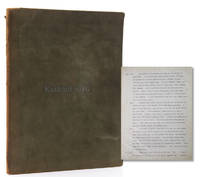
Large format loose leaf paper binder with string tie containing four page descriptive text and six loose leaf pages with tipped in full color prints on each. The prints are different sizes but all similar to the first, which measures 8 1/2 " X 8 1/2". Prints are as follows: The white elephant, circa 1580; An encampment scene circa 1600; Bahar falls from his horse circa 1600; Camel fight circa 1610; An imaginary meeting etween jahangir and Shah Abbas of Persia, c. 1618; A Mughal beauty C. 1640. Prints are all in excellent condition, the paper they are mounted to is age toned and an occasional corner shows some wear, the folder is stained and tattered with lots of edgewear and tears at the folds. Prints are suitable for mounting.
20131-3659452181Lap Lambert Academic Publishing 2013. Paperback. New. 200 pages. 8.66x5.91x0.46 inches. Lap Lambert Academic Publishing paperback
2013__3659452181Lap Lambert Academic Publishing 2013. Paperback. New. 200 pages. 8.66x5.91x0.46 inches. Lap Lambert Academic Publishing paperback
Mm 120x160 Collana "Off the road". Brossura editoriale di 275 pagine, in stato di nuovo. SPEDIZIONE IN 24 ORE DALLA CONFERMA DELL'ORDINE.
3659264318New. Brand new and still unused unknown
3659264318.Gpaperback. Good. Access codes and supplements are not guaranteed with used items. May be an ex-library book. paperback
The phenomenon of “gender discrimination” exists more or less in all societies of the world, irrespective of their differences in region, religion, economy, polity, education, culture, social structure and so on. The sociological studies carried out at the global level and in cross-cultural context have revealed that women in general were not considered equal to men at the social level and they were not allowed to become active partners in the processes of change and development. Like other societies/communities in the Indian subcontinent, the Kashmiri women faced certain set degree of gender-based discrimination in the traditional situation. However, as a result of cumulative effect of the processes of modernization, this situation has changed qualitatively as well as quantitatively. While the direction of this change stands towards their total development and emancipation, it has also given rise to some crucial problems for themselves. It was in the context of preceding social dynamics that this study was carried out in the Kashmir valley.<br><br>This book is based on [a] revised version of the report of an extensive empirical study carried out in Baramulla and Budgam district in 1996–1997 among 600 [approximately] selected and representative respondents; and [b] proceedings of the National Seminar in Srinagar in August 1997 [organized jointly by UNICEF, New Delhi; Jammu and Kashmir Government; and Department of Sociology, University of Kashmir] which discussed the findings of the report and prepared a set of recommendations to negate and debase the practices related to gender discrimination in the valley.<br><br>In brief, the book portrays the existing reality, in statistics and description, related to the phenomenon of gender discrimination in the Kashmir valley. Moreover, it suggests the action programme to reduce and finally negate these undesirable practices. The Title 'Gender Discrimination in the Kashmir Valley written/authored/edited by B.A. Dabla Sandeep K Nayak, Kurshid Ul Islam', published in the year 2000. The ISBN 9788121207508 is assigned to the Hardcover version of this title. This book has total of pp. 219 (Pages). The publisher of this title is Gyan Publishing House. This Book is in English. The subject of this book is Jammu and Kashmir / Women Studies. Size of the book is 14.34 x 22.59 cms Vol:-
In 4°. Pagine 222, XXXVIII carte di tavole. Brossura editoriale. Lievi macchie e bruniture. All'interno numerose tabelle ed in fine 38 tavole alcune delle quali più volte ripiegate. Buono stato di conservazione complessivo. Il testo raccoglie parte delle relazioni scientifiche della spedizione italiana diretta da Filippo De Filippi nell'Himalaya, Karakorum e Turkestan Cinese, ora Xinjiang, nel 1913-1914
ABOUT THE BOOK:- :- Good governance and Coalition Politics” is a tale of two coalition governments of Jammu and Kashmir -(PDP-Congress(2002-2008) and NC-Congress (2008-2014)- prefaced by concept and contours of Good Governance in historical and philosophical contexts. The focus was on dynamic changes in the philosophy, structure, functions and goals of governance and the triangular relationship among state, society, and citizen that evolved during the last two centauries or so. The policy frame, processes and motivation informing the decision making on important issues were subjected to similar treatment. The book laid bare contradictions between the classical model of cabinet system rooted in the principle of “joint responsibility” and supremacy of the Chief minister and its actual practice under what had come to be known as “coalition compulsions”. The political immorality and massive corruption in public life that it spawned demanded public debate for urgent and comprehensive system correctives. ABOUT THE AUTHOR:- :- M.M. Khajooria, a product of National Police Academy, retired as Director General of Jammu & Kashmir Police. An administrator with wide and varied experience he was the first IPS officer to be appointed as Commissioner of a Division and State Relief & Rehabilitation Commissioner. He also served as Director General Transport and head of the J&K Prison Department. Since retirement from Indian Police Service, he remained involved in social and intellectual activities. He is a columnist of repute, a recognised security analyst, an eminent seminarian and distinguished Media person. He has done extensive study on various dimensions of governance and similarly treated politico-strategic developments in Jammu & Kashmir, Pakistan, Afghanistan and Central Asia. Human resource development, organizational restructuring, and Good governance are some of the subjects closet to his heart. His recent book “Pakistan Under Army Rule' has attracted wide readership CONTENTS:- :- Preface 9 PART: 1 GOOD GOVERNANCE 1. The Concept and Contours of Governance? 15 2. Public Administration 27 3. Public Accountability 35 PART: 2 Coalition Governments in Jammu and Kashmir 45 Rise and fall of PDP-Congress Coalition (2002-2008) 49 Performance Monitor 59 1. J&K ASSEMBLY polls; Elections with High Stakes 59 2. Restoration of Vital Institutions; the foremost challenge before ruling combine in J&K 64 3. A coalition “Made in Delhi” 70 4. 222 Days of Mufti Government 75 5. Good Governance; How Many More Miles to Go? 83 6. The Bus Service Across LoC 89 7. Coping with Earth Quake Fall Out 93 8. Time to Stop Quarrelling and Start Governing 100 9. Transforming Administrative Chaos into Good Governance 104 10. An Economic Survey; Congress Forced on the Back foot 107 Performance Evaluation 111 1. Return of ‘Kashmiri Pandit’ Migrants 112 2. Peace Process 117 3. Education 120 4. Discrimination against Jammu 121 6. The “Roshni” Act 125 7. Fiscal Management 132 PART: 3 Governor’s Rule 137 1. The “Bum Bum Bholey” Upsurge 140 2. The Bogey of Economic Blockade 146 3. “Muzaffarabad Chalo” 148 PART: 4 National Conference-Congress Coalition at the Helm 153 1. Expectations 157 2. 157 3. Handicaps 158 4. Journey Towards Normalcy 161 5. Armed Forces Special Powers Act 168 6. The Saga of Stone Pelting 172 7. Panchayat Elections 180 8. The Report Card 184 (a) Employment 188 (b) Trust Deficit 188 (c) Achievements 191 (d) Conclusion 192 (e) Epilogue 193 Appendices 195 (A) Common Minimum Programme for Congress-PDP Coalition Government (2002-08) (B) A Background Note on the Diversion of Forest Land to Shri Amarnath Ji Shrine Board (Jun-25-2008) (C) Joint Statement signed by Governor's Adviser and Convener SAYSS dated 31 Aug 2008 (D) Prime Ministers' Package for Return and Rehabilitation of Kashmiri migrants (June 2008). (E) The Jammu and Kashmir State Lands (Vesting of Ownership to the Occupants) Act, 2001 (F) The Jammu and Kashmir State Lands (Vesting of Ownership to the Occupants) Rules, 2007 (G) ‘Kashmir Observer', March 09, 2014 (H) ‘Nation’ March 10, 2014 Index 233 The Title 'Good Governance and Coalition Politics : Pdp-Congress in Jammu & Kashmir written/authored/edited by M.M. Khajooria', published in the year 2016. The ISBN 9789351281184 is assigned to the Hardcover version of this title. This book has total of pp. 244 (Pages). The publisher of this title is Kalpaz Publications. This Book is in English. The subject of this book is Political Science / Jammu & Kashmir. Size of the book is 14.34 x 22.59 cms Vol:-
Sm. 8vo., First Edition, endpapers lightly browned; cloth gilt, gilt back, uncut, covers a trifle age-marked else a sound, clean copy. Published as a companion to the bird volumes of 'The Fauna of British India' . Scarce
ABOUT THE BOOK:- It is a spiritual primer book of both the writers (Dr. Raj Kumar & Miss Ramiyan Bhardwaj). To write down this book ‘History and Kashmir Politics’ is to conquering death with art of writings the dalit identity = Chamar thought, as an idea of happiness as a progressive measure to elaborate the story of Scientific Knowledge and study of composition of Dalit race. ABOUT THE AUTHOR:- Dr. Raj Kumar is a prolific writer and has elaborate the will of God in his study along with co-writer Miss Ramiyan Bhardwaj. She is doing M.A. in “Mass Communication & New media”. Central University of Jammu (J&K State) as an efficient scholar of State (India). CONTENTS:- Acknowledgement . 7 Foreword . 9 Preface . 11 Introduction . 13 1. The Prophet Muhammad (Part - One) . 17 2. Jammu and Kashmir State: Geo-political Overview (Part - Two) . 27 3. Formation of Jammu and Kashmir State = Old View and New Ideology = Chamar Thought; Past and Present or Infinite Knowledge . 39 4. Political Awakening in Kashmir K.S. Sexsana ke Kitab (Published in 1973 Foreword by Dr. Karan Singh Brahmin - Rajput) . 43 5. Political Awakening in Jammu = Advocate Meher Chand Mahajan ke Soch . 49 6. Instrument of Accession=New Constitution of India and Dalit History of the State . 57 7. Special Status, Article 370 of the Indian Constitution and Presidential Order of 1954 = Old Chapter of “Kashmir Issue” .63 8. Permanent Residents of Jammu and Kashmir and their Rights = Dalit Literature . 69 9. Constitution of Jammu and Kashmir as Especial Status for Dalits (Jammu) . 79 10. Directive Principles of State Politics . 85 11. Panchayati Raj in Jammu and Kashmir . 89 12. Governor of Jammu and Kashmir State = Animal Culture . 97 13. Chief Minister and Council of Ministers . 105 14. State Legislature . 113 15. Judicial System of Jammu and Kashmir . 119 16. Party System in Jammu and Kashmir = Progressive Idea Dalit-literature . 123 17. Politics of Resettlement for Displacement People After 1947 of New History (Jammu & Kashmir. A Victim) . 131 18. Ladakh Region: Demands and Politics with Special Reference to Hill Council of Sudra Concept as Elevated Race . 135 19. Regional Demand and Politics = Idea of Development in History (1947 to 2017) and Study the Book of Miss Ramiyan Bhardwaj (“Studies in Kashmir Politics = Brahminmat” . 143 Appendices . 157 Index . 197 The Title 'History and Kashmir Politics (1947-2017) written/authored/edited by Raj Kumar, Ramiyan Bhardwaj', published in the year 2018. The ISBN 9789386397799 is assigned to the Hardcover version of this title. This book has total of pp. 210 (Pages). The publisher of this title is Kalpaz Publications. This Book is in English. The subject of this book is Political Science / Jammu and Kashmir. Size of the book is 14.34 x 22.59 cms Vol:-
This book on Kashmir titled History of Kas'mira (Kashmir) is his ten years research and writing effort, which covers many facets of Kas'mira (Kashmir) Aryans, Naga's, Evolution, Rulers from Ancient times, Religious Beliefs/Worship, Religious Era's, Aberrations in Kalhan's Rajatarangiri and Goddesses of Kas'mira (Kashmir). The contents are all that what we must know about Kas'mira; triumphs, travails, origins and various facets of history Brigadier Kaul was the one to bring, for the first time, latest photograph of more than 1000 years old Sharda Temple in Pakistan Occupied Kashmir and share it with Goddess Sharda's worshippers in India.These are not the triumphs and travails of Aryan Saraswat Brahmins of Kas'mira {Kashmir}, commonly referred to as Bhatta or now Kashmiri Pandit, but transition of Aryan Saraswat community as a whole through millenniums of religious philosophies, search of identity, Gotra orientation, honorific's; Bhatta and Pandit and selective surnames. This medium intends to remind of Aryan roots, genesis of specific names and surnames, honorific, with details, to give insight of that era, before these pass into oblivion. Not much is known correctly about the rulers of Kas'mira except what has been mentioned in Kalhan's Rajatarangini, which in any case covers period upto 1150 AD only. Though there have been some other chronicles, most of them except that of Jonaraja fell short of expectations. Even both these did not cover our origins, roots, settlements, religious beliefs, transition during the second millennium. Rulers are responsible for shaping the destiny of their subjects, the book covers this aspect and analyses their effort in shaping Kas'mira. A composite compendium of all what we should know of Kas'mira over the last over five millenniums, including events that shaped life in the beautiful valley of Sage Kashyap, land of Vitasta River and what Kalhan mentioned: “There even to this day drops of sandal ointment offered by the Gods are to be seen at Nandikshetra, the residence of Shiva. About The Author:- ”Brigadier Rattan Kaul was born in Srinagar and had his schooling there. He joined Army and was commissioned in 4/5 Gorkha Rifles (Frontier Force) and took part in 1965 and 1971 War. During Bangladesh War 1971, he was seriously injured in the Battle of Sylhet. In 1974 he was amongst top ten officers (Competitive Vacancy) to be selected for Staff College at Wellington. He was promoted to Brigadiers Rank in 1993. He has been commended during his Army Service by Army Chief. After his retirement he stepped into Industry and served as Vice President, Birla's. An HRD, Management and Defence Analyst, he has many books on military history and plethora of articles on History, Defence Concepts and Kashmir Centric papers to his credit. Contents:- Contents, Foreword 13, Preface 17, Acknowledgements 19, 1. Aryans-Immigration To Kas’mira to Saraswat Brahmins 23, Libraries and Ancient Literature-Curiosity for the Past; Original, Place of Aryans-Route of Immigration, Religious Development, and Evolution of Vedas-Arya-Aryan Saraswat Brahmin, Honorific-Caste System among Aryans-Aryan Immigration to, Kas’mira–Aryan Entry into Kas’mira-Gotra Genesis and, Orientation-Aryans and Kas’mira-Proliferation of Gotra’s in, Kas’mira-Dattatreya Legend-Earliest Settlers and Dating of, Settlements-Earliest Settlers-Dating of Early Human Settlements, in Kas’mira-Saraswat Bhatta’s of Kas’mira and Surnames-, Saraswat Bhattas-Surnames-Kaula or Kaul From Shakta, Worship-Shaivite Roots for Surnames-Surname Kaul-Changes, in Surnames Mid 14th Century Onwards-Other Surnames., 2. Kas’mira in Nilamat Puranam 51, Kas’mira in Nilamat Puranam-The Vale of Gods–Kas’mira-Nilamat, Puranam-Pre BC Authorship-AD Effort-Kas’mira.-Kas’mira, Name, Sacred Rivers Sindhu, Vitasta (Wyeth, Jhelum)-Kas’mira, Name-Sindhu River(s)-Vitasta-Vitasta Through Meilleniums-, Jhelum-Name Wyeth (Also Vyath)-The Legends of, Mahapadamsar (Wular Lake)-Mahapadamsar (Wular Lake)-, Legend Narrated to Zaina-ul-Abidin-Potters Legend-Bosangiri, Legend-Mahapadamsar to Wular, Archaelogical and Geological, Finds. Mahapadamsar Name Dating from Nilamat Puranam-, Temples and Architectural Remains in Mahapadamsar-Geological, Indicators-Dating of Events-Early Human Settlements in, Kas’mira-Evolution of Vitasta, Chronology of Mahapadamsar, and Dating of Settlements-Evolution of Vitasta-Physical Features, of Mahapadamsar (Wular Lake)-Evolution of Mahapadamsar, 8 History of Kas’mira, (Wular Lake)-Chronology of Mahapadamsar (Wular Lake)-, Nilamat and Kas’mira., 3. Ancient, Hindu Rule and Advent of Islam 91, Ancient Rule-Chronology of Early Settler Kings-Pre Historic –, 500 BC-Ashoka and Early AD Era-Hindu Rule-Hindu Dynasties-, Karkota Dynasty (631-855 AD)-Utpala Dynasty (855-939 AD)-, Gupta Dynasty (950-1003 AD)-Lohara Dynasty (1003-1273 AD)-, Later Period-Lohara Dynasty-First Kasmirian Brahman King and, After (1273-1320 AD)-Advent of Islam-Rinchen and Shahmiri, Dynasty (1324–1555 AD-Advent of Islam-Bul Bul Shah and, Rinchen-Shah Mir-Sikandar-Suha Bhatta-Ali Shah and Shah-e-, Hamdan-Sultan Zain-ul-Abidin–Badshah-Return, Conversions, and Exodus-Return : Gratis Shriya Bhatta (Shri Bhat)-Transition, During Benevolent Rule. Mir Shams-ud-din Iraqi and Musa, Raina-Conversions and Killings-Exodus-Role of Convertee, Brahmins-Sayyids, Intrinsic Civil War and End of Shahmiri, Dynasty-Sayyids-Downfall of Sayyids-Intrinsic Civil War-Forays, by Babar and Sher Shah Suri-Mirza Haider Dughlat’s Moghul, Invasion, Chaks and Magrays-End of Shahmiri Dynasty-Bhattas, During Civil War-Chak Rule 1555-1586 AD-Chak Clans-Chak, Rulers-Yusuf Shah Chak-Yousuf Shah Deposed-Moghul Forces, Defeated-Moghuls Again Invade Kas’mira-Final Farewell of, Yousuf Shah Chak-Chak Rule-Oh God : Move Back Again., 4. Moghul, Afghan and Sikh Rule 139, Moghul Rule-Star Ancestors Under Akbar and later Moghuls-, Pandit Honorific: Kashmiri Pandit (KP) Born-Pandit Honorific, Usage-Later Moghuls-End of Moghul Rule-Kashmiri Pandit, Delegation to Guru Tegh Bahadur-Pandits Under Moghuls-, Kashmiri Pandits in Moghul Court-Moghuls and Kashmiri, Muslims-Moghul Rule on the Wane-Afghans on the Scene–, Afghan Rule (1753-1819 AD)-Raja Sukh Jiwan-Fall of Sukh Jiwan-, Rise of Pandit Kailash Dhar-Kailash Dhar Murdered-Rise and, Murder of Pandit Dila Ram-Rise of Nand Ram Tiku-Recognition, to Pandit Sahaj Ram Dhar-Pandit Nand Ram Tiku as Diwan of, Kabul-Unrest and Rebellion in Kabul and Effects in Kas’mira-, Pandit Sahaj Ram Dhar as Diwan-Maharaja Ranjit Singh of, Punjab Enters the Scene-Sikh Army’s Second Foray into, Kas’mira-Pandit Mission to Maharaja Ranjit Singh-Kas’mira, Passes to Sikh Kingdom-Under Afghans-Sikh Rule (June 1819-, June 1846)-Sikh Rule and Hari Singh Nalwa-Sikh Rule on, Downslide-Assesment of Sikh Rule., CONTENTS:- 9, 5. Dogra Rule 169, Raja Gulab Singh of Jammu-Suraya Vanshi Jamwal Rajput Ruling, Clan-Rise of Gulab Singh–Expeditions of General Zorawar Singh-, Paddar and Ladakh–Zorawar Conquers Baltistan for Gulab Singh-, Death of Maharaja Ranjit Singh and Turmoil in Sikh Durbar-, Dogra Expedition to Tibet and Treaty of Chushul-Sikh Durbar-, Killings, Intrigues, Reprisals and on way to Subjugation–Events, to Anglo-Sikh War and Treaties of Amritsar/Lahore–First Anglo-, Sikh War-Raja Gulab Singh and Peace Negotiations–Intrigues, and Lahore/Amritsar Treaties-Treaty of Amritsar-Raja Gulab, Singh and Sikh Durbar-1809 to 26 February 1946-Gulab Singh, (1846-56)- Maharaja Gulab Singh’s Reign-British Efforts to have, British Resident-Maharaja’s Welfare Measures-Abdication–, Ranbir Singh (1856-1885)–Ranbir Singh-Re-conquest of Gilgit-, Ranbir Penal Code and Other Measures–Proposals to Reconvert, Muslims–Pandits Under Dogra Rule–Pratap Singh (1885-1925)–, Pratap Singh and British Resident-Control of Chitral and Gilgit, by British–Pratap Singh Restored to the throne-Modernisation, of the State Infrastructure and Systems-Assessment of Pratap, Singh’s Reign-Hari Singh’s Reign (1925-1949)-Hari Singh-Views, on Indian Independence–Democratic/Electoral Reforms-Ceding, of Gilgit-Social and Welfare Measures–Quit Kashmir Movement-, Pakistani Invasion and Accession to India-End of Dogra Rule–, Assessment of Dogra Rule., 6. Religious Worship Eras 213, Kas’mira-Abodeof Gods, Evolution and Dating Inhabitants-, The Abode of Gods-Original Inhabitants of Bharatvarsha and, Aryans-Development of Aryan Scriptures-Dating Earliest, Inhabitants of Kas’mira-Aryan Arrival in Kas’mira-Vedic Religion, and Vedic Gods/Goddesses-Rig Vedic, Brahmanic and Later, Vedic Period-Vedas-Vedic Literature-Vedic Religion-Importance, of Some Vedic Gods-Origin of Saraswats-Nilamat Puranam and, Religion in Kas’mira-Nilamat Puranam-Veda Connection of, Nilamat Puranam-Rituals of Nilamat Puranam-Religious, Philosophy Contents-Gods and Goddesses of Nilamat-Earliest, Religion of Kas’mira-Aboriginal (Neolithic) Beliefs-Naga, Worship Rituals-Religious Eras of Kas’mira-Eras-Vaishnavite, Brahmanism-Progress till 9th Century-Spread of Buddhism-, Buddhism on Wane-Shiva Worship in Kas’mira-Shakta Worship-, Trika-Tantra-Patronage by Rulers During Later Centuries-, Transitions in Religious Worship-Priests and Rituals in Kas’mira-, Sakayas of Buddhism-Role of Agraharas, Sadaks (Preachers)-, Intrigue by Priests-Bhasha Bhatta or Bhacha Bhatta., 10 History of Kas’mira, 7. Goddess Bhadrakali Worship 243, Goddesses as Devi, Durga and Bhadrakali-Manifestation of, Goddesses in Bharatvarasha and Kas’mira-Goddess Durga-, Goddess Bhadrakali-Bhadrakali Worship in Kas’mira-Bhadrakali, Worship Days-Kali (Mahakali) Worship in Kas’mira-Kul Devis-, Bhadrakali as Kul Devi-Goddess Bhadrakali’s Abodes in, Kas’mira-Upto 12th Century AD-Religious Lore-Svayambhu,, Abhinav Gupta Connection-Bhadrakal Later Centuries-Sage of, Bhadrakal-As I knew Sage of Bhadrakal., 8. Manifestation of Kul Devis 267, Manifestation of Gods/Goddesses in Bharatvarasha and, Kas’mira-Gods and Goddesses-Manifestation of Kul Devis-Kul, Devi Forms-Firming of Kul Devi Worship-Kul Devis-Devi, Rahasya-Kul Devis-Chakreshwari (Sharika)-Raghnya (Tul Mul,, Kheer Bhawani)-Tripursundari (Bala Tripursundari, Tripura)-, Jwala-Shailputri (Devi Bal, Nag Bal)-Baramulla (Varahamulla,, Varhakshetra) Bhadrakali as Kul Devi-Kali (Mahakali) Worship, in Kas’mira-Other Goddesses., 9. Goddess Sharda of Kas’mira 291, Mother’s Grace (Mahima), Sharda Mahatmaya and Grandeur-, Mahima (Grace) of Mother Sharda-Temple of Goddess Sharda-, Sharda Mahatmaya-Grandeur of the Sharda Temple-Sanctum, Sanctorum-Sri Chakra Inscription at Sharda Temple Sanctum, Sanctorum-Narda Linkage to Temple Construction-Historical, Evaluation, Shakti Roop, Lore and Pilgrimage Routes-Historical, Evaluation of Sharda Temple-Ram and Krishna Lore-Sindhu, Ganga, Kishanganga, Madhumati and Saraswati-Pilgrimage Later, Centuries-Sharda Pilgrimage Accounts-Gangabal and Sharda, Tirath Together-Sharda Temple Connection to Buddhism and, Karnah Artefacts-Sharda Script, Myths, Adi-Shankara and, Sharda Peeth-Sharda Language and Sharda Script-Adi, Shankara’s Visit to Kas’mira, Sharda Temple and Authorship of, Scriptures-Adi-Shankara’s Visit: Facts and Fiction-Sharda Peeth, Honours-Adoption of Sri Chakra-Sharda Desh and Sharda, Peeth-Panchastavi and Saundarya Lahiri-The Southern Influence, Indicators-Epilogue., 10. Era Abberations in Kalhan’s Rajatarangini 335, Rajatarangini–Style, Sources and General Contents-Rajatarangini, Style and Sources-General Contents-Eras mentioned by Kalhan-, Scope-Origin of Various Eras/Calendars-Eras/Calendars-Relevant, Acceptance of Kali, Laukika and Saka Samvats by Kalhan-, Aberration in Dates-Dates of Mahabharata War-Kalhan’s, CONTENTS:- 11, Assertion Sapatrishis (Munis) in Maghah Nakshatra in 2526, Saka Era (653 Kali Samvat Laukika Era 628)-Yudishthir’s, Coronation Dates by Kalhan-Mystery of Kali Samvat 653/2526, Pre Saka Samvat-Erroneous Dating of Gonanda I and, Chronology-Gonanda I-Chronology-Bharata War (Mahabharata), Dates Mix Up-Lost Kings–King Ashoka and Kanishka-Reign, and Era-Kings Abhimanyu to Baladitya and Thereafter-Mystery, of 25 Years Difference in Taranga 4-Other Misinterpretations., Index 353 The Title 'History of Kas'Mira (Kashmir) written/authored/edited by Brig.(Retd.) Rattan Kaul', published in the year 2018. The ISBN 9788121214353 is assigned to the Paperback version of this title. This book has total of pp. 359 (Pages). The publisher of this title is Gyan Publishing House. This Book is in English. The subject of this book is History / Jammu and Kashmir. Size of the book is 13.34 x 21.59 cms Vol:-
This book on Kashmir titled History of Kas'mira (Kashmir) is his ten years research and writing effort, which covers many facets of Kas'mira (Kashmir) Aryans, Naga's, Evolution, Rulers from Ancient times, Religious Beliefs/Worship, Religious Era's, Aberrations in Kalhan's Rajatarangiri and Goddesses of Kas'mira (Kashmir). The contents are all that what we must know about Kas'mira; triumphs, travails, origins and various facets of history Brigadier Kaul was the one to bring, for the first time, latest photograph of more than 1000 years old Sharda Temple in Pakistan Occupied Kashmir and share it with Goddess Sharda's worshippers in India.These are not the triumphs and travails of Aryan Saraswat Brahmins of Kas'mira {Kashmir}, commonly referred to as Bhatta or now Kashmiri Pandit, but transition of Aryan Saraswat community as a whole through millenniums of religious philosophies, search of identity, Gotra orientation, honorific's; Bhatta and Pandit and selective surnames. This medium intends to remind of Aryan roots, genesis of specific names and surnames, honorific, with details, to give insight of that era, before these pass into oblivion. Not much is known correctly about the rulers of Kas'mira except what has been mentioned in Kalhan's Rajatarangini, which in any case covers period upto 1150 AD only. Though there have been some other chronicles, most of them except that of Jonaraja fell short of expectations. Even both these did not cover our origins, roots, settlements, religious beliefs, transition during the second millennium. Rulers are responsible for shaping the destiny of their subjects, the book covers this aspect and analyses their effort in shaping Kas'mira. A composite compendium of all what we should know of Kas'mira over the last over five millenniums, including events that shaped life in the beautiful valley of Sage Kashyap, land of Vitasta River and what Kalhan mentioned: “There even to this day drops of sandal ointment offered by the Gods are to be seen at Nandikshetra, the residence of Shiva. About The Author:- ”Brigadier Rattan Kaul was born in Srinagar and had his schooling there. He joined Army and was commissioned in 4/5 Gorkha Rifles (Frontier Force) and took part in 1965 and 1971 War. During Bangladesh War 1971, he was seriously injured in the Battle of Sylhet. In 1974 he was amongst top ten officers (Competitive Vacancy) to be selected for Staff College at Wellington. He was promoted to Brigadiers Rank in 1993. He has been commended during his Army Service by Army Chief. After his retirement he stepped into Industry and served as Vice President, Birla's. An HRD, Management and Defence Analyst, he has many books on military history and plethora of articles on History, Defence Concepts and Kashmir Centric papers to his credit. Contents:- Contents, Foreword 13, Preface 17, Acknowledgements 19, 1. Aryans-Immigration To Kas’mira to Saraswat Brahmins 23, Libraries and Ancient Literature-Curiosity for the Past; Original, Place of Aryans-Route of Immigration, Religious Development, and Evolution of Vedas-Arya-Aryan Saraswat Brahmin, Honorific-Caste System among Aryans-Aryan Immigration to, Kas’mira–Aryan Entry into Kas’mira-Gotra Genesis and, Orientation-Aryans and Kas’mira-Proliferation of Gotra’s in, Kas’mira-Dattatreya Legend-Earliest Settlers and Dating of, Settlements-Earliest Settlers-Dating of Early Human Settlements, in Kas’mira-Saraswat Bhatta’s of Kas’mira and Surnames-, Saraswat Bhattas-Surnames-Kaula or Kaul From Shakta, Worship-Shaivite Roots for Surnames-Surname Kaul-Changes, in Surnames Mid 14th Century Onwards-Other Surnames., 2. Kas’mira in Nilamat Puranam 51, Kas’mira in Nilamat Puranam-The Vale of Gods–Kas’mira-Nilamat, Puranam-Pre BC Authorship-AD Effort-Kas’mira.-Kas’mira, Name, Sacred Rivers Sindhu, Vitasta (Wyeth, Jhelum)-Kas’mira, Name-Sindhu River(s)-Vitasta-Vitasta Through Meilleniums-, Jhelum-Name Wyeth (Also Vyath)-The Legends of, Mahapadamsar (Wular Lake)-Mahapadamsar (Wular Lake)-, Legend Narrated to Zaina-ul-Abidin-Potters Legend-Bosangiri, Legend-Mahapadamsar to Wular, Archaelogical and Geological, Finds. Mahapadamsar Name Dating from Nilamat Puranam-, Temples and Architectural Remains in Mahapadamsar-Geological, Indicators-Dating of Events-Early Human Settlements in, Kas’mira-Evolution of Vitasta, Chronology of Mahapadamsar, and Dating of Settlements-Evolution of Vitasta-Physical Features, of Mahapadamsar (Wular Lake)-Evolution of Mahapadamsar, 8 History of Kas’mira, (Wular Lake)-Chronology of Mahapadamsar (Wular Lake)-, Nilamat and Kas’mira., 3. Ancient, Hindu Rule and Advent of Islam 91, Ancient Rule-Chronology of Early Settler Kings-Pre Historic –, 500 BC-Ashoka and Early AD Era-Hindu Rule-Hindu Dynasties-, Karkota Dynasty (631-855 AD)-Utpala Dynasty (855-939 AD)-, Gupta Dynasty (950-1003 AD)-Lohara Dynasty (1003-1273 AD)-, Later Period-Lohara Dynasty-First Kasmirian Brahman King and, After (1273-1320 AD)-Advent of Islam-Rinchen and Shahmiri, Dynasty (1324–1555 AD-Advent of Islam-Bul Bul Shah and, Rinchen-Shah Mir-Sikandar-Suha Bhatta-Ali Shah and Shah-e-, Hamdan-Sultan Zain-ul-Abidin–Badshah-Return, Conversions, and Exodus-Return : Gratis Shriya Bhatta (Shri Bhat)-Transition, During Benevolent Rule. Mir Shams-ud-din Iraqi and Musa, Raina-Conversions and Killings-Exodus-Role of Convertee, Brahmins-Sayyids, Intrinsic Civil War and End of Shahmiri, Dynasty-Sayyids-Downfall of Sayyids-Intrinsic Civil War-Forays, by Babar and Sher Shah Suri-Mirza Haider Dughlat’s Moghul, Invasion, Chaks and Magrays-End of Shahmiri Dynasty-Bhattas, During Civil War-Chak Rule 1555-1586 AD-Chak Clans-Chak, Rulers-Yusuf Shah Chak-Yousuf Shah Deposed-Moghul Forces, Defeated-Moghuls Again Invade Kas’mira-Final Farewell of, Yousuf Shah Chak-Chak Rule-Oh God : Move Back Again., 4. Moghul, Afghan and Sikh Rule 139, Moghul Rule-Star Ancestors Under Akbar and later Moghuls-, Pandit Honorific: Kashmiri Pandit (KP) Born-Pandit Honorific, Usage-Later Moghuls-End of Moghul Rule-Kashmiri Pandit, Delegation to Guru Tegh Bahadur-Pandits Under Moghuls-, Kashmiri Pandits in Moghul Court-Moghuls and Kashmiri, Muslims-Moghul Rule on the Wane-Afghans on the Scene–, Afghan Rule (1753-1819 AD)-Raja Sukh Jiwan-Fall of Sukh Jiwan-, Rise of Pandit Kailash Dhar-Kailash Dhar Murdered-Rise and, Murder of Pandit Dila Ram-Rise of Nand Ram Tiku-Recognition, to Pandit Sahaj Ram Dhar-Pandit Nand Ram Tiku as Diwan of, Kabul-Unrest and Rebellion in Kabul and Effects in Kas’mira-, Pandit Sahaj Ram Dhar as Diwan-Maharaja Ranjit Singh of, Punjab Enters the Scene-Sikh Army’s Second Foray into, Kas’mira-Pandit Mission to Maharaja Ranjit Singh-Kas’mira, Passes to Sikh Kingdom-Under Afghans-Sikh Rule (June 1819-, June 1846)-Sikh Rule and Hari Singh Nalwa-Sikh Rule on, Downslide-Assesment of Sikh Rule., CONTENTS:- 9, 5. Dogra Rule 169, Raja Gulab Singh of Jammu-Suraya Vanshi Jamwal Rajput Ruling, Clan-Rise of Gulab Singh–Expeditions of General Zorawar Singh-, Paddar and Ladakh–Zorawar Conquers Baltistan for Gulab Singh-, Death of Maharaja Ranjit Singh and Turmoil in Sikh Durbar-, Dogra Expedition to Tibet and Treaty of Chushul-Sikh Durbar-, Killings, Intrigues, Reprisals and on way to Subjugation–Events, to Anglo-Sikh War and Treaties of Amritsar/Lahore–First Anglo-, Sikh War-Raja Gulab Singh and Peace Negotiations–Intrigues, and Lahore/Amritsar Treaties-Treaty of Amritsar-Raja Gulab, Singh and Sikh Durbar-1809 to 26 February 1946-Gulab Singh, (1846-56)- Maharaja Gulab Singh’s Reign-British Efforts to have, British Resident-Maharaja’s Welfare Measures-Abdication–, Ranbir Singh (1856-1885)–Ranbir Singh-Re-conquest of Gilgit-, Ranbir Penal Code and Other Measures–Proposals to Reconvert, Muslims–Pandits Under Dogra Rule–Pratap Singh (1885-1925)–, Pratap Singh and British Resident-Control of Chitral and Gilgit, by British–Pratap Singh Restored to the throne-Modernisation, of the State Infrastructure and Systems-Assessment of Pratap, Singh’s Reign-Hari Singh’s Reign (1925-1949)-Hari Singh-Views, on Indian Independence–Democratic/Electoral Reforms-Ceding, of Gilgit-Social and Welfare Measures–Quit Kashmir Movement-, Pakistani Invasion and Accession to India-End of Dogra Rule–, Assessment of Dogra Rule., 6. Religious Worship Eras 213, Kas’mira-Abodeof Gods, Evolution and Dating Inhabitants-, The Abode of Gods-Original Inhabitants of Bharatvarsha and, Aryans-Development of Aryan Scriptures-Dating Earliest, Inhabitants of Kas’mira-Aryan Arrival in Kas’mira-Vedic Religion, and Vedic Gods/Goddesses-Rig Vedic, Brahmanic and Later, Vedic Period-Vedas-Vedic Literature-Vedic Religion-Importance, of Some Vedic Gods-Origin of Saraswats-Nilamat Puranam and, Religion in Kas’mira-Nilamat Puranam-Veda Connection of, Nilamat Puranam-Rituals of Nilamat Puranam-Religious, Philosophy Contents-Gods and Goddesses of Nilamat-Earliest, Religion of Kas’mira-Aboriginal (Neolithic) Beliefs-Naga, Worship Rituals-Religious Eras of Kas’mira-Eras-Vaishnavite, Brahmanism-Progress till 9th Century-Spread of Buddhism-, Buddhism on Wane-Shiva Worship in Kas’mira-Shakta Worship-, Trika-Tantra-Patronage by Rulers During Later Centuries-, Transitions in Religious Worship-Priests and Rituals in Kas’mira-, Sakayas of Buddhism-Role of Agraharas, Sadaks (Preachers)-, Intrigue by Priests-Bhasha Bhatta or Bhacha Bhatta., 10 History of Kas’mira, 7. Goddess Bhadrakali Worship 243, Goddesses as Devi, Durga and Bhadrakali-Manifestation of, Goddesses in Bharatvarasha and Kas’mira-Goddess Durga-, Goddess Bhadrakali-Bhadrakali Worship in Kas’mira-Bhadrakali, Worship Days-Kali (Mahakali) Worship in Kas’mira-Kul Devis-, Bhadrakali as Kul Devi-Goddess Bhadrakali’s Abodes in, Kas’mira-Upto 12th Century AD-Religious Lore-Svayambhu,, Abhinav Gupta Connection-Bhadrakal Later Centuries-Sage of, Bhadrakal-As I knew Sage of Bhadrakal., 8. Manifestation of Kul Devis 267, Manifestation of Gods/Goddesses in Bharatvarasha and, Kas’mira-Gods and Goddesses-Manifestation of Kul Devis-Kul, Devi Forms-Firming of Kul Devi Worship-Kul Devis-Devi, Rahasya-Kul Devis-Chakreshwari (Sharika)-Raghnya (Tul Mul,, Kheer Bhawani)-Tripursundari (Bala Tripursundari, Tripura)-, Jwala-Shailputri (Devi Bal, Nag Bal)-Baramulla (Varahamulla,, Varhakshetra) Bhadrakali as Kul Devi-Kali (Mahakali) Worship, in Kas’mira-Other Goddesses., 9. Goddess Sharda of Kas’mira 291, Mother’s Grace (Mahima), Sharda Mahatmaya and Grandeur-, Mahima (Grace) of Mother Sharda-Temple of Goddess Sharda-, Sharda Mahatmaya-Grandeur of the Sharda Temple-Sanctum, Sanctorum-Sri Chakra Inscription at Sharda Temple Sanctum, Sanctorum-Narda Linkage to Temple Construction-Historical, Evaluation, Shakti Roop, Lore and Pilgrimage Routes-Historical, Evaluation of Sharda Temple-Ram and Krishna Lore-Sindhu, Ganga, Kishanganga, Madhumati and Saraswati-Pilgrimage Later, Centuries-Sharda Pilgrimage Accounts-Gangabal and Sharda, Tirath Together-Sharda Temple Connection to Buddhism and, Karnah Artefacts-Sharda Script, Myths, Adi-Shankara and, Sharda Peeth-Sharda Language and Sharda Script-Adi, Shankara’s Visit to Kas’mira, Sharda Temple and Authorship of, Scriptures-Adi-Shankara’s Visit: Facts and Fiction-Sharda Peeth, Honours-Adoption of Sri Chakra-Sharda Desh and Sharda, Peeth-Panchastavi and Saundarya Lahiri-The Southern Influence, Indicators-Epilogue., 10. Era Abberations in Kalhan’s Rajatarangini 335, Rajatarangini–Style, Sources and General Contents-Rajatarangini, Style and Sources-General Contents-Eras mentioned by Kalhan-, Scope-Origin of Various Eras/Calendars-Eras/Calendars-Relevant, Acceptance of Kali, Laukika and Saka Samvats by Kalhan-, Aberration in Dates-Dates of Mahabharata War-Kalhan’s, CONTENTS:- 11, Assertion Sapatrishis (Munis) in Maghah Nakshatra in 2526, Saka Era (653 Kali Samvat Laukika Era 628)-Yudishthir’s, Coronation Dates by Kalhan-Mystery of Kali Samvat 653/2526, Pre Saka Samvat-Erroneous Dating of Gonanda I and, Chronology-Gonanda I-Chronology-Bharata War (Mahabharata), Dates Mix Up-Lost Kings–King Ashoka and Kanishka-Reign, and Era-Kings Abhimanyu to Baladitya and Thereafter-Mystery, of 25 Years Difference in Taranga 4-Other Misinterpretations., Index 353 The Title 'History of Kas'Mira (Kashmir) written/authored/edited by Brig.(Retd.) Rattan Kaul', published in the year 2014. The ISBN 9788121212106 is assigned to the Hardcover version of this title. This book has total of pp. 359 (Pages). The publisher of this title is Gyan Publishing House. This Book is in English. The subject of this book is History / Jammu and Kashmir. Size of the book is 14.34 x 22.59 cms Vol:-
The book deals with the historical survey of the state, analyses the worst of global terrorism, traces out the roots and present status about the terrorism in J&K, makes an updated and comprehensive survey about tourism in J&K till July 2005, examines the impact of terrorism on J&K tourism and latest status of tourism in J&K. About The Author:- Dr. R. Soundararajan, is Professor of History and Academic - Coordinator, Department of Tourism Management, Directorate of Distance Education, Madurai Kamaraj University. Contents:- Preface • Acknowledgements • Introduction • Historical Survey of Jammu and Kashmir • Scenario of Global Terrorism • Terrorism in Jammu and Kashmir • Tourism in Jammu and Kashmir • Impact of Terrorism on J&K Tourism • Review of Current Situation in Jammu and Kashmir • Conclusion • Appendices • Geneological Tree of Dogra Rulers in Jammu and Kashmir • Rice Varieties Cultivated in J&K • Mountains in Srinagar and Its Vicinity • Route Chart: Amarnath Ji Yatra • Srinagar-Leh Route Chart • Trekking Routes in Ladakh Region • Mountaineering in Ladakh Region • Organisational Chart of Tourism • J&K Feel Good Factor: Tourism • Road to Peace between India and Pakistan • PM's Kashmir Visit • Questionnaire • Annexures-Map • Sketch of J&K Showing Actual Positions • Map of J&K Showing International Boundary • State of J&K with Communal Groupings • State of J&K Sourced by JKLF • Tourist Places in Jammu • Tourist Places in Kashmir • Major Infiltration Routes • Tables • Area and Population: J&K State • Yatries Visiting Amarnathji and Vaishno Deviji Holi Caves • Tourists Visiting Kashmir Valley • Country-wise Number of Foreign Tourists Visiting Kashmir Valley • No. of Tourists Visiting to Ladakh Region • Graphs • Terrorist Incidents in J&K 1988-2004 • Militants Killed in J&K 1990-2004 • Attack on Security Forces • Indian Forces Killed • Attack on Civilians • Civilians Killed • Terrorists Killed • Surge in Infiltration-2004 • Yatries Visiting Vaishno Deviji Holy Cave • Tourists Visiting Kashmir Valley: Indian Tourists • Tourists Visiting Kashmir Valley: Non-Indian Tourists • Yatries Visiting Amar Nathji Holy Cave • Tourist Inflow to Ladakh Region • Bibliography • Index. The Title 'Impact of Terrorism On J&K Tourism written/authored/edited by R. Soundararajan Major P Rajan', published in the year 2006. The ISBN 9788178354743 is assigned to the Hardcover version of this title. This book has total of pp. 390 (Pages). The publisher of this title is Kalpaz Publications. This Book is in English. The subject of this book is Jammu and Kashmir / Terrorism / Defence / Tourism. Size of the book is 14.34 x 22.59 cms Vol:-
The Kashmir section of the northern boundary is the heart of India’s boundary dispute with China. That is because Ladakh, of which the contentious Aksai Chin is a significant part, and Gilgit that stretched to the Little and Taghdumbash Pamirs, are central to India’s economic, political and military interests. Over these could run a distinctly possible autobahn or even a rail road to provide India her own commercial and political access to Central Asia. But then so are Tibet and Xinjiang, along the boundary, to which roads run from Ladakh and Gilgit, central to China’s interests. Therefore the eyeball to eyeball confrontation on the boundary for 50 years. The central and eastern sectors of the northern boundary are only pawns, an ultimate trade off, for Aksai Chin when time, China feels, is propitious for her. The boundary dispute is accentuated by an escalating economic and political rivalry worldwide between the two countries. This volume debunks many notions about the boundary dispute, delves deep into its different aspects to give a blow by blow account of as to how and why a conflict arose over the boundary. So also of the cloak and dagger diplomacy of Britain in Jammu and Kashmir State from day one it was born on 16th March 1846. About The Author:- Hriday Nath Kaul post-graduated in Diplomacy and International Affairs from the Allahabad University in 1950 and joined the Press Trust of India as a trainee-journalist. As a Journalist he had ample opportunities to study the India-China boundary issue, including in Kashmkir, where he served for several years. He has extensively written on Kashmir in newspapers, notably on Anglo-Dogra relations in the 19th century, the genesis of the boundary dispute. An earlier work of his, Evolution of India's Oil Policy, was published in1990. The present volume is the first of a trilogy on Kashmir. Contents:- Northern boundary in Kashmir Evidence • Attempts To Pull Back Boundary • Search For New Boundary • Gilgit Section of Boundary • Awesome Aksai Chin Road, Desert • Shaping British Policy • Contending British, Russian, Chinese Interests • Chinese Contradictions • England's Second Thoughts over Karakoram Line • Cavilling Over Aksai Chin • Appendix I • Appendix II • Appendix III • Index The Title 'India China Boundary in Kashmir written/authored/edited by H.N. Kaul', published in the year 2003. The ISBN 9788121208260 is assigned to the Hardcover version of this title. This book has total of pp. 344 (Pages). The publisher of this title is Gyan Publishing House. This Book is in English. The subject of this book is International Studies / Jammu and Kashmir. Size of the book is 14.34 x 22.59 cms Vol:-
Book shows light wear to covers only. Binding is solid and square, covers have sharp corners, text/interior is clean and free of marking of any kind. 405 pages. Contents include: The Vedas, the Upanisads and Bhagavadgita; the study of Materialism, Jainism, Early Buddhism, Sunyavada, Vijnanavada and Svatantra Vijnanavada, the tenets of the six systems of Indian Philosophy with special reference to Sankara the pre-Sankara and the post-Sankara Vedanta, the essentials of Buddhism and Vedanta in comparison, the doctrines of Vedanta as interpreted by Ramanuja Madhva Nimbarka Vallabha Caitanya and Aurobindo. Also an exposition of Saiva Siddhanta Kashmir Saivism and Sakta Schools.
The book presents a collection of Jayaprakash Narayan’s views on Jammu & Kashmir state, expressed in press statements, public speeches and articles from pre-independence era till the late years of his life. About The Author:- Balraj Puri, a noted journalist and activist on Jammu and Kashmir Issue. Contents:- Preface • Introductory • Author's Assessment of Impact of JP on Kashmir • JP's Role in J&K before Independence • JP's Policy on Kashmir (1947-1953) • Kashmir's First Emotional Rupture with the Rest of India (1953) • Theft of Holy Relic in Kashmir • Abdullah's Release (1964) • Post-Nehru Kashmir Policy • Indo-Pak Relations • Debate on JP's Views on Kashmir • Re-Arrest of Abdullah • After Infiltration from Pakistan and War • Era of Indira Gandhi • Delhi Seminar on Kashmir • J&K People's Convention • Abdullah's Externment • Election in Kashmir • Emergency and After • Index The Title 'J.P. On Jammu and Kashmir written/authored/edited by Balraj Puri', published in the year 2005. The ISBN 9788121208598 is assigned to the Hardcover version of this title. This book has total of pp. 300 (Pages). The publisher of this title is Gyan Publishing House. This Book is in English. The subject of this book is Jammu and Kashmir / Political Science. Size of the book is 14.34 x 22.59 cms Vol:-
2003London 1929-1933. Author of "The Road to Kashmir" and others. Total seven pages 8vo 4 and 4to 1 good condition. He discusses "The Road to Kashmir" sales etc. and "A Window on Fleet Street". He discusses at length a circular relating to the latter from John Murray which he sends not present in response to Murray's request for him to send it to "good book readers and good book buyers". Wilson is "the goodest bookseller in London". Frank Mumby describes Wilson as "one of the outstanding booksellers of the day" 1956 ed. p.235. Six items London, 1929-1933. unknown
In 4° (30,5x 30,5), p. 99(9). Numerose fotografie a colori e in bianco e nero. Legatura editoriale in tela. Sovracoperta illustrata. Ottimo esemplare.
1921314728N.p. 1921. 21 interleaved pp.; typescript. 4to 11 x 8-1/2 inches. Contemporary full green reverse calf blind-stamped title to upper cover Spine worn away pale staining and toning to boards minor foxing. 21 interleaved pp.; typescript. 4to 11 x 8-1/2 inches. Typescript detailing a trip through Kashmir from August 14-October 13 1921. A "Table of Marches" appears at the end of the volume with the number of miles traversed including Srinagar to Islamabad 34 miles Khistwar to Palamir Camp 15 miles Keshwan to Hadu'll 12 miles Malshaibagh to Srinagar road 14 miles etc. Bear hunting on p. 16-18. unknown
Second Edition, revised and enlarged, 24 plates, several gatherings becoming loose, [5], vi-xxii, 448, xxxviii (index) pp., original green cloth, printed on spine and upper cover.
Kashmir Crisis: Unholy Anglo-Pak Nexus, painstakingly researched and documented, provides an exhaustive study of the history of the crisis from 1947 to 1971. The initial Chapters speak of the splendour of Hindu Kashmir, its brilliant contribution to the cultural integration of India since time immemorial; and the forcible conversion of the Hindu population to Islam starting from the beginning of the fourteenth to the mid-nineteenth century by which time nine-tenths of the Hindus had become Muslims making Kashmir a Muslim majority State. The book then proceeds to present a connected and cogent account of the ghastly events that rocked Kashmir for about a quarter of a century following her accession to India in October 1947. Britain throughout played a partisan role not only when India took the matter to the UN but also in the wars of 1947 and 1965. With conviction and clarity, the author traces the role of Britain in the Indo-Pakistan dispute on Kashmir, which was neither fair, nor honest, nor ethical. In all her acts of aggression including the unprovoked wars against India to undo the accession of Kashmir to her, Pakistan had the full cooperation and the support of Britain both openly and clandestinely. To add insult to injury, Britain chose to maintain an ominous silence over Pakistan's illegal annexations of Indian territories in Kashmir, which were named 'Azad Kashmir' and which became a hotbed of intrigue and treachery. Until the late 1960s, Britain's policy on the Kashmir crisis was to make Pakistan, the aggressor, a beneficiary at the expense of India. About The Author:- Dr. Saroja Sundararajan was Principal of colleges in Tamil Nadu and Pondicherry for more than 26 years. She was Principal, Pachaiyappa's College for Women, Kanchipuram, Smt. DKNB Vaishnav College for Women, Chennai, Avvaiyar Government College for Women, Karaikkal (Pondicherry State), Bharatidasan Government College for Women, Pondicherry and Director, Kanchi Mamunivar Centre for Post Graduate Studies, Pondicherry. She has authored eleven books most of which are on subjects demanding laborious research. Her specialization has been the history of the erstwhile composite Madras Presidency as reflected in her M.Litt., thesis on the history of Madras 1827-1842, her books S. Satyamurti: A Political Biography, Pre-Gandhian Politics in Madras Presidency 1884-1915, and March to Freedom in Madras Presidency 1916-1947. Her other publications include Sir C.P. Ramaswami Aiyar: A Biography, Glimpses of the History of Karaikkal, Pondicherry: A Profile and Indentured Labour in Mauritius and British Guiana. She had also served on the academic bodies of the Universities of Madras and Pondicherry.The laurels won by Dr. Saroja include the 1965 Population Essay Contest Award sponsored by a New Jersey Foundation, US, and the Seva Ratna Award in 1996 instituted by the Centenarian Trust in memory of Kanchi Paramacharya, in recognition of her services to the cause of Women's education. Contents:- CONTENTS:- # Preface, Acknowledgements, Acronyms Introduction, • A Retrograde Move • White Hall-Karachi Axis 1. The Hindu Kingdom Of Kashmir - Its Glorious Past, • National Integration through Sanskrit • Kalhana: Dominating Figure of Kashmir • Co-existence of Faiths 2. Hindu Kashmir Becomes Muslim Kashmir, • Muslim Inroads into Kashmir • Resumption of Fanaticism and Oppression • Sale of Kashmir 3. The Last Ruler of Kashmir, • Advent of Sheikh Abdullah • People’s Movement: Reforms to Pacify • Visits of Gandhiji and Mountbatten • Controversy over Mountbatten’s Talks with Hari Singh • Why was the Maharaja Indecisive over Accession? 4. India Dismembered, • Britain: Originator of Pakistan Concept • Jinnah’s Ire • Jinnah’s Jubilation • Bloody Massacres in Bengal and Punjab • Wavell’s Exit • Arrival of Last Viceroy of India • Radcliffe Award: Pakistan’s Misconception • Birth of the Two Dominions, 5. The First Indo-pakistan War, • Grisly Happenings: Baramulla under Siege • Maharaja’s Appeal • Attlee’s Deprecatory Response • Gallantry of Indian Forces • Maharaja Exiled • Britain’s Condemnation • Jinnah’s Outrage • Fruitless Parleys • Appeal to Security Council • Unanswered Question 6. At The Security Council, • Opening of Kashmir Issue • Tsiang’s Resolution and After • Fresh Proposals for Kashmir • Britain’s Extreme Bias for Pakistan • UNCIP in the Sub-Continent • Resolution of 13 August 1948 • UN Under Fire • A Dramatic End 7. Cease-fire in The Doldrums, • Unedifying Negotiations • Blindly Partisan • UNCIP’S Fresh Efforts • India’s Displeasure with UNCIP • UNCIP’s Final Reports • McNaughton’s Proposals: India’s Rejection • Maelstrom over Trivial Remarks • Zafrullah’s Damaging Disclosures • Time Limit for Demilitarisation 8. The Dixon Mission, • Dixon’s Visit to Sub-Continent • Failure of the Mission • Error of Judgment • Unhealthy Nexus • Fresh Outburst of Pakistani Fury 9. The Graham Mission, • An Impolitic Resolution • New Mediator’s Arrival • Failure of the Mission • The Infamous Devers Plan • Graham’s Return to Sub-Continent • Geneva Negotiations of 1953 • Graham’s Final Report 10. Road Blocks to Demilitarisation, • Bilateral Talks Go Awry • Dismissal of Abdullah: A Regrettable Necessity • US Arms Aid to Pakistan: India’s Reaction • Kashmir’s Accession Ratified • Dubious Western Pacts in Asia • India’s Distrust of Military Pacts 11. Two More Unsuccessful Un Missions, • Pakistan’s Active Role in Pacts • Two Ill-fated Resolutions • Jarring Mission • Again Graham • Abominable Lack of Knowledge 12. The Four Unproductive Years, • Transient Change in Attitudes • Revival of War Threats by Pakistan • Western Bloc’s Abortive Attempts 13. Rude Break With Age Old Relations, • The McMahon Line • China – An Insidious Enemy • China’s Unabashed Aggression • Full Dress Invasion • Avoidable Furore • Krishna Menon’s Exit 14. West’s Conditional Military Aid to India, • Kashmir Made “Core Issue” • Overconcern for Pakistan • Six Rounds of Talks • Unparalleled Tension • Kennedy’s Avowed Aim Frustrated 15. Pakistan’s Continued Belligenrence, • Patrick Dean’s Offensive Speech • Pakistan’s Debacle • A Stimulated Hatred • Censure on Government for Poor Publicity • Clash Over Rann of Kutch • Smokescreen • War Afoot • Agreement on Rann 16. The Second Pakistani Invasion of India 1965, • Miscarriage of a Marathon Move • India’s Belated Response • Defying UN Resolutions to Halt War • Wilson’s Provocative Message to Shastri • India Isolated • Escalation of war • U Thant’s Report • Cease-Fire • Renewal of Attacks 17. Tashkent and After, • Bhutto’s Degrading Melodrama • Tashkent Agreement • Normal Relations - A Mirage • Change of Guard in Pakistan • End of Estranged Relationship 18. Pakistan Dismembered, • On the Home Front • Mujib’s Six-Point Programme • A Despicable Act • Monstrous Tyranny • Mass Exodus to India • The Fifteen-Day War • Lamentable Letdown • Triumph of Justice, 19. Epilogu # Simla Agreement, I11-Conceived Kargil War, Rumination, Sri Aurbindo’s Prophecy # Bibliography # Index The Title 'Kashmir Crisis: Unholy Anglo-Pak Nexus written/authored/edited by Saroja Sundararajan', published in the year 2010. The ISBN 9788178358086 is assigned to the Hardcover version of this title. This book has total of pp. 424 (Pages). The publisher of this title is Kalpaz Publications. This Book is in English. The subject of this book is International Studies / Jammu and Kashmir. Size of the book is 14.34 x 22.59 cms Vol:-