Jamaica; Dept; Of AgricultureBiblio.com
488 résultats
1330555007.Gpaperback. Good. Access codes and supplements are not guaranteed with used items. May be an ex-library book. paperback
1527842975.Gpaperback. Good. Access codes and supplements are not guaranteed with used items. May be an ex-library book. paperback
1967990Berlin, Frankfurt a. M., Wien: Verlag Ullstein GmbH, 1967. 191 Seiten , 21 cm, Leinen
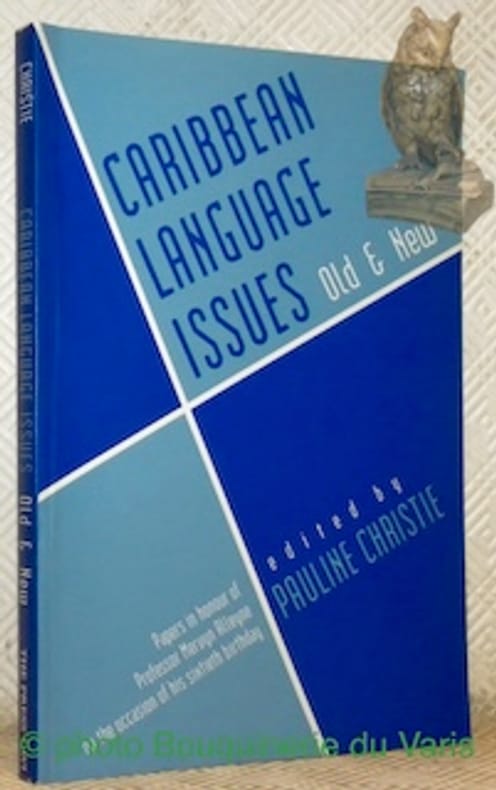
109878Barbados, The Press University of the West Indies 1996, 225x150mm, 224pages, paperback. Book in very good condition.
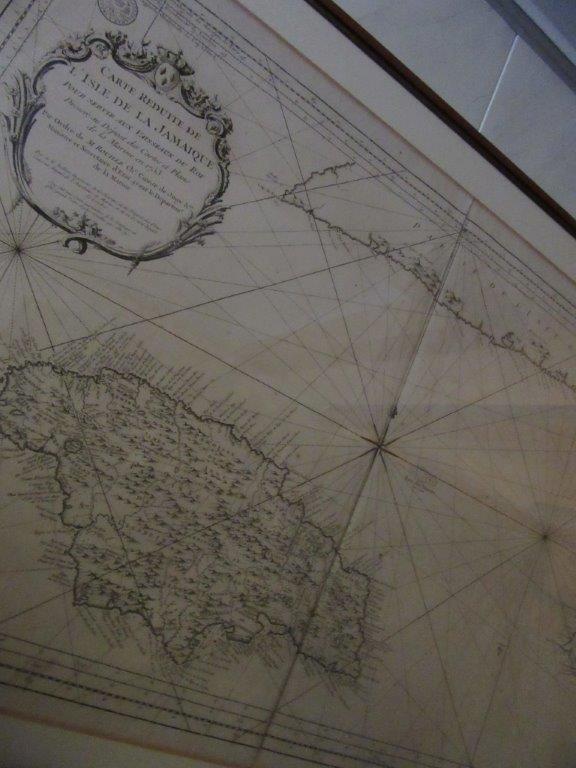
45391Dépots des Cartes et Plans de la Marine.1753.Sans réhauts de couleurs. Carte encadrée. TBE.
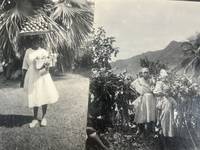
1930224461930. Caribbean and Panama travel photograph album. circa early 1930s. This album documents interwar travel through the Panama Canal Zone and Jamaica recording maritime transit canal infrastructure and rural Caribbean life as observed by Western travelers. The photographs provide primary visual evidence of the Panama Canal as a site of industrial activity and international movement alongside scenes of Jamaican village life and landscape establishing a contrast between engineered environments and colonial rural settings. The material is particularly strong in its depiction of canal operations and the presence of local populations within these spaces.<br /> <br /> Album containing 29 silver gelatin photographs mounted on black leaves with individual prints measuring approximately 3.5 x 4.5 to 5 x 7 inches housed in a string-bound album measuring approximately 7 x 9.5 inches. The opening sequence shows passengers aboard a steamship with men and women posed along deck rails and views of ships navigating canal locks and docking areas. Additional images depict cranes drawbridges canal cuts and small boats in the water along with dock workers and uniformed personnel visible among travelers. Architectural and infrastructural views include colonial-style buildings and mechanical equipment associated with canal operation concluding with a monument identified as that of Vasco Núñez de Balboa in Panama City. The Jamaica sequence includes landscape views of hillsides and gardens along with images of Black Jamaican residents posed in village settings. One photograph bears the caption "Kingston Jamaica 10 -- S.S. 'Reliance' West Indies Cruise" showing children and adults gathered along a dirt road lined with wooden and metal-roofed structures. Other images show groups assembled beneath trees and within rural surroundings.<br /> <br /> Produced during a period when the Panama Canal served as a major conduit for global shipping under U.S. administration and Caribbean travel formed part of organized cruise itineraries the album reflects established routes of interwar tourism. The juxtaposition of canal engineering and Jamaican village scenes situates the photographs within broader patterns of travel that linked industrial infrastructure with colonial landscapes. Minor water rippling to pages and photographs; images remain clear; overall very good. A coherent travel album documenting canal operations and Caribbean life in the early twentieth century. unknown
Paris, 1760 circa. Incisione in rame al'acquaforte, colore, cm 23 x 35,2 (alla lastra). Sono segnati meridiani e paralleli sulla “Longitude du Méridien de l'Isle de Fer” e sulla “Longitude du Méridien de Paris”. Buone condizioni.
64361aafSt. Andrä-Wördern, Hannibal, 1992, 422 S. + photogr. Tafeln, Original-Broschüre.
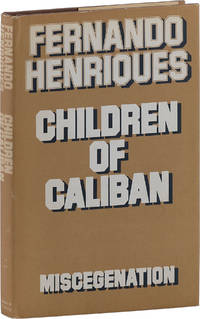
197464110London: Secker and Warburg 1974. First Edition. First impression. Octavo. Cloth hardcover; dustjacket; xii196pp; illus. Neat ownership stamp to front free endpaper and title page else tight clean and unmarked. In the original dustwrapper price-clipped else Fine. <br /> <br /> The Jamaican anthropologist's final published work a pioneering study of attitudes towards race-mixing in the West Indies Latin America and the United States. Henriques 1916-1976 was a major theorist of class color and sexuality best-known for his massive three-volume survey Prostitution and Society 1962-68. He was Director of the Centre for Multi Racial Studies from 1964 to 1974. Secker and Warburg unknown
130458aafSierre, Editions à la Carte, 2002, in-8vo, 244 p., ill. n./b., envoi sur 6 lignes signé par l’auteur, brochure originale ill.
1910227821910. Caribbean Photography Large-format Caribbean photography archive documenting everyday life labor and landscape across multiple British Caribbean territories during the early twentieth century. Produced circa 1910s-1920s the photographs depict Jamaica St. Thomas Trinidad and Bermuda at a time when maritime trade imperial administration and expanding leisure travel were reshaping island economies and social environments. The images record agricultural labor coastal fishing village and market activity transportation routes and the built environment of island communities offering visual evidence of how Caribbean societies lived and worked within systems of colonial governance during the decades preceding the major economic disruptions of the Great Depression. Scenes of women carrying fruit children in domestic garden spaces and fishermen working near the shoreline provide direct documentation of gendered labor and community life rarely preserved in formal colonial records.<br /> <br /> Archive of 19 original silver gelatin photographs taken across Jamaica St. Thomas Trinidad and Bermuda circa 1910s-1920s. The photographs depict tropical interior landscapes palm-lined roads coastal harbors village and town infrastructure markets and local economies and scenes of daily labor and recreation among local inhabitants. Several photographs show women working balancing baskets of fruit atop their heads and fishermen working along shorelines while others present panoramic views of bays harbors and anchored ships alongside expanding waterfront construction. Architectural views include roads market environments and hotel grounds illustrating the physical fabric of island towns and the commercial transport infrastructure threaded through them. Each photograph measures approximately 8 x 10 inches and retains a penciled caption on the verso identifying the scene or location. The geographic range - from Jamaica's mountainous interior and coastal towns to maritime scenes in Trinidad Bermuda and St. Thomas - creates a comparative visual record of early twentieth-century Caribbean environments shaped by plantation economies maritime trade routes and the transatlantic shipping networks operating across the region during the period. Light handling wear with occasional surface scuffing visible on several prints and mild curling along some edges. Images remain well contrasted with strong clarity. Overall very good condition. A substantial early photographic record of Caribbean landscapes labor and community life spanning several islands during a formative period in the region's economic and visual history. unknown
18620A Londres et à Paris, chez la veuve Duchesne, 1767, 1 broché, couverture en papier dominoté. 2 volumes in-8, faux-titre, titre, 382 pages et faux-titre, titre, 399 pages, exemplaire à pleines marges ;
1989524075New York: Charles Scribner's Sons 1989. Hardcover. Near Fine/Near Fine. First edition. Edited by Bradford Morrow. Octavo. 287 9 ads pp. With several black and white illustrations. Green remainder mark on bottom edge else fine in price-clipped and very lightly worn near fine dust jacket. Signed by editor Bradford Morrow on the title page and Signed by Jamaica Kincaid Robert Coover John Edgar Wideman Patrick McGrath and William T. Vollmann at their contributions. Also prints contributions by Robert Creeley John Hawkes and Salman Rushdie among others. Charles Scribner's Sons hardcover
188625455Jamaica L.I. New York: Republican Club 1886. 6 pages; printed at Jamaica Queens L.I. New York by Long Island Farmer Print; back cover with American flag illustration. Officers of the club for 1886 were Richard C. McCormick President; William Dykes Vice Pres.; Samuel S. Aymar Sec.; Henry M. Haviland Treasurer. ".The object of the Club shall be to unite the Republicans of the town under a central and permanent organization for consultation and action in the interest of the Republican part; and to provide them a pleasant place of resort where access may be had to political papers and documents and social intercourse may be promoted." Approx. 6" x 9 1/4" size; side-sewn. Paper a little darkened a few spots dustiness; top corner chipped away; in good condition. First Edition. Soft Cover. Good. Republican Club paperback books
197918650World Bank, 1979. 4°, 180 S., mit zahlreichen Diagr., Schaubildern, Bibl. Ex. Bezahlung per PayPal möglich, we accept PayPal, Stempel u. Nr. a.Vorsatz, Nr. a. Rücken, altersbedingte Bräunungen, sonst min. Gebr.sp., kartoniert
317pp. 24 cm. Hardcover Very good condition good
1946206442Kingston: Central Bureau of Statistics 1946. Folded three times; short tear at one fold very good. Printed map 16-1/2 x 21 in. printed on one side only. Official government map showing each of the island's fourteen parishes with statistical details: area population density dwellings schools illiteracy post offices main roadsetc. Central Bureau of Statistics unknown
FIRST AND ONLY EDITION OF THIS ATLAS OF THE BRITISH WEST INDIES, published in France during the Seven Years' War (also known as the "French and Indian War".) xii, 171 pp + engraved title and THIRTEEN FINE MAPS, of which 8 are folding (complete). Also illustrated with ten headpieces, nine of which depict the entry into a major port. Includes Jamaica (with several maps), Barbuda, St. Kitts, Nevis, the Virgin Islands, Anguilla, Antigua, the Lucayes (now the Bahamas), and Bermuda. 4to (26 x 20.3 cm). Attractively bound in contemporary calf, with the ARMS OF KING LOUS XV OF FRANCE EMBLAZONED IN GILT ON FRONT AND BACK COVERS. Binding restored at head and tail of spine, and very solid. Small, faint marginal stain to engraved title-page, else INTERNALLY FINE AND BRIGHT, WITH MAPS AND TEXT VERY FRESH. Sabin 4553. RARE AND IMPORTANT.
0260389005.Gpaperback. Good. Access codes and supplements are not guaranteed with used items. May be an ex-library book. paperback
0331457989.Ghardcover. Good. Access codes and supplements are not guaranteed with used items. May be an ex-library book. hardcover
194966594Aus den Briefen Richard Beckfords, die von seinen Erlebnissen auf dieser Insel in den Jahren 1737 und 1738 berichten. Übersetzt von Georg Kurt Schauer. Frankfurt, Schauer, (1949). Mit Buchschmuck. 375 S., 1 Bl. Or.-Lwd.; etw. gebräunt u. Rückendeckel etw. fleckig, etw. schiefgelesen.
194232132ABBrünn/Leipzig/Wien, Rohrer, (1942). Gr.8°. 392 Seiten. Originalhalbleinenband mit Deckelvignette und illustriertem Schutzumschlag. (Umschlag fleckig und mit unterlegten Randeinrissen. Schnitt gering fleckig). - Innen erfreulich gut erhalten und sauber. Keine Eintragungen.
19411484CBBrünn, Rohrer, 1941. 8°, 391 S., original Halbleineneinband, Einband und Schnitt mit ganz leichten Altersspuren, Seiten nachgedunkelt und mit vereinzelten Fleckspuren, sonst aber noch gutes aber leicht schiefes Exemplar .
1662250234Southampton House England 1662. 1 bifolium 11-3/4 x 8-1/4 in. accomplished entirely in manuscript. Docketed verso: "Sr Tho. Whetstones warrant for £100 out of the privy seals dormant. indistinct initials follow.". 1 vols. 4to. Former fold lines per usual; some surface soil to recto of document; heavy surface soil to verso of integral cognate; small perimeter chips and light distress. 1 bifolium 11-3/4 x 8-1/4 in. accomplished entirely in manuscript. Docketed verso: "Sr Tho. Whetstones warrant for £100 out of the privy seals dormant. indistinct initials follow.". 1 vols. 4to. According to David F. Marley's Pirates of the Americas Sir Thomas Whetstone 1630/31-1668 was a nephew of Oliver Cromwell "reduced from a Commonwealth naval Commodore into an impoverished West Indian rover before dying in Spanish hands." <br /> Whetstone is described by ODNB as a naval officer and adventurer and a son of the favorite sister of the protectorate. Through nepotism per the protector's "misplaced patronage" Whetsone quickly rose through the naval ranks. He ascended from a volunteer on Penn's flagship in the 1654 expedition to Hispaniola was given command of a ship on the return voyage home and eventually commanded a squadron cruising the waters between Malta and Crete.<br /> Whetstone soon became a man of questionable integrity. He flouted orders sold grain seriously needed to sustain the fleet for his own profit quarreled with officers and in general showed high levels of insolence incompetence and dallied onshore avoiding naval duties. <br /> Cromwell's death changed Whetstone's fortunes. When it became apparent to political forces that his usefulness as a pawn to control the naval fleet was insignificant Whetsone returned to England at the restoration impoverished and spent. By 1661 he was in a debtor's jail in Marshalsea where he became a royal nuisance by "bombarding" the government for employment and begging relatives for money. Finally to put this embarrassment out of harm's way the King agreed in April 1662 to give Whetstone £100 and to establish him as a Jamaican planter. The money was considered "royal bounty for his encouragement in settling a plantation in the Isle of Jamaica." Additionally Whetsone was given twelve indentured men to help him establish a foothold in the New World. <br /> Here then is the material evidence that propels Whetstone towards his destiny in the West Indies. The document is signed "T. Southampton" by Sir Lawrence Tanfield Earl of Southampton Keeper of the Privy Seal. Addressed to and directing Sir Robert Pye auditor of the exchequer and indicating that he is to give Sir Thomas Whetstone £100 ". as of his Majesty's free gift for his incouragement sic in settling a plantation in the Island of Jamaica." With this document a new chapter in Whetstone's life opened upon his arrival in Jamaica in 1662.<br /> As Marley notes Whetstone's first actions in the West Indies was not to become a sedentary planter but to be a privateer. With an Indian crew he began operating and raiding off the Cuban coast. Then personally providing recent intelligence to the infamous Sir Christopher Myngs 1625-1666 an English admiral and pirate whose riotous atrocities with his buccaneers were legendary Whetstone joined in Myngs' 1662 sacking of Santiago de Cuba. Myngs was hated by the Spanish and famed for his unbridled cruelty. His atrocities next year in 1663 with pirates Henry Morgan and Abraham Blauvelt would alarm and forced King Charles II to call for a moratorium on further attacks. In the same year Whetstone was likewise endeavoring: on record as commander of a 7-gun Spanish prize manned by sixty souls and noted as one of the "private ships of war belonging to Jamaica."<br /> In addition to his exploits at sea Whetsone was heavily involved with the arrest and deposal of the Jamaican Speaker of Assembly Samuel Long on charges of treason in 1664. By 1666 Whetsone himself became Speaker of the Jamaica House of Assembly. Circa this period he was captured by the Spanish on Providencia Island carried as a prisoner to Portobelo and then force-marched to Panama City where he was tossed in the dungeon. So angry were the Spanish at Whetstone's piratical depredations the Governor Juan Perez de Guzman wrote to Madrid blaming the man for planning "all the damage done on these coasts." Whetsone died in Spanish captivity in 1667. See ODNB; Marley Pirates of the Americas pp. 399-405 unknown
1662250234Southampton House England 1662. 1 bifolium 11-3/4 x 8-1/4 in. accomplished entirely in manuscript. Docketed verso: "Sr Tho. Whetstones warrant for £100 out of the privy seals dormant. indistinct initials follow.". 1 vols. 4to. Former fold lines per usual; some surface soil to recto of document; heavy surface soil to verso of integral cognate; small perimeter chips and light distress. 1 bifolium 11-3/4 x 8-1/4 in. accomplished entirely in manuscript. Docketed verso: "Sr Tho. Whetstones warrant for £100 out of the privy seals dormant. indistinct initials follow.". 1 vols. 4to. According to David F. Marley's Pirates of the Americas Sir Thomas Whetstone 1630/31-1668 was a nephew of Oliver Cromwell "reduced from a Commonwealth naval Commodore into an impoverished West Indian rover before dying in Spanish hands." <br/>Whetstone is described by ODNB as a naval officer and adventurer and a son of the favorite sister of the protectorate. Through nepotism per the protector's "misplaced patronage" Whetsone quickly rose through the naval ranks. He ascended from a volunteer on Penn's flagship in the 1654 expedition to Hispaniola was given command of a ship on the return voyage home and eventually commanded a squadron cruising the waters between Malta and Crete.<br/>Whetstone soon became a man of questionable integrity. He flouted orders sold grain seriously needed to sustain the fleet for his own profit quarreled with officers and in general showed high levels of insolence incompetence and dallied onshore avoiding naval duties. <br/>Cromwell's death changed Whetstone's fortunes. When it became apparent to political forces that his usefulness as a pawn to control the naval fleet was insignificant Whetsone returned to England at the restoration impoverished and spent. By 1661 he was in a debtor's jail in Marshalsea where he became a royal nuisance by "bombarding" the government for employment and begging relatives for money. Finally to put this embarrassment out of harm's way the King agreed in April 1662 to give Whetstone £100 and to establish him as a Jamaican planter. The money was considered "royal bounty for his encouragement in settling a plantation in the Isle of Jamaica." Additionally Whetsone was given twelve indentured men to help him establish a foothold in the New World. <br/>Here then is the material evidence that propels Whetstone towards his destiny in the West Indies. The document is signed "T. Southampton" by Sir Lawrence Tanfield Earl of Southampton Keeper of the Privy Seal. Addressed to and directing Sir Robert Pye auditor of the exchequer and indicating that he is to give Sir Thomas Whetstone £100 ". as of his Majesty's free gift for his incouragement sic in settling a plantation in the Island of Jamaica." With this document a new chapter in Whetstone's life opened upon his arrival in Jamaica in 1662.<br/>As Marley notes Whetstone's first actions in the West Indies was not to become a sedentary planter but to be a privateer. With an Indian crew he began operating and raiding off the Cuban coast. Then personally providing recent intelligence to the infamous Sir Christopher Myngs 1625-1666 an English admiral and pirate whose riotous atrocities with his buccaneers were legendary Whetstone joined in Myngs' 1662 sacking of Santiago de Cuba. Myngs was hated by the Spanish and famed for his unbridled cruelty. His atrocities next year in 1663 with pirates Henry Morgan and Abraham Blauvelt would alarm and forced King Charles II to call for a moratorium on further attacks. In the same year Whetstone was likewise endeavoring: on record as commander of a 7-gun Spanish prize manned by sixty souls and noted as one of the "private ships of war belonging to Jamaica."<br/>In addition to his exploits at sea Whetsone was heavily involved with the arrest and deposal of the Jamaican Speaker of Assembly Samuel Long on charges of treason in 1664. By 1666 Whetsone himself became Speaker of the Jamaica House of Assembly. Circa this period he was captured by the Spanish on Providencia Island carried as a prisoner to Portobelo and then force-marched to Panama City where he was tossed in the dungeon. So angry were the Spanish at Whetstone's piratical depredations the Governor Juan Perez de Guzman wrote to Madrid blaming the man for planning "all the damage done on these coasts." Whetsone died in Spanish captivity in 1667. See ODNB; Marley Pirates of the Americas pp. 399-405 unknown books