488 résultats
19622409180259xbvkJamaica, Island Worcester [and Things] - Ceramics, 1962. Material: Ceramic / Total height (Pot with lid): ca. 39 cm; diameter at foot: ca. 15 cm, largest diameter (open top of 'pot'): ca. 24 cm. / Colour: lightbrown-rosé with white partly gilt-lined embossments and partly gilt inscriptions; foot and pineapple-top: white. / Weight: ca. 3 kg.
1787WRCAM13337Kingston Jamaica: Printed by Alexander Aikman 1787. Two volumes bound in one. 231262221582pp. bound with: AN ABRIDGEMENT OF THE LAWS OF JAMAICA IN MANNER OF AN INDEX. Kingston: Aikman 1787. 429pp. bound with: APPENDIX: CONTAINING LAWS RESPECTING SLAVES. Kingston: Aikman 1787. 4325pp. Large folio. Old calf rebacked. Internally near fine. with: ACTS OF ASSEMBLY PASSED IN THE ISLAND OF JAMAICA; FROM 1770 TO 1783 INCLUSIVE. Kingston: Printed for James Johnes Esq. by Lewis and Eberall 1786. v313-424pp. bound with: AN ABRIDGEMENT OF THE LAWS OF JAMAICA. Kingston: Lewis and Eberall 1786. 440pp. Quarto. Old calf rebacked. Fine. with: ACTS OF ASSEMBLY PASSED IN THE ISLAND OF JAMAICA FROM THE YEAR 1784 TO THE YEAR 1788 INCLUSIVE. Kingston: Printed by Alexander Aikman 1789. xvi300iv423pp. Quarto. Old calf rebacked. Near fine. All together an extraordinary collection of 18th-century Jamaican printing combining six separate imprints one of them consisting of two volumes in three bound volumes all printed between 1786 and 1789 by two different printers in Kingston Jamaica. The texts retrospectively cover the Acts of the Assembly from its beginning in 1681 up to date with the last printing in 1788. Also included are two separate publications containing abridgements of the various acts and a further separate publication combining all of the slave statutes in one place. <br> <br> As anyone who has sought them knows well all 18th-century Caribbean imprints are rare most extremely so and these laws are no exception. Furthermore most Caribbean printing is fairly slight not substantial volumes such as these. Printing began in Jamaica in 1718. It was the first British colony south of Maryland to have a printing press and except for several items printed in Havana by a press briefly established there this was the first press in the Caribbean; however only a handful of fugitive pieces survive from the 1770s. In that period the economic importance of Jamaica was supplemented by an influx of Loyalists including printer Alexander Aikman who seems to have invigorated the cultural and publishing life of the colony while the British government liberalized its colonial policy to avoid a repetition of the problems of the American Revolution. In that climate these retrospective and current laws of the local colonial government were printed. Of all early Caribbean printing that of Jamaica is best documented through the early and thorough work of Frank Cundall. His bibliographies illustrate both the rich variety of material printed on Jamaica and its rarity. <br> <br> Following are the NUC locations and citations of the laws offered herein: <br> <br> 1 ACTS OF ASSEMBLY 1681-1769. Kingston 1787. Not in the NUC. CUNDALL p.52. <br> <br> 2 ABRIDGEMENT OF LAWS. Kingston 1787. Not in the NUC or Cundall. <br> <br> 3 LAWS RESPECTING SLAVES. Kingston 1787. Not in the NUC or Cundall. <br> <br> 4 ACTS OF ASSEMBLY 1770-83. Kingston 1786. The NUC locates DLC MH RPJCB MChB NN. CUNDALL p.52. SABIN 35617. <br> <br> 5 ABRIDGEMENT OF LAWS. Kingston 1786. The NUC locates NN. Not in Cundall. SABIN 35617. <br> <br> 6 ACTS OF ASSEMBLY 1784-88. Kingston 1789. The NUC locates DLC RPJCB. CUNDALL p.53. <br> <br> In all a remarkable assemblage of Caribbean printing. Printed by Alexander Aikman unknown books
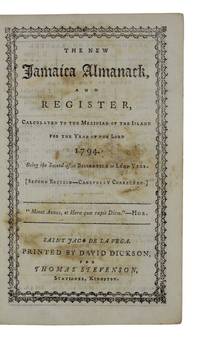
1794AQ30515Saint Jago de la Vega: Printed by David Dickson for Thomas Stevenson Stationer Kingston 1794. 146pp 14. With two hand-coloured engraved leaves of plates depicting 'Signals for distinguishing the Several Packets on the Falmouth Station' bound in before title. Variously interleaved at front with numerous blanks at end inserted some of which removed. Contemporary perhaps original gilt-tooled wallet-format calf over card boards the fold-over flap missing but with an open fore-edge to upper board with marbled paper-lined pocket. Rubbed and marked with some occasional staining sometimes rather unsightly to text childish pen and pencil trials to endpapers engraved signals largely erased and some blank- interleaving or areas of text. Occasional manuscript correction to text. Bifolium G3-4 detached from the binding. A rare Jamaican-printed almanac - with the original engraved signals leaves apparently issued only in this edition - featuring an early example of West-Indian Hebrew printing. Almanacs were apparently first issued in Jamaica during the 1760s printed by Weatherby & McCann Walker & Strupar Douglass and Aikman and later Alexander Aikman alone at Kingston. The rival New Jamaica Almanack and Register first appeared in the same city in 1788 printed by Bennett and Dickson for the stationer Thomas Stevenson of King Street. From 1791 this same title was printed by David Dickson alone at Spanish Town Saint Jago de la Vega. This is definitely not the second appearance of a Dickson printed almanac either printed at Kingston or Spanish Town editions for 1791 1792 and 1793 are known for example with the Saint Jago de la Vega imprint despite the title designation. In addition to providing a calendar specifically for use in the colony noting for example the dates of various Jamaican assizes these eighteenth-century almanacks are perhaps best known for their inclusion of some of the earliest examples of printing with Hebrew type - specifically produced for the use of the largest Jewish community in the Atlantic outside of London - in the Western hemisphere significantly predating any American-printed Hebrew calendar. This is displayed in this edition as a final calendar leaf headed 'Of Months Sabbaths and Holidays which the Hebrews or Jews observe and keep for the Years 5554 an 5555 of the Creation'. Whilst much of the remainder of the first half of the volume relates to British government and administration the first 30pp of the second half includes a description of the geography and history of Jamaica and excerpts various commercial treaties applicable including the 'Act for regulating the Commerce with America' and notes the duties due to the Receiver-General for landing traded goods. Rather disturbingly this includes the government duty of £2 'per head' imposed upon the importers of enslaved Africans. Fully 44 further pages headed 'Jamaica Lists' relate to the civil administration and military establishments of the colony including lists of officials and appointees headed by the then Lt.-Governor Major General Adam Williamson. Included in this section are extensive details on the economic output of the plantations of the island grouped by parish within different counties often revealing the extent of enslavement. Thus St. George is noted as housing '19 Sugar Works and 5 more settling 90 other Settlements 7000 Slaves and 4500 Cattle' whilst Trewlawny housed '86 Sugar Works 126 other Settlements 27000 Slaves and 15000 Cattle'. Copies of the Dickson-printed almanacks printed during the final decade of the eighteenth- century are known with and without maps. There is none present here but equally there is no obvious absence of such. However the only reference we can find to any edition of an almanac with engravings of signals flags as here is in the 1794 edition; indeed the foot of the first of the two engraved leaves notes that it was 'Engraved for the New Jamaica Almanac 1794'. Given the increasingly visible presence of Royal Naval ships in the West Indies due to action taken against French colonies in the War of the First Coalition it is entirely possible that the signals were placed in some copies of the 1794 New Jamaican Almanack instead of the map. OCLC locates three copies worldwide Temple with a map and two at Yale one without a map or signals wanting pp81-102 and possibly pp.145-6; and another without map but with the signals. ESTC N67930. 12mo in 6s. Printed by David Dickson, for Thomas Stevenson, Stationer, Kingston hardcover
1789227355London: Sold by B. White and Son 1789. Third edition first edition was 1756. 49 copper-engraved plates by George Dionysius Ehret. viii 503 646 Index pp. 1 vols. Folio. Bound in contemporary diced calf rebacked. Bookplate of Clarence Dillon Dunwalke Library and with a note that it comes from the Library of Owen D. Young Esq. Third edition first edition was 1756. 49 copper-engraved plates by George Dionysius Ehret. viii 503 646 Index pp. 1 vols. Folio. Browne was an Irish physician who lived for several years in the West Indies and settled in Jamaica in 1746. This is his major work particularly valuable for its contribution to botany. Sabin 8671; Nissen BBl 255; Cundal Bibliographia Jamaicensis 416 Sold by B. White and Son unknown
1789227355London: Sold by B. White and Son 1789. Third edition first edition was 1756. 49 copper-engraved plates by George Dionysius Ehret. viii 503 646 Index pp. 1 vols. Folio. Bound in contemporary diced calf rebacked. Bookplate of Clarence Dillon Dunwalke Library and with a note that it comes from the Library of Owen D. Young Esq. Third edition first edition was 1756. 49 copper-engraved plates by George Dionysius Ehret. viii 503 646 Index pp. 1 vols. Folio. Browne was an Irish physician who lived for several years in the West Indies and settled in Jamaica in 1746. This is his major work particularly valuable for its contribution to botany. Sabin 8671; Nissen BBl 255; Cundal Bibliographia Jamaicensis 416 Sold by B. White and Son unknown books
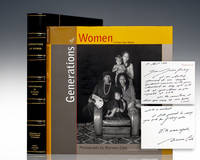
149944San Francisco: Chronicle Books 1998. First edition of this multidimensional visual portrayal of women’s lives. Quarto original publisher's cloth illustrated with black and white photographs. Presentation copy with a lengthy autograph notecard inscribed by the photographer Mariana Cook to Ruth Bader Ginsburg laid in. The recipient American lawyer and jurist Ruth Bader Ginsburg served as an associate justice of the Supreme Court of the United States from 1993 until her death in 2020 and was responsible for some of the most eventful legal decisions of the past half-century. Nominated by President Bill Clinton in 1993 to replace retiring justice Byron White Ginsburg became the first Jewish woman and the second woman to serve on the Court after Sandra Day O’Connor. Ginsburg spent much of her legal career as an advocate for gender equality and women’s rights winning many arguments before the Supreme Court. During her tenure as associate justice of the Supreme Court Ginsburg received attention for her fiery and passionate dissents that reflected liberal views of the law. She was popularly dubbed “the Notorious R.B.G.†a moniker she later embraced. She authored several important majority opinions related to gender discrimination voting rights and affirmative action in cases such as United States v. Virginia 1996 which struck down the Virginia Military Institute’s male-only admissions policy as violating the Equal Protection Clause of the Fourteenth Amendment Olmstead v. L.C. 1999 in which the Court ruled that mental illness is a form of disability covered under the Americans with Disabilities Act of 1990 and Friends of the Earth Inc. v. Laidlaw Environmental Services Inc. 2000 in which the Court held that residents have standing to seek fines for an industrial polluter that affected their interests and that is able to continue doing so. Fine in a fine dust jacket. From the library of American lawyer and jurist Ruth Bader Ginsburg. Housed in a custom half morocco clamshell box. Photographic and literary exploration of the relationships between women across different generations. The book features intimate black-and-white portraits of grandmothers mothers and daughters accompanied by personal narratives that reflect on themes of heritage identity and familial bonds. Through these stories Cook captures the complexities of womanhood emphasizing both the shared experiences and the individuality of each subject. Chronicle Books hardcover
1662250234Southampton House England 1662. 1 bifolium 11-3/4 x 8-1/4 in. accomplished entirely in manuscript. Docketed verso: "Sr Tho. Whetstones warrant for £100 out of the privy seals dormant. indistinct initials follow.". 1 vols. 4to. Former fold lines per usual; some surface soil to recto of document; heavy surface soil to verso of integral cognate; small perimeter chips and light distress. 1 bifolium 11-3/4 x 8-1/4 in. accomplished entirely in manuscript. Docketed verso: "Sr Tho. Whetstones warrant for £100 out of the privy seals dormant. indistinct initials follow.". 1 vols. 4to. According to David F. Marley's Pirates of the Americas Sir Thomas Whetstone 1630/31-1668 was a nephew of Oliver Cromwell "reduced from a Commonwealth naval Commodore into an impoverished West Indian rover before dying in Spanish hands." <br /> Whetstone is described by ODNB as a naval officer and adventurer and a son of the favorite sister of the protectorate. Through nepotism per the protector's "misplaced patronage" Whetsone quickly rose through the naval ranks. He ascended from a volunteer on Penn's flagship in the 1654 expedition to Hispaniola was given command of a ship on the return voyage home and eventually commanded a squadron cruising the waters between Malta and Crete.<br /> Whetstone soon became a man of questionable integrity. He flouted orders sold grain seriously needed to sustain the fleet for his own profit quarreled with officers and in general showed high levels of insolence incompetence and dallied onshore avoiding naval duties. <br /> Cromwell's death changed Whetstone's fortunes. When it became apparent to political forces that his usefulness as a pawn to control the naval fleet was insignificant Whetsone returned to England at the restoration impoverished and spent. By 1661 he was in a debtor's jail in Marshalsea where he became a royal nuisance by "bombarding" the government for employment and begging relatives for money. Finally to put this embarrassment out of harm's way the King agreed in April 1662 to give Whetstone £100 and to establish him as a Jamaican planter. The money was considered "royal bounty for his encouragement in settling a plantation in the Isle of Jamaica." Additionally Whetsone was given twelve indentured men to help him establish a foothold in the New World. <br /> Here then is the material evidence that propels Whetstone towards his destiny in the West Indies. The document is signed "T. Southampton" by Sir Lawrence Tanfield Earl of Southampton Keeper of the Privy Seal. Addressed to and directing Sir Robert Pye auditor of the exchequer and indicating that he is to give Sir Thomas Whetstone £100 ". as of his Majesty's free gift for his incouragement sic in settling a plantation in the Island of Jamaica." With this document a new chapter in Whetstone's life opened upon his arrival in Jamaica in 1662.<br /> As Marley notes Whetstone's first actions in the West Indies was not to become a sedentary planter but to be a privateer. With an Indian crew he began operating and raiding off the Cuban coast. Then personally providing recent intelligence to the infamous Sir Christopher Myngs 1625-1666 an English admiral and pirate whose riotous atrocities with his buccaneers were legendary Whetstone joined in Myngs' 1662 sacking of Santiago de Cuba. Myngs was hated by the Spanish and famed for his unbridled cruelty. His atrocities next year in 1663 with pirates Henry Morgan and Abraham Blauvelt would alarm and forced King Charles II to call for a moratorium on further attacks. In the same year Whetstone was likewise endeavoring: on record as commander of a 7-gun Spanish prize manned by sixty souls and noted as one of the "private ships of war belonging to Jamaica."<br /> In addition to his exploits at sea Whetsone was heavily involved with the arrest and deposal of the Jamaican Speaker of Assembly Samuel Long on charges of treason in 1664. By 1666 Whetsone himself became Speaker of the Jamaica House of Assembly. Circa this period he was captured by the Spanish on Providencia Island carried as a prisoner to Portobelo and then force-marched to Panama City where he was tossed in the dungeon. So angry were the Spanish at Whetstone's piratical depredations the Governor Juan Perez de Guzman wrote to Madrid blaming the man for planning "all the damage done on these coasts." Whetsone died in Spanish captivity in 1667. See ODNB; Marley Pirates of the Americas pp. 399-405 unknown
1662250234Southampton House England 1662. 1 bifolium 11-3/4 x 8-1/4 in. accomplished entirely in manuscript. Docketed verso: "Sr Tho. Whetstones warrant for £100 out of the privy seals dormant. indistinct initials follow.". 1 vols. 4to. Former fold lines per usual; some surface soil to recto of document; heavy surface soil to verso of integral cognate; small perimeter chips and light distress. 1 bifolium 11-3/4 x 8-1/4 in. accomplished entirely in manuscript. Docketed verso: "Sr Tho. Whetstones warrant for £100 out of the privy seals dormant. indistinct initials follow.". 1 vols. 4to. According to David F. Marley's Pirates of the Americas Sir Thomas Whetstone 1630/31-1668 was a nephew of Oliver Cromwell "reduced from a Commonwealth naval Commodore into an impoverished West Indian rover before dying in Spanish hands." <br/>Whetstone is described by ODNB as a naval officer and adventurer and a son of the favorite sister of the protectorate. Through nepotism per the protector's "misplaced patronage" Whetsone quickly rose through the naval ranks. He ascended from a volunteer on Penn's flagship in the 1654 expedition to Hispaniola was given command of a ship on the return voyage home and eventually commanded a squadron cruising the waters between Malta and Crete.<br/>Whetstone soon became a man of questionable integrity. He flouted orders sold grain seriously needed to sustain the fleet for his own profit quarreled with officers and in general showed high levels of insolence incompetence and dallied onshore avoiding naval duties. <br/>Cromwell's death changed Whetstone's fortunes. When it became apparent to political forces that his usefulness as a pawn to control the naval fleet was insignificant Whetsone returned to England at the restoration impoverished and spent. By 1661 he was in a debtor's jail in Marshalsea where he became a royal nuisance by "bombarding" the government for employment and begging relatives for money. Finally to put this embarrassment out of harm's way the King agreed in April 1662 to give Whetstone £100 and to establish him as a Jamaican planter. The money was considered "royal bounty for his encouragement in settling a plantation in the Isle of Jamaica." Additionally Whetsone was given twelve indentured men to help him establish a foothold in the New World. <br/>Here then is the material evidence that propels Whetstone towards his destiny in the West Indies. The document is signed "T. Southampton" by Sir Lawrence Tanfield Earl of Southampton Keeper of the Privy Seal. Addressed to and directing Sir Robert Pye auditor of the exchequer and indicating that he is to give Sir Thomas Whetstone £100 ". as of his Majesty's free gift for his incouragement sic in settling a plantation in the Island of Jamaica." With this document a new chapter in Whetstone's life opened upon his arrival in Jamaica in 1662.<br/>As Marley notes Whetstone's first actions in the West Indies was not to become a sedentary planter but to be a privateer. With an Indian crew he began operating and raiding off the Cuban coast. Then personally providing recent intelligence to the infamous Sir Christopher Myngs 1625-1666 an English admiral and pirate whose riotous atrocities with his buccaneers were legendary Whetstone joined in Myngs' 1662 sacking of Santiago de Cuba. Myngs was hated by the Spanish and famed for his unbridled cruelty. His atrocities next year in 1663 with pirates Henry Morgan and Abraham Blauvelt would alarm and forced King Charles II to call for a moratorium on further attacks. In the same year Whetstone was likewise endeavoring: on record as commander of a 7-gun Spanish prize manned by sixty souls and noted as one of the "private ships of war belonging to Jamaica."<br/>In addition to his exploits at sea Whetsone was heavily involved with the arrest and deposal of the Jamaican Speaker of Assembly Samuel Long on charges of treason in 1664. By 1666 Whetsone himself became Speaker of the Jamaica House of Assembly. Circa this period he was captured by the Spanish on Providencia Island carried as a prisoner to Portobelo and then force-marched to Panama City where he was tossed in the dungeon. So angry were the Spanish at Whetstone's piratical depredations the Governor Juan Perez de Guzman wrote to Madrid blaming the man for planning "all the damage done on these coasts." Whetsone died in Spanish captivity in 1667. See ODNB; Marley Pirates of the Americas pp. 399-405 unknown books
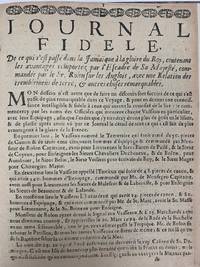
169560184to. 227 x 170 mm. 8 pp. Bound in marbled paper over boards. Margins short cropping page numbers on 2 leaves and just touching but not obscuring the top of some letters of text. Generally very good. <br /><br /><p>Very rare with one recorded copy in Bordeaux of a detailed and lively account of this French expedition against Jamaica during the Nine Years War comprising a string of brutal attacks over the summer of 1694 led by Jean-Baptiste Du Casse. Appointed Governor of Saint-Domingue in 1691 Du Casse had earlier in his career been involved with the slave-trading Compagnie du Senegal and had served throughout the Atlantic world in various capacities including as admiral and privateer. Very familiar with the Caribbean and the ways of the filibusterers and buccaneers operating there he was the best candidate for the difficult job of rallying competing interests to align with those of <i>la France d'outre-mer </i>at a time when funding from France was scarce with Louis XIV distracted by the War of the League of Augsburg closer to home. </p><p>In brief 3 French warships accompanied by numerous transport ships under the command of Captain Rollon were sent to Saint Dominique to provide support to the colonists against the Spanish in neighboring Hispaniola. Soon after their arrival they were reassigned by Du Casse to cruise off Jamaica in early April 1694 where they eventually landed at Port Morant on the eastern coast of the island. Over a period of six to seven weeks they ravaged plantations destroyed over 50 sugar-works and kidnapped hundreds of slaves along with killing and torturing numerous English colonists. Soon to follow Du Casse assembling a small fleet of colonial brigantines and sloops embarked from Saint Dominique with 1500 men for Jamaica. He set sail down the southern coast to Carlisle Bay en route to Spanish Town which he planned to plunder. However a militia company of planters and slaves successfully defended their ground and Du Casse withdrew to St. Dominque but not before destroying Carlisle Bay. "The expeditions richest prize was undoubtedly the 1300 to 3000 captured slaves who proved crucial to the immediate future prosperity of the French colony" Pritchard p. 318 where our narrator points out they could be sold for 60 to 120 piastres each.</p><p>Narrated chronologically the eye-witness account gives vivid testimony to the preparations execution and aftermath of the expedition against Jamaica over the spring and summer months and into the fall of 1694 touching on the internal state of martial affairs between the Spanish and French on the divided island they occupied together. The narrator's lively digressions and personal reflections leave no doubt that he was on the spot when he comments on the disease probably Yellow Fever which ravaged the crews the tremors under foot which incited fear of another earthquake like the one which flattened Port Royal two years before the unexpected collateral encounters and skirmishes with the English in the area related through colorful anecdotes and the general atmosphere of depravation of the crews and the weakness of the Saint Dominique defenses against incursion by the Spanish as a result in large part to the lack of sufficient material support coming from France. </p><p>"If Du Casse could declare the attack on Jamaica a success the same conclusion could not be made by the navy. By August sickness was swiftly reducing crew numbers. <i>Le Solide</i> which had been long in the Islands was immediately sent back to France her crew being too diminished for further use. <i>Le Téméraire</i> had lost 50 of her best sailors and the captain of the English prize now called <i>Le Faucon</i> had died. By September <i>L'Envieux</i> had lost 100 men including her captain and disease claimed Captain du Rollon of Le <i>Téméraire</i>. The four warships including <i>Le Hazardeux</i> departed Cap Francais in early October but further disaster awaited them in the Atlantic" Pritchard p.318– storms capture by the English starvation fire shipwreck disappearance and death. Of the 350 men who departed France at the beginning of the year only 130 returned by year's end. </p><p>Collated against the copy at the Collection de la ville de Bordeaux Bibliotheque municipale see https://issuu.com/scduag/docs/bbx17016 a copy with numerous printer's creases significantly obscuring text; Pritchard <i>In Search of Empire: The French in the Americas 1670-1730</i> Cambridge 2004; Charlevoix <i>Histoire de l'Isle Espagnole ou de S. Domingue</i> 1731 vol. 2 p. 261. Not in Landis.</p> hardcover
169560184to. 227 x 170 mm. 8 pp. Bound in marbled paper over boards. Margins short cropping page numbers on 2 leaves and just touching but not obscuring the top of some letters of text. Generally very good. <br /><br /><p>Very rare with one recorded copy in Bordeaux of a detailed and lively account of this French expedition against Jamaica during the Nine Years War comprising a string of brutal attacks over the summer of 1694 led by Jean-Baptiste Du Casse. Appointed Governor of Saint-Domingue in 1691 Du Casse had earlier in his career been involved with the slave-trading Compagnie du Senegal and had served throughout the Atlantic world in various capacities including as admiral and privateer. Very familiar with the Caribbean and the ways of the filibusterers and buccaneers operating there he was the best candidate for the difficult job of rallying competing interests to align with those of <i>la France d'outre-mer </i>at a time when funding from France was scarce with Louis XIV distracted by the War of the League of Augsburg closer to home. </p><p>In brief 3 French warships accompanied by numerous transport ships under the command of Captain Rollon were sent to Saint Dominique to provide support to the colonists against the Spanish in neighboring Hispaniola. Soon after their arrival they were reassigned by Du Casse to cruise off Jamaica in early April 1694 where they eventually landed at Port Morant on the eastern coast of the island. Over a period of six to seven weeks they ravaged plantations destroyed over 50 sugar-works and kidnapped hundreds of slaves along with killing and torturing numerous English colonists. Soon to follow Du Casse assembling a small fleet of colonial brigantines and sloops embarked from Saint Dominique with 1500 men for Jamaica. He set sail down the southern coast to Carlisle Bay en route to Spanish Town which he planned to plunder. However a militia company of planters and slaves successfully defended their ground and Du Casse withdrew to St. Dominque but not before destroying Carlisle Bay. "The expeditions richest prize was undoubtedly the 1300 to 3000 captured slaves who proved crucial to the immediate future prosperity of the French colony" Pritchard p. 318 where our narrator points out they could be sold for 60 to 120 piastres each.</p><p>Narrated chronologically the eye-witness account gives vivid testimony to the preparations execution and aftermath of the expedition against Jamaica over the spring and summer months and into the fall of 1694 touching on the internal state of martial affairs between the Spanish and French on the divided island they occupied together. The narrator's lively digressions and personal reflections leave no doubt that he was on the spot when he comments on the disease probably Yellow Fever which ravaged the crews the tremors under foot which incited fear of another earthquake like the one which flattened Port Royal two years before the unexpected collateral encounters and skirmishes with the English in the area related through colorful anecdotes and the general atmosphere of depravation of the crews and the weakness of the Saint Dominique defenses against incursion by the Spanish as a result in large part to the lack of sufficient material support coming from France. </p><p>"If Du Casse could declare the attack on Jamaica a success the same conclusion could not be made by the navy. By August sickness was swiftly reducing crew numbers. <i>Le Solide</i> which had been long in the Islands was immediately sent back to France her crew being too diminished for further use. <i>Le Téméraire</i> had lost 50 of her best sailors and the captain of the English prize now called <i>Le Faucon</i> had died. By September <i>L'Envieux</i> had lost 100 men including her captain and disease claimed Captain du Rollon of Le <i>Téméraire</i>. The four warships including <i>Le Hazardeux</i> departed Cap Francais in early October but further disaster awaited them in the Atlantic" Pritchard p.318– storms capture by the English starvation fire shipwreck disappearance and death. Of the 350 men who departed France at the beginning of the year only 130 returned by year's end. </p><p>Collated against the copy at the Collection de la ville de Bordeaux Bibliotheque municipale see https://issuu.com/scduag/docs/bbx17016 a copy with numerous printer's creases significantly obscuring text; Pritchard <i>In Search of Empire: The French in the Americas 1670-1730</i> Cambridge 2004; Charlevoix <i>Histoire de l'Isle Espagnole ou de S. Domingue</i> 1731 vol. 2 p. 261. Not in Landis.</p> hardcover books
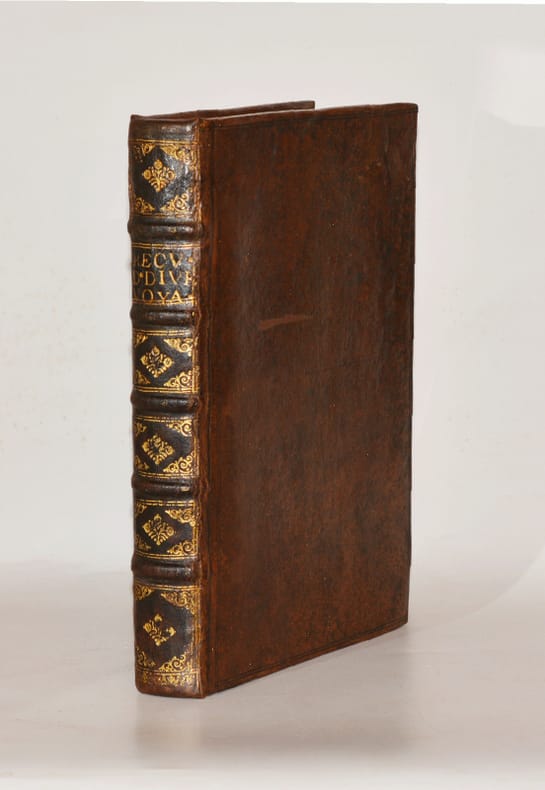
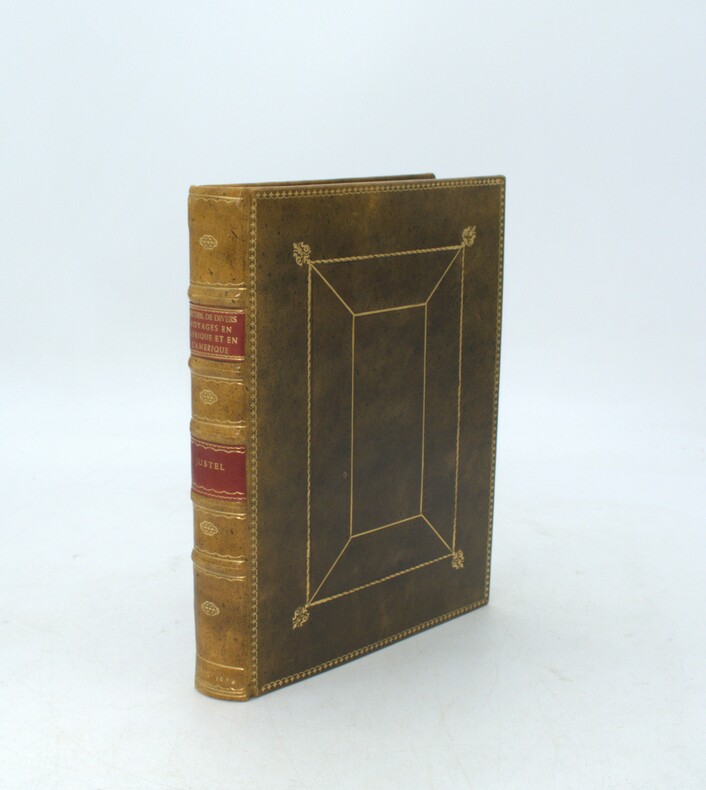
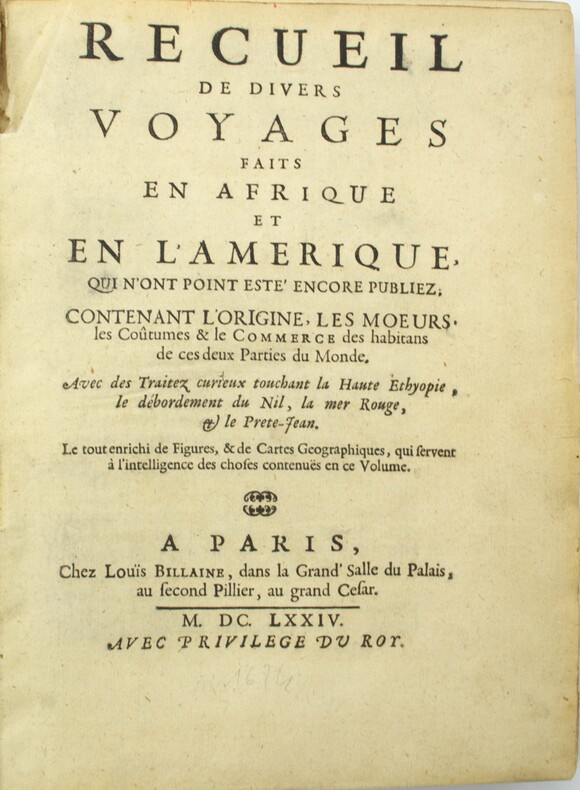
005460Paris, Louis Billaine, 1674. Cinq parties reliées en un volume in-quarto (180 X 250 mm) basane fauve marbrée, dos brun à nerfs orné de fers dorés, titre doré, tranches mouchetées en rouge (Reliure de l’époque) ; (8) ff. de titre, avis au lecteur, extrait du privilège, 262 pages, 14 planches h.-t. (dont 7 dépliantes) - 23 pages - 49 pages, 3 planches h.-t. - 83 pages [et non 81 pages, il y a en effet deux pages 54/55], 1 planche dépliante h.-t. - 35 pages, 1 planche dépliante h.-t. Discrètes et habiles restaurations à la reliure, épidermures sur les plats, infime travail de ver en fond de cahier sans atteinte au texte du premier tiers de l'ouvrage. SANS le faux titre "Colonies Anglaises" ni la CARTE de la "Description Topographique et mesure de l'Isle des Barbades aux Indes Occidentales" qui manque souvent.
1786WRCAM36081Kingston Jamaica: Printed for James Jones Esq. by Lewis and Eberall 1786. v3114-424; 440pp. Quarto. Modern polished calf gilt leather label. Contemporary ownership inscription on titlepage of ACTS.: "George Harrison Lincolns Inn 1791." Titlepage worn and soiled repairs in top and bottom margin with no loss of text. Occasional minor foxing last two leaves dampstained. Small hole in leaf F with loss of a few letters. First four leaves and last four leaves of AN ABRIDGMENT. dampstained leaf aa repaired no loss of text final leaf supplied in facsimile. These exceptions noted very clean internally. A very good copy. First editions of two rare 18th-century Jamaican legal imprints. The volume was previously owned by legal author Sir George Harrison the son of Thomas Harrison who served as attorney-general and advocate- general of Jamaica. The elder Harrison's name is included in the list of subscribers for the ACTS. and father or son have made minor manuscript additions on a half dozen pages in the text. <br> <br> The volume records both public and private acts organized chronologically for 1770 through 1783. The ABRIDGMENT. published as a separate work with separate titlepage clearly supplements the ACTS. by listing the acts by subject and providing an index. There are numerous acts regarding slaves which provide much insight into that institution on the island including legislation regarding runaways "Free- Negroes" "Negro towns" and maroons firearms holidays and even drumming. Other acts cover a wide range of laws and activities including those related to land roads cattle gaming hawkers and pedlars the militia settlers ships and smuggling. <br> <br> All 18th-century Caribbean imprints are rare most are extremely so and these laws are no exception. Furthermore the majority of Caribbean printing is often ephemeral and fairly slight rather than a substantial volume such as this one. The first British colony south of Maryland to have a press printing began in Jamaica in 1718. Except for several items printed in Havana by a press briefly established there this was the first press in the Caribbean; however only a handful of fugitive pieces survive from the 1770s. In that period the economic importance of Jamaica was supplemented by an influx of Loyalists who seems to have invigorated the cultural and publishing life of the colony while the British government liberalized its colonial policy to avoid a repetition of the problems of the American Revolution. In this social and political climate these retrospective laws of the local colonial government were printed. <br> <br> A very good copy of two rare 18th-century Jamaican imprints with provenance related to the island and British legal history. SABIN 35617 ACTS. and ABRIDGMENT. CUNDALL SUPPLEMENT 446 447. GOLDSMITHS 13208. ESTC T140415. OCLC 28209638 30304147 31220784. DNB IX p.32. Printed for James Jones, Esq. by Lewis and Eberall hardcover books
3417Fischl Eric. Fischl Ericillus. ANNIE GWEN LILLY PAM AND TULIP by Jamaica Kincaid. American Livre de Peintre 16. Whitney Museum NY 1986. Edition of 145 copies signed by Fischl and Kincaid. Oversize folio black cloth slipcase in green cloth 28 pp. text and nine lithographs five in color. Fine throughout. "Fischl's illustrations perfectly match the exotic heat of the tale and its latent sexuality. The prints are variosly folded tipped-in and bound to echo the tale's unexpected turnings. He brgins in black and white presenting the five as if at some camp overnight. He moves on to luxuriant colors and suggestive scenes showing them tempted to leave each other for the unknown." The Print Collector's Newsletter. hardcover
FIRST AND ONLY EDITION OF THIS ATLAS OF THE BRITISH WEST INDIES, published in France during the Seven Years' War (also known as the "French and Indian War".) xii, 171 pp + engraved title and THIRTEEN FINE MAPS, of which 8 are folding (complete). Also illustrated with ten headpieces, nine of which depict the entry into a major port. Includes Jamaica (with several maps), Barbuda, St. Kitts, Nevis, the Virgin Islands, Anguilla, Antigua, the Lucayes (now the Bahamas), and Bermuda. 4to (26 x 20.3 cm). Attractively bound in contemporary calf, with the ARMS OF KING LOUS XV OF FRANCE EMBLAZONED IN GILT ON FRONT AND BACK COVERS. Binding restored at head and tail of spine, and very solid. Small, faint marginal stain to engraved title-page, else INTERNALLY FINE AND BRIGHT, WITH MAPS AND TEXT VERY FRESH. Sabin 4553. RARE AND IMPORTANT.
1674PHO-2032Paris, Louis Billaine, 1674. in-4 (228x164) , relié plein veau , filets sur les plats , dos à nerfs orné avec titre , auteur et date (reliure pastiche),tranches rouge. L'ouvrage est illustré de 12 planches hors texte, une carte de l'Éthiopie dans le texte, trois cartes dépliantes (Barbades, Jamaïque et Virginie, Maryland et la Nouvelle-Angleterre) manque la carte du Nil, mouillures, déchirure et réparation au pli (carte des Barbardes)
198660767New York:: Library Fellows of the Whitney Museum of American Art 1986. First edition; one of 145 copies signed by Jamaica Kincaid and Eric Fischl. publisher's black cloth in slipcase. A very fine copy except for a few slight marks to the black cloth in a near fine slipcase. Oversized folio. Illustrated with seven lithographs by Fischl. Library Fellows of the Whitney Museum of American Art, hardcover
1674PHO-2243Paris, Louis Billaine, 1674, in-4 (228x164), basane postérieure (19eme), dos à nerfs avec titre, lieu et date, tranches marbrées, réparations au dos et aux coins, petite réparation au pli de la carte des Barbades, intérieur frais, illustré de 12 planches (13) et trois cartes dépliantes (Barbades, Jamaïque et Virginie, Maryland et la Nouvelle-Angleterre) manque la carte du Nil comme souvent et un faux titre
198981445Knopf. New. 1989. Paperback. FREE UPGRADE to Courier/Priority Shipping Upon Request - IN STOCK AND IMMEDIATELY AVAILABLE FOR SHIPMENT - FLAWLESS COPY BRAND NEW PRISTINE NEVER OPENED -- - Corresponds to ASIN: B002WWWWWI. 18 pages 4to. 9 illustrations. -- with a bonus offer-- . Knopf paperback
198981444Knopf. New. 1989. Hardcover. 0394580354 . FREE UPGRADE to Courier/Priority Shipping Upon Request - IN STOCK AND IMMEDIATELY AVAILABLE FOR SHIPMENT - FLAWLESS COPY BRAND NEW PRISTINE NEVER OPENED -- - Corresponds to ASIN: B001ISIFZ0. 18 pages 4to. 9 illustrations. -- with a bonus offer-- . Knopf hardcover
199891227New York New York U.S.A.: Umbrage Editions. New. 1998. Hardcover. 1884167012 . FREE UPGRADE to Courier/Priority Shipping Upon Request - IN STOCK AND IMMEDIATELY AVAILABLE FOR SHIPMENT - FLAWLESS COPY BRAND NEW PRISTINE NEVER OPENED - SIGNED AND DATED BY GEESAMAN. First edition so stated. -- with a bonus offer-- . Umbrage Editions hardcover
199891226New York New York U.S.A.: Umbrage Editions. New. 1998. Hardcover. 1884167012 . FREE UPGRADE to Courier/Priority Shipping Upon Request - IN STOCK AND IMMEDIATELY AVAILABLE FOR SHIPMENT - FLAWLESS COPY BRAND NEW PRISTINE NEVER OPENED - First edition so stated. -- with a bonus offer-- . Umbrage Editions hardcover
19105793Kingston: A. Duperly & Sons 1910. About very good. Eight glossy sepia-toned photographs each approximately 6 x 9 inches; matted to 14 x 16 inches. Some creasing and wear more pronounced on a handful of images. Minor soiling minimal fading crisp images. A nice group of photographs from the noted Kingston studio of A. Duperly and Sons initially established by patriarch Adolphe Duperly in the 1840s. The images here show local life and scenery including a view of the rebuilt King Street following the 1907 earthquake; local women with baskets perched atop their heads; a man carrying bananas; and several images featuring locals at bends in a river notably one that shows a dapper Black man seated by a stream beneath some palm trees his hat resting on his upturned knee. A wonderful representation of the work accomplished by the Duperly studio after it was rebuilt following the Kingston Earthquake of 1907. A. Duperly & Sons unknown
1837333372London: Printed by J. C. Chappell 1837. First edition. xii 282 vii 1pp. 8vo. Contemporary cloth black morocco spine label yellow endpapers. First edition. xii 282 vii 1pp. 8vo. An impassioned appeal by Henry Sterne resident of St. George Jamaica in defense of "apprentices" i.e. newly-freed slaves following the 1834 emancipation in the West Indies who have suffered mistreatment citing detailed legal cases and presenting legal and religious arguments: "The iron yoke of slavery for apprenticeship is equally as bad if not worse still reigns. The lash dungeons and chains are in constant attendance throughout the land and will remain so for near four long years to come" p. vii. Sabin 91337; not in Cundall Printed by J. C. Chappell unknown
Second edition, much enlarged with "the addition of a new sett of cutts", 2 vols., 12mo (165 x 100 mm), [2], 336; 275, [21]pp., imprint date omitted in vol. I, 2 folding engraved frontispieces showing the costumes of the various countries, that to volume one with tear to fold and slightly cropped at lower margin, 10 engraved plates, woodcut head and tail pieces, a nice set in contemporary sprinkled calf, spine with five raised bands ruled in gilt, volume number in gilt to third compartments. Volume two concerns the Americas, including Peru, Mexico, Chile, Jamaica, Cuba, Virginia, Carolina, New-England and others, in addition to England, Scotland and Ireland. Provenance: Contemporary ink ownership signature of E. Vaughan 1741 to endpapers and at head of title page. Sabin 25670.
1895WRCAM55994Kingston and other locations in Jamaica 1895. Forty-six sepia-tone photographs either 4 x 6 inches or 6 x 8 inches mounted in an album. Oblong quarto. Contemporary three-quarter calf and pebbled brown cloth front board gilt. Spine perished front board detached cloth soiled and discolored. A few mounts detached mounts toned with occasional soiling and foxing. A few photographs with minor abrasions. Good condition overall. An attractive album of Caribbean images containing almost fifty original photographs showing views of Kingston Jamaica and its environs during the last decade of the 19th century. The album comprises a wide range of settings in and around Kingston including numerous shoreline and harbor views some showing people in sailboats or rowboats a number of street views a handful of images of fruit groves notable residences and other buildings rural views a scene of several people and their horse-drawn carriage outside a barn churches a railroad depot and more. The photographs are present in two distinct sizes; one of the larger-format pictures is titled in pencil on the verso "Palmetto Ave. Kingston." One of the smaller-format photographs is noted as "Bakers Grove." <br> <br> The compiler of the album is unknown though he or she was most likely American; the photograph album was manufactured in New York by Felix Reifschnelder with his label on the inside rear board. <br> <br> A handsome group of photographs featuring the people and places of Kingston Jamaica at the end of the 19th century. hardcover books