IRVING , WashingtonLivre Rare Book

53 résultats
1829PHO-1018Paris,Baudry, 1829 volumes in-8 ,(180x110),xiii-473p,490p,413p,489p , relié demi veau époque, dos ornés avec pièces de titre et tomaison , bon exemplaire et 2eme édition française .
1828PHO-1507London, John Murray, 1828, 4 volumes, 8vo.,xii-473,(4)-490,viii-413,vii-489, with 2 folding maps , half calf and corners, nice copy, well bound.
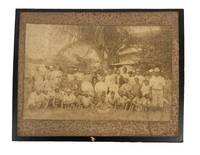
1890208021890. Unidentified photographers two albumen photographs of Black laborers circa 1890s to early 1900s document agricultural and skilled work performed by African Americans in the decades following emancipation when systems of sharecropping and tenant farming structured rural economies across the American South and parts of the Caribbean. These images provide visual evidence of labor organization racial hierarchy and economic dependency that persisted after the formal end of slavery with large groups of Black workers shown in relation to white overseers or employers. One photograph presents approximately forty five Black men gathered around three centrally seated white men emphasizing supervisory roles and social stratification within plantation labor systems. The clothing of the workers including cotton shirts loose trousers and wide brimmed hats reflects adaptation to agricultural work in hot climates while a smaller number of individuals in jackets and pocket watches suggests internal distinctions within Black labor communities. The second image depicts six Black carpenters engaged in coordinated manual work at an outdoor shop indicating the presence of skilled trades alongside agricultural labor.<br /> <br /> Group of two albumen photographs mounted on original cardstock measuring approximately 8 x 9.5 inches and 10 x 12 inches. The larger photograph shows an outdoor woodworking scene with six men using tools including a hammer and saw working under a thatched structure suggestive of southern or Caribbean environments. The second photograph shows a large assembled group of plantation workers with three white men seated at center. Faint pencil annotations appear in the margins of one mount. Both photographs retain strong compositional clarity with figures arranged to emphasize both collective labor and hierarchical relationships.<br /> <br /> These photographs contribute to the study of post emancipation Black life by documenting how agricultural dependency and limited access to capital shaped labor conditions into the late nineteenth and early twentieth centuries. The plantation scene illustrates the persistence of racially stratified labor organization while the carpentry image provides evidence of skilled Black tradesmen operating within local economies often without institutional support or pathways to independent enterprise. The visual contrast between collective field labor and artisanal work expands the interpretive scope of the archive situating these images within broader histories of labor race and economic transition following the end of slavery. Edge wear and minor chipping to mounts with noticeable foxing to one image primarily at the margins; images remain legible and structurally intact. Overall good condition. unknown
1836011073, 1836. Erstausgabe Goldgeprägter Halblederband Solide, Materiell Gut
1862030663Kjobenhavn Copenhagen: J H Schultz 1862. 1st Edition . Soft cover. Near Fine. 11 Pp. Original Printed Wrappers No Names Or Marks Minute Loss At Lower Tips Of Cover And First Page. Ex Copley Library Although Not Marked As Such. <br/> <br/> J H Schultz paperback
182614630Dufart Paris 1826 1 vol. In-8 de 332 pp., demi-chagrin de l'époque, dos à nerfs orné.
18657812paris Michel Lévy 1865 in12, broché, 264 pp édition originale
190037614- 2 feuilles 25 x 30 cm. Quelques rousseurs.
190084015- Une feuille 84 x 96 cm, pliée.
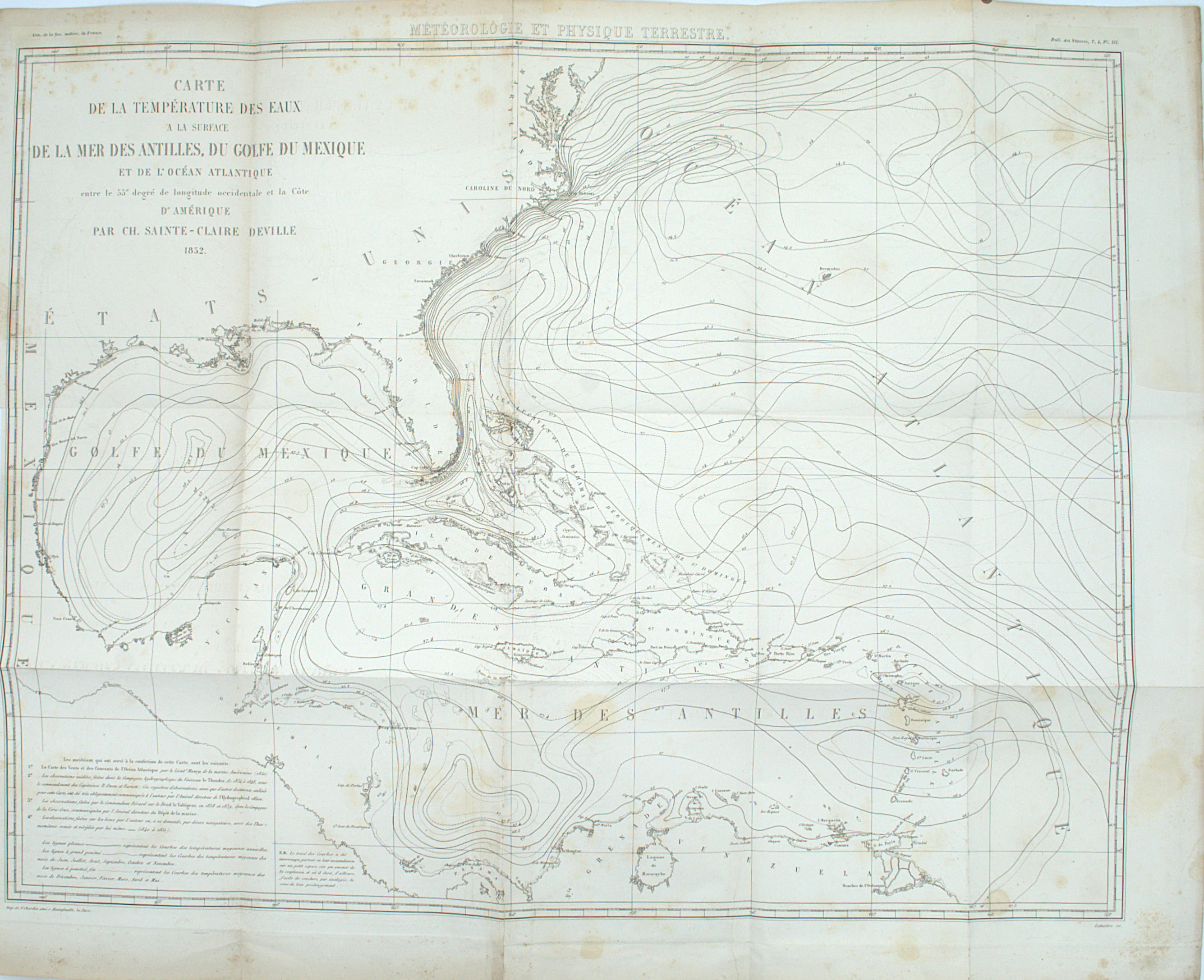
1852PHO-2529Paris, imprimerie de F. Chardon aîné, 1852. Grand in-8 (260x170mm), 6pp., accompagné par une grande carte dépliante (550 × 658 mm), gravée par G. Lemaître. Relié demi toile, auteur et titre au dos. Carte volante.
1821200023AG1821. Paris Brué 1821. Original engraving. Plate Size: 50.5 cm x 36.1 cm. Sheet Size: 68 cm x 54.1 cm. Original map. Very good condition. Extra wide margins. Some minor foxing along sheet edges. Discreet author's blind stamp with 'Carte Encyprotipe' and initials 'AB' embossed in top corner of map. Centre-fold as issued. Border with longitudinal and latitudinal information. Detailed early map of the Caribbean from an early edition of Brue's Atlas Universel Pl.35. Rich detail in Florida the Gulf Coast Central America. The eye is drawn to Cuba among the islands of the 'Grandes' and 'Petites' Antilles. As demonstrated by the map's political divisions and colourings Mexico has yet cede control of what will become Texas. Nouva Espagne and Nouv Grenade show that the aged and tottering Spanish empire has still to fall in Central and South America. The division of Hispaniola into its Haitian and Dominican parts is also shown. The great port cities of the infant United States - Charlestown Savannah and New Orleans - can be seen along the seaboard. Bermuda is shown breaching the map's top border. Reference keys and explanatory annotations and four scale-bars in lower left corner of map. Decorative title in top right corner of map. Adrien-Hubert Brué 1786 - 1832 was a renowned French cartographer. Between 1810 and 1830 Brué established himself as one of the most important French cartographers and it was during this period that his two most important works were published: Grand Atlas Universel in 1815 and Atlas Universel in 1822 which ran to several editions. Atlas Universel was published as a continuation to Grand Atlas Universel. Brués maps or cards as they were referred to at the time were characterized by the high degree of accuracy with which they were produced and the meticulous attention to detail employed in their crafting. This was possible due to Brués application of copper plate intaglio to the process of mapmaking or as Nouvelles Annales des Voyages et des Sciences Géographiques had it: by applying to the making of cards this ingenious process of drawing on copper itself. Alexandre von Humboldt the President of the Société de géographie de Paris praised the accuracy of his work and clarity that is all the more pleasing to the eye. He also was quick to update his maps with the latest scientific discoveries and nautical measurements. Wikipedia unknown
185927043Paris France: Various Publishers 1859. French text; details below on publisher and pagination. Including: Le Pape et le Congres. Paris. E. Dentu & Didot Freres 1859. 46 pages; no author noted; OCLC credits Arthur Vicomte de Dubreuil-Helion La Gueronniere. Les Jesuites en 1860 par Charles Habeneck. Paris. Imprimerie L. Tinterlin et Cie. 1860. 32 pages. La Vraie Liberte Consequence Necessaire de la Separation des Pouvoirs Temporel et Spirituel. Par Celestin de Blignieres. Paris. Chez Tous les Libraires. 1860. 47 pages. Pale spotty foxing. Pape et Empereur. Par J.-M. Cayla. Paris. E. Dentu. 1861. 32 pages. La France Sans le Pape. Par J.-M. Cayla. Paris. E. Dentu. 1861. 32 pages. Le 89 du Clerge. Par J.-M. Cayla. Paris. E. Dentu. 1861. 32 pages. Le Pretres a Marier. Par J.-M. Cayla. Paris. E. Dentu. 1861. 31 pages. Plus de Couvents! Par J.-M. Cayla. Paris. E. Dentu. 1861. 32 pages. Paper darkened some. L'Eglise et L'Instruction Primaire a la Campagne. Par M.L. Derome. Paris. E. Dentu. 1861. 32 pages. La France Rome et L'Italie. Arthur Vicomte de Dubreuil-Helion La Gueronniere. Paris. E. Dentu. 1861. 61 pages. La France et La Liberte. Pars B. Sarrans Jeune. Paris. E. Dentu. 1861. 32 pages. Retablissement du Divorce. Par Eugene Debriges. Paris. E. Dentu. 1861. 31 pages. Paper darkened spottily foxed some. L'Empereur Rome et Le Roi D'Italie. Paris. E. Dentu. 1861. 31 pages. OCLC credits authorship to Armand Levy. L'Independence D'Haiti et La France. Par Charolais. Paris. Dentu. 1861. 32 pages. OCLC with the note: "Signed: 'Charolais' which is said to be not a pseudonym but the name of a French journalist whom Mr. Delorme had asked for political reasons to sign in his place" - Bissanthe. Haitian bibliography dictionary. Les Interets Francais et Europeens a Santo-Domingo. Paris. Dentu. 1861. 31 pages. No author noted here or in OCLC. L'Espagne et Son Avenir. Par Emile Bonnaud. Paris. Chez Castel.1860. 32 pages; last several leaves spotty foxed. Le Prisonnier du Pape. Par J.-B Charles Paya. Paris. Chabot-Fontenay. 1864. 64 pages 8 advertisements for various works by this author. Paper darkened some little spotting. La Papaute Moderne Condamnee par le Pape Saint Gregoire le Grand Extraits des Ouvrages de Saint Gregoire le Grand. Traduits et commentes par l'Abbe Guettee. Paris. Dentu. 1861. 61 pages. La Question de Cuba. Paris. Dentu. 1859. 63 pages. OCLC attributes to Philippe Athanase Cucheval-Clarigny. Unless noted above in the individual entry condition of the pamphlets are in clean very good condition. Often half-titles are present. Each pamphlet has tax stamps of 5 cen. Imperial Timbre. Front endpaper with a handwritten "Contents" with short titles and dates of the above books; all present here. Title page of the first pamphlet with the small owner name-stamp of collector George R. Brush M.D. U.S. Navy; in service as a surgeon & medical inspector from 1861-1894. Approx. 6 1/2" x 9 1/2"size; bound in red marbled-paper covered boards; red morocco leather spine; gilt decorations & titles patterned-paper endpapers. Some edge tips wear and rubbing to the boards; base of bottom spine compartment scarred and darkened; text block clean and in very good condition. . First Edition. Leather. Very Good. Various Publishers books
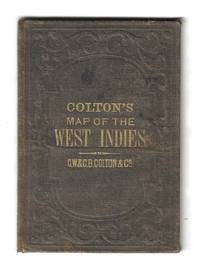
185578137New York: G.W. & C.B. Colton 1855. Hand-colored lithograph map of the Caribbean showing Florida and Central America with insets of Bermuda and the city and harbor of Havana. This example is colored according to national allegiance with British territories in red Spanish in yellow and so on.<br />  <br /> The map is printed on a 17†x 14 ¾†sheet of banknote paper and folds into brown cloth-covered boards with gilt titles. Some light foxing with a few small spots. There is a bit of creasing along the right margin not affecting the image. The boards are rubbed and faded with some light soiling as well. G.W. & C.B. Colton unknown
1893WRCAM55675Various places as described below 1893. 28pp. manuscript index followed by 499 onionskin leaves comprising 402 letters. Five leaves laid in between leaves 195-196. Quarto. Three-quarter leather and cloth boards. Backstrip missing but boards still holding firm; rubbing and wear to extremities. Some rumpling and curling to pages ink bleed heavy at times a few small tears in leaves several small tears or holes due to ink burn occasional mild spotting and foxing. Good. A comprehensive look at the operations of a major import/export company in the Caribbean for the first part of 1893. <br> <br> J. Sala & Co. was a large international firm headquartered in New York that did business of all kinds throughout the Caribbean in particular Puerto Rico the Dominican Republic and Haiti but also Cuba Jamaica St. Thomas St. Croix and Curaçao. In DELMAR'S.TRADES DIRECTORY 1889-90 they are listed in San Juan Puerto Rico as "Ship Brokers and Commission Merchants." In THE PORT OF NEW YORK. 1893-94 their entry describes them as "General Commission Merchants" and Juan Sala and Cosme Batlle are listed as agents. They also provided banking and finance services in particular in partnership with Batlle a Spanish merchant and banker one of the wealthiest men in the Dominican Republic and a chief creditor to dictator Ulises Heureaux. As this book only covers January through part of March 1893 one gets a sense of the extent of the firm's activities. <br> <br> The copy book begins with an alphabetical directory of recipients listed along with their location and the numbers of relevant letters in the copy book. 171 recipients are listed representing over forty cities in the Caribbean along with several in England France Germany and Spain. Letters are primarily in Spanish but also appear in French for letters to Haiti and France and English for letters to England Germany Jamaica and some clients in St. Thomas and St. Croix. Several leaves have a mimeographed memorandum form with the company name and address. Almost every letter is annotated in blue pencil with the numbers of related letters in the copy book providing a further index; some letters have additional annotations in black pencil. <br> <br> All letters are signed "J. Sala & Co." and deal with a wide variety of business issues including notices about payments received and credits processed along with inquiries about late payments; credit references; consignments of turtle shells; and shipments of lumber iron pipes and whisky among other things although most often the material in question is listed as "sundries." In letters to Enrique Nebot of Monte Cristi Dominican Republic a Sala agent discusses the schooner "Annie R. Kemp" which they have chartered on his behalf and introduces the letter's bearer - the ship's captain - who is not named. The letter is in English which is presumably for the Captain's benefit since other letters to Nebot are in Spanish. The letter goes on to note that Nebot's "sundries.do not appear on the vessel's manifest and we have assured him the captain in your name that he will have no trouble whatsoever with your Custom House on that or other account." The Dominican Republic had a notoriously corrupt customs system at this time and no doubt J. Sala & Co. made sure they took advantage of every available loophole. <br> <br> A densely-informative and very interesting record of an active business engaged in a variety of endeavors in the Caribbean. THE PORT OF NEW YORK: A SOUVENIR OF THE NEW YORK CUSTOM HOUSE AND INDEX OF THE IMPORTS AND SHIPPING FACILITIES OF THIS PORT New York 1893-1894. DELMAR'S NEW REVISED AND COMPLETE CLASSIFIED TRADES DIRECTORY AND MERCANTILE MANUAL OF MEXICO CENTRAL AMERICA AND THE WEST INDIA ISLANDS Chicago: Belford Clarke & Co. 1889- 1890. hardcover books
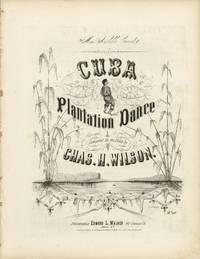
1855List3682Philadelphia: Edward L. Walker 142 Chestnut St. above 6th 1855. Folio sheet music pictorial lithographed cover approximately 13.5 × 10.5 inches. Light edge wear and minor toning; very good with a strong impression of the cover illustration. An antebellum piano dance reflecting the plantation imagery that circulated widely in mid-nineteenth-century American popular music. “Cuba Plantation Dance†was composed by Chas. H. Wilson a little-documented composer whose name appears chiefly in connection with this work and issued in Philadelphia during the early 1850s by Edward L. Walker the predecessor firm to the major publishing house Lee & Walker. A copy is recorded in the Levy Collection at Johns Hopkins which dates the publication to 1855.<br /> <br /> The cover presents a stylized plantation landscape framed by tall stalks of sugar cane with a small central vignette of a dancing Black figure. The use of Cuban plantation imagery reflects contemporary American fascination with the Caribbean sugar economy and with plantation life beyond the United States. During the 1850s Cuba was one of the largest slave societies in the Atlantic world. By the midcentury the island’s sugar plantations relied on hundreds of thousands of enslaved Africans and the enslaved population of Cuba was estimated at roughly 400000 people in the 1840s–1850s working primarily in the rapidly expanding sugar industry. Although Spain formally agreed to end the Atlantic slave trade in 1820 illegal importations of enslaved Africans into Cuba continued for decades supplying labor for the island’s plantations well into the 1850s. American publishers frequently borrowed such imagery for plantation-themed dance music marketed to the parlor trade. Pieces labeled “plantation dances†or “Ethiopian dances†formed part of the broader culture of minstrel and plantation entertainment. The title page bears a dedication to “Miss Arabelle Conrad†typical of mid-century sheet music addressed to amateur pianists. Along with the aforementioned copy in the Levy collection we find copies at Michigan and Temple. Edward L. Walker, 142 Chestnut St., above 6th unknown
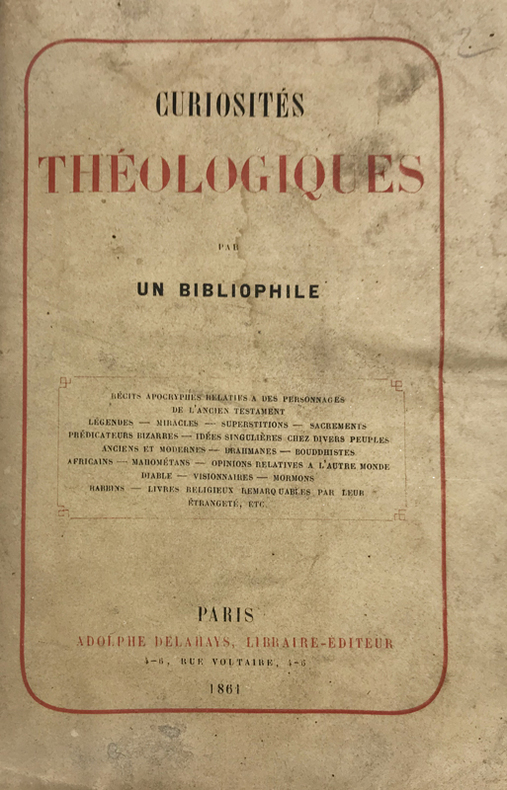
186110901Paris, Adolphe Delahays, 1861 ; in-16, broché ; (4), II, 358 pp., (6) pp. de catalogue du libraire, couverture beige imprimée en rouge et noir.
18758011L. Guerin et Cie Paris 1875 4 vol. 3 vol. grand in-8 de 4 ff.n.ch. XXXI 446 pp., 2 ff.n.ch. 466 pp. et 2 ff.n.ch. 502 pp. + un atlas in-folio de 1 f.n.ch. (titre) 30 feuillets 1 f.n.ch. (table), demi-chagrin de l'époque, dos à nerfs orné.
1817PHO-1170Paris, F. Bechet ; A. Égron, février 1817; 2 volumes in-8 ,xxxii,403,[2]; [4],394,[2]pp., relié plein veau raciné époque , dos lisse orné avec pièces de titre et tomaisons rouges, dos lisses. Édition originale.
1817PHO-2154Paris, Bechet,1817. 3 parties en 2 vol in 8°, (23x 13cm), demi veau époque, dos lisse orné, pièce de titre rouge, xxxii, 507 pp errata, 394 pp.-1f. (errata)- 2ff.-160pp.-1f (errata), demi veau époque, dos lisse orné avec tomaison et pièce de titre, frottements et épidermures, manque de papier au tome 2 et au dos, intérieur frais.
186246424Concord MA 1862. First Separate Edition. Octavo 24cm.; side-stitched self-wrappers; 15pp.; text printed in double columns. Wrappers separated and rather ragged along extremities the whole dust-soiled; Good only. Originally delivered as a lecture before being published in the abolitionist newspaper "The Pine and Palm" also known as the "Weekly Anglo-African". Sanborn a member of the "Secret Six" who provided funding to John Brown in the 1850s describes the effects of the emancipation of slaves in the West Indies noting that no violence broke out nor did it lead to an economic depression as had been predicted by Confederate propaganda. See "A Guide to the Study of British Caribbean History 1763-1834" 1932 p. 548; LCP AFRO-AMERICANA 9085; SABIN 76248. unknown books
180110389Dentu Paris An IX (1801) 1 vol. Fort in-8 broché de VIII 490 pp., couverture muette de l'époque, pièce de titre papier.
182513130Janet, Ponthieu Paris 1825 1 vol. In-8 de VII 480 pp., pleine basane racinée de l'époque, dos lisse orné, pièce de titre, tranches marbrées.
1844PHO-1491Paris, Arthus Bertrand, 1844, in-8, 2 volumes, LXXI-771-[2] pp. en numérotation continue, 20 diagrammes hors texte, demi-chagrin rouge, dos à faux nerfs, monogramme "J.M.C." doré en pied des dos, Rousseurs, quelques auréoles, l'une assez large en tête du second tome.
1844PHO-2506Paris, Arthus Bertrand, 1844, in-8, 2 volumes, LXXI-771-[2] pp. en numérotation continue, 20 diagrammes hors texte. Veau époque, dos lisse avec auteur, titre et tomaison. Manque aux dos, charnières fendues, quelques rousseurs, cachet aux titres.