754 résultats
567763Nerac, Imprimerie J. Owen, s.d. In-8 broché, 2 piqûres métal, 43pp, fig. in-texte. (Tiré à part du Bulletin de la Société d'Histoire de la Guadeloupe, n° 11-12)
182614630Dufart Paris 1826 1 vol. In-8 de 332 pp., demi-chagrin de l'époque, dos à nerfs orné.
9210210492New. Brand new and still unused unknown
Sevilla, Escuela de Estudios Hispano - Americanos, 1955. 4to.; XII - 989 pp. Láminas. Cubiertas originales.
1956ZB705138Caracas: Instituto Caribe de Antropologia y Sociologia . 1956-1999. Whole Numbers 1 through 64 66 through 71 73 through 92 only; library markings but sound and good or better copies in original paper wrappers. - If you are reading this this item is actually physically in our stock and ready for shipment once ordered. We are not bookjackers. Buyer is responsible for any additional duties taxes or fees required by recipient's country. Photos available upon request. Caracas: Instituto Caribe de Antropologia y Sociologia ... unknown
Endpapers darkened (as usual). A few underlinings. Otherwise internally a tight copy with faint foxing to first pages ; Rear fold out map in NF condition. Including slipcase and original mylar; 16mo 6" - 7" tall; 545 pages
Sevilla, 1964 ( Separata del "Anuario de Estudios Amerinanos"). 4to.; 36 pp. Cubiertas originales.
1862030663Kjobenhavn Copenhagen: J H Schultz 1862. 1st Edition . Soft cover. Near Fine. 11 Pp. Original Printed Wrappers No Names Or Marks Minute Loss At Lower Tips Of Cover And First Page. Ex Copley Library Although Not Marked As Such. <br/> <br/> J H Schultz paperback
Madrid, 1954 ["Cuadernos de Historia de las Relaciones Internacionales y Política Exterior de España"]. 4to.; 84 pp. Cubiertas originales.
pp. 337-392, 31 figs., refs. 4to. Plain new wrs.
5300CARIBBEAN TRAVEL JOURNAL. Diary. 101 pages. The Caribbean. c. 1908-9. The handwritten journal belonging to C. B. Benson of Hudson New York. The diary recounts Benson’s experience on an organized cruise group visit to Caribbean locations such as St. Thomas Puerto Rico Kingston Jamaica Caracas Venezuela Panama City Panama Port of Spain Trinidad and Martinique. Benson records his experiences in each location including his impressions of the town the locals sights he visited and local travel. He visited forts a school churches a mill a sugar plantation and Carnival celebrations. Benson took his tour during the era of colonial rule the attitudes of which infuse both his experiences and observations. Based on his mention of an earthquake in Kingston Jamaica taking place a year or two before he travelled in 1908 or 1909. “…St. Thomas where we arrived about 6 A.M. mid morning Jan 26 is one of the Virgin group and we found her framed and frescoed in the principal churches. Columbus in 1493 gave the group of 100 islands rocks and…which comprise the group. St. Thomas is 13 miles in length and 3 miles in width at its broadest. And I guess we walked the length of it speaking broadly and in the abstract at this distance.The heat of the tropical sun also takes its toll and blurs our ideas of time and distance somewhat. The town of Charlotte Amelia contains 13000 inhabitants – merchants and black babies and they are all dressed in their Sunday best to receive us properly.Thursday morning at 8 we went ashore at Porto sic Rico.Returning thro the village streets we stopped at the market place and noticed the display of fruits in baskets a couple of men seated on low stools with blacks in front of them.a native woman…was entertaining us in the middle of the road with a dance.When passing the island of Haiti.‘Do you know why we do not stop at the Island of Haiti’ ‘No’ There are cannibals there there are so many fat people aboard you would lose your wife’ At St Thomas the American council held open house and received some of us who dared to invade this solitude.An hour’s railroad ride which was made interesting by stops at every little…and station where the bare legged boy with the oil gun in hand squirted oil…bearings sic of the cars and engine. As it was before the 17 miles came to an end the rear axle of the parlor car so called because it had leather covered reclining seats caught fire. But when this happened we were nearly at the end of our journey and we were not delayed much. At the sugar plantation where we detrained we found we had some distance to walk down…to the sugar mill. As there was no path and the sticky wet ground to soil made worse by the heavy rain of the night before.A sugar mill is never a clean place.The process is somewhat intricate but way he likened to the process of brewing.The cane piled up in the yard is boiled in a number of vats then is run off with barrels and in a black and solid state in shipped to the Refineries at New York. The fiber of the cane is then hardened and dried and is fed to the furnaces to boil…cane. After return to the town San Juan we visited the shops. Walked out to the fort at the entrance of the harbor. The town is excellently policed and paved in the principal streets with telegram blocks.As this day was Thursday we concluded that every day was wash day for the native women and girls who for want of other diversions spend most of their time in this form of dissipation. Even the balconies of the main public street filled with traffic of street cars carriages and drays had their fill of wash some of which are found laying in the street having been carried down by the wind. No one had appropriated it as yet; and we did not add it to our collection of souvenirs. At the officers quarters I applied for a permit of the officer of the day to enter the fort ‘San Cristobal’ the fort commanding the entrance to the harbor.The fort was like most forts. The high tower gave a commanding view of the town and harbor. Then we visited the Governor’s Palace. In the Reception Room hanging on opposite sides facing each other are life sized oil paintings of McKinley & Cleveland. In the garden were some large palms tropical ferns a fountain &.Jan 29. early in the morning we were at Kingston in Jamaica. The channel is narrow and tortuous but well… Taking a local pilot we soon…opposite it…of three vessels one of which was the Princess Louise that was caught in the hurricane here three years ago and…the larger of the three vessels was trying to pick up the light from the light house which had been blown down. This destruction of the hurricane.After driving about a mile thru the city the destruction to the buildings & pavements made by the earthquake here a year or two ago half of the city seems to be in ruins and no attempt has been made apparently to rebuild & restore the city. Thousands of lives were lost here at that time which did immense damage to the fruits. Most of the uninhabitable part of the island belongs to the United Fruit Company a Boston Corporation who ships immense quantities of bananas from Port Antonio. Owing to recent destruction by fire of Hotel Litchfield our stop at the port of San Antonio and stay of night at the Hotel was omitted. An excursion across the island by train to Mandeville was arranged in its place.The town of Colon in its principle streets are paved with brick and appear clean. We noticed many buzzards. The air was clear and there was a delightful cool breeze blowing.We stopped at all of the stations going to Panama and noted the wonderful impressions made by the Sanitary Commission. The well ventilated and screened houses. The plan for disposal of garbage the open drainage the cleared lands…But of course the facts are here – bug and drain – all working to the mutual exclusion of some ideas to the American white employers. Therefore after a few months they must have a reaction in the States to…and detach themselves from all absorbing facts. The fighting for life against…fires. Most things are…between the white employers and the black employees. So we find the ‘White Bar’ and the ‘Black Bar’ ‘The White Employees’ ‘The Silver White Employees’ &c as signs on the cars intended to carry workmen back and forth from the works.Caracas the capital of Venezuela is about 3000 ft up but the sun in the middle of the day we found very hot.Plaza Bolivar was decorated with rows of colored electric lights. They are preparing for the Carnival season which ushers in Lent in Catholic countries. The market place had counters for dry goods highly colored handkerchiefs etc. Another section was devoted to fruits vegetables etc. We noticed some very large apricots. Mr. Bolivar apparently has done a great deal for his native town. He has given his name – while the people furnished the funds – for the largest parks a street and the coinage of the plutocrats.The Spaniard the…Hildago -in his easy subjugation of the…pleasure loving tropical savage has replaced the native of simple taste and left in his place the mongrel half-breed with all the vices of the conqueror and none of the virtues of the…Indian savage…â€. The diary is in very good condition. It is mostly written in pencil but is quite legible. hardcover books
5300CARIBBEAN TRAVEL JOURNAL. Diary. 101 pages. The Caribbean. c. 1908-9. The handwritten journal belonging to C. B. Benson of Hudson New York. The diary recounts Bensons experience on an organized cruise group visit to Caribbean locations such as St. Thomas Puerto Rico Kingston Jamaica Caracas Venezuela Panama City Panama Port of Spain Trinidad and Martinique. Benson records his experiences in each location including his impressions of the town the locals sights he visited and local travel. He visited forts a school churches a mill a sugar plantation and Carnival celebrations. Benson took his tour during the era of colonial rule the attitudes of which infuse both his experiences and observations. Based on his mention of an earthquake in Kingston Jamaica taking place a year or two before he travelled in 1908 or 1909. St. Thomas where we arrived about 6 A.M. mid morning Jan 26 is one of the Virgin group and we found her framed and frescoed in the principal churches. Columbus in 1493 gave the group of 100 islands rocks andwhich comprise the group. St. Thomas is 13 miles in length and 3 miles in width at its broadest. And I guess we walked the length of it speaking broadly and in the abstract at this distance.The heat of the tropical sun also takes its toll and blurs our ideas of time and distance somewhat. The town of Charlotte Amelia contains 13000 inhabitants merchants and black babies and they are all dressed in their Sunday best to receive us properly.Thursday morning at 8 we went ashore at Porto sic Rico.Returning thro the village streets we stopped at the market place and noticed the display of fruits in baskets a couple of men seated on low stools with blacks in front of them.a native womanwas entertaining us in the middle of the road with a dance.When passing the island of Haiti.Do you know why we do not stop at the Island of Haiti No There are cannibals there there are so many fat people aboard you would lose your wife At St Thomas the American council held open house and received some of us who dared to invade this solitude.An hours railroad ride which was made interesting by stops at every littleand station where the bare legged boy with the oil gun in hand squirted oilbearings sic of the cars and engine. As it was before the 17 miles came to an end the rear axle of the parlor car so called because it had leather covered reclining seats caught fire. But when this happened we were nearly at the end of our journey and we were not delayed much. At the sugar plantation where we detrained we found we had some distance to walk downto the sugar mill. As there was no path and the sticky wet ground to soil made worse by the heavy rain of the night before.A sugar mill is never a clean place.The process is somewhat intricate but way he likened to the process of brewing.The cane piled up in the yard is boiled in a number of vats then is run off with barrels and in a black and solid state in shipped to the Refineries at New York. The fiber of the cane is then hardened and dried and is fed to the furnaces to boilcane. After return to the town San Juan we visited the shops. Walked out to the fort at the entrance of the harbor. The town is excellently policed and paved in the principal streets with telegram blocks.As this day was Thursday we concluded that every day was wash day for the native women and girls who for want of other diversions spend most of their time in this form of dissipation. Even the balconies of the main public street filled with traffic of street cars carriages and drays had their fill of wash some of which are found laying in the street having been carried down by the wind. No one had appropriated it as yet; and we did not add it to our collection of souvenirs. At the officers quarters I applied for a permit of the officer of the day to enter the fort San Cristobal the fort commanding the entrance to the harbor.The fort was like most forts. The high tower gave a commanding view of the town and harbor. Then we visited the Governors Palace. In the Reception Room hanging on opposite sides facing each other are life sized oil paintings of McKinley & Cleveland. In the garden were some large palms tropical ferns a fountain &.Jan 29. early in the morning we were at Kingston in Jamaica. The channel is narrow and tortuous but well Taking a local pilot we soonopposite itof three vessels one of which was the Princess Louise that was caught in the hurricane here three years ago andthe larger of the three vessels was trying to pick up the light from the light house which had been blown down. This destruction of the hurricane.After driving about a mile thru the city the destruction to the buildings & pavements made by the earthquake here a year or two ago half of the city seems to be in ruins and no attempt has been made apparently to rebuild & restore the city. Thousands of lives were lost here at that time which did immense damage to the fruits. Most of the uninhabitable part of the island belongs to the United Fruit Company a Boston Corporation who ships immense quantities of bananas from Port Antonio. Owing to recent destruction by fire of Hotel Litchfield our stop at the port of San Antonio and stay of night at the Hotel was omitted. An excursion across the island by train to Mandeville was arranged in its place.The town of Colon in its principle streets are paved with brick and appear clean. We noticed many buzzards. The air was clear and there was a delightful cool breeze blowing.We stopped at all of the stations going to Panama and noted the wonderful impressions made by the Sanitary Commission. The well ventilated and screened houses. The plan for disposal of garbage the open drainage the cleared landsBut of course the facts are here bug and drain all working to the mutual exclusion of some ideas to the American white employers. Therefore after a few months they must have a reaction in the States toand detach themselves from all absorbing facts. The fighting for life againstfires. Most things arebetween the white employers and the black employees. So we find the White Bar and the Black Bar The White Employees The Silver White Employees &c as signs on the cars intended to carry workmen back and forth from the works.Caracas the capital of Venezuela is about 3000 ft up but the sun in the middle of the day we found very hot.Plaza Bolivar was decorated with rows of colored electric lights. They are preparing for the Carnival season which ushers in Lent in Catholic countries. The market place had counters for dry goods highly colored handkerchiefs etc. Another section was devoted to fruits vegetables etc. We noticed some very large apricots. Mr. Bolivar apparently has done a great deal for his native town. He has given his name while the people furnished the funds for the largest parks a street and the coinage of the plutocrats.The Spaniard theHildago -in his easy subjugation of thepleasure loving tropical savage has replaced the native of simple taste and left in his place the mongrel half-breed with all the vices of the conqueror and none of the virtues of theIndian savage. The diary is in very good condition. It is mostly written in pencil but is quite legible. hardcover
041370520X.Gpaperback. Good. Access codes and supplements are not guaranteed with used items. May be an ex-library book. paperback
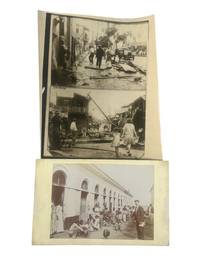
1928219181928. Puerto Rico during the early 20th century photo archive including the 1928 hurricane and colonial era life. Archive contains 3 silver gelatin photos with 2 photos being on one sheet. Each measure 8.5" x 11" to 5" x 9". One press photograph features two stacked photojournalistic images showing scenes of destruction in San Juan following the catastrophic hurricane of September 13 1928 one of the most devastating natural disasters to hit the island. The other photograph likely taken in the late 1910s is a mounted studio or missionary-style image depicting a white man standing in front of a long arched tenement-style structure surrounded by dozens of Puerto Rican women men and children many of the children barefoot and wearing minimal or tattered clothing. The larger image appears staged or observational and likely documents poverty in the aftermath of the U.S. acquisition of Puerto Rico following the Spanish-American War. The 1928 hurricane later named the San Felipe Segundo hurricane made landfall as a Category 5 storm killing over 300 people and rendering tens of thousands homeless. The press release photo captures the stark aftermath: corrugated roofs torn from buildings telephone poles shattered and citizens-both children and laborers-wandering through the wreckage-strewn streets of San Juan. These images reflect not only the physical devastation of the hurricane but also the lack of infrastructural resilience in a colony still reeling from U.S. economic control widespread poverty and racialized neglect by the mainland. The second image provides an unvarnished glimpse into the social realities of Puerto Rican life under U.S. rule during the 1910s. After the Foraker Act of 1900 and the Jones Act of 1917 which made Puerto Ricans U.S. citizens without granting them full constitutional rights the island experienced increasing political disenfranchisement and economic dependency. The presence of the white man-possibly a government official missionary or educator-visually underscores the racial and colonial dynamics at play. The surrounding community members including many children without shoes or shirts reflect systemic inequality and the enduring impacts of U.S. colonial policy on public health housing and education. Some edge wear tape on margins of smaller image and original editor's markings en verso to press photo. Overall very good condition. unknown
128 pages. Features: Is the U.S. Losing Out in the Caribbean?; The Fourth of July - 1908; "Fair Play for America" Committee; The Fair Trae Racket; The Lost Colony of the Confederacy - A bizarre tale of a Colony of defeated Confederates who tried to start over again in South America; A Barber Speaks His Mind - things a customer should know in view of the rising price of haircuts; What Are You Reading These Days? - A critique that throws light on brainwashing techniques of the book and magazine publishers in America; Debatability of Fluoridation; Smith Street, U.S.A. - reprint of a 1939 article on the battle for democracy in the U.S.; Straight Talk; Nostalgia; Stage Fright - a common fear is explained; The Challenge of Underdevelloped Countries; Red Spies Plague America - an army of 300,000 spies steal military and atomic secrets; Underground "Noah's Ark" - man-made salt caverns in Kansas offer protection in the event of enemy attack; A "New" Task for the Church - the American home has become a real mission field; Old Warhorse Still in Harness - how Charlie Younts dealt with retirement; Exit the Aircraft Carrier; How to Prevent a Cold; Vi Murphy Keeps Her Word - courageous reporter goes to jail rather than betray news source; A Discovery That Changed the World - Paper; The Dalton Trumbo Trumpet - he was jailed in 1950 for contempt of Congress, has since written scripts for Exodus and Spartacus, and now receives adulation. Minimal markings. Moderate wear. A sound vintage copy bearing the address label of noted Madison, WI architect William Kaeser. Book
196998859New York, Kraus Reprint Co., 1969. 738 S. Gr.-8°, Halbleinen
1836011073, 1836. Erstausgabe Goldgeprägter Halblederband Solide, Materiell Gut
Un volume broché au format poche de 222 pp.; couverture illustrée. Etat de neuf. Voir photo. Peu fréquent.
17596261BBLeipzig, Arkstee und Merkus, 1759. 4°. (1) Bl., (8) 726 (42) S., (1) Bl. Mit 17 (dv. 12 gef.) gest. Karten u. 11 gest. Tafeln. Lederband der Zeit mit restauriertem Rücken, schlichte Vergoldung und Rückenschild. + Wichtig: Für unsere Kunden in der EU erfolgt der Versand alle 14 Tage verzollt ab Deutschland / Postbank-Konto in Deutschland vorhanden +, A|B 17. Band.
17596261BB17. Band. Leipzig, Arkstee und Merkus, 1759. 4°. (1) Bl., (8) 726 (42) S., (1) Bl. Mit 17 (dv. 12 gef.) gest. Karten u. 11 gest. Tafeln. Lederband der Zeit mit restauriertem Rücken, schlichte Vergoldung und Rückenschild.
AMA-1176London, Robillant + Voena, 2010. In 4°, broché, couverture à rabats. 37 pp.,[1 f.], illustrations en couleurs in texte.
Z1-F-065-00096British Film Institute. Used - Good. Ships from UK in 48 hours or less usually same day. Your purchase helps support Sri Lankan Children's Charity 'The Rainbow Centre'. Ex-library so some stamps and wear but in good overall condition. 100% money back guarantee. We are a world class secondhand bookstore based in Hertfordshire United Kingdom and specialize in high quality textbooks across an enormous variety of subjects. We aim to provide a vast range of textbooks rare and collectible books at a great price. Our donations to The Rainbow Centre have helped provide an education and a safe haven to hundreds of children who live in appalling conditions. We provide a 100% money back guarantee and are dedicated to providing our customers with the highest standards of service in the bookselling industry. British Film Institute unknown
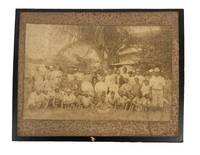
1890208021890. Unidentified photographers two albumen photographs of Black laborers circa 1890s to early 1900s document agricultural and skilled work performed by African Americans in the decades following emancipation when systems of sharecropping and tenant farming structured rural economies across the American South and parts of the Caribbean. These images provide visual evidence of labor organization racial hierarchy and economic dependency that persisted after the formal end of slavery with large groups of Black workers shown in relation to white overseers or employers. One photograph presents approximately forty five Black men gathered around three centrally seated white men emphasizing supervisory roles and social stratification within plantation labor systems. The clothing of the workers including cotton shirts loose trousers and wide brimmed hats reflects adaptation to agricultural work in hot climates while a smaller number of individuals in jackets and pocket watches suggests internal distinctions within Black labor communities. The second image depicts six Black carpenters engaged in coordinated manual work at an outdoor shop indicating the presence of skilled trades alongside agricultural labor.<br /> <br /> Group of two albumen photographs mounted on original cardstock measuring approximately 8 x 9.5 inches and 10 x 12 inches. The larger photograph shows an outdoor woodworking scene with six men using tools including a hammer and saw working under a thatched structure suggestive of southern or Caribbean environments. The second photograph shows a large assembled group of plantation workers with three white men seated at center. Faint pencil annotations appear in the margins of one mount. Both photographs retain strong compositional clarity with figures arranged to emphasize both collective labor and hierarchical relationships.<br /> <br /> These photographs contribute to the study of post emancipation Black life by documenting how agricultural dependency and limited access to capital shaped labor conditions into the late nineteenth and early twentieth centuries. The plantation scene illustrates the persistence of racially stratified labor organization while the carpentry image provides evidence of skilled Black tradesmen operating within local economies often without institutional support or pathways to independent enterprise. The visual contrast between collective field labor and artisanal work expands the interpretive scope of the archive situating these images within broader histories of labor race and economic transition following the end of slavery. Edge wear and minor chipping to mounts with noticeable foxing to one image primarily at the margins; images remain legible and structurally intact. Overall good condition. unknown
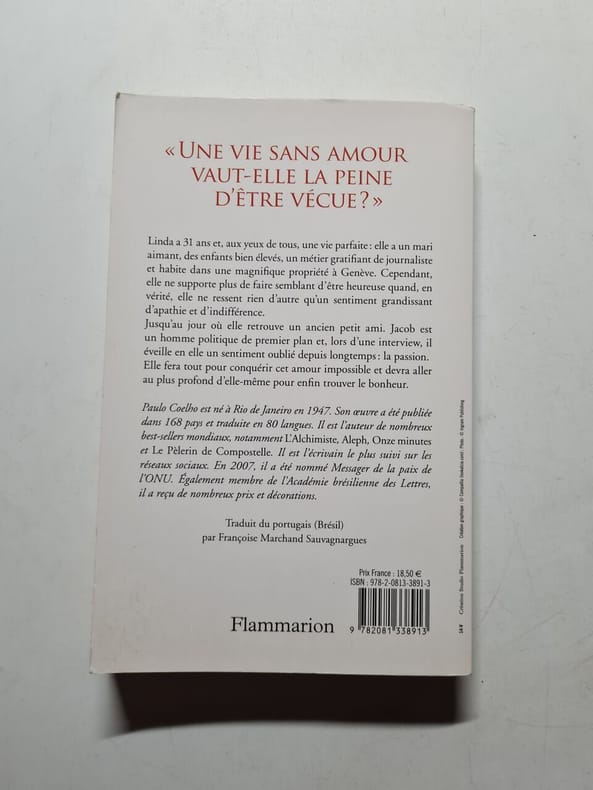
2014500272323Editions Flammarion 2014 320 pages 13 4x2 6x20 8cm. 2014. Broché. 320 pages.
680p., illus. Hardcover Good condition