LAMARTINE Alphonse deLivre Rare Book
708 résultats
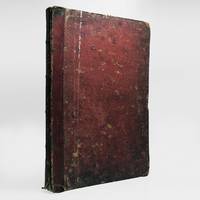
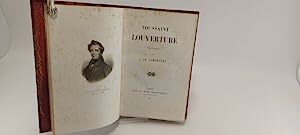
1449Editions Michel Lévy frères, 1850. Relié (16 x 23,5 cm) de XXIII-302 pages. Reliure demi-maroquin rouge à coins, dos à nerfs, titre et tête dorés. Couvertures conservées (Reliure de L. Claessens). Quelques rousseurs sinon bel exemplaire. Édition originale de la première oeuvre dramatique de Lamartine. On lit au verso du faux-titre: "Représenté pour la première fois à Paris sur le théâtre de la Porte-Saint-Martin, le 6 avril 1850. Les vers marqués d'un astérisque ont été supprimés à la représentation." A la suite de la pièce "De l'émancipation des esclaves, discours prononcés à diverses époques par M. A. de Lamartine" (23 avril 1835, 25 mai 1836, 10 février 1840 et 10 mars 1842). Au lendemain de la révolution de 1848 à laquelle il avait participé et qui scellait l'abolition définitive de l'esclavage, Lamartine, qui avait pleinement compris la force symbolique du personnage de Toussaint-Louverture, attendait beaucoup de cette pièce tout comme le Théâtre de la Porte Saint-Martin en perte de vitesse. Le rôle titre et la mise en scène avaient été confiés à Frédérick Lemaître (1800-1876), consacrant ainsi le retour sur le devant de la scène de l'acteur vedette du Boulevard du crime.Ex-lbris monogrammé non identifié portant la devise Labor omnia vincit improbus.
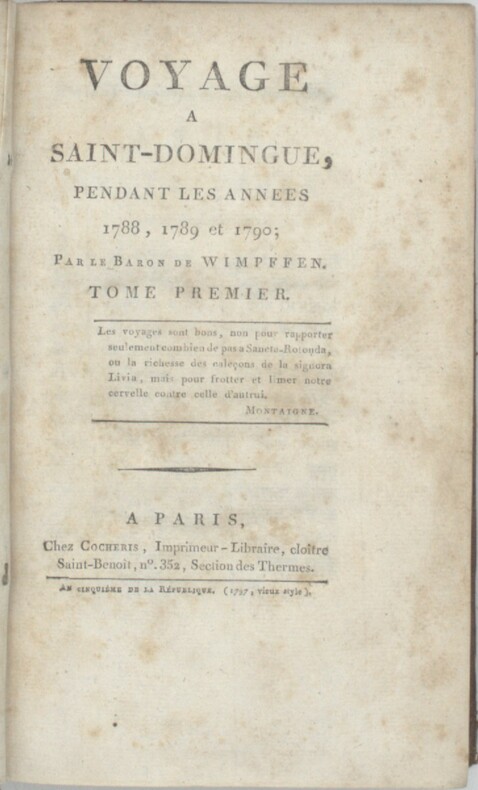
1797PHO-1518Paris, Cocheris, An cinquième de la République (1797). 2 volumes in-8 en 1, pleine basane, dos lisse avec pièces de titre et de tomaison rouge (Reliure de l’époque), rousseurs et papier bruni, coiffe usée.
A Paris, chez Pillot frères, libraires, sur le Pont-neuf, n. 5, an XI.-1802, in-18 (mm. 139x85), br. muta ottocentesca, pp. XII, [1], da 14 a 175, [1]. Con ritratto di Toussaint-Louverture inciso in rame in antiporta. François-Dominique Toussaint Louverture (Port-Margot, 20 maggio 1743 – Fort-de-Joux, 7 aprile 1803), fu un rivoluzionario haitiano afroamericano. Ex schiavo, guidò la rivolta degli schiavi di Saint-Domingue (oggi Haiti). Il suo acume militare e politico seppe salvare gli ideali della prima rivoluzione haitiana del novembre 1791. Combatté prima per gli spagnoli contro la Francia e poi per la Francia contro Spagna e Gran Bretagna. Infine combatté per Haiti contro la Francia napoleonica. Risultò fondamentale nella trasformazione dei primi moti di ribellione in una vera e propria rivoluzione che nel 1800 scoppiò a Santo Domingo, la più prospera colonia di schiavi dell'epoca che si trasformò nella prima vera e propria società libera coloniale con l'esplicito rifiuto della razza come base di scala sociale. Esistono diverse varianti (o contraffazioni?) dell'edizione di Pillot, impressa nel 1802 e che dovrebbe essere la prima. Tutte recano 1802 come data di stampa ma variano: la datazione rivoluzionaria (anno X o anno XI), il ritratto (la figura, riprodotta di tre quarti, è volta a destra o a sinistra), le linee di stampa sul frontespizio, la presenza o meno sul frontespizio del nome dell'autore ed infine il numero di pagine. Il nostro esemplare corrisponde ad una delle varianti conservate alla National Library of Israel: il ritratto è volto verso la propria destra; il nome dell'autore non è presente in frontespizio; la data rivoluzionaria è: an XI; le pagine sono 175; la citazione in frontespizio ("Les abstractions et le vains theories [...]", è impressa su quattro linee di testo invece che su due. Mancanza al margine bianco inferiore di una carta, gore marginali al ritratto e alle prime carte del volume. Raro.
238308Paris, chez les marchands de nouveautés [Imprimerie de F. P. Hardy], 1822 in-8, 16 pp., dérelié.
46404990Lettre d’une page sur un double feuillet in-4 à en-tête de la République d’Haïti, avec sa fonction imprimée “B. Inginac, Général de Brigade, Secrétaire Général près de Son Excellence le Président d’Haïti”.Joseph-Balthazar Inginac (1775 - 1847) est un personnage éminent de la jeune république d’Haïti, il fut chargé, à partir de 1804, d’élaborer le code Rural afin d’exploiter les terres reprises aux colons. Il a occupé divers postes sous Petion et Boyer, notamment celui de secrétaire particulier de Pétion à partir de 1810, poste qu’il conserva sous Boyer. En charge des relations extérieures et de l’instruction publique, il eut à mener des missions diplomatiques délicates avec l’Angleterre et les États-Unis afin de donner une reconnaissance internationale à Haïti. Nommé chef d’escadron et aide de camp du président en 1811, il fut successivement promu colonel, puis général de brigade et enfin, en 1839, général de division. Il a, en particulier, négocié l’accueil à Haïti de noirs étasuniens. En 1839, il fut l’un des commissaires chargés de négocier un traité de commerce avec la France. Pour des raisons indépendantes de ses compétences, la plupart de ses missions furent des échecs, mais son sens de la diplomatie, son intelligence et son dévouement à la cause de son pays a marqué tous ses interlocuteurs. Il fut brièvement banni suite au renversement de Boyer, puis rappelé en 1845.La lettre est adressée à M. Jullien, homme de lettres à Paris. Ce dernier lui avait recommandé un M. Dubois pour un poste auquel Inginac l’avait embauché et pour lequel il offrait toute satisfaction. Mais alors qu’il commençait son travail il fut frappé par “la maladie du pays à laquelle il n’a pu résister malgré les soins qui lui ont été prodigués”. Un post-scriptum dit “M. Villevalix s’occupera sous peu de vous faire parvenir les renseignements que vous demandez”. Le correspondant est sans doute Marc-Antoine Jullien (1775 - 1848), révolutionnaire et homme de lettres qui, à cette époque, s’occupait de pédagogie. Jullien était un enthousiaste de la cause haïtienne, il dirigeait à cette époque la Revue Encyclopédique, revue qu’il avait fondée en collaboration avec son ami l’abbé Grégoire. Il a noté en tête de la lettre “rép. le 23 mai 1825 par M. Leblanc, instituteur. écrit le même jour à M. Boyer président d’Haïti et Villevalaix.”
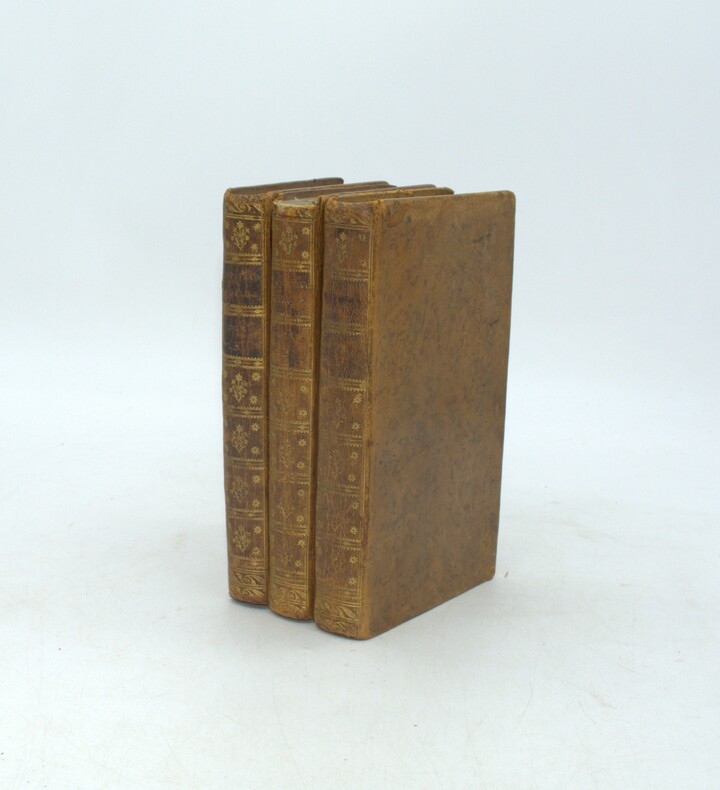
1797PHO-2001A Paris Chez J. Jansen, l’an V de la République (1797), 3 volumes in-8 de VI-504pp. ; 420 p., 414 pp., pleine basane époque, dos lisse orné avec titre et tomaison, frottements et épidermures, coiffe sup. tome 2 arasée,
238359Paris-Strasbourg-Londres, Treuttel et Würtz [L.-E. Herhan, imprimeur stéréotype], 1820 - 1822 2 parties en un vol. in-8, (6)-23 pp., (2)-iv pp., 124 pp., dérelié.
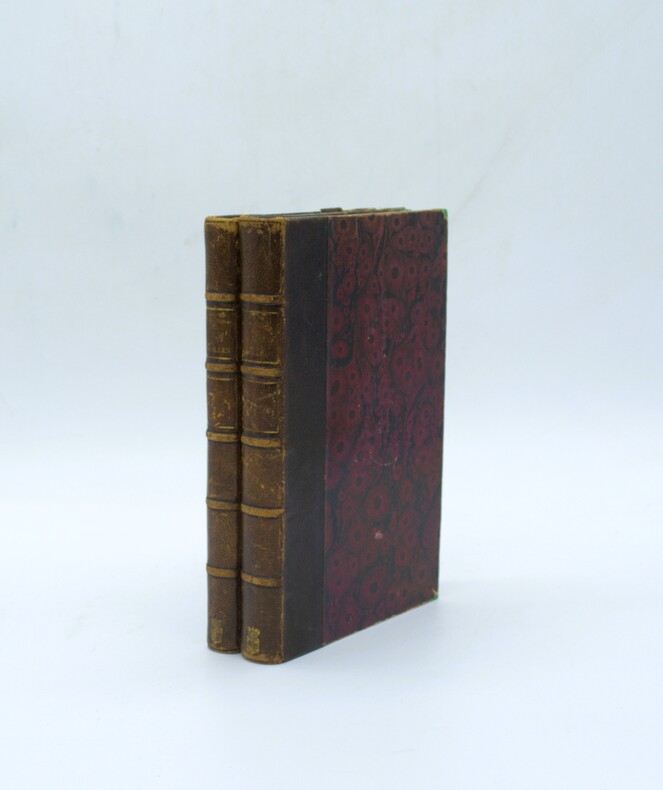
1842PHO-2339Paris, Dauvin et Fontaine Libraires, 1842, Au Comptoir Des Imprimeurs-Unis, 1844, 2 volumes in-8 (21,5x13,5cm), VIII-356 pp., 481 pp., demi chagrin époque, dos à nerfs avec auteur et titre, armoiries dorées en pied, ex-libris en page de garde (Bruneau, officier de vaisseau).
244146Jacmel, Librairie Dame Lamour, 1868 in-8, [2] ff. n. ch., 111 pp., en feuilles, cousu.
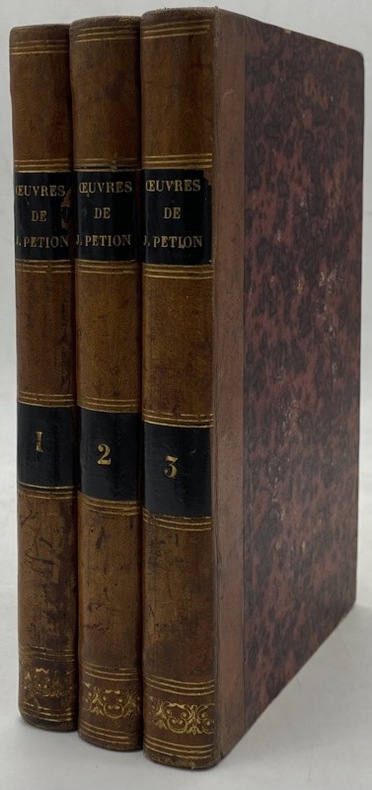
232912Paris, Garnery, an premier de la République (1792-1793) 3 vol. in-8, viij pp., 399 pp. ; [2] ff. n. ch., vj pp., pp. 7-[415] (mal chiffrées 435) ; [2] ff. n. ch., iv pp., pp. 5-436, demi-basane brique, dos lisses ornés de guirlandes et filets dorés, pièces de titre et de tomaison noires, coins en vélin vert, tranches mouchetées (reliure du début du XIXe).
210191Paris, chez Ponthieu, 1826 in-8, (8)-488 pp., demi-basane brune, dos lisse, filets dorés (reliure de l'époque). Début de fente au mors supérieur, mouillure angulaire.
1875373911Paris: L. Guerin et Cie 1875. Second edition. 42 engravings and maps. Folio. Bound in quarter contemporary red morocco and cloth. Good only plates with worm holes. Second edition. 42 engravings and maps. Folio. "Collection of views of the main locations of the French colony of Saint Domingue". Sabin 50578 L. Guerin et Cie unknown
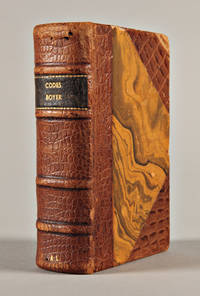
WRCAM53510Port-au-Prince: C. Descauriet 1828. 3859-276349-736pp. Thick 16mo. 20th-century patterned calf and marbled boards gilt leather label. A handful of wormholes in binding some edge wear. Haitian library stamp on front free endpaper. Minor toning a number of leaves with fire damage along bottom. A fair copy lacking titlepage last leaf and otherwise incomplete see pagination. Gives the Code Civil Code de Procedure Civile Code de Commerce Code d'Instruction Criminelle Code Penal and Code Rural. A rugged copy at best but an extensive example of early Caribbean printing from a time and place with a very low survival rate of material. C. Descauriet hardcover books
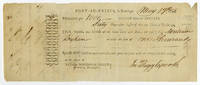
1796WRCAM52307Port-au-Prince 1796. 4 x 9 1/2 inches completed in manuscript docketed on verso. Minor toning and edge wear. Very good. A rare pay order for supplies made out to Baron Jean-Charles de Montalembert on behalf of the invading British occupation force in Haiti. The document is signed by John Wigglesworth agent to the Commander of the British forces in Haiti and later Britain's envoy to the leader of the Haitian Revolution Touissant Louverture. By early the next century Louverture would become ever so briefly chief of the first free Black Republic in Haiti. The payee Montalembert has docketed the verso with an additional docket in French transferring the funds to Dutilh & Wachsmuth a Philadelphia mercantile house. <br> <br> St. Domingo the French part of Haiti was a highly prosperous sugar coffee and cotton slave-estate island whose produce was described as exceeding that of the whole of the British Leeward and surrounding islands. In 1789 it was said to consist of 10000 white people 24000 free mixed-race people and 455000 negro slaves. Although free local laws decreed that mixed-race individuals could not accept any office or employment other than as planters. As news spread of the revolution this group revolted but were roundly defeated. Part of the white response to the uprising was to create their own local assembly which excluded those of mixed race and resolved to transfer the island's allegiance to Great Britain whereupon France sent Commissioners who according to some reports recruited negroes to fight the whites. <br> <br> Starting in August 1791 the slaves revolted in many towns implementing major massacres and destruction of estates and establishing free communities of their own. They were led by Touissant Louverture an ex-slave who later joined the French army after the country abolished slavery in 1793. Louverture swiftly rose to the rank of Commander in Chief of the French forces in Haiti and proved to be an effective leader. In 1794 the British army under the pretense of the Napoleonic war sent a force from Jamaica that occupied Port-au-Prince and some other towns a welcome development for the remaining white population on the island. This British force was commanded by General Sir Thomas Maitland of the 62 Foot Regiment for whom Wigglesworth was the army agent. <br> <br> In the end the British were not successful. By 1798 the army had been virtually wiped out by yellow fever and in April of that year Maitland withdrew the British forces from Haiti under a guarantee from Louverture that the remaining pro-British whites would be protected. In May 1801 Touissant established St. Domingo as an independent republic. This alarmed the French so badly that they subsequently sent an army of 25000 that recaptured the island within a year and then by a ruse conveyed Louverture to France where he soon after died in prison. <br> <br> Baron de Montalembert had commanded the Legion britaniques de Sainte-Domingue a force of 1200 men composed of white colonials recruits from Europe and possibly some free mixed-race Haitians. Montalembert's Grenadiers were one of the most dependable units fighting for the British until the aforementioned fever along with heavy casualties decimated the unit. They disbanded on June 25 1797. <br> <br> A rare early Haitian document signed by two principal figures in the British occupation during the Haitian Revolution. unknown books
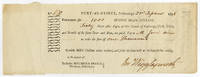
1796WRCAM52305Port-au-Prince 1796. 4 x 9 1/2 inches completed in manuscript docketed on verso. Minor toning and corner wear. Very good. A rare pay order for supplies bought from William Dickson by the invading British occupation force in Haiti. The document is signed by John Wigglesworth agent to the Commander of the British forces in Haiti and later Britain's envoy to the leader of the Haitian Revolution Touissant Louverture. By early the next century Louverture would become ever so briefly chief of the first free Black Republic in Haiti. The payee Dickson has docketed the verso to pay "Mg. de Klegand" with an additional docket in French by de Klegand to pay Dutilh & Wachsmuth a Philadelphia mercantile house. <br> <br> St. Domingo the French part of Haiti was a highly prosperous sugar coffee and cotton slave-estate island whose produce was described as exceeding that of the whole of the British Leeward and surrounding islands. In 1789 it was said to consist of 10000 white people 24000 free mixed-race people and 455000 negro slaves. Although free local laws decreed that mixed-race individuals could not accept any office or employment other than as planters. As news spread of the revolution this group revolted but were roundly defeated. Part of the white response to the uprising was to create their own local assembly which excluded those of mixed race and resolved to transfer the island's allegiance to Great Britain whereupon France sent Commissioners who according to some reports recruited negroes to fight the whites. <br> <br> Starting in August 1791 the slaves revolted in many towns implementing major massacres and destruction of estates and establishing free communities of their own. They were led by Touissant Louverture an ex-slave who later joined the French army after the country abolished slavery in 1793. Louverture swiftly rose to the rank of Commander in Chief of the French forces in Haiti and proved to be an effective leader. In 1794 the British army under the pretense of the Napoleonic war sent a force from Jamaica that occupied Port-au-Prince and some other towns a welcome development for the remaining white population on the island. This British force was commanded by General Sir Thomas Maitland of the 62 Foot Regiment for whom Wigglesworth was the army agent. <br> <br> In the end the British were not successful. By 1798 the British army had been virtually wiped out by yellow fever and in April of that year Maitland withdrew the British forces from Haiti under a guarantee from Louverture that the remaining pro-British whites would be protected. In May 1801 Touissant established St. Domingo as an independent republic. This alarmed the French so badly that they subsequently sent an army of 25000 that recaptured the island within a year and by a ruse conveyed Louverture to France where he soon after died in prison. unknown books
1796WRCAM52308Port-au-Prince 1796. 3 1/2 x 9 3/4 inches completed in manuscript docketed on verso. Minor toning. Very good. A rare pay order for supplies intended for the British occupation force in Haiti made out to M. Juré Ainé. The document is signed by John Wigglesworth agent to the Commander of the British forces in Haiti and later Britain's envoy to the leader of the Haitian Revolution Touissant Louverture. By early the next century Louverture would become ever so briefly chief of the first free Black Republic in Haiti. The payee Jure has docketed the verso in French with an additional docket in French transferring payment to Dutilh & Wachsmuth a Philadelphia mercantile house. <br> <br> St. Domingo the French part of Haiti was a highly prosperous sugar coffee and cotton slave-estate island whose produce was described as exceeding that of the whole of the British Leeward and surrounding islands. In 1789 it was said to consist of 10000 white people 24000 free mixed-race people and 455000 negro slaves. Although free local laws decreed that mixed-race individuals could not accept any office or employment other than as planters. As news spread of the revolution this group revolted but were roundly defeated. Part of the white response to the uprising was to create their own local assembly which excluded those of mixed race and resolved to transfer the island's allegiance to Great Britain whereupon France sent Commissioners who according to some reports recruited negroes to fight the whites. <br> <br> Starting in August 1791 the slaves revolted in many towns implementing major massacres and destruction of estates and establishing free communities of their own. They were led by Touissant Louverture an ex-slave who later joined the French army after the country abolished slavery in 1793. Louverture swiftly rose to the rank of Commander in Chief of the French forces in Haiti and proved to be an effective leader. In 1794 the British army under the pretense of the Napoleonic war sent a force from Jamaica that occupied Port-au-Prince and some other towns a welcome development for the remaining white population on the island. This British force was commanded by General Sir Thomas Maitland of the 62 Foot Regiment for whom Wigglesworth was the army agent. <br> <br> In the end the British were not successful. By 1798 the British army had been virtually wiped out by yellow fever and in April of that year Maitland withdrew the British forces from Haiti under a guarantee from Louverture that the remaining pro-British whites would be protected. In May 1801 Touissant established St. Domingo as an independent republic. This alarmed the French so badly that they subsequently sent an army of 25000 that recaptured the island within a year and by a ruse conveyed Louverture to France where he soon after died in prison. unknown books
384 pages. Extensive index. Notes on bibliography. Illustrated in color and black and white. Map endpapers. "Author served Israel's Ministry of Foreign Affairs in Columbia, Panama and Haiti. In those places, and many others in the Americas to which he traveled, he encountered descendants of Jewish colonists who recalled their religious heritage. Arbell has devoted a good part of his life to uncovering and documenting the elusive story of the Jews who lived in areas of Central and South America at one time ruled by the French, the Dutch, the Danish and the British." - from back board. Clean, bright and unmarked with very light wear. An excellent copy. Book
1744PHO-2162Trévoux, par la Compagnie, 1744, 3 (4) volumes in-12 (17x10,5cm), (6) ff., 394 pp. ; (1) f., 428 pp. ; 346 pp., illustré de 7 cartes et plans, manque le frontispice au tome 1, veau marbré époque, dos à nerfs ornés avec pièces de titre et de tomaison grenat, tranches rouges, 4 planches détachées, frottements, épidermures plus marquées au tome 2, coiffes arasées au tome 2, petit manque au tome 1, coins usés, coupes usées au tome 2, manque de papier en marge p. 11, sans atteinte au texte.
004480Paris, Imprimerie Royale, 1780. In-8 (134 X 204 mm) veau fauve marbré, encadrement de triple filet doré sur les plats, dos cinq nerfs, caissons dorés ornés, pièce de titre maroquin grenat, roulette intérieure, tranches dorées (reliure de l'époque); XVI-312 pages.
219851Paris, Grangé, 1776-1777 2 vol. in-8, XVI-327 pp. et [4]-IV-368 pp., tableau dépliant, demi-chagrin vert, tranches marbrées (reliure fin XIXe). Coiffes et nerfs frottés, coupes et coins usés. Rousseurs et mouillures au tome II.
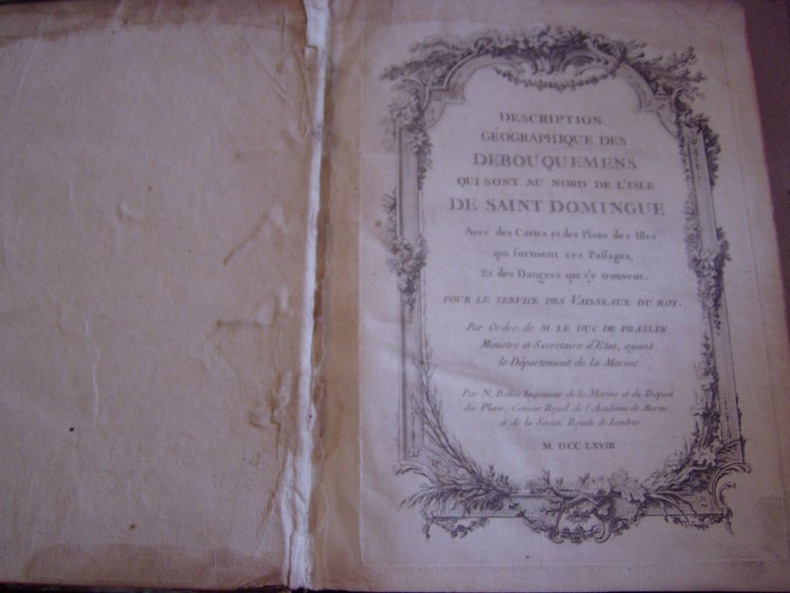
1768203001768 1768 ( A Versailles; Imprimerie du département de la Marine) , 1768. In/4 basane fauve marbrée, dos à nerfs orné d'ancres,152 p., page de titre gravée, page de titre imprimée manquante : 34 planches gravées (cartes) dont 15 rempliées,32 numerotées en continu,la 24 en double,et la carte des Isles Bermudes numerotée T1,N°48. Mouillure generale claire dans la marge superieure sur l’ensemble du volume,page de garde manquante. Armes sur le 2e plat,arrachées ou cachées sur le 1er plat.Coins usés.In-4 carré ( 250 X 195 mm. ) de: [5] ff. ( Titre, Titre gravé, Table des chapitres, Table des cartes et plans ), 152 pages, Joli bandeau allégorique signé Jean CHOFFARD et 34 cartes gravées dont 16 doubles ( 2 dépliantes ) par Nicolas BELLIN. Parmi les 34 cartes qui illustrent louvrage, une carte générale du Nord de St Domingue et de ses cinq débouquements, une du Canal de Bahama représentant le sud du Golfe du Mexique. Rare édition originale de ce routier des Antilles par le premier hydrographe de la Marine royale française, Jacques-Nicolas BELLIN ( 1703-1772 ). ( J. Polak 591 Sabbin, 4552 ).Conforme à l'exemplaire en ligne Gallica - Versailles.
235836Londres, J. Debrett, et se trouve à Paris, Laran, et chez les marchands de nouveautés, s.d. (1797) in-8, [3] ff. n. ch., 100 pp., cartonnage d'attente de papier bouteille, pièce de titre cerise, tranches citron (reliure de l'époque). Rousseurs
239741Paris, chez Arthus Bertrand, 1811 in-8, [4]-494 pp., portr., une vue et une carte dépl., demi-veau fauve, dos lisse, filets dorés (reliure à l'imitation).
1792AQ13490London: Printed: and sold by J. Johnson 1792. 32pp. Handsomely bound in recent antique half-calf gilt marbled boards. Occasional mark three small paper flaws at end without loss of sense. A contemporary account of the only successful slave revolt in history which resulted in the foundation of a state ruled by those formerly enslaved on the French Caribbean island of St. Domingue now Haiti. As the inclusion of Coulon's account read to the French National Assembly in this volume suggests the first black insurrection was entwined with the causes and effects of Revolutionary France which despite the 1789 Declaration of the Rights of Man sought albeit unsuccessfully to retake the island from the rebels. ESTC T11240 c/f Sabin 75135. First edition in English. 8vo. Printed: and sold by J. Johnson hardcover
1730PHO-2325Paris, Guérin, 1730-1731. 2 volumes in-4 (25,5 × 20 cm). XXVIII, 482 p., 29 ff. ; XIV, 506 p., 30 ff., reliures postérieures en demi-veau, pièces de titre et tomaison, coins et coupes légèrement frottés et émoussés, petits manques aux coiffes. Légèrement bruni, légères galeries de vers et traces d’humidité dans la marge intérieure au début du tome I ; les pages 17-20, 221/222, *19/*20 du tome I ainsi que les plans « Plan de la ville de San-Domingo » (tome I) et « Plan du Cap François » (tome II) sont déreliés ; petit déchirement restauré au pli de la garde de la « Carte de l’Isle de Saint-Domingue » (tome II). Ex-libris Jack Grout.