Haiti, New World, The First Negro RepublicAntiquariat.de

707 résultats
1950203417Haiti Visite S.A., Haiti, 1950. /160 S., Hardcover
0282229353.Gpaperback. Good. Access codes and supplements are not guaranteed with used items. May be an ex-library book. paperback
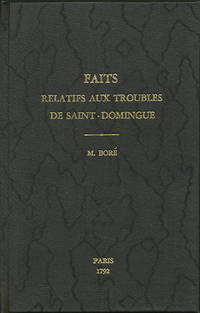
179235978Paris: De L'Imprimerie du Patriote François 1792. First edition. Cloth with gilt titles. Amateur repair of quarter-size hole on title page darkening several words faint foxing pencil annotations else a very good copy. 15 pp. Sm. 8vo. Caption title: Faits Relatifs aux Troubles de Saint-Domingue presentes au Comite Colonial en Vertu d'un Decret de I'Assemblee nationale par M. Bore citoyen et planteur de Saint-Domingue. Date supplied in manuscript. Memoirs of a planter from 1789 to 1791. OCLC shows only seven copies. Sabin 6423. Garrett French Colonial Question 153. Bissainthe M. Dict. de bib. haïtienne 4837. Catalogue de l'histoire de France VIII p. 733: 400. De L'Imprimerie du Patriote François hardcover books
1998203394Heft Nr. 680. Zürich, TA-Media, Februar 1998. Fol. Mit zahlreichen meist fotografischen Abbildungen. 88 S. Or.-Kart. - Inhaltsverzeichnis mit kleinem privaten Besitzvermerk
1998194390Heft Nr. 680. Zürich, TA-Media, Februar 1998. Fol. Mit zahlreichen meist fotografischen Abbildungen. 88 S. Or.-Kart. - Buchblock oben etwas wellig [5 Warenabbildungen]
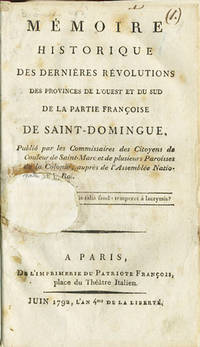
179237277Paris: Patriote Françoise 1792. First edition. Modern silk with gilt titles. Title page torn and repaired affecting a few words of the statement of responsibility and the quote below it small inked numeral foxing on a few leaves; else contents very good in an excellent binding. 114 pp. Sm. 8vo. Covers the slave insurrections in Haiti. OCLC shows only nine copies. Sabin 75161. Cundall 417. LCP. Afro-Americana 9128. Martin & Walter. Révolution française: IV/2 9677. Patriote Françoise unknown books
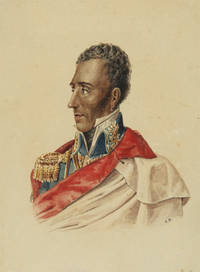
1825WRCAM47136Port-au-Prince 1825. Watercolor 6 1/2 x 5 inches. Matted and framed to 10 x 8 inches. A few faint spots of foxing. Colors bright and fresh. Near fine. A handsome watercolor of Haitian general and president Jean-Pierre Boyer 1776-1850 who reigned over Haiti from 1818 to 1843. Boyer a free mulatto was born in Port-au-Prince but educated in France. One of the leaders of the Haitian Revolution he fled to France when Toussaint's uprising turned against the mulattoes as well as the whites returning with LeClerc in 1802. After independence Haiti split into two states north and south and Boyer served as the right hand of Alexandre Petion who established himself as president of the southern state. Boyer was appointed by Petion to be his successor in 1818 while Henri Christophe still ruled in the north. After Christophe committed suicide in 1820 and his young son was killed ten days later Boyer succeeded in reunifying the two states of Haiti. In late 1821 Santo Domingo became independent from Spain and Boyer swiftly moved to invade uniting the island under his rule by early 1822. In 1825 after agreeing to an indemnity he obtained official French recognition of the country for the first time since the revolution. <br> <br> At first Boyer's rule looked like a new start for the war-ravaged country and many free blacks from the United States considered settling there; but Boyer preferred to maintain a semi-feudal government and little was done to improve the situation. He stayed solidly in power until an earthquake was followed by an insurrection in 1843. Santo Domingo rebelled and won its independence back in 1844. Boyer fought back for over a year before fleeing first to Jamaica in 1845 and then to France where he died in 1850. He succeeded in lasting as president longer than any other Haitian ruler just edging out "Papa Doc" Duvalier for the honor. <br> <br> In this portrait which shows Boyer in three- quarter profile facing left he is dressed in his full regalia as general and president wearing a blue military coat trimmed in gold braid and a white cape with a red lining. This likeness closely resembles an engraving by Raban dated 1825 which is probably based on it. He is at the height of his achievements having just solidified his power by obtaining recognition from France. The portrait is signed with the initials "B.C." written in reverse in the bottom corner. An outstanding image of Haiti's fourth president. unknown books
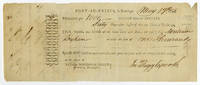
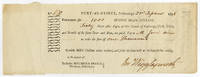
1796WRCAM52307Port-au-Prince 1796. 4 x 9 1/2 inches completed in manuscript docketed on verso. Minor toning and edge wear. Very good. A rare pay order for supplies made out to Baron Jean-Charles de Montalembert on behalf of the invading British occupation force in Haiti. The document is signed by John Wigglesworth agent to the Commander of the British forces in Haiti and later Britain's envoy to the leader of the Haitian Revolution Touissant Louverture. By early the next century Louverture would become ever so briefly chief of the first free Black Republic in Haiti. The payee Montalembert has docketed the verso with an additional docket in French transferring the funds to Dutilh & Wachsmuth a Philadelphia mercantile house. <br> <br> St. Domingo the French part of Haiti was a highly prosperous sugar coffee and cotton slave-estate island whose produce was described as exceeding that of the whole of the British Leeward and surrounding islands. In 1789 it was said to consist of 10000 white people 24000 free mixed-race people and 455000 negro slaves. Although free local laws decreed that mixed-race individuals could not accept any office or employment other than as planters. As news spread of the revolution this group revolted but were roundly defeated. Part of the white response to the uprising was to create their own local assembly which excluded those of mixed race and resolved to transfer the island's allegiance to Great Britain whereupon France sent Commissioners who according to some reports recruited negroes to fight the whites. <br> <br> Starting in August 1791 the slaves revolted in many towns implementing major massacres and destruction of estates and establishing free communities of their own. They were led by Touissant Louverture an ex-slave who later joined the French army after the country abolished slavery in 1793. Louverture swiftly rose to the rank of Commander in Chief of the French forces in Haiti and proved to be an effective leader. In 1794 the British army under the pretense of the Napoleonic war sent a force from Jamaica that occupied Port-au-Prince and some other towns a welcome development for the remaining white population on the island. This British force was commanded by General Sir Thomas Maitland of the 62 Foot Regiment for whom Wigglesworth was the army agent. <br> <br> In the end the British were not successful. By 1798 the army had been virtually wiped out by yellow fever and in April of that year Maitland withdrew the British forces from Haiti under a guarantee from Louverture that the remaining pro-British whites would be protected. In May 1801 Touissant established St. Domingo as an independent republic. This alarmed the French so badly that they subsequently sent an army of 25000 that recaptured the island within a year and then by a ruse conveyed Louverture to France where he soon after died in prison. <br> <br> Baron de Montalembert had commanded the Legion britaniques de Sainte-Domingue a force of 1200 men composed of white colonials recruits from Europe and possibly some free mixed-race Haitians. Montalembert's Grenadiers were one of the most dependable units fighting for the British until the aforementioned fever along with heavy casualties decimated the unit. They disbanded on June 25 1797. <br> <br> A rare early Haitian document signed by two principal figures in the British occupation during the Haitian Revolution. unknown books
1796WRCAM52305Port-au-Prince 1796. 4 x 9 1/2 inches completed in manuscript docketed on verso. Minor toning and corner wear. Very good. A rare pay order for supplies bought from William Dickson by the invading British occupation force in Haiti. The document is signed by John Wigglesworth agent to the Commander of the British forces in Haiti and later Britain's envoy to the leader of the Haitian Revolution Touissant Louverture. By early the next century Louverture would become ever so briefly chief of the first free Black Republic in Haiti. The payee Dickson has docketed the verso to pay "Mg. de Klegand" with an additional docket in French by de Klegand to pay Dutilh & Wachsmuth a Philadelphia mercantile house. <br> <br> St. Domingo the French part of Haiti was a highly prosperous sugar coffee and cotton slave-estate island whose produce was described as exceeding that of the whole of the British Leeward and surrounding islands. In 1789 it was said to consist of 10000 white people 24000 free mixed-race people and 455000 negro slaves. Although free local laws decreed that mixed-race individuals could not accept any office or employment other than as planters. As news spread of the revolution this group revolted but were roundly defeated. Part of the white response to the uprising was to create their own local assembly which excluded those of mixed race and resolved to transfer the island's allegiance to Great Britain whereupon France sent Commissioners who according to some reports recruited negroes to fight the whites. <br> <br> Starting in August 1791 the slaves revolted in many towns implementing major massacres and destruction of estates and establishing free communities of their own. They were led by Touissant Louverture an ex-slave who later joined the French army after the country abolished slavery in 1793. Louverture swiftly rose to the rank of Commander in Chief of the French forces in Haiti and proved to be an effective leader. In 1794 the British army under the pretense of the Napoleonic war sent a force from Jamaica that occupied Port-au-Prince and some other towns a welcome development for the remaining white population on the island. This British force was commanded by General Sir Thomas Maitland of the 62 Foot Regiment for whom Wigglesworth was the army agent. <br> <br> In the end the British were not successful. By 1798 the British army had been virtually wiped out by yellow fever and in April of that year Maitland withdrew the British forces from Haiti under a guarantee from Louverture that the remaining pro-British whites would be protected. In May 1801 Touissant established St. Domingo as an independent republic. This alarmed the French so badly that they subsequently sent an army of 25000 that recaptured the island within a year and by a ruse conveyed Louverture to France where he soon after died in prison. unknown books
1796WRCAM52308Port-au-Prince 1796. 3 1/2 x 9 3/4 inches completed in manuscript docketed on verso. Minor toning. Very good. A rare pay order for supplies intended for the British occupation force in Haiti made out to M. Juré Ainé. The document is signed by John Wigglesworth agent to the Commander of the British forces in Haiti and later Britain's envoy to the leader of the Haitian Revolution Touissant Louverture. By early the next century Louverture would become ever so briefly chief of the first free Black Republic in Haiti. The payee Jure has docketed the verso in French with an additional docket in French transferring payment to Dutilh & Wachsmuth a Philadelphia mercantile house. <br> <br> St. Domingo the French part of Haiti was a highly prosperous sugar coffee and cotton slave-estate island whose produce was described as exceeding that of the whole of the British Leeward and surrounding islands. In 1789 it was said to consist of 10000 white people 24000 free mixed-race people and 455000 negro slaves. Although free local laws decreed that mixed-race individuals could not accept any office or employment other than as planters. As news spread of the revolution this group revolted but were roundly defeated. Part of the white response to the uprising was to create their own local assembly which excluded those of mixed race and resolved to transfer the island's allegiance to Great Britain whereupon France sent Commissioners who according to some reports recruited negroes to fight the whites. <br> <br> Starting in August 1791 the slaves revolted in many towns implementing major massacres and destruction of estates and establishing free communities of their own. They were led by Touissant Louverture an ex-slave who later joined the French army after the country abolished slavery in 1793. Louverture swiftly rose to the rank of Commander in Chief of the French forces in Haiti and proved to be an effective leader. In 1794 the British army under the pretense of the Napoleonic war sent a force from Jamaica that occupied Port-au-Prince and some other towns a welcome development for the remaining white population on the island. This British force was commanded by General Sir Thomas Maitland of the 62 Foot Regiment for whom Wigglesworth was the army agent. <br> <br> In the end the British were not successful. By 1798 the British army had been virtually wiped out by yellow fever and in April of that year Maitland withdrew the British forces from Haiti under a guarantee from Louverture that the remaining pro-British whites would be protected. In May 1801 Touissant established St. Domingo as an independent republic. This alarmed the French so badly that they subsequently sent an army of 25000 that recaptured the island within a year and by a ruse conveyed Louverture to France where he soon after died in prison. unknown books
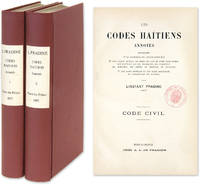
1892643861892. 2 Vols. Port-Au-Price 1892. Complete set. 2 Vols. Port-Au-Price 1892. Complete set. Nineteenth-Century Haitian Codes Haiti. Pradine Linstant d. 1884 Editor. Les Codes Haitiens Annotes Contenant 1 La Conference des Articles Entre Eux 2 Sous Chaque Article Les Titres des Lois et Actes Tant Anciens que Nouveaux qui les Expliquent Les Completent les Modifient Les Arrets du Tribunal de Cassation 3 Une Table Generale et une Table Analytique et Alphabetique des Matieres. Port-Au-Price: Chez A. L. de Pradine 1892. Two volumes. cvi 484; lxiv 279 pp. Complete set. Octavo 9" x 6". Recent cloth printed title labels to spines. Light toning to text internally clean. Ex-library. Stamps to title pages. An attractive set. $450. Later edition. Pradine's were the standard annotated editions of the nineteenth century. Volume I: Code Civile and Constitution de la Republique de Haiti; Volume II: Code de Procedure Civile Code de Commerce. OCLC locates 13 copies in North America 11 in law libraries. unknown
1892643861892. 2 Vols. Port-Au-Price 1892. Complete set. 2 Vols. Port-Au-Price 1892. Complete set. Nineteenth-Century Haitian Codes Haiti. Pradine Linstant d. 1884 Editor. Les Codes Haitiens Annotes Contenant 1 La Conference des Articles Entre Eux 2 Sous Chaque Article Les Titres des Lois et Actes Tant Anciens que Nouveaux qui les Expliquent Les Completent les Modifient Les Arrets du Tribunal de Cassation 3 Une Table Generale et une Table Analytique et Alphabetique des Matieres. Port-Au-Price: Chez A. L. de Pradine 1892. Two volumes. cvi 484; lxiv 279 pp. Complete set. Octavo 9" x 6". Recent cloth printed title labels to spines. Light toning to text internally clean. Ex-library. Stamps to title pages. An attractive set. $450. Later edition. Pradine's were the standard annotated editions of the nineteenth century. Volume I: Code Civile and Constitution de la Republique de Haiti; Volume II: Code de Procedure Civile Code de Commerce. OCLC locates 13 copies in North America 11 in law libraries. unknown books
193125709Paris, Société de l'Histoire nationale / Librairie Plon, (1929). Un fort vol. au format in-4 (297 x 242 mm) de xlviii - 630 pp., broché.
199420658CBPlainview, NY, Original Publications, 1994. 8°, 226 S. mit s/w-Abbildungen, Text: englisch, farbig illustr. original Kartonage (Paperback), 3. Auflage sehr schönes, sauberes Exemplar
193512701935 roman-A.MICHEL 1935-256p.couv.ill -couverture illustrée d'un portrait,
4656PARIS, Rey & Gravier, Libraires - 1834, 1835, 1836 & 1937 - 4 volumes In-8 : T. 2, 3, 5, 8 -Reliure toile - Propre
PARIS, Rey & Gravier, Libraires - 1834, 1835, 1836 & 1937 - 4 volumes In-8 : T. 2, 3, 5, 8 -Reliure toile - Propre Chaque volume peut-être vendu individuellement au prix de 40 € T. II : Amérique, Angleterre, Anhalt-bernbourg Anhalt-Coethen, Abhalt-Dessau, Autriche, Bade Bavière, Blegique, brésil, Brunswick, chine, colombie, Danemark, Cracovie - T. III :Grande-Bretagne, Haïti, Hanovre, Hesse, Lippe-Detmold, Lucques, Maroc, Mecklembourg, Mexique, Nassau-Usingen, Parme, Plaisance, Guatalla, Pays-bas, hollande,Perse - T. V : Italie Sardaigne, Prusse, tunis, tripoli,, Russie, saxe, schwarzbourg, suède, suisse, venezuela, Waldeck, Wurtemberg - T. VIII : hongrie Iles Ioniennes Issembourg equateur lichtenstein Perou, Pologne, Porte-ottomane, Portugal, PrusseRaguse, Reuss, Saintsiège Rome russie, San-Marin, Sardaigne, SaxeSiam, Etats-unis Suede, norvège, suisse, Toscane, Tripoli, tunis, Venezuela, Ha¨ti villes Anséatiques MarocDanemark france
1974229537Editora De Santo Domingo, S.A. Republicana Dominica., 1974. 510 Seiten. Mit zahlreichen Schwarz-Weiß-Illustrationen. Grüner Originallederband mit vergoldetem Deckel und Rückentitel. 22 cm
2020118107Flammarion 2020 Flammarion, 574p, 2020, in-8 broché. Couverture légèrement défraîchie sinon bon état.
195445183Service d'information, de presse et de propagande Cuir Port-au-Prince 1954
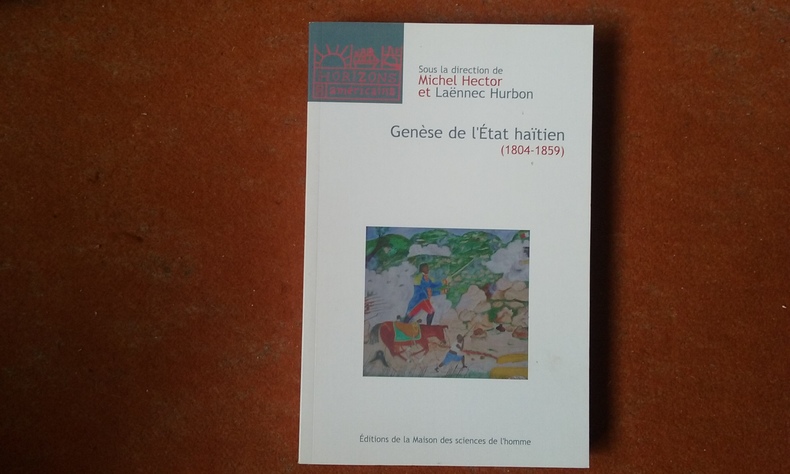
QWA-6988Editions de la Maison des Sciences de l'Homme, 2009, in-8 br., 365 p., coll. "Horizons américains", cartes, photos, état de neuf.
0282488308.Gpaperback. Good. Access codes and supplements are not guaranteed with used items. May be an ex-library book. paperback
0484574469.Ghardcover. Good. Access codes and supplements are not guaranteed with used items. May be an ex-library book. hardcover
12378Alençon, Imprimerie Typographique F.Guy, 1887. 1 plaquette, brochée, couverture souple imprimée, 44 pp. bon état.
1887GF219041887 Alençon - F. GUY - 1887 - 1 volume in8 broché de 45 pages -