[Affiche/Cuba]Livre Rare Book
2 507 résultats
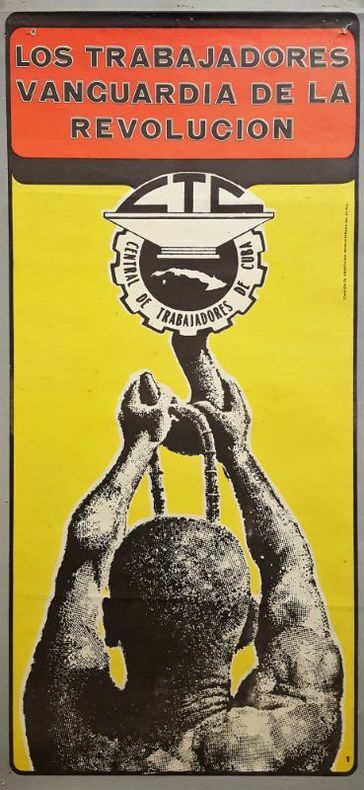
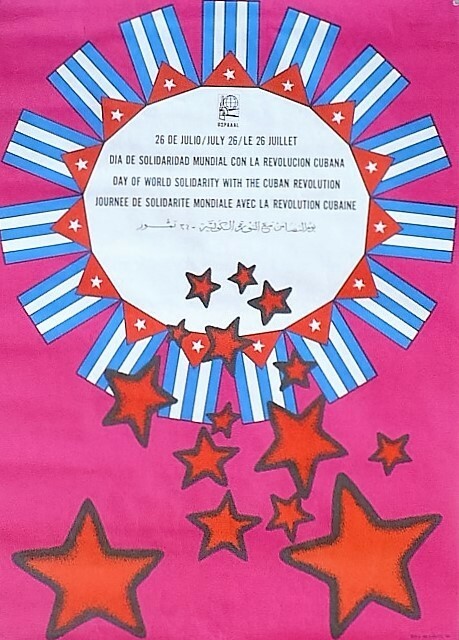
776Éditée par OSPAAL. 1975. Impression offset. Dimensions: 55,5x35. Petits manques coins inférieurs et une déchirure. Rare.
1413Comision de Orientacion Revolucionaria del CC PCC. ca.1970. Impression en offset. Dim: 64 x 30,7 cm. Petites déchirures.
1413Comision de Orientacion Revolucionaria del CC PCC. ca.1970. Impression en offset. Dim: 64 x 30,7 cm. Petites déchirures.
1415Ministerio del Commercio exterior de la republica de Cuba.1973. Impression en offset. Dim: 49,7 x 34,3 cm.
1415Ministerio del Commercio exterior de la republica de Cuba.1973. Impression en offset. Dim: 49,7 x 34,3 cm.
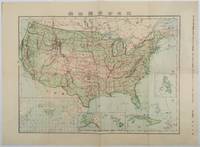
1911179415Tokyo.: 楠山正雄. Kusuyama Masao. Meiji 44 1911. Colour folding map 40 x 55cm inset maps showing the Philippines Alaska and Hawaii very good copy. This map was a supplement of October 1911 issue of a monthly magazine Shin Nippon 新日本 which was published between 1911 and 1918. The main map covers the contiguous United States with inset maps of the world showing the American territories of Alaska Hawaii and the Philippines. Curiously Cuba has been marked as an American territory having been directly occupied from 1906 to 1909 though at the time still beholden to the 1903 Cuban-American Treaty of Relations. . 楠山正雄. [Kusuyama Masao]. unknown
193054341930 P., Editions Emile-Paul Frères, 1930, 1 vol. in-8 br. sous couv. ill. rempliée, de 88 pp + tables et justificatif de tirage. Très bel exemplaire.
1930123681930 P., Editions Emile-Paul Frères, 1930, 1 vol. in-8° (212 x 143) broché sous couverture illustrée rempliée, de 88 pp + tables et justificatif de tirage. Quelques rousseurs en tranches, très bel exemplaire partiellement non coupé par ailleurs..
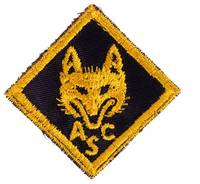
18121Fine. Unused embroidered Wolf Cub badge issued by the Asociación de Boy Scouts de Cuba ASC the national Scouting organization active from 1927 until its suspension in 1961 following the Cuban Revolution. This badge is associated with Manada del Grupo 14 Havana dating to 1959 the final year of organized Cuban Scouting.<br /> <br /> The patch measures approximately 1.5 inches per side diamond format. Embroidered in navy blue with a gold border gold lettering and a stylized wolf head emblem. The initials "ASC" identify the Cuban national organization. The badge shows no evidence of being sewn to a uniform and remains unused.<br /> <br /> The embroidery is crisp and intact colors strong edges clean. No staining fraying or mounting traces. Very fine unused condition. This badge was retained within a Scoutmaster-prepared photographic album providing direct period association rather than later collector accumulation. <br /> <br /> Cuban Scouting began in 1914 and formally organized as the ASC in 1927 joining the World Organization of the Scout Movement the same year. Following the 1959 revolution the organization was suspended in 1961 and disbanded shortly thereafter. <br /> <br /> Surviving Cuban Scout insignia from this terminal period are uncommon particularly unused examples with documented Havana troop association.<br /> <br /> Subjects: Boy Scouts of Cuba Havana Cuban Revolution 1959 Cold War era youth movements Scouting insignia Americana youth organizations political transition ephemera. unknown
27053Dimensions (à vue) : 293 x 188 mm + passe-partout.
1189Three volumes. White full cloth with gilt lettering on front boards in glossy red blue black and green jackets featuring silhouettes of a mass of people with upraised weapons against a Cuban flag. Square quartos. Volume I is inscribed and signed by Fidel Castro on the title page: "A Curbelo por su firme traycetonia en nuestro Partido Historíco le obsequio estos ejemplares como Memorias Imperecederas de este trascendental momento. / Revolucionariamente: / Fidel Castro / Septiembre 10 de 1976." It is possible - indeed likely - that this inscription is addressed to Raúl Curbelo Morales a party loyalist who served as head of the air force during the Bay of Pigs invasion and later as vice-president of INRA and minister of communications. 384 11 photos; 420; 188 63 photos. Illustrated with black and white as well as color photographs. Jackets chipped with peeling laminate in some places damp staining primarily visible on the inside and sunned spines. Volumes are near very good with some light foxing. Volume two has an open nick and heavy bump to spine head. Otherwise overall a tight and clean copy in slightly less than very good condition in a very good red slipcase. Official export certificate dated 1976 laid-in. Provenance available upon request. Departmento de Orientación Revolucionaria del Comité Central del Partido Comunista de Cuba hardcover
197025055P., Editions Universitaires, 1970, in-8°, 170 pp, 16 pl. de photos et cartes hors texte, choix de textes, chronologie, biblio, broché, couv. illustrée, bon état (Coll. Les Justes)
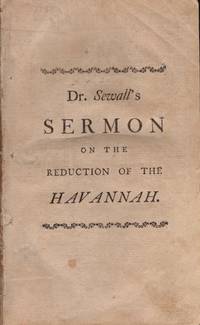
176235251Boston New England: Printed by John Draper Printer to His Excellency the Governor and the Honourable His Majesty's Council: AND By Edes and Gill Printers to the Honourable House of Representative 1762. First Edition. Wraps. Good. Disbound wraps. 33 1 page blank. Half title present. Light toning and scattered brown spots to the print. <br /> <br /> Evans 9269; Sabin 79430. From wikipedia:<br /> <br /> The siege of Havana was a successful British siege against Spanish-ruled Havana that lasted from March to August 1762 as part of the Seven Years' War. After Spain abandoned its former policy of neutrality by signing the family compact with France resulting in a British declaration of war on Spain in January 1762 the British government decided to mount an attack on the important Spanish fortress and naval base of Havana with the intention of weakening the Spanish presence in the Caribbean and improving the security of its own North American colonies. A strong British naval force consisting of squadrons from Britain and the West Indies and the military force of British and American troops it convoyed were able to approach Havana from a direction that neither the Spanish governor nor the Admiral expected and were able to trap the Spanish fleet in the Havana harbour and land its troops with relatively little resistance.<br /> <br /> The Spanish authorities decided on a strategy of delaying the British attack until the strength of the city's defences and the onset of seasonal rains inflicting tropical diseases would significantly reduce the size of the British force via disease along with the start of hurricane season would force the British fleet to seek a safe anchorage. However the city's main fortress the Morro Castle was overlooked by a hill that the governor had neglected to fortify; the British installed batteries there and bombarded the fortress daily with heavy shelling. The fortress eventually fell after the officer in charge of Morro Castle Luis Vicente de Velasco was mortally wounded by a stray bullet. The capture of Morro Castle led to the eventual fall of the rest of the fortifications and the surrender of the city the remaining garrison and the naval forces present before the hurricane season began.<br /> <br /> The surrender of Havana led to substantial rewards for the British naval and military leaders and smaller amounts of prize money for other officers and men. The Spanish governor Admiral and other military and civil office holders were court-martialled upon their return to Spain and punished for their failures to conduct a better defence and allowing the Spanish fleet present to fall intact into the hands of the British. Havana remained under British occupation until February 1763 when it was returned to Spain under the 1763 Treaty of Paris that formally ended the war. Printed by John Draper, Printer to His Excellency the Governor, and the Honourable His Majesty's Council: AND By Edes and Gill, unknown
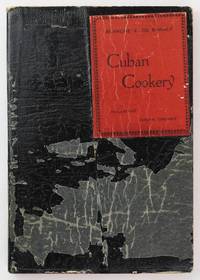
19316190Havana 1931. Very good. 150pp. Stiff black cloth covers printed paper label on front board. Front cover vertically creased light wear to boards; remnants of glassine stuck to covers. Contemporary inscription on front flyleaf. Internally clean. In a custom clamshell box. First edition of the first Cuban cook book published in English. Blanche Zacharie de Baralt 1865-1950 was born in New York; she married Luis Alejandro Baralt y Peoli in 1886 and the couple moved to his native Cuba in 1900. She earned a PhD in philosophy from the University of Havana in 1902 and went on to translate the poetry of Tagore and to write a book on Jose Marti. She also published this volume which was clearly geared toward the tourist market with the introduction emphasizing the idea of taking home the tastes of one's holiday abroad. Each chapter heading has an illustration and these were drawn by Federico Edelmann and Conrad W. Massaguer the one above the section for beans appears to show a cowboy riding along in a cloud of gas. Notably this work contains several important Cuban cocktails including the first appearance of the mojito referred to here as a Rum Cocktail or Cuban Mojo. Rare in the true first edition. unknown
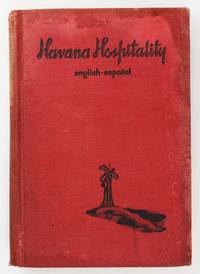
19506261Havana 1950. Good. 389pp. plus 33pp. of ads. Original red publisher's cloth stamped in black. Dampstained at edges and spine extremities worn; rear cover soiled. Contemporary inscription on front pastedown. Foxed some scattered soiling. An interesting bilingual Cuban cook book with recipes in English and Spanish on facing pages. The introduction explains that this is not a volume of recipes for the beginner bride or a how to guide but rather "the compilation of favorite recipes hitherto unpublished yet well-known and highly regarded in important Cuban-American circles and other parts of the world where men and women of taste and discernment throughout the years have succeeded in regaling the palates of intimate friends and distinguished gusts." Each recipe lists its contributor -- some of whom are noted as "Mrs." and some of whom are denoted as "Sra." Recipes range from Hot Grapefruit Cocktail to Sweet and Pungent Shrimp to Italian Spaghetti California Style and more. The St. Rita Guild is a Catholic parish organization designed to foster community. Fewer than ten copies in OCLC. A wonderful slice of domestic and social life in Cuba just before the Communist revolution. unknown
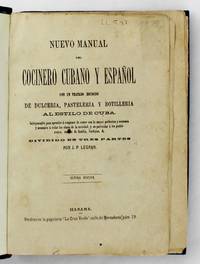
18806249Habana 1880. About very good. 199xxi3pp. Contemporary quarter red leather with modern marbled boards spine gilt. Light wear to binding. Minor soiling and wear to text. "Ultima edicion" originally published in 1857. This charming Cuban production is divided into three parts -- Sopas; Menestras Salsas Legumbres Frituras y Menudencias; and Pasteleria Reposteria y Dulceria. Each section has an index at the end of the text. The work includes local flavors such as Sopa Cubana; Ajiaco de Puerto-Principe; Lengua a la Criolla; Jigote Cubano; Pargo a la Americana; and more. We locate two copies of the 1857 edition of this work. Though we find a listing in OCLC there are no physical locations attached. unknown
197147663Miami: Ediciones Universal 1971. First Edition. Octavo 20.5cm.; publisher's pictorial card wrappers; 263pp. Light shelf wear tiny dampstain to bottom fore-edge corner of textblock else Near Fine. Account of present-day Cuba by the exiled Cuban journalist who nearly twenty-five years earlier was nominated Vice President by the Socialist Revolutionary Movement with twenty-two-year-old Enrique Ovares as President. According to the author biography on the rear cover: "Ni un sólo minuto de sa vida no está dedicado a Cuba. Nadie lo aventaja en la lucha constante contra el régimen castrista y contra los malandrines que ofenden la dignidad nacional. Ediciones Universal unknown
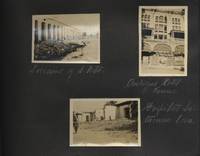
193250120Santiago de Cuba 1932. A unique album of 19 leaves of heavy black stock 7 x 5 1/2 inches with 67 mounted b&w silver photographs of varying sizes 1 3/4 x 2 1/2 inches - 3 1/2 x 5 7/8 inches all captioned in white ink. The album is titled and decorated in gilt on the upper cover "PHOTOGRAPHS: SOUVENIR OF SANTIAGO CUBA and tied with a cloth lace. Very good. An earthquake of 6.7 magnitude struck the city of Santiago de Cuba at dawn on 3 February 1932. Over half the buildings were destroyed or damaged and reports of the deaths range to 1500. These photographs show the destruction to the commercial and residential buildings and the Cathedral and the tents set up as temporary shelters. A few of the photographs were made by local commercial photographers just after the quake and the remainder within days. All captions in Spanish. unknown
1847LL 559<p><strong><em>"Appointment of Lieutenant General Federico Roncali count of alcoy "as governor and captain general of the island of cuba and president of the courts of the same" in replacement of general leopoldo o'donell. </em><em>Given in the palace on november 30 1847. <u>Begins:</u> Doña Isabel Segunda por la gracia de Dios y por la constitucion de la monarquia española Reina de las Españas.</em></strong> "5750</p><p>Handwritten bifolio on paper with the printed heading of Isabel II. Queen's stamp signature and plate seal with fleur-de-lys shaped paper protection. Signature of Ramón Narváez. On the second page different statements appear in Madrid and Havana signed by the Count of Villanueva also by the Marquis of Selva Alegre.</p><p>Federico Roncali count of Alcoy Cádiz 1800- Madrid 1857 came to generalship at the hands of Espartero. Between December 14 1852 and April 14 1853 he was president of the council of ministers after his time as Captaincy of the island of Cuba a position in which he replaced O'Donell. His mandate in Cuba was characterized by the creation of different infrastructures and the increase in the arrival of Chinese laborers that had begun in the previous period. During his mandate the lighthouse that bears his name Roncali was built of great importance for navigation in the Yucatan Strait "the last place on the island where the sun sets"; it is located at Cape San Antonio which was the last place where the aborigines remained at the time of colonization.</p><p>The document talks about the replacement of Captain General Leopoldo O'Donell the oath that must be taken before taking office and how it should be exercised.</p><p>UNIQUE AND OF UTMOST IMPORTANCE</p>
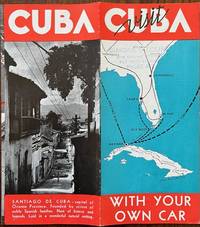
194059321Havana Cuba: Cuban Tourist Commission ca. 1940. 8vo. 12 pp unpaginated. folds out leporello accordion-style format printed in red blue & black photo illustrations & map on recto large map of Cuba’s Central Highway on verso slight shelfwear NF. First edition of this scarce travel brochure touting the advantages of U.S. tourists to bring their own cars and travel over the Carretera Central which ran the entire length of the Island from Pinar del Rio to Santiago de Cuba over 700 miles. The highway construction launched in may 1927 and when finished proved very popular as a means to see the island. Tourists could bring their own cars from Tampa Miami or Key West on a ferryboat and travel through Cuba. No copies in Worldcat. Cuban Tourist Commission, unknown
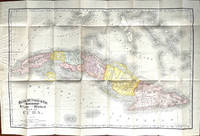
189262697Chicago IL: Rand McNally & Co. 1892. One pocket map. 12mo. sized 3.75 x 6 in. which folds out into 21.5 x 15 in. colour-lithograph map printed index on verso. Brown embossed publisher’s cloth gilt lettering on front cover slight shelfwear very slight rubbing light toning & edgewear to map still a VG bright copy. First edition thus of this “Business†pocket map of Cuba issued by the Rand McNally Co. the same year that Jose Marti established the Cuban Revolutionary Party to organize independence of Cuba and Puerto Rico from Spain. The printed index on verso references islands lakes mountains provinces rivers and towns in Cuba. Although several different versions of this particular map were produced by Rand McNally along with the San Francisco Chronicle and versions including an inset map of Havana Harbor none located in Worldcat are the same maps as this pocket map. Rand McNally & Co., hardcover
200054535Havana: Editorial Echevarria ca. 2000. Oblong 4to. 32 pp unpaginated. w/ 271 colour numbered Revolutionary trading cards all tipped-in including 3 for Revolutionist flags on verso front cover. Colour-illustrated coated softcovers cover art showing heroic Fidel Castro leading the revolutionaries rubbing creasing rippling to textblock still VG- copy. Facsimile souvenir of this famed piece of Cuban Revolutionary propaganda distributed free to the Cuban people originally by Felices Frutas the local canned fruit industry trying to stay afloat and appease Castro as all the countries industries and businesses were nationalized after the Revolution. Featuring the cartoon art of Capdevila this piece traces the return of the Castros from exile in Mexico as they fought capitalist exploitation the fall of Batista the bloody running battles and more all celebrating the success. Editorial Echevarria, paperback
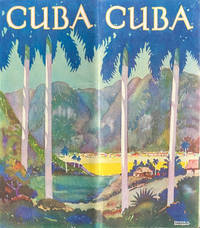
193261114Havana Cuba: Cuban Tourist Commission Printed by “Ucar Garcia & Co.†ca. 1932. 4to. 36 pp unpaginated. Printed & illustrated throughout in green black & white photo illustrations throughout graphic text illustrations in green & white. Self-printed colour-illustrated softcovers wraparound cover art by Conrado W. Massaguer minor bumping head of spine shelfwear still VG copy. First edition of this informative travel brochure touting the joys of visiting Cuba touting the historic cathedral square the lush countryside the offerings of sugar coffee and tobacco as well as the beaches hunting sport fishing night life and The Rumba. Massaguer 1889-1965 was an influential Cuban artist whose modernist look dominated magazines catalogues and ads across Latin America and also was a founding member of the Grupo Minorista. Cuban Tourist Commission, Printed by “Ucar Garcia & Co.,†paperback
193162232Havana Cuba: Walton & Spencer Co. P. Fernandez & Co. Printers Pl. y Margall 17 1931. 4to. 32 pp unpaginated. Printed & illustrated throughout in green black & white photo illustrations throughout decorative green borders 1 double page folding map at center. Colour-illustrated softcovers cover art front & back by Edward Sandback of Cuban beach old Havana and fruits of Cuba on verso of front cover Art Deco frontisp. in colour by Herminio Portell Vila 1901-1992 Cuban cartoonist & illustrator on verso of back cover center crease fold as issued slight shelfwear NF copy. First edition of this beautifully printed brochure exclaiming over the fun and leisure activities of visiting Cuba featuring photos of historic Havana golf courses polo gambling automobile trips the influences of Africa and Spain and of particular interest the many different residence hotels and leisure places for rent for tourists. Sandback was a Florida artist well-remembered for his travel brochure illustrations such as “Florida: Empire of the Sun†as well as paintings. Walton & Spencer Co., P. Fernandez & Co., Printers, Pl. y Margall 17, paperback
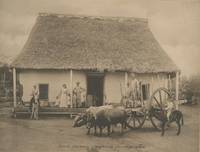
1913List3218Brooklyn New York: The Albertype Co 1913. Photo album of twenty-five 12 ½ x 10 inch pages containing fifty 8 x 6 inch photographs with cardstock cover. Cover and pages worn with marginal damage; pages mostly detached from string binding; photos with captions on negative; Near Fine with Fine contrast. Overall excellent to Near Fine. After the Spanish American War the Isle of Pines now Isla de Juventud in Cuba was contested territory because the 1901 Platt Amendment had specifically left ownership of the island up to a future treaty; the 1904 Hay-Quesada Treaty recognizing Cuban sovereignty over the island failed to be ratified by the US until 1925. American citizens controlled ninety-five per cent or more of the island’s land and were strongly in favor of American annexation. <br /> <br /> Offered here is a 1913 photo album exhibiting the island’s lush scenery productive farmland and luxurious American residences and resorts. The American property owners are identified by name and include American Residents and Property Owners’ Association President T.J. Keenan who in 1902 described the island under default administration by the Cuban government as “on the verge of anarchy . American interests are absolutely unprotectedâ€1; H.A. Christy Vice President of the Cincinnati Richmond & Muncie Railroad; coal and coke businessman John F. Atcheson and other elites. There are also shots of a number of hotels; grapefruit banana and pineapple farms belonging to the settlers; and recreation by both automobile and boat.<br /> <br /> Two photographs are not of American ventures: one of the home of José Sarda which housed José Martà before his exile to Spain labeled merely “Nueva Gerona Sarda Homsteadâ€; and one of a house labeled “San Juan Native Homestead†showing a family standing on the porch of their thatched-roof home with an oxcart before them.<br /> <br /> We find four copies of this photo book on OCLC. Of interest to historians of US imperialism in Cuba following the military withdrawal. <br /> <br /> 1 “The Isle of Pines President Orders Investigation of Affairs There†The Press-Herald November 15 1902 2. The Albertype Co unknown