2 507 résultats
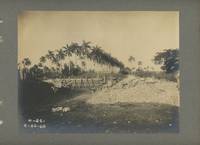
1906List3021La Habana Province Republic of Cuba 1906. Twenty-two photographs measuring 7 ¼ x 9 ½ inches mounted on heavy cardstock measuring 10 x 12 inches. Photos numbered and dated on negative. In album embossed with “Havana Central Railroad Co./ Progress Photographs/ GUANAJAYâ€. Photos with fine contrast and some wear; mounts with minor damage slightly warped with some detached from binding. Overall excellent. Havana Central Railroad Company was an American company formed in April 1905. It opened two electric tram lines—Havana to Guanajay in 1906 and Havana to Güines in 1907—before it was bought by the English company United Railways following the Panic of 1907. Offered here is a photo album showing the construction of the Guanajay line. The photographs show laborers assisted by horse-drawn carts digging culverts laying tracks and erecting bridges and buildings.<br /> <br /> This project came on the heels of the successful efforts of the Cuba Company another railroad company to make the emerging Cuban Republic amenable to American business.They did so first by using ‘revocable permits’ which could ostensibly be revoked by the new government when it was formed to circumvent the Foraker Amendment prohibiting concessions to American companies by the US’s military government; and second by using their close relationships to several members of the Cuban Constitutional Convention to include a law allowing irrevocable permits.1 These along with the Platt Amendment and Governor Leonard Wood’s General Railway Law led to what would amount to domination by US interests in Cuba particularly but not exclusively in the railroad industry.2<br /> <br /> Of interest to scholars of the early Republic of Cuba especially the history of US businesses in the country.<br /> <br /> 1 Juan C. Santamarina “The Cuba Company and the Expansion of American Business in Cuba 1898–1915†The Business History Review 74 no. 1 Spring 2000: 41–83.<br /> 2 Louis A. Pérez Jr. “Insurrection Intervention and the Transformation of Land Tenure Systems in Cuba 1895–1902†Hispanic American Historical Review 65 no. 2 1985: 229–254. unknown
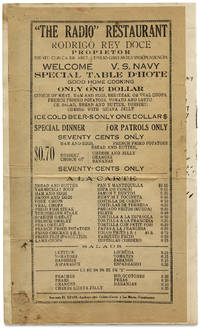
3726630<p>Guantanamo Cuba: Imprenta El Suaso Aguilerae ntre Calixto Carćia y Los Maceo. ca. 1930s. 13½ x 7½ inches. Broadside simple ornamental border. Single sheet mounted to a larger ledger sheet. Two short tears upon fold lines in margins; tanning; good.</p> <p>A rare unrecorded Cuban restaurant menu directed at American naval servicemen. This bilingual broadside functions as both menu and advertisement for Rodrigo Rey Doce’s restaurant aptly named “The Radio†promising “Good Home Cooking†to the U.S. Navy through a fixed-price offering.</p> <p>For one dollar patrons could order familiar comforts—ham and eggs “beesteak†“french fried potatoes†veal chops or cheese with guava jelly—while ice-cold beer was offered at the same price a detail that hints at the economics of leisure near a U.S. base. An à la carte menu supplemented the set meal listing dishes in both English and Spanish including bacon and eggs fried fish steak fried fish parguitos vermicelli soup and simple fruit desserts.</p> <p>The menu suggests a steady clientele of American sailors likely stationed at Guantánamo and captures a small but telling moment of cultural exchange between Cuban proprietors and the U.S. Navy. A rare survival likely kept as a souvenir by a sailor and brought home to the United States.</p> unknown
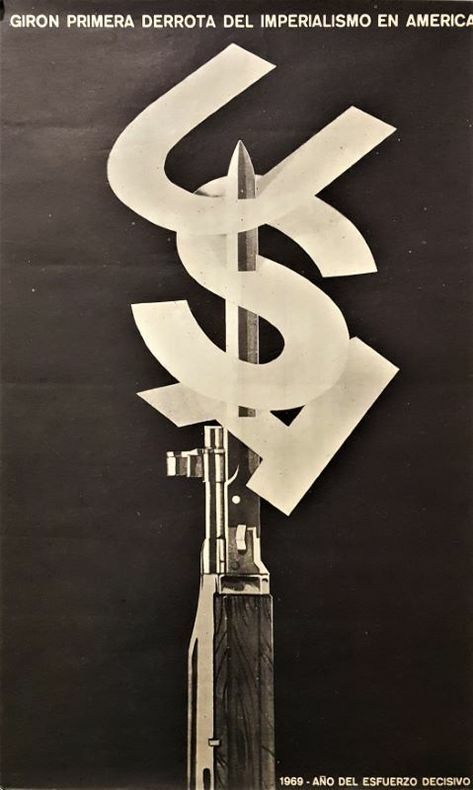
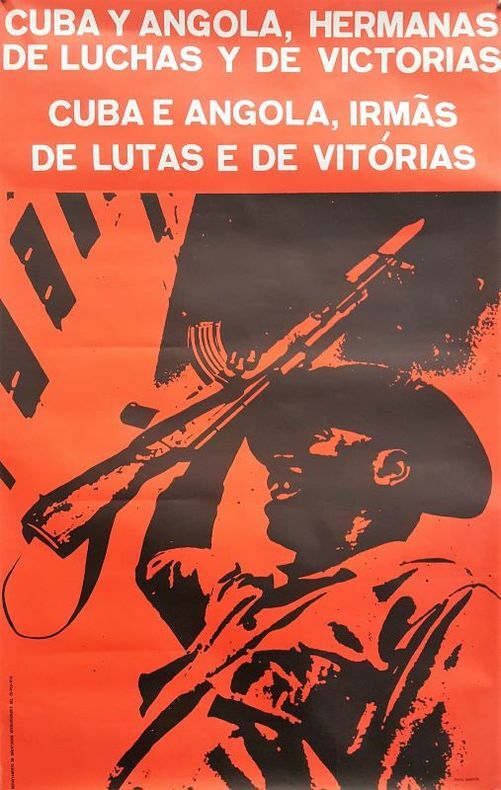
2092Sans mention d'éditeur. 1969. Impression offset.Dim : 52,5 x 32,5 cm
2092Sans mention d'éditeur. 1969. Impression offset.Dim : 52,5 x 32,5 cm
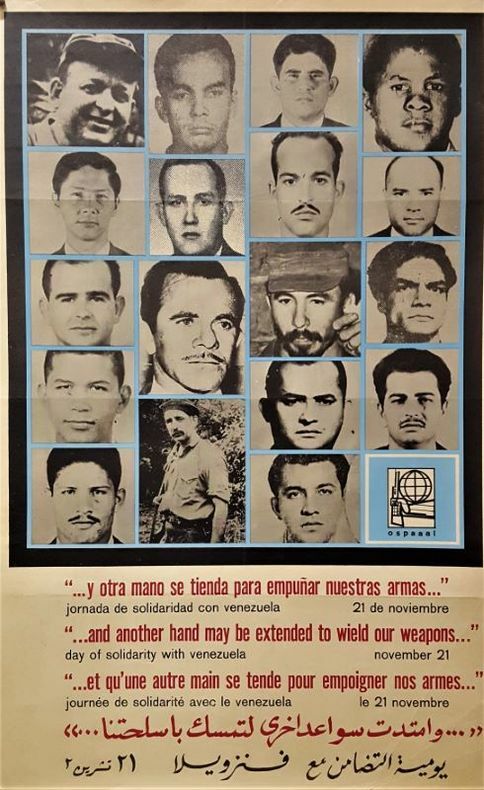
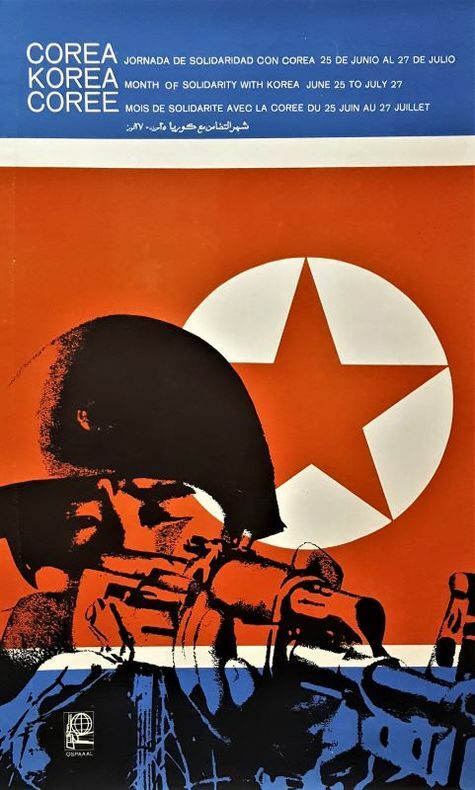
2094Edit. OSPAAAL . 1970. Impression offset. Dim : 56 x 33 cm
2094Edit. OSPAAAL . 1970. Impression offset. Dim : 56 x 33 cm
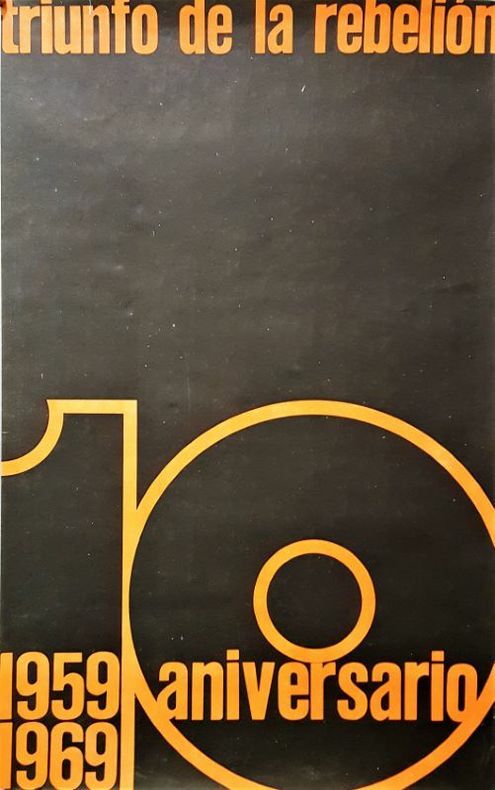
2096Dans lesprit OLAS.1969. Impression offset.Dim : 52 x 33 cm
2096Dans lesprit OLAS.1969. Impression offset.Dim : 52 x 33 cm
1105Impression offset. ca.1975. Dim: 72,7 x 46,5 cm. Departamento de Orientación Revolucionaria del Comité Central del Partido Comunista de Cuba. Bon état.
1105Impression offset. ca.1975. Dim: 72,7 x 46,5 cm. Departamento de Orientación Revolucionaria del Comité Central del Partido Comunista de Cuba. Bon état.
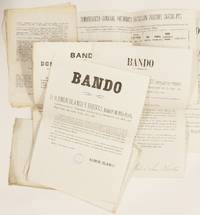
1896RF 818<p><i><b>Collection of 23 original edicts February 1896-September 1898 by the Captain Generals of Cuba 19 by General Valeriano Weyler 4 by General Ramón Blanco the last Spanish Captain General of Cuba. The edicts concern the attempts by the Spanish authorities to control the insurrection. They range from Weyler's efforts to concentrate the population in fortified encampments a measure often considered the precursor of concentration camps to Blanco´s establishing of a ceasefire in 1898.</b></i></p><p>23 ORIGINAL EDICTS; some manuscript annotations and the stamp of the Army of Cuba on some communiqués. The collection includes three items of related ephemera.</p><p>Notable collection of original edicts from Spanish authorities who participated in the Cuban War of Independence and attempted unsuccessfully to end the insurrection. The Cuban War of Independence the War of 1895 is the name given to the final Cuban war against Spanish domination. It is one of the last American wars against the Kingdom of Spain. The war began on 24 February 1895 with a simultaneous insurrection in 35 Cuban localities known as Grito de Oriente formerly known as Grito de Baire and ended in 1898 with the surrender of the Spanish Colonial army to the U.S. military advance with the assistance and support of <i>mambises</i>members of the Independentist Cuban army in the conflict known as the Spanish-American War. </p><p>Details on each of the edicts available on request. G. 11653/ RF 818. X99X001160 </p>
2090Edit. OSPAAAL. 1968. Impression offset. Dim : 53 x 33 cm.
2090Edit. OSPAAAL. 1968. Impression offset. Dim : 53 x 33 cm.
1827Impression offset. OSPAAAL. 1968. Dim: 49,5 x 34,5 cm. Rare.
1827Impression offset. OSPAAAL. 1968. Dim: 49,5 x 34,5 cm. Rare.
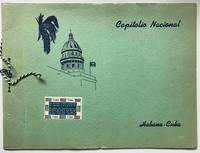
1930537Havana: Imp. “Ninon 1930. 24pp. Oblong quarto. Original green pictorial wrappers string-tied. Cuban Revolution stamp affixed to front cover. Pictorial souvenir of the Capitol Building in Havana which was inaugurated May 20 1929. Each image has bilingual descriptive text in English and Spanish on the verso. Images include the exterior of the building as well as specific locations within such as the Office of the President of the Senate the Reception Hall the Statue of the Republic and the Marti Library.<br /> <br /> A sticker on the front cover has a border of small Cuban flags around the text “Our Revolution is NOT Communist. Our Revolution is Humanist. The Cubans only want the right to an education the right to work the right to eat without fear the right to PEACE JUSTICE FREEDOM.†Presumably affixed to this earlier souvenir after the start of the Cuban Revolution in 1953. An interesting addition to this piece of promotional literature. OCLC locates six copies. Imp. “Ninon unknown
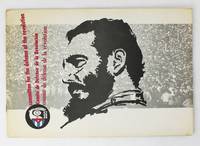
19656257Habana 1965. Very good. 16pp. Oblong pamphlet in original pictorial wrappers stapled. Light wear and toning at wrapper edges with a few faint creases. Internally clean. A visually rich pro-Casto and pro-Communist pamphlet that highlights the history and core activities of Cuba's Committee for the Defense of the Revolution CDR neighborhood-based civil defense organizations created by Castro in 1960 to defend the revolution and maintain social and political control at the local level. This often included activities like surveillance distribution of propaganda and vigilante justice. The pamphlet is illustrated with photos throughout and also contains a two-page spread with maps of the island and charts data and statistics about the Cuban people. It contains a year-by-year account of the Committee's achievements and activities and ends with a section concerning its relations with other countries and their visits to Cuba. The rear wrapper states that editions were published in English French and Spanish as evidenced by the trilingual title on the front cover but we find no evidence of any edition in OCLC. Scarce and with much interesting and propagandized information about Castro's local enforcers during the early years of the Communist regime. unknown
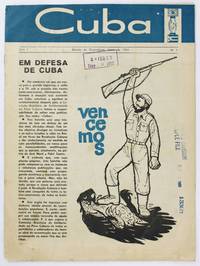
19615832Guanabara 1961. About very good. 111pp. Small folio. Original pictorial self-wrappers stapled. Contemporary and slightly later ink stamps to front wrap. Light edge wear. Some tanning and dust soiling. First issue of this evidently unrecorded periodical published by the "Comissão Brasileira de Solidariedade ao Pavo Cubano" in May 1961. The publication contains numerous positive stories on the progress of the Cuban Revolution and support of the cause from the Brazilian people. Illustrated throughout with photographs and drawings including the beginning of a serial comic on the history of the revolution at the rear. The front wrap depicts Fidel Castro with his foot on the chest of a supine eagle and a rifle raised triumphantly over his head. Interesting support for the Communist cause in Cuba from South America. Not in OCLC. unknown
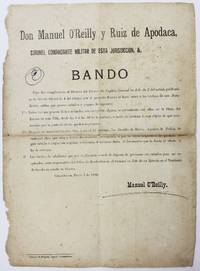
18963188Guanabacoa: Imprenta el Progreso 1896. About very good. Broadside approximately 17 x 12.5 inches. Previously folded. Some biopredation at left edge not affecting text. Otherwise faint foxing light tanning and dust soiling. Two contemporary manuscript rubrics. Unrecorded broadside that orders the presentation of privately-owned horses and pack animals in the town square of Guanabacoa for requisition by the Spanish army in January 1896 at the outset of the Cuban uprising that would eventually lead to the end of Spanish colonial rule. This bando states first that "Todos los que posean dichos animales sin excepción alguna se presentarán con ellos en la Plaza del Recreo de esta Villa desde las 8 á las 10 de la mañana á partir de mañana 8 con objeto de que reconocidos por la junta al efecto queden requisados." Following these initial voluntary presentations inspections would be made of homes and farms and those found not to have handed over usable animals would be guilty disobeying army orders during a time of war. At this point Spain had 100000 troops on the island and another two years of fighting the insurrection incited by José Marti would pass before the intervention of the United States. Not in OCLC. Imprenta el Progreso unknown
1963206861New York: Defense Committee for Garcia and Sueiro 1963. Folded for mailing otherwise fine. Bifolium approx. 7 x 8-1/5 in. making a four-page offset printed document; with 8-1/2 x 14 in. mimeo letter and original mailing envelope. Documentation from the effort to defend two Cuban-Americans arrested as suspected saboteurs with plans to blow up Manhattan businesses and New Jersey oil refineries. The FBI generated prominent headlines with the arrests at the height of cold-war tensions between the Bay of Pigs and the assassination of President Kennedy. Defense Committee for Garcia and Sueiro unknown
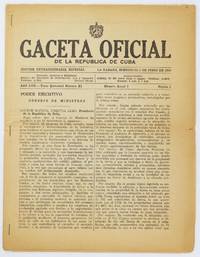
19595470Habana: June 3 1959. Good plus. 11pp. Small folio. Previously folded; stapled along gutter margin. Some edge and corner wear; closed tear to initial leaf from fore-edge along old fold. Toned cheap newsprint. A special edition of the Gaceta Oficial of Communist Cuba devoted to the printing of the First Agrarian Reform Law passed and signed on May 17 1959. The law effected the first major land redistribution under Fidel Castro and the Communist Party. Under its authority all properties were over 420 hectares were confiscated and redistributed to the people and native businesses. Prior to the law over 80% of Cuban land was owned by foreign mostly American companies. The preamble and sixty-seven articles lay out the motivations for the law the parameters for confiscation by the Department of Agriculture the mechanisms for seizure and redistribution and the creation of a new government organization to facilitate the land transfers the Instituto Nacional de Reforma Agraria. Signed in print by Fidel as Prime Minister Manuel Urrutia Lleo as President and a slew of other officials. June 3 unknown
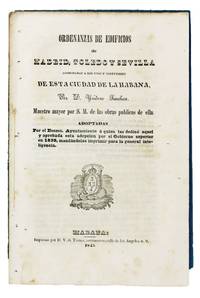
18455182Habana: Impresas por D. V. de Torres 1845. Good. 533pp. Contemporary plain blue wrappers separated at spine. Stitched as issued with additional small stabholes at gutter where previously bound into a sammelband. Light foxing and dust soiling. A seemingly unrecorded architectural pamphlet that prints the first comprehensive building code for Havana developed in 1837 by Isidoro Sánchez y Fuentes the city’s Director of Public Works. The text outlines detailed rules for the construction of buildings and related infrastructure to accord to high technical aesthetic and public health standards influenced by such regulations as had been imposed in Madrid Toledo and Seville. Sánchez’s code proved highly consequential and it resulted in significant improvements to the appearance livability and safety of many Havana neighborhoods.<br /> <br /> In the 18th century Madrid Seville and Toledo suffered from many of the same problems of haphazard urban development as Havana. However great efforts were made to develop and enforce building codes which cleaned up most of these city’s formerly slum-like suburbs of great benefit to public health not to mention aesthetics. Teodoro Ardemans Madrid’s Director of Public Works began the reforms in these Spanish cities and his 1720 work on the subject was fantastically influential for generations going through multiple reprints until 1848. Isidoro Sánchez adapted Ardemans’ concepts but updated and improved them to the requirements of the tropical climate and customs of Havana. He thus developed the first comprehensive building code for the Cuban capital which was one of the most progressive and well-considered in the Americas. <br /> <br /> Two preambles begin the work by discussing the importance of taking architectural inspiration from the buildings of classical antiquity and of considering the historical context and significance of reformed Spanish building codes. The bulk of the text takes up a variety of interesting and practical topics -- erecting urban and suburban buildings; respecting neighbors’ rights when building homes shared alleyways building ovens in light of nearby homes; creating ventanas de medianería large windows that can open or close depending the temperature and breeze; how garages should open onto public thoroughfares; where building materials should be manufactured; building basements; building balconies etc. on public streets; drainage systems and sewers; creating wells and other drinking water sources; where to build forges without disturbing neighbors; large windows for basements; building attics; and air circulation.<br /> <br /> Sánchez presented his proposed code to the City Council on June 10 1837 and in 1839 it was approved in full by the Governor but the printing of the text was only approved in April 1845 according to the introduction. We locate no copies of this significant work in OCLC or available auction records. Impresas por D. V. de Torres unknown
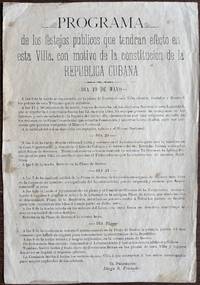
19013191Havana 1901. About very good. Broadside 12.5 x 9 inches. Light wear and soiling. Backed with tissue. Broadside outlining the celebrations planned for the adoption of the Cuban Constitution of 1901 following the eviction of both Spain and the United States from the country. Four days of celebrations were planned for May 19 20 21 and 22. Events including the singing of the National Anthem orchestral concerts fireworks dancing and other diversions. We find no record of this broadside in OCLC. An ephemeral piece commemorating Cuban independence. unknown
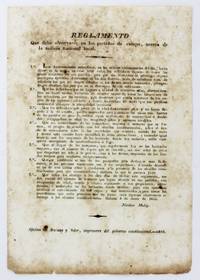
18223190Havana: January 5 1822. Good. Broadside 11.5 x 8 inches. Foxed faint signs of folding a few small wormholes not affecting text. An apparently unrecorded broadside order from the captain general of Cuba Nicolas Mahy directing all able-bodied men under the age of fifty to join up with their local militias in order to keep the peace. The local militias are directed to go out on nightly forays "en nùmero capaz de evitar las incursiones de los salteadores por los caminos y la desercion que pueda acontecer de los negros de los ingenios cafetales y demas haciendas." Additionally all men between the ages of fifty and seventy are told to report to “las casas mas fuertes de los pueblos" to form a garrison that can protect women children and the elderly in case of insurrection. By the formation of these militias and the establishment of "el uso de los pasaportes" it was hoped to identify and arrest "los vagos y mal entretenidos." All mayors within ten days of receipt of this regulation were to report the number of men they had enlisted along with their particulars. In the early 1820s much of Spanish colonial America was gripped by revolution and with these orders the Cuban government likely hoped to avoid similar unrest on the island. Several independence groups had been formed in Cuba as of the promulgation of this decree the largest of which was the Soles y Rayos de Bolívar established in 1821. Signed in print by Mahy; not in OCLC. January 5 unknown
1931D1703La Habana 1931. Hardcover. Very Good. Five issues all but the last with their original wraps bound in one volume leather-backed marbled paper over boards -- a bit scuffed and bumped along the edges. Includes: Ano I. No. 1; Febrero 15 1931 / Ano I. No. 2; Febrero 22 1931 / Ano I. No. 3; Marzo 1 1931 / Ano I. No. 4; Marzo 8 1931 / Ano I. No. 5; Marzo 15 1931. The last issue No. 5. does not have the original front cover otherwise all original illustrated wraps are present. All a bit browned as expected and brittle with the occasional small marginal tear but perfectly good reading copies complete and nicely preserving the text illustrations sheet music and ads. Santa Clara bookseller's ticket on front paste-down. A wonderful and uncommon look at Cuba. <br/><br/> hardcover