Orozco y Etienne, Anastasion [Cuba]Biblio.com
469 résultats
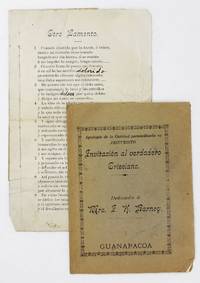
19036144Guanabacoa: Imprenta "El Progreso 1903. Good. 24;12pp. One small pamphlet in original printed wrappers plus a bifolium stitched together with four small broadside flyers. Previously folded. Some moderate creasing and wear with a few scattered short closed tears. Light dust soiling and toning. An assemblage of six individually printed poems composed in the early 20th century by obscure Cuban poet Anastasio Orozco y Etienne. The first poem "Apologia de la Caridad." is in its own wrappers and dedicated to Susan Hammond Barney the noted prison reformer Christian writer evangelist and world traveler. She is one of the founders of the Prisoners' Aid Society of Rhode Island and for many years was the President of the Women's Christian Temperance Union in Rhode Island. The second lengthier work titled "Otro Lamento" is printed on a bifolium and also carries religious themes. Stitched with this bifolium are four small broadside poems printed from 1901 to 1903. One of these is a tribute to President McKinley following his assassination and is dated the day of his death September 14 1901. The titles of the broadside poems in full are as follows:<br /> <br /> 1 A MacKinley sic. La Gloria Es de los Redentores.<br /> 2 El 10 de Octubre. Reminiscencia.<br /> 3 En Memoria del Pundonoroso Capitán Don Federico Capdevila.<br /> 4 Al Rev. H.B. Someillán. Su Regresso.<br /> <br /> OCLC records an 1882 work by Orozco y Etienne Emblema de las flores y de los colores en prosa y verso But not the later ephemeral works collected here. Interesting literary printing from a small newspaper press in Cuba just after the Spanish-American War. Imprenta "El Progreso unknown
185487325Havana: Imprenta de la Real Audiencia Pretorial por S.M. 1854. First Edition. hardcover. very good. 3 folding tables. 2 volumes bound in one. 8vo 1/2 contemporary black morocco tear in a table with no loss of text. Habana: Imprenta de la Real Audiencia Pretorial por S.M. 1847 1854. Very good.<br/> <br/> Imprenta de la Real Audiencia Pretorial por S.M. unknown
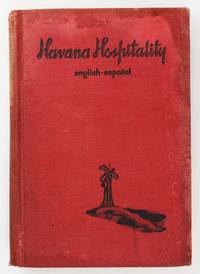
19506261Havana 1950. Good. 389pp. plus 33pp. of ads. Original red publisher's cloth stamped in black. Dampstained at edges and spine extremities worn; rear cover soiled. Contemporary inscription on front pastedown. Foxed some scattered soiling. An interesting bilingual Cuban cook book with recipes in English and Spanish on facing pages. The introduction explains that this is not a volume of recipes for the beginner bride or a how to guide but rather "the compilation of favorite recipes hitherto unpublished yet well-known and highly regarded in important Cuban-American circles and other parts of the world where men and women of taste and discernment throughout the years have succeeded in regaling the palates of intimate friends and distinguished gusts." Each recipe lists its contributor -- some of whom are noted as "Mrs." and some of whom are denoted as "Sra." Recipes range from Hot Grapefruit Cocktail to Sweet and Pungent Shrimp to Italian Spaghetti California Style and more. The St. Rita Guild is a Catholic parish organization designed to foster community. Fewer than ten copies in OCLC. A wonderful slice of domestic and social life in Cuba just before the Communist revolution. unknown
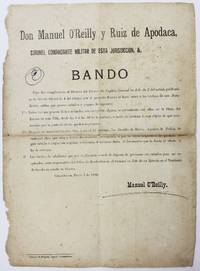
18963188Guanabacoa: Imprenta el Progreso 1896. About very good. Broadside approximately 17 x 12.5 inches. Previously folded. Some biopredation at left edge not affecting text. Otherwise faint foxing light tanning and dust soiling. Two contemporary manuscript rubrics. Unrecorded broadside that orders the presentation of privately-owned horses and pack animals in the town square of Guanabacoa for requisition by the Spanish army in January 1896 at the outset of the Cuban uprising that would eventually lead to the end of Spanish colonial rule. This bando states first that "Todos los que posean dichos animales sin excepción alguna se presentarán con ellos en la Plaza del Recreo de esta Villa desde las 8 á las 10 de la mañana á partir de mañana 8 con objeto de que reconocidos por la junta al efecto queden requisados." Following these initial voluntary presentations inspections would be made of homes and farms and those found not to have handed over usable animals would be guilty disobeying army orders during a time of war. At this point Spain had 100000 troops on the island and another two years of fighting the insurrection incited by José Marti would pass before the intervention of the United States. Not in OCLC. Imprenta el Progreso unknown
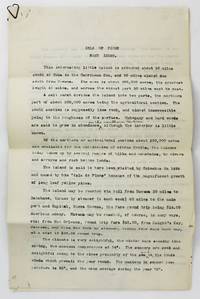
19105377N.p. 1910. Very good. 11pp. of folio typescript totaling around 3000 words with a handful of manuscript corrections. Old folds minor marginal stains from old paper clips. An anonymously-written typescript promotional and business prospectus touting the Isle of Pines Isla de la Juventud off the southern coast of Cuba in the West Indies. The author writes of the many advantages of the Isle of Pines noting "This interesting little island is situated about 50 miles south of Cuba in the Caribbean Sea" with a population of "well-to-do Americans who own about 95% of the island and are after the other 5%." The author also states that "the laborers are mostly 'Pineros' or Isle of Pines people and are very efficient. They are kind and courteous and seem well pleased with the present situation. They are paid from $1.00 to $1.50 per day according to the grade of work." More of the usual language encouraging emigration to the island follows describing the agriculture climate soil government business environment the "old Spanish cities on the island" and more along with several pages of cost estimates for creating a working ten-acre fruit grove. The anonymous author mentions that he and his partner in Nueva Gerona J.A. Miller bought forty acres in Cuchilla Alta or Santa Ana Estates at $40 per acre from H.R. Leland "the sole representative in the United States." The author states he has given up his profession as an engineer in order to devote his time and energy to building a grapefruit grove and pineapple farm and to get others interested in investing with him "We will organize a Development Company with a Citrus Fruit Expert at its head.". He concludes by reiterating that "the country itself is a delightful place to live.raises a superior quality of fruit" and he is glad he "learned about it in time to enable us to enjoy all the benefits of the 'Great Ground Floor.' unknown
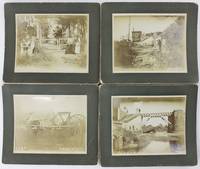
18984079Puerto Principe 1898. Good plus. Thirteen photographs each approximately 4 x 5 inches on original card mounts. A few images rather faded. Light edge wear to mounts. Some photo credits in negatives; each with manuscript caption on mount verso. An interesting group of thirteen photographs taken by an amateur military photographer while deployed to Cuba during the Spanish-American War. The photos are centered around Puerto Principe now Camaguey in Central Cuba an unusual location for photos of this genre and focus on natives local architecture and natural views. Crude credits in the negatives of several images attribute the photographs to "Woodward" or "W.D.W" of the "15th U.S.I.B" i.e. 15th U.S. Infantry Battalion . Each image is also captioned in manuscript on the rear of its mount as follows:<br /> <br /> 1 Rail Road Bridge Near Puerto Principe Cuba<br /> 2 Same Bridge Different View<br /> 3 Natives in Cuba<br /> 4 Military Headquarters<br /> 5 Soldier Camp in Cuba<br /> 6 Cuban Prison<br /> 7 Cemetery in Puerto Principe Cuba<br /> 8 Water Wagon in Cuba<br /> 9 Plaza in Puerto Principe Cuba<br /> 10 Residence in Cuba<br /> 11 Cuban Carriage<br /> 12 Summer Resort in Cuba<br /> 13 Military Headquarters Inside. unknown
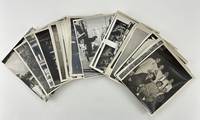
19612137Various places in Florida Mexico Cuba & Spain 1961. About very good. 138 original prints each 8 x 10 inches; mostly large format images with twelve contact sheet containing multiple smaller images and including several duplicates. Light wear at edges; slight curling. Occasional patches of scuffing or soiling. Scattered manuscript annotations and ink stamps on blank versos of photographs. An interesting aggregation of approximately 150 unique professional images that depict the travels and activities of the Latin American Fiesta Association of Tampa Florida. The cultural heritage group was founded in 1940 and flourished from the late 1940s to the 1980s and organized or participated in local social events had an annual ball and traveled widely across Latin America. The photographs here date from 1949 to the early 1960s and document the travels of association members to Spain Mexico and Cuba. They attended numerous events entertainments dinners and other social gatherings as well as made visits to attractions and local cultural clubs. In Spain and Cuba their trips seem to have been limited to Madrid and Havana respectively and there are some interesting series of travel images in Cuba from just prior to the Revolution.<br /> <br /> The group seems to have made multiple trips to Mexico and traveled somewhat more widely. Scattered images show the activities of the association in Florida as well and many of the prints have contemporary manuscript captions and ink stamps of local photographers and photography studios on the versos. In all a wide-ranging and quite engaging group of large photographs that document this midcentury Latin American social club in Florida. unknown
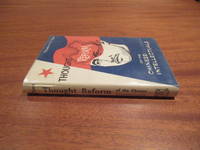
1960025662Hong Kong: Hong Kong University Press / Oxford University Press / Institute of Pacific relations 1960. First Edition First Printing . Hardcover. Near Fine/Near Fine Dustjacket. Xiii 247. Orange Cloth. One Of 2000 Copies Of The First Printing But This Copy With Printed $5 Us Price At Bottom Of Front Flap So Perhaps An American Issue. Slight Signs Of Usage To Book And Dj. Inscribed To Mr. And Mrs. Z. T. Nyi Zau Tsung Nyi Of Los Angeles "With High Esteem And Respect". Information From His Archives At Usc: Theodore H.E. Chen Ph.D. 1939 Was Chairman Of Usc's Department Of Asian Studies From 1940 To 1968 And From 1960 To 1971 He Directed The East Asian Studies Center In Support Of Which He Had Obtained The First Federal Grants. Chen Also Secured Outside Funding For A Project To Help Train And Advise High School Teachers Of Chinese And Japanese. A Native Of Fuzhou China Chen Was President Of Fukien Christian University In 1946 And 1947 While On Leave To Participate In Postwar Rehabilitation. He Also Helped Organize Tunghai University In Taiwan As A Representative Of The United Board Of Christian Colleges. He Was The Author Of Nine Books Including Thought Reform Of Chinese Intellectuals And Maoist Educational Revolution And Chinese Education. Dr Chen Hits An Easy Target; The Worst Governments Are Those Who Try To Control What And How People Think And How And Where They Communicate Because Their Leaders Have An Excess Of The Oldest Disease Of Officials Crap-In-The-Brain Which Prevents Them From Engaging In Exchanges Of Facts And Ideas. <br/> <br/> Hong Kong University Press / Oxford University Press / Institute of Pacific relations hardcover
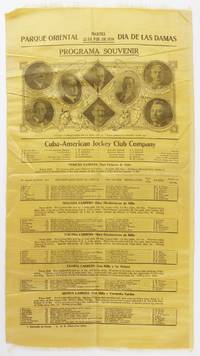
19164158Havana 1916. Very good. Broadside printed on light orange silk approximately 16.25 x 9 inches. Minor edge wear one small tear near bottom right. A seemingly unrecorded silk broadside issued by the Cuba-American Jockey Club Company advertising the lineup of horses and the schedule for a series of five races during Dia de las Damas "Ladies Day" at the Oriental Park racetrack in Marianao Havana in 1916. In addition the top of the broadside is printed with small oval- and diamond-shaped portraits picturing the nine officers of the club who are identified by name and their position within the club. Below these portraits is a listing of fourteen officers of the club. The Oriental Park Racetrack "Parque Oriental" opened in 1915 for winter racing which began in November and lasted into March each year. The racetrack was the only thoroughbred track in Cuba until Fidel Castro practically shut it down after the Cuban Revolution in 1959. The present broadside is a visual reminder of the influx of American business interests in Cuba in the early 20th century. No copies reported in OCLC. unknown
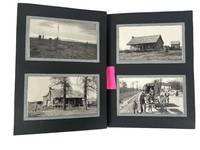
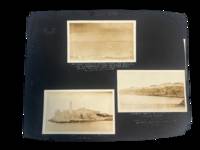
1924184851924. Photograph album 1920s-1930s documenting travel across the American Southwest and Cuba with images capturing landscapes infrastructure and communities during a period of regional development and increased mobility. Early photographs depict desert environments with saguaro cacti and yucca followed by rural farms mission-style buildings and roadside scenes including a family traveling by wagon in Texarkana. One image records the recently constructed Coolidge Dam in Arizona completed between 1924 and 1928 situating the album within contemporary efforts at water management and agricultural expansion in the Southwest. Additional photographs show individuals in domestic and rural settings including an African American man seated outside his home before transitioning to scenes of coastal and subtropical environments. The final portion of the album documents Cuba including street life harbor views with ships and fishing vessels and architectural landmarks such as Morro Castle reflecting the circulation of American travelers in the Caribbean during the interwar period.<br /> <br /> Photograph album containing 69 black and white silver gelatin photographs most measuring approximately 5.75 x 3 inches with one larger earlier portrait at the beginning measuring approximately 9.5 x 6 inches. The images are mounted in a cloth-covered board album with gilt lettering reading "Photographs" secured by a cord binding and measuring approximately 10 x 8.25 inches. The photographs are uncaptioned and arranged sequentially suggesting a travel-based compilation spanning multiple regions including Arizona Texas the Gulf South and Havana Cuba.<br /> <br /> 69 photographs mounted in original album; images clear and well-preserved. Light wear to album consistent with age; overall very good condition. A cohesive visual record of travel and regional life across the American Southwest and Cuba during the early twentieth century. unknown
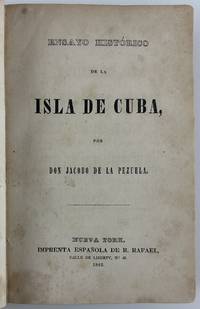
184213073Nueva York: Imprenta Espanola de R. Rafael 1842. viii631pp. Contemporary quarter calf over marbled-paper boards spine gilt gilt leather label. Substantial scuffing and wear to spine and extremities spine ends frayed rubbing to boards. Hinges somewhat tender but holding strong varying degrees of toning and foxing throughout. Good condition. A scarce historical work on Cuba by a Cuban-born Spain-and-France-educated soldier and historian. Jacobo de la Pezuela 1812-1884 was born in Havana went to school in Valladolid and Montpellier then returned to Cuba in his thirties to serve at various army posts and also record the history of his native country. He published several works and later became a member of Spain's esteemed Real Academia de la Historia. In the present work which translates to Historical Essay on the Island of Cuba Pezuela begins at the beginning with Columbus's arrival on the island and continues to almost the present moment concluding with an appraisal of the governorship of Miguel Tacon. In the last chapter Pezuela also includes a section on "Negros emancipados" "Emancipated Blacks". A dense history of Cuba by a Cuban-born historian published in Spanish in New York in 1842.<br /> <br /> Sabin 61329. Imprenta Espanola de R. Rafael unknown
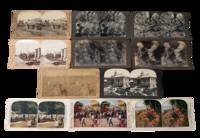
1890231711890. Stereoview archive of the post-emancipation Caribbean showing how the islands were marketed to western viewers through plantation labor export agriculture civic spectacle and catastrophe. As a group these photos function not only as an ethnographic travel archive but as evidence of the visual economy that followed slavery. The British West Indies moved through emancipation in 1834 to 1838 the French Caribbean in 1848 Puerto Rico in 1873 and Cuba in 1886 yet plantation production remained central to regional life well into the early twentieth century. These stereoviews preserve a colonial way of seeing in which Black and Afro-Caribbean labor rural discipline and extractive agriculture remained the background condition of "tropical" beauty and commercial modernity. Cuba's sugar economy in particular expanded through the nineteenth century and slavery was not abolished there until 1886 while Weyler's later reconcentration policy during the Cuban War of Independence violently reorganized rural life. Martinique after 1848 likewise shifted into new labor regimes including imported workers from India and China.<br /> <br /> Archive of 11 stereoview cards late 1890s to early 1900s depicting Cuba Jamaica Martinique Puerto Rico and the Dominican Republic. Most black and white with a few colorized. Each measure 3.5" x 7". All with captions on the margins. "Reconcentrado Farming Scene Province of Havana Cuba" links agricultural production to the brutal displacements of Spain's reconcentration campaign; "Cutting sugar cane Montego Bay Jamaica W.I." records cane labor in a colony where emancipation had not ended plantation dependency; and "Harvesting Coconuts Porto Rico" likewise frames Caribbean land through export work rather than local life. Other views extend that economic framing through cacao and coffee scenes while the paired Havana cards shift into urban leisure and public display including "Beautiful Central Park Havana Cuba" and "Holiday in Havana Cuba" the latter with both Cuban and American flags visible a telling image of the new imperial order after 1898. The disaster views from Martinique and the Lesser Antilles show how stereoview publishers also turned Caribbean destruction into consumable spectacle. the Morne Rouge card is accompanied on the reverse by the grim printed text "Dead bodies which were to be seen in Morne Rouge." while the wider context is the 1902 eruptions of Mount Pelée in Martinique and La Soufrière on Saint Vincent two catastrophes that killed roughly 30000 and 1600 people respectively and devastated local communities and agriculture.<br /> <br /> Some corner wear light toning scattered surface and edge wear. Overall very good condition. This collection gives direct visual representation of Caribbean history Atlantic slavery and emancipation plantation labor and U.S. imperial expansion in the circum-Caribbean preserving the transition from slavery to post-abolition labor. unknown
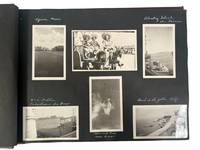
1930221561930. This Photo Album captures a series of trips across California Mexico Dominican Republic Cuba Panama and other U.S. and North American travel documents the coastal and cross-border tourist experience of an American social group during the 1930s through the early 1950s.The album records a continuous itinerary of domestic and international travel with dated captions such as "July 19 1938 / On Board S/S Dixie from New Orleans La" situating the group within organized steamship routes linking the United States to Caribbean destinations.<br /> Oblong photograph album measuring approximately 11.5 x 15.25 inches containing 218 silver gelatin photographs mounted on black pages with images ranging from approximately 2.25 x 2.75 inches to 4.5 x 5.5 inches. Photographs are captioned on album pages and occasionally on versos identifying locations and dates. California scenes include Los Angeles Hollywood Olvera Street Pasadena gardens San Diego Balboa Park Mission Beach La Jolla Catalina Island and the Hotel del Coronado with recurring images of beaches coastal views small boats and leisure activities such as bathing and sightseeing. Additional images depict San Francisco landmarks including Alcatraz Island and Muir Woods. Travel beyond the United States includes Tijuana Mexico; Havana Cuba; Santo Domingo Dominican Republic; and Panama City with scenes of street activity ruins courtyards and waterfronts. A sequence from Catalina Island emphasizes seaside recreation while Caribbean and Central American images show plazas tropical vegetation and urban environments including Afro-Caribbean individuals in public spaces. Additional photographs document travel to New Orleans Utah Salt Lake City Nova Scotia and a location labeled "Indian Island."<br /> This album documents patterns of American tourism during the mid-twentieth century when organized travel by rail and steamship enabled access to domestic resorts and international destinations across the Americas. The combination of coastal California imagery with Caribbean and Latin American scenes reflects a broader گردش of leisure travel that emphasized climate landscape and cultural difference within reachable distance of the United States. The presence of consistent captions and chronological markers provides a structured record of travel routes and destinations contributing to research on tourism history visual culture and cross-border movement in the pre-jet era. Light wear to album and photographs with minor handling marks; overall very good condition. A substantial visual record of American travel practices and geographic mobility across the Americas in the mid-twentieth century. unknown
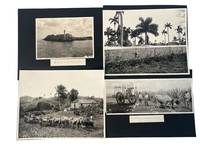
1900202981900. Photographers unknown. Cuban rural photographs early 20th century. This group documents agricultural labor family life and rural landscapes in Cuba prior to the Cuban Revolution recording work practices and domestic environments tied to farming economies that shaped the island's social structure. The images show ox-driven cultivation tobacco production and multi-generational presence within agricultural settings providing visual evidence of how rural Cuban communities organized labor and daily life before the political and economic transformations of the mid-twentieth century. Inclusion of a Havana harbor view further situates these rural scenes within a broader geographic context connecting countryside production with national infrastructure.<br /> <br /> Four original black-and-white silver gelatin photographs mounted on black mats with manuscript captions measuring approximately 4.75 x 6.75 inches to 7.5 x 10 inches. Images include oxen tilling soil in tropical farmland with workers riding wooden-wheeled wagons while family members stand near a thatched dwelling surrounded by palm trees. One photograph shows six children standing atop an ox cart drawn by two animals with hemp fields extending into the background and adult workers and dogs in the foreground. Another image depicts a laborer standing before a large tobacco crop covered with protective cloth with palm trees and huts visible behind. A landscape view of Castillo del Morro overlooks the entrance to Havana Harbor connecting agricultural life with a major coastal landmark.<br /> <br /> These photographs align with the structure of rural Cuban economies in the early twentieth century when agriculture particularly tobacco and related crops relied on manual labor and animal power within plantation and smallholder systems. Visual documentation of fieldwork transport methods and domestic settings provides primary evidence for the study of labor organization family roles and environmental conditions in pre-revolutionary Cuba. The combination of agricultural scenes and a Havana harbor landmark situates local labor within wider economic and geographic networks. Minor surface wear; mounts and photographs remain intact with clear imagery and legible captions. Overall very good condition. unknown
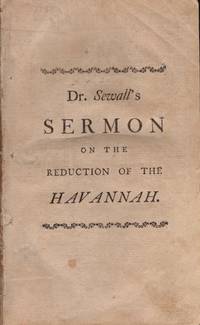
176235251Boston New England: Printed by John Draper Printer to His Excellency the Governor and the Honourable His Majesty's Council: AND By Edes and Gill Printers to the Honourable House of Representative 1762. First Edition. Wraps. Good. Disbound wraps. 33 1 page blank. Half title present. Light toning and scattered brown spots to the print. <br /> <br /> Evans 9269; Sabin 79430. From wikipedia:<br /> <br /> The siege of Havana was a successful British siege against Spanish-ruled Havana that lasted from March to August 1762 as part of the Seven Years' War. After Spain abandoned its former policy of neutrality by signing the family compact with France resulting in a British declaration of war on Spain in January 1762 the British government decided to mount an attack on the important Spanish fortress and naval base of Havana with the intention of weakening the Spanish presence in the Caribbean and improving the security of its own North American colonies. A strong British naval force consisting of squadrons from Britain and the West Indies and the military force of British and American troops it convoyed were able to approach Havana from a direction that neither the Spanish governor nor the Admiral expected and were able to trap the Spanish fleet in the Havana harbour and land its troops with relatively little resistance.<br /> <br /> The Spanish authorities decided on a strategy of delaying the British attack until the strength of the city's defences and the onset of seasonal rains inflicting tropical diseases would significantly reduce the size of the British force via disease along with the start of hurricane season would force the British fleet to seek a safe anchorage. However the city's main fortress the Morro Castle was overlooked by a hill that the governor had neglected to fortify; the British installed batteries there and bombarded the fortress daily with heavy shelling. The fortress eventually fell after the officer in charge of Morro Castle Luis Vicente de Velasco was mortally wounded by a stray bullet. The capture of Morro Castle led to the eventual fall of the rest of the fortifications and the surrender of the city the remaining garrison and the naval forces present before the hurricane season began.<br /> <br /> The surrender of Havana led to substantial rewards for the British naval and military leaders and smaller amounts of prize money for other officers and men. The Spanish governor Admiral and other military and civil office holders were court-martialled upon their return to Spain and punished for their failures to conduct a better defence and allowing the Spanish fleet present to fall intact into the hands of the British. Havana remained under British occupation until February 1763 when it was returned to Spain under the 1763 Treaty of Paris that formally ended the war. Printed by John Draper, Printer to His Excellency the Governor, and the Honourable His Majesty's Council: AND By Edes and Gill, unknown
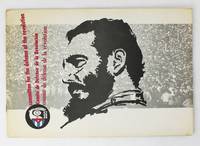
19656257Habana 1965. Very good. 16pp. Oblong pamphlet in original pictorial wrappers stapled. Light wear and toning at wrapper edges with a few faint creases. Internally clean. A visually rich pro-Casto and pro-Communist pamphlet that highlights the history and core activities of Cuba's Committee for the Defense of the Revolution CDR neighborhood-based civil defense organizations created by Castro in 1960 to defend the revolution and maintain social and political control at the local level. This often included activities like surveillance distribution of propaganda and vigilante justice. The pamphlet is illustrated with photos throughout and also contains a two-page spread with maps of the island and charts data and statistics about the Cuban people. It contains a year-by-year account of the Committee's achievements and activities and ends with a section concerning its relations with other countries and their visits to Cuba. The rear wrapper states that editions were published in English French and Spanish as evidenced by the trilingual title on the front cover but we find no evidence of any edition in OCLC. Scarce and with much interesting and propagandized information about Castro's local enforcers during the early years of the Communist regime. unknown
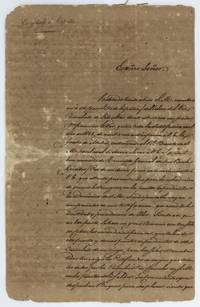
18282401Gibraltar 1828. Good. 3pp. on a bifolium. Previously folded with separations. Tanned somewhat brittle. An interesting example of official communications concerning trade between colonial Cuba and the Spanish mainland. In this manuscript letter date March 14 1828 the new Spanish Vice Consul in Gibraltar writes to the Governor General of Cuba concerning several topics. These include the regulation of shipping to Cuba and by implication the rest of the Caribbean through Gibraltar particularly of French ships leaving Mediterranean ports. Also discussed is keeping track of individuals particularly merchants going to Cuba by means of identification papers and other documents. The consul also reminds the colonial government of the importance of documenting duties and tariffs paid for shipping cargo and goods. unknown
1920227281920. Havana Cuba travel photo album circa 1920s documents an American visitor's encounter with Havana during the interwar years when U.S. tourism commercial presence and Spanish-American War memory shaped how many American travelers interpreted the city. The vernacular photographs record arrival by steamship harbor landmarks civic buildings commercial streets factories boulevards monuments cemeteries and guarded public spaces giving insight into both Havana's urban landscape and the traveler's assumptions about access history and spectacle. The album's references to the USS Maine and Spanish-American War memorials place ordinary sightseeing within a longer history of U.S. intervention in Cuba; the Maine exploded in Havana Harbor on February 15 1898 killing more than 260 sailors and intensifying the crisis that led to war with Spain.<br /> <br /> Approximately 25 sepia-toned silver gelatin photographs each about 3 x 5 inches mounted to black album leaves with detailed handwritten captions in white pencil. The sequence begins aboard the S.S. Kroonland with one caption reading "My first view of Havana from the deck. three miles out at sea in a dark storm" followed by a landing view captioned "where we landed in Havana Cuba." The S.S. Kroonland returned to Panama Pacific Line service in 1923 on a New York to San Francisco route via Havana the Panama Canal and Los Angeles supporting the album's interwar travel context. The photographs then trace Havana's maritime and civic topography: harbor views Morro Castle captioned "Famous during the Spanish-American War" the waterfront in front of the fortress the Court House the President's Palace a "600-year-old church" the Henry Clay Cigar Store Havana's factory district and public boulevards "where all streets have parks in the center." Other images include a cemetery visit captioned "All people in Cuba are laid to rest above the ground" and a restricted-view street or carriage scene captioned "Officer would not let me take picture but when he turned I took it anyway" a revealing note on tourist privilege and unauthorized looking.<br /> <br /> Several images directly record the ways American travelers consumed Havana through imperial memory and Cuban nationalist commemoration. One monument is captioned "This was given by the Cuban people to the American soldiers that fell in the Spanish-American War" while another marks "the spot where the Maine sank at the entrance of the harbor." The album was made after Cuba's formal independence in 1902 and during the long aftermath of the Platt Amendment framework under which the United States retained extensive influence over Cuban affairs and intervened repeatedly in the early twentieth century. Album leaves chipped at edges several with corner losses not affecting images; prints generally sharp with strong contrast and clear annotations very good overall. Socially revealing Havana travel album documenting how a U.S. visitor pictured Cuba through steamship tourism colonial architecture cigar commerce Spanish-American War remembrance and the everyday authority structures of an interwar Caribbean capital. unknown
1906ZB705570Habana: 1906-1931 passim. Tomo I 1906 Tomo III 1906 a 1908 Tomo IV 1909 a 1911 Tomo VIII 1917 a 1919 Tomo 10 1921 a 1923 Tomo XII 1925-1927 Tomo XIII Vol. I 1927 a 1929 Tomo XIII Vol. 2 1929 a 1931 only; first editions; small usually thick quartos; ex library original cloth bindings smudged and worn with one side and a few text leaves detached most hinges cracked or broken text age toned but not fragile reading copies only. - If you are reading this this item is actually physically in our stock and ready for shipment once ordered. We are not bookjackers. Buyer is responsible for any additional duties taxes or fees required by recipient's country. Photos available upon request. Habana: hardcover
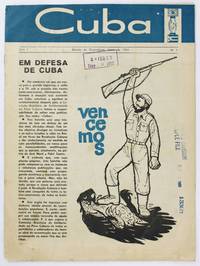
19615832Guanabara 1961. About very good. 111pp. Small folio. Original pictorial self-wrappers stapled. Contemporary and slightly later ink stamps to front wrap. Light edge wear. Some tanning and dust soiling. First issue of this evidently unrecorded periodical published by the "Comissão Brasileira de Solidariedade ao Pavo Cubano" in May 1961. The publication contains numerous positive stories on the progress of the Cuban Revolution and support of the cause from the Brazilian people. Illustrated throughout with photographs and drawings including the beginning of a serial comic on the history of the revolution at the rear. The front wrap depicts Fidel Castro with his foot on the chest of a supine eagle and a rifle raised triumphantly over his head. Interesting support for the Communist cause in Cuba from South America. Not in OCLC. unknown
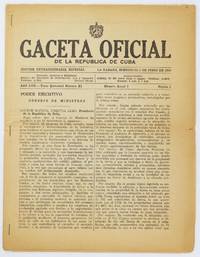
19595470Habana: June 3 1959. Good plus. 11pp. Small folio. Previously folded; stapled along gutter margin. Some edge and corner wear; closed tear to initial leaf from fore-edge along old fold. Toned cheap newsprint. A special edition of the Gaceta Oficial of Communist Cuba devoted to the printing of the First Agrarian Reform Law passed and signed on May 17 1959. The law effected the first major land redistribution under Fidel Castro and the Communist Party. Under its authority all properties were over 420 hectares were confiscated and redistributed to the people and native businesses. Prior to the law over 80% of Cuban land was owned by foreign mostly American companies. The preamble and sixty-seven articles lay out the motivations for the law the parameters for confiscation by the Department of Agriculture the mechanisms for seizure and redistribution and the creation of a new government organization to facilitate the land transfers the Instituto Nacional de Reforma Agraria. Signed in print by Fidel as Prime Minister Manuel Urrutia Lleo as President and a slew of other officials. June 3 unknown
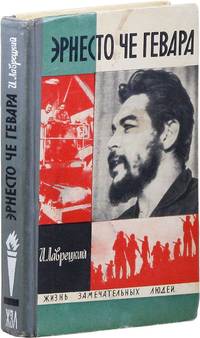
197232549Moscow: ИздательÑтво ЦК ВЛКСМ ÐœÐ¾Ð»Ð¾Ð´Ð°Ñ Ð³Ð²Ð°Ñ€Ð´Ð¸Ñ 1972. First Edition. Octavo. Cloth-backed pictorial paper-covered boards; 348 3pp; portraits plates. Slight external rubbing and shelfwear; corners nudged; still a solid Very Good copy. Apparently the first full-length Soviet biography of the Argentinian revolutionary martyr and hero of the Cuban Revolution well-illustrated with photographic portraits and plates. <br /> <br /> According to Costa Rican investigative journalist Marjorie Ross "Lavretsky" was a pseudonym for Soviet master-spy Iosif Grigulevich who got his start as a hired hit-man against Trotskyist and Anarchist factions in the Spanish Civil War. She pegs him as the never-identied "third man" in the assassination of Leon Trotsky; and during the Cold War posing as an international coffee expert Grigulevich reputedly penetrated the highest levels of government and culture in Costa Rica Chile and Mexico during which time he was also the Kremlin's "handler" for Chilean poet Pablo Neruda and Mexican painter José Siqueiros see Marjorie Ross El secreto encanto de la KGB/ The Secret Charm of the KGB: Las cinco vidas de Iosif Grigulievich/ The Five Lives of Iosif Grigulevich. San José: 2006. <br /> <br /> Apparently an uncommon work at least in Western institutions; OCLC locates just one copy British Library; KVK and European Library Meta Catalog find three more Nat. Lib. Lithuania; BNF; Staatsbibliothek Berlin. ИздательÑтво ЦК ВЛКСМ ÐœÐ¾Ð»Ð¾Ð´Ð°Ñ Ð³Ð²Ð°Ñ€Ð´Ð¸Ñ unknown
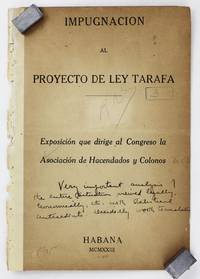
19235672Havana 1923. Fair. 14pp. Original wrappers rear cover lacking. Contemporary ink notation to front cover reinforced at spine with later paper tanned. Text guillotined; leaves silked some chipping and wear at edges. A rare work arguing against railroad consolidation in Cuba and a victim of the New York Public Library's microfilming project. The subtitle reads "Exposicion que dirige al Congreso la Asociacion de Hacendados y Colonos." We locate only the microfilm copy at NYPL in OCLC no physical copies. unknown
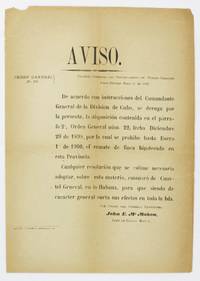
18995378Puerto-Principe Cuba: Imp. el Progreso-Soledad January 11 1899. Good. Broadside 11.75 x 8.25 inches. Old folds minor chip at top left corner uniformly tanned and somewhat tender. An unrecorded general order issued in Spanish by the American "Jefe de Estado Mayor" Chief of Staff John E. McMahon during the military occupation of Cuba in the Spanish-American War. The order stipulates that a paragraph in a previous order prohibiting the auction of mortgaged property in the province of Puerto-Principe until January 1 1900 is hereby repealed and any further instructions on this matter will come from the Army's General Headquarters in Havana. McMahon issued several general orders during the American Army's occupation of Cuba and all appear to be rare. An interesting artifact from America's expansionist period with no other copies in OCLC auction history or the trade. Imp. el Progreso-Soledad, January 11 unknown
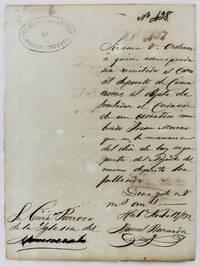
18723066Havana 1872. Very good. Manuscript form approximately 8.5 x 6.25 inches. Minor wear at edges; a few small worm holes. Contemporary ink stamp. Light tanning and offsetting. This 1872 manuscript form from a Havana jail the Celaduria de la Punta notes the death there of an "Asiatico" a Chinese indentured servant with the given name of Juan Macao and orders the transfer of the body to the mortuary for cremation. Indentured servants found themselves jailed for several reasons including suspicion of theft and other crimes recapture following runaway or mere suspicion of abandoning a contract. unknown