2 507 résultats
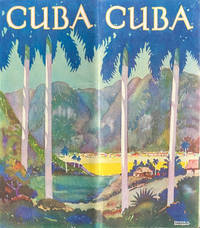
193261114Havana Cuba: Cuban Tourist Commission Printed by “Ucar Garcia & Co.†ca. 1932. 4to. 36 pp unpaginated. Printed & illustrated throughout in green black & white photo illustrations throughout graphic text illustrations in green & white. Self-printed colour-illustrated softcovers wraparound cover art by Conrado W. Massaguer minor bumping head of spine shelfwear still VG copy. First edition of this informative travel brochure touting the joys of visiting Cuba touting the historic cathedral square the lush countryside the offerings of sugar coffee and tobacco as well as the beaches hunting sport fishing night life and The Rumba. Massaguer 1889-1965 was an influential Cuban artist whose modernist look dominated magazines catalogues and ads across Latin America and also was a founding member of the Grupo Minorista. Cuban Tourist Commission, Printed by “Ucar Garcia & Co.,†paperback
193162232Havana Cuba: Walton & Spencer Co. P. Fernandez & Co. Printers Pl. y Margall 17 1931. 4to. 32 pp unpaginated. Printed & illustrated throughout in green black & white photo illustrations throughout decorative green borders 1 double page folding map at center. Colour-illustrated softcovers cover art front & back by Edward Sandback of Cuban beach old Havana and fruits of Cuba on verso of front cover Art Deco frontisp. in colour by Herminio Portell Vila 1901-1992 Cuban cartoonist & illustrator on verso of back cover center crease fold as issued slight shelfwear NF copy. First edition of this beautifully printed brochure exclaiming over the fun and leisure activities of visiting Cuba featuring photos of historic Havana golf courses polo gambling automobile trips the influences of Africa and Spain and of particular interest the many different residence hotels and leisure places for rent for tourists. Sandback was a Florida artist well-remembered for his travel brochure illustrations such as “Florida: Empire of the Sun†as well as paintings. Walton & Spencer Co., P. Fernandez & Co., Printers, Pl. y Margall 17, paperback
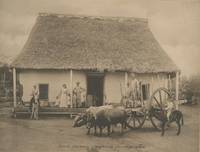
1913List3218Brooklyn New York: The Albertype Co 1913. Photo album of twenty-five 12 ½ x 10 inch pages containing fifty 8 x 6 inch photographs with cardstock cover. Cover and pages worn with marginal damage; pages mostly detached from string binding; photos with captions on negative; Near Fine with Fine contrast. Overall excellent to Near Fine. After the Spanish American War the Isle of Pines now Isla de Juventud in Cuba was contested territory because the 1901 Platt Amendment had specifically left ownership of the island up to a future treaty; the 1904 Hay-Quesada Treaty recognizing Cuban sovereignty over the island failed to be ratified by the US until 1925. American citizens controlled ninety-five per cent or more of the island’s land and were strongly in favor of American annexation. <br /> <br /> Offered here is a 1913 photo album exhibiting the island’s lush scenery productive farmland and luxurious American residences and resorts. The American property owners are identified by name and include American Residents and Property Owners’ Association President T.J. Keenan who in 1902 described the island under default administration by the Cuban government as “on the verge of anarchy . American interests are absolutely unprotectedâ€1; H.A. Christy Vice President of the Cincinnati Richmond & Muncie Railroad; coal and coke businessman John F. Atcheson and other elites. There are also shots of a number of hotels; grapefruit banana and pineapple farms belonging to the settlers; and recreation by both automobile and boat.<br /> <br /> Two photographs are not of American ventures: one of the home of José Sarda which housed José Martà before his exile to Spain labeled merely “Nueva Gerona Sarda Homsteadâ€; and one of a house labeled “San Juan Native Homestead†showing a family standing on the porch of their thatched-roof home with an oxcart before them.<br /> <br /> We find four copies of this photo book on OCLC. Of interest to historians of US imperialism in Cuba following the military withdrawal. <br /> <br /> 1 “The Isle of Pines President Orders Investigation of Affairs There†The Press-Herald November 15 1902 2. The Albertype Co unknown
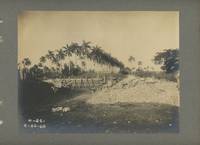
1906List3021La Habana Province Republic of Cuba 1906. Twenty-two photographs measuring 7 ¼ x 9 ½ inches mounted on heavy cardstock measuring 10 x 12 inches. Photos numbered and dated on negative. In album embossed with “Havana Central Railroad Co./ Progress Photographs/ GUANAJAYâ€. Photos with fine contrast and some wear; mounts with minor damage slightly warped with some detached from binding. Overall excellent. Havana Central Railroad Company was an American company formed in April 1905. It opened two electric tram lines—Havana to Guanajay in 1906 and Havana to Güines in 1907—before it was bought by the English company United Railways following the Panic of 1907. Offered here is a photo album showing the construction of the Guanajay line. The photographs show laborers assisted by horse-drawn carts digging culverts laying tracks and erecting bridges and buildings.<br /> <br /> This project came on the heels of the successful efforts of the Cuba Company another railroad company to make the emerging Cuban Republic amenable to American business.They did so first by using ‘revocable permits’ which could ostensibly be revoked by the new government when it was formed to circumvent the Foraker Amendment prohibiting concessions to American companies by the US’s military government; and second by using their close relationships to several members of the Cuban Constitutional Convention to include a law allowing irrevocable permits.1 These along with the Platt Amendment and Governor Leonard Wood’s General Railway Law led to what would amount to domination by US interests in Cuba particularly but not exclusively in the railroad industry.2<br /> <br /> Of interest to scholars of the early Republic of Cuba especially the history of US businesses in the country.<br /> <br /> 1 Juan C. Santamarina “The Cuba Company and the Expansion of American Business in Cuba 1898–1915†The Business History Review 74 no. 1 Spring 2000: 41–83.<br /> 2 Louis A. Pérez Jr. “Insurrection Intervention and the Transformation of Land Tenure Systems in Cuba 1895–1902†Hispanic American Historical Review 65 no. 2 1985: 229–254. unknown
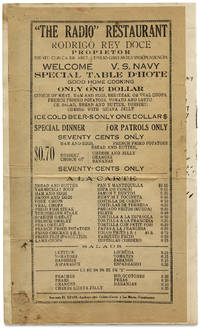
3726630<p>Guantanamo Cuba: Imprenta El Suaso Aguilerae ntre Calixto Carćia y Los Maceo. ca. 1930s. 13½ x 7½ inches. Broadside simple ornamental border. Single sheet mounted to a larger ledger sheet. Two short tears upon fold lines in margins; tanning; good.</p> <p>A rare unrecorded Cuban restaurant menu directed at American naval servicemen. This bilingual broadside functions as both menu and advertisement for Rodrigo Rey Doce’s restaurant aptly named “The Radio†promising “Good Home Cooking†to the U.S. Navy through a fixed-price offering.</p> <p>For one dollar patrons could order familiar comforts—ham and eggs “beesteak†“french fried potatoes†veal chops or cheese with guava jelly—while ice-cold beer was offered at the same price a detail that hints at the economics of leisure near a U.S. base. An à la carte menu supplemented the set meal listing dishes in both English and Spanish including bacon and eggs fried fish steak fried fish parguitos vermicelli soup and simple fruit desserts.</p> <p>The menu suggests a steady clientele of American sailors likely stationed at Guantánamo and captures a small but telling moment of cultural exchange between Cuban proprietors and the U.S. Navy. A rare survival likely kept as a souvenir by a sailor and brought home to the United States.</p> unknown
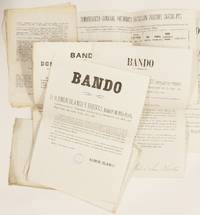
1896RF 818<p><i><b>Collection of 23 original edicts February 1896-September 1898 by the Captain Generals of Cuba 19 by General Valeriano Weyler 4 by General Ramón Blanco the last Spanish Captain General of Cuba. The edicts concern the attempts by the Spanish authorities to control the insurrection. They range from Weyler's efforts to concentrate the population in fortified encampments a measure often considered the precursor of concentration camps to Blanco´s establishing of a ceasefire in 1898.</b></i></p><p>23 ORIGINAL EDICTS; some manuscript annotations and the stamp of the Army of Cuba on some communiqués. The collection includes three items of related ephemera.</p><p>Notable collection of original edicts from Spanish authorities who participated in the Cuban War of Independence and attempted unsuccessfully to end the insurrection. The Cuban War of Independence the War of 1895 is the name given to the final Cuban war against Spanish domination. It is one of the last American wars against the Kingdom of Spain. The war began on 24 February 1895 with a simultaneous insurrection in 35 Cuban localities known as Grito de Oriente formerly known as Grito de Baire and ended in 1898 with the surrender of the Spanish Colonial army to the U.S. military advance with the assistance and support of <i>mambises</i>members of the Independentist Cuban army in the conflict known as the Spanish-American War. </p><p>Details on each of the edicts available on request. G. 11653/ RF 818. X99X001160 </p>
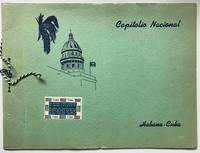
1930537Havana: Imp. “Ninon 1930. 24pp. Oblong quarto. Original green pictorial wrappers string-tied. Cuban Revolution stamp affixed to front cover. Pictorial souvenir of the Capitol Building in Havana which was inaugurated May 20 1929. Each image has bilingual descriptive text in English and Spanish on the verso. Images include the exterior of the building as well as specific locations within such as the Office of the President of the Senate the Reception Hall the Statue of the Republic and the Marti Library.<br /> <br /> A sticker on the front cover has a border of small Cuban flags around the text “Our Revolution is NOT Communist. Our Revolution is Humanist. The Cubans only want the right to an education the right to work the right to eat without fear the right to PEACE JUSTICE FREEDOM.†Presumably affixed to this earlier souvenir after the start of the Cuban Revolution in 1953. An interesting addition to this piece of promotional literature. OCLC locates six copies. Imp. “Ninon unknown
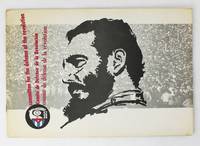
19656257Habana 1965. Very good. 16pp. Oblong pamphlet in original pictorial wrappers stapled. Light wear and toning at wrapper edges with a few faint creases. Internally clean. A visually rich pro-Casto and pro-Communist pamphlet that highlights the history and core activities of Cuba's Committee for the Defense of the Revolution CDR neighborhood-based civil defense organizations created by Castro in 1960 to defend the revolution and maintain social and political control at the local level. This often included activities like surveillance distribution of propaganda and vigilante justice. The pamphlet is illustrated with photos throughout and also contains a two-page spread with maps of the island and charts data and statistics about the Cuban people. It contains a year-by-year account of the Committee's achievements and activities and ends with a section concerning its relations with other countries and their visits to Cuba. The rear wrapper states that editions were published in English French and Spanish as evidenced by the trilingual title on the front cover but we find no evidence of any edition in OCLC. Scarce and with much interesting and propagandized information about Castro's local enforcers during the early years of the Communist regime. unknown
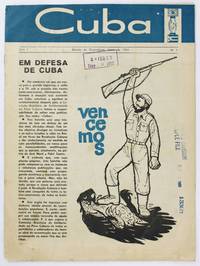
19615832Guanabara 1961. About very good. 111pp. Small folio. Original pictorial self-wrappers stapled. Contemporary and slightly later ink stamps to front wrap. Light edge wear. Some tanning and dust soiling. First issue of this evidently unrecorded periodical published by the "Comissão Brasileira de Solidariedade ao Pavo Cubano" in May 1961. The publication contains numerous positive stories on the progress of the Cuban Revolution and support of the cause from the Brazilian people. Illustrated throughout with photographs and drawings including the beginning of a serial comic on the history of the revolution at the rear. The front wrap depicts Fidel Castro with his foot on the chest of a supine eagle and a rifle raised triumphantly over his head. Interesting support for the Communist cause in Cuba from South America. Not in OCLC. unknown
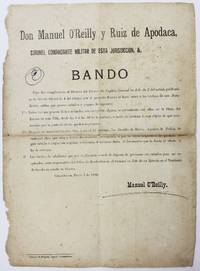
18963188Guanabacoa: Imprenta el Progreso 1896. About very good. Broadside approximately 17 x 12.5 inches. Previously folded. Some biopredation at left edge not affecting text. Otherwise faint foxing light tanning and dust soiling. Two contemporary manuscript rubrics. Unrecorded broadside that orders the presentation of privately-owned horses and pack animals in the town square of Guanabacoa for requisition by the Spanish army in January 1896 at the outset of the Cuban uprising that would eventually lead to the end of Spanish colonial rule. This bando states first that "Todos los que posean dichos animales sin excepción alguna se presentarán con ellos en la Plaza del Recreo de esta Villa desde las 8 á las 10 de la mañana á partir de mañana 8 con objeto de que reconocidos por la junta al efecto queden requisados." Following these initial voluntary presentations inspections would be made of homes and farms and those found not to have handed over usable animals would be guilty disobeying army orders during a time of war. At this point Spain had 100000 troops on the island and another two years of fighting the insurrection incited by José Marti would pass before the intervention of the United States. Not in OCLC. Imprenta el Progreso unknown
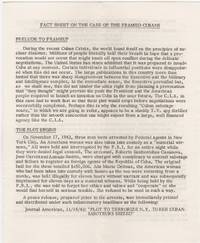
1963206861New York: Defense Committee for Garcia and Sueiro 1963. Folded for mailing otherwise fine. Bifolium approx. 7 x 8-1/5 in. making a four-page offset printed document; with 8-1/2 x 14 in. mimeo letter and original mailing envelope. Documentation from the effort to defend two Cuban-Americans arrested as suspected saboteurs with plans to blow up Manhattan businesses and New Jersey oil refineries. The FBI generated prominent headlines with the arrests at the height of cold-war tensions between the Bay of Pigs and the assassination of President Kennedy. Defense Committee for Garcia and Sueiro unknown
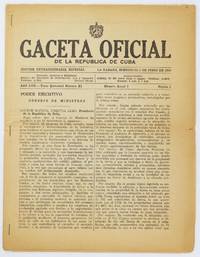
19595470Habana: June 3 1959. Good plus. 11pp. Small folio. Previously folded; stapled along gutter margin. Some edge and corner wear; closed tear to initial leaf from fore-edge along old fold. Toned cheap newsprint. A special edition of the Gaceta Oficial of Communist Cuba devoted to the printing of the First Agrarian Reform Law passed and signed on May 17 1959. The law effected the first major land redistribution under Fidel Castro and the Communist Party. Under its authority all properties were over 420 hectares were confiscated and redistributed to the people and native businesses. Prior to the law over 80% of Cuban land was owned by foreign mostly American companies. The preamble and sixty-seven articles lay out the motivations for the law the parameters for confiscation by the Department of Agriculture the mechanisms for seizure and redistribution and the creation of a new government organization to facilitate the land transfers the Instituto Nacional de Reforma Agraria. Signed in print by Fidel as Prime Minister Manuel Urrutia Lleo as President and a slew of other officials. June 3 unknown
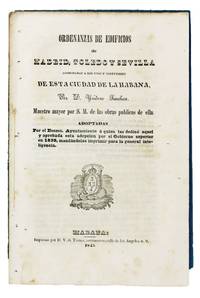
18455182Habana: Impresas por D. V. de Torres 1845. Good. 533pp. Contemporary plain blue wrappers separated at spine. Stitched as issued with additional small stabholes at gutter where previously bound into a sammelband. Light foxing and dust soiling. A seemingly unrecorded architectural pamphlet that prints the first comprehensive building code for Havana developed in 1837 by Isidoro Sánchez y Fuentes the city’s Director of Public Works. The text outlines detailed rules for the construction of buildings and related infrastructure to accord to high technical aesthetic and public health standards influenced by such regulations as had been imposed in Madrid Toledo and Seville. Sánchez’s code proved highly consequential and it resulted in significant improvements to the appearance livability and safety of many Havana neighborhoods.<br /> <br /> In the 18th century Madrid Seville and Toledo suffered from many of the same problems of haphazard urban development as Havana. However great efforts were made to develop and enforce building codes which cleaned up most of these city’s formerly slum-like suburbs of great benefit to public health not to mention aesthetics. Teodoro Ardemans Madrid’s Director of Public Works began the reforms in these Spanish cities and his 1720 work on the subject was fantastically influential for generations going through multiple reprints until 1848. Isidoro Sánchez adapted Ardemans’ concepts but updated and improved them to the requirements of the tropical climate and customs of Havana. He thus developed the first comprehensive building code for the Cuban capital which was one of the most progressive and well-considered in the Americas. <br /> <br /> Two preambles begin the work by discussing the importance of taking architectural inspiration from the buildings of classical antiquity and of considering the historical context and significance of reformed Spanish building codes. The bulk of the text takes up a variety of interesting and practical topics -- erecting urban and suburban buildings; respecting neighbors’ rights when building homes shared alleyways building ovens in light of nearby homes; creating ventanas de medianería large windows that can open or close depending the temperature and breeze; how garages should open onto public thoroughfares; where building materials should be manufactured; building basements; building balconies etc. on public streets; drainage systems and sewers; creating wells and other drinking water sources; where to build forges without disturbing neighbors; large windows for basements; building attics; and air circulation.<br /> <br /> Sánchez presented his proposed code to the City Council on June 10 1837 and in 1839 it was approved in full by the Governor but the printing of the text was only approved in April 1845 according to the introduction. We locate no copies of this significant work in OCLC or available auction records. Impresas por D. V. de Torres unknown
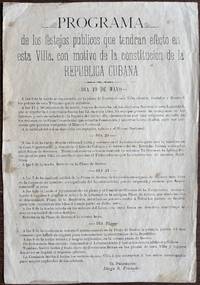
19013191Havana 1901. About very good. Broadside 12.5 x 9 inches. Light wear and soiling. Backed with tissue. Broadside outlining the celebrations planned for the adoption of the Cuban Constitution of 1901 following the eviction of both Spain and the United States from the country. Four days of celebrations were planned for May 19 20 21 and 22. Events including the singing of the National Anthem orchestral concerts fireworks dancing and other diversions. We find no record of this broadside in OCLC. An ephemeral piece commemorating Cuban independence. unknown
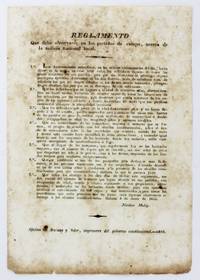
18223190Havana: January 5 1822. Good. Broadside 11.5 x 8 inches. Foxed faint signs of folding a few small wormholes not affecting text. An apparently unrecorded broadside order from the captain general of Cuba Nicolas Mahy directing all able-bodied men under the age of fifty to join up with their local militias in order to keep the peace. The local militias are directed to go out on nightly forays "en nùmero capaz de evitar las incursiones de los salteadores por los caminos y la desercion que pueda acontecer de los negros de los ingenios cafetales y demas haciendas." Additionally all men between the ages of fifty and seventy are told to report to “las casas mas fuertes de los pueblos" to form a garrison that can protect women children and the elderly in case of insurrection. By the formation of these militias and the establishment of "el uso de los pasaportes" it was hoped to identify and arrest "los vagos y mal entretenidos." All mayors within ten days of receipt of this regulation were to report the number of men they had enlisted along with their particulars. In the early 1820s much of Spanish colonial America was gripped by revolution and with these orders the Cuban government likely hoped to avoid similar unrest on the island. Several independence groups had been formed in Cuba as of the promulgation of this decree the largest of which was the Soles y Rayos de Bolívar established in 1821. Signed in print by Mahy; not in OCLC. January 5 unknown
1931D1703La Habana 1931. Hardcover. Very Good. Five issues all but the last with their original wraps bound in one volume leather-backed marbled paper over boards -- a bit scuffed and bumped along the edges. Includes: Ano I. No. 1; Febrero 15 1931 / Ano I. No. 2; Febrero 22 1931 / Ano I. No. 3; Marzo 1 1931 / Ano I. No. 4; Marzo 8 1931 / Ano I. No. 5; Marzo 15 1931. The last issue No. 5. does not have the original front cover otherwise all original illustrated wraps are present. All a bit browned as expected and brittle with the occasional small marginal tear but perfectly good reading copies complete and nicely preserving the text illustrations sheet music and ads. Santa Clara bookseller's ticket on front paste-down. A wonderful and uncommon look at Cuba. <br/><br/> hardcover
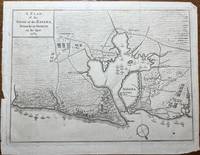
176635128London: Britannia triumphant 1766. Map. Very good. Approx. 8.5" x 11" map. 2 vertical creases where map was folded. Small left edge tear in the margin. Very good condition. The original map is located at the John Carter Brown Library at Brown University. Britannia triumphant unknown
19036457V.p. 1903. 36 postcards all completed in manuscript generally very good or better with some wear and rounded corners. <br /> <br /> A fascinating assemblage of cards written by Pre-Castro intellectuals to a Maria de Serra though a few are written to other women. It is difficult to pin down de Serra though we do know she was highly educated and very well-known and connected. It makes sense to us that she is perhaps the Maria de Serra mentioned by William Wells Brown in his important work The Rising Son or the Antecedents and advancement of the Colored Race 1874. On pg 260 Brown writes:<br /> <br /> "The free blacks in Cuba form an important element in her population and these people are found in all the professions and trades. .one of the best young ladies' academies at present existing at Havana is personally conducted by an accomplished negro woman Maria de Serra to whom many a lady of high rank owes her social and intellectual accomplishments."<br /> <br /> Further research may be fruitful in retrieving more information on this Maria de Serra.<br /> <br /> It goes without saying that the sentiments and signatures are the most appealing part of this collection. Many of the cards appear to contain original verse and all are quite legible and well preserved. Equally as lovely are the cards themselves many being of exceptional beauty as they were all chosen by artists and intellectuals. All in all a remarkable set worthy of further research. The correspondents are as follows:<br /> <br /> <br /> Diego Vicente Tejera; one of the most famous turn-of-the-century Cuban poets but also known as a short story writer orator and political activists.<br /> <p><br /> Nestor Cargonell; famous poet and writer. His son went on to become a Hollywood star.</p> <br /> <p>Conde Kostia pseudonym of Aniceto Valdivia; writer journalist poet critic lecturer dramatist founder of newspapers and Cuban diplomat.</p> <br /> <p>Rafael Maria Merchain; very influential poet and philosopher</p> <br /> <p>Enrique Fontanills; very prominent Cuban journalist.</p> <br /> <p>Florimel: great Cuban journalist writer and poet who died early in life.</p> <br /> <p>Manuel Raul Blanco Belmonte; Cuban poet.</p> <br /> <p>Ramon Meza; One of the most important Cuban writers of his time. Many of his books are considered classics and remain in print.</p> <br /> <p>Aurelio Cancio; Cuban journalist who founded "La Discusion" newspaper.</p> <br /> <p>Manuel Serafin Pichardo; one of the most popular Cuban poet of the 1900s.</p> <br /> <p>Frederico Mendes Cobos; a Cuban politician who became a a senator in 1902.</p> <br /> <p>Juan Maria Alberti: influential Cuban politician.</p> <br /> <p>Manuel Marquez Sterling; fine writer and politician.</p> <br /> <p>Jose Manuel Govin; journalist and director of the popular newspaper "El Munto"</p> <br /> <p>Cesar Cancio; Very popular Cuban poet born in St Spiritus.</p> <br /> <p>Pablo Bonachea; great Cuban journalist and director of "La Discussion" newspaper for one year.</p> <br /> <p>Jose Ernesto Trian; Cuban writer with political connections. Was ambassador to Venezuela.</p> <br /> <p>Manuel Tierso; Romantic Cuban poet</p> <br /> <p>Alvaro de la Iglesia. revered Cuban writer who penned the great "Cuban Traditions"</p> <br /> <p>Frederico Ledesma Balsunde: journalist and editor at "El Lucero."</p> <br /> <p>Fabio Fiallo; a leading Dominican writer poet and politician. He died in Cuba.</p> <br /> <p>Dulce Maria Borrero de Lujan; the most important Cuban woman writer and poet of her time.</p> <br /> <p>Frederico Hermida; author of any Cuban novels in the 1900s.</p> <br /> <p>Mariana Comas; Cuban essayist</p> <br /> <p>Joaquin Lopez Sena; renown Cuban poet and a politician from the 1900s to the 1920s.</p> <br /> <p>Eliseo Giberga; a very powerful and influential Cuban politician of the early 1900s.</p> <br /> <p>Manuek Coronado; an important Cuban journalist.</p> <br /> <p>Antonio San Miguel; Cuban writer and journalist.</p> <br /> <p>Pablo Santi Rois; Poet and respected journalist.</p> <br /> <p>Armando Celorio; One of the finest Cuban poets.</p> <br /> <p>Jose Maria Carbonell; famous Cuban poet and writer.</p> <br /> <p>Marcos Trazivark; famous Cuban writer and Musician.</p> <br /> <p>Esteban Joven; Cuban writer poet and essayist.</p> <br /> <p>Narciso de Puso; famous poet well entrenched in Cuban high society.</p> <br /> <p>Eduardo Mencis Capote; Cuban journalist popular among the elite.</p> <br /> <p>Lorenzo Frau Marsal; respected Cuban journalist</p> <br /> . unknown
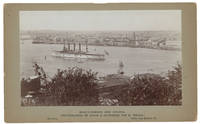
1890LIST110Havana: R. Testar 1890. Albumen photograph on cardstock mount image measuring 7 1/4 x 4 1/2 inches on 8 3/4 x 5 1/2 inch mount. A view of an American warship in Havana harbor likely taken prior to the outbreak of hostilities between the United States and Spain in early 1898. The photographers Leach and Patterson of Calle San Rafael published several views of Cuba at this time mostly of bucolic scenes around Havana and its environs. The American cruiser is similar in design to the U.S.S. Maine with slight differences - two smokestacks instead of three. An excellent example with minor wear to mount and fine image. R. Testar unknown
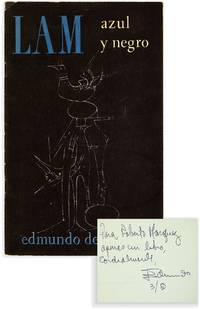
196387864Havana: Cuadernos de la Casa de Las Americas 1963. First Edition. First Impression one of 4000 copies. Slim octavo 24.25cm; original pictorial card wrappers stapled; Inscribed by the author on the half-title page to Puerto Rican editor translator and literary critic Roberto Márquez: "Para Roberto Marquez / apenas un libro cordialmente / Eduardo / 3/80." Light wear to extremities some oxidation to staples toning to rear wrapper with a faint crease to upper left corner; Very Good. The Cuban author's extended essay on the life and work of Afro-Cuban painter Wilfredo Lam 1902-1982. Uncommon inscribed. 87864. Cuadernos de la Casa de Las Americas unknown
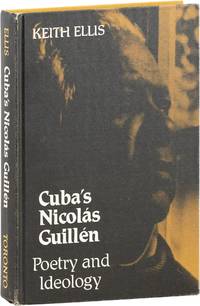
198385035Toronto: University of Toronto Press 1983. First Edition. First Impression. Octavo 23.5cm; pictorial cloth-covered boards; x34-251252-254pp. This copy is from the library of to Puerto Rican editor translator and literary critic Roberto Marquez with his ink markings and notations throughout the text and inscribed to him by the author on the title page: "To Robert / as a token of my highest esteem and my admiration for your work / Keith." Base of spine gently nudged light wear to extremities with a few dog-eared pages; Very Good and sound without dustjacket as issued. <br /> <br /> Scholarly work on the writings of Nicolás Guillén 1902-1989 with a particularly generous inscription to Marquez who has written extensively on Guillén and has translated several of the poet's works faithfully from Spanish into English. A nice association linking two Guillén scholars. Uncommon inscribed. University of Toronto Press unknown
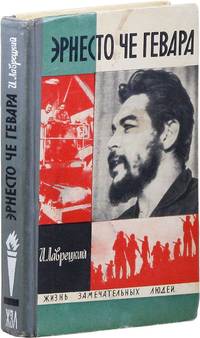
197232549Moscow: ИздательÑтво ЦК ВЛКСМ ÐœÐ¾Ð»Ð¾Ð´Ð°Ñ Ð³Ð²Ð°Ñ€Ð´Ð¸Ñ 1972. First Edition. Octavo. Cloth-backed pictorial paper-covered boards; 348 3pp; portraits plates. Slight external rubbing and shelfwear; corners nudged; still a solid Very Good copy. Apparently the first full-length Soviet biography of the Argentinian revolutionary martyr and hero of the Cuban Revolution well-illustrated with photographic portraits and plates. <br /> <br /> According to Costa Rican investigative journalist Marjorie Ross "Lavretsky" was a pseudonym for Soviet master-spy Iosif Grigulevich who got his start as a hired hit-man against Trotskyist and Anarchist factions in the Spanish Civil War. She pegs him as the never-identied "third man" in the assassination of Leon Trotsky; and during the Cold War posing as an international coffee expert Grigulevich reputedly penetrated the highest levels of government and culture in Costa Rica Chile and Mexico during which time he was also the Kremlin's "handler" for Chilean poet Pablo Neruda and Mexican painter José Siqueiros see Marjorie Ross El secreto encanto de la KGB/ The Secret Charm of the KGB: Las cinco vidas de Iosif Grigulievich/ The Five Lives of Iosif Grigulevich. San José: 2006. <br /> <br /> Apparently an uncommon work at least in Western institutions; OCLC locates just one copy British Library; KVK and European Library Meta Catalog find three more Nat. Lib. Lithuania; BNF; Staatsbibliothek Berlin. ИздательÑтво ЦК ВЛКСМ ÐœÐ¾Ð»Ð¾Ð´Ð°Ñ Ð³Ð²Ð°Ñ€Ð´Ð¸Ñ unknown
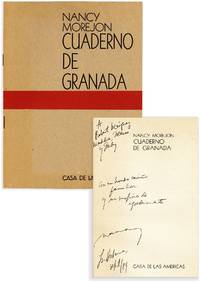
198488455Havana: Casa de las Americas 1984. First Edition. Slim quarto 23.75cm; original printed card wrappers with French flaps stapled; 16pp; text is entirely in Spanish. Inscribed by Morejon on the title page to Puerto Rican editor translator and literary critic Roberto Márquez and his family: "A Robert Márquez Maddie Maceo y Gaby / Con un hondo cariño familiar y suspiro de agradecimiento y un suspiro de agradecimiento / Nancy / La Habana / Sept/84." Trivial external wear and a hint of sunning to spine-fold; touch of oxidation to staples; contents fresh; Near Fine. Short collection of verse by the noted Afro-Cuban poet critic and essayist gathrering nine poems. A nice inscription connecting two prominent Caribbean literary figures. 88455. Casa de las Americas unknown
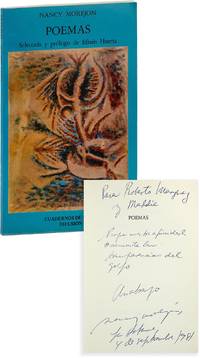
198088457Mexico City: Difusion Cultural Departamiento de Humanidades / Universidad Nacional Autónoma de México 1980. First Edition. First Impression one of 2000 copies. Small octavo 18cm; original pictorial card wrappers; 89-62pp. With a full-page inscription from Morejon to Puerto Rican editor translator and literary critic Roberto Márquez and his wife signed and dated in Havana 4 September 1981." Mild surface wear else a fresh very Near Fine copy. A collection of verse by the noted Afro-Cuban poet selected and edited by Mexican poet and journalist Efraín Huerta Roma 1914-1982. A nice inscription connecting two prominent Caribbean literary figures. 88457. Difusion Cultural Departamiento de Humanidades / Universidad Nacional Autónoma de México unknown
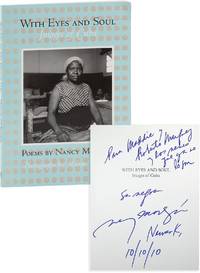
200488456Buffalo NY: White Pine Press 2004. First Edition. First Printing. Small quarto 25.5cm; original glossy pictorial card wrappers; 910-1155pp; illus.; with parallel text in English and in Spanish. Inscribed by Morejon on the half-title page to Puerto Rican editor translator and literary critic Roberto Márquez and his wife: "Para Maddie y Roberto y los nenes que ya no lo son / Su negra / Nancy Morejon / 10/10/10." Hint of sunning to spine tiny crease to upper right corner of front wrapper; Near Fine. <br /> <br /> Collection of verse by the noted Afro-Cuban poet written between the summers of 1986-87 pairing her poems prose poems and vignettes with photos by Milton Rogovin. A nice inscription connecting two prominent Caribbean literary figures. 88456. White Pine Press unknown