Etats-Unis, Cuba, MexiqueBiblio.com

469 résultats
0243028571.Gpaperback. Good. Access codes and supplements are not guaranteed with used items. May be an ex-library book. paperback
1333201060.Gpaperback. Good. Access codes and supplements are not guaranteed with used items. May be an ex-library book. paperback
1961212<p>Book is in good condition additional photos can be provided upon reasonable request. Book has no markings as it is a clean copy. Seller is open to any inquiries interested parties may have.</p> paperback
1020883847.Ghardcover. Good. Access codes and supplements are not guaranteed with used items. May be an ex-library book. hardcover
Frimodt, LisbethIn Pristine Condition. unknown
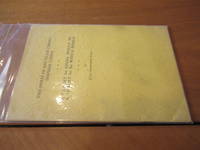
1938029977Julia Ellsworth Ford 1938. 1st Edition . Soft cover. Near Fine. 74 illustrations and maps. 9 Pp. Yellow Card Wrappers Printed In Black. With Paste-On Printed Sheets With Additional Text On Inner Side Of Wrappers. Nerar Fine. Scarce; Only Two Examples In Worldcat. Her Archives Are At Yale And Presented There As "Julia Ellsworth Ford Was A New York Socialite Art Collector And Patron And Author Of Children's Books. She Was Married To Simeon Ford A Financier And Co-Owner Of The Grand Union Hotel In New York. Ford Presided Over A Salon That Included The Lebanese Mystic Kahlil Gibran Irish Poet W. B. Yeats And American Dancer Isadora Duncan. Her Published Works Include: Simeon Solomon: An Appreciation 1908 Imagina 1914 And Snickerty Nick 1919 Among Others." The Archive Apparently Does Not Include This Booklet. <br/> <br/> [Julia Ellsworth Ford] paperback
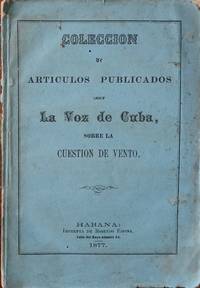
18773543<p>Coleccion de articulos publicados por la voz de cuba sobre la cuestion de vento primera edicion habanaimprenta de rosendo espina 1877 caratulas originaleslibro originalestado regularla voz de cuba fue un periodico cubano del siglo XIX en este libro se publican articulos del ingeniero cubano francisco de albearcon respecto a la construccion del acueducto de vento en la habanaAsí a solicitud del capitán general de la Isla el coronel de ingenieros >Francisco de Albear y Fernández de Lara presentó en 1855 una "Memoria acerca del Proyecto de conducción a La Habana de las aguas de los manantiales de Vento" que proyectaba un sistema de acueducto de mampostería cerrado que conduciría por gravedad las aguas de dichos manantiales hasta su destino final a una distancia de once kilómetros. En la Memoria Albear realizó un estudio de los antecedentes y las posibilidades de aprovechamiento de los acueductos anteriores efectuó un cálculo de la dotación de agua para la ciudad valoró las dificultades para lograr la obra de captación en Vento y propuso el trazado del canal hasta el depósito.</p><p>Atendiendo a la extraordinaria complejidad de la obra y a las dificultades de su ejecución en el convulso período de la >Guerra de los diez años Albear elaboró y presentó en 1876 dos nuevos documentos: la "Memoria del Proyecto de depósito de recepción y de distribución de las obras del Canal de Vento" y la "Memoria del Proyecto de la distribución del agua de Vento en La Habana". En la primera valoraba los aspectos relativos a la ubicación altura capacidad y dimensiones del depósito así como otros aspectos tecnológicos; mientras que en la segunda se argumentaban las condiciones requeridas para un buen sistema de distribución dividido en dos partes interior y exterior así como las particularidades y aportes de cada una de ellas.</p>La inauguración del Acueducto de Albear denominado finalmente así tras la muerte de su artífice el 22 de octubre de 1887 no ocurriría hasta seis años más tarde el 23 de enero de 1893 en medio de condiciones políticas y económicas sumamente adversas plagadas de dificultades no sólo topográficas y tecnológicas sino incluso higiénicas en momentos en que las llamadas "fiebres de Vento" diezmaban a sus constructores. La etapa final de las obras a cargo de la firma Runkle Smith and Co. de Nueva York y encabezada por el ingeniero Sherman Gould por la parte norteamericana fue dirigida de acuerdo con los proyectos originales por un discípulo y continuador de Albear el coronel de ingenieros >Joaquín Ruiz. No obstante su artífice llegó a tener en vida la satisfacción de ver su proyecto premiado con Medalla de Oro en la Exposición Universal de >París de 1878 donde se la consideró como una obra maestra de la ingeniería del siglo XIX. Imprenta de rosendo espina paperback
1390422860.Gpaperback. Good. Access codes and supplements are not guaranteed with used items. May be an ex-library book. paperback
1993Q-1555911161Fulcrum Publishing 1993-06-22. Paperback. New. In shrink wrap. Looks like an interesting title! Fulcrum Publishing paperback
025917128X.Gpaperback. Good. Access codes and supplements are not guaranteed with used items. May be an ex-library book. paperback
0666111871.Ghardcover. Good. Access codes and supplements are not guaranteed with used items. May be an ex-library book. hardcover
189587496Havana: Castro Fernandez 1895. First. hardcover. near fine. Folding table. 414pp. 1/2 modern lavender buckram marbled boards original wrappers bound in. Habana: Castro Fernandez 1895. First Edition. Near Fine.<br/> <br/> Laws regulating the telephone and telegraph industries.<br/> <br/> Castro, Fernandez unknown
1391102479.Gpaperback. Good. Access codes and supplements are not guaranteed with used items. May be an ex-library book. paperback
1391163087.Ghardcover. Good. Access codes and supplements are not guaranteed with used items. May be an ex-library book. hardcover
20192-6200019932Editorial Académica Española 2019. Paperback. New. 56 pages. Spanish language. 8.66x5.91x0.13 inches. Editorial Académica Española paperback
20CCUBALOTCIsrael Jerusalem Havana Cuba New York Usa. Fair with no dust jacket. Non-Book. On offer is a remarkable nine-document archive tracing nearly two decades of Zionist political cultural and financial correspondence linking Cubas Jewish leadership with the centers of world Jewry in Jerusalem New York and Latin America. Together these communications chart the transformation of Cuban Jewry from a peripheral supporter of the Yishuv to an active and recognized participant in the international Zionist networka Caribbean outpost engaged in fundraising education youth mobilization and ideological exchange. Mandatory-Era Migration and Bureaucratic RestraintThe earliest piece dated September 22 1937 comes from the Jewish Agency for Palestine in Jerusalem addressed to the Zionist Federation of Cuba in Havana regarding an individual immigration request the case of Rudzenewsky. The letter opens: - . We do not have any immigration certificates in our possession; therefore we cannot discuss your request regarding obtaining Aliyah certificates at all. Issued amid the tightening British immigration quotas of the Arab Revolt this restrained refusal captures the bureaucratic limits of Mandatory-era migration and the frustration of a community newly seeking direct participation in the Zionist project. Even a sympathetic outpost such as Havana remained outside the gates of the Yishuvs allocation system dependent on permissions that never came. As one of the earliest known correspondence between the Cuban Zionist Federation and Jerusalem it marks the beginning of a paper trail that would over the following two decades trace the communitys evolution from petitioners to recognized partners in global Zionist coordination. Fundraising for Settlement and DefenseBarely six weeks later the tone shifts from denial to mobilization. On 5 Kislev 5698 November 5 1937 Keren Hayesod Ltd. the Erez Israel Palestine Foundation Fund issued a Hebrew circular from Jerusalem to its global committees including Havana. Typed on vivid blue-and-white letterhead it announced the forthcoming fourth issue of HaMassad dedicated to the great enterprise of construction and security of Keren Hayesod this year. Inviting regional feedback to ensure the bulletin fulfills its task perfectly and reflects the creative work being done in Eretz Israel the circular unites the twin imperatives of binyan uvebitachon building and defense central to the Yishuvs ethos amid the Arab Revolt. For Cubas emerging Zionist Federation this stands as one of the earliest direct communications from Jerusalem confirming the islands inclusion in the pre-state fundraising and ideological network. Wartime Solidarity and Political ConscienceTwo vivid wartime items from 1944 illustrate how ideology culture and politics intertwined in Havana. The Unión Sionista de Cuba issued a bilingual flyer inviting the Jewish public of Havana to a lecture by Nathan Bistritzky on Moscow and Jerusalem An Analysis of Two Revolutions adding: En este Acto se homenajeará al heroico Ejército Rojo en ocasión de su 26º Aniversario. In this Act the heroic Red Army will be honored on the occasion of its 26th Anniversary. An accompanying invitation from the Patronato de Ayuda al Pueblo Español greets the President of Zionist Youth and invites him to a December meeting about the struggle of the Spanish people and the delivery of economic contributions for the Year-End Effort. These intertwined documents vividly position Jewish Havana within the broader antifascist and humanitarian currents of the Second World War. Youth Networks and Ideological PluralismA Hashomer Hatzair letter of April 17 1945 conveys the disciplined optimism of the socialist-Zionist youth movement as it rebuilt its trans-American network in the final months of war. Written from the North American headquarters in New York to the Cuban branch it reports on arrangements for Tova Levin a young Hebrew teacher in training at the movements Hightstown farm who would soon travel to Cuba to assist with education and leadership development. The circular further details plans for a Latin-American management camp in Mexico and urges an immediate reply with participant names. The writers lament the branchs silence since October and request news and photographs for The Young Guard anniversary issue. Closing with With the blessing of the movement. Strong and courageous! it perfectly fuses administration and inspiration. Its bilingual Hebrew-English letterhead / Hashomer Hatzairembodies the groups dual mission: Hebrew in content international in spirit linking Havana New York and Mexico in a single youth-driven Zionist network. From Jerusalem the Executive of the Zionist Organization issued a communiqué on July 15 1946 signed by Dr. A. L. Leuterbach in the aftermath of the British arrests and seizure of the Jewish Agencys offices during the Black Sabbath raids: The imprisonment of members of the Jewish Agency came as a heavy blow to us and greatly shocked the Yishuv and the entire Zionist world. The statement thanks Jewish communities abroad for solidarity vows to continue our work without hesitation and appeals to every Zionist body to spread the spirit of Zionism even more strongly in their respective places. Although the Agencys files had been seized the call radiates steadfastness and unity amid repression. A decade later this networks endurance is reaffirmed through two trans-Atlantic communications. On December 14 1955 The Jewish Agency Inc. 16 E. 66th Street New York wrote to Betar Calle 10 esq. 3 Vedado Havana enclosing a check for $150 representing allocation by the Youth and Hechalutz Department for the period October 1 1955 through March 31 1956.The letter explicitly notes that the payment was made pursuant to instructions received from Israel confirming that the directive to fund Havanas Betar chapter originated in Jerusalem. Signed by Fannie Speiser Assistant Treasurer the letter attests to the continuing New YorkHavana financial conduit and to Israels oversight of diaspora youth programming. Soon afterward Dr. Aron Weinberger of Midstream magazine wrote inviting the Havana community to help distribute the journal for free and frank discussion of all problems that face the contemporary Jew. final item dated November 12 1956 brings the narrative full circle. Issued by the Club Juvenil del Patronato de la Casa de la Comunidad Hebrea de Cuba it invites Hashomer Hatzair Prado 260 Ciudad to attend the installation ceremony of the Patronatos new youth board to be held on Tuesday 20 November at 9 p. M. In the Conference Hall of the Patronato. Signed by Rafael Kapuskin Secretary the letter is both social and symbolicaffirming that by the mid-1950s Zionist youth movements were no longer peripheral study circles but active civic partners within Havanas central Jewish institutions. The letters tone En la seguridad de vernos honrados con vuestra presencia In the certainty of being honored by your presence embodies the confidence of a mature interconnected Jewish community just before the political transformations of late-1950s Cuba. Together these communications trace Havanas evolving role in Israel-oriented and diasporic intellectual lifefrom the practical fundraising of Keren Hayesod to the ideological pluralism of Betar and Hashomer Hatzair. As a whole the archive captures the rhythm of Cuban Zionist life from supplication and bureaucracy to political maturity and cultural dialogue. It offers scholars a uniquely multilingual cross-section of Hebrew Yiddish Spanish and English voices negotiating identity loyalty and nationhood from the Caribbean periphery of world Zionism. Condition and Language: Nine documents spanning Hebrew Yiddish Spanish and English. Mixed paper stocks; significant folds generally minor stains and varying edge tears especially prominent on thinner stock. Heavy handling all text complete and legible. Age toning. Overall Fair to Good.; Manuscripts; 8vo 8" - 9" tall; 10 pages; Signed by Author . unknown
1247409120.Gpaperback. Good. Access codes and supplements are not guaranteed with used items. May be an ex-library book. paperback
1278869239.Gpaperback. Good. Access codes and supplements are not guaranteed with used items. May be an ex-library book. paperback
102449067X.Ghardcover. Good. Access codes and supplements are not guaranteed with used items. May be an ex-library book. hardcover
1024495299.Gpaperback. Good. Access codes and supplements are not guaranteed with used items. May be an ex-library book. paperback
1278900748.Gpaperback. Good. Access codes and supplements are not guaranteed with used items. May be an ex-library book. paperback
1275600719.Gpaperback. Good. Access codes and supplements are not guaranteed with used items. May be an ex-library book. paperback
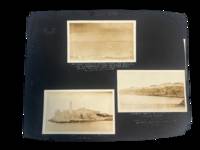
1920227281920. Havana Cuba travel photo album circa 1920s documents an American visitor's encounter with Havana during the interwar years when U.S. tourism commercial presence and Spanish-American War memory shaped how many American travelers interpreted the city. The vernacular photographs record arrival by steamship harbor landmarks civic buildings commercial streets factories boulevards monuments cemeteries and guarded public spaces giving insight into both Havana's urban landscape and the traveler's assumptions about access history and spectacle. The album's references to the USS Maine and Spanish-American War memorials place ordinary sightseeing within a longer history of U.S. intervention in Cuba; the Maine exploded in Havana Harbor on February 15 1898 killing more than 260 sailors and intensifying the crisis that led to war with Spain.<br /> <br /> Approximately 25 sepia-toned silver gelatin photographs each about 3 x 5 inches mounted to black album leaves with detailed handwritten captions in white pencil. The sequence begins aboard the S.S. Kroonland with one caption reading "My first view of Havana from the deck. three miles out at sea in a dark storm" followed by a landing view captioned "where we landed in Havana Cuba." The S.S. Kroonland returned to Panama Pacific Line service in 1923 on a New York to San Francisco route via Havana the Panama Canal and Los Angeles supporting the album's interwar travel context. The photographs then trace Havana's maritime and civic topography: harbor views Morro Castle captioned "Famous during the Spanish-American War" the waterfront in front of the fortress the Court House the President's Palace a "600-year-old church" the Henry Clay Cigar Store Havana's factory district and public boulevards "where all streets have parks in the center." Other images include a cemetery visit captioned "All people in Cuba are laid to rest above the ground" and a restricted-view street or carriage scene captioned "Officer would not let me take picture but when he turned I took it anyway" a revealing note on tourist privilege and unauthorized looking.<br /> <br /> Several images directly record the ways American travelers consumed Havana through imperial memory and Cuban nationalist commemoration. One monument is captioned "This was given by the Cuban people to the American soldiers that fell in the Spanish-American War" while another marks "the spot where the Maine sank at the entrance of the harbor." The album was made after Cuba's formal independence in 1902 and during the long aftermath of the Platt Amendment framework under which the United States retained extensive influence over Cuban affairs and intervened repeatedly in the early twentieth century. Album leaves chipped at edges several with corner losses not affecting images; prints generally sharp with strong contrast and clear annotations very good overall. Socially revealing Havana travel album documenting how a U.S. visitor pictured Cuba through steamship tourism colonial architecture cigar commerce Spanish-American War remembrance and the everyday authority structures of an interwar Caribbean capital. unknown
190985268New York: n.p. 1909. Paperback. Very Good. 4 photos in the 1907 report 27 27 27p. Softcovers in original wrapper. 26 cm. Later string ties. Business card for Jose Merla Manager of Royal "M. C." Lines laid in one of the reports. n.p. paperback
0366008889.Gpaperback. Good. Access codes and supplements are not guaranteed with used items. May be an ex-library book. paperback