CubaBiblio.com
469 résultats
DADAX1361665823Wentworth Press 2016-08-25. hardcover. New. 6.14x1.63x9.21. Buy with confidence. Excellent Customer Service & Return policy. Wentworth Press hardcover
A9781346133263Hardback. New. hardcover
0366220837.Ghardcover. Good. Access codes and supplements are not guaranteed with used items. May be an ex-library book. hardcover
0364997273.Ghardcover. Good. Access codes and supplements are not guaranteed with used items. May be an ex-library book. hardcover
0332093794.Ghardcover. Good. Access codes and supplements are not guaranteed with used items. May be an ex-library book. hardcover
036507960X.Ghardcover. Good. Access codes and supplements are not guaranteed with used items. May be an ex-library book. hardcover
0364301090.Gpaperback. Good. Access codes and supplements are not guaranteed with used items. May be an ex-library book. paperback
1941056819BALTIMORE MD.: LITHO COPY PREP. CLEAN COPY. . Very Good. Hardcover. 1941. LITHO COPY PREP hardcover
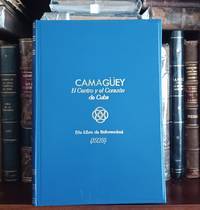
19284253<p>Camaguey el centro y el corazon de cubathe center and heart of cuba primera edicion cuba 1928Compilado y editado por cuba atlas company coronel j bascom jones editor gerentenueva encuadernacionconserva sus caratulas originaleslibro ilustradocon un mapa de la provinciaedicion bilingueingles y espanol.con datos historicos de la provinciadatos de negocios y sus duenosla industria azucarera y un directorio de personalidades de la provinciade sus ferrocarriles y negocios.</p> Cuba atlas company,molina y compania hardcover
198186364Havana Cuba: Political Publishers 1981. Presumed First Edition First printing. Hardcover. Good/Good. 116 4 pages. Index. Among the topics addressed in the Index are Socioeconomic Developments Revolutionary Armed Forces Social Organizations Ministry of the Interior Union of Young Communists Communist Party Ideological Struggle Foreign Policy and Economics. Fidel Alejandro Castro Ruz 13 August 1926 - 25 November 2016 was a Cuban revolutionary and politician who was the leader of Cuba from 1959 to 2008 serving as the prime minister of Cuba from 1959 to 1976 and president from 1976 to 2008. Ideologically a Marxist-Leninist and Cuban nationalist he also served as the first secretary of the Communist Party of Cuba from 1965 until 2011. Under his administration Cuba became a one-party communist state; industry and business were nationalized and socialist reforms were implemented throughout society. On January 20 1981 Fidel Castro gave the closing speech at the Communist Party of Cuba's second Congress held from January 17-20. He addressed almost 150 foreign delegations representing pro-Soviet communist parties liberation movements and even some social democratic parties of the Socialist international as well as more than a million Cubans. This fact alone is a measure of the prestige which the CPC has among many political trends and working people around the world. But the economic situation in Cuba brought to light during the congress and the path which Castro is proposing to the peoples struggling against imperialism give food for thought and should lead us to question the supposedly revolutionary path which Castro claims to be defending. One of the main concerns of the congress was the economic situation in Cuba. Despite an overall situation envied by many of the peoples dominated by U.S. imperialism the main report presented by Castro revealed that the objectives of the 5-year plan adopted at the First Congress in 1975 were not attained. Economic growth reached only 4% despite an objective of 6% and the industrialization plan met with difficulties. These results are of some importance since the objectives set at the last congress were consciously modest. Given this situation the Second Congress underlined the need for increased mobilization in production and stepped up plans to implement the new system to manage the economy which was first adopted at the First Congress. At the time this system was presented as an answer to the idealist errors of the 1965-70 period when it was claimed that all forms of market economy had abruptly been eliminated. The system clearly draws inspiration from the experience of the economic reforms introduced in the U.S.S.R. by Khrushchev in the early sixties which are judged as positive. These reforms underlined the importance of "the law of value the necessity that in all enterprises including State enterprises there are buy and sell relations and that within these relations the market categories function as indispensable instruments for measuring the use we make of our productive resources. in order to decide which investments are the most advisable and to know which enterprises.work the best.". Political Publishers hardcover
A9781164615675New. unknown
116461567X.Gpaperback. Good. Access codes and supplements are not guaranteed with used items. May be an ex-library book. paperback
B9781164615675New. unknown
1437008380.Ghardcover. Good. Access codes and supplements are not guaranteed with used items. May be an ex-library book. hardcover
1436816793.Gpaperback. Good. Access codes and supplements are not guaranteed with used items. May be an ex-library book. paperback
0428831729.Ghardcover. Good. Access codes and supplements are not guaranteed with used items. May be an ex-library book. hardcover
1916029953London: East And West Ltd. 1916. 1st Edition . Soft cover. Good. 15 Pp. Orange Covers Printed In Black. Wear Small Chip At Upper Left Corner Of Front Cover. Last Sentence With Warning That The West "Will See What We Can Do To Our Foes Who Dare Think Of Humiliating Us". <br/> <br/> East And West, Ltd. paperback
1960025662Hong Kong: Hong Kong University Press / Oxford University Press / Institute of Pacific relations 1960. First Edition First Printing . Hardcover. Near Fine/Near Fine Dustjacket. Xiii 247. Orange Cloth. One Of 2000 Copies Of The First Printing But This Copy With Printed $5 Us Price At Bottom Of Front Flap So Perhaps An American Issue. Slight Signs Of Usage To Book And Dj. Inscribed To Mr. And Mrs. Z. T. Nyi Zau Tsung Nyi Of Los Angeles "With High Esteem And Respect". Information From His Archives At Usc: Theodore H.E. Chen Ph.D. 1939 Was Chairman Of Usc's Department Of Asian Studies From 1940 To 1968 And From 1960 To 1971 He Directed The East Asian Studies Center In Support Of Which He Had Obtained The First Federal Grants. Chen Also Secured Outside Funding For A Project To Help Train And Advise High School Teachers Of Chinese And Japanese. A Native Of Fuzhou China Chen Was President Of Fukien Christian University In 1946 And 1947 While On Leave To Participate In Postwar Rehabilitation. He Also Helped Organize Tunghai University In Taiwan As A Representative Of The United Board Of Christian Colleges. He Was The Author Of Nine Books Including Thought Reform Of Chinese Intellectuals And Maoist Educational Revolution And Chinese Education. Dr Chen Hits An Easy Target; The Worst Governments Are Those Who Try To Control What And How People Think And How And Where They Communicate Because Their Leaders Have An Excess Of The Oldest Disease Of Officials Crap-In-The-Brain Which Prevents Them From Engaging In Exchanges Of Facts And Ideas. <br/> <br/> Hong Kong University Press / Oxford University Press / Institute of Pacific relations hardcover
2008022694New York: Spiegel & Grau 2008. First Edition First Printing . Grey Cloth / Boards. Fine/Fine DJ. Hardcover First Edition. First Printing. Signed And Dated By The Author In 2008 Otherwise As New. <br/> <br/> Spiegel & Grau hardcover
2003017614Madrid Spain: Centro de Arte Contemporaneo Wifredo Lam 2003. Book. Very good condition. Paperback. First Edition. Octavo 8vo. 431 pages of text. Paperback binding with a minor crease to the spine. The text is clean and unmarked. Profusely illustrated in full color. Text is in Spanish. Art museum located in La Habana or Havana Cuba. First edition. Centro de Arte Contemporaneo Wifredo Lam Paperback
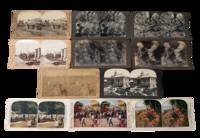
1890231711890. Stereoview archive of the post-emancipation Caribbean showing how the islands were marketed to western viewers through plantation labor export agriculture civic spectacle and catastrophe. As a group these photos function not only as an ethnographic travel archive but as evidence of the visual economy that followed slavery. The British West Indies moved through emancipation in 1834 to 1838 the French Caribbean in 1848 Puerto Rico in 1873 and Cuba in 1886 yet plantation production remained central to regional life well into the early twentieth century. These stereoviews preserve a colonial way of seeing in which Black and Afro-Caribbean labor rural discipline and extractive agriculture remained the background condition of "tropical" beauty and commercial modernity. Cuba's sugar economy in particular expanded through the nineteenth century and slavery was not abolished there until 1886 while Weyler's later reconcentration policy during the Cuban War of Independence violently reorganized rural life. Martinique after 1848 likewise shifted into new labor regimes including imported workers from India and China.<br /> <br /> Archive of 11 stereoview cards late 1890s to early 1900s depicting Cuba Jamaica Martinique Puerto Rico and the Dominican Republic. Most black and white with a few colorized. Each measure 3.5" x 7". All with captions on the margins. "Reconcentrado Farming Scene Province of Havana Cuba" links agricultural production to the brutal displacements of Spain's reconcentration campaign; "Cutting sugar cane Montego Bay Jamaica W.I." records cane labor in a colony where emancipation had not ended plantation dependency; and "Harvesting Coconuts Porto Rico" likewise frames Caribbean land through export work rather than local life. Other views extend that economic framing through cacao and coffee scenes while the paired Havana cards shift into urban leisure and public display including "Beautiful Central Park Havana Cuba" and "Holiday in Havana Cuba" the latter with both Cuban and American flags visible a telling image of the new imperial order after 1898. The disaster views from Martinique and the Lesser Antilles show how stereoview publishers also turned Caribbean destruction into consumable spectacle. the Morne Rouge card is accompanied on the reverse by the grim printed text "Dead bodies which were to be seen in Morne Rouge." while the wider context is the 1902 eruptions of Mount Pelée in Martinique and La Soufrière on Saint Vincent two catastrophes that killed roughly 30000 and 1600 people respectively and devastated local communities and agriculture.<br /> <br /> Some corner wear light toning scattered surface and edge wear. Overall very good condition. This collection gives direct visual representation of Caribbean history Atlantic slavery and emancipation plantation labor and U.S. imperial expansion in the circum-Caribbean preserving the transition from slavery to post-abolition labor. unknown
0366228641.Ghardcover. Good. Access codes and supplements are not guaranteed with used items. May be an ex-library book. hardcover
0365944262.Gpaperback. Good. Access codes and supplements are not guaranteed with used items. May be an ex-library book. paperback
20162-2343094624Editions L'Harmattan 2016. Paperback. New. 398 pages. French language. 9.29x6.14x1.02 inches. Editions L'Harmattan paperback
1980157147La Habana: Ministerio de Cultura 1980. First edition presumed. Paperback. Used; Very Good. 4to large wrps 478 p. index boards. Comprehensive annotated bibliography of Cuban periodical publications. Includes title subject and author indices. Ministerio de Cultura paperback