2 507 résultats
198186364Havana Cuba: Political Publishers 1981. Presumed First Edition First printing. Hardcover. Good/Good. 116 4 pages. Index. Among the topics addressed in the Index are Socioeconomic Developments Revolutionary Armed Forces Social Organizations Ministry of the Interior Union of Young Communists Communist Party Ideological Struggle Foreign Policy and Economics. Fidel Alejandro Castro Ruz 13 August 1926 - 25 November 2016 was a Cuban revolutionary and politician who was the leader of Cuba from 1959 to 2008 serving as the prime minister of Cuba from 1959 to 1976 and president from 1976 to 2008. Ideologically a Marxist-Leninist and Cuban nationalist he also served as the first secretary of the Communist Party of Cuba from 1965 until 2011. Under his administration Cuba became a one-party communist state; industry and business were nationalized and socialist reforms were implemented throughout society. On January 20 1981 Fidel Castro gave the closing speech at the Communist Party of Cuba's second Congress held from January 17-20. He addressed almost 150 foreign delegations representing pro-Soviet communist parties liberation movements and even some social democratic parties of the Socialist international as well as more than a million Cubans. This fact alone is a measure of the prestige which the CPC has among many political trends and working people around the world. But the economic situation in Cuba brought to light during the congress and the path which Castro is proposing to the peoples struggling against imperialism give food for thought and should lead us to question the supposedly revolutionary path which Castro claims to be defending. One of the main concerns of the congress was the economic situation in Cuba. Despite an overall situation envied by many of the peoples dominated by U.S. imperialism the main report presented by Castro revealed that the objectives of the 5-year plan adopted at the First Congress in 1975 were not attained. Economic growth reached only 4% despite an objective of 6% and the industrialization plan met with difficulties. These results are of some importance since the objectives set at the last congress were consciously modest. Given this situation the Second Congress underlined the need for increased mobilization in production and stepped up plans to implement the new system to manage the economy which was first adopted at the First Congress. At the time this system was presented as an answer to the idealist errors of the 1965-70 period when it was claimed that all forms of market economy had abruptly been eliminated. The system clearly draws inspiration from the experience of the economic reforms introduced in the U.S.S.R. by Khrushchev in the early sixties which are judged as positive. These reforms underlined the importance of "the law of value the necessity that in all enterprises including State enterprises there are buy and sell relations and that within these relations the market categories function as indispensable instruments for measuring the use we make of our productive resources. in order to decide which investments are the most advisable and to know which enterprises.work the best.". Political Publishers hardcover
Political edition. VG pbk. 15561. eng
Un volume (22,5 cm) di 191 pagine, con illustrazioni in nero. In lingua francese. Brossura editoriale con foto di Fidel.
163153 handwritten documents in ink regarding the sale of slave girls in Cuba. The documents are written in Spanish and include details such as purchase price age and names of the girls being sold. Documents are large: 12 ½ x 8 ¾ in. Some shadows from storage with other documents paper acidification from ink. Some losses from ink acidification and wormholes. Marks from previous binding along left edge. Sale documents are numbered at bottom of pages with signatures and all have stamp from Cuban government. Good condition. One of the documents includes the year 1875 dating some of these papers to the dwindling years of the slavery in Cuba which was officially outlawed in 1886. unknown books
Suojoki, SaaraIn Pristine Condition. unknown
Frimodt, LisbethIn Pristine Condition. unknown
2003017614Madrid Spain: Centro de Arte Contemporaneo Wifredo Lam 2003. Book. Very good condition. Paperback. First Edition. Octavo 8vo. 431 pages of text. Paperback binding with a minor crease to the spine. The text is clean and unmarked. Profusely illustrated in full color. Text is in Spanish. Art museum located in La Habana or Havana Cuba. First edition. Centro de Arte Contemporaneo Wifredo Lam Paperback
2003017614Madrid Spain: Centro de Arte Contemporaneo Wifredo Lam 2003. Book. Very good condition. Paperback. First Edition. Octavo 8vo. 431 pages of text. Paperback binding with a minor crease to the spine. The text is clean and unmarked. Profusely illustrated in full color. Text is in Spanish. Art museum located in La Habana or Havana Cuba. First edition. Centro de Arte Contemporaneo Wifredo Lam Paperback books
27053Dimensions (à vue) : 293 x 188 mm + passe-partout.
In-8°. 14 pp. Tavole fotografiche. Brossura editoriale.
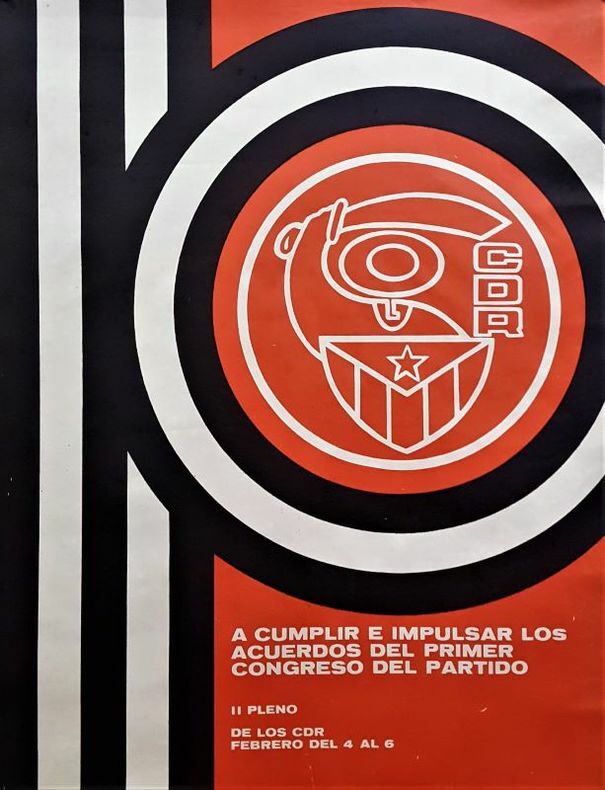
1440Impression en offset. ca.1970. Dim: 70 x 53 cm
Roma, 1959, 1 febbraio, copertina illustrata a colori in fascicolo originale completo di pp. 32 de “La Tribuna Illustrata".
Madrid, Editorial Renacimiento, 1913. 4to.; 308 pp. Cubiertas originales.
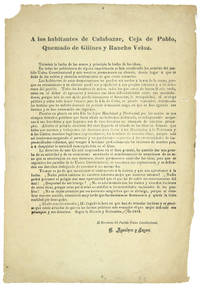
1878WRCAM38237Cuba 1878. Broadside 12 1/2 x 8 3/4 inches. Chip at upper left corner not affecting text. Small tears in all edges several repaired by tape on verso. Good. A rare and fascinating Cuban political broadside calling for an end to armed struggle but a beginning to a "struggle for ideas" at the conclusion of Cuba's "Ten Years' War" the battle for independence from Spain in 1868 to 1878. The broadside is addressed to the residents of the region around the north-central coast of Cuba some 150 miles east of Havana. The text of the broadside is signed in print by Gabriel Aguilera y Zayas Secretary of the Partido Union Constitucional PUC one of the two main political parties that developed out of the Ten Years' War. The PUC which was a conservative pro-Spanish party led by prominent Creoles sought a measure of local political autonomy while favoring continued Spanish control over Cuba. The text exhorts Cubans to partake in the ideological struggle that would succeed the armed rebellion and urges them not to fall into lethargy but to continue the battle of ideas against radicals seeking independence from Spanish colonial rule. <br> <br> Due to their ephemeral nature as well as the climate of the Caribbean any such Cuban broadsides are scarce. No copies of this broadside are located in OCLC. Important evidence of the political factionalism and the strength of pro-Spanish sentiment in Cuba in the late 19th century. Rare and possibly unique. unknown books
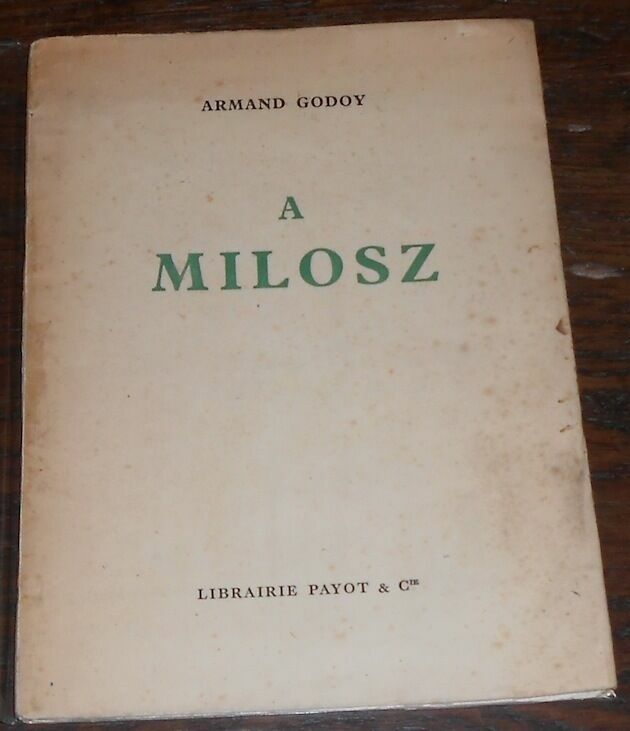
1939141591939. Lausanne Librairie Payot 1939 s.p. - Broché couv. rempliée 16 cm x 22 cm 22 pages - Texte de Armand Godoy envoi de l'auteur - Bon état
20032565191029073Donning Co Pub 2003-05-01. Hardcover. Like New. Nice looking book has minor edge wear. Donning Co Pub hardcover
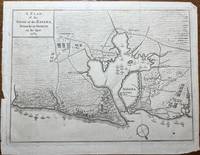
176635128London: Britannia triumphant 1766. Map. Very good. Approx. 8.5" x 11" map. 2 vertical creases where map was folded. Small left edge tear in the margin. Very good condition. The original map is located at the John Carter Brown Library at Brown University. Britannia triumphant unknown
Santiago de Compostela, 2004. 4to. cuadrado; 302 pp., 2 hs. Ilustraciones. Cubiertas originales.
1914020130Chicago / New York / Toronto / London / Edinburgh: Fleming H. Revell Company 1914. First Edition . Illustrated Cloth. Very Good/No DJ. Photographs of Hwang Hsing Etc. 142 Pp 2 Pp Catalog At Rear. Orange Cloth Stamped In Black And White With Allegorical Design. First Edition. Clean Lightly Used No Names Or Marks Hinges Solid Light Wear With Some Loss Of Lettering And Design In Black Ink On Front Cover But All Chalk Lettering And Design Present And Strong.Previous Owner's Name On Front Free Endpaper Signs Of Bookplate Removal On Facing Pastedown. <br/> <br/> Fleming H. Revell Company hardcover
Eventi cruciali e drammatici della storia recente del Vecchio e del Nuovo Mondo nei reportage graffianti ed appassionati di Marquez.
M., Ambrosio Pérez y Cía., 1901, 21 x 15 cm., 30 págs. (El nombre del autor figura al final del folleto. Trata sobre Cuba).
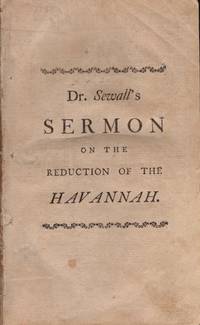
176235251Boston New England: Printed by John Draper Printer to His Excellency the Governor and the Honourable His Majesty's Council: AND By Edes and Gill Printers to the Honourable House of Representative 1762. First Edition. Wraps. Good. Disbound wraps. 33 1 page blank. Half title present. Light toning and scattered brown spots to the print. <br /> <br /> Evans 9269; Sabin 79430. From wikipedia:<br /> <br /> The siege of Havana was a successful British siege against Spanish-ruled Havana that lasted from March to August 1762 as part of the Seven Years' War. After Spain abandoned its former policy of neutrality by signing the family compact with France resulting in a British declaration of war on Spain in January 1762 the British government decided to mount an attack on the important Spanish fortress and naval base of Havana with the intention of weakening the Spanish presence in the Caribbean and improving the security of its own North American colonies. A strong British naval force consisting of squadrons from Britain and the West Indies and the military force of British and American troops it convoyed were able to approach Havana from a direction that neither the Spanish governor nor the Admiral expected and were able to trap the Spanish fleet in the Havana harbour and land its troops with relatively little resistance.<br /> <br /> The Spanish authorities decided on a strategy of delaying the British attack until the strength of the city's defences and the onset of seasonal rains inflicting tropical diseases would significantly reduce the size of the British force via disease along with the start of hurricane season would force the British fleet to seek a safe anchorage. However the city's main fortress the Morro Castle was overlooked by a hill that the governor had neglected to fortify; the British installed batteries there and bombarded the fortress daily with heavy shelling. The fortress eventually fell after the officer in charge of Morro Castle Luis Vicente de Velasco was mortally wounded by a stray bullet. The capture of Morro Castle led to the eventual fall of the rest of the fortifications and the surrender of the city the remaining garrison and the naval forces present before the hurricane season began.<br /> <br /> The surrender of Havana led to substantial rewards for the British naval and military leaders and smaller amounts of prize money for other officers and men. The Spanish governor Admiral and other military and civil office holders were court-martialled upon their return to Spain and punished for their failures to conduct a better defence and allowing the Spanish fleet present to fall intact into the hands of the British. Havana remained under British occupation until February 1763 when it was returned to Spain under the 1763 Treaty of Paris that formally ended the war. Printed by John Draper, Printer to His Excellency the Governor, and the Honourable His Majesty's Council: AND By Edes and Gill, unknown
1988Q-0673397661Scott Foresman & Co 1988-01-01. Paperback. New. In shrink wrap. Looks like an interesting title! Scott Foresman & Co paperback