To the Islands of Cuba and Porto RicoBiblio.com
469 résultats
1331387701.Gpaperback. Good. Access codes and supplements are not guaranteed with used items. May be an ex-library book. paperback
0656878223.Ghardcover. Good. Access codes and supplements are not guaranteed with used items. May be an ex-library book. hardcover
1988Q-0673397661Scott Foresman & Co 1988-01-01. Paperback. New. In shrink wrap. Looks like an interesting title! Scott Foresman & Co paperback
0673524949.Gtextbook. Good. Access codes and supplements are not guaranteed with used items. May be an ex-library book. unknown
2001Q-032107842XPearson 2001-08-11. Paperback. New. New. In shrink wrap. Looks like an interesting title! Pearson paperback
067352194X.Gpaperback. Good. Access codes and supplements are not guaranteed with used items. May be an ex-library book. paperback
2001DADAX032107842XPearson 2001-08-11. 4. paperback. New. 5.50x0.80x8.10. Buy with confidence. Excellent Customer Service & Return policy. Pearson paperback
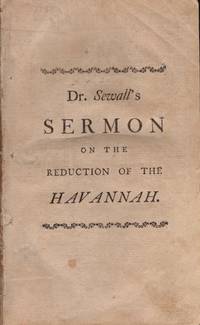
176235251Boston New England: Printed by John Draper Printer to His Excellency the Governor and the Honourable His Majesty's Council: AND By Edes and Gill Printers to the Honourable House of Representative 1762. First Edition. Wraps. Good. Disbound wraps. 33 1 page blank. Half title present. Light toning and scattered brown spots to the print. <br /> <br /> Evans 9269; Sabin 79430. From wikipedia:<br /> <br /> The siege of Havana was a successful British siege against Spanish-ruled Havana that lasted from March to August 1762 as part of the Seven Years' War. After Spain abandoned its former policy of neutrality by signing the family compact with France resulting in a British declaration of war on Spain in January 1762 the British government decided to mount an attack on the important Spanish fortress and naval base of Havana with the intention of weakening the Spanish presence in the Caribbean and improving the security of its own North American colonies. A strong British naval force consisting of squadrons from Britain and the West Indies and the military force of British and American troops it convoyed were able to approach Havana from a direction that neither the Spanish governor nor the Admiral expected and were able to trap the Spanish fleet in the Havana harbour and land its troops with relatively little resistance.<br /> <br /> The Spanish authorities decided on a strategy of delaying the British attack until the strength of the city's defences and the onset of seasonal rains inflicting tropical diseases would significantly reduce the size of the British force via disease along with the start of hurricane season would force the British fleet to seek a safe anchorage. However the city's main fortress the Morro Castle was overlooked by a hill that the governor had neglected to fortify; the British installed batteries there and bombarded the fortress daily with heavy shelling. The fortress eventually fell after the officer in charge of Morro Castle Luis Vicente de Velasco was mortally wounded by a stray bullet. The capture of Morro Castle led to the eventual fall of the rest of the fortifications and the surrender of the city the remaining garrison and the naval forces present before the hurricane season began.<br /> <br /> The surrender of Havana led to substantial rewards for the British naval and military leaders and smaller amounts of prize money for other officers and men. The Spanish governor Admiral and other military and civil office holders were court-martialled upon their return to Spain and punished for their failures to conduct a better defence and allowing the Spanish fleet present to fall intact into the hands of the British. Havana remained under British occupation until February 1763 when it was returned to Spain under the 1763 Treaty of Paris that formally ended the war. Printed by John Draper, Printer to His Excellency the Governor, and the Honourable His Majesty's Council: AND By Edes and Gill, unknown
1914020130Chicago / New York / Toronto / London / Edinburgh: Fleming H. Revell Company 1914. First Edition . Illustrated Cloth. Very Good/No DJ. Photographs of Hwang Hsing Etc. 142 Pp 2 Pp Catalog At Rear. Orange Cloth Stamped In Black And White With Allegorical Design. First Edition. Clean Lightly Used No Names Or Marks Hinges Solid Light Wear With Some Loss Of Lettering And Design In Black Ink On Front Cover But All Chalk Lettering And Design Present And Strong.Previous Owner's Name On Front Free Endpaper Signs Of Bookplate Removal On Facing Pastedown. <br/> <br/> Fleming H. Revell Company hardcover
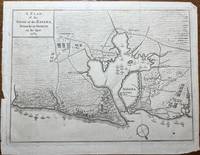
176635128London: Britannia triumphant 1766. Map. Very good. Approx. 8.5" x 11" map. 2 vertical creases where map was folded. Small left edge tear in the margin. Very good condition. The original map is located at the John Carter Brown Library at Brown University. Britannia triumphant unknown
20032565191029073Donning Co Pub 2003-05-01. Hardcover. Like New. Nice looking book has minor edge wear. Donning Co Pub hardcover
2003017614Madrid Spain: Centro de Arte Contemporaneo Wifredo Lam 2003. Book. Very good condition. Paperback. First Edition. Octavo 8vo. 431 pages of text. Paperback binding with a minor crease to the spine. The text is clean and unmarked. Profusely illustrated in full color. Text is in Spanish. Art museum located in La Habana or Havana Cuba. First edition. Centro de Arte Contemporaneo Wifredo Lam Paperback
Frimodt, LisbethIn Pristine Condition. unknown
Suojoki, SaaraIn Pristine Condition. unknown
198186364Havana Cuba: Political Publishers 1981. Presumed First Edition First printing. Hardcover. Good/Good. 116 4 pages. Index. Among the topics addressed in the Index are Socioeconomic Developments Revolutionary Armed Forces Social Organizations Ministry of the Interior Union of Young Communists Communist Party Ideological Struggle Foreign Policy and Economics. Fidel Alejandro Castro Ruz 13 August 1926 - 25 November 2016 was a Cuban revolutionary and politician who was the leader of Cuba from 1959 to 2008 serving as the prime minister of Cuba from 1959 to 1976 and president from 1976 to 2008. Ideologically a Marxist-Leninist and Cuban nationalist he also served as the first secretary of the Communist Party of Cuba from 1965 until 2011. Under his administration Cuba became a one-party communist state; industry and business were nationalized and socialist reforms were implemented throughout society. On January 20 1981 Fidel Castro gave the closing speech at the Communist Party of Cuba's second Congress held from January 17-20. He addressed almost 150 foreign delegations representing pro-Soviet communist parties liberation movements and even some social democratic parties of the Socialist international as well as more than a million Cubans. This fact alone is a measure of the prestige which the CPC has among many political trends and working people around the world. But the economic situation in Cuba brought to light during the congress and the path which Castro is proposing to the peoples struggling against imperialism give food for thought and should lead us to question the supposedly revolutionary path which Castro claims to be defending. One of the main concerns of the congress was the economic situation in Cuba. Despite an overall situation envied by many of the peoples dominated by U.S. imperialism the main report presented by Castro revealed that the objectives of the 5-year plan adopted at the First Congress in 1975 were not attained. Economic growth reached only 4% despite an objective of 6% and the industrialization plan met with difficulties. These results are of some importance since the objectives set at the last congress were consciously modest. Given this situation the Second Congress underlined the need for increased mobilization in production and stepped up plans to implement the new system to manage the economy which was first adopted at the First Congress. At the time this system was presented as an answer to the idealist errors of the 1965-70 period when it was claimed that all forms of market economy had abruptly been eliminated. The system clearly draws inspiration from the experience of the economic reforms introduced in the U.S.S.R. by Khrushchev in the early sixties which are judged as positive. These reforms underlined the importance of "the law of value the necessity that in all enterprises including State enterprises there are buy and sell relations and that within these relations the market categories function as indispensable instruments for measuring the use we make of our productive resources. in order to decide which investments are the most advisable and to know which enterprises.work the best.". Political Publishers hardcover
20CCUBALOTCIsrael Jerusalem Havana Cuba New York Usa. Fair with no dust jacket. Non-Book. On offer is a remarkable nine-document archive tracing nearly two decades of Zionist political cultural and financial correspondence linking Cubas Jewish leadership with the centers of world Jewry in Jerusalem New York and Latin America. Together these communications chart the transformation of Cuban Jewry from a peripheral supporter of the Yishuv to an active and recognized participant in the international Zionist networka Caribbean outpost engaged in fundraising education youth mobilization and ideological exchange. Mandatory-Era Migration and Bureaucratic RestraintThe earliest piece dated September 22 1937 comes from the Jewish Agency for Palestine in Jerusalem addressed to the Zionist Federation of Cuba in Havana regarding an individual immigration request the case of Rudzenewsky. The letter opens: - . We do not have any immigration certificates in our possession; therefore we cannot discuss your request regarding obtaining Aliyah certificates at all. Issued amid the tightening British immigration quotas of the Arab Revolt this restrained refusal captures the bureaucratic limits of Mandatory-era migration and the frustration of a community newly seeking direct participation in the Zionist project. Even a sympathetic outpost such as Havana remained outside the gates of the Yishuvs allocation system dependent on permissions that never came. As one of the earliest known correspondence between the Cuban Zionist Federation and Jerusalem it marks the beginning of a paper trail that would over the following two decades trace the communitys evolution from petitioners to recognized partners in global Zionist coordination. Fundraising for Settlement and DefenseBarely six weeks later the tone shifts from denial to mobilization. On 5 Kislev 5698 November 5 1937 Keren Hayesod Ltd. the Erez Israel Palestine Foundation Fund issued a Hebrew circular from Jerusalem to its global committees including Havana. Typed on vivid blue-and-white letterhead it announced the forthcoming fourth issue of HaMassad dedicated to the great enterprise of construction and security of Keren Hayesod this year. Inviting regional feedback to ensure the bulletin fulfills its task perfectly and reflects the creative work being done in Eretz Israel the circular unites the twin imperatives of binyan uvebitachon building and defense central to the Yishuvs ethos amid the Arab Revolt. For Cubas emerging Zionist Federation this stands as one of the earliest direct communications from Jerusalem confirming the islands inclusion in the pre-state fundraising and ideological network. Wartime Solidarity and Political ConscienceTwo vivid wartime items from 1944 illustrate how ideology culture and politics intertwined in Havana. The Unión Sionista de Cuba issued a bilingual flyer inviting the Jewish public of Havana to a lecture by Nathan Bistritzky on Moscow and Jerusalem An Analysis of Two Revolutions adding: En este Acto se homenajeará al heroico Ejército Rojo en ocasión de su 26º Aniversario. In this Act the heroic Red Army will be honored on the occasion of its 26th Anniversary. An accompanying invitation from the Patronato de Ayuda al Pueblo Español greets the President of Zionist Youth and invites him to a December meeting about the struggle of the Spanish people and the delivery of economic contributions for the Year-End Effort. These intertwined documents vividly position Jewish Havana within the broader antifascist and humanitarian currents of the Second World War. Youth Networks and Ideological PluralismA Hashomer Hatzair letter of April 17 1945 conveys the disciplined optimism of the socialist-Zionist youth movement as it rebuilt its trans-American network in the final months of war. Written from the North American headquarters in New York to the Cuban branch it reports on arrangements for Tova Levin a young Hebrew teacher in training at the movements Hightstown farm who would soon travel to Cuba to assist with education and leadership development. The circular further details plans for a Latin-American management camp in Mexico and urges an immediate reply with participant names. The writers lament the branchs silence since October and request news and photographs for The Young Guard anniversary issue. Closing with With the blessing of the movement. Strong and courageous! it perfectly fuses administration and inspiration. Its bilingual Hebrew-English letterhead / Hashomer Hatzairembodies the groups dual mission: Hebrew in content international in spirit linking Havana New York and Mexico in a single youth-driven Zionist network. From Jerusalem the Executive of the Zionist Organization issued a communiqué on July 15 1946 signed by Dr. A. L. Leuterbach in the aftermath of the British arrests and seizure of the Jewish Agencys offices during the Black Sabbath raids: The imprisonment of members of the Jewish Agency came as a heavy blow to us and greatly shocked the Yishuv and the entire Zionist world. The statement thanks Jewish communities abroad for solidarity vows to continue our work without hesitation and appeals to every Zionist body to spread the spirit of Zionism even more strongly in their respective places. Although the Agencys files had been seized the call radiates steadfastness and unity amid repression. A decade later this networks endurance is reaffirmed through two trans-Atlantic communications. On December 14 1955 The Jewish Agency Inc. 16 E. 66th Street New York wrote to Betar Calle 10 esq. 3 Vedado Havana enclosing a check for $150 representing allocation by the Youth and Hechalutz Department for the period October 1 1955 through March 31 1956.The letter explicitly notes that the payment was made pursuant to instructions received from Israel confirming that the directive to fund Havanas Betar chapter originated in Jerusalem. Signed by Fannie Speiser Assistant Treasurer the letter attests to the continuing New YorkHavana financial conduit and to Israels oversight of diaspora youth programming. Soon afterward Dr. Aron Weinberger of Midstream magazine wrote inviting the Havana community to help distribute the journal for free and frank discussion of all problems that face the contemporary Jew. final item dated November 12 1956 brings the narrative full circle. Issued by the Club Juvenil del Patronato de la Casa de la Comunidad Hebrea de Cuba it invites Hashomer Hatzair Prado 260 Ciudad to attend the installation ceremony of the Patronatos new youth board to be held on Tuesday 20 November at 9 p. M. In the Conference Hall of the Patronato. Signed by Rafael Kapuskin Secretary the letter is both social and symbolicaffirming that by the mid-1950s Zionist youth movements were no longer peripheral study circles but active civic partners within Havanas central Jewish institutions. The letters tone En la seguridad de vernos honrados con vuestra presencia In the certainty of being honored by your presence embodies the confidence of a mature interconnected Jewish community just before the political transformations of late-1950s Cuba. Together these communications trace Havanas evolving role in Israel-oriented and diasporic intellectual lifefrom the practical fundraising of Keren Hayesod to the ideological pluralism of Betar and Hashomer Hatzair. As a whole the archive captures the rhythm of Cuban Zionist life from supplication and bureaucracy to political maturity and cultural dialogue. It offers scholars a uniquely multilingual cross-section of Hebrew Yiddish Spanish and English voices negotiating identity loyalty and nationhood from the Caribbean periphery of world Zionism. Condition and Language: Nine documents spanning Hebrew Yiddish Spanish and English. Mixed paper stocks; significant folds generally minor stains and varying edge tears especially prominent on thinner stock. Heavy handling all text complete and legible. Age toning. Overall Fair to Good.; Manuscripts; 8vo 8" - 9" tall; 10 pages; Signed by Author . unknown
1847LL 559<p><strong><em>"Appointment of Lieutenant General Federico Roncali count of alcoy "as governor and captain general of the island of cuba and president of the courts of the same" in replacement of general leopoldo o'donell. </em><em>Given in the palace on november 30 1847. <u>Begins:</u> Doña Isabel Segunda por la gracia de Dios y por la constitucion de la monarquia española Reina de las Españas.</em></strong> "5750</p><p>Handwritten bifolio on paper with the printed heading of Isabel II. Queen's stamp signature and plate seal with fleur-de-lys shaped paper protection. Signature of Ramón Narváez. On the second page different statements appear in Madrid and Havana signed by the Count of Villanueva also by the Marquis of Selva Alegre.</p><p>Federico Roncali count of Alcoy Cádiz 1800- Madrid 1857 came to generalship at the hands of Espartero. Between December 14 1852 and April 14 1853 he was president of the council of ministers after his time as Captaincy of the island of Cuba a position in which he replaced O'Donell. His mandate in Cuba was characterized by the creation of different infrastructures and the increase in the arrival of Chinese laborers that had begun in the previous period. During his mandate the lighthouse that bears his name Roncali was built of great importance for navigation in the Yucatan Strait "the last place on the island where the sun sets"; it is located at Cape San Antonio which was the last place where the aborigines remained at the time of colonization.</p><p>The document talks about the replacement of Captain General Leopoldo O'Donell the oath that must be taken before taking office and how it should be exercised.</p><p>UNIQUE AND OF UTMOST IMPORTANCE</p>
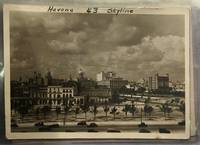
1930RF 565<p><b><i>17 original photos from La Habana.</i></b><br /></p><p>8vo. 17 photographs from Havana. Photographs are 17.5 cm x 12.5 cm.</p><p>Each photograph bears an ink handwritten description across the top: Prado & Morro Castle; Havana Skyline; Prado & Capitol; Residential Palace; El Morro no inscription; Race Track Havana; Prado from the Capitol; Prado from the Capitol another view Maine Monument; Capitol Grounds; Tropical Beer Garden; Main Monument & National Hotel Havana; Race Track another view; National Theatre and Capitol. Set of photographs of Havana from the 1920s 1930s. The inscriptions on each photograph are in English. Unidentified photographer. Interesting Cuban photographici conography. O02G000074 RF 565 X99X001603</p>
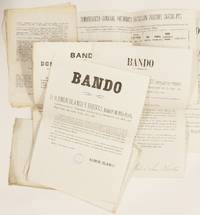
1896RF 818<p><i><b>Collection of 23 original edicts February 1896-September 1898 by the Captain Generals of Cuba 19 by General Valeriano Weyler 4 by General Ramón Blanco the last Spanish Captain General of Cuba. The edicts concern the attempts by the Spanish authorities to control the insurrection. They range from Weyler's efforts to concentrate the population in fortified encampments a measure often considered the precursor of concentration camps to Blanco´s establishing of a ceasefire in 1898.</b></i></p><p>23 ORIGINAL EDICTS; some manuscript annotations and the stamp of the Army of Cuba on some communiqués. The collection includes three items of related ephemera.</p><p>Notable collection of original edicts from Spanish authorities who participated in the Cuban War of Independence and attempted unsuccessfully to end the insurrection. The Cuban War of Independence the War of 1895 is the name given to the final Cuban war against Spanish domination. It is one of the last American wars against the Kingdom of Spain. The war began on 24 February 1895 with a simultaneous insurrection in 35 Cuban localities known as Grito de Oriente formerly known as Grito de Baire and ended in 1898 with the surrender of the Spanish Colonial army to the U.S. military advance with the assistance and support of <i>mambises</i>members of the Independentist Cuban army in the conflict known as the Spanish-American War. </p><p>Details on each of the edicts available on request. G. 11653/ RF 818. X99X001160 </p>