PRIVATEERING; WEST INDIESBiblio.com
456 résultats
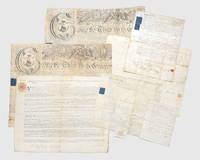
1796133528c.1796-97. Where gain is the object bring into harbour all the loaded merchantmen you can An outstanding and unusually comprehensive archive documenting the British-built armed brig Swallow a Liverpool privateer operating in the Caribbean under the experienced prize-master John McIver. The papers trace in exceptional detail the purchase fitting out commissioning and deployment of a late 18th-century privateering vessel anchored by impressive original Letters of Marque. Privateering was in essence a form of licensed warfare. As the Oxford Companion to Ships and the Sea defines it a privateer was "a privately owned vessel armed with guns commissioned by letters of marque which licensed them to take prizes in time of war" 1979 p. 670. This archive shows the process in action. The owners' letters to McIver convey both urgency and anxiety as they navigate the risks of long-distance operations during wartime revealing the network of merchants agents and seamen supporting the Swallow. Early letters make clear that McIver was the driving force: his kinsmen purchased the vessel "solely with the View to make a profitt by a Resale" yet were "well pleased you have taken the Command." The brig was refitted with 10 new iron cannon and furnished with Letters of Marque against French Dutch and later Spanish vessels. In late 1796 the Liverpool partners press McIver to sail immediately for Caribbean waters "in search of Spanish Prizes" while repeatedly stressing the need for constant intelligence. Their concerns deepen over slow remittances from their agent in Jamaica and uncertainty over whether to continue privateering or sell the ship. Built at East Cowes and bought on the stocks by the Royal Navy in 1781 the Swallow was sold in 1795 to a Liverpool consortium including Samuel McDowall the Twemlow family and the McIvers with McIver himself later taking a one-third share. At his urging the vessel was strengthened rearmed and commissioned. Her first Letter of Marque 12 July 1796 authorized cruising against the French and Dutch; a second January 1797 targeted Spanish shipping prompting an increase to 20 guns and a crew of 80. As Gomer Williams notes the Swallow "was not an ordinary privateer but an armed vessel specially hired by Government." McIver enjoyed some success: off Léogâne he sent into Port-au-Prince a large brig and schooner with French property aboard took other vessels and saved the Fame of Liverpool from capture. The letters also record his ancillary government work transporting governors and army officers. By 1797 however the quasi-peace following Leoben and Campo Formio curtailed her privateering activities. The archive also preserves McIver's account of capturing a small American merchantman in 1793 - a case serious enough to draw the attention of Thomas Jefferson and the British envoy George Hammond. The later history of the McIver/MacIver family forms a notable coda: their descendants became central figures in the creation of the Cunard Line partnering with Samuel Cunard and Robert Napier in the 1830s and 1840s to establish what became the British and North American Royal Steam Packet Company. This archive offers a superlative and unusually granular record of British privateering at a moment when European conflict fuelled an upsurge of activity in the Caribbean - a milieu in which as N. A. M. Rodger observes "the letter of marque was often a slender cover for piracy." A full listing with commentary is available on request. Overall in remarkably good condition. N. A. M. Rodgers The Wooden World 1986; Gomer Williams History of the Liverpool Privateers and Letters of Marque with an Account of the Liverpool Slave Trade 1897; Rif Winfield British Warships in the Age of Sail 1714-1792: Design Construction Careers and Fates 2007 p. 314. unknown
1841009470No Place: Notes on Gunpowder Percussion Powder; Cannon and Projectiles 1841. Half Leather. Fair/No Jacket. No place: 1841. Half leather with dark brown pebbled cloth. 75 pp. Black and white illustrations in text throughout. A technical discussion on gunpowder measuring ballistics cannons and their manufacture the use of metals in various projectiles etc. This includes a look at the composition of gunpowder and variations for different applications aspects of different metals and other substances an illustrated look at the manufacturing and testing of cannons ways of measuring ballistics with illustrations etc. Printed via lithograph from handwritten manuscript. Knowlton served as a professor at the United States Military Academy helping to teach mathematics as well as artillery. This particular copy bears pencil corrections pencil brackets and the word 'omit' next to several passages perhaps indicating this was a proof or editor's copy of some sort. FAIR/GOOD condition slightly ex-library bearing a 'torpedo station' stamp in the interior and in gilt on the spine with call numbers at the foot of the spine. Heavy scuffing and some gouging to the leather along the hinges spine and corners with superficial loss. General fading some staining and minor discoloration. Light soiling. Last name in large ink script on the title page with a few other ink notes spots etc. to the first two pages. Leaf 45/46 with heavy ink spots hatches slightly obscuring the text in places. Heavy foxing to the paper with a large dampstain affecting the lower corner. Several pages with tears and chipping along the edges with mostly minor loss. Large rice paper repair to the leaf 71/72 with the fore edge margins of the last 2 pages bearing extensive loss of paper. Notes on Gunpowder, Percussion, Powder; Cannon and Projectiles unknown
1848BB1404Brussels and Leipzig: Carl Muquardt 1848. First Edition thus. Near Fine. Translated into German by Dr. Heinrich Berghous. Imperial 8vo: x2382pp with 24 tissue-guarded hand-colored plates. Contemporary quarter calf flat spine in five compartments lettered and decorated in gilt stamped in blind; marbled covers edges and end papers. An excellent copy binding tight and unmarred moderate foxing mostly marginal to about half of text leaves but plates completely clean and richly colored. Continental editions of Catlin are quite scarce and this offers reduced-scale versions of the plates in the North American Indian Portfolio at a fraction of the cost. Howes C 243b. Sabin 11539. Pilling 684. Graff 630. First German Edition published originally in different form in London 1841 a hybrid of Catlin's two best known works Letters and Notes on the Manners Customs and Condition of the North American Indians 1841 and North American Indian Portfolio 1844. The text of this edition is an abridged version of Letters and Notes while most of the plates are scaled-down versions of the large folio plates of the Indian Portfolio. "As graphic delineations of Indian hunting and dancing scenes these plates rank next to those of Bodmer." Howes N. B. With few exceptions always identified we only stock books in exceptional condition carefully preserved in archival removable polypropylene sleeves. All orders are packaged with care and posted promptly. Satisfaction guaranteed. Carl Muquardt unknown
019708Boston: B. Franklin Edmunds. Quarter Leather. Good. no date perhaps mid 1830s. Most likely appeared in an earlier London edition around 1828 as The Stolen Boy. Quarter leather with blue paper covered boards. Approximately 3 by 2 3/8 inches. Page edges gilt. 63 1 64 pp. With 10 full-page wood engravings including frontispieces. The first 63 pages comprise "Little Manuel" purporting to tell the true story of a young Spanish immigrant to Texas who was kidnapped by Native Americans Comanches and perhaps could be considered to fall into the "Indian Captivity Narrative" genre. Illustrated with 6 engravings. The last 64 pages contain a poem to a birthday boy by Felicia Hemans; one page of "Lines to a Young Lady; and "The Travelling Tin-Man: An American Story" by Eliza Leslie. This appears to be a moral tale for children. The book finishes with another short piece by Hofland "The Deserted Villagers; or the Confiding Boy." Eliza Leslie was perhaps best known as a cookbook author in the 19th century although she did write fiction and nonfiction. Barbara Wreaks Hoole Hofland was an English author primarily writing moral or instructive tales. Given this it is very possible Little Manuel was written as a moral tale. GOOD condition. Leather rather scuffed along the spine and hinges with moderate to heavy scuffing to the extremities. Small area of faint staining to the rear cover. Text block toned with scattered foxing and soiling. B. Franklin Edmunds unknown
1836022178Dover NH: J.T. Gibbs Publisher 1836. Quarter Leather. Poor. Folio. Quarter leather with marbled boards. Large folio. Bound volume of the Dover New Hampshire newspaper the Dover Gazette and Strafford Advertiser comprising of every weekly issue spanning from December 1 1835 to November 22 1836. Of particular note are many articles recounting events of the Battle of the Alamo in Texas. The first account appears in an early April issue of the paper reporting on what a New Orleans newspaper reported. After this short account longer articles appear documenting more of the battle the events and other news from fighting in Texas. These appear sporadically throughout the rest of the volume. For example the May 3 issue reports news from the Texas Telegraph which prints the names of those dead in the attack mentioning David Crockett James Bowie and many others. Many other articles on battles in the Texas Revolution also appear throughout as well as other news relating to it. Other news in the paper reports on a massacre of crew of the whaling ship Awashonks; the a brief account of the building of a Mormon temple in Kirtland Ohio; the Florida War with the Seminole; a massacre in Hawaii; news on insurrections of enslaved people in Kentucky and New Orleans; a piece on Sam Houston etc. POOR condition. Ex-library with minor stamping. Covers and first several blank endpapers DETACHED. Covers scuffed faded and worn especially along the extremities. Other than the first several endpapers the text block is solid and clean. One or two papers have an ownership signature in ink on the top of the page. J.T. Gibbs, Publisher unknown
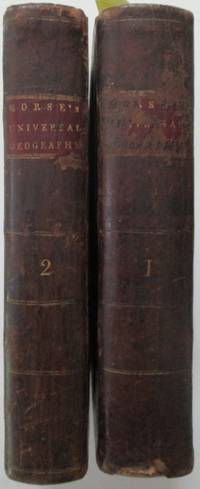
1793012721Boston: Isaiah Thomas and Ebenezer T. Andrews Printers 1793. Leather. Good. Full Calf leather. 696 552 pp. Eight fold out plates/maps in volume one three in volume two all present as called for. 1793 edition of this early geographical survey of the United States as well as the world containing maps relating to the United States at the time North America and the world. This work served to heavily influence the teaching of geography and education in the US. GOOD condition. Moderate to heavy scuffing to the leather covers and extremities with a few deep scrapes and scratches present. Minor soiling and staining. Interiors solid with moderate toning scattered foxing staining and soiling. Dampstaining present to the endpapers. Ownership signatures present. A few pages creased including dog ear creases. The Virginia map is very tattered torn and misfolded with a few other American maps also bearing tears ranging from small to long along the folds. Some creasing to the maps. Sabin 50926. Isaiah Thomas and Ebenezer T. Andrews, Printers unknown
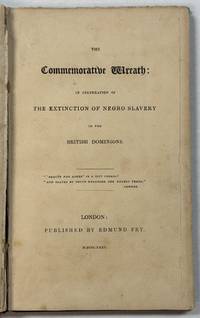
183541420London: Published by Edmund Fry 1835. 2 viii 112 pp. Original cloth rebacked. Title stamped in gilt on upper cover. Frontis engraving with tissue guard of black children in school taught by elegantly dressed white teachers; and with several signs: "The Day of Our Freedom August 1st 1834" engraved by J. Crosland; "That Which I See Not Teach Thou Me"; "Shew Me Thy Ways O Lord Teach Me Thy Paths." Occasional foxing Good plus. <br /> <br /> A scarce work issued to celebrate the abolition of slavery in British colonies with the Slavery Abolition Act passed in 1833 and going into effect on 1 August 1834. "On the memorable day when British Colonial Slavery ceased the 'Peckham Negro's Friend and Instruction Society' held a special meeting with a view to 'signalizing the day of Negro Emancipation by some act of Christian benevolence" and accordingly came to the unanimous resolution of undertaking 'the charge of an Adult School to be established in the island of Jamaica. The necessary steps were taken to effect this design; and it is the hope of aiding the the extension of its practical usefulness which has prompted a few individuals who have long felt deeply interested in the Negro's cause to collect into a small volume such poems as may be within their reach written for the most part in special commemoration of the abolition of Slavery and to apply the profit if any to the furtherance of the object before described."<br /> The authors of most of these poems have signed with their initials only. This is the first edition.<br /> LCP 2587. Published by Edmund Fry unknown
1782CA0094lii315 pages. Octavo 8" x 5 3/4" bound in full leather with gilt lettering to spine. Translated with notes by Pedro Varela y Ulloa. Palau 196692. First Spanish edition.<br /><br />A text that engaged the well-studied debates about the natural history of the Americas and Spain's colonial history. In 1780 in Venice Juan Nuix published Riflessioni imparziali supra l'umanita degli spagnuoli nell' Indie contro i pretersi filosofi e politici. Nuix a Catalan living in Italy since the expulsion of the Jesuits wrote the book to defend Spanish colonialism and historiography against the attacks of Robertson and Raynal. It sailed by the censors in the Council of the Indies and two separate translations appeared in succession one in 1782 edited by a member of the Royal Council Pedro Varela y Ulloa and another in 1783 by Joseph Nuix Juan's brother. The Spanish edition sponsored by the crown opened with an essay by Varela y Ulloa in which he first offered a searing Critique of traditional forms of colonialism not unlike that put forth by Raynal. After describing military campaigns in foreign lands from Alexander the Great to Genghis Kahn as butcheries Varela y Ulloa went on to claim that the Spanish colonialism was unique. The crimes attributed to Spain in the Indies had been committed by private individuals who did not represent the nation as a whole and who had acted as they did while surrounded by hungry cannibals. Moreover compared with the atrocities committed by other European colonial powers the actions of the Spaniards looked like misdemeanors. Varela y Ulloa's effort to portray Spanish colonialism as unique benign captured the essence of Nuix's thesis well. Nuix's defense of the record of Spanish colonialism opened with passages that sought to bolster his credibility by stressing that he was a Catalan and that Catalans had not really participated in the Spanish colonization of the Indies so that he could not be accused of being partisan. He then articulated a five-pronged defense of Castilian colonial behavior in America seeking to demonstrate the unreliability of the sources used by Robertson and Raynal and of their interpretations. Nuix First set out to prove that charges of Spanish cruelty to Amerindians were exaggerations originally put into circulation by writers such as Las Casas whose reports on the destruction of the Indies were at the root of most foreign criticisms of Spain. According to Nuix Las Casas was of Flemish origin which explained why he had sought to undermine Spain. Las Casas also often contradicted himself Nuix argued no impartial jury could trust such "an inept" witness. Foreign historians who had echoed Las Casas's allegations were not credible either not Robertson whose moderation had prompted him to dismiss Las Casas. Robertson had selected and reinterpreted the testimony of Spanish witnesses when recounting various colonial massacres. Instead of quoting them moreover Robertson had manipulated the testimony of witnesses to depict the Amerindians as passive victims of Spanish cruelty. History was not a matter of interpretation however but of faithfully presenting the testimony of witnesses and in that respect Robertson lacked credibility. In order to prove that Spaniards in America had not behaved like greedy barbarians Nuix argued that the alleged depopulation caused by the Conquest was the product of factors outside human control. The infantile susceptibility of the natives to disease for example was why epidemics had wiped them out. The barrenness of the Americas and the idleness of the originally small number of natives had moved the conquerors to create economies based on mining and large estates. Such economies along with the foreign monopoly on colonial trade not Spanish cruelty and greed Nuix contended were responsible for having slowed both markets and population growth.<br /><br />Condition:<br /><br />Provenance: Book plate of Alberto Parreño formerly president of the Cuban Chamber of Commerce in New York to front paste down. Spine head chipped rubbing to edges and corners very crisp internally else about a very good copy. Joachin Ibarra hardcover
17781001488vo period calf rebacked with modern calf and new endpapers 3 202pp. Wear to covers; ink name to top of title page and some foxing and darkening within. Otherwise very good. The contents provide coverage of the important proceedings before the Declaration of Independence on July 4th 1776.This commentary reflects the efforts of the Second Continental Congress which was headed by John Hancock. A good portion of the contents focus on correspondence between Washington who had taken command of the Continental Army in May 1775 and Congress election of delegates form each of the Colonies and funding the war with Great Britain. Some remarks actually give insight into the pay that soldiers received privates got $5 per month. Also some information on printing of paper money and what denominations would be used. While the title page indicated this was a reprinted work Sabin only lists the London edition. Reprinted For J. Almon
183334458v.p. including Antwerp London Havana Pensacola New York 1833. Folio. 12 3/4 x 8 inches. 21 leaves plus two additional manuscript leaves laid in. Contemporary half calf and marbled boards manuscript label on front board. Bookseller's label on front pastedown.<br/> <br/> Account book of Atlantic trading voyages.<br/> <br/> An interesting manuscript ship's log containing financial accounts for the brigs Nimrod and Jasper for an eight year period from 1826 to 1833 while they were under the command of a Captain John Hill. The two ships made numerous voyages between the United States Europe and the Caribbean. The present log book contains line accounts of expenditures for journeys from London and Marseilles to New York and Norfolk in 1827; from Antwerp to London in 1828; from Philadelphia to the West Indies in 1829; from Madeira to the Turks Islands in 1831; from the West Indies to Pensacola to Havana in 1832; from the Indies to New York in 1833; and other similar voyages. The log also contains two copies of an 1832 letter written in Havana by Hill to merchants there inquiring about the price of molasses and a list of port charges at several major way points. A fascinating artifact of trans-Atlantic trade in the 1820s and 1830s. unknown
181055475Madrid La Imprenta Real 1810. Small 4to. Clothbacked marbled boards. Uncut. VIII455 pp. Internally clean and fine. <br/><br/><em>First edition. - Sabin 19678. </em> hardcover
1854biblio2<p>Foxing 13 color plates second binding. Text clean name and number title page. Does not include map.<br /></p><p>inscription and writing front free fly leaf</p><p>Wagner camp 235</p><p>Book is in good condition</p><p>Text Unmarked<br /></p> Lippincott, Grambo hardcover
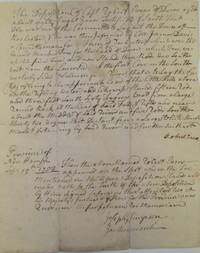
1753021222No Place: No publisher 1753. Unbound. Good. Single sheet. Handwritten deposition recalling the testimony of Captain Robert Evans describing the lay out of the town of Rochester mentioning a pine tree standing three rods due Southwest from the lower side of the first cove on the Southwesterly side of the Salmon Falls River and going on to mention other landmarks such as a round rock and a large white birch. We surmise that Captain Robert Evans was the same as that who died in 1753 in his eighties the deposition also mentions his age and who was described in his obituary as a rolling stone. Signed by a justice of the peace Joseph Simpson and stating Province of New Hampshire Sept. 19th 1753. Reverse notes this was recorded in Dover town records. GOOD condition. Old white tape repairs to the reverse. Horizontal and vertical fold creases present. Minor foxing and spotting. No publisher unknown
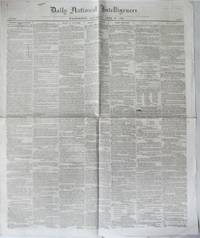
1859017039Washington DC: Gales and Seaton 1859. Tabloid. Good. Side folding large tabloid newspaper. A single issue of this long running newspaper published in Washington DC first published in 1800 and publishing until 1870 with an eventual bias toward conservative Whig policies. Besides the usual ads and political news this issue contains two "Was Committed" notices last page bottom right one pertaining to Mary Norris George Park and Sally King the other pertaining to Lewis West. All four were African-Americans with Mary Norris George Park and Lewis West being enslaved people from enslaver Robert E. Lee. According to the US National Park Service website devoted to Robert E. Lee's Arlington House Memorial Mary Norris George Parks and another man Wesley Norris believed they were free based on a provision in the will of George Washington Custis. Based on this knowledge the three emancipated themselves traveling to Pennsylvania. They were all captured in Maryland. According to contemporary newspaper accounts New York Tribune in June 1859 Lee had the re-captured African-Americans whipped. Wesley Norris himself wrote an article in the Anti-Slavery Standard in 1866 which provides his account of the whipping. Early historians and biographers dismissed both accounts considering them to be accounts used for anti-slavery propaganda. Lee himself was silent on the subject with many of his contemporaries and historians taking his silence as a denial. However modern research suggests the accounts of Wesley Norris and others were true dispelling the myth of Lee as benevolent enslaver perpetuated by earlier historians. The first notice states that Norris Park and West were committed to jail on May 26th and that "George and Mary say they belong to Col. Robert Lee of Fairfax County Virginia." The complexion and height of all three are given as well as descriptions of the clothing they wore. Sally King asserted that she was free living in Washington with a Mrs. D. Bread. According to the piece they all initially left Washington on May 22nd 1859. The second notice contains the same information as the first although it appears Lewis West was jailed on May 27th but also asserted he "belongs to Col. Robert Lee." Both notices request that the "owner or owners" come forward and pay all charges due. Also present is a notice of "young servants for sale" indicating the availability of several girls from ages 11 to 15 as well as young men from 21 to 25 years old. All were apparently located in Georgetown. The newspaper is in GOOD condition. Paper split chipped and deteriorating along the spine with very slight loss of letters to some of the "was committed" ads. Horizontal and vertical fold creases present. Moderate toning along the spine edge. Small hole worn through at the intersection of the fold creases. Some wrinkling and creasing to the paper. Several small tears along the extremities. Gales and Seaton unknown
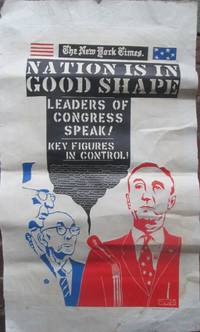
1964015841No Place: William Kent Publisher 1964. Unbound. Good. #2 of 20 printed. Signed by William Kent on the lower right corner below illustration. Printed on paper in black red and blue with ink set in relief on the plain background. 36 ½ by 21 ¼ inches. A slate relief print by artist and carver William Kent. Kent adapted newspaper headlines and imagery of political leaders to present a subtle satirical commentary on the United States and its leaders that undercuts the assertions of the leaders. William Kent is credited with the creation of the slate print technique. Considered an outsider artist by his contemporary critics Kent as a self taught artist adopted techniques used by artists in the Pop Art movement to his own ends in an effort to portray upheavals in American society during the 1960s. GOOD condition. Needs restoration/conservation. Faint large dampstain at the lower right corner. Faint foxing present to the whole piece. Paper is wrinkled with some large curls and faint creases presumably from being stored rolled at some point. A few small tears and chips present along the extremities. William Kent, Publisher unknown
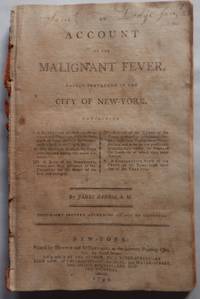
1799004114New York: Printed by Hurtin and McFarlane at the Literary Printing Office No. 20 Gold-Street 1799. First Edition. Disbound. Good. Disbound pamphlet. 139 pp plus 9 unnumbered pages and one blank endpaper in the rear. Contains as given on the title page: I. A narrative of its rise progress and decline with opinions of some medical gentlemen with respect to its origin. II. The manners in which the poor were relieved. III. A list of donations for relief of the sick and indigent. IV. A list of the names of the dead with occupations. This list also states if the deceased was African-American. V. A comparative view of the fever in the year 1798 with that of 1795. The nine unnumbered pages contain tables of information relating to the fever and its affliction of various groups of people. Contains letters from Dr. Samuel Mitchill and Richardson Underhill in regard to the origin of the fever. In GOOD condition. Remains of leather binding on the spine. The signature of a Samuel Dodge present at the top of the title page with a handwritten list in pencil of phrases on the rear blank endpaper. Page 85 with a number in ink with two numbers in faint pencil. Faint pen squiggle in the margin of page 97. Moderate toning to the paper with minor spotting and foxing scattered throughout. Rear endpaper with a few minor chips along its fore edge as well as bearing a diagonal crease. This crease affects the previous leaf as well. Sabin 30314. Printed by Hurtin and McFarlane, at the Literary Printing Office, No. 20 Gold-Street unknown
17971022408vo modern calf 407 pp. Lacks half title ex-library stamps on both sides of title front endpaper chipped on top expert repair to last page a little soiling normal aging and foxing; otherwise very good in a very nice modern binding. Before James Monroe 1758-1831 became president of the United States his political apprenticeship included serving as Minister to France. He was appointed by George Washington in 1794 to this post which proved disastrous from a political standpoint. He was recalled in 1796 and while he was an enthusiastic supporter of the French Revolution he was openly critical of the Jay Treaty with Britain which antagonized Washington's pro -British cabinet. This work was Monroe's attempt to justify his position. New Book of Knowledge. Evans 32491. Sabin 50020. Howes M727. Benj. Franklin Bache,
1797102241<p>8vo contemporary calf spine and tips rebacked with original spine label laid down new endpapers includes half title 407 pp. Signature on front endpaper and title ink and pencil numbers on back of title extremity wear to binding corner mended dampstaining to the bottom third of book some soiling foxing and aging; otherwise in very good condition overall. Before James Monroe 1758-1831 became president of the United States his political apprenticeship included serving as Minister to France. He was appointed by George Washington in 1794 to this post which proved disastrous from a political standpoint. He was recalled in 1796 and while he was an enthusiastic supporter of the French Revolution he was openly critical of the Jay Treaty with Britain which antagonized Washington's pro-British cabinet. This work was Monroe's attempt to justify his position. New Book of Knowledge. Evans 32491. Sabin 50020. Howes M727.</p> Benj. Franklin Bache,
1835022270Dover NH: J.T. Gibbs Publisher 1835. Quarter Leather. Poor. Folio. Quarter leather with marbled paper covered boards. Large folio. Bound volume of the Dover New Hampshire newspaper the Dover Gazette and Strafford Advertiser comprising of every weekly issue spanning from December 2 1834 to November 24 1835. Of particular note is a printing of the Treaty of New Echota a treaty that a small minority of members of the Cherokee Indian Tribe signed and that sold their land east of the Mississippi River to the US government. This treaty led directly to the forced removal of the Cherokee people from their land infamously known as the Trail of Tears. Also present is a lengthy account of the trial of the Prophet Matthais for murder. This trial also accused Sojourner Truth who at the time worked as a servant for Matthais under the name Isabella of murder. Matthias alias of Robert Matthews was a pseudo-religious figure in the early to mid 1800s establishing a cult like following in New York. He even had a meeting with Joseph Smith at one point although both denounced each other as Satanic according to Wikipedia. Another notable articles is present discussing a racially integrated school established in Canaan New Hampshire the Noyes Academy. Established in 1835 by abolitionists the school educated African Americans and admitted women. This school aroused the racist ire of local residents and was destroyed by townspeople in August of 1835. The August 25th issue has an approving article documenting the destruction and writing as if scandalous that African American men and supposedly respectable white women had been seen walking arm in arm in town. Other articles on slavery antislavery and abolition are found throughout. POOR/FAIR condition. Ex-library with exterior spine labels interior pastedowns and minor markings. Both covers DETACHED along with the first several leaves. Last several leaves also detached. Binding essentially perished rendering the whole text block rather fragile. Minor scuffing fading soiling to the covers. Years written on masking tape taped to the spine. Paper a bit browned and brittle. J.T. Gibbs, Publisher unknown
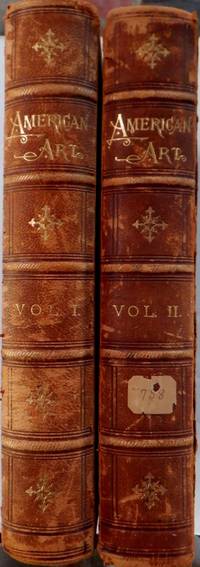
1889017940Boston: E.W. Walker and Co 1889. Cloth. Good. Half leather with brown cloth. Folios. 1004 pp. between the two volumes. Black and white illustrations and plates throughout. A survey of American art and artists containing a collection of essays accompanied by many plates of photo etchings etchings and woodcut illustrations. Includes sections on artists such as Frederick S. Church Maud Humphrey Albert Bierstadt Winslow Homer and many others. GOOD condition. Ex-library with spine labels and stamping in the interior. Leather along the front hinge of volume two completely split along the hinge attached by the interior pastedown endpapers. Heavy scuffs to the leather along the hinges and corners. Uneven fading. Minor soiling. Text blocks solid and toned. E.W. Walker and Co unknown
004001Oneida NY: The American Socialist. Original Wraps. Good. Oneida NY. Edited by John Humphrey Noyes the founder of a utopian community in Oneida and an advocate of communal style living including the controversial advocacy of men and women marrying multiple partners. These pieces are 8 page newspaper devoted to topics on communism and socialism as well as items on spiritualism and religion. Brook Farm is discussed in several issues. With a page of ads on the rear. Present are 12 issues from 1876 to 1879. All are in GOOD or slightly better condition with general minor darkening varying amounts of minor soiling some with some staining and varying degrees of chipping and tearing to the extremities as well as some creasing. Specific condition issues where noted. Vol I No 34. November 16 1876. Topics include the connection between socialism and spiritualism socialism and the state-from an 1844 lecture by Ralph Waldo Emerson science and spiritualism etc. Some soiling along the extremities. Minor chipping along the fore edge. Vol II No. 10. March 8 1877. Topics include socialism and positivism evolution of communities etc. Several 1-2 inch tears along the extremities. Vol II No 13. Marh 29 1877. Topics include communism among the pilgrims advantages of communism etc. Dampstaining along the fore egdge. Moderate chipping and tearing along the lower and fore edges. Several pages unopened. Vol II No. 21. May 24 1877. Topics include an in depth look at communism Icaria history of German socialism etc. A few tears and some creasing along the extremities. Vol II No. 23. June 7 1877. Topics include cooperation in Massachusetts a brief bio of Noyes Icaria etc. Minor chipping and tearing along the fore edge with a longer tear at the upper edge. Minor faint staining and a faint dampstain along the lower spine. Vol II No. 25. June 21 1877. Topics include co-operation in Massachusetts land tenure in various countries the abdication of John Humphrey Noyes etc. Smallish area of dark staining to the center pages. Vol II No. 38. September 20 1877. Topics include socialist clubs the condition of the Icarian community positivism and spiritualism etc. With many small tears and chips along the fore edge with a few tears along the other extremities. Minor darkening with very minor scattered soiling and foxing. Minor creasing. Vol II No. 39. September 27 1877. Topics include socialism in England the Mennonites and their government some aspects of socialism in America etc. Two small areas of dark spotting on the front page maybe from ash as one of the two areas has a small hole in it. The lower spot affects all the pages throughout. Area of heavy foxing/spotting to the rear page. Minor edgewear and darkening. Vol III No. 42. October 17 1878.Topics include socialism in England a free press home life of Brook Farm spiritualism etc. A small area of dark stippling/soiling. Several 1 inch or slightly larger tears along the extremities with a few other shorter tears. Minor darkening and scattered minor soiling. First pages unopened. Vol III No. 43. October 24 1878. Topics include socialism in England inventor of the phonograph communism. Two 1-2 inch tears along the extremities. Several pages unopened. Vol IV. No 3. January 16 1879. Topics include colonization of the northwest Gertie Barton's cure Spiritualistic notes pedigree of American socialism. Several large tears in the extremities. Chip missing from the lower left corner. Vol IV No. 47 November 20 1879. Topics include communism life among the shakers description of a new cable line race-culture. The American Socialist unknown
184956698Madrid La Imprenta Nacional 1849. Small 4to. Contemp. hcalf. Richly gilt spine. Gilt lettering. Stamp on title-page. 4421 pp. 1 folded table. Internally clean and fine. <br/><br/><em>This edition not in Sabin. Sabin 19679 for other editions. </em> unknown
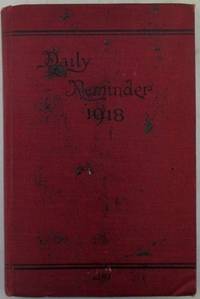
1918021403No Place: No publisher 1918. Cloth. Good. World War I Hospital/Medical Worker Diary. 1918 France. In a Daily Reminder Calendar for 1918. Red cloth. 365 pp. one for each day of the year. No name/author given. Some entries rather faded and most written in pencil. Handwriting is sometimes illegible. We speculate the author may have been an officer in the AEF as many of their entries refer to daily inspections and they reference an officer training drill in one entry. Many entries also refer to lieutenants majors and other officers although very rarely giving names instead using a single initial. It appears they were part of the AEF's hospital unit with mention of being at a frontline ambulance medical facility run by French forces and called Ambulance de Bois Roger see Feb. 12. First entry for January 1st indicates the author was in Langres France with the AEF American Expeditionary Force and mentions that school is out and he took a walk. They describe waiting for orders eventually being moved to Liffol-le-grand and Camp Hospital 18 for the month of January. By Early February entries are from Field Hospital 101. A hand drawn map/plan of Ambulance de Bois Roger appears on February 12. They describe setting up a triage with plan. On February 17 "considerable artillery to the east" is mentioned and the author as well as their going to an abandoned trench on the ridge. German biplanes are referred to using the French term avion boche. Boche was a derogatory term for Germans and the word appears off and on in entries going forward including March 8th where it states "Some boche in the air." They also mention that two were killed. By April the author is back at Camp Hospital 18 another map/plan of the facility appears and Field Hospital 101. Entries pretty much cease by April 23 with a few scattered entries short a few long" through the rest of the book. In general the diarist discusses basic day to day operations at the various medical facilities as well as planning interactions with others basic orders etc. GOOD condition. Residue/staining on the front cover. General fading. Minor soiling and edgewear. Some bumping. No publisher unknown
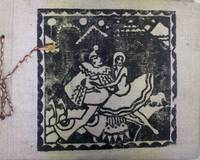
1926022001No Place: No publisher 1926. Cloth. Good. Clothbound scrapbook measuring 13 by 10 inches. String tied. Large ink block print of a man and woman dancing on the front cover with ink block print initials on the rear cover. Artwork presumably done by the owner. Thin paper stock in the interior. Approximately 57 photographs of various sizes including a few 8 by 10 inch photographs 5 by 7s and smaller as well as a few thumbnails. Many of the pages are empty. Other items in the interior include a program of camp exercises a few camp songs a homemade gypsy camp pennant two pages of notes from other campers to the owner a postcard of Gypsy Camp wrappers and labels etc. Photos consist of group photos or photos of individuals some depicting young women in Romani costumes some swimming horseback riding as well as photos of the Tree Top Inn main cabin etc. The owner and creator of this scrapbook was Dorothy Henderson who had an artistic touch in assembling this scrapbook as well as the art within. It appears she attended Gypsy Camp in 1926. Gypsy Camp originating in the early 1900s as an artist colony. The site 65 acres of land with some frontage along the Illinois River and located in Benton County Arkansas was purchased by Weesie and J.H. McAllister in 1921. Weesie McAllister envisioned turning the land into a summer camp for girls. The first building erected on the site was a three story structure that served as camp office residence for the McAllister family and dorm for the girls. Other structures were built in the late 1920s and eventually the camp could hold around 120 young women. The camp operated until 1978. It eventually fell into disrepair before being added to the National Register Historic District in 1988. Even so it was still empty until 2017. This scrapbook documents the early stages of Gypsy Camp as experienced by a young woman. GOOD condition. The scrapbook is generally solid. Some pages are loose and laid in with chipped and torn edges. Paper is rather brittle. No publisher unknown
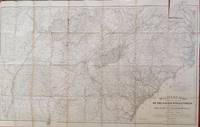
1865021368New York: Ferdinand Mayer Lithographer 1865. Unbound. Good. 47 by 30 inches. Black and white only. A large map apparently issued in 1865 that depicted the marches General William Tecumseh Sherman undertook during the Civil War. The map depicts railroads terrain etc. demonstrating the extraordinary lengths Sherman went to in order to dismantle the Confederacy's ability to resupply and fight. This edition was issued by Ferdinand Mayer with two other editions of this map published by two other firms. GOOD condition. Many fold creases present as issued. Large L shaped tear along one of the upper folds affecting the map in that area. Many other tiny tears along the folds fold edges or intersections present along with evidence of repair on the reverse to some of the tears. Map browned along the fold creases. Ferdinand Mayer, Lithographer unknown