29 645 résultats
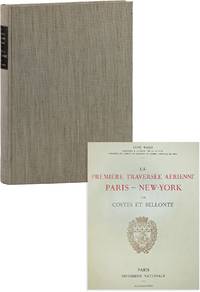
193185868Paris: Imprimerie Nationale 1931. First Edition. Small folio. 34cm. Later heavy grain oatmeal cloth with black leather title label to spine. 258pp.; 1. Clean and strong minor bumping to spine ends; internally clean and fresh illustrated throughout with photographs color images and charts all with captioned tissue guards. A near fine copy.<br /> <br /> <br /> From the library of Nathaniel Tarn noted poet translator and anthropologist bearing his bookplate to the front pastedown. A lavish and justifiably celebratory account of the first aerial crossing from Paris to New York performed in 1930 as the second traversal attempt by Costes and Bellonte with the first having to be abandoned in 1929 due to bad weather. The duo successfully made the crossing of 3850 miles in 37 hours and 18 minutes to international fanfare in their Breguet 19 Super Bidon named "Point D'Interrogation" or "Question Mark". Bellonte's rather lush and impressive account is quite scarce in trade and considering the importance of Costes and Bellonte's singular achievement seems sparse in institiutional holdings. Imprimerie Nationale unknown
1983146401983. Dimensions : 198 x 303 mm. Tirage argentique du temps. Cachet ˆ l'encre du photographe au verso TrÂs belle condition. b42961 unknown
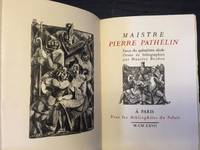
192741376Paris: Les Bibliophiles Du Palais 1927. Small 4to. 712713 pp. Ltd to 200 copies wraps presented in a loose case inserted into a slipcase. Tissue guarded illustrative plates in b/w edges untrimmed. Box darkened and rubbed particularly on spine. Split to spine of inner case. FRENCH TEXT . Very Good. Slipcase. 1927. Les Bibliophiles Du Palais 1927 unknown
68-4283Paris France: Maurice Berton ca. 1950s. 18 x 13 cm. B&W glossy photograph. Very Good. Provenance Paul Paulet French actor from the 1930s-1970s [Paris, France: Maurice Berton, [ca. 1950s?]. unknown
68-4284Paris France: Maurice Berton ca. 1950s. 17.5 x 23.5 cm. B&W glossy photograph. Very Good with a few perforations. Provenance Paul Paulet French actor from the 1930s-1970s [Paris, France: Maurice Berton, [ca. 1950s?]. unknown
68-4282Paris France: Maurice Berton ca. 1950s. 18 x 13 cm. B&W glossy photograph. Very Good. Provenance Paul Paulet French actor from the 1930s-1970s [Paris, France: Maurice Berton, [ca. 1950s?]. unknown
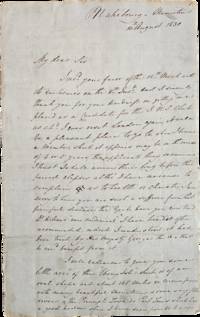
1830List2931Mahébourg Mauritius 1830. Single unsigned fourteen-page letter measuring 8 x 12 ¾ inches. Folded with some stains and pencil marks. Overall near fine. In 1830 Mauritius was a British colony captured from the French in 1810 during the Napoleonic Wars. It was originally a Dutch colony and the Dutch had introduced enslaved labor to the islands. Enslaved people were imported from Madagascar India and Southeast Asia to harvest the valuable ebony trees and later to farm sugarcane. It became a French colony in 1715 and among other provisions the French government awarded upper-class colonists large land grants each with twenty enslaved people to work them. Slavery was abolished in 1835 under British rule after which the planters still farming sugarcane turned to indentured servant labor from India and China alongside illegal slavery.1<br /> <br /> Offered here is a lengthy single letter written by an unknown author to an unknown recipient from Mahébourg in 1830 shortly before this radical change. The letter describes the lives and economic circumstances of the planters and merchants and of the non-white population particularly Malabar people and free and enslaved Black people.<br /> <br /> Noting that “every inch of ground that will produce sugar cane is planted with it†including “the former fine gardens to some of the Habitations†the author reports on the situation for sugar planters:<br /> <br /> “The price of sugar here is not more than 20/per Cwt. for the best quality which does not now remunerate the Planter as his expenses are becoming every day more heavy in consequence of their slaves diminishing . The want of Slaves induced many of the Planters to send for Chinese Labourers and several hundreds were imported at a great expense but unfortunately they did not answer and were obliged to be reshipped for their native Country again at the charge of those who sent for them.â€<br /> <br /> The author later notes that “nearly everyone of the Planters have heavy mortgages on their Estates and are obliged to pay this immense Interest which keeps them poor and will I fear ultimately ruin themâ€. In fact the planters in British Mauritius had extra duties on their sugar exports compared with their Caribbean counterparts. The shopkeepers on the other hand “calculate on retiring with a fortune in five years– therefore you will fancy what must be their prices also their profits.â€<br /> <br /> Though writing from Mahébourg the author describes the capital city of Port Louis at length especially its Malabar Indian and free Black residents—the lives of the latter particularly the free Black women seem especially grim. They write:<br /> <br /> “The Centre of Port Louis is inhabited by all the respectable people and many most excellent houses buildings– the Catholic Chapel the English Church amongst the number. The Suburbs to the West is the part occupied by about 3000 Malabars called ‘Malabar Town.’ – They are dressed mostly in white with Turbans ear rings c c and the females with ornaments in their noses and on their Toes as they generally go bare foot. – Once a year they have what is called a ‘Yamsee’ or a festival in honor of Mehomet which lasts for about a fortnight during which time they seem to get no sleep a continual beating of tom toms – jingling of bells – carrying pagodas which are made of various coloured paper and most richly ornamented followed by all the population of their Caste with their faces daubed with red white c and which has a most ludicrous appearance. The Suburbs to the South is called ‘black Camp’ – the Houses being very small and poor and inhabited by all the free blacks as well as many Mulattoes. – Also a certain class of females of the population of colour – who are visited immediately on the Arrival of a Ship the Crews soon enquiring the way to the ‘Camp.’â€<br /> <br /> As regards relations between the races the author recounts an incident that followed the 1828 abolition of the color bar which would ostensibly give the free non-white population the same rights as the whites:<br /> <br /> “The Theatre is a very good one but has been closed for several months past the Actors Actresses gone to Bourbon in consequence of the promulgation of the act ‘causing all free people of the population of Colour’ to have the same laws – the same privileges as the Whites’ fearing they ought come to the Theatre which they had hitherto been forbidden thereby cause disturbances as the French Whites detest them wd. not sit in the same box it was considered best to shut the Theatre which is a great loss to the Place it being the chief public amusement and indeed the only one we have here.â€<br /> <br /> Overall a detailed letter giving insight into life in a slave colony at a time when significant changes were on the horizon. Of interest to scholars of the colonial history of Mauritius and the second wave of British colonialism.<br /> <br /> 1 Truth and Justice Commission Report of the Truth and Justice Commission Vol. 1 Mauritius: Government Printing 2011. unknown
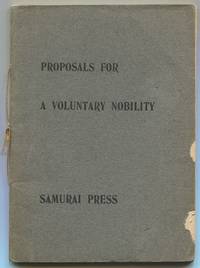
1907539003Ranwith Hall Norwich: The Samurai Press 1907. Softcover. Very Good. Second edition. Small octavo. 31 1pp. Stitched printed gray wrappers. Two modest chips on front wrap and one on the first leaf else very good. Early English-language source on the History of Bushido. OCLC notes a reasonable number of copies of the 1907 first edition but only four of this edition. The Samurai Press unknown
1959143208London: Sidgwick & Jackson 1959. Hardcover. Very Good/Dust Jacket Included. London Sidgwick & Jackson 1959 'special edition'/ 1959. Tall octavo 536 pages with numerous illustrations from photographs and a map plus an errata slip mounted on the verso of the half-title and endpaper maps. Cloth slightly bumped at the top corners; edges a little discoloured with the top edge foxed; a very good copy with the good unclipped dustwrapper a little worn and moderately sunned on the spine. A small label mounted on the verso of the title page states this is number 711 of a maximum of 2000 copies of a 'special edition' issued by Sidgwick & Jackson. <p>The edition comprises copies of the first US edition Grove Press 1959 with a variant dustwrapper and a 'London Sidgwick & Jackson' label mounted over the original publisher's details at the foot of the title page. Sidgwick & Jackson hardcover
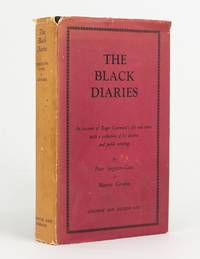
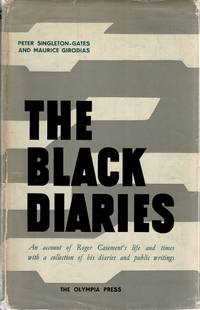
195932182AB1959. Paris The Olympia Press 1959. Large Octavo 17.2 cm wide x 25.5 cm. 626 pages with numerous photographs throughout. Original Hardcover with original dustjacket in protective collector's mylar. Very good condition with only minor signs of wear. The very rare Olympia Press Edition. Chapters in this monumental publication are: Irish Childhood / Africa / The Congo Report / The 1903 Diary / The Putumayo / The 1910 Diary / The Putumayo Report / The Awakening of Ireland / The Trial / The Aftermath / Appendix: The 1911 Diary Roger David Casement Irish: Ruairí Dáithí Mac Easmainn; 1 September 1864 3 August 1916 known as Sir Roger Casement CMG between 1911 and 1916 was a diplomat and Irish nationalist executed by the United Kingdom for treason during World War I. He worked for the British Foreign Office as a diplomat becoming known as a humanitarian activist and later as a poet and Easter Rising leader. Described as the "father of twentieth-century human rights investigations" he was honoured in 1905 for the Casement Report on the Congo Free State and knighted in 1911 for his important investigations of human rights abuses in the rubber industry in Peru. In Africa as a young man Casement first worked for commercial interests before joining the British Colonial Service. In 1891 he was appointed as a British consul a profession he followed for more than 20 years. Influenced by the Second Boer War and his investigation into colonial atrocities against indigenous peoples Casement grew to mistrust imperialism. After retiring from consular service in 1913 he became more involved with Irish republicanism and other separatist movements. During World War I he made efforts to gain German military aid for the 1916 Easter Rising that sought to gain Irish independence. He was arrested convicted and executed for high treason. He was stripped of his knighthood and other honours. Before during and after the trial British security agents and police showed typescripts prepared by the Metropolitan police to influential persons. These were said to be official copies of his private journals which detailed homosexual activities. Given prevailing views and existing laws on homosexuality this material undermined support for clemency. Disputes have continued about these diaries; a private handwriting comparison study in 2002 concluded that Casement had written the diaries but this was contested by several scholars. Casement worked in the Congo for Henry Morton Stanley and the African International Association from 1884; this association became known as a front for King Leopold II of Belgium in his takeover of what became the so-called Congo Free State. Casement worked on a survey to improve communication and recruited and supervised workmen in building a railroad to bypass the lower 220 miles 350 km of the Congo River which is made unnavigable by cataracts in order to improve transportation and trade to the Upper Congo. During his commercial work he learned African languages. In 1890 Casement met Joseph Conrad who had come to the Congo to pilot a merchant ship Le Roi des Belges 'King of the Belgians'. Both were inspired by the idea that "European colonisation would bring moral and social progress to the continent and free its inhabitants 'from slavery paganism and other barbarities.' Each would soon learn the gravity of his error." Conrad published his short novel Heart of Darkness in 1899 exploring the colonial ills. Casement later exposed the conditions he found in the Congo during an official investigation for the British government. In these formative years he also met Herbert Ward and they became longtime friends. Ward left Africa in 1889 and devoted his time to becoming an artist and his experience there strongly influenced his work. Casement joined the Colonial Service under the authority of the Colonial Office first serving overseas as a clerk in British West Africa. In August 1901 he transferred to the Foreign Office service as British consul in the eastern part of the French Congo. In 1903 the Balfour Government commissioned Casement then its consul at Boma in the Congo Free State to investigate the human rights situation in that colony of the Belgian king Leopold II. Setting up a private army known as the Force Publique Leopold had squeezed revenue out of the people of the territory through a reign of terror in the harvesting and export of rubber and other resources. In trade Belgium shipped guns and other materials to the Congo used chiefly to suppress the local people. 2014 Faroe Islands stamp depicting Casement and Daniel Jacob Danielsen his Faroese boat captain and assistant. Casement travelled for weeks in the upper Congo Basin to interview people throughout the region including workers overseers and mercenaries. He delivered a long detailed eyewitness report to the Crown that exposed abuses: "the enslavement mutilation and torture of natives on the rubber plantations".22 It became known as the Casement Report of 1904. King Leopold had held the Congo Free State since 1885 when the Berlin Conference of European powers and the United States effectively gave him free rein in the area. Leopold had exploited the territory's natural resources mostly rubber as a private entrepreneur not as king of the Belgians. Using violence and murder against men and their families Leopold's private Force Publique had decimated many native villages in the course of forcing the men to gather rubber and abusing them to increase productivity. Casement's report provoked controversy and some companies with a business interest in the Congo rejected its findings as did Casement's former boss Alfred Lewis Jones. When the report was made public opponents of Congolese conditions formed interest groups such as the Congo Reform Association founded by E. D. Morel with Casement's support and demanded action to relieve the situation of the Congolese. Other European nations followed suit as did the United States. The British Parliament demanded a meeting of the 14 signatory powers to review the 1885 Berlin Agreement defining interests in Africa. The Belgian Parliament pushed by Socialist leader Emile Vandervelde and other critics of the king's Congolese policy forced Léopold to set up an independent commission of inquiry. In 1905 despite Leopold's efforts it confirmed the essentials of Casement's report. On 15 November 1908 the parliament of Belgium took over the Congo Free State from Leopold and organised its administration as the Belgian Congo. Wikipedia hardcover
124520095X.Gpaperback. Good. Access codes and supplements are not guaranteed with used items. May be an ex-library book. paperback
1954GB0000BMN64I5N00Skira 1954. Hardcover. Acceptable. Disclaimer:A readable copy. All pages are intact and the cover is intact. Pages can include considerable notes-in pen or highlighter-but the notes cannot obscure the text. At ThriftBooks our motto is: Read More Spend Less.Dust jacket quality is not guaranteed. Skira hardcover
198332501New York: The Stonehill Publishing Co 1983. First American Edition. With 127 full colour plates and 46 black and white drawings. 8vo publisher's original navy cloth lettered in gilt on the spine panel and with the colour pictorial dustjacket. xxi 184 pp. An extremely fresh and well preserved copy of this enticing book as pristine. FIRST EDITION PROFUSELY DECORATED WITH SOME OF THE FINEST WORK OF MASTER ILLUSTRATORS AND PRINTERS OF THE LATE-NINETEENTH-CENTURY IN ENGLAND. "This book presents a representative selection of the best work produced for children during the great flowering of the illustrator's art that began in England in the 1860's. The beautifully crafted drawings of such illustrators as Caldecott Walter Crane Kate Greenaway and Richard Doyle has been reproduced with painstaking fidelity to the originals. Includes the complete texts of Caldecott's whimsical Hey Diddle Diddle and Baby Bunting selections from Greenaway's beloved Mother Goose Doyle's exquisitely rendered drawings of fairies and elves the lavish work of anonymous illustrators for such classics as Puss-in-Boots and Tom Thumb and much more. The Stonehill Publishing Co hardcover
186223685New York: G. Savage 1862. Fine. Civil War era addenda to the Municipalist a New York magazine published following the "Separation of the United States". The first sentence reads "Since the preceding Letters have been published the United States of America have been dissevered and a new federation under the name of Confederate States of America formed". The Municipalist was first published in 1858; the second edition in 1859. <br /> <br /> Contents include secession enforced union convention of the states Abolitionists Shay's Rebellion the United States a great people no nation; and more.<br /> <br /> Plain paper wrappers. 16mo 303-348pp 1pp "Some Private Opinions". Stitched. Sabin 51330. OCLC: 950932219 one copy at the American Antiquarian Society. G. Savage unknown
118262Paris Éditions d’art Édouard Pelletan 1915. 8vo. 8 418 4 pp. Illustrated. Somewhat worn half calf spine with raised bands top edge gilt and front wrapper preserved. Copy number 203 numbered in ink. Number 203 of 494 printed on 2vélin du Maraisâ€. hardcover
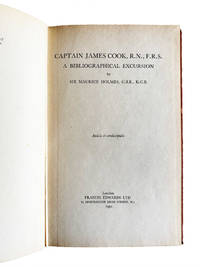
19525000610London: Francis Edwards 1952. Endpapers slightly spotted otherwise fine. Octavo; original brown cloth. <p><p>One of 500 copies published of this early and influential Cook bibliography by the doyen of Cook collecting Sir Maurice Holmes. One of two standard bibliographical references for the voyages of Captain Cook it is discursive and more attuned to the collector than Beddie's bibliography which by comparison is encyclopaedic. This is the second and best version revised and greatly expanded from Holmes' original 1936 essay which notes Holmes 'contained one shocking howler. and half a dozen more venial errors'.</p> <p>It was put together by a significant collector: Holmes's Cook collection is today in the UCLA library. Like Holmes's earlier and less authoritative "Introduction to the Bibliography of Captain Cook" of 1936 it was published by the English bookseller Francis Edwards at that time well known for its specialisation in books of voyages and travels.</p> </p> . Francis Edwards unknown
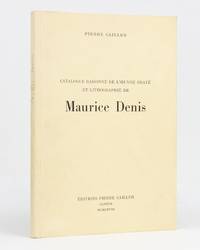
1968122935Geneva: Editions Pierre Cailler 1968. First Edition. Paperback. Very Good. Geneva Editions Pierre Cailler 1968. Octavo unpaginated but approximately 164 pages with 233 illustrations. Card covers a little rubbed at the extremities; author's name in pencil on the plain spine; an excellent copy. Limited to 700 copies with the first 50 constituting a numbered deluxe edition containing an original woodcut. Editions Pierre Cailler paperback
0342582690.Gpaperback. Good. Access codes and supplements are not guaranteed with used items. May be an ex-library book. paperback
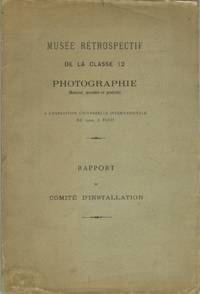
190032023Paris: Piublisher not identified 1900. First edition. 4to. 102 pp. portrait frontispiece with tissue guard illustrations in text 10 plates with tissue guards 1 of these in color. Printed wrappers expertly repaired with a new paper spine. Moderate wear; a very good copy. Housed in a new cloth clamshell box. A history of photography and processes which includes two chapters by Léon Vidal - one is a history of photogravure and the other on color photography. Details several other photomechanical processes and their inventors. Illustrations include those by Robert Demachy and by Puyo. <br /> <br /> There are several issues of this report three of which vary only in size; a fourth a later issue has a slightly different wording to the title and is dated 1903. Étienne-Jules Marey was the president of the committee.<br /> <br /> Roosens and Salu No. 3704. Piublisher not identified unknown
190053064Paris: Publisher not identified 1900. First edition. 4to. 28 cm. x 19 cm 102 pp. portrait frontispiece with tissue guard illustrations in text 10 plates with tissue guards 1 of these in color. Original printed wrappers. Neat ownership signature of a member of the jury of classe 5 on the blank reverse of the half-title page. Fine as new. A history of photography and processes which includes two chapters by Léon Vidal - one is a history of photogravure and the other on color photography. Details several other photomechanical processes and their inventors. Illustrations include those by Robert Demachy and by Puyo. <br /> <br /> There are several issues of this report three of which vary only in size; a fourth a later issue has a slightly different wording to the title and is dated 1903. Étienne-Jules Marey was the president of the committee.<br /> <br /> Roosens and Salu No. 3704. Publisher not identified unknown
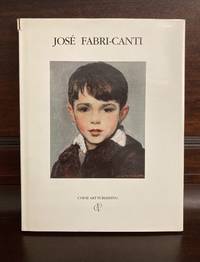
1990523Washington Paris: Cyrne Art Publishing 1990. Hardcover. Very Good/Very Good. :: On José Fabri-Canti a diverse and intriguing painter simultaneously Classic Impressionistic and Surrealistic. :: 35 pictures in black and white 79 plates in colour. :: <br /> <br /> Bound in publisher's red cloth title and publisher's emblem lettered upon the spine in gold. Rear board bears ISBN at bottom right corner. Quarto 11 1/4 x 8 11/16 inches; 285 x 220 millimeters. 33 numbered pages and then plates and exhibition and collections pages.<br /> <br /> Condition: Very Good in a Very Good dust jacket. Endpapers age-toned. <br /> <br /> Dust jacket is lightly worn along the edges with small tears at the top of the spine. Age-toned. Cyrne Art Publishing hardcover
195363736London UK: Neville Spearman Ltd. 1953. 8vo. 143 1 pp. Illustrated title page numerous illustrations. Blue publisher’s cloth black lettering on spine slight shelfwear w/ d.j. cover art by Guy Nicholls minor chipping head of spine upper fore-edge partially affecting 1 letter couple closed tears still NF/G copy. First edition of this authoritative and humorous anthology of recipes honoring beer & ale in roasts fish sauces pickles jams cakes and sweets and an assortment of beer & ale cocktails. Harrison 1907-1991 was a mystery and science fiction/fantasy author who wrote mysteries as Quentin Downes from 1952-1954 and became a leading authority on Sherlock Holmes writing several pastiches. Neville Spearman, Ltd., hardcover
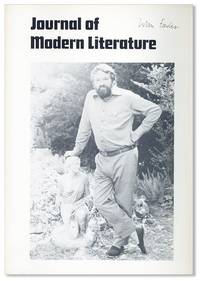
198124257Philadelphia: Temple University 1981. Octavo 25cm.; publisher's white photo-illustrated card wrappers; 161-336pp.; photographic illus. throughout. Wrappers a bit toned at extremities fore-edges slightly curled else Very Good and sound. Signed by Fowles on upper cover. Temple University unknown
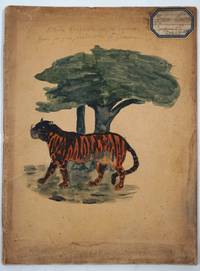
192929264France: Chambre Syndicate des Fourreurs et Gelletiers francais 1929. Three handwritten and charmingly illustrated workbooks supporting Mr. Pigeon's studies in furs and pelts in France in 1929. His professor was M. Hoffman and later Mme. Dupré. <br /> <br /> The title page is M. Pigeon's fantasy of a platypus kangaroo and polar bear surrounding his title "Chambre syndicale des Fourreurs et Pelletiers francais. Jungmann & Cie." There follows 48pp of hand manuscript notes with each page delightfully outlined and illustrated with animals and their habitats. The 2nd volume continues discusses where to buy furs by country how to cut the fur skins dart placement illustrated 42pp. The 3rd covers 4th Year Cutting Course illustrated with the shield of AAiF with two black tipped minks on either side of the shields. It includes text patterns drawn on mannequins and paper with the animal and skin drawings interspersed throughout. 18 pp with writing 10 blank. <br /> <br /> The penciled title on the first volume is 'Etude elaboree sur les Fourrures leur origines fabrication et Commerce'. The covers are illustrated - the first with a tiger under a tree; the 2nd a pencil sketch of a fox and pine trees and the 3rd a woman in a fur coat trimmed in fox with a fox at her feet. Small folio tan card covers string tied covers somewhat toned internally very clean meticulous work. Chambre Syndicate des Fourreurs et Gelletiers francais unknown
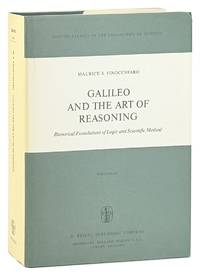
198047412Dordrecht Netherlands: D. Reidel Publishing Company 1980. Fine/Very Good. Dordrecht Netherlands: D. Reidel Publishing Company 1980. First Edition. Octavo 22.5cm; publisher's cloth in grey and white printed dust jacket; xx478pp. A few tiny chips at jacket margins spine a shade toned else a Fine copy in Very Good jacket. Issued as the Boston Studies in the Philosophy of Science Vol. 61. D. Reidel Publishing Company unknown