de Dechy MauriceABAA
84 résultats
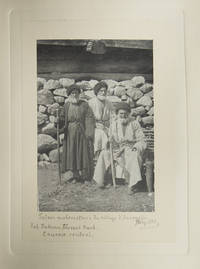
1898307181Caucasus mountains 1898. 38 vintage platinum print photographs printed circa 1900 mounted on card captioned in pencil and signed and dated beneath the image by the photographer. Sizes vary all approximately 7 x 5 inches. Generally fine images not faded heavy spotting to one mount slight warping to mounts. In a custom black half morocco slipcase and chemise. 38 vintage platinum print photographs printed circa 1900 mounted on card captioned in pencil and signed and dated beneath the image by the photographer. Sizes vary all approximately 7 x 5 inches. A fine group of ethnographic and mountaineering scenes from the Causasus Mountains by the Hungarian photographer and mountaineer Maurice de Déchy 1851-1917. A wide-ranging selection of views encompasing scenes from Chechnya Dagastan Georgia and the breadth of the Caucasus Mountains. Images include Mount Elbrus several views Mount Adyr Mount Chikhildi Mount Kasbek and numerous passes valleys glaciers and gorges; ethnographic scenes including Tatar Digor Karachai Daghestani and Khevsuri people and villages; mountaineering scenes including camping beneath Katchou pass with a note that the guide Maser of Tyrol died in 1900 and "en route pour la découverte du col Djiper 1885" with de Déchy identified as one of the mountaineers.<br/><br/>Douglas Freshfield in his classic Exploration of the Caucasus 1896 summarizes de Déchy's activities in the Caucasus: <br/><br/>". M. de Déchy a Hungarian gentleman took up the task of exploration. In 1884 1885 and 1886 he made three extensive journeys in the range. In 1884 . he climbed Elbruz and a fine peak near the Mamison Pass. In the course of his wanderings he made the first passage by travellers of several native glacier passes and collected a considerable amount of scientific information with regard to the glaciers and the snow region. He also took a very large number of most valuable photographs of the scenery and people thus making himself the pioneer in Caucasian photography. I am indebted to him for some of the most interesting illustrations in these volumes" Freshfield p. 19. <br/><br/>De Déchy returned to the Caucasus again in 1887 this time with Freshfield. Fourteen of De Déchy's photographs were reproduced in Freshfield's Exploration of the Caucasus including "Ice-Lake at Klukhor Pass" one of the images in the present group. He also contributed an entire chapter "The Sources of the Kuban" vol. II chapter XXI. <br/><br/>These beautifully printed platinum prints are in a fine state of preservation and exhibit the wide tonal range and delicate shading characteristic of the process. unknown books
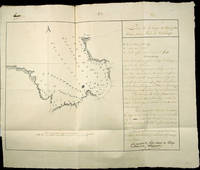
1803WRCAM40583N.p. but probably Tobago 1803. 68pp. plus two folding manuscript plans. Approximately 14500 words. Folio. Folded sheets stitched together. Stitching loose some sheets loosely laid in. Spine chipped. Titlepage lightly soiled some small chips and tears around the edges. Some light soiling and dampstaining to outer leaves else clean and bright. Written on the right half of each page with some additional notes or corrections on the left. Near fine. An important document in French detailing the functions of the island of Tobago written by Louis-Maurice Le Rat De Magnitot 1757-1823 colonial prefect of Tobago and Saint Domingue. Tobago changed hands many times during the 18th century and the island was briefly in French possession again in 1802-03 before being captured by the British in June of 1803. In this document Magnitot summarizes the situation of the newly reclaimed island. The first four sections of his MEMOIRE deal with military matters. In the first section "Troupes" he lists seventy-seven men garrisoned on Tobago noting that the garrison is a varied blend of men. He includes details on discipline causes of sickness and mortality among the men and uniforms. The second section "Artillerie" provides details of the number of guns and munitions at Tobago. The third section "Fortifications" includes two plans of Man of War Bay complete with soundings observations and important locations marked. This is followed by a section entitled "Marine" in which he details the condition of the ports and harbors. In the next four sections Magnitot gives details about the civil operations of the island: Laws Police Agriculture and Commerce. The section on the law is very detailed giving the organization of the courts civil and criminal. The section on police is perhaps the most interesting in which he gives not only information on keeping the public peace but on the public itself. Magnitot delineates in several separate points policing among the black populace the conduct of masters toward slaves and the condition of roads and the means of their maintenance. In the last of these points he gives numbers on both the European and colored populace. The "population blanche" numbers no more than 600 while the "population noire" at the time of the assessment numbers 17485. Breakdowns within each group are also given dividing rural from urban and free from slave. <br> <br> In the seventh section "Agriculture" Magnitot declares Tobago's agriculture to be flourishing. He lays out the reasons for that success before going into specific crop information detailing production of coffee cotton rum and sugar. The final section "Commerce" is the most extensive. It lays out details of Tobago's trade with France and reasons for variation on the flow of commerce as well as discussing the cost of national trade versus trade with other nations. Clearly the French administrators hoped Tobago would become a productive colony but Napoleon's entire American strategy collapsed in 1803 with the loss of Saint Domingue to the freed slaves the sale of Louisiana and the choking off of Caribbean commerce by the Royal Navy. <br> <br> First colonized by the Dutch in the early 17th century over the next two hundred years Tobago changed hands thirty-three times among the Spanish Dutch English and French all of them rival colonists. In 1763 Tobago was ceded to Britain captured by the French in 1781 and then recaptured by the British in 1793. In 1802 Trinidad was ceded to the British through the Treaty of Amiens and Tobago returned to the French. Britain re- captured it in 1803 when the peace broke and the Napoleonic Wars resumed. At the end of the Napoleonic Wars in 1814 Britain gained formal possession of Tobago with the Treaty of Paris. <br> <br> A fascinating and detailed document illuminating this last brief period of French rule on the island of Tobago a small part of Napoleon's strategy to build a French empire in America. unknown books
1898253096New York: Dodd Mead & Co 1898. hardcover. fine. 19 volumes title-pages with decorative red borders. 8vo. Publisher's deluxe binding gold-decorated full blue crushed morocco ornately gilt spines and covers full finely tooled burgundy leather inside all covers top edge gilt deckled fore - and bottom edges. New York: Dodd Mead and Company 1898-1918. Near Fine.<br/><br/> Autograph Edition limited to 150 copies. Volume 1 signed by Maeterlinck on blank leaf. Previous owners bookplates<br/><br/> Dodd, Mead & Co unknown books
1862006327Paris: A. Lévy Fils 1862. Half Morocco. Very Good. Sand Maurice. All the plates are here rendered in three states -- full hand-colored black and white and sepia and white! 2 volumes 4to. 28 by 20 cm. viii 356 2 384 pp. 50 hand-colored plates and 100 additional in the two other formats featuring the stock characters of the improvisational Theatre Italienne such as Harlequino Arlechino Pulcinella Colombine Pagliaccio Pierrot Pantalon L'Apothicaire Le Notaire Scaramuccia Pasquariello etc. Nowadays these characters are most familiar to opera-goers thanks to the comical works of Donizetti Mascagni Busoni Mozart etc. Most of these characters grew out of the roaming theatrical troupes that originated in Italy of the sixteenth and seventeenth centuries. The costume and basic personality of the character remained stable from one performance to the next but within those parameters the characters in a troupe usually following the broad contours of a story line would improvise bringing in buffonery perhaps relating to the events of the day the specific venue where they were appearing or whatever else might spring into their mind on the spur of the moment. In the eighteenth century the free form went into decline replaced by more scripted plays but its influence is very evident in the plays of Goldoni Moliere who worked well before the form vanished and besides the opera buffa early twentieth century Vaudeville ballet and more current comedy. Also the costume from the Theatre Italienne has never failed to excite enthusiasm and thus it is often celebrated in the decorative arts as perhaps most magnificently in porcelain beginning in the eighteenth century with Meissen Nymphenburg and many other makes. Today the style of Harlequin or Arlecchino continue to be emulated in clothes design with some regularity. This two volume celebration of the costume and characters of this theater was written by Maurice Sand who was the son of the novelist George Sand who wrote the preface. Maurice Sand 1823 -1889 was an accomplished illustrator and writer in his own right. Provenance: this copy comes from the heirs of John James Audobon. The initials "V.A." are stamped on both front boards; these initials probably refer to Victor Gifford Audubon Jr. 1847-1915 the artist's grandson. Condition: some minor scuffs and abrasions on the leather spine shelfwear on the edges. A few some light soil spots here and there but overall quite clean and bright. <br /><br /> A. Lévy Fils books
1862003597Paris: A. Levy Fils 1862. Quarter Morocco pebbled cloth boards. Very Good. Sand Maurice. 2 volumes 4to. 28 by 19 cm. viii 356 2 384 pp. 50 hand-colored plates featuring the stock characters of the improvisational Theatre Italienne such as Harlequino Arlechino Pulcinella Colombine Pagliaccio Pierrot Pantalon L'Apothicaire Le Notaire Scaramuccia Pasquariello etc. Nowadays these characters are most familiar to opera-goers thanks to the comical works of Donizetti Mascagni Busoni Mozart etc. Most of these characters grew out of the roaming theatrical troupes that originated in Italy of the sixteenth and seventeenth centuries. The costume and basic personality of the character remained stable from one performance to the next but within those parameters the characters in a troupe usually following the broad contours of a story line would improvise bringing in buffonery perhaps relating to the events of the day the specific venue where they were appearing or whatever else might spring into their mind on the spur of the moment. In the eighteenth century the free form went into decline replaced by more scripted plays but its influence is very evident in the plays of Goldoni Moliere who worked well before the form vanished and besides the opera buffa early twentieth century Vaudeville ballet and more current comedy. Also the costume from the Theatre Italienne has never failed to excite enthusiasm and thus it is often celebrated in the decorative arts as perhaps most magnificently in porcelain beginning in the eighteenth century with Meissen Nymphenburg and many other makes. Today the style of Harlequin or Arlecchino continue to be emulated in clothes design with some regularity. This two volume celebration of the costume and characters of this theater was written by Maurice Sand who was the son of the novelist George Sand who wrote the preface. Maurice Sand 1823 -1889 was an accomplished illustrator and writer in his own right. Occasional soiling sometimes toning around perimeter outside of tissue guards which have survived remarkably well. Rubbing along joints and moderate wear of boards. Very handsome marbled painting of edges. <br/><br/> A. Levy Fils hardcover books
183433774London: Richard Bentley New Burlington Street 1834. 1st edition NCBEL III 1392; Sadleir 1672. Not in Wolff. 19th C. maroon morocco-style half-leather binding by Budden with marbled paper boards. Elaborate gilt-decorated spines. Marbled paper eps. AEG. Joints professionally strengthened. Bookplate. Townshend's signature at base of t.p. in each volume. A VG set. 3 volumes 4 300; 4 311 1 blank; 2 288 pp. 12mo. 7-5/8" x 4-5/8" <br/><br/>Author's first book and apparently only published novel issued anonymously. Maurice named the villian of his novel "Captain Marryatt" which was as Sadleir termed it "an error of judgement which brought Maurice a challenge to a duel." Uncommon on the commercial market. Richard Bentley, New Burlington Street hardcover books
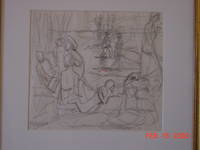
18901147C. 1890. Pencil sketch on tissue. 11 ½ x 12. D.V. See Mayenpon Charlotte Leon: Shadows and Light: Life friends and Opinions of Maurice Stern 1965. Framed. books
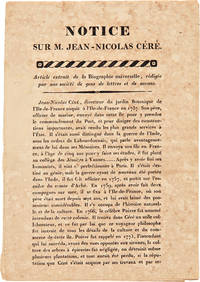
1814284151814. 8pp. Folded sheets. Moderately foxed and lightly worn. Biographical notice extracted from the Biographie Universelle Ancienne et Moderne ; Céré first appeared in volume seven of that work published 1813 after his death in1810. Jean-Nicolas Céré 1737-1810 was a French botanist born on the island of Mauritius. He rose to become the director of the Royal Botanical Garden on the island in 1775 a position he maintained until his death in 1810. He was instrumental in facilitating an exchange of plants between Mauritius the Indies and Europe and America specializing in spices grown in plantations on the island. Julien Coudray published a biographical notice of Céré on Mauritius in 1816; while a possibility we are unable to confirm that this is that imprint. Not recorded in OCLC. Rare.<br/> <br/>Toussaint A431 ref. unknown books
1814WRCAM48604Mauritius 1814. 8pp. Folded sheets. Moderately foxed and lightly worn. About very good. Biographical notice extracted from the BIOGRAPHIE UNIVERSELLE ANCIENNE ET MODERNE; Céré first appeared in volume seven of that work published 1813 after his death in 1810. Jean-Nicolas Céré 1737-1810 was a French botanist born on the island of Mauritius. He rose to become the director of the Royal Botanical Garden on the island in 1775 a position he maintained until his death in 1810. He was instrumental in facilitating an exchange of plants between Mauritius the Indies and Europe and America specializing in spices grown in plantations on the island. Julien Coudray published a biographical notice of Céré on Mauritius in 1816; while a possibility we are unable to confirm that this is that imprint. Not recorded in OCLC. Rare. TOUSSAINT A431 ref. unknown books
1835008067Paris: Baudry's European Library 1835. RARE six volumes bound in contemporary quarter calf over marbled boards marbled end papers silk markers. Collection of Ancient and Modern British Authors Vol. C. Very Good Plus prior owner name in Vol. II only marbled boards a bit rubbed. Interiors evenly browned in the text scattered light toning to margins. A clean and lovely set and RARE in contemporary binding. According to RBH last seen in this edition at auction in 1916. A heavy set please be advised added shipping charges will be requested for international orders. . Second Edition. Quarter Calf. Very Good Plus/No Jacket As Issued. 8vo - over 7¾" - 9¾" tall. Baudry's European Library Hardcover books
18395976Paris: Chez Aubert 1839-40. First edition. The great Parisian caricaturists of the mid-19th-century: Daumier Gavarni Grandville Travies and others represented with original lithographs illustrating short prose pieces by Alhoy Huart and Philipon. 27 cm; 3 volumes in two. 150 lithographs including 45 by Daumier among them 27 from "Croquis d'expression" and 42 by Gavarni. Half titles present. Plates not colored in. Bound in recent green crushed morocco over marbled boards ruled in gilt; spines titled in gilt. Marbled edges. Endleaves foxed; some scattered toning. Overall a clean copy. References: Ray #164 "one of the freshest and most attractive of romantic illustrated books"; Carteret III 426-27. Chez Aubert hardcover books
1898WRCLIT43088London: Macmillan & Co. 1898. Distinctive green cloth with overall decorative stamping in darker green lettered in gilt. Extremities a bit rubbed bookplate of collector Paul Lemperley and some relevant clippings inserted by him in back else a fine copy in a good example of the very scarce printed dust jacket see below. Half morocco slipcase a bit corner worn. First edition first issue of the author's fourth and best known book distinguished by the presence of the original printed dust jacket. The jacket is somewhat tanned and worn and was backed with tissue by Lemperly so it is somewhat rippled; there's a closed tear across the lower corner of the rear panel and a large diagonal chip at the toe of the spine affecting part of the price and a corner of the publisher's device. It is nonetheless not a jacket that is frequently seen. NCBEL IV:601. Macmillan & Co. hardcover books
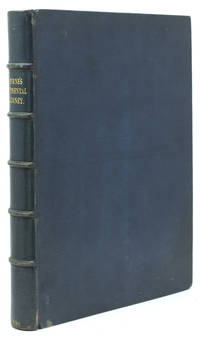
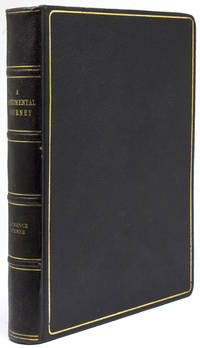
188554074London & New York: George Routledge and Sons Broadway Ludgate Hill 1885. Number 437 of 550 copies printed by H. Launtte Librairie Artistique Paris for George Routledge. With 12 full-page photogravure plates "by the Goupil process" and numerous sketches throughout the text by Maurice Leloir. 1 vols. 4to 12 1/2 x inches. Bound in full blue contemporary morocco gilt lettered spine gilt dentelles t.e.g. original chromolithographed wrappers bound in. About fine. Leloir Maurice. Number 437 of 550 copies printed by H. Launtte Librairie Artistique Paris for George Routledge. With 12 full-page photogravure plates "by the Goupil process" and numerous sketches throughout the text by Maurice Leloir. 1 vols. 4to 12 1/2 x inches. A Modern French Master Illustrator. Fine attractive copy of this beautifully illustrated book masterfully incorporating his drawings with the text in style of Johannot. Leloir 1853-1940 was one of the true professionals in the history of French illustration. Books with his designs appeared over five decades. Working by preference with stories laid in the seventeenth and eighteenth centuries he was at pains to make his costumes as accurate as possible. It was his celebrity in this field indeed which led Douglas Fairbanks to bring him to Hollywood as artistic director of The Iron Mask 1929. His illustrations are abundant precise and objective." -Ray French Illustrated Books.<br/><br/>As for A Sentimental Journey one of his masterpieces Ray observes that "every episode in Sterne's short text finds its appropriate visual commentary." Ray 292 French ed. George Routledge and Sons, Broadway, Ludgate Hill unknown books
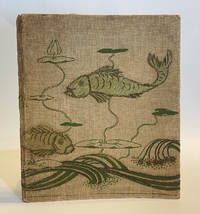
18983198Florence & Leipzig: Printed in Berlin by Otto Von Holten for: Verlag von Eugen Diederichs 1898. Autorisierte Ausgabe. Square 4to 210 x 170 mm. 105 pp. With stylized art-nouveau typography and large ornamental initials in red and black throughout. Vernacular binding of slightly later decorated burlap cloth patterned with lily pads; green cloth onlays depicting three fish their eyes made of sequins other sequins adorning seaweed fronds; green floral endpapers inner hinges cracked. Original printed wrappers bound in. Front joint worn crown chipped; early ownership inscription of "Lillie C. Schleiser" dated "Christmas Munich 1903" on front wrapper. Text evenly toned extremities with some chipping here and there on account of the paperstock. First edition of the first fully realized book design by Melchoir Lechter 1865-1937 a triumph of Jugendstil / art-nouveau typography which perfectly complements the mystical essays by the famed Belgian Symbolist Maurice Maeterlinck. The type used herein is now known as Lechter-Schrift after the name of its designer. According to Schauer this book defines the beginning of German book arts of the twentieth century and is justly considered "a great book in which everything is dark colorful and primeval." Upon publication it was widely praised as the most beautiful German book of the day O. Grautoff. Ordinary copies our bound in wrappers designed by Lechter. Our copy has both wrappers bound into a remarkable German vernacular binding of burlap cloth with cloth onlays of green fish adorned with sequins all adhered to art-nouveau patterned cloth of lily pads and fronds. The early ownership inscription reveals that the book was acquired by an English or American woman named Lillie C. Schleiser in Munich in 1903. Perhaps the present volume was bound there <br/><br/>As is stated in the colophon: "Cover design ornaments headings numbers initials and typography arrangement by Melchior Lechter under whose artistic direction this book was printed in the year 1898 by Otto Von Holten Berlin." "Bei seinem Erscheinen vielfältig als das schönste deutsche Buch gepriesen" O. Grautoff. Lechter is best known for his book design glass paintings drawings calendars catalogues ex-libris designs and posters. He also designed furniture carpets wallpaper and stained glass windows. <br/><br/>This is the trade edition of the first authorized German translation of "Le Trésor des Humbles" 1896 / "The Treasure of the Humble" 1897 containing an essay on Ralph Waldo Emerson not found in the English edition. It was created on the occasion of the 1898 Maeterlinck exhibition of the same name. As is well known Maeterlinck received the Nobel Prize for Literature in 1911. <br/><br/>References: Transfer und Modifikation: Mario Zanucchi Die französischen Symbolisten in der deutschsprachigen Lyrik der Moderne 1890-1923 Abb. 2. Grautoff p. 14. Raub A20 p. 67; Rodenberg 240; Schauer Vol. 2 12. [Printed in Berlin by Otto Von Holten for]: Verlag von Eugen Diederichs unknown books
190053064Paris: Publisher not identified 1900. First edition. 4to. 28 cm. x 19 cm 102 pp. portrait frontispiece with tissue guard illustrations in text 10 plates with tissue guards 1 of these in color. Original printed wrappers. Neat ownership signature of a member of the jury of classe 5 on the blank reverse of the half-title page. Fine as new. A history of photography and processes which includes two chapters by Léon Vidal - one is a history of photogravure and the other on color photography. Details several other photomechanical processes and their inventors. Illustrations include those by Robert Demachy and by Puyo. <br/><br/>There are several issues of this report three of which vary only in size; a fourth a later issue has a slightly different wording to the title and is dated 1903. Étienne-Jules Marey was the president of the committee.<br/><br/>Roosens and Salu No. 3704. <br/><br/> Publisher not identified unknown books
1892133160.1Glasgow: Blackie & Son Ltd 1892. Hardbound. Good ex-library with expected marks. in addition a perforation stamp has been used to mark the title page and pg 36. all plates are marked with a library ink stamp. Some wear to cloth at corners and spine ends. title page and half title are loose and chipped around edges. there is some spotting/soiling/darkening to the edges of the plate images. Black library buckram. ix 36 pp. Followed by 102 chromolithographs some heightened with gilt accompanied by 100 descriptive notices. Oversize. Published for subscribers this beautiful volume is a great practical manual on Victorian design with plates large enough to directly reproduce as stencils. Audsley's selection of Greek Renaissance mediaeval oriental and Gothic patterns and motifs definitely reflects the influence of Ruskin and the Arts and Crafts movement. Designs mostly for use as wall paper ceiling decor wall panels etc. typically found in large high-ceilinged rooms in Victorian buildings in the UK. Beautiful color plates. Blackie & Son, Ltd hardcover books
1892133160Glasgow: Blackie & Son Ltd 1892. Hardcover. Most plates and text pages VG to NF. Inner folio Good- separating at hinge; ex-library with bookplate and with writing on spine of wrapper; perforation stamps on title page pg 36 and all plate images at very bottom corners but not always very obvious. The library slipcase also has some wear at corners. A few minor finger smudges to first few text pages. Folio of blue boards with four flaps and gilt cover lettering. i-ix 10-36 pp. Followed by 102 chromolithographs some enhanced with gilt accompanied by 100 descriptive notices. Protected by additional blue cloth library slipcase. Oversize. Published for subscribers this beautiful volume is a great practical manual on Victorian design with plates large enough to directly reproduce as stencils. Audsley's selection of Greek Renaissance mediaeval oriental and Gothic patterns and motifs definitely reflects the influence of Ruskin and the Arts and Crafts movement. Stunning plates in beautiful colors. Blackie & Son, Ltd hardcover books
188414879New York: J.W. Bouton 1884. First American edition thus. With 12 full-page photogravure plates "by the Goupil process" and numerous sketches throughout the text by Maurice Leloir. 210pp. 1 vols. 4to. Full dark blue pebbled morocco gilt lettered spine original chromolithographed wrappers bound in. Very Good. Leloir Maurice. First American edition thus. With 12 full-page photogravure plates "by the Goupil process" and numerous sketches throughout the text by Maurice Leloir. 210pp. 1 vols. 4to. A Modern French Master Illustrator. Fine attractive copy of this beautifully illustrated book masterfully incorporating his drawings with the text in style of Johannot. Leloir 1853-1940 was one of the true professionals in the history of French illustration. Books with his designs appeared over five decades. Working by preference with stories set in the seventeenth and eighteenth centuries he was at pains to make his costumes as accurate as possible. It was his celebrity in this field indeed which led Douglas Fairbanks to bring him to Hollywood as artistic director of The Iron Mask 1929. His illustrations are abundant precise and objective . " -Ray French Illustrated Books.<br/><br/>As for A Sentimental Journey one of his masterpieces Ray observes that "every episode in Stern's short text finds its appropriate visual commentary . " Ray 292 French ed. J.W. Bouton unknown books
18011329521London: W. Richardson 1801. Hardcover. Octavo 334 pages; G; bound in contemporary marbled boards rebacked in brown cloth red label with gilt titling; moderate rubbing to boards; new endpapers with old endpapers preserved; front pastedown with bookplate ownership stamp signature of Millard Fillmore dated Nov. 6th 1858.; two folding plates plus folding frontispiece; SG consignment; shelved case 5. 1329521. Shelved Dupont Bookstore. W. Richardson hardcover books
18943355Paris: Imprimerie Generale Lahure for: Librairie de L. Conquet 1894. 12mo. Contemporary burgundy levant morocco gilt extra by H.E. Laskine: triple gilt fillet around sides enclosing a blue morocco inlaid frame turn-ins similarly gilt and inlaid silk moire pastedowns and endpapers the verso and the recto opposite of comb-marbled paper original hand-colored wrappers bound in top edges gilt others untrimmed. Text and wrappers inexplicably foxed throughout see images and priced accordingly; apart from extremely minor abrasions at head and tail the binding is superb state. PRINTED FOR THE ARTIST HIMSELF Maurice Leloir as stated in letterpress on the verso of the half-title on Japon paper with an extra suite of all the illustrations hors-texte bound in. <br/><br/>Charles Nodier 1783-1844 author insatiable book collector and long-serving librarian of the Bibliothèque de l'Arsenal was the progenitor of the kind of bibliophily practiced in France to the present day. He was also an unrivalled seller of books by auction. In 1838 he declared that God had made him rich enough five times to buy books and five times so poor that he had to sell them again. He sold his books for the first time in 1802 at the age of nineteen and sold reconstituted collections or parts of them at auction in 1809 1813 1817 1827 and 1829. In advance of forthcoming sales Nodier aroused a great deal of excitement by publishing his own literary and bibliographical investigations into the books to be offered in the form of "Mélanges" and "Nouveau Mélanges." It is a remarkable fact that Nodier wrote nearly all the descriptions that appeared in the posthumous sale catalogue of his library Techener 1844.<br/><br/>Nodier was in the forefront of those French collectors who had simple contemporary bindings on old books ripped off and replaced by modern more elaborate bindings; among his favored butchers were Koehler and Thouvenin. <br/><br/>Our copy does not contain any statement of limitation which was bound in ordinary copies; instead on the verso of the half-title the name of the special recipient is printed: "Exemplaire tire pour Monsieur Maurice Leloir." We have seen mention that the edition was limited to 150 numbered copies on Japon from a total edition of 500. The number of "named" hors-serie copies has not be determined but it must have been extremely small.<br/><br/>The binder H.E. Laskine clearly possessed a high degree of artistry and technical abilities; and yet very few bindings by him/her have been located: only three examples are listed in RBH's Rare Book Transactions database which currently holds more than 10 million records sic. Laskine remained unknown to Flety. [Imprimerie Generale Lahure for]: Librairie de L. Conquet unknown books
1895001393Paris: Librairie A. Rouquette 1895. First Limited Edition. Half Morocco. Near Fine. One of 100 copies issued on Japon paper with extra suite of illustrated plates on chine paper. 8vo 21 by 14 cm 41 pp not counting the extra suite. With superb vignette color illustrations by Morin depicting characters at a masque described by Vaucaire's witty verse. Many of the characters derive from the Commedia dell'Arte Pantalon Arlequin. The entirety of the production captures the spirit of the Belle Epoque or Fin de Siecle at least as we like to remember it. Complementing the work itself is the spine decoration of masked figures linked by a floreate vine. Some foxing on the chine extra suite leaves. The half morocco leather is sunned. Spine gilt decorations though remain vividly bright. <br/><br/> Librairie A. Rouquette unknown books
1890184Lithograph. c. 1890. As published for L'Estampe et L'Affiche. Printed on very thin tissue. Image: 5 x 7. Margins: 9 x 11¼. L'Estampe et L'Affiche. books
180137101London: for the author by H.L. Galabin 1801. Second separate edition 8vo pp. 4 17-460; folding copper-engraved frontispiece of Vishnu Brahma and Seva plus 5 other folding copper-plates; contemporary quarter calf over marbled boards; very good and sound. Without the 2-leaf Advertisement in the first separate edition of the previous year and with the pagination gone awry at 2E1. Essentially an offprint from the author's larger work Indian Antiquities 7 vols. 1793-1800 but "revised newly arranged and divided into chapters." DNB calls him "one of the first to popularise a knowledge of the history and religions of the east." <br/><br/> for the author by H.L. Galabin hardcover books
18984333London: John Lane The Bodley Head 1898. First edition. First edition. Finely bound by W. Root & Son in green calf inlaid design intricately tooled in gilt and red comprising four gilt leaf designs linked by geometric ruling and red circles onlayed along the ruled lines spine decoratively tooled with raised bands red morocco spine labels gilt-tooled inner dentelles; marbled endpapers all edges gilt; red cloth slipcase. A bit of light rubbing to slipcase; uniform sunning to spine; ownership signature and chop stamps to front pastedown; else near fine. With 1929 photograph of garden stylized "Pan"laid in. <br/><br/> John Lane, The Bodley Head hardcover books
189858430New York: Macmillan 1898. Edition de Luxe one of 500 sets. Printed at the Norwood Preass. 10 vols. 8vo. Original green cloth gilt spines t.e.g. rest uncut. Fine. Edition de Luxe one of 500 sets. Printed at the Norwood Preass. 10 vols. 8vo. Macmillan unknown books