Un Contemporain [Joly, Maurice]Biblio.com
2 001 résultats
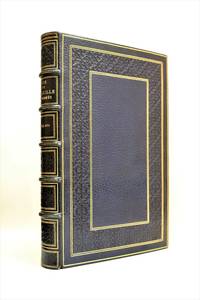
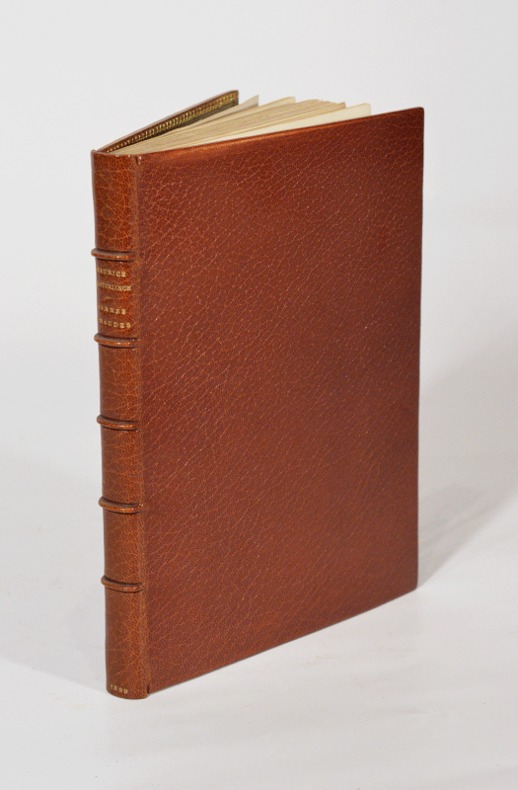
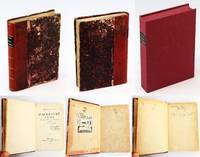
1864564j1976Bruxelles: Imprimerie de A. Mertens et Fils. Fair with No dust jacket as issued. 1864. First Edition. Hardcover. Is this book the plagiarized source of The Protocols of the Learned Elders of Zion "In his 1870 autobiography Maurice Joly 1829-1878 described how he conceived the idea of a dialogue between Montesquieu and Machiavelli. At that time it was forbidden to openly criticize the regime of Napoleon III but in this way it would be possible through the mouth of Machiavelli to expose the Emperor's motives and methods stripped of the usual camouflage. Thus this book was printed in Belgium and smuggled into France but was immediately seized by the police banned and Joly arrested. Thus few copies survive. Joly's reflections on the despotism of Napoleon III provide insights applicable to authoritarian regimes of today. Moreover something of Joly's insights even survived when his book was transformed into The Protocols of the Elders of Zion thus The Protocols often seem to forecast twentieth-century authoritarianism." - pages 73-76 of Warrant for Genocide by Norman Cohn in which he claims over 160 passages in the Protocols are clearly based on passages in Joly. "The Protocols of the Wise Men of Zion were first circulated in Russia in the early years of the twentieth century purportedly an account of a meeting between Jewish leaders in the fall of 1897. A horrible plot to undermine society overthrow governments and destroy Christianity is revealed. The 'minutes' are copied verbatim from A Dialogue in Hades Between Machiavelli and Montesquiou written by Maurice Joly. The 'Protocols' merely substituted the word 'Jew' for Joly's own devils." - Footnotes to pages 423-424 of Mein Kampf Reynal & Hitchcock 1939. Others argue that Joly's work was not the source of The Protocols. We leave it to the reader to decide. 4 i-iii iv 337 1 1 errata p. 18.0 x 12.4 cm. Text in French. Tight maroon quarter leather binding with new leather spine and leather title label. Wear to periphery of older marbled boards which are probably not original. Bookplate of Dr. J.A. Van Praag 1895-1969 inside front board. Van Praag was a lecturer at the University of Amsterdam when he acquired this book in 1931 and wrote his name atop the first blank leaf along with a comment about the purported connection of the book to The Protocols. He also wrote Joly's name on the title page. Pencil notes on pages 47 80 and 94. Evidence of moisture exposure to endpapers and more moderately to contents. Negligible if any waviness to contents. All text clearly legible with pages intact. Includes new custom acid-free clamshell with leather title label upon spine. A rare first edition example of this most contentious work. Provenance: Acquired from an Israeli dealer who purchased it at an Israeli auction which only sells books offered by Israelis. Our research indicates that at least some of Van Praag's books were looted by the Nazis in 1941. Apparently he retired in 1966 and attempted to rebuild his library. However after a fire in his widow's home in 1970 part of the library was destroyed or damaged and she sold the remaining books. We have no definitive way of knowing if this book was looted from Van Praag or if it was if he ever re-acquired it. Perhaps he did re-acquire it only to have it exposed to moisture per our description by firefighting efforts in his widow's home; 12mo . Imprimerie de A. Mertens et Fils hardcover
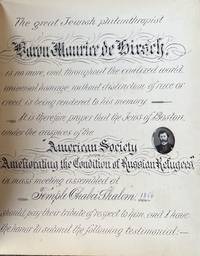
18962430Boston 1896. Manuscript book. In original black leather by Frank J. Barnard signed on the recto of the last leaf with clasp gilt title on front panel gilt edges gilt turn-ins. Pastedowns and flyleaves are covered with white moiré. Moiré detached from the flyleaves discolored at the rear. Some of the tracing paper leaves are creased few with closed tears. Stains to the gutter at the rear no effect on text. Binding slightly rubbed with three small barely visible holes. Overall in very good condition. Calligraphed manuscript in ink by H. C. Kendall signed on the verso of the first leaf. Each page written in different calligraphy style. Text in English. With a mounted portrait transferred on porcelain of Baron Hirsch on the second leaf. Calligraphed manuscript in ink by H. C. Kendall signed on the verso of the first leaf. Each page written in different calligraphy style. Text in English. With a mounted portrait transferred on porcelain of Baron Hirsch on the second leaf. Manuscript book. In original black leather by Frank J. Barnard signed on the recto of the last leaf with clasp gilt title on front panel gilt edges gilt turn-ins. Pastedowns and flyleaves are covered with white moiré. <p><br /> A memorial album commemorating the death of the greatest Jewish philanthropist of the nineteenth century Baron Maurice de Hirsch offered by the Jews of Boston to his widow and family.<br /> <p><p><br /> This delicate memorial album signed by twenty-two representatives of Jewish associations of Boston was prepared by the commission of the Boston Jews under the auspices of the American Committee here Society for Ameliorating the Condition of Russian Refugees an umbrella organization of various groups concerned with the welfare of the immigrants co-founded by the Hirsch Fund and was offered to the widow and the family of Baron de Hirsch. The album is a piece of very fine craftsmanship calligraphed by H. C. Kendall an "artist penman" and Principal of the Normal Writing Institute in Boston and bound by Frank J. Barnard the industry leader bookbinder in Massachusetts. The text consists of profound quotes about human greatness from William Dean Howells and Julia C. R. Dorr and the eulogy delivered at Temple Ohabei Shalom.<br /> <p><p><br /> Baron Maurice de Hirsch 1831-1896 was a German Jewish financier and philanthropist born into a wealthy landowner and banker family in Bavaria. In 1855 Hirsch married Clara Bischoffsheim daughter of a Belgian banker and became associated with his father-in-law's banking house. He amassed a large fortune and became one of the top five richest individuals in Europe at the time. Baron de Hirsch set up charitable foundations promoting Jewish education especially in Russia and after an unsuccessful offer of 50000000 francs to the Russian government to be used for purposes of Jewish education in 1891 he founded the Jewish Colonization Association the greatest charitable trust in the world to provide the funds for extensive Jewish immigration to Argentina. In the same year he established the Hirsch Fund to help the Russian Jewish immigrants in the States and provided the finances for agricultural colonies and trades schools in the US. Through his Galician Foundation he realized the establishment of primary and technical schools for Jewish pupils in Galicia and the Bukowina. "It is impossible to form an accurate estimate of the amount of money Baron de Hirsch devoted to benevolent purposes. That including the large legacy amounting to $45000000 left to the Jewish Colonization Association it exceeded $100000000 is an estimate justified by the amounts given by him from time to time to the foundations already referred to. There were besides many gifts to individuals of which there is no record." Jewish Encyclopedia Baron Maurice de Hirsch died suddenly presumably of a heart attack at the age of 64 on 21 April 1896 at the country house of a friend near his own recently purchased estate of Ógyalla in Hungary now part of Slovakia. His widow continued the Baron's charitable work. Clara died in Paris in 1899 and left the remaining family assets to her adopted son Maurice Arnold de Forest. <br /> <p>. unknown
189741462Sous étui bordé. Reliure plein maroquin cerise. Dos à nerfs orné de filets dorés et date dorée au talon. Quadruple filet doré en encadrement sur les plats. Toutes tranches dorées. Contreplats de soie bleue encadrés d'une bande de maroquin rouge ornée de filets dorés. Couverture et dos conservés. Reliure signée Ch. SEPETIER.Orné de 12 planches hors texte, 12 en-têtes et 12 culs-de-lampe reproduits en couleurs par H. Reymond d'après les aquarelles de J. LE BLANT. Couverture d'après une aquarelle de Giraldon.Avec une préface par George Duruy et un tableau historique des régiments français.
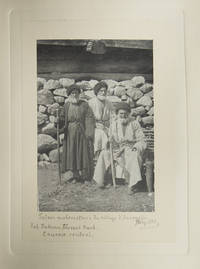
1898307181Caucasus mountains 1898. 38 vintage platinum print photographs printed circa 1900 mounted on card captioned in pencil and signed and dated beneath the image by the photographer. Sizes vary all approximately 7 x 5 inches. Generally fine images not faded heavy spotting to one mount slight warping to mounts. In a custom black half morocco slipcase and chemise. 38 vintage platinum print photographs printed circa 1900 mounted on card captioned in pencil and signed and dated beneath the image by the photographer. Sizes vary all approximately 7 x 5 inches. A fine group of ethnographic and mountaineering scenes from the Causasus Mountains by the Hungarian photographer and mountaineer Maurice de Déchy 1851-1917. A wide-ranging selection of views encompasing scenes from Chechnya Dagastan Georgia and the breadth of the Caucasus Mountains. Images include Mount Elbrus several views Mount Adyr Mount Chikhildi Mount Kasbek and numerous passes valleys glaciers and gorges; ethnographic scenes including Tatar Digor Karachai Daghestani and Khevsuri people and villages; mountaineering scenes including camping beneath Katchou pass with a note that the guide Maser of Tyrol died in 1900 and "en route pour la découverte du col Djiper 1885" with de Déchy identified as one of the mountaineers.<br/><br/>Douglas Freshfield in his classic Exploration of the Caucasus 1896 summarizes de Déchy's activities in the Caucasus: <br/><br/>". M. de Déchy a Hungarian gentleman took up the task of exploration. In 1884 1885 and 1886 he made three extensive journeys in the range. In 1884 . he climbed Elbruz and a fine peak near the Mamison Pass. In the course of his wanderings he made the first passage by travellers of several native glacier passes and collected a considerable amount of scientific information with regard to the glaciers and the snow region. He also took a very large number of most valuable photographs of the scenery and people thus making himself the pioneer in Caucasian photography. I am indebted to him for some of the most interesting illustrations in these volumes" Freshfield p. 19. <br/><br/>De Déchy returned to the Caucasus again in 1887 this time with Freshfield. Fourteen of De Déchy's photographs were reproduced in Freshfield's Exploration of the Caucasus including "Ice-Lake at Klukhor Pass" one of the images in the present group. He also contributed an entire chapter "The Sources of the Kuban" vol. II chapter XXI. <br/><br/>These beautifully printed platinum prints are in a fine state of preservation and exhibit the wide tonal range and delicate shading characteristic of the process. unknown books
18931704391893. DENIS Maurice. Le Voyage d'Urien. By André Gide. 110 pp. illustrated with 29 lithographs in 2 colors by Maurice Denis. 4to 200 x 192 mm. original wrappers in a new cloth folding box. Paris: Librairie de l'Art Indépendant 1893. A fine copy of one of the few Nabis illustrated books preserved in the original wrappers as issued and not rebound as is almost always the case. It is also free from the foxing that plagues many copies. It is interesting that Denis illustrated this book at the express invitation of Gide who had seen his drawings for Sagesse. One of 300 copies. The Artist and the Book No.76. Freches-Thory. The Nabis pp. 216 - 217. Cailler Maurice Denis: Catalogue Raisonné de l'Oeuvre Gravé et Lithographié Nos. 37 - 67. hardcover
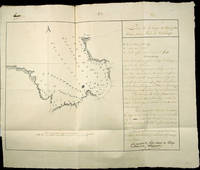
1803WRCAM40583N.p. but probably Tobago 1803. 68pp. plus two folding manuscript plans. Approximately 14500 words. Folio. Folded sheets stitched together. Stitching loose some sheets loosely laid in. Spine chipped. Titlepage lightly soiled some small chips and tears around the edges. Some light soiling and dampstaining to outer leaves else clean and bright. Written on the right half of each page with some additional notes or corrections on the left. Near fine. An important document in French detailing the functions of the island of Tobago written by Louis-Maurice Le Rat De Magnitot 1757-1823 colonial prefect of Tobago and Saint Domingue. Tobago changed hands many times during the 18th century and the island was briefly in French possession again in 1802-03 before being captured by the British in June of 1803. In this document Magnitot summarizes the situation of the newly reclaimed island. The first four sections of his MEMOIRE deal with military matters. In the first section "Troupes" he lists seventy-seven men garrisoned on Tobago noting that the garrison is a varied blend of men. He includes details on discipline causes of sickness and mortality among the men and uniforms. The second section "Artillerie" provides details of the number of guns and munitions at Tobago. The third section "Fortifications" includes two plans of Man of War Bay complete with soundings observations and important locations marked. This is followed by a section entitled "Marine" in which he details the condition of the ports and harbors. In the next four sections Magnitot gives details about the civil operations of the island: Laws Police Agriculture and Commerce. The section on the law is very detailed giving the organization of the courts civil and criminal. The section on police is perhaps the most interesting in which he gives not only information on keeping the public peace but on the public itself. Magnitot delineates in several separate points policing among the black populace the conduct of masters toward slaves and the condition of roads and the means of their maintenance. In the last of these points he gives numbers on both the European and colored populace. The "population blanche" numbers no more than 600 while the "population noire" at the time of the assessment numbers 17485. Breakdowns within each group are also given dividing rural from urban and free from slave. <br> <br> In the seventh section "Agriculture" Magnitot declares Tobago's agriculture to be flourishing. He lays out the reasons for that success before going into specific crop information detailing production of coffee cotton rum and sugar. The final section "Commerce" is the most extensive. It lays out details of Tobago's trade with France and reasons for variation on the flow of commerce as well as discussing the cost of national trade versus trade with other nations. Clearly the French administrators hoped Tobago would become a productive colony but Napoleon's entire American strategy collapsed in 1803 with the loss of Saint Domingue to the freed slaves the sale of Louisiana and the choking off of Caribbean commerce by the Royal Navy. <br> <br> First colonized by the Dutch in the early 17th century over the next two hundred years Tobago changed hands thirty-three times among the Spanish Dutch English and French all of them rival colonists. In 1763 Tobago was ceded to Britain captured by the French in 1781 and then recaptured by the British in 1793. In 1802 Trinidad was ceded to the British through the Treaty of Amiens and Tobago returned to the French. Britain re- captured it in 1803 when the peace broke and the Napoleonic Wars resumed. At the end of the Napoleonic Wars in 1814 Britain gained formal possession of Tobago with the Treaty of Paris. <br> <br> A fascinating and detailed document illuminating this last brief period of French rule on the island of Tobago a small part of Napoleon's strategy to build a French empire in America. unknown books
1804PHO-1187Paris, F. Buisson, 1804. 3 vol. in-8 de texte et 1 atlas de planches .Texte : I/ xv-[1]-408 pp. ; II/ [2] sq., 431 pp. ; III/ [2] sq., 473 pp. ; Atlas de 4 pp., 58 planches et cartes , relié demi basane époque (atlas reliure moderne) , coiffes usées, mouillure et quelques rousseurs dans l'atlas . Édition originale avec l'atlas complet des 58 cartes et planches dont 1 en couleur ,gravées en taille douce par Adam, Blondeau, Fortier, Dorgez, B. Tardieu d'après les dessins de l'auteur.
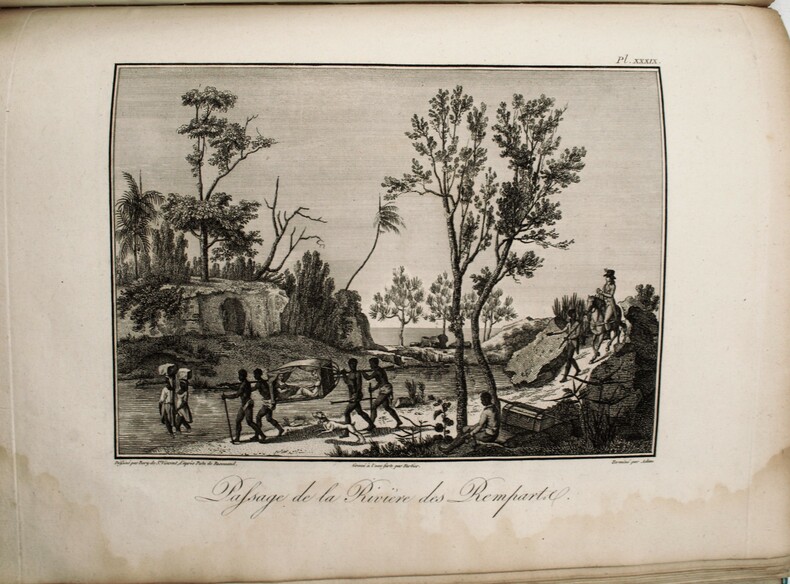
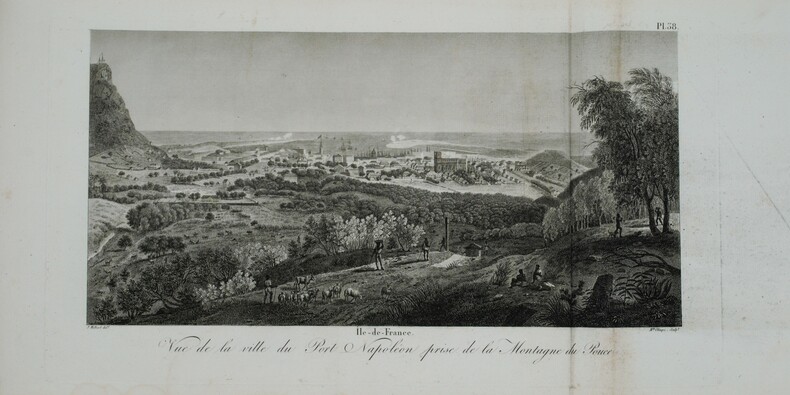
1812PHO-1228Paris, A. Nepveu, 1812. 2 volumes de texte in-8 (210x130), veau havane marbré, dos lisse orné, pièces de titre et de tomaison de maroquin rouge et tabac, roulette encadrant les plats, tranches mouchetées (reliure de l'époque) ,une coiffe usée, et un atlas in-folio oblong (420x280), demi-veau vert, dos lisse fileté or (reliure de l'époque) ,plats et dos frottés avec manques aux coins , début de fente . Première édition, illustrée de 3 tableaux dont 2 dépliants. L'atlas comprend 45 planches et cartes, dessinées et gravées la plupart par l'auteur ,certaines terminées par Coube, Hulk, Gossard ou Perdoux, (carte de l'île de France, vue de la ville du Port Napoléon, vue du Cap de Bonne-Espérance, etc.). L'ouvrage traite de l'histoire de l'île Maurice, de sa population et de son administration, de géologie et de sciences naturelles. Bon exemplaire. Mouillure très claire marginale à quelques planches, déchirure sans manque à la dernière avec réparation .
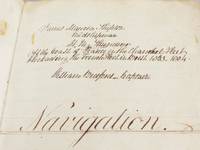
18030002561Good. 1803. On offer is a superb original 1803 - 1805 manuscript cypher and navigation book handwritten by a young midshipman James Maurice Shipton aboard the noted HMS Thunderer a ship forever in the history books as the ship that spotted the emerging Spanish fleet and thusly began the Battle of Trafalgar and the demise of Britain's enemies and sadly the hero of the day Lord Horatio Nelson. Notably Thunderer also took part in the Glorious 1st of June Battle against the French in 1794. James Maurice Shipton who would one day captain his own ship and reap accolades created this book while theThunderer worked blockade duty along the French coast. Mere months later the ship would engage in the Battle of Trafalgar and the decisive engagement by the British would end the rule of the French despot and dictator Napoleon Bonaparte. Included are a number of letters from archivists and historians providing background info on Shipton. The book is in wonderful condition the vellum save for some soiling is better than good and the interior as well. Overall G.; Manuscript; Folio - over 12" - 15" tall; KEYWORDS: HISTORY OF JAMES MAURICE SHIPTON HMS THUNDERER TRAFALGAR MIDSHIPMAN GEORGE III NAVIGATION CYPHER SAILING AGE OF SAIL CHANNEL SQUADRON BLOCKADE DUTY LORD HORATIO NELSON MARITIME MARINE NAUTICAL NAVAL OCEAN TRAVEL BARGE SCHOONER NAVAL ACTIONS THE ROYAL NAVY NAVAL MARINE NAUTICAL NAUTICAL LOGBOOK SPANISH FLEET CYPHERING CIPHER COMPLEX MATHEMATICS BRITISH ROYAL NAVY BRITANNICA EARLY 19TH CENTURY HANDWRITTEN MANUSCRIPT DOCUMENT LETTER AUTOGRAPH WRITER HAND WRITTEN DOCUMENTS SIGNED LETTERS MANUSCRIPTS HISTORICAL HOLOGRAPH WRITERS AUTOGRAPHS PERSONAL MEMOIR MEMORIAL AMERICANA ANTIQUITÉ CONTRAT VÉLIN DOCUMENT MANUSCRIT PAPIER ANTIKE BRIEF PERGAMENT DOKUMENT MANUSKRIPT PAPIER OGGETTO D'ANTIQUARIATO ATTO VELINA DOCUMENTO MANOSCRITTO CARTA ANTIGÜEDAD HECHO VITELA DOCUMENTO MANUSCRITO PAPEL . hardcover
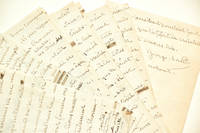
187275733Nohant Nohant-Vic 1872. Fine. Nohant Nohant-Vic 19 semptembre 1872 13.20 x 20.60 cm 20 pages 1/2 sur 21 feuillets Autograph manuscript signed by George Sand written in black ink on 21 leaves of white paper. Deletions and corrections. One page of the manuscript appears to have been lost. The final version of this chronicle whose text conforms to the manuscript we offer was published in Impressions et souvenirs Paris M. Lévy 1873. George Sand would devote another article to her son's novel in Questions d'art et de littérature in 1878. The first edition of Maurice Sand's Coq aux cheveux d'or was published by Lacroix and Verboeckhoven in 1867. unknown
190044822Paris E. Plon 1900 In-8, maroquin rouge, plats orns d'un trs large encadrement de filets dors avec, chaque angle, un motif pouss or comprenant un bton de marchal entre deux tiges de laurier et deux "P"; rappel du dcor sur le dos nerfs, filets or sur les coupes; encadrements intrieurs orns d'une roulette dore, doublures de maroquin vert bouteille encadres de filets or et recouvertes d'un semis rgulier de grandes toiles et de points dors, gardes de soie rouge, doubles gardes de papier peigne, tranches dores sur brochure, couverture imprime; Etui (Georges Mercier, succ. de son pre, 1920).Edition originale de cette remarquable tude sur la carrire militaire de Maximilien Sbastien Foy (1775-1825) depuis sa jeunesse et son entre l'cole de Chlons, sa blessure Waterloo en 1815 qui l'oblige cesser son activit, avec sa campagne de 1796 l'arme du Rhin, son refus de suivre Bonaparte en Egypte, ses campagnes en Italie, en Galice et au Portugal, sa mission Constantinople... L'ouvrage est illustr de 2 portraits reproduits en hliogravure, de 6 cartes et 3 fac-simils d'autographe. Un des trs rares exemplaires non numrots sur papier verg (seul tirage sur grand papier). Superbe exemplaire reli en 1920 par Georges Mercier, peut-tre pour le marchal Ptain l'poque glorieuse de l'aprs guerre 14-18, avec deux "P" et les symboles de marchal sur les plats, et le semis d'toiles sur les doublures.
189452496Paris Librairie Rouquette 1894 In-12, maroquin rouge, plats encadrs de sept filets dors; rappel du dcor sur le dos nerfs; encadrements intrieurs orns de filets pousss or, doublures et gardes de soie moire beige, tranches dores sur brochure, couverture imprime (Marius Michel).52 compositions in texte de Ed. Rudaux et Ch. Landre, graves l'eau-forte par A. Lamotte et Ed. Rudaux. Tirage limit 400 exemplaires numrots. Un des 20 premiers exemplaires sur papier du Japon, seuls comporter trois tats de toutes les gravures. Exemplaire enrichi de 6 ravissants dessins originaux signs par Ed. Rudaux, excuts pleine page et en couleurs. Dans cet ouvrage dlicieusement illustr, les contes sont entremls de souvenirs nostalgiques et gais, en particulier ceux relatifs la chasse, une grande passion de l'auteur. Superbe exemplaire. De la bibliothque Francis Kettaneh (ex-libris).
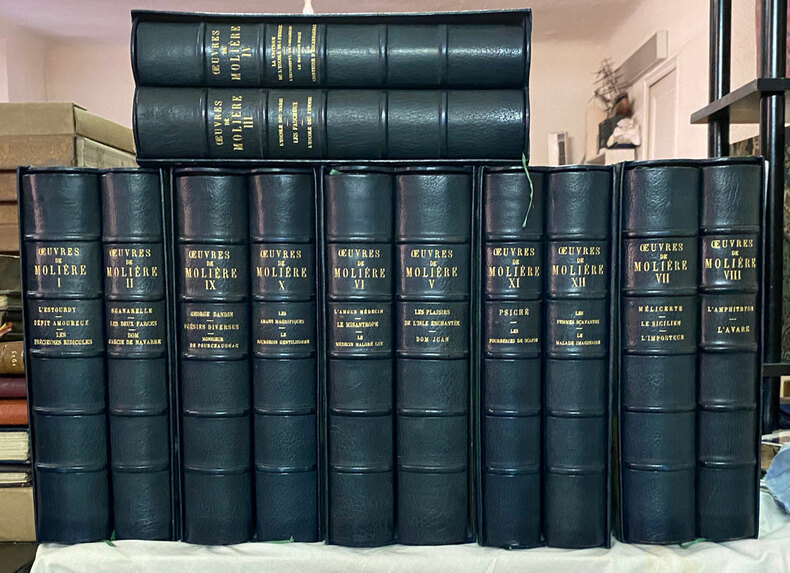
1882LIQ-6296P. Chez Jean Lemonnyer 1882-1896. 12 volumes in-4° plein maroquin bleu marine, dos à 5 nerfs, titres et têtes dorées, dentelles intérieures dorées, couvertures conservées, reliures signées de VAUTHRIN.
188671943Paris: H. Launette & Cie 1886. Fine. H. Launette & Cie Paris 1886 18.50 x 28.50 cm relié Illustrated edition with 10 etchings as well as about a hundred vignettes by Maurice Leloir one of 50 numbered copies on Japan paper. Full navy blue morocco binding spine with five raised bands set with gilt fillets decorated with triple gilt compartments embellished with floral motifs stamped in blind gilt roulettes on headcaps frames of quintuple gilt fillets on marbled paper boards boards also decorated with a floral frieze stamped in blind marbled endpapers and pastedowns frame of gilt dentelle on pastedowns double gilt fillets on leading edges covers and spine preserved all edges gilt superb binding signed Chambolle-Duru. Our copy contains a triple state of the etchings a separate suite of in-text vignettes on Japan paper having been bound at the end as well as an original wash drawing signed by Maurice Leloir as stipulated in the justification page. Very handsome copy expanded with an original drawing and perfectly executed by Chambolle-Duru. H. Launette & Cie hardcover
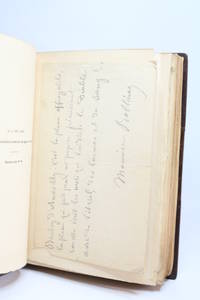
188372680Paris: G. Charpentier 1883. Fine. G. Charpentier Paris 1883 19 x 14 cm relié First edition one of 50 numbered copies on Holland paper the only deluxe copies after ten on Japan and a few on China. With frontispiece portrait of the author engraved by F. Desmoulin. Half brown morocco with corners smooth spine with mosaic heart-shaped havana morocco title and author labels covering a long floral spray in mosaic gilt with inlaid colored morocco petals and leaves head and foot enhanced with five small circles gilt and inlaid with havana morocco gilt fillet on covers marbled paper endpapers and pastedowns original wrappers preserved top edge gilt retaining deckled edges. Binding signed by Canape. Our copy is enhanced with an autograph quatrain mounted on a stub: ""Barbey d'Aurevilly: c'est la plume effroyable la plume qui fait peur au papier frémissant. Car elle écrit les mots que lui dicte le Diable avec du Vitriol des larmes et du sang!"" ""Barbey d'Aurevilly: it is the dreadful pen the pen that frightens the trembling paper. For it writes the words dictated by the Devil with Vitriol tears and blood!"". The note mirrors a remark by Barbey d'Aurevilly his friend who also called him a devil but a ""Devil of steel"". G. Charpentier unknown
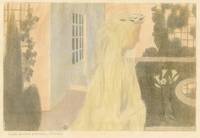
18952731<p>1895. Original lithograph printed in colors from the set AMOUR . P. Cailler 109. 15 1/4 x 11 margins 21 x 16. Deckled edge. In fine condition with full margins. signed in the plate. Prov:Candillier</p> Amboise Vollard
1819P4781Montreal: Canadian Pacific c.1918-1930. Very Good. Notes: The White Empress fleet were the Empress of Britain Empress of Asia Empress of Russia Empress of Canada Empress of Australia or the Empress of Japan.<br>Maurice Logan was a prominent commercial artist working out of Northern California. He was also a fine artist and in 1917 joined five other California painters to form the "Society of Six" a group of artists whose work was categorised first and foremost by bold colours. Logan designed one other poster for the Canadian Pacific but was primarily employed by the American Railway companies. Image Size : Platemark Size : Paper Size : 940x565 mm 37.01x22.24 Inches Coloring: Printed in Color Medium: Lithograph Categories: Posters; Transportation Ships; Canadian Pacific unknown
188922838London, Sampson Low, Marston, Searle and Rivington, 1889 ; Edinburgh and London Ballantyne Press ; "This Imperial 8° Edition de luxe, with Mounted Plates and Text Illustrations on India Paper", tirage limité à 100 exemplaires numérotés et signés de la main de Frédéric Alford. Plein maroquin vert sapin, dos rond à cinq nerfs, 2 pièces de titre et auteur renouvelés, filet doré d'encadrement des plats, double filet doré sur les coupes, dentelle dorée d'intérieur, tête dorée sur témoins, non rogné (reliure de l'époque). 26 planches hors-texte par Kemp et Moul lithographiées par Leighton Brothers, dont le frontispice, sont collées sur des feuilles de bristol montées sur onglets, parmi lesquelles 5 sont en couleurs : 3 aquarellées à la main et 2 en chromolithographie, toutes protégées par des serpentes en papier de soie ; 13 figures imprimées sur papier collé de chine dans le texte.
18890035411889 Paris, Vanier, 1889. In-8 (151 X 199 mm) maroquin havane, dos cinq nerfs, auteur et titre dorés, date en queue, coiffes et coupes filetées, bordure intérieure ornée de roulettes et filets dorés, plats et dos de la couverture conservés, tranches dorées sur témoins, étui (Huser); (1) f. blanc, frontispice, 97 pages, (1) f. d’achevé d’imprimer, (1) f. blanc. Infimes traces de frottements sur les plats.
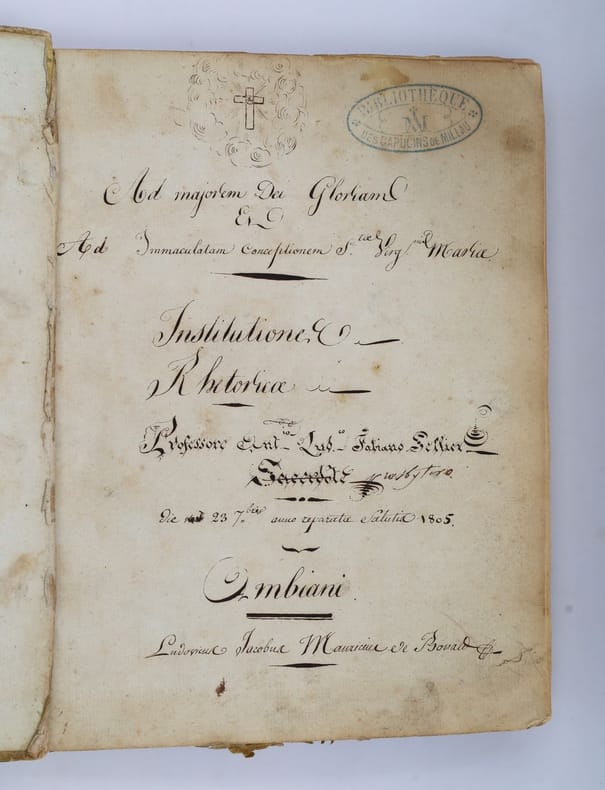
1805102924Ambiani [Amiens], Ludovicus Jacobus Mauritius de Bonald, 1805, in-8, 207-[2]-55 ff, Cartonnage de l'époque, Manuscrit en deux parties : la première ? en 207 feuillets et 2 feuillets de table ? comporte le Cours de rhétorique en latin et en français de Louis Sellier; la seconde, foliotée en chiffre romains (LV), contient une transcription en français du Discours de Ciréron pour Milon. Le jeune étudiant à l'origine de ce cahier, Louis Jacques Maurice de Bonald (1787-1870), originaire de Millau, deviendra une personnalité éminente à Lyon, dont il sera l'archevêque en 1839. Pour l'heure, il est en passe d'achever ses études classiques : né dans une famille ultraroyaliste, il est conduit chez les Pères de la Foi ? d'abord au sein du collège d'Amiens, puis à Montdidier ? par son parent, le prêtre réfractaire de Millau Louis de Sambucy. Il y suit le cours de rhétorique de Louis Sellier (1772-1854), émule de Joseph Varin avec qui il participe à la restauration de la Compagnie de Jésus. Les leçons du père Sellier débutent le 23 septembre 1805; Maurice de Bonald est alors à l'aube de ses 18 ans. L'élève a recopié ses notes sur des pages réglées au crayon, à l'encre noire, d'une écriture soignée et lisible. La page de titre calligraphique est illustrée en tête d'une croix lumineuse surgissant de nuées. Le cours se constitue d'une préface et de trois parties : I. De inventione; II. De dispositione; III. De Elocutione. À la fin se trouvent le Pro Milone, célèbre plaidoyer de Cicéron qui servit d'exercice d'éloquence à des générations d'étudiants. "Sous la conduite de maîtres aussi éclairés dans la science de Dieu que dans les sciences humaines, la semence divine fructifia abondamment dans l'âme du jeune Maurice de Bonald, si bien préparée à la recevoir. Sa vocation ecclésiastique fut le couronnement de cette éducation profondément chrétienne, commencée sur les genoux d'une pieuse mère, et achevée par les soins de vénérables professeurs, et sous la haute direction de son père" (Vie de S. Em. le Cardinal de Bonald p. 15). Les études religieuses de Maurice de Bonald sont en fait assez peu connues, contrairement à sa carrière ecclésiastique : dès qu'il quitte les Pères de la foi, il entre au séminaire de Saint-Sulpice; il est fait prêtre à la fin de l'année 1811. En 1823, il est nommé à l'Evêché du Puy tout juste rétabli, puis devient archevêque de Lyon en 1839. Cet ultramontain oeuvre avec ferveur à la rechristianisation de la capitale de la soie en fondant des dizaines d'églises, plusieurs instituts religieux et en remettant à l'honneur le culte marial. Bien qu'imprégné de l'héritage ultraroyaliste de sa famille, Maurice de Bonald adopta une attitude prudente, évitant toute opposition directe au pouvoir et s'abstenant de s'impliquer dans les affaires politiques. Le document que nous présentons ici apporte un éclairage précieux sur les jeunes années de cette figure religieuse parmi les plus marquantes du milieu du XIXe siècle. Cachet de la bibliothèque des Capucins de Millau. Papier de recouvrement des plats largement arraché, dos manquant, mais couture solide. Bon état intérieur. Vie de S. Em. le Cardinal de Bonald. Lyon, Briday, 1870. Couverture rigide
188671943H. Launette & Cie | Paris 1886 | 18.50 x 28.50 cm | relié
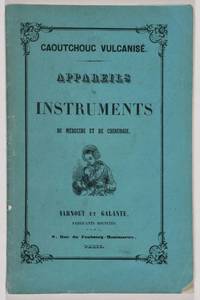
185253892Paris: Imprimerie Administrative de Paul Dupont/ Varnout et Galante 1852. First edition second printing. Softcover. g to vg. Small quarto. 49 1pp. Illustrated blue wrappers with black lettering on the covers. String-tied binding for the book block.<br /> <br /> A scarce illustrated catalog of early vulcanized rubber medical devices manufactured by the French company Varnout et Galante. Included here are more than 80 medical surgical and gynecological instruments designed under the supervision of physician and gynecologist Marie Maurice Gariel 1811-1878. The work includes numerous small engraved figures throughout illustrating various products. Each item is numbered for reference with a description some brief and some longer. The products include not only items related to reproductive medicine and women's health such as breast-feeding instruments vaginal douches tampons urethral probes and urinals for incontinence but also more general medical equipment such as crutches braces bandages protective gloves mattress pads for medical beds restraints compression belts and inflatable cushions. <br /> <br /> This publication is notable and intriguing in that it was produced at a time when both the modern medical field of gynecology was in it's infancy and the revolutionary process of vulcanizing rubber was a newly established industry. Only eight years earlier in 1844 American chemist and engineer Charles Goodyear had patented the groundbreaking process for manufacturing this material on an industrial scale and its wide range of potential uses was just starting to be discovered. The introductory pages extoll the virtues of the new technology of vulcanized rubber and include tables comparing vulcanize to un-vulcanized rubber under various metrics. Table of contents at the rear.<br /> <br /> Text in French.<br /> <br /> Wrappers with minor rubbing to extremities and small chips to the bottom right corners of the front cover and at a few points on the spine. Light foxing at the bottom of the back cover. Interior with a very few tiny sporadic stains but otherwise very clean. Wrappers in good interior in very good condition overall. Scarce. Protected in modern mylar. Full title: Catalogue des Appareils et Instruments de Médecine et de Chirurgie en Caoutchouc Vulcanisé Fabriqués sous la Direction Immédiate de M. Le Doctuer Gariel Par Varnout et Galante<br /> <br /> This second printing is the same in every way to the first printing of the previous year save that the printed year at the bottom of the title page has been adjusted to 1852 instead of 1851.<br /> <br /> Marie Maurice Gariel 1811-1878 was a French physician and gynecologist. He was a member of the Société anatomique de Paris Anatomical Society of Paris and a notable figure in the focus of reproductive medicine and women's health at a time when the field of gynecology was in its early stages. His son was noted French physician and medical engineer Charles-Marie Gariel 1841-1924. Imprimerie Administrative de Paul Dupont/ Varnout et Galante unknown
1857462459Trenton: Printed at the Office of the True American 1857. Hardcover. Very Good. First edition. Octavo. 211pp. 11 plates plus large folding map in color. Brown cloth stamped in blind and gilt. Library of Congress duplicate stamp bottom of the front board and corners bumped very slight loss at the spine ends small tears and faint stain in the margins of the map with a minor archival repair on the verso overall very good or better. Inscribed by the author George H. Cook to Spencer F. Baird of the Smithsonian who is acknowledged on p.11 for his survey of fishes in the area: "Prof. Spencer F. Baird with the respects of Geo. H. Cook." Baird's small ownership stamp on the titlepage. Baird's comprehensive geological and natural history survey of the County with Beesley's informative and relatively early historical sketch including early mentions of sea bathing at the County resorts. A noteworthy association copy the map by Egbert L. Viele is highly prized in its own right. Printed at the Office of the True American hardcover
18982730<p>1898. Original lithograph printed in colors from the set AMOUR. P. Cailler 118. 11 x 16 margins: 16 x 21 Deckled edge. SIGNED IN PENCIL LOWER RIGHT. In fine condition with full margins.</p> Ambroise Vollard
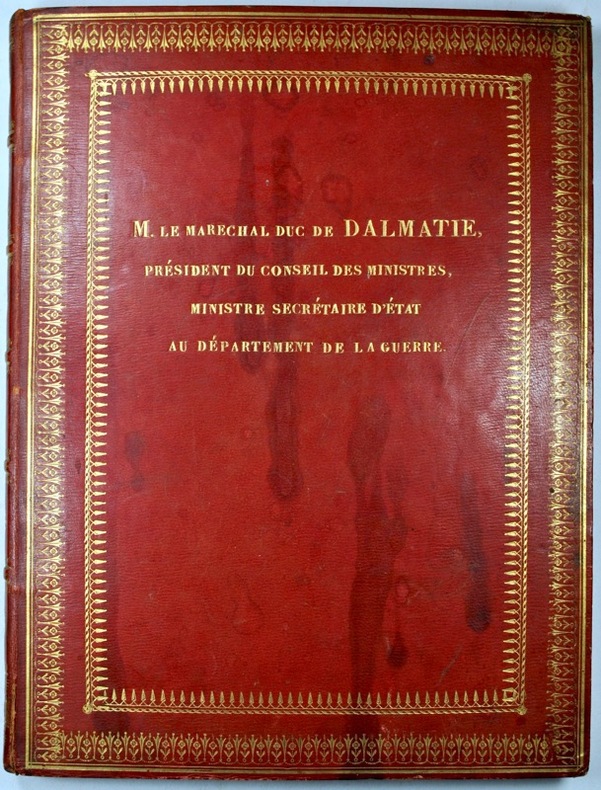
183241019Paris, Imprimerie royale, 1832. 2 parties en 1 vol. in-4 de (2)-III-87-(84) pp., maroquin rouge à grains longs, dos orné à nerfs, frises, filets et roulettes dorées en encadrement sur les plats, inscription dorée sur le plat supérieur, tranches dorées, gardes de tabis bleu (reliure de l'époque).