(Maurice BLANCHOT)Biblio.com
29 645 résultats
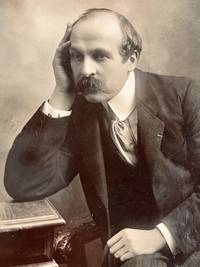
193471944Elbeuf: S. n. 1934. Fine. S. n. Elbeuf S.d 1900 5.50 x 8 cm une feuille Original photograph of Maurice Blanchot. Vintage silver gelatin print. ""Blanchot long defied photographers and caricaturists of the literary press. Minimalist and extremely rare over so many years are the illustration sketches: in 1962 in L'Express a hand brandishes a book against a page background; in 1979 in Libération a blank square in the middle of the page bearing as sole caption the name of Maurice Blanchot and a quote from L'Entretien infini ""un vide d'univers: rien qui fut visible rien qui fut invisible"" ""a void of universe: nothing that was visible nothing that was invisible"""" C. Bident Maurice Blanchot. In 1986 on the occasion of an exhibition of writers' portraits he requests that his photo be replaced by a text manifesting his desire to ""apparaître le moins possible non pas pour exalter ses livres mais pour éviter la présence d'un auteur qui prétendrait à une existence propre"" ""appear as little as possible not to exalt his books but to avoid the presence of an author who would claim a proper existence"". A photo taken without his knowledge by a paparazzo in a supermarket parking lot would long serve as a portrait of the writer before his friend Emmanuel Lévinas revealed some rare portraits from their youth. That Maurice Blanchot did not oppose this disclosure that it was done by his closest friend could be explained by what Bident calls ""l'espacement de l'inquiétude"" ""the spacing of unrest"" the untimeliness of the revealed portraits echoing the delayed publications of L'Idylle Le Dernier Mot L'Arrêt de mort. Only a few photographs gathered in the central pages of the issue of Cahiers de l'Herne devoted to Maurice Blanchot complete these unique shots of the most secret writer of the 20th century. In his chapter ""L'indisposition du secret"" ""The Indisposition of the Secret"" Christophe Bident devotes several pages to the almost total absence of images of this partenaire invisible invisible partner questioning the intellectual and psychological motivations of the writer conscious nevertheless of the inevitable revelation to come ""Tout doit devenir public. Le secret doit être brisé. L'obscur doit entrer dans le jour et se faire jour. Ce qui ne peut se dire doit pourtant s'entendre. Quidquid latet apparebit tout ce qui est caché c'est cela qui doit apparaître ."" ""Everything must become public. The secret must be broken. The obscure must enter the day and make itself day. What cannot be said must nevertheless be heard. Quidquid latet apparebit everything that is hidden that is what must appear."" Maurice Blanchot L'Espace littéraire Provenance: Family archives. S. n. unknown
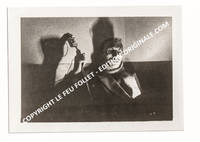
1907579131907. Fine. ca.1907-2003 30 x 32 cm Maurice BLANCHOT Extraordinary collection of Maurice Blanchot's original photographs taken in the family setting the only printings C. 1907-2003 272 photographs various format Blanchot challenged photographers and caricaturists of the literary press for a long-time. His 'portraits' over so many years are minimalist and rare: in 1962 in L'Express a hand holds up a book at the bottom of the page; in 1979 in Libération a blank square is in the middle of the page with only Maurice Blanchot's name and a quote from the Entretien infini as a caption: an empty universe: nothing that was visible nothing that was invisible' C. Bident Maurice Blanchot. In 1986 at the time of an exhibition of writers' portraits he requested that his photo be replaced by a text showing his desire to appear as little as possible not to glorify his books but to avoid the presence of an author who was entitled to an independent existence. A photo taken without him knowing by a paparazzi in a supermarket carpark was used as the writer's portrait for a long time before his friend Emmanuel Levinas revealed a few rare photographs of their youth. The fact that Maurice Blanchot did not oppose this release and the fact that this was his closest friend's deed could be explained by what Bident calls the spacing of worry as the revealed portraits were not up-to-date similar to the postponed publications of his books L'Idylle Le Dernier Mot L'Arrêt de mort. Only a few photographs gathered on the central pages of the Cahiers de l'Herne issue dedicated to Maurice Blanchot and published in 2014 supplement these unique shots of the 20th-century's most secret writer. In his chapter The indisposition of the secret Christophe Bident devotes several pages to the almost total absence of images of this invisible partner questioning the intellectual and psychological motivation of the writer who was aware of the inevitable future revelation of his appearance: Everything must become public. The secret must be told. The darkness must emerge. That which cannot be said must however be heard. Quidquid latet apparebit all that is hidden is that which must appear. Maurice Blanchot L'Espace littéraire In general Maurice Blanchot refused to be photographed even in private life as confirmed by the family of his sister-in-law Anna who revealed in a letter to her nephew that she had not taken any photographs of the writer thus respecting his wishes. However the photographs taken with his close family show us a perfectly willing Blanchot and one even playing very elegantly with the image of himself that he projects to the photographer generally his brother. As such we discover an elegant man posing proudly on a boat pontoon or on the banks of the Seine or more mysteriously playing with lighting effects in the corner of an empty room. Here we see a real photographic staging and a symbolic reappropriation of image particularly in a surprising seated portrait of the writer holding the Inconnue de la Seine death mask in his arms the well-known plaster head of a young woman supposedly drowned who adorned artists' studios after 1900. A true romantic legend this sculpture with a mysterious post-mortem smile is at the heart of Aragon's novel Aurélien and haunts the work of artists at the beginning of the century including Rainer Maria Rilke Vladimir Nabokov Claire Goll Jules Supervielle Louis-Ferdinand Céline Giacometti and Man Ray who produced a worrying photographic portrait of the mask at Aragon's request. Maurice Blanchot described the unknown woman as an adolescent girl with her eyes closed but full of life with a smile so slender so rich . that we could believe that she was drowned in a moment of extreme happiness. This photograph of an impervious Blanchot cradling the white mask of the Mona Lisa of suicide asserts itself as a true deconstruction of representation. It becomes an ill unknown
190052955Elbeuf: A. MARTIN 1900. Fine. A. MARTIN Elbeuf S.d Circa 1900 10.50 x 16.50 cm une feuille Original photograph of Maurice Blanchot at about one year old seated on a pedestal surrounded by his brothers and sisters. Original photograph of Maurice Blanchot at about one year old seated on a pedestal surrounded by his brothers and sisters. Contemporary silver print. Blanchot eluded the photographers and caricaturists of the literary press for a long time. Attempts at producing an image were both rare and minimalist throughout the years. In 1962 in Express a hand holds up a book at the bottom of the page; in 1979 in Libération a blank square in the middle of the page captioned only with Blanchots name and a quotation from lEntretien infini ""a vacuum of a universe: nothing that is visible nothing that is invisible C. Bident Maurice Blanchot. In 1986 at an exhibition of writers portraits he asked that his photo be replaced with a text noting his desire to appear as little as possible not for the exaltation of his books but to avoid the presence of an author who pretends to a separate existence. A photo taken without his knowledge in the parking lot of a supermarket was the only portrait of the writer until his friend Emmanuel Lévinas made public a few rare photos from their youth. That Blanchot did not oppose this act and the fact that it was done by his closest friend can be explained by what Bident calls l'espacement de l'inquiétude the distancing of worry the outdated nature of the portraits made public carry an echo of the delayed publication of L'Idylle Le Dernier Mot L'Arrêt de mort. Only a few photographs gathered in the centre pages of the issue of les Cahiers de l'Herne dedicated Maurice Blanchot complement these unique shots of the most secretive writer of the 20 th century. In his chapter on L'indisposition du secret The indisposition of the secret Christophe Bident devotes several pages to the almost complete absence of images of this invisible partner wondering about the intellectual and psychological motivations of the writer who was nonetheless aware of the inevitable revelation to come. Everything must become public. The secret must be broken. The obscure must enter into the day and make itself clear. That which cannot be said must nonetheless make itself heard. Quidquid latet apparebit everything that is hidden must appear Maurice Blanchot L'Espace littéraire. A. MARTIN unknown
193452957Elbeuf: S. n. 1934. Fine. S. n. Elbeuf S.d 1900 5.50 x 8 cm une feuille Original photograph of Maurice Blanchot standing against a wall. Vintage silver gelatin print. « Blanchot long defied photographers and caricaturists of the literary press. Minimalist and extremely rare over so many years are the illustrative sketches: in 1962 in L'Express a hand brandishing a book against a page background; in 1979 in Libération a blank square in the middle of the page bearing only the name Maurice Blanchot as caption and a quotation from L'Entretien infini ""un vide d'univers: rien qui fut visible rien qui fut invisible"" ""a void of universe: nothing that was visible nothing that was invisible"" » C. Bident Maurice Blanchot. In 1986 on the occasion of an exhibition of writers' portraits he requested that his photo be replaced by a text manifesting his desire to « apparaître le moins possible non pas pour exalter ses livres mais pour éviter la présence d'un auteur qui prétendrait à une existence propre » ""appear as little as possible not to exalt his books but to avoid the presence of an author who would claim a proper existence"". A photo taken without his knowledge by a paparazzo in a supermarket parking lot would long serve as the writer's portrait before his friend Emmanuel Levinas revealed a few rare portraits from their youth. That Maurice Blanchot did not oppose this disclosure that it was the work of his closest friend could be explained by what Bident calls « l'espacement de l'inquiétude » ""the spacing of unease"" the outdatedness of the disclosed portraits echoing the delayed publications of L'Idylle Le Dernier Mot L'Arrêt de mort. Only a few photographs gathered in the central pages of the issue of Cahiers de l'Herne devoted to Maurice Blanchot complete these unique shots of the most secret writer of the 20th century. In his chapter « L'indisposition du secret » ""The Indisposition of the Secret"" Christophe Bident devotes several pages to the almost total absence of images of this partenaire invisible invisible partner questioning the intellectual and psychological motivations of the writer who was nevertheless conscious of the inevitable revelation to come « Tout doit devenir public. Le secret doit être brisé. L'obscur doit entrer dans le jour et se faire jour. Ce qui ne peut se dire doit pourtant s' entendre. Quidquid latet apparebit tout ce qui est caché c'est cela qui doit apparaître . » ""Everything must become public. The secret must be broken. The obscure must enter the day and make itself day. What cannot be said must nevertheless be heard. Quidquid latet apparebit everything that is hidden that is what must appear ."" Maurice Blanchot L'Espace littéraire S. n. unknown
190052956Elbeuf 1900. Fine. Elbeuf S.d Circa 1900 10.50 x 16.50 cm une feuille Original photograph of Maurice Blanchot seated at his desk before his library Original photograph of Maurice Blanchot smiling at his desk before his library. Contemporary silver print. Blanchot eluded the photographers and caricaturists of the literary press for a long time. Attempts at producing an image were both rare and minimalist throughout the years. In 1962 in Express a hand holds up a book at the bottom of the page; in 1979 in Libération a blank square in the middle of the page captioned only with Blanchots name and a quotation from lEntretien infini ""a vacuum of a universe: nothing that is visible nothing that is invisible C. Bident Maurice Blanchot. In 1986 at an exhibition of writers portraits he asked that his photo be replaced with a text noting his desire to appear as little as possible not for the exaltation of his books but to avoid the presence of an author who pretends to a separate existence. A photo taken without his knowledge in the parking lot of a supermarket was the only portrait of the writer until his friend Emmanuel Lévinas made public a few rare photos from their youth. That Blanchot did not oppose this act and the fact that it was done by his closest friend can be explained by what Bident calls l'espacement de l'inquiétude the distancing of worry the outdated nature of the portraits made public carry an echo of the delayed publication of L'Idylle Le Dernier Mot L'Arrêt de mort. Only a few photographs gathered in the centre pages of the issue of les Cahiers de l'Herne dedicated Maurice Blanchot complement these unique shots of the most secretive writer of the 20 th century. In his chapter on L'indisposition du secret The indisposition of the secret Christophe Bident devotes several pages to the almost complete absence of images of this invisible partner wondering about the intellectual and psychological motivations of the writer who was nonetheless aware of the inevitable revelation to come. Everything must become public. The secret must be broken. The obscure must enter into the day and make itself clear. That which cannot be said must nonetheless make itself heard. Quidquid latet apparebit everything that is hidden must appear Maurice Blanchot L'Espace littéraire. unknown
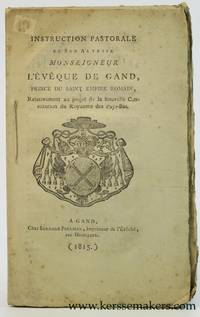
181541685Gand Gent: Chez Bernard Poelman 1815. 8vo 22x145 cm. Pamphlet sewn no wrappers uncut. 43i: blankpp. Title and margins sl. dust-soiled. With coats of arms of the archbishop on title. - Text in French and printed opposite in Dutch Chez Bernard Poelman unknown
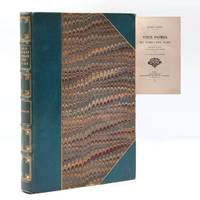
19109058Paris: H. Champion 1910. Fine. H. Champion Paris 1910 13 x 20.50 cm relié Second edition. Half shagreen binding in aubergine smooth spine slightly faded decorated with gilt typographical motifs original wrappers preserved top edge gilt. As frontispiece a portrait of M. de Guérin engraved on wood by J. Bertrand work illustrated with 5 engravings and facsimiles. Handsome copy attractively bound. H. Champion unknown
190076660Paris: Henri Manuel 1900. Fine. Henri Manuel Paris 1900 11 x 14.90 cm une photographie Rare original silver gelatin photograph. Among the known portraits of the writer particularly those by Henri Manuel we have found no trace of this one. The date is naturally approximate in the absence of more precise data. On the verso stamp: ""La mention Photo Henri Manuel est obligatoire"" ""The mention Photo Henri Manuel is obligatory"". Second stamp with number 761. In grey pencil manuscript: Maurice Leblanc. Thin scratches above the arm resting on the elbow. Superb condition. Henri Manuel unknown
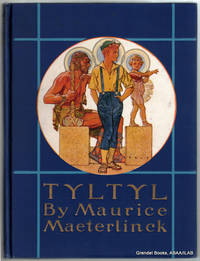
1920104827<p>NY:: Dodd Mead and Company. Very Good. 1920. Hardcover. Illustrated with eight tipped-in color plates all in excellent condition by Herbert Paus. First edition. INSCRIBED by Maurice Maeterlinck in French to a previous owner in 1938. Also a two page handwritten letter from Maeterlinck also in French in it's original envelope laid in. Very good or better in blue cloth with gilt lettering and a color illustration on front board. No dust jacket.; 159 pages .</p> Dodd, Mead and Company, hardcover
199283143Cambridge:: Candlewick Press. Fine in Fine dust jacket. 1992. Hardcover. 1564020460 . First printing. SIGNED by Maurice Sendak on the half-title page. Fine in a fine dust jacket.; 160 pages; Signed by Illustrator . Candlewick Press, hardcover
195294889NY:: Harper & Brothers. Very Good in Very Good dust jacket. 1952. Hardcover. B000CQ3356 . Illustrated by Maurice Sendak. Stated first edition. Previous owner's Cecelia Eareckson book-plate on front paste-down else very good in a very good faded along the spine tiny chip at the base of the spine dust jacket. ; 151 pages . Harper & Brothers, hardcover
1966108516<p>NY:: Harper & Row. Very Good in Very Good dust jacket. 1966. Hardcover. Newbery Honor Book. Translated from the Yiddish by the author and Elizabeth Shub. A later printing. INSCRIBED by Maurice Sendak to a previous owner in 1978. Foxing to cloth covered boards else very good in a very good dust jacket. ; 90 pages; Signed by Illustrator .</p> Harper & Row, hardcover
200279107Woodbridge: Antique Collectors Club 2002. Hardcover. Very Good Condition/Very Good. Size: folio. Quantity Available: 1. Shipped Weight: Under 1 kilo. Category: Antiquarian & Rare; Art & Design. Inventory No: 79107. . Antique Collectors Club hardcover
195272637Vincent Stuart 1952. First Edition. Hardcover. Very Good Condition/No Dust Jacket. Discusses consciousness the perception of reality the nature of eternity the recurrence of life and the psychological systems we use to think about time. Previous owners book plate laid in. A few pages with indentations Size: Octavo standard book size. Quantity Available: 1. Shipped Weight: Under 1 kilo. Category: Philosophy; Inventory No: 72637. . Vincent Stuart hardcover
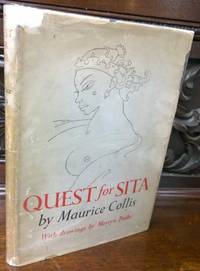
194642889London: Faber 1946. First Edition. Hardcover Original Cloth. Good Condition/Fair. Blue buckram binding with dust wrapper. Dust wrapper in protective film but with some tears and a missing area. The author retells this ancient story with an art of narrative which though perfected in the West is beautifully adapted to its Eastern theme. With beautiful illustrations by Mervyn Peake on hand made paper. Size: Quarto. Quantity Available: 1. Shipped Weight: 1-2 kilos. Category: Literature & Literary; Britain/UK; 1940s; Inventory No: 42889. . Faber hardcover
15240SIN LUGAR: Sin imprenta. 8º.- Media piel.- 25 litografías a todo color. Descripción de las litografías: 1. Eux Bonnes Hombre 2. Grip 3. Pau 4. Chasseur d'Izard 5. Environs de Barreges 6. Eaux Bonnes Mujer 7. Bagnéres de Luchon 8. Valle d'Aspe 9. Pau Ancien 10. St. Sauveur 11. Eaux Chaudes 12. Eaux Bonnes Mujer 13. Laruns 14. Eaux Bonnes Hombre 15. Eaux Bonnes Mujer 16. Eaux Bonnes Mujer 17. Pátre des Pyrénées 18. Grisette de Tarbes 19. Femme de Barreges 20. Prés Gavarny 21. Eaux Bonnes Mujer 22. Pau 23. Eaux Bonnes Mujer 24. Lac Garbe 25. Environs de Cauterets. Colas 20 15 reseña otra obra del mismo autor sobre los Pirineos pero con 12 litografías. Al inicio de la obra lleva una hoja de respecto blanca con un manuscrito fechado en Febrero de 1868. Colas 20 15 Sin imprenta unknown
1971611355No place: Twentieth Century Fox 1971. Unbound. Very Good. Original promotional film poster. Measuring approximately 27" x 40". Folded presumably as issued light wear along the creases remnants of scotch tape on the top and bottom edges and rubbing very good. A poster promoting a 1971 double feature re-release of the first two Planet of the Apes films. Twentieth Century Fox unknown
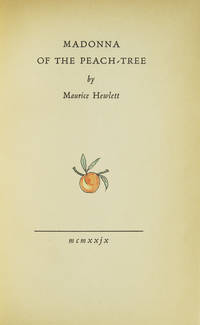
192926978Verona: Officina Bodoni 1929. Private edition of 120 copies on Imperial Japanese paper for John Holyrod-Reece. This Copy Printed for Marthe Hyde. 1 vols. 12mo. Orange cloth. Some wear and with loss of peach on front cover. Private edition of 120 copies on Imperial Japanese paper for John Holyrod-Reece. This Copy Printed for Marthe Hyde. 1 vols. 12mo. Officina Bodoni unknown
196313686Paris: Seghers 1963. Fine. Seghers Paris 1963 13.50 x 16 cm broché First edition of which there were no deluxe copies. Autograph inscription signed by the author to Jacques Perrey. A small stain of no consequence on the endpaper a trace of folding on the back cover. Iconography from the 'Cinéma d'aujourd'hui' collection. Seghers unknown
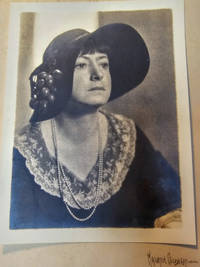
19300224021930s-1940s. Photograph. The Parker photograph without the original thick paper cover. Fine. Three formal original photograph portraits 7-1/2" x 9-3/4" tipped to an 11" x 14" mat SIGNED in pencil by the photographer Maurice Goldberg 18811949 of Dorothy Parker Alan Campbell and both Parker and Campbell together. <br/><br/>Parker and Campbell produced over 20 scripts made into movies most famously the script of the Oscar-winning A STAR IS BORN. The couple was married from 1933 to 1947 and again from 1950 until 1963 when Campbell died of an apparent suicide. unknown
192535978Paris: Société d'Éditions Géographiques Maritimes er Coloniales 1925. Illustrated with 16 headpieces by Jean Kerhor numerous plates from early engravings. 188 4 pp. 1 vols. 8vo. Three quarter turquoise morocco spine gilt preserving original wrappers. Bookplates. Fine. Kerhor Jean. Illustrated with 16 headpieces by Jean Kerhor numerous plates from early engravings. 188 4 pp. 1 vols. 8vo. Attractively bound copy of this miscellany of articles on French overseas expansion during the seventeenth and eighttenth centuries. Subjects include the pirate colony of New Normandie in the Caribbean; the pirate Dulaien; the exploration of the Marquesas; the last of the Natchez Indians in Louisiana; a French embassy to the court of the Moghuls; a French adviser to the Emperor of Siam; the Jesuits at the Cape of Good Hope; the colonial ideas of Louis XIV; a naval raid on the coast of West Africa; and several others. Société d'Éditions Géographiques, Maritimes er Coloniales unknown
196022777Boston and Cambridge: Published by Museum of Fine Arts and Harvard University Press 1960. Fine facsimiles in black and white and color of the sketches and paintings in the sketchbook. 1 vols. Sm. 4to. Original cloth-backed black boards. Some light soiling else a very good copy. Fine facsimiles in black and white and color of the sketches and paintings in the sketchbook. 1 vols. Sm. 4to. Accompanied by the wrappered pamphlet containing "A Critical Note by Peter A. Wick "concerning the sketchbook. The sketches are mostly of Boston and the area drawn about 1895-8 when he was between his Paris and Venetial trips. The sketchbook was the gift to the Boston Museum by Mrs. Charles Prendergast wife of his brother. Published by Museum of Fine Arts and Harvard University Press unknown
194325325Paris: Gallimard 1943. Fine. Gallimard Paris 1943 12 x 19 cm broché First edition one advance service de presse copy. Handsome autograph inscription signed by the author to Robert Desnos. Light and rare foxings on the upper cover a good copy. Gallimard unknown
1911ST20731New York: Dodd Mead and Company 1911. First Edition Thus. 260 x 195 mm. 10 x 7 3/4". xvi 211 pp.Translated by Alexander Teixeira de Mattos. <br/> Charming sky blue publisher's cloth upper cover with floral frame in gilt pink and green populated by blue birds central panel with gilt lettering smooth spine with gilt lettering top edge gilt. In its original slightly torn glassine and original somewhat faded and slightly rubbed blue cardboard box with printed paper label on lid the box perhaps repaired but if so done with great skill. With 25 color plates by F. Cayley Robinson tipped onto heavy stock. Three plates with corner creases otherwise A NEAR-PRISTINE COPY.<br/> <br/> This copy of Maeterlinck's iconic work of Symbolist drama is offered here in its immaculate publisher's binding and retains its original fragile dust jacket and cardboard box. Our author Belgian poet dramatist and essayist Maurice Maeterlinck 1862-1949 won the Nobel Prize for Literature 1911 the year the present edition was released. First performed in 1908 "The Blue Bird" is the story of two young siblings Mytyl and Tyltyl who are sent on a search for the Blue Bird of Happiness by the fairy Bérylune. The two learn the meaning and importance of true happiness through a journey populated by allegorical characters and a final act of joy-bringing generosity close to home. The play was a massive international success and was translated into English the year after its initial French publication by Maeterlinck's friend Dutch-British journalist and intellectual Alexander Teixeira de Mattos 1865-1921. Teixeira de Mattos writes in the introduction to the present "Edition De Luxe" that this translation includes the "latest alterations and additions made by the author in view of the Paris edition of the play" although it includes the "Forest Scene" which had been cut from that production ensuring that this edition is "complete at all points . . . and the fullest edition published." The enchanting plates that accompany this edition are the work of painter set designer and book illustrator F. Cayley Robinson 1862-1927 who studied art in London Paris and Florence and was much influenced by Edward Burne-Jones and other Pre-Raphaelites. Robinson had created the London stage sets for the play the previous year at the Haymarket Theatre; DNB tells us that these sets were "his triumph in this field." These illustrations are dreamlike with swaths of pastel colors suffusing the fairy-tale scenes that are in turn ethereal and gently comical. This book is rarely seen in such fine condition as here and very infrequently retains the fragile original box and glassine. Dodd, Mead and Company unknown
191116021New York: Dodd Mead 1911. First edition with these illustrations. Translated by Alexander Teixeira de Mattos. 25 mounted color plates after drawings by F. Cayley Robinson. 1 vols. 4to. Blue gilt-decorated cloth. Spine slightly darkened area of wrinkling on lower board else Fine. Robinson F.Cayley. First edition with these illustrations. Translated by Alexander Teixeira de Mattos. 25 mounted color plates after drawings by F. Cayley Robinson. 1 vols. 4to. Dodd, Mead unknown