71 408 résultats
2021BN221442DUNOD 2021. 2021. Softcover. Éléments de géologie - 17e édition du "Pomerol": 17e édition du "Pomerol" <br/><br/>Éléments de géologie - 17e édition du "Pomerol": 17e édition du "Pomerol" Renard Maurice; Lagabrielle Yves; Martin Erwan; Rafélis Marc de; Collectif DUNOD paperback
1999136426Arstella 1999 In-4 broché 29 cm sur 20,3. 165 pages. Couverture à rabats légèrement poussiéreuse, intérieur frais. Bon état d’occasion.
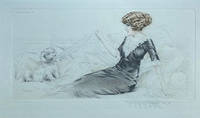
51-6156France: 1913. Color etching. Signed dated 1913 and numbered 4. Dimensions: 25 x 40 cm with margins. Framed and matted to 40 x 58cm.Expertise by Bernard Portheault8 rue des Pichots 41500 Mer.Maurice Millière 1871-1946 Born at Le Havre in Normandy on 12th December 1871 Millière began his art education in his home town but soon transferred to l'Ecole des Beaux-Arts in Paris where he studied portraiture life drawing and figure painting in the atelier of Leon Bonnat whose pupils included Toulouse-Lautrec and Raoul Dufy. He also studied at l'Ecole des Arts Decoratifs. His skill as a draughtsman translated quickly into success as a cartoonist and illustrator and his brilliant interpretation of the "Modern Parisienne" soon became known as the "Petite femme de Millière". Skilfully using the technique of colour etching with drypoint Millière created a modern woman who was coy charming independent and beautiful. Unconsciously erotic and quite adorable his portrayals became known as “Femmes Poupées†doll-women and through them he created the genre of boudoir art. His work was the prime inspiration for the popular "boudoir" painter and engraver Louis Icart 1888-1950.Millière contributed to fashionable magazines of the time including "La Vie Parisienne" and "Fantasio". He also contributed 13 illustrations to the Cornet Société of which he was a member between 1907 and 1939 most of them of the same woman – Fanny who featured originally as a coy teenager and gradually developed into a voluptuous young woman.Millière’s success continued to grow after the Great War of 1914-18 and he became closely involved with the welfare of children injured or orphaned during the War. He was the treasurer for Charitable Works in Montmartre where he lived. For this he was created Chevalier of the Legion d’Honneur. Although his art became somewhat more restrained and less overtly erotic he continued to work steadily and in various media. He also illustrated several books including works by Gyp and Maurice Vaucaire. He travelled and worked in the French colonies including Martinique.Millière developed into an establishment artist and he exhibited widely at commercial galleries and at the Paris Salon as well as the Salon des Humoristes and l’Exposition Coloniale where he was a gold medallist in 1931 when he was 59.Millière died at the age of 74 in 1946. France: 1913 unknown
194824058Manuel Bruker 1948 1 Orné de lithographies en couleurs. Manuel Bruker éditeur, 1956, broché, in-4, couverture rempliée vert pâle, non chiffré, table des gravures, achevé d'imprimer.
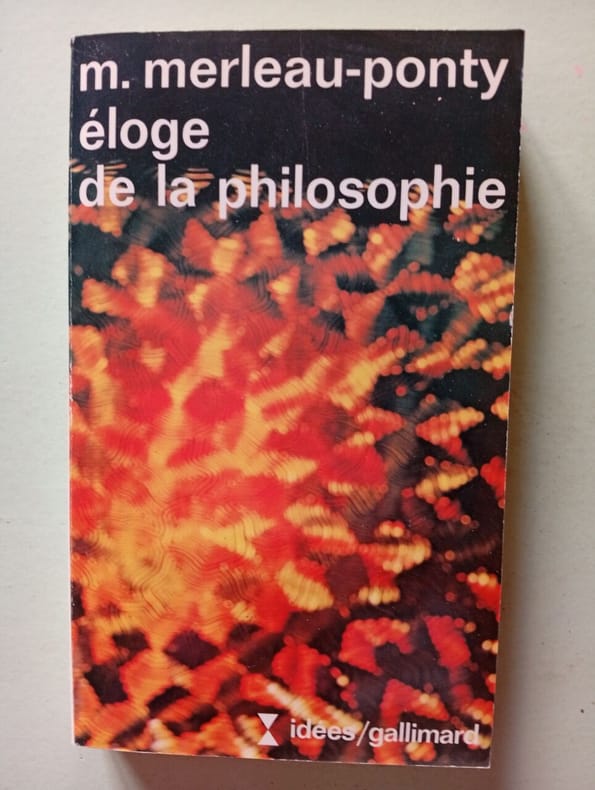
195344020Paris, Gallimard, 1953 Small 8to. Uncut and unopened in the original printed wrappers. Back hinge slightly clacked, but a very fine and clean copy. S.P. printed to title-page and bottom of back wrapper. 90, (3) pp.
500230664Sans date.
18556Paris, La Tradition, 1942, 1 volume in-4 de 285x230 mm environ, 193 pages(2ff) en feuillets libres sous chemise contre pliée sur trois cotés titrée en rouge, et emboîtage de l'éditeur avec étui bordé.Toutes les compositions à la pointe sèche de Maurice Leroy sont demeurées sous serpente. Tirage à 645 exemplaires, l'un des 489 ex sur Vélin d'Arches. Très agréable exemplaire. Boite altérée faiblement en tête sans déficit de matière. Exempt de rousseurs et de défauts par ailleurs. Bel exemplaire;
2070325105.Gpocket_book. Good. Access codes and supplements are not guaranteed with used items. May be an ex-library book. unknown
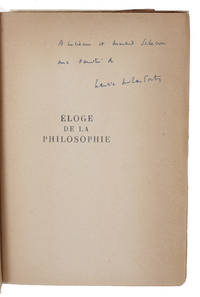
195344020Paris Gallimard 1953 Small 8to. Uncut and unopened in the original printed wrappers. Back hinge slightly clacked but a very fine and clean copy. S.P. printed to title-page and bottom of back wrapper. 90 3 pp. <br/><br/><em>First edition presentation copy "A Meriam et Ammeend Schcor / avedCm'amitié de/ Maurice Blanchot." of Merleau-Ponty's famous inaugural address to the Collège de France his frequently quoted and highly regarded "In Praise of Philosophy" in which he defines the essence of philosophy and predicts its future. It is here we find his famous passages about philosophy "limping" that "this limping of philosophy is its virtue" and the answer to the question what philosophy will do in the 21st century - It will limp along. </em> unknown
195382088Couverture souple imprimée. Non coupé.
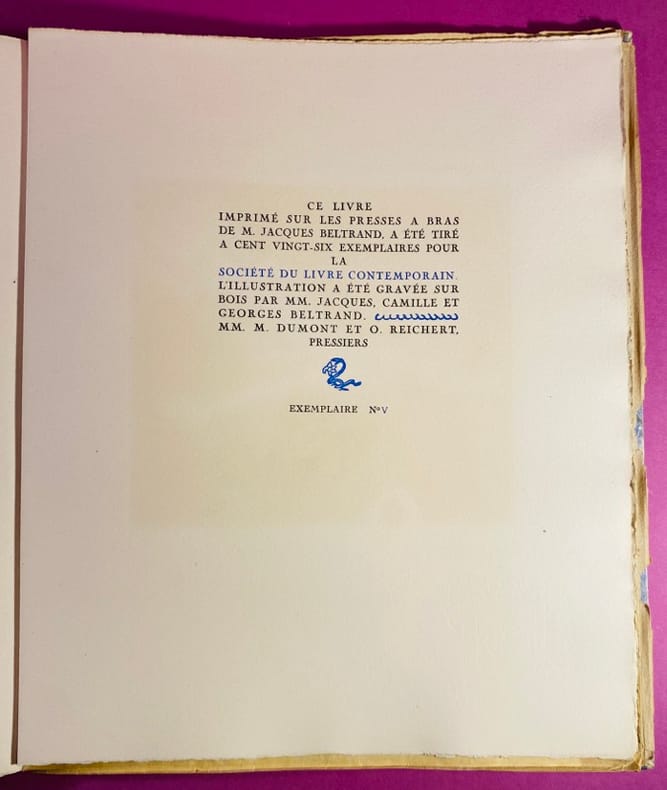
191716701917 Couverture souple Paris, Le livre contemporain, 1917. 1 volume et une suite de format in-4 (30 x 25 cm), en feuilles, sous chemise souple avec papier cristal de protection et sous chemise cartonnée de l'éditeur avec titre doré au premier plat, dans son étui cartonné avec papier à la cuve, charnière supérieure de la chemise cartonnée fendue. 66 (1) pages, illustrées de 18 gravures sur bois en couleurs et de 8 vignettes en bleu (dont une à la page de titre) également gravées sur bois, quelques légères décharges des illustrations sur la page en regard. Un des 126 exemplaires numérotés (n°5), sur papier d'Arches. Les illustrations ont été gravées sur bois par Jacques, Camille, et Georges Beltrand. Notre exemplaire contient également une suite de 12 épreuves d'artiste (9 en couleurs et 3 vignettes en bleu). "Eloa" est un poème philosophique et romantique d'Alfred de Vigny, publié pour la première fois en 1824. Dans une ambiance mêlant mysticisme et réflexion métaphysique, le poème explore les thèmes de l'amour, du sacrifice et de la chute. Le récit culmine dans une scène bouleversante où Eloa, captivée par Lucifer, découvre sa véritable identité et se perd en voulant sauver l'ange déchu. Les illustrations de Maurice Denis, peintre symbolyste et figure majeure du mouvement nabi, s'accordent parfaitement à l'univers mystique et poétique de Vigny. Carteret IV, 398. Bon état des planches et du texte, bon exemplaire de cette édition illustrée à tirage restreint.
194234910ABLausanne, Edition d'art André Gonin 1942. 33,5x25 cm. 161 p. en feuilles. Illustré de 20 lithographies originales de Maurice Barraud. broché, sous chemise.
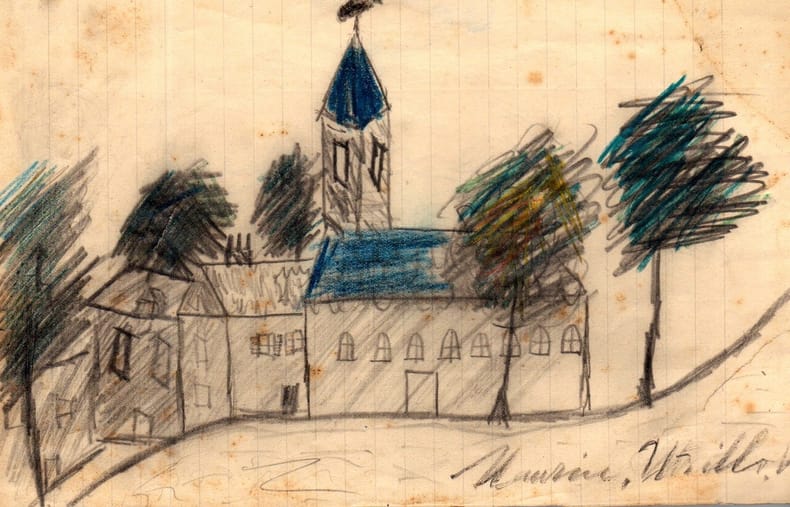
8506Vue d'une église surmontée d'un coq. Dessin au crayon rehaussé de crayon bleu et rouge. Signé. Sur papier "anc. Papeterie A. H. Pan...(?). Cahier d'écolier ? Très bon 14,2 x 21,6 cm
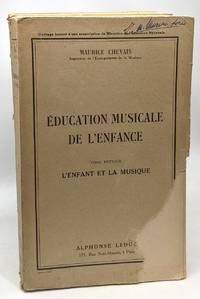
100073109Alphonse Leduc in8. Sans date. Broché. 4 volume(s).
28836Paris, Ollendorff, 1895. In-18 ; 2 ff (faux-titre, titre)-269 pp. Demi-percaline à coins à la Bradel, couvertures imprimées conservées.
Paris, Ollendorff, 1895. In-18 ; 2 ff (faux-titre, titre)-269 pp. Demi-percaline à coins à la Bradel, couvertures imprimées conservées. Edition originale sur papier d'édition (il n'a été tiré de cet ex que 20 hollande). Bel ex.
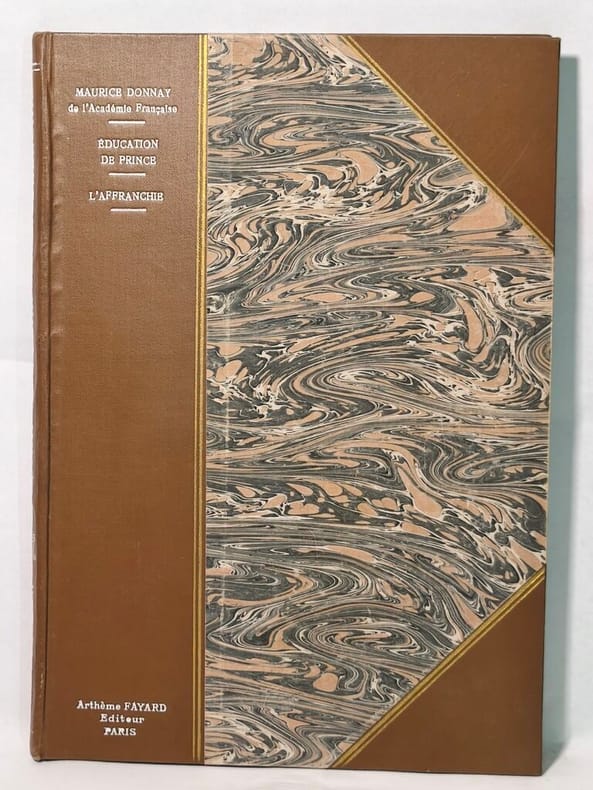
19121587Arthème Fayard 1912 125 pages in8. 1912. Reliure editeur cartonnée. 125 pages.
100073109Alphonse Leduc. circa 1940 - Bon état BE de conservation général cependant manque dans le coin inf. droit du Ier tome intérieurs uniformément jaunis propres ex libris. in8. Sans date. Broché. 4 volumes. Alphonse Leduc unknown
1527612252.Gpaperback. Good. Access codes and supplements are not guaranteed with used items. May be an ex-library book. paperback
6202534524.Gpaperback. Good. Access codes and supplements are not guaranteed with used items. May be an ex-library book. paperback
0364005467.Ghardcover. Good. Access codes and supplements are not guaranteed with used items. May be an ex-library book. hardcover
92698Paris, La Table Ronde, 1956 in-8, 529 pp., broché.
68044La Table Ronde, 1956, 529 pp., broché, couverture défraîchie avec taches, manque du coin supérieur droit de la quatrième de couverture, état acceptable.
429921x21 cm, broché, 32 pages, bon état, coin de page de garde découpé, beau papier glacé, reproductions en couleurs des huiles sur toile, reproductions N&B des crayons et plumes, ISBN : 2950666043
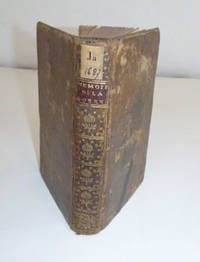
51-5312A Dresde: Aux deÌpens de l'editeur 1757. 12 mo. Contemporary calf rubbed. rel. in-12 plein veau d’époque en l’état épidermures xxiii-356-xcxi pp. ; OCLC Number 54169812.Les pièces qui suivent les "Rêveries" ont une pagination particulière et sont précédées de titres propres ; le 1er de ces titres porte : "Amusemens sérieux à MM. les militaires pour servir de suite aux mémoires précédens" et les 2 pièces ainsi désignées portent pour titres de départ la 1re : "Réflexions sur la lecture adressées à M. de : la lecture est particulièrement nécessaire aux militaires ; les militaires doivent être plus instruits et plus vertueux que les hommes des autres états". .Britannica: Maurice count de Saxe count of born Oct. 28 1696 Goslar Saxony Germany -died Nov. 30 1750 Chambord Fr. general and military theorist who successfully led French armies during the War of the Austrian Succession 1740–48.The illegitimate son of the elector Frederick Augustus I of Saxony later also King Augustus II of Poland young Maurice was sent by his father to serve under Prince Eugene of Savoy against the French in Flanders in 1709–10. In 1711 he was made Graf von Sachsen count of Saxony; in French comte de Saxe. His father bought him a German regiment in the French service in 1719 and Saxe quickly won recognition for his innovations in military training especially in musketry.J.M. White: Marshal Saxe is one of the forgotten figures of the first half of the eighteenth century; yet not only is he one of its most vivid personalities but one of its outstanding generals. He takes his place among the great mercenary soldiers of a military age: Schomburg Schulenburg and Prince Eugene in the west Keith and Lacy in the east; and there is leason to rate him even more highly than any of these and compare his achievements with those of Marlborough. At the close of his career Louis XV revived for him the splendid title of Marshal-General of the King’s Camps and Armies a title that had been borne previously only by the legendary Turenne.Expertise by Jean-Paul VEYSSIÈRE Manoir de Bellay 37370 MARRAY . A Dresde: Aux deÌpens de l'editeur, 1757 unknown