18 204 résultats
200484291<p>In English also available in Greek. Hard cover 24 cm 268 pp. ill. net weight 1740 gr. ISBN: 960-03-3732-2.</p><p><em>"52 Days of 1943"</em> tells the story of the 52-day battle at Leros island and the ship-legend of the Greek Navy "Queen Olga". This album is the result of investigations which lasted almost five years: hundreds of photos over thirty hours of digital video underwater shooting by the findings of the war dozens of hours of discussions with survivors Greeks and foreigners. The photos are accompanied by short texts true relay memories shocking stories of people who were eye-witnesses and illuminate unknown parts of the World War II history.</p><p>// . "depth 42 feet a German transport plane appears before us inside us shudder human bones the sinking of the destroyer "Queen Olga" a legend of the Greek Navy illuminated after 60 years. Dilapidated huge military installations large canons like those of Navarone a submarine base a large rusty crane from Turin once placed hydroplanes galleries hewn in the mountains shelters and secret facilities a surgery room in the heart of the mountain make up an adventure like in a movie. Sensitive human stories of Greeks Italians Englishmen and Germans hard men cry . a time machine takes us back to the door of the plane that the German paratroopers used to jump to occupy Leros ."</p><p><strong>CONTENTS:</strong></p><p>INTRODUCTION</p><p>CHAPTER I. The year 2000 the story begins. . .</p><p>Aircraft data</p><p>Identifying the aircraft</p><p>CHAPTER 2. The "Queen Olga" a Greek destroyer</p><p>The last hours of the "Queen Olga"</p><p>Commissioning the "Queen Olga"</p><p>The "Queen Olga" in action</p><p>Greece and Italy at war</p><p>The fleet that would not surrender</p><p>CHAPTER 3. The Malta of the Aegean</p><p>CHAPTER 4. Fifty two days in 1943</p><p>The overall picture and data concerning the war</p><p>The Battle of Leros</p><p>Events as related in the official German archives</p><p>Italian Battery 888</p><p>Events as recorded in the official German archives</p><p>CHAPTER 5. The fall of Leros</p><p>Events from the official German and Italian archives</p><p>The "Oria" the unknown "Titanic"</p><p>CHAPTER 6. Leros is annexed to Greece</p><p>CHAPTER 7. The raising of a legend</p><p>A letter from Andrea Hutter "a crew member in the Ju-52 squadron who fought on Leros"</p><p>Identifying the place</p><p>EPILOGUE</p> Kastaniotes hardcover
Madrid, Hiperión, 1979. 4to.; 95 pp., y una lámina aparte. Cubiertas originales.
A clean, unmarked book with a tight binding. 446 pages. Full dark red cloth boards. Slight edge wear to dust jacket. Attractive small format: 4 3/4"w x 7 1/2"h. Modern Library #158. Rockwell Kent torch bearer design on endpapers and embossed on cover.
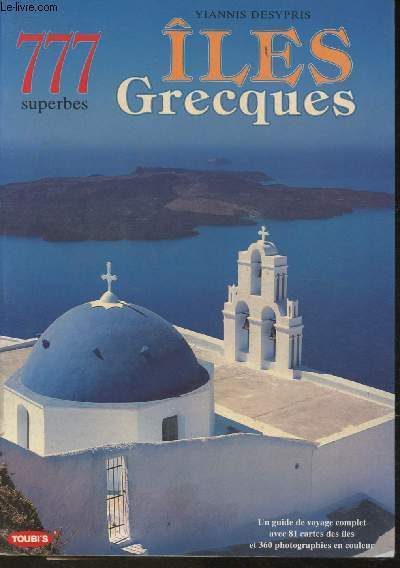
1995RO30318810Toubi's. 1995. In-8. Broché. Bon état, Couv. convenable, Dos satisfaisant, Intérieur frais. 271 pages. 81 cartes en couleurs + 360 photos en couleurs, dans et hors texte+Dossier de photos et cartes d'îles.Couverture contrepliée.. . . . Classification Dewey : 949.5-Grèce
100.422Belgique, Musée Royal de Mariemont, 1982. 21 x 23, 84 pp., nombreuses illustrations en N/B, 1 carte, broché, bon état.
2001R300300061Haïtalis. 2001. In-8. Broché. Bon état, Couv. convenable, Dos satisfaisant, Intérieur frais. 287 pages - nombreuses photos en couleurs dans et hors texte. Plats contrepliés en un rabat.. . . . Classification Dewey : 949.5-Grèce
044826Karyes Mount Athos : Ekdose Archimantritou Stephanou Meliotou Book. Very Good. French Wraps. First US Edition. A vintage illustrated book about Mount Athos monasteries and . Icons. Bilingual Greek and German text. Undated . 80 numbered pages 24 more pages of plates. some colour. Clean neat text but scuffed paper wraps 25x17x1 cm NO copy of this edition found in Worldcat nor in NLG . Ekdose Archimantritou Stephanou Meliotou paperback
1976041164Athens: Ekdoseis Papazese 1976 Book. Near Fine. French Wraps. 1st Greek Edition. Three aspects of "Topics in the Sociology of International Relations 1 Mythogologia 2 Diethnes These tis Ellados 3 He Kypriaki Krise.201p. bibliography.Crisp tight unmarked text cover slightly tanned. 6 copies in USA found in WorldCat . Ekdoseis Papazese paperback
1955192631955. Athènes Éditions EN 1955 - Broché 18 cm x 25 5 cm 149 pages - Texte en grec de L. Bürchner - Tampon de bibliothèque en partie non coupé bon état
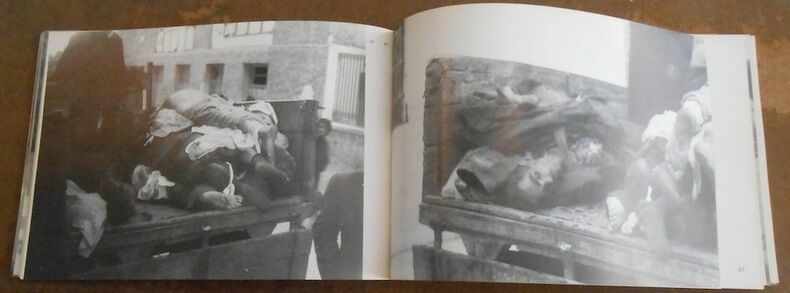
1974132731974. Grèce Éditions ????? 1974 2ème ed. - Broché format à l'italienne 16 5 cm x 24 cm 213 pages 211 photographies noir et blanc - Texte en grec de ????? ???????? (Kostas Paraxhou) - Bon état - Photos noir et blanc d'Athènes pendant l'occupation allemande : la famine les manifs la libération la vie quotidienne etc...
cm. 15,5 x 25, 162 pp. Universit? di Padova - Pubblicazioni della Facolt? di lettere e filosofia 401 gr. 162 p.
cm. 17 x 24, 274 pp. Accademia toscana di scienze e lettere ?La Colombaria? - Serie Studi Gli ?Halieutica? di Oppiano di Cilicia (tardo II sec. d. C.) sono l?opera pi? significativa dell?epica didascalica greca di et? imperiale. Quest?analisi rigorosa e innovativa porta il lettore dentro il laboratorio del poeta, individuando gli strumenti con i quali egli trasforma un patrimonio di conoscenze ittiologiche e alieutiche in un?opera letteraria di alto livello artistico. Puntuali confronti con la produzione didascalica precedente e successiva contribuiscono a individuare la peculiarit? del poema all?interno del genere. The ?Halieutica? by Oppian of Cilicia (late II AD) is the most significant Greek didactic epic poem of the Imperial Age. This new and scrupulous study guides the reader through the poet's laboratory showing the tools Oppian used to transform his fishing and ichthyological knowledge into a highly artistic literary work. Constant reference to former and later didactic poems helps to single out ?Halieutica? within this genre. 510 gr. 274 p.
1 vol. in-8 format à l'italienne, cartonnage éditeur, Imprimerie J. Cayer, Librairie Marpon et Flammarion, Marseille, 1893, 1 ff. et 18 chromolithographies Rare exemplaire de cette édition en grec moderne imprimée à Marseille en 1893. Nous nous permettons de citer un article de presse contrecollé en garde, extrait du "Sémaphore de Marseille" du 5 Octobre 1893 : "Nous signalons à nos lecteur l'Atlas de Géographie du Royaume de Grèce, publié par A. Clavier, l'auteur bien connu du guide de ce nom et de l'Atlas des Chemins de fer français par départements. [ .... ] Après une longue absence, M. A. Clavier, de retour à Marseille, vient de faire paraître en langue grecque, un Atlas de la Grèce, à l'usage des élèves du gymnase Averoff, à Alexandrie (Egypte) [... ] Cet Atlas sorti des presses de l'imprimerie M. J. Cayer, est composé de 18 planches en chromolithographies. Sur les cartes des 16 Nomarchies, à l'échelle de 1.800 000e, en outre des noms des chefs-lieux, bourgs, villages et ports actuels, figurent les noms des lieux célèbres de l'antiquité. Les chemins de fer, les routes, les cours d'eau et les lacs y sont fidèlement tracés. Une carte d'ensemble et une planche orographique le complètent". Avec une carte manuscrite de l'époque, contrecollée en garde et signée du libraire Aubertin de Marseille, précisant le prix de l'ouvrage. Bon état (petits frott. en dos, anciens cachets d'ex-libris en page de titre, numéro de cote en garde). Grec
1 vol. in-8 reliure de l'époque demi-chagrin noir, dos à 5 nerfs doré orné, Une inscription inédite d'Halicarnasse en dialecte dorien et en vers. Extrait de la Revue archéologique, Aux Bureaux de la Revue archéologique, Librairie Académique Didier et Cie, Paris, 1864, 13 pp. avec une planche hors texte [Avec : ] Notice sur les Découvertes archéologiques faites récemment au Pirée avec le texte de deux inscriptions grecques, Aux Bureaux de la Revue archéologique, Librairie Académique Didier et Cie, Paris, 1866, 12 pp. avec une planche hors texte [ Avec : ] Texte et explication d'un décret en dialecte dorien provenant de l'île de Carpathos, s.d., 28 pp. [ Avec : ] Notice sur une stèle hypothécaire des environs d'Athènes, Aux Bureaux de la Revue archéologique, Librairie Académique Didier et Cie, Paris, 1867, 8 pp. [ Avec : ] Note relative à un Prêtre d'Alexandrie et des Ptolémées avec deux restitutions tirées des manuscrits d'Elien et des inscriptions de Delphes, Extrait de la Revue archéologique, s.d., 8 pp. [ Avec : ] Extrait d'une introduction à la Poliorcétique des Grecs, Extrait de la Revue archéologique, Aux Bureaux de la Revue archéologique, Didier et Cie, Paris, 1868, 8 pp. [ Avec : ] Fragments inédits de l'historien grec Aristodème traduits en français par Carle Wescher, Extrait de la Revue archéologique, Aux Bureaux de la Revue archéologique, Librairie Académique Didier et Cie, Paris, 1868, 19 pp. [ Avec : ] Fragments inédits de l'historien grec Priscus relatifs au siège de Noviodunum et à la prise de Naissos recueillis et publiés par Carle Wescher, Aux Bureaux de la Revue archéologique, Librairie Académique Didier et Cie, Paris, 1868, 11 pp. [ Avec : ] Fragment historique inédit en dialecte ionien relatif au siège d'une cité gauloise, Extrait de la Revue archéologique, s.d., 7 pp. [ Avec : ] Inscription archaïque gravée sur un Rocher près de Delphes illustrée par Carl Wescher, Tipografia Tiberina, Roma, 1866, 18 pp. avec une planche hors texte ; [ Avec : ] Eclaircissement sur une inscription grecque d'Alexandrie appartenant au règne de Cléopâtre, Estratto dal Bullettino dell'Inst. di Corrispondenza Archeologica Settembre 1866, 8 pp. [ Avec : ] Note relative au dialecte de l'Ile d'Andros par Carle Wescher, Imprimerie Adolphe Lainé, Paris, 1871, 13 pp. [ Avec : ] Rapport adressé à S. Exc. le Ministre de l'Instruction Publique par M. C. Wescher adjoint à la Mission scientifique d'Egypte, Typographie E. Panckoucke et Cie, Paris, 1864, 15 pp. Rare recueil d'articles en tirés-à-part de l'archéologue Carles Wescher (né à Wissembourg en 1832-1904). Conservateur à la Bibliothèque nationale, professeur du cours d'archéologie à la Bibliothèque nationale, Paris, France. - Membre fondateur de l'Association pour l'encouragement des études grecques en France et membre de la Société nationale des antiquaires de France (1868-1892). Bon état (annotation au stylo au second feuillet blanc, dos lég. frotté, très bon état par ailleurs). Français
Very Good Turkish, Ottoman (1500-1928) In contemporary aesthetics 1/3 leather bdg. Raised five bands to spine. Third and fourth compartments have lettered gilt title and a personal name (Fikri) in Ottoman script. Other ones have decorated gilts. Cr. 8vo. (20 x 14 cm). In Ottoman script (Turkish with Arabic letters). 359 p. First and Only Edition of Süleyman Tevfik's travels to Thessaly, who participated in the Turco-Greco War in 1897 as a war correspondent to watch the war in the Thessaly Front between April 27 - May 20, 1897. The Greco-Turkish War of 1897 or the Ottoman-Greek War of 1897, also called the Thirty Days' War and known in Greece as the Black '97. It was a war fought between the Kingdom of Greece and the Ottoman Empire. Its immediate cause was the question over the status of the Ottoman province of Crete, whose Greek majority had long desired union with Greece. Despite the Ottoman victory on the field, an autonomous Cretan State under Ottoman suzerainty was established the following year (as a result of the intervention of the Great Powers after the war), with Prince George of Greece and Denmark as its first High Commissioner. This was the first war effort in which the military and political personnel of Greece were put to test in an official open war since the Greek War of Independence in 1821. For the Ottoman Empire, this was also the first war effort in which the reorganized military personnel were put to test. The Ottoman army was under the guidance of a German military mission led by Colmar Freiherr von der Goltz, who had reorganized it after the defeat in the Russo-Turkish War (1877-1878). In Thessalian Front, war was declared on 18 April when the Ottoman ambassador in Athens, Asim Bey, met with the Greek foreign minister announcing the cutting of diplomatic ties. Heavy fighting occurred between the 21-22 April outside the town of Tyrnavos but when the overwhelming Ottoman forces converged and pushed together, the Greek general staff ordered a general withdrawal, spreading panic among soldiers and civilians alike. Larissa fell on 27 April, while the Greek front was being reorganized behind the strategic lines of Velestino, in Farsala. Nevertheless, a division was ordered to head for Velestino, thus cutting Greek forces in two, 60 km apart. Between 27 and 30 April, under the command of Col. Konstantinos Smolenskis, Greek forces checked and halted the Ottoman advance. On 5 May three Ottoman divisions attacked Farsala, forcing an orderly withdrawal of Greek forces to Domokos, while on the eve of those events Smolenskis withdrew from newly recaptured Velestino to Almyros. Volos fell into Ottoman hands-on 8 May. At Domokos, the Greeks assembled 40,000 men in a strong defensive position, joined by about 2,000 Italian "Redshirt" volunteers under the command of Ricciotti Garibaldi, son of Giuseppe Garibaldi. The Ottoman Empire had a total of about 70,000 troops, of whom about 45,000 were directly engaged in the battle. On 16 May the attackers sent part of their army around the flank of the Greeks to cut off their line of retreat, but it failed to arrive in time. The next day the rest of their army made a frontal assault. Both sides fought ferociously. The Ottomans were held at bay by the fire of the defending infantry until their left flank defeated the Greek right. The Ottoman formation broke through, forcing a renewed withdrawal. Smolenskis was ordered to stand his ground at the Thermopylae passage but on 20 May a ceasefire went into effect. Suleyman Tevfik was there in the frontline himself during this war. He shared his anecdotes about how to receive news from the battlefield and how to deliver them to Istanbul. Also, he wrote about professional conversations with journalists from other countries. First Edition. Özege 20762.; OCLC: 65794449 / 775132812.
Very Good Greek, Modern (post 1453) Original wrappers. Large 8vo. (21 x 16 cm). In Greek (Modern). 21 p. First and only edition of this exceedingly rare and one of the earliest church regulations of the Greek Orthodox community of Attalia [Antalya]. Attalia was not a large urban center or major trading hub, but neither was the Greek Community marginal, and it was well integrated into the regional economy. It was different from other areas in Asia Minor due to a combination of factors ranging between demography, geography, local Orthodox leadership, and the city's social milieu. In contrast to the West-coast cities and many villages in Asia Minor with Orthodox majorities, Attalia's population was only about one-third Orthodox. The main area of difference in Antalya was the Community leadership, which was key to the maintenance of cordial relationships between Christians and Muslims, and the secular and ecclesiastical elements of Orthodox leadership in Antalya tended to cooperate for collective benefit. Throughout this period, a local elite managed to control education and other Community institutions, perpetuating an identity that was compatible with the local Ottoman context. In this last period, the Greek Community printed several books and tractates including a brief history of Antalya and this "regulation book" in the Meli Printing House, which was the only printing house of the Greek Community in Antalya. Only one institutional copy is located in OCLC 1030075331 (Suna Kiraç Library of the Koç University).
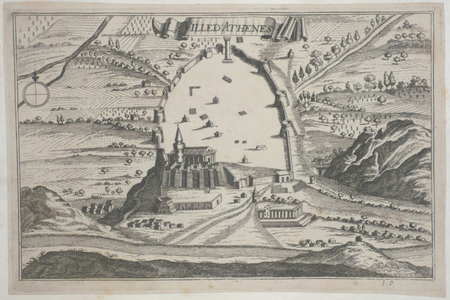
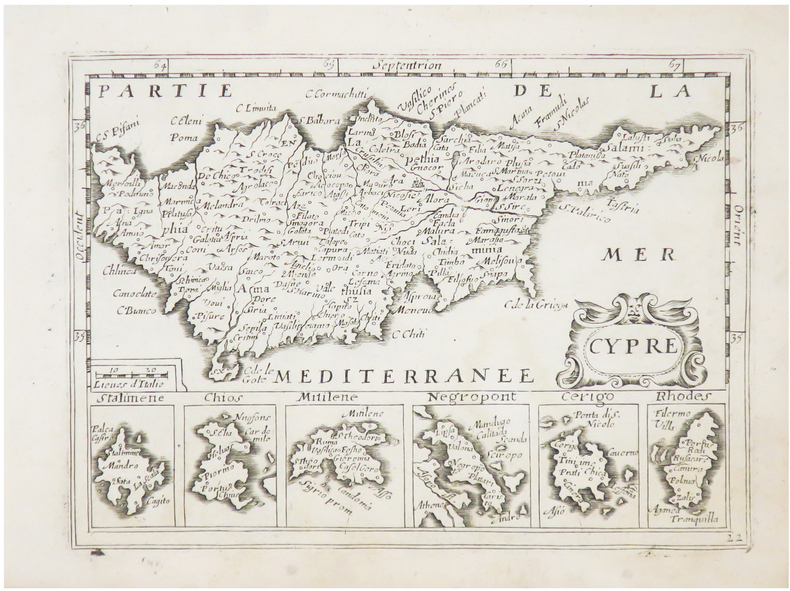
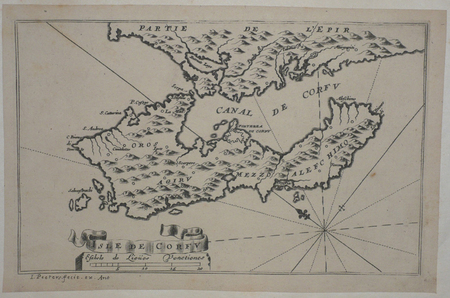
LBW045fdcirca 1690 128 x 200 mm.
Very Good English Original bdg. Cr. 8vo. (19 x 12 cm). In Greek. B/w ills. [xvi], 448 p. [Calendar of Greek churches in the year Disektou Six (1964)].
26169Dimensions : 323 x 307 mm.
Very Good Greek, Modern (post 1453) Paperback. Demy 8vo. (21 x 14 cm). In Greek (Modern). 79 p. Not in OCLC. The Metropolis of Chalcedon is an ecclesiastical territory (diocese) of the Ecumenical Patriarchate of Constantinople. Christianity spread in Chalcedon during the 2nd century AD. The city was initially the see of a bishopric before being promoted to a metropolis at 451 AD, at the time of the Fourth Ecumenical Council. It is one of the four remaining active Greek Orthodox Church metropolises of the Ecumenical Patriarchate in Turkey today and the only one surviving in Asia Minor (Anatolia). During the 14th century, the metropolitan see remained vacant, due to the Ottoman conquest of the region. However, it was reorganized in the 15th century, possibly after the Fall of Constantinople and the subsequent incorporation of the Ecumenical Patriarchate into the millet system of the Ottoman society. The first recorded metropolitan of that time was Joseph, in 1477. In the following years, the jurisdiction of the metropolis was extended to the east. During the late 17th century the see of the diocese was transferred to Kuzguncuk (Ermoulianai, Chrysokeramos), where it remained until 1855. At that period a number of monasteries were established, like the one of Saint Panteleimon, which was declared Stauropegic. The metropolitan of Chalcedon was one of the five Elder metropolitans from the wider region of Constantinople, the other being those of nearby Herakleia, Cyzicus, Nicaea, and Nicomedia. Following an Ottoman decree of 1757, they had to be always present in the Holy Synod of the Ecumenical Patriarchate and had direct access to the Ottoman Sultan, to whom they announced the election of the new Ecumenical Patriarch. From the mid-19th century, the local metropolis prospered thanks to the significant population increase and economic development of the local Orthodox population. In 1855 the see of the metropolitan returned to Chalcedon during the primateship of Metropolitan Gerasimos. Moreover, the newly erected church of Saint Euphemia became the new cathedral. The metropolitan mansion was built near the cathedral in 1902. This is the first and only known printed regulation book of the Greek Community in Chalcedonia (Kadiköy). Extremely rare.
1667LBW-6493[Paris, Jollain, 1667]. 132 x 180 mm.
LBW045dfcirca 1690 130 x 206 mm.
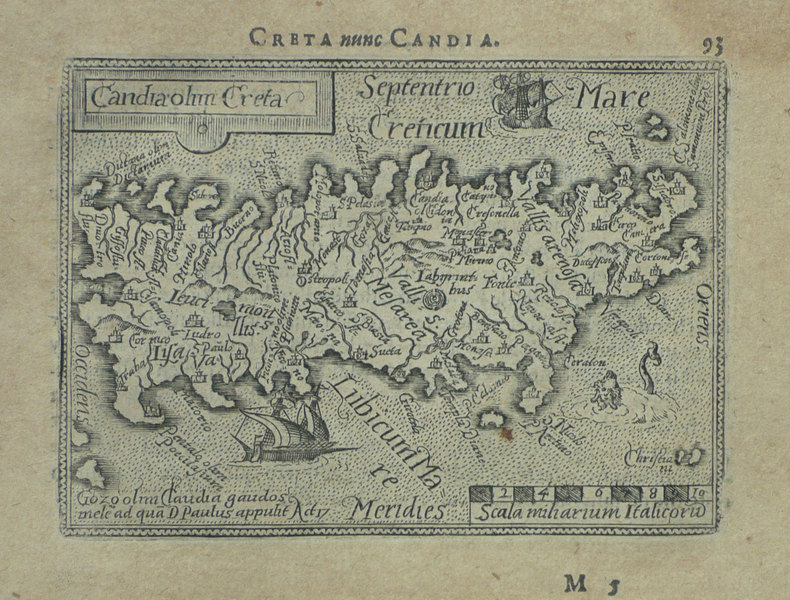
1598LBW-1432Anvers 1598 82 x 106 mm.
1572LBW-1371[Venise, 1572]. 196 x 159 mm.