47 résultats
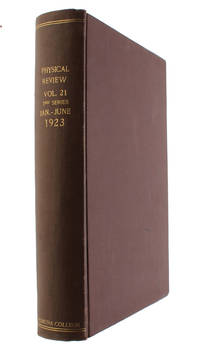
192347061Lancaster The Physical Review 1923. Royal8vo. Contemp. full buckram. In:"The Physical Review" Series II vol. 21. 4736 pp. Plates and textillustr. Entire volume offered. A perforated stamp in upper margin on a few leaves. Compton's paper: pp. 483- 501. <br/><br/><em>First printing of this milestone paper in quantum physics in which Compton verifies Planck's quantum postulate and found that some of the X-rays had in scattering lenghtened their wavelenght. This phenomena was called the "Compton Effect" in his honour. For this discovery Compton received the Nobel prize in physics in 1927."Compton was able to account for this lenghtening of wavelenght by presuming that a photon of light struch an electron which recoiled subtracting some energy from the photon and therefore increasing its wavelenght. This made it seem that a photon acted as a particle: thus after more than a century the particulate natuer of light as evolved by Newton was revived. What itamounted to was that Compton brought to fruition the view that electromagnetic radiation had both a wave aspect and a particle aspect and that the aspect which was most evident depended on how the radiation was tested. De Broglie was at the same time showing that this held true also for ordinary particles such as electrons." AsimovParkinson "Breakthroughs" 1923 P. - Sigmund Brandt "The Harvest of as Century" Episode 31. </em> hardcover
191722798London 1917. Very good condition. The salver was presented as a wedding gift to Royal Navy officer CHARLES ROYDS 1876-1931 the Discovery's first lieutenant after whom Cape Royds in Antarctica is named. The salver has specially crafted feet fashioned after penguin's feet.<br /> <br /> The Discovery expedition was the first led by Captain Robert Scott and was arranged by the Joint Antarctic Committee composed of members from the Royal Society and the Royal Geographical Society. Known as the British National Antarctic Expedition the goal of the expedition was the scientific exploration of South Victoria Land and the ice barrier as well as the interior of the Antarctic continent. Its achievements included the discovery of the polar plateau and Scott's ascent the first ever in a hot air balloon over Antarctica. It was also the first to do extensive land exploration on the continent and went the furthest south by a sledge reaching 82 16' S. One of the unexpected contributions was the introduction to the Antarctic of so many future explorers as it included Ernest Shackleton Frank Wild & Edgar & Edward Evans. Scott returned to Antarctica a second time aboard the Terra Nova. That expedition which commenced in 1910 developed into a race against the Norwegian explorer Roald Amundsen to become the first to reach the South Pole. Amundsen attained the goal on January 4 1912 beating Scott by two weeks. Scott's expedition ended tragically when he and four companions perished on their return march from the South Pole after failing to reach a supply depot.<br /> <br /> Royd's had a very distinguished list of Antarcticans attending his wedding. But there are a number of ghostly presences that might have been there. Both Scott and Edward Wilson died in 1911 in their attempt to be the first to the South Pole. Ernest Shackleton was on duty in Northern Russia as was Frank Wild. These two were to return to the Antarctic in the Shackleton's Endurance expedition which is one of the greatest stories of survival ever told. Dr. Koettlitz died in 1916. <br /> <br /> The silver salver was made by Goldsmiths & Silversmith's Co. Regent St. London in 1917. It has a scalloped rope edge and four ball and claw feet is inscribed with the seal of the Discovery Voyage depicting icebergs and a penguin encircled within a heraldic belt. Below the seal is the engraved inscription "To Captain C.W. Royds R.N. on his marriage October 5th 1918 from his old messmates in the ‘Discovery' 1901-1904." <br /> <br /> Surrounding the inscription are the engraved signatures of:<br /> <br /> Scottish Royal Navy captain ALBERT B. ARMITAGE 1864-1943; "Albert B. Armitage" was the Discovery's second-in-command. "Armitage had been second in command of the Jackson-Harmsworth expedition to Spitsbergen. In recognition of this he received the Murchison award from the Royal Geographical Society. Armitage was the oldest man in the expedition and his years of Arctic service gave him more such experience than anyone else on the Discovery except Koettlitz. The contrasts between Armitage and Scott were noteworthy. Armitage had a good deal of experience with ships under sail; Scott did not. Armitage had three years of polar work; Scott had none" Scott of the Antarctic Huxley. Cape Armitage the southernmost point on Ross Island is named in his honor.<br /> <br /> LOUIS BERNACCHI 1876-1942; "L. C. Bernacchi" was a Tasmanian physicist and astronomer of Italian extraction. His first polar journey was with Carsten Borchgrevink's Southern Cross expedition 1898-1901 along with Hodgson above. For his work on the Discovery voyage Bernacchi was decorated by the Royal Geographical Society and awarded the Légion d'honneur. Scott was the best man at his wedding. Bernacchi explored regions of Africa and South America wrote several books on the Antarctic was a member of the Royal Geographic Society and served in the British and United States military during World War I. His attempts to raise funds for a 1925 Antarctic expedition failed. Antarctica's Bernacchi Head and Bay honor his name.<br /> <br /> MICHAEL BARNE 1877-1961; "Michael Barne". Barne's responsibilities as a member of Scott's Discovery expedition was to keep records of the voyage. A recipient of the Polar Medal Barne "had been a shipmate of Scott on the Majestic. and was appointed second officer by the committee in June 1900. His duties including assisting Armitage with magnetic studies and taking charge of deep-sea temperature research" Pilgrims on the Ice: Robert Falcon Scott's first Antarctic Expedition Baughman. An Antarctic cape glacier and inlet are named after him.<br /> <br /> GEORGE FRANCIS ARTHUR MULOCK 1882-1963; "George F.A. Mulock". Mulock had joined the relief vessel Morning that resupplied Scott's ships in the Antarctic. In 1902 he came aboard the Discovery to replace Ernest Shackleton who had fallen ill. Mulock served as a surveyor and cartographer during the mission publishing his results as Survey Work of the National Antarctic 1901-04 for which he was awarded the Polar Medal. He had a distinguished career in both World War I and II during which time he was held captive by the Japanese. The Mulock Inlet and Glacier are named in his honor.<br /> <br /> Marine biologist THOMAS VERE HODGSON 1864-1926; "T.V. Hodgson" did pioneering work aboard the Discovery and was the first person to describe the Antarctic's deep sea floor. Prior to joining the Discovery he had been a member of Carsten Borchgrevink's Southern Cross expedition 1898-1901. Cape Hodgson in the Ross Archipelago is named after him.<br /> <br /> Royal Navy officer REGINALD W. SKELTON 1872-1956; "Reginald W. Skelton" was the Discovery's chief engineer and official photographer. Despite the long-standing friendship between Scott and Skelton he was passed over as second-in-command on Scott's fatal 1910 Terra Nova expedition. An Antarctic inlet and three glaciers are named in his honor.<br /> <br /> CYRIL LONGHURST "Cyril Longhurst" was the secretary of the Discovery expedition and served as best man at Shackleton's wedding. Mount Cyril in Antarctica is named after him.<br /> <br /> HARTLEY TRAVERS FERRAR 1879-1932; "H.T. Ferrar" was born in Ireland raised in South Africa and educated as a geologist in England. A relatively young and inexperienced member of the voyage Ferrar met the woman he would marry while the Discovery was docked in New Zealand. His expedition duties included making geological surveys classifying what became known as the Ferrar or Beacon sandstone layer and discovering the first Antarctic fossils. He later conducted geological research in Egypt Palestine and New Zealand. The Ferrar Glacier is named for him.<br /> <br /> Following the Discovery expedition Royds continued his career in the Royal Navy. While commanding the battleship HMS Emperor of India he was given our lovely sterling silver platter to honor his marriage to Mary Louisa Blane a widow and retired actress. After the war Royds was an instructor at the Admiralty retiring from the navy as a rear-admiral. Thereafter he enjoyed a second career as deputy commissioner of the Metropolitan Police for which he received a knighthood.<br /> <br /> A unique object. Professionally polished and in fine condition save a few very faint scuffs. unknown
194250233-5: Faber & Faber. Very Good in Very Good- dust jacket. 1942. Reveiw Copy. Hardcover. Faber & Faber hardcover
19442092902137303000Japanese art publication 1944. Soft Cover. Fine. Size: 26cm Japanese art publication paperback
1980KOS02300819TBD 1980. Soft Cover. Fine. KOS02300819 TBD paperback
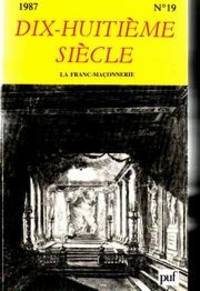
1987abc623PRESSES UNIVERSITAIRES DE FRANCE 1987 PRESSES UNIVERSITAIRES DE FRANCE 1987 large thick paperback 551 pages text in French tiny nick to top rear cover corner Otherwise in EXCELLENT CLEAN TIGHT READING ORDER AS NEW. Full refund if not satisfied. 24 hour despatch. If not pictured in this listing a scan of the actual book is available on request. Soft cover. As New. PRESSES UNIVERSITAIRES DE FRANCE paperback
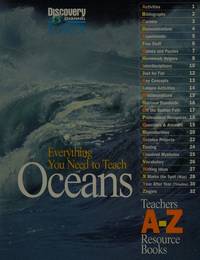
20001700140511015Discovery Channel School 2000-01-01. Paperback. Very Good. Nice looking book has minor edge wear. Discovery Channel School paperback
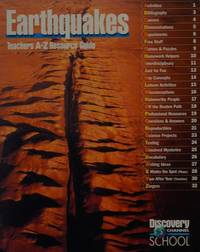
20001700140511014Discovery Channel 2000-01-01. Paperback. Very Good. Nice looking book has minor edge wear. Discovery Channel paperback
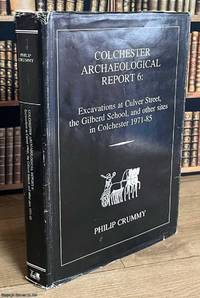
1992520298Colchester Archaeological Trust Colchester 1992. Hardcover. Very Good Condition/Good Condition. 426 pages illustrated throughout 4 large folding plates in a slip case. Includes several microfiche. Original black cloth gilt lettered. With a very worn dustwrapper. Signed by Paul Bidwell British archaeologist to front endpaper. Contents clean and bright throughout. The book details the discovery and analysis of Roman medieval and later remains with particular emphasis on Colchester’s Roman town layout buildings industrial activity and artefacts. The report includes specialist studies drawings site plans and finds catalogues making it a foundational reference for understanding the archaeology of one of Britain’s most important Roman towns. Size: 21.5 x 30.5 cms. Category: Varied Books; Archaeology; Hardback Books; ISBN: 095037279X. ISBN/EAN: 9780950372792. This item may require more postage than the rates shown for delivery outside the UK. If extra postage is required we will contact you before processing your order and you will be given the details and option to decline the extra cost. 9780950372792 Colchester Archaeological Trust hardcover
19931-077480470XUniv of British Columbia Pr 1993. Hardcover. New. reissue edition. 353 pages. 9.50x6.50x1.50 inches. Univ of British Columbia Pr hardcover
2000Q-0939979489Nada 2000-01-01. Hardcover. New. In shrink wrap. Looks like an interesting title! Nada hardcover
19622092902137304616Japan Arts and Crafts Company 1962. Soft Cover. Fine. The book is in fine condition. Japan Arts and Crafts Company paperback
19532092902137304708Japan Arts and Crafts Company 1953. Soft Cover. Fine. Size: 21cm Japan Arts and Crafts Company paperback
199757129World Scientific Pub Co Inc 1997-03-01. Hardcover. Good. Hardcover ex-library book in very nice condition text is unmarked and pages are tight. Usual library markings and mylar cover over dust jacket. World Scientific Pub Co Inc hardcover
1999Q-0912299762Stoneydale Pr Pub Co 1999-03-01. Hardcover. New. In shrink wrap. Looks like an interesting title! Stoneydale Pr Pub Co hardcover
1999Q-0912299851Stoneydale Pr Pub Co 1999. Hardcover. New. In shrink wrap. Looks like an interesting title! Stoneydale Pr Pub Co hardcover
198174493Marquette University. Good. 1981. Award Booklet Celebrating Mother Teresa. Soft Cover. rb-1 . Marquette University paperback
19946946Sao Paulo: Fundacao Quadrilátero do Descobrimento 1994. 1st ed. Paperback. Used; Like New. Small Folio bds 239 pp.dust jacket semi glossy stock maps color plates facsimiles bibl. Fundacao Quadrilátero do Descobrimento paperback
1997x-1563084554Teacher Ideas Pr 1997. Paperback. New. 161 pages. 11.25x8.50x0.75 inches. Teacher Ideas Pr paperback
1979TN254373British Journal of Experimental Pathology / Beecham Research Laboratories London 1979. 1st Edition Thus. SOFTCOVER. Mde to commemorate the 50th anniversary of the discovery of penicillin and published by Beecham Research Laboratories in 1979. 4to in black printed orange card covers pages numbered 191 to 236 - a very nicely produced facsimile using well matched paper of the exact size of the complete issue for June 1929 which contains Flemings famous paper. Housed in a cloth backed thin card slip-case with single leaf insert on thick glossy paper with a brief history and time-line for penicillin. Fleming made his own limited edition reprint of the offprint in 1944 but this is the first reprint of the whole issue. __CONDITION : The journal and insert are AS NEW the slipcase is a little shelf rubbed and faintly sunned. Overall an excellent copy of this facsimile which has become almost as hard to find as the original. __NOTE. Depending on destination this item may require an extra payment for shipping insurance. If so orders made by card will be completed only after you have approved the extra cost. . __We always ship in PROTECTIVE CARD PARCELS British Journal of Experimental Pathology / Beecham Research Laboratories, London paperback
192349718Paris Gauthier-Villars et Cie 1923. 4to. Bound in one contemp. full buckram. Spines gilt and with gilt lettering. In: "Comptes Rendus Hebdomadaires des Séances de L'Academie des Sciences" Tome 177. Bound with orig. printed front-wrapper to No. 1 half-title and title-page to vol. 177. 1513 pp. Entire volume offered. De Broglie's papers: pp. 507-510 pp. 548-551 a. pp. 630-32. Clean and fine. A punched stamp on foot of title-page. <br/><br/><em>First edition of these papers which ESTABLISHED A NEW ERA IN PHYSICS by introducing the epochal new principle that particle-wave duality should apply not only to radiation but also to matter and thus CREATING QUANTUM MECHANICS. These 3 papers were extended to form his doctoral thesis of 1924 "Recherches sur la Théorie des Quanta."De Broglie relates "After long reflection in solitude and meditation I suddenly had the idea during the year 1923 that the discovery made by Einstein in 1905 should be generalized by extending it to all material particles and notably to electrons" Preface to his PhD thesis 1924."He made the leap in his September 10 1923 paper: E=hv should hold not only for photons but also for electrons to which he assigns a 'fictitious associated wave'. In his September 24 paper he indicated the direction in which one 'should seek experimental confirmations of our ideas': a stream of electrons traversing an aperture whose dimensions are small compared with the wavelenght of the electron waves 'should show diffraction phenomena' ."Pais "Subtle is the Lord" pp. 425-436.In the third paper October 8 he discusses "The interplay between the propagation of the particle and of the waves could be expressed in more formal terms as an identity between the fundamental variational principles of Pierre de Fermat rays and Pierre Louis Maupertuis particles as de Broglie discussed it further in his last communication . Therein he also considered some thermodynamic consequences of his generalized wave-particle duality. He showed in particular how one could using Lord Rayleigh’s 1900 formula for the number of stationary modes for phase waves obtain Planck’s division of the mechanical phase space into quantum cells.Louis de Broglie achieved a worldwide reputation for his discovery of the wave theory of matter for which he received the Nobel Prize for physics in 1929. His work was extended into a full-fledged wave mechanics by Erwin Schrödinger and thus contributed to the creation of quantum mechanics. After an early attempt to propose a deterministic interpretation of his theory de Broglie joined the Copenhagen school’s mainstream noncausal interpretation of the quantum theory."DSB."This idea i.e. de Broglie's that matter might behave as waves was tested and confirmed by Davisson and Germer in 1927. Thus the duality of both light and matter had been established and physicists had to come to terms with fundamental particles which defied simple theories and demanded two sets of 'complementary' descriptions each applicable under certain circumstances but incompatible with one another." Printing and the Mind of Man 417. </em> hardcover
192346949Paris Gauthier-Villars et Cie 1923. 4to. Bound in 2 contemp. full cloth. Spines gilt and with gilt lettering. In: "Comptes Rendus Hebdomadaires des Séances de L'Academie des Sciences" Tome 177. With htitle a. titlepage. 1513 pp. Entire volume offered. De Broglie's papers: pp. 507-510 pp. 548-551 a. pp. 630-32. Clean and fine. A stamp to verso of titlepage. <br/><br/><em>First edition of these papers which ESTABLISHED A NEW ERA IN PHYSICS by introducing the epochal new principle that particle-wave duality should apply not only to radiation but also to matter and thus CREATING QUANTUM MECHANICS. These 3 papers were extended to form his doctoral thesis of 1924 "Recherches sur la Théorie des Quanta."De Broglie relates "After long reflection in solitude and meditation I suddenly had the idea during the year 1923 that the discovery made by Einstein in 1905 should be generalized by extending it to all material particles and notably to electrons" Preface to his PhD thesis 1924."He made the leap in his September 10 1923 paper: E=hv should hold not only for photons but also for electrons to which he assigns a 'fictitious associated wave'. In his September 24 paper he indicated the direction in which one 'should seek experimental confirmations of our ideas': a stream of electrons traversing an aperture whose dimensions are small compared with the wavelenght of the electron waves 'should show diffraction phenomena' ."Pais "Subtle is the Lord" pp. 425-436.In the third paper October 8 he discusses "The interplay between the propagation of the particle and of the waves could be expressed in more formal terms as an identity between the fundamental variational principles of Pierre de Fermat rays and Pierre Louis Maupertuis particles as de Broglie discussed it further in his last communication . Therein he also considered some thermodynamic consequences of his generalized wave-particle duality. He showed in particular how one could using Lord Rayleigh’s 1900 formula for the number of stationary modes for phase waves obtain Planck’s division of the mechanical phase space into quantum cells.Louis de Broglie achieved a worldwide reputation for his discovery of the wave theory of matter for which he received the Nobel Prize for physics in 1929. His work was extended into a full-fledged wave mechanics by Erwin Schrödinger and thus contributed to the creation of quantum mechanics. After an early attempt to propose a deterministic interpretation of his theory de Broglie joined the Copenhagen school’s mainstream noncausal interpretation of the quantum theory."DSB."This idea i.e. de Broglie's that matter might behave as waves was tested and confirmed by Davisson and Germer in 1927. Thus the duality of both light and matter had been established and physicists had to come to terms with fundamental particles which defied simple theories and demanded two sets of 'complementary' descriptions each applicable under certain circumstances but incompatible with one another." Printing and the Mind of Man 417. </em> hardcover
1989Q-0929239032Discovery House Pub 1989-04-01. Paperback. New. In shrink wrap. Looks like an interesting title! Discovery House Pub paperback
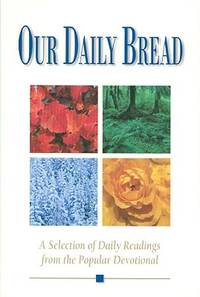
1988Q-0929239016Discovery House Publishers 1988-01-01. Hardcover. New. In shrink wrap. Looks like an interesting title! Discovery House Publishers hardcover
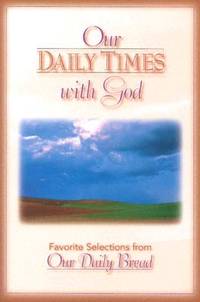
1997Q-1572930195Discovery House Publishers 1997-01-01. Paperback. New. In shrink wrap. Looks like an interesting title! Discovery House Publishers paperback