360 résultats
1965332Beamsville Ontario: Discovery Women's Institute Printed by Rannie Publications 1965. First edition. Stapled Wraps. Unpaginated. pp. 64. 4to. Illustrated card covers. Profusely illustrated with maps black and white photographs portraits and illustrations. Lightest rubbing to the extremities contents clean and unmarked with tight sound binding; very good. Rare. A comprehensive local history of Discovery N.W.T. formerly a mining town with details on the Indigenous peoples of the region religious affiliations of the community and the institutions serving them schools libraries newspapers fraternal organizations etc. <br/><br/> [Discovery Women's Institute], Printed by Rannie Publications paperback
191441545London 1914. No wrappers but stiched. All three papers contained in: "Philosophical Magazine" Sixth Series Vol. 27. No. 159. March 1914. The whole issue issue offered =no. 159: pp. 397-540 and 2 plates.Rutherford's paper.pp. 488-498. - Darwin's paper: pp. 499-506. - Bohr's paper: pp. 506-523. All clean and fine. <br/><br/><em>First edition and first printing of all three papers. Rutherford in this paper for the first time identifies the hydrogen nucleus and called it the 'positive electron'. He later called it 'the proton' . In his definitive paper of 1911 he estimated the radius of the nucleus a hundred thousand times smaller than that of an atom. Darwin in his paper offered here gave a more precise measure.In the first lines of the paper Rutherford outlines the content "The present paper and and the accompanying paper by Mr. C. Darwin the second paper offered here deal with certain points in connection with the "nucleus" theory of the atom which were purposely omitted in my first communication on that subject Phil. Mag. May 1911. A brief account is given of the later investigations which have been made to test the theory and of the deductions which can be drawn from them. At the same time a brief statement is given of recent observations on the passage of alpha particles through hydrogen which throw importent light on the dimensions of the nucleus." - Rutherford had studies alpha-particles intensely in the years before 1914 and proved quite conclusively that the individual particle was a helium atom with its electrons removed. The alpha particles were like the positive rays that had been discovered by Goldstein 1886 and now in 1914 the paper offered Rutherford suggested that the simplest positive rays must be those obtained from the hydrogen and that these must be the fundamentall positively-charged particle. He names it a 'positive electron'.Darwin in the paper offered "concluded from the known data:"No force proportional to some power of the distance other than the inverse square can give the dependence the Rutherford scattering cross section on the initial velocity" and he then calculated the distance of closest alpha-particle-nucleus approach.The paper by Niels Bohr relates to "The Stark effect". In 1913 appeared "an importent new discovery: when atomic hydrogen is exposed to a static electrical field its spectral lines split the amount of splitting being proportional to thefield strenght the linear Stark effect. After Rutherford read this news in "Nature" he at once wrote to Bohr:'I think it is rather up to you at the present time to write something on.electric effects.'" A. Pais. Bohrs paper on The Stark effect appeared in 1914 the paper offered here. - Rosenfeld. Niels Bohr' publications No. 10. </em> unknown
191441545London, 1914. No wrappers, but stiched. All three papers contained in: ""Philosophical Magazine"", Sixth Series, Vol. 27. No. 159. March 1914. The whole issue issue offered (=no. 159): pp. 397-540 and 2 plates.Rutherford's paper.pp. 488-498. - Darwin's paper: pp. 499-506. - Bohr's paper: pp. 506-523. All clean and fine.
19541153051954 Editions A.I.P.P.E. - 1954 - Edition sur Roto blanc des Papeteries Barjon et encarts sur Couché des Papeteries Navarre limitée à 500 exemplaires, n°381 - In-8, broché, couverture illustrée - 38 p. - Riche iconographie hors texte en N&B - Ouvrage non coupé (jamais lu)
19973486Alexandria VA : Time-Life Books; Tehabi Books 1997. 1997. Hardcover. Very Good/Very Good. 205 pp. : illustrated some in color color maps ; 26 cm. ; ISBN: 0783552610 LCCN: 97-16404 ; OCLC: 36727998 ; LC: G530.T6; Dewey: 910/.91634 ; "Unlike any other book ever published on the Titanic these pages magnificently present the combined efforts of hundreds of individuals through years of historical and scientific research study exploration and preservation."--dustjacket ; color photographic boards in printed glassine dustjacket ; a few tiny spots on dustjacket wear points on bottom of boards else VG/VG <br/> <br/> [Alexandria, VA] : Time-Life Books; Tehabi Books, 1997. hardcover
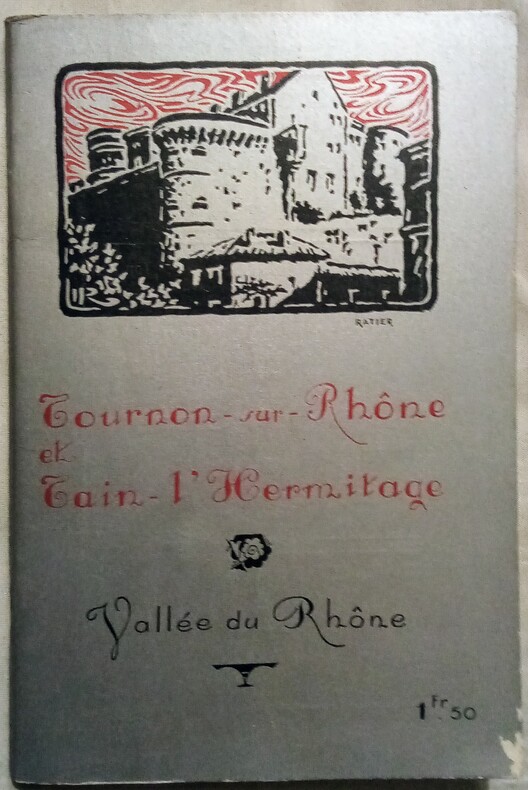
1934WOC-1686allée du Rhône – Vivarais. Guide illustré, publié par le Syndicat D'Initiatives. Nombreuses illustrations photographies, dessins de M. Beaume et M. Hudry. Ain, Imprimerie Rey & Guibaud, sans date (liste des Membres du Syndicat 1934). In-12 (18x12cm) broché couverture argentée et ornée par Ratier. 56pp.
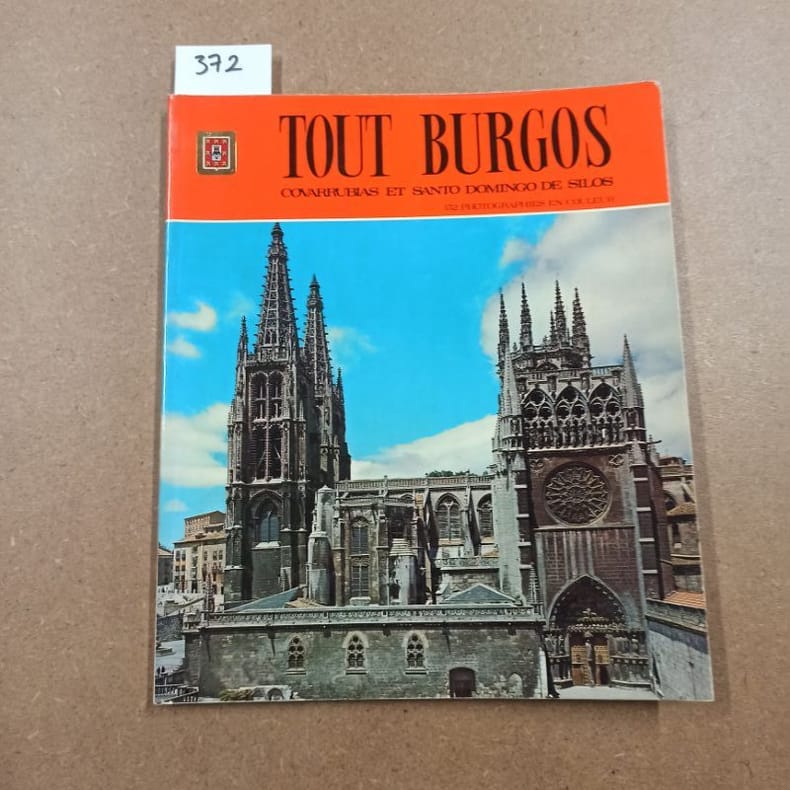
19743721974 - broché - Editorial Escudo de Oro - Collection "Toute l'Espagne" N° 20 - 1974 - In-8 (24,2 x 20,5 cm) broché - 125 pages - 152 photographies en couleurs - ISBN : 84-378-0021-8
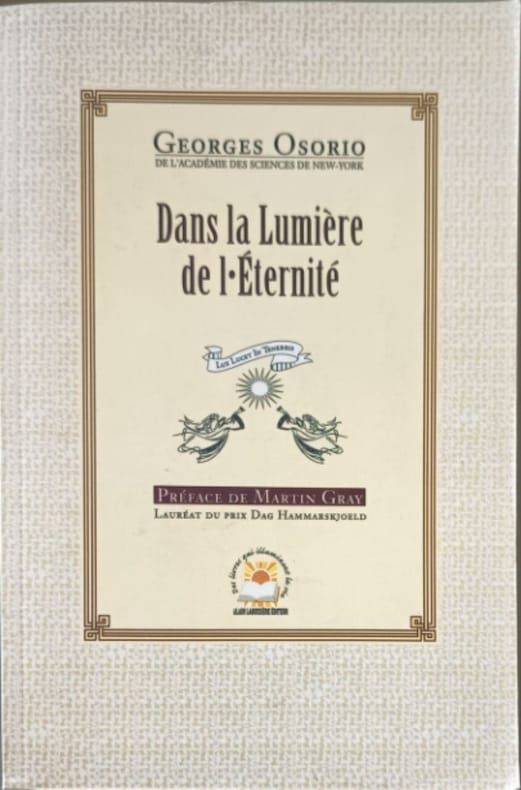
197913464Robert Laffont 1979 329 pages in8. 1979. Broché. 329 pages. Georges Osorio ingénieur en physique-chimie-biologie explore la question de la conscience après la mort à travers des enquêtes menées dans plusieurs pays. L'ouvrage préfacé par Martin Gray vise à rendre la mort acceptable et sans peur en s'appuyant sur des faits et expériences reconnus scientifiquement
1992253054Éditions Olizane 1992 312 pages in8. 1992. Broché. 312 pages.
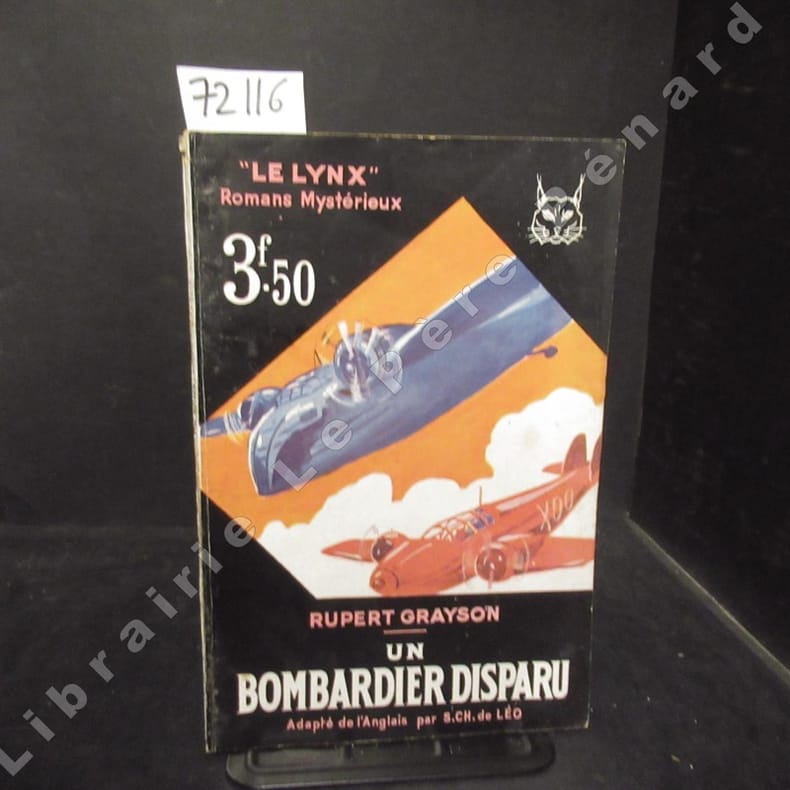
1940721161940 Editions Tallandier, collection "Le Lynx" N° 10 - 1940 - In-8, broché couverture illustrée - 63 pages
193447071Paris Gauthier-Villars 1934. 4to. No wrappers. In: "Comptes Rendus Hebdomadaires des Séances de L'Academie des Sciences" Tome 198 No 3. Titlepage to vol. 198. Pp. 213- 292. Entire issue offered. The joint paper: pp. 254-256 a. 1 photographic illustration in the text. Titlepage with a stamp on verso 2 small tears and a tiny bit of upper right corner gone. Titlepage a bit browned. <br/><br/><em>First appearance of this seminal paper in which artificial radioactivity was announced for the first time. Curie and Joliot were awarded the Nobel Prize in Chemistry 1935 "in recognition of their synthesis of new radioactive elements"."Until this date 1934 atomic nuclei emitting radiation were found in nature: it was called the natural radioactivity. It had been known since Rutherford that this natural radioactivity changed a nucleus into an other one: for instance radium becomes finally lead after many radioactive decays. We could say that lead does not become gold but gold becomes lead! But. this change of matter was not under control. It was not possible to construct the desired chemical element as the alchemist dreamed. But Irene and Frederic Joliot-Curie made the dream become almost reality.""Another very important development in the early 1934 by the Joliot-Curies in connection with irradiation of aluminum by alpha particles. The two French scientists detected the production of the recently discovered positrons. . However they soon realized that the positron activity continued after the alpha source was removed and that they had in fact discovered positive beta radioactivity. The importance of the discovery of artificial radioactivity was immediately recognized and resulted in a Nobel Prize in chemistry to the Joliot-Curies in 1935. The new phenomenon immediately became widely employed in nuclear physics chemistry biology and medicine." Kragh Quantum Generations p. 187"These elegant experiments which provided the first chemical proof of induced transmutations and showed the possibility of artificially creating radioisotopes of known stable elements were repeated and extended in the major nuclear physics laboratories of various countries " DSB.Born on 12 September 1897 in Paris Irène Curie was the daughter of Pierre and Marie Curie. "During World War I she worked as a nurse helping her mother operate radiography equipment and then studied physics and mathematics at the Sorbonne gaining a doctorate for studying the range of alpha particles. She then went to work for her mother at the Radium Institute. There she met Frédéric Joliot whom she married in 1926. Frédéric Joliot was born on 19 March 1900 in Paris - He joined the Radium Institute in 1925 and obtained his PhD in 1930. Together the Joliot-Curies worked on radioactivity and the transmutation of the elements. Twice they just missed major discoveries: in 1932 when Chadwick beat them to the neutron and in 1933 when Anderson discovered the positron. However in 1934 whilst bombarding light elements with alpha particles the Joliot-Curies noticed that although proton production stopped when the alpha particle bombardment stopped another form of radiation continued. The alpha particles had produced an isotope of phosphorus not found in nature. This isotope was radioactive and was decaying through beta-decay" DSB. </em> unknown
19081193901908 A Genève, Atar, S. A., éditeur - Extrait de l'Annuaire du conservatoire et du jardin botaniques de Genève, 11ème et 12ème années, 1907-1908 - 1908 - In-8, broché - 8 p. - 2 planches hors texte en fin d'ouvrage
193447071Paris, Gauthier-Villars, 1934. 4to. No wrappers. In: ""Comptes Rendus Hebdomadaires des Séances de L'Academie des Sciences"", Tome 198 No 3. Titlepage to vol. 198. Pp. (213-) 292. (Entire issue offered). The joint paper: pp. 254-256 a. 1 photographic illustration in the text. Titlepage with a stamp on verso, 2 small tears and a tiny bit of upper right corner gone. Titlepage a bit browned.
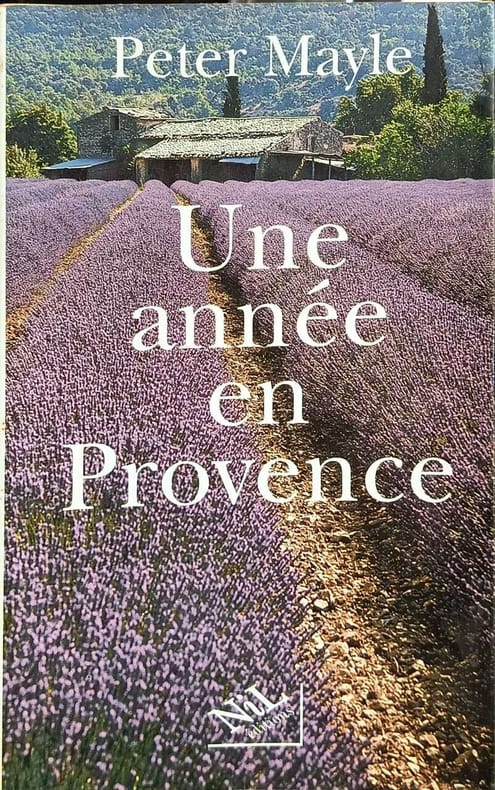
19948864Nil 1994 245 pages 13x22x2cm. 1994. Broché. 245 pages. Peter Mayle raconte avec humour et tendresse son expérience d'installation avec sa femme dans une ferme du Lubéron en Provence. Ce récit autobiographique décrit leur immersion dans la région ses traditions ses paysages et ses habitants offrant un voyage sensoriel entre délices culinaires et rencontres pittoresques
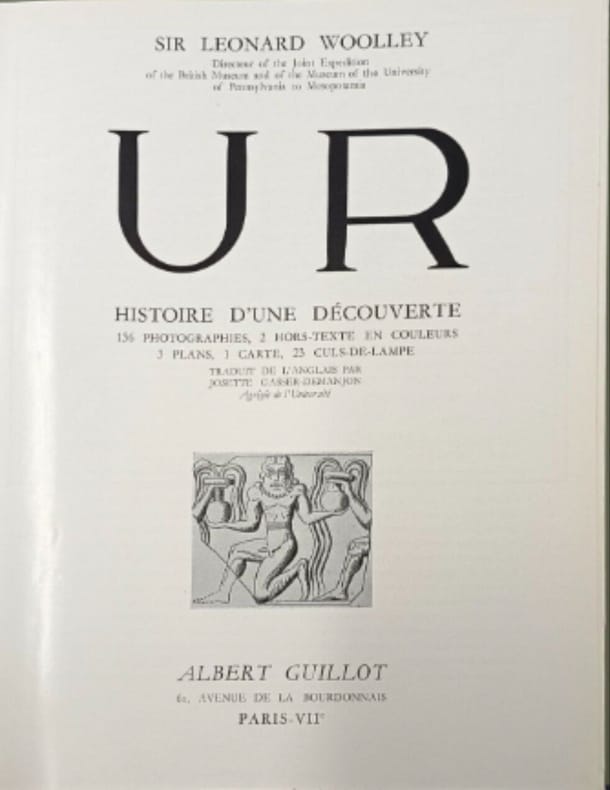
195716126Albert Guillot 1957 163 pages in4. 1957. pleine toile éditeur avec jaquette. 163 pages.
1939723901939 Agence Parisienne de Distribution Editeur, collection "REX" N° 11 - 1939 - 1 fascicule in-8, broché couverture illustrée - 63 pages
1951WOC-550Préface de Paul Lévy. Photo de Michel Huet, P. Verger, J.Y. Claeys et S. De Sacy. Lausanne, La Guilde du Livre, 1951. In-4 (28,5x22,5cm) broché et illustrée. Ouvrage non paginé.
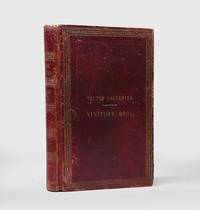
1904166196London: The Bruton Galleries Bond Street 1904-36. The blockbuster Discovery exhibition of 1904 The original visitor's book for one of the stellar red-carpet events of the season: the Bruton Galleries exhibition of artefacts and artwork from Scott's Discovery expedition a landmark in polar exploration. It includes the signatures of numerous crew members including Ernest H. Shackleton Edward A. Wilson Charles Royds Reginald Skelton and Ernest E. Joyce alongside Clements Markham and Llewellyn Longstaff a financial angel of the expedition. The exhibition which opened in November 1904 was curated by Clements Markham who had organized the expedition and launched Scott's polar career. It was remarkably extensive the catalogue listing 484 items including 150 photographs by Reginald Skelton 200 watercolours and drawings by Edward A. Wilson equipment from the expedition a model of the Discovery rations and the South Polar Times. The photographs and artwork constituted a visual record of Antarctic conditions and documented gruelling conditions bringing home "the scale magic and danger of Antarctica with a compelling immediacy" Merwe & Michell p. 66. The show proved extraordinarily popular with "Bruton Street and New Bond Street lined with motorcars and carriages" Huxley p. 141. "Persons of rank and fashion were marshalled into a long queue by a policeman. Society folk were not used to queues in those days and they protested that they had tickets; so had everyone the constable replied and kept them in line" Huxley p. 141. It fuelled the public's growing excitement about polar exploration: "an exhibit of Wilson's Antarctic art attracted over ten thousand viewers to London's prestigious Bruton Gallery. Advertisements in the gallery catalogue touted paints and binoculars used by the artist in the Antarctic" Larson p 159. The Discovery crew received an exuberant homecoming hailed for their "British grit" and Edward VII awarded each man the Antarctic medal. "Indeed for many Scott and his men became the national heroes that the Boer War had failed to supply. The explorers became celebrities. Crowds packed their public appearances" Larson p. 158. The leading actress Ellen Terry attended the event. She had been present when the expedition docked in Portsmouth later writing a postcard to Scott thanking him for letting her see the Discovery. The members of the Discovery expedition who have signed include Ernest H. Shackleton third lieutenant Edward A. Wilson assistant surgeon and artist Charles Royds first lieutenant Reginald Skelton chief engineer and photographer Ernest E. Joyce petty officer Arthur Henry Blissett steward Jacob Cross petty officer Hartley T. Ferrar geologist and Reginald C. Ford chief steward and stores officer. Curiously Scott is not among them. This might be a consequence of his resolve "to keep as quiet as possible" after the expedition Huxley p. 158. Three Shackleton family members attended: Ernest H. Shackleton's sisters Gladys and Helen besides Eileen Shackleton of Bushey. Other noted polar explorers feature among the visitors such as Robert Rudmose-Brown of the Scottish National Antarctic Expedition Scotia 1902-4 alongside its honorary secretary James G. Ferrier. Another notable voyager is Charles Ede the assistant surgeon on HMS Assistance on the British Franklin Search Expedition 1850-1 and a "Mrs. Reynolds" the great-niece of Franklin. The visitor's book serves as a record of an early 20th-century red carpet event and contains approximately 1000 signatures including the writer Walter Jerrold alongside the artists Felix Moscheles and Marietta Pallis. Robert Baden-Powell the founder of the Boy Scout movement also attended. Princess Beatrice and Maria Amelia Queen of Portugal likewise attended. Successive pages record visitors from Lancashire Yorkshire and Scotland. Moreover there are numerous admirals and military men together with a collector of Egyptian art. Two further sections in the book relate to miscellaneous exhibitions held in later years. Folio 283 x 245 mm. Contemporary dark red skiver by Jas. Truscott & Sons of London flat spine gilt-lettered direct spine and covers decorated in gilt front cover lettered "Bruton Galleries/Visitor's Book" marbled endpapers all edges gilt; 115 lined pages signed bearing approximately 2000 names and addresses all recto of which 57 lined pages with approximately 1000 signatures pertaining to the Discovery expedition. Extremities with slight wear from handling some stripping of leather minor toning general finger soiling. A very good copy. Elspeth Huxley Scott 1990; Max Jones The Last Great Quest 2004; Edward J. Larson An Empire of Ice 2011; Pieter van der Merwe and Jeremy Michell eds South: The Race to the Pole 2018. hardcover
1973116867Stock 1973 In-8 broché 23,5 cm sur 15. 267 pages. Pelicullage desquamé. Bon état d’occasion.
1983ROD0035063Chez l'auteur. 1983. In-8. Broché. Bon état, Couv. convenable, Dos satisfaisant, Intérieur bon état. 80p. Nombreuses illustrations en noir et blanc.. . . . Classification Dewey : 553-Géologie économique
1983ROD0035061Chez l'auteur. 1983. In-8. Broché. Bon état, Couv. convenable, Dos satisfaisant, Intérieur bon état. 104p. Illustrations ennoir et blanc.. . . . Classification Dewey : 560-Paléontologie. Paléozoologie
1984ROD0035059Chez l'auteur. 1984. In-8. Broché. Bon état, Couv. convenable, Dos satisfaisant, Intérieur frais. 96p. Illustrations en noir et blanc.. . . . Classification Dewey : 0-GENERALITES
1978ROD0035060Chez l'auteur. 1978. In-8. Broché. Bon état, Couv. convenable, Dos satisfaisant, Intérieur bon état. 103p. Illustrations en noir et blanc.. . . . Classification Dewey : 560-Paléontologie. Paléozoologie
1979ROD0035062Chez l'auteur. 1979. In-8. Broché. Bon état, Couv. convenable, Dos satisfaisant, Intérieur bon état. 111p. Illustrations en noir et blanc.. . . . Classification Dewey : 530-Physique
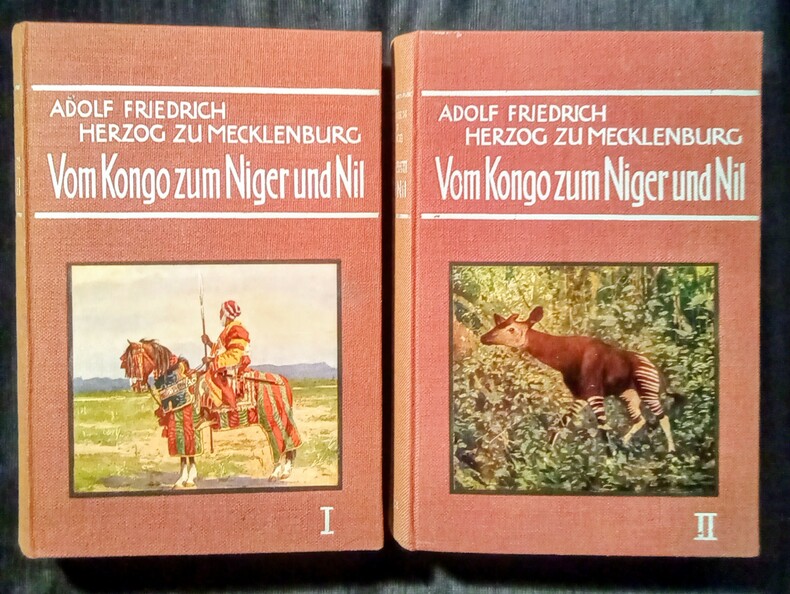
1914WOC-2234Berichte der deutschen Zentralafrica=Expedition 1910/1911. Mit 512 buten und einfarbigen Abbildungen nach Photographien und Zeichnugen, sowie mit 6 karten. Esther Band. Leipzig, F. A. Brocklaus, 1914. 2 volumes grands in-8 (23,5x4x16cm) pleine toile bordeaux, plats supérieurs imprimé en blanc et ornés de vignettes en couleurs, dos lisses imprimés et un peu passés. X,324pp. + X,398pp.