ROMANO, FolcoLivre Rare Book
360 résultats
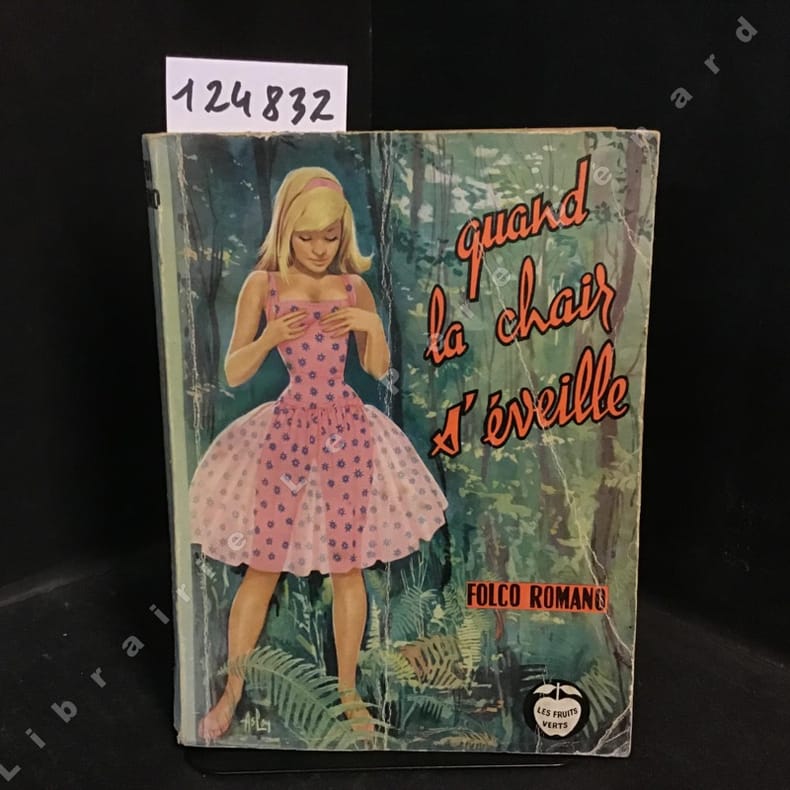
19581248321958 Editions Les Presses de la Nuit / Le Styx - Collection "Les Fruits Verts" - 1958 - In-12 broché, couverture signée Aslan - 187 pages
1968ART5746MRelié, 264 pages, paru en 1968 chez Nagel, livre en très bon état général, proche du neuf.
1952100148755Desclée de brouwer 1952 in8. 1952. Broché.
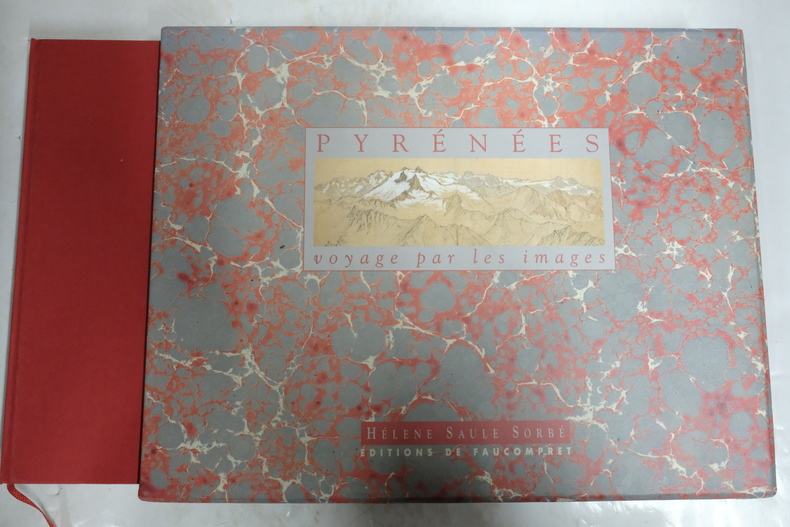
1993REG2627MRelié, avec coffret, 331 pages, paru en 1993 chez Ed. de Faucompret, livre en très bon état général.
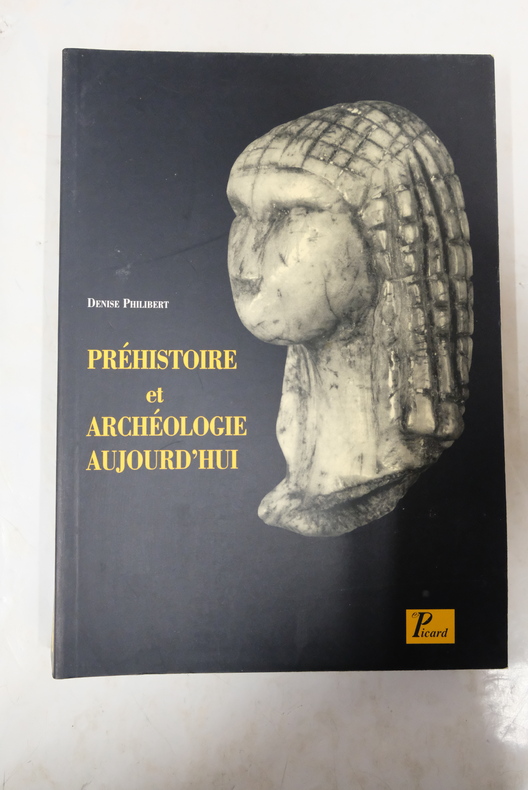
2000ARCHEO563MBroché, 368 pages, paru en 2000 chez Picard, livre en très bon état général.
1991100148595Hakluyt Society 1991 574 pages 14 2x2x21 6cm. 1991. Cartonné jaquette. 574 pages. Ce livre est une édition savante et annotée des récits de voyage du missionnaire tchèque Remedius Prutky en Éthiopie et dans d'autres pays au XVIIIe siècle. La traduction et l'édition sont réalisées par J.H. Arrowsmith-Brown avec des annotations de l'historien Richard Pankhurst. Le texte décrit notamment le voyage de Prutky depuis Rome jusqu'en Bohême son audience avec l'impératrice Marie-Thérèse et son retour en Égypte et à Rome
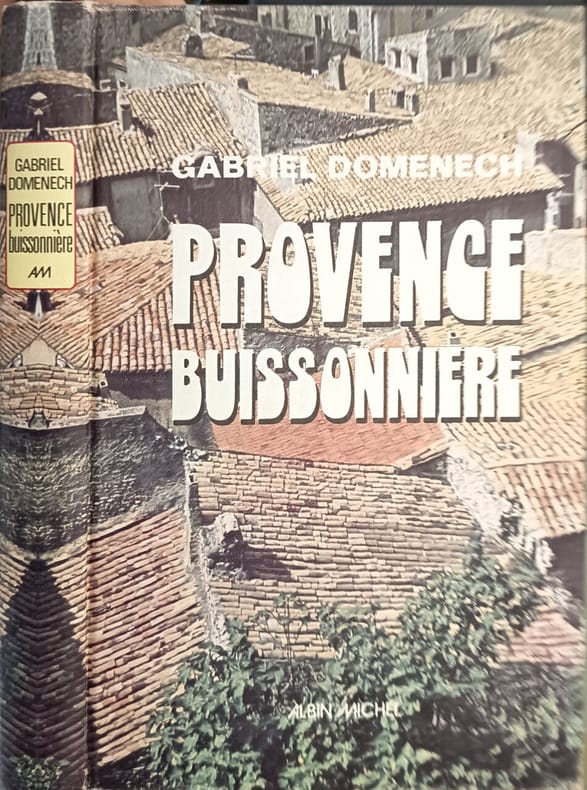
197610147Albin Michel 1976 259 pages in8. 1976. reliure editeur. 259 pages. Provence Buissonnière est un récit de Gabriel Domenech publié en 1975 par Albin Michel qui propose une découverte de la Provence à travers le regard de l'auteur. L'ouvrage invite à une exploration personnelle de cette région
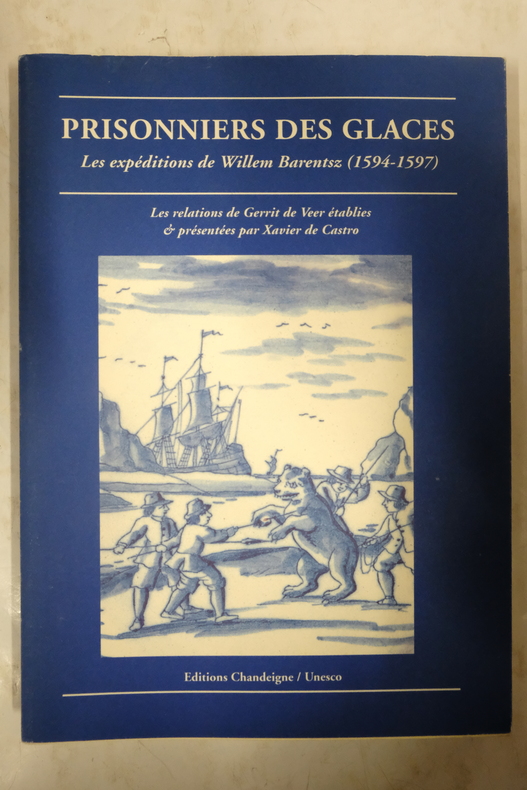
1996VOY4420MBroché, 253 pages, paru en 1996 chez Chandeigne, très bon état général. Nous avons d'autres exemplaires des éditions Chandeigne, retrouvez les dans notre catalogue grâce au mot-clé "Chandeigne".
1949BOOKS25738Surrey England: Merle Press. Very good condition: upper corner gently bumped/No Dustjacket. 1949. First Edition. 12mo. 47pp. . Merle Press unknown
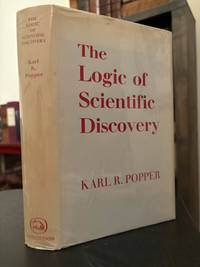
1959508<p><strong>Large Octavo. Publisher's cloth & dustwrapper. First edition first printing of one of the most significant works on the philosophy of science. The Logic of Scientific Discovery was originally published in Germany in 1934 and Popper rewrote and republished it in English in 1959 with the New York edition preceding this much rarer UK edition. A fine copy in an unclipped slightly worn and faded very good dust wrapper. Small inscription on the front pastedown of David Keyt 1930-2025 Professor Emeritus of Philosophy at Washington University Seattle. The book is mostly unopened and looks mostly unread. A very nice copy. Popper argues that science should adopt a methodology based on falsifiability because no number of experiments can ever prove a theory but a reproducible experiment or observation can refute one. According to Popper: "non-reproducible single occurrences are of no significance to science. Thus a few stray basic statements contradicting a theory will hardly induce us to reject it as falsified. We shall take it as falsified only if we discover a reproducible effect which refutes the theory". Popper argues that science should adopt a methodology based on "an asymmetry verifiability and falsifiability; an asymmetry which results from the logical form of universal statements. For these are never derivable from singular statements but can be contradicted by singular statements".</strong></p> Hutchinson hardcover
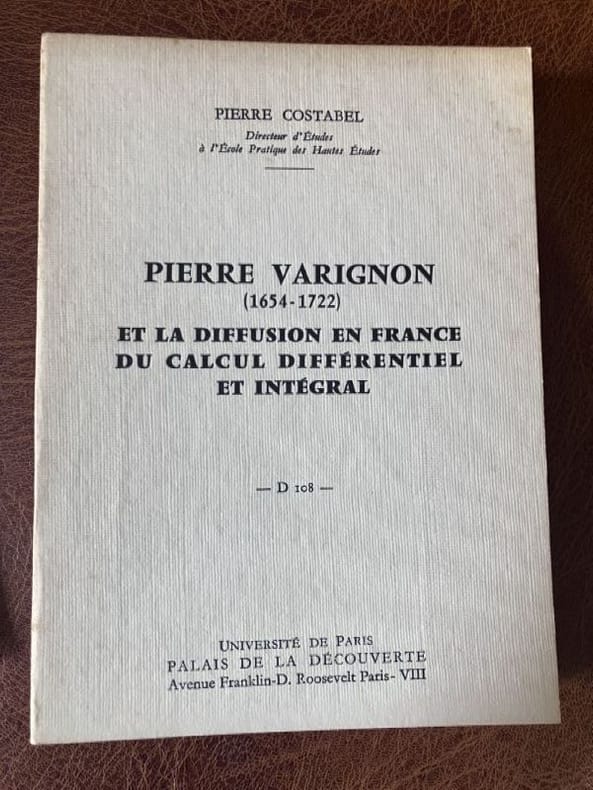
196721311967 Paris Université de Paris Palais de la découverte 1960 Un volume in°12 broché 32 pages LR30
196721351967 Paris Université de Paris Palais de la découverte 1965 Un volume in°12 broché 28 pages LR30
19852090202118202648Fukutakeshoten 1985. Soft Cover. Fine. The book is in fine condition. Fukutakeshoten paperback
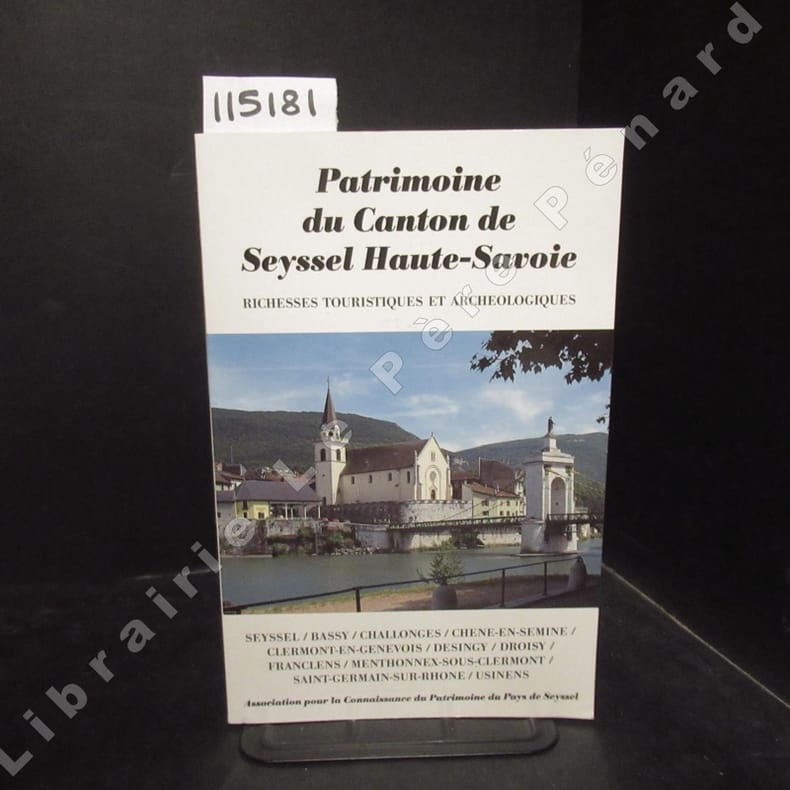
19811151811981 Edité par l'A.C.P.P.S. (Association pour la connaissance du patrimoine du pays de Seyssel) - 1981 - In-8, broché, couverture illustrée - 287 p. - Très nombreuses illustrations in et hors texte en couleurs et en N&B
19721227121972 Editions Paulines, collection "Problèmes de vie" - 1972 - Petit In-8, broché - 191 pages
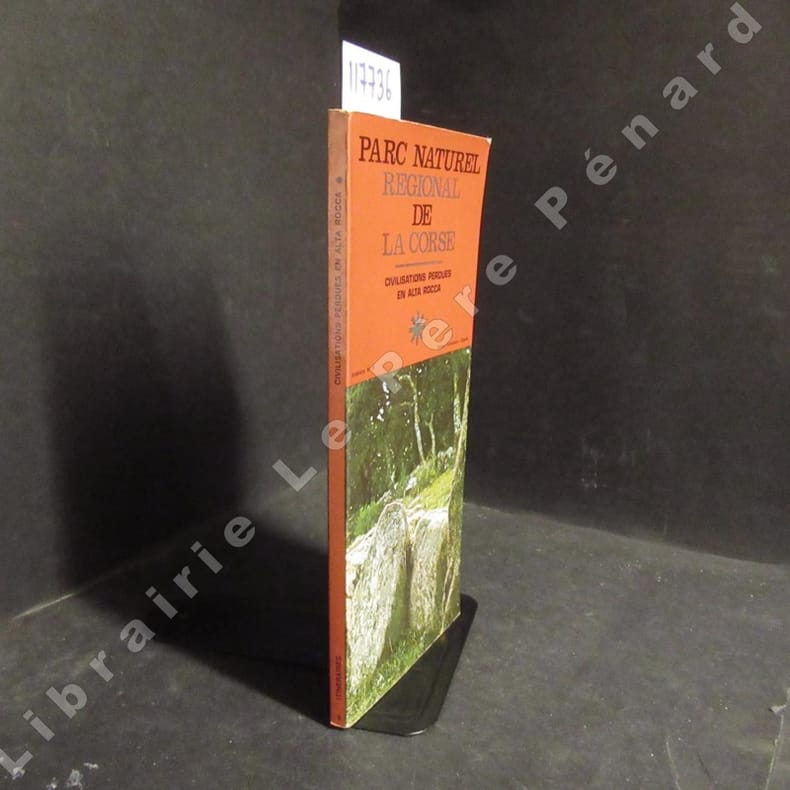
19751177361975 Production A.R.P.E.G.E., Collection "Guides des Parcs Naturels Régionaux" - 1975 - In-8, format oblong, broché, couverture à rabats illustrée - 112 p. - Riche iconographie in texte en N&B
1989Q-0929239032Discovery House Pub 1989-04-01. Paperback. New. In shrink wrap. Looks like an interesting title! Discovery House Pub paperback
1988Q-0929239016Discovery House Publishers 1988-01-01. Hardcover. New. In shrink wrap. Looks like an interesting title! Discovery House Publishers hardcover
1997Q-1572930195Discovery House Publishers 1997-01-01. Paperback. New. In shrink wrap. Looks like an interesting title! Discovery House Publishers paperback
1976500330819Hachette 1976 119 pages 1976. 119 pages. Oui-Oui le petit bonhomme en bois rêve d'aventure sur les mers. Il part en voyage sur un gros navire parfois pour ramener Bastien Bouboule qui a fait une fugue et vit plusieurs jours d'aventures en mer où il se fait de nombreux amis
1992791501992 Edition La Découverte - collection Enquêtes - grand in-8 broché - 1992 - 201 pages
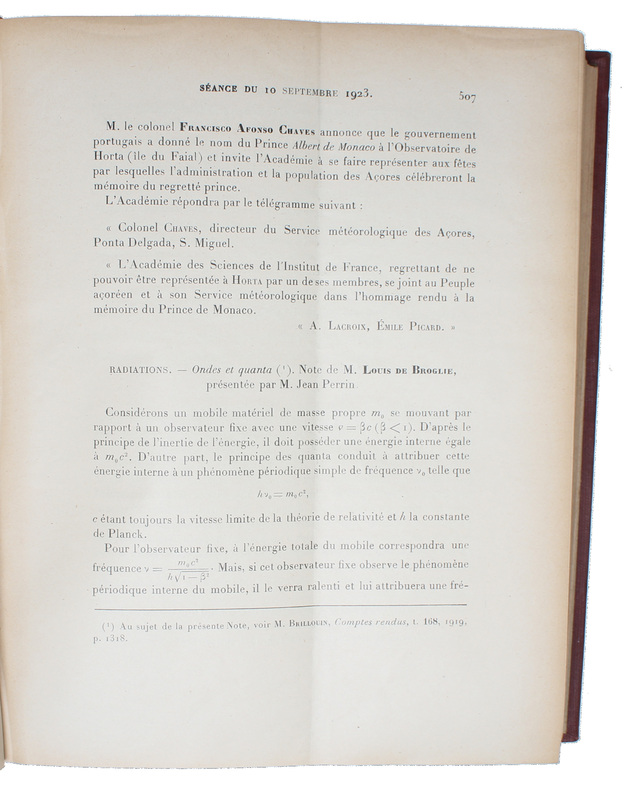
192349718Paris, Gauthier-Villars et Cie, 1923. 4to. Bound in one contemp. full buckram. Spines gilt and with gilt lettering. In: ""Comptes Rendus Hebdomadaires des Séances de L'Academie des Sciences"", Tome 177. Bound with orig. printed front-wrapper to No. 1, half-title and title-page to vol. 177. 1513 pp. (Entire volume offered). De Broglie's papers: pp. 507-510, pp. 548-551 a. pp. 630-32. Clean and fine. A punched stamp on foot of title-page.
192346949Paris, Gauthier-Villars et Cie, 1923. 4to. Bound in 2 contemp. full cloth. Spines gilt and with gilt lettering. In: ""Comptes Rendus Hebdomadaires des Séances de L'Academie des Sciences"", Tome 177. With htitle a. titlepage. 1513 pp. (Entire volume offered). De Broglie's papers: pp. 507-510, pp. 548-551 a. pp. 630-32. Clean and fine. A stamp to verso of titlepage.
192349718Paris Gauthier-Villars et Cie 1923. 4to. Bound in one contemp. full buckram. Spines gilt and with gilt lettering. In: "Comptes Rendus Hebdomadaires des Séances de L'Academie des Sciences" Tome 177. Bound with orig. printed front-wrapper to No. 1 half-title and title-page to vol. 177. 1513 pp. Entire volume offered. De Broglie's papers: pp. 507-510 pp. 548-551 a. pp. 630-32. Clean and fine. A punched stamp on foot of title-page. <br/><br/><em>First edition of these papers which ESTABLISHED A NEW ERA IN PHYSICS by introducing the epochal new principle that particle-wave duality should apply not only to radiation but also to matter and thus CREATING QUANTUM MECHANICS. These 3 papers were extended to form his doctoral thesis of 1924 "Recherches sur la Théorie des Quanta."De Broglie relates "After long reflection in solitude and meditation I suddenly had the idea during the year 1923 that the discovery made by Einstein in 1905 should be generalized by extending it to all material particles and notably to electrons" Preface to his PhD thesis 1924."He made the leap in his September 10 1923 paper: E=hv should hold not only for photons but also for electrons to which he assigns a 'fictitious associated wave'. In his September 24 paper he indicated the direction in which one 'should seek experimental confirmations of our ideas': a stream of electrons traversing an aperture whose dimensions are small compared with the wavelenght of the electron waves 'should show diffraction phenomena' ."Pais "Subtle is the Lord" pp. 425-436.In the third paper October 8 he discusses "The interplay between the propagation of the particle and of the waves could be expressed in more formal terms as an identity between the fundamental variational principles of Pierre de Fermat rays and Pierre Louis Maupertuis particles as de Broglie discussed it further in his last communication . Therein he also considered some thermodynamic consequences of his generalized wave-particle duality. He showed in particular how one could using Lord Rayleigh’s 1900 formula for the number of stationary modes for phase waves obtain Planck’s division of the mechanical phase space into quantum cells.Louis de Broglie achieved a worldwide reputation for his discovery of the wave theory of matter for which he received the Nobel Prize for physics in 1929. His work was extended into a full-fledged wave mechanics by Erwin Schrödinger and thus contributed to the creation of quantum mechanics. After an early attempt to propose a deterministic interpretation of his theory de Broglie joined the Copenhagen school’s mainstream noncausal interpretation of the quantum theory."DSB."This idea i.e. de Broglie's that matter might behave as waves was tested and confirmed by Davisson and Germer in 1927. Thus the duality of both light and matter had been established and physicists had to come to terms with fundamental particles which defied simple theories and demanded two sets of 'complementary' descriptions each applicable under certain circumstances but incompatible with one another." Printing and the Mind of Man 417. </em> hardcover
192346949Paris Gauthier-Villars et Cie 1923. 4to. Bound in 2 contemp. full cloth. Spines gilt and with gilt lettering. In: "Comptes Rendus Hebdomadaires des Séances de L'Academie des Sciences" Tome 177. With htitle a. titlepage. 1513 pp. Entire volume offered. De Broglie's papers: pp. 507-510 pp. 548-551 a. pp. 630-32. Clean and fine. A stamp to verso of titlepage. <br/><br/><em>First edition of these papers which ESTABLISHED A NEW ERA IN PHYSICS by introducing the epochal new principle that particle-wave duality should apply not only to radiation but also to matter and thus CREATING QUANTUM MECHANICS. These 3 papers were extended to form his doctoral thesis of 1924 "Recherches sur la Théorie des Quanta."De Broglie relates "After long reflection in solitude and meditation I suddenly had the idea during the year 1923 that the discovery made by Einstein in 1905 should be generalized by extending it to all material particles and notably to electrons" Preface to his PhD thesis 1924."He made the leap in his September 10 1923 paper: E=hv should hold not only for photons but also for electrons to which he assigns a 'fictitious associated wave'. In his September 24 paper he indicated the direction in which one 'should seek experimental confirmations of our ideas': a stream of electrons traversing an aperture whose dimensions are small compared with the wavelenght of the electron waves 'should show diffraction phenomena' ."Pais "Subtle is the Lord" pp. 425-436.In the third paper October 8 he discusses "The interplay between the propagation of the particle and of the waves could be expressed in more formal terms as an identity between the fundamental variational principles of Pierre de Fermat rays and Pierre Louis Maupertuis particles as de Broglie discussed it further in his last communication . Therein he also considered some thermodynamic consequences of his generalized wave-particle duality. He showed in particular how one could using Lord Rayleigh’s 1900 formula for the number of stationary modes for phase waves obtain Planck’s division of the mechanical phase space into quantum cells.Louis de Broglie achieved a worldwide reputation for his discovery of the wave theory of matter for which he received the Nobel Prize for physics in 1929. His work was extended into a full-fledged wave mechanics by Erwin Schrödinger and thus contributed to the creation of quantum mechanics. After an early attempt to propose a deterministic interpretation of his theory de Broglie joined the Copenhagen school’s mainstream noncausal interpretation of the quantum theory."DSB."This idea i.e. de Broglie's that matter might behave as waves was tested and confirmed by Davisson and Germer in 1927. Thus the duality of both light and matter had been established and physicists had to come to terms with fundamental particles which defied simple theories and demanded two sets of 'complementary' descriptions each applicable under certain circumstances but incompatible with one another." Printing and the Mind of Man 417. </em> hardcover