343 résultats
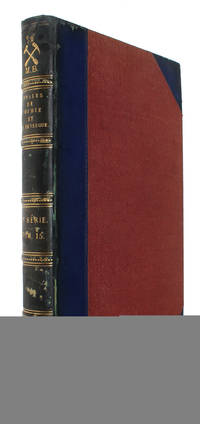
181644516Paris Crochard 1816-25. Bound in 2 fine recent hmorocco. In: "Annales de Chimie et de Physique Redigées par MM. Gay-Lussac et Arago" Tome I IV IX X XI XV XVII XX XXI XXIII XXVIII and XXIX. Some memoirs with scattered brownspots. All but volume 15 with the orig. titlepages to the volumes. Vol. XV having instead of the titlepage a sample of the orig. printed wrappers December issue 1820. Bound at end of volume 2. The memoir no. 25a below is inserted at the end of volume 2. Some of the memoirs having textillustrations. Some versos of titlepages with stamps. <br/><br/><em>First appearances of this groundbreaking series of papers and memoirs in which Fresnel established the scientific basis for the wave theory of light and gave the theoretical framework for explaining in the context of his theory of the transversal nature of lightwaves the phenomena of double refraction refraction dispersion polarization interference diffraction patterns diffraction fringes as light spreads around objects etc. He developed mathematically the hypothesis of the wave nature of light and he demonstrates its conformity with experience. His study of light was a dynamic interplay between theory and observation between mathematics and experiment. - The offered series also comprises the contributions from Arago and the rapports from The French Academy's committees by Ampère Biot and Fourier - see below nos. 6111415a.nd 18."From the point of view of method his investigations extended from the manual operations of the laboratory to the most abstract mathematical analyses. Few physicists since Newton had been so versatile."Silliman in "Historical Studies in the Physical Sciences" vol. 4 p. 155."The wave-thory at this time was still encumbered with difficulties. Diffraction was not satisfactorily explained; for polarization no explanation of any kind was forthcoming; the Huygenian construction appeared to require two different luminiferous media within double refracting bodies; and the universality of that construction had been impugned by Brewster's discovery of biaxial crystals. The upholders of the emission theory emboldened by the success of Laplace's theory of double refraction thought the time ripe for their final triunph; and as a step to this in March 1817 they proposed Diffration as the subject of the Academy's prize for 1818. Their expectation was disappointed; and the successful memoir afforded the first of a series of reverses of which in the short space of seven years the corpuscular theory was completely owerthrown. The author was Augustin Fresnel."Whittaker "A History of the Theories of Aether & Electricity" vol. 1 p.107 ff."This concept of transverse waves met with the greatest hostility from the scientists of the day who could not imagine an extremely fluid and rarified ether which at the same time possessed the mechanical properties of a rigid body. Even Arago admitted that he could not follow the exuberant engineer in his ideas. ButFresnel was convinced that at last he had the key to many mysteries and with his model of waves he gave a full clarification of the phenomena of polarization. With insuperable precision he explained a long series of extremely complicated experiments such as those of chromatic polarization that Arago himself had discovered by chance in 1811 and which the followers of Newton could not explain in spite of all their efforts. Following this line Fresnel reached the synthesis which is his masterpiece.we must recall the final interpretation that he gave of the famous phenomenon of partial reflection by transparent surfaces that simple phenomenon which until then had puzzled Grimaldi Newton and Huygens and which in Malus's experiments had unexpectedly acquired a special importencee as it had been compared to the great mystery of double refraction."Ronchi "The Nature of Light" p. 255 ff.Comprising:1. Mémoire sur la Diffraction de la lumière où l'on examine particululièrement le phénomène des franges colorées que présentent les ombres des corps éclairés par un point lumineux. "Ann.Chim.P." Tome 1. 1816. With titlepage to vol. 1. Pp. 239-281 and 1 folded engraved plate.2. Extrait d'une Lettre de M. Fresnel à M. Arago sur l'influence de la chaleur dans les couleurs développées par la polarisation.Tome 4. 1817. With titlepage to vol. 4. Pp. 298-300.3. Lettre de M. Fresnel à M. Arago sur l'influence du mouvement terrestres dans quelques phénomènes terrestres dans quelques phénoménes d'optique. Tome 9. 1818. With titlepage to vol. 18. Pp. 57-70.4. Note additionelle à la Lettre de M. Fresnel à M. Arago insérée dans le dernier Cahier des Annales. Tome 9. 1818. Pp. 286-287.5. FRESNEL & ARAGO. Sur l'Action que le rayons de lumiére polarisés exercent les uns sur les autres. Tome 10. 1819. With titlepage to vol. 10. Pp. 288-305. - Also with "Extrait d'un ouvrage du P. Grimaldi intitulé: Traité physico-mathérmatique de la lumiere des couleurs et de l'iris". Pp. 306-312.6. ARAGO. Rapport par M. Arago à l'Academie des Sciences au nom de la Commission qui avait été chargée d'examiner les Mémoires envoyés au concours pour le prix de la diffraction. Tome 11. 1819. With titlepage to vol. 11. Pp. 5-30.7. Mémoire sur la Diffraction de la Lumiere. Extrait. This importent Price-Memoir was only printed in full in 1826. Tome 11. 1819. Pp. 246-296.8. Suite Du Mémoire sur la Diffraction de la Lumière. Tome 11. 1819. Pp. 337-378. Note sur des Essais ayant pour but de décomposer l'eau avec un aimant. Pp. 219-222.9. Note sur des Essais ayant pour but de décomposer l'eau avec un aimant. Tome 15. 1820. Pp. 219-222. No titlepage to vol. 15.10. Résume d'un Mémoire sur la Reflexion de la lumière. Tome 15. 1820. Pp. 379-386. Tome 15 is here represented with the last issue of the year Decembre 1820 pp. 337-448 and instead of the titlepage having the orig. printed wrappers bound at end of the second volume.11. ARAGO & AMPÈRE. Rapport fait à l'Academie des Sciences le lundi 4 juin 1821 sur un Mémoire de M. Fresnel relatif aux couleurs des lames cristallisées douées de la double réfraction. Tome 17. 1821. Titlepage to vol. 17. Pp. 80-102.12. Note sur le Calcul des teintes que la polarisation développe dans les lames cristallisées. Tome 17. 1821. Pp. 102-111.13. IIe Note sur la Coloration des lames cristallisées. Tome 17. 1821. Pp. 167-196.14. BIOT. Remarques de M. Biot sur un Rapport lu le 4 juin 1821 à l'Academie des Sciences par MM. Arago et Ampere. Tome 17. 1821. Pp. 225-258.15. ARAGO. Examen des Remarques de M. Biot. Tome 17. 1821. Pp. 258-273. 16. Addition à la IIe Note insérée dans le Cahier précédent par M. Fresnel. Tome 17. 1821. Pp. 312-315.17. Note sur les remarques de M. Biot publiées dans le Cahier précédent. Tome 17. 1821. Pp. 393-403.18. FOURIER AMPÈRE ET ARAGO. Rapport fait à l'Academie sur un Mémoire de M. Fresnel relatif à la double réfraction. Commission: Fourier Ampère et Arago. Tome 20 1822. With titlepage to vol. 20. Pp. 337-344.19. Note sur la double réfraction du verre comprimé. Tome 20. 1822. Pp. 376-383.20. Explication de la Réfraction dans le système des ondes. Tome 21 1822. Titlepage to vol. 21. Pp. 225-241. LAGRANGE. Sur la Théorie de la lumière d'Huygens. Pp. 241-246.21. Sur l'Ascension des nuages dans l'atmosphère. Tome 21 1822. Pp. 260-263.22. Réponse de M. Fresnel à la Lettre de M. Poisson insérée dans le tome XXII des Annales p. 270. Tome 23 1823. Titlepage to vol. 23. Pp. 32-49.23. Note sur le Phénomène des anneaux colorés. Tome 23 1823. Pp. 129-134.24. Suite de la Réponse de M.A. Fresnel à la Lettre de M. Poisson. Tome 23 1823. Pp. 113-122.25. Extrait d'un Mémoire sur la double Réfraction particulière que présente le cristal de roche dans la irection de son axe. Tome 28 1825. Titlepage to vol. 28. Pp. 147-161. 25 a Extrait d'un Mémoire sur la double Réfraction. Tome 28 1825. Pp. 263-279. According to Buchwald "The Rise of the Wave Theory opf Light" p. 462 these 2 extracts composes the entire memoire.26. Note sur la Répulsion que des corps échauffés exercent les uns sur les autres à des distances sensibles. Lue à l'Institut le 13 juin 1825. Tome 29 1825. Titlepage to vol. 29. Pp. 57-62.27. Extrait d'un Mémoire sur la Loi des modifications imprimées à la lumière polarisée par sa réflexion totale dans l'intérieur des corps transparens. Tome 29 1825. Pp. 175-187. This paper was never printed in full. </em> unknown
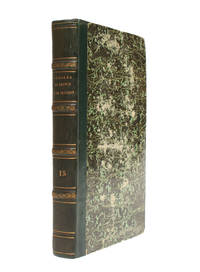
58978Paris Crochard 1820. 8vo. In 'Annales de Chimie et de Physique' Volume 15 pp.59-76;170-218. The entire volme 15 offered here. 448 pp. 5 engraved plates. Bound in contemporary half calf with gilt spine Raised bands. Minor scratches to spine. Corners a bit bumped. Five engraved plates accompanying the memoires. Clean and fine. <br/><br/><em>First edition of the first announcement of Ampère's discoveries on electromagnetism. Ampère first heard of Ørsted's discovery of electromagnetism on the 4th of September when Arago announced Ørsted's results to the Paris Academy of Sciences. In Ørsted's experiment a current-carrying wire is held over and under a compass needle - the result being that the needle is positioned at 45 degrees in respect to the wire. Ampére immediately saw that this result made no physical sense and realized that the true nature of the effect could not be observed until the force of terrestrial magnetism was somehow neutralized; what Ørsted had observed and reported on was the resultant of the force from the wire and that from the earth's magnetic field. Ampère discovered that the compass needle sets at 90 degrees to the current-carrying wire when the effect of terrestial magnetism is eliminated. He also observed that current-carrying wires which are formed as spirals act as permanent magnets and this lead him to his theory that electricity in motion produces magnetism and that permanent magnets must contain electrical currents. And thus Ampère laid the foundation of the new field of electrodynamics. Ampère announced his theory and experimental results for the first time in a series of memoires read before the Paris Academy of Sciences in September and October 1820. These memoires were first published in the September and October issues of Arago's 'Annales de Chimie et de Physique' the offered items. In November Ampère had a seperate printing of his findings published under the title 'Mémoires sur I'action mutuelle de deux courans électriques sur celle qui existe entre un courant électrique et un aimant ou le globe terrestre et celle de deux aimans I'un sur I'autre.' Dibner 62 Norman 43. On the title-page of this publication it is stated 'Extrait des Annales de Chimie et de Physique' and therefore this publication is often identified as an offprint of the two offered papers see the Norman sales catalogue for an example. This is however untrue since it contains considerable changes and additions in comparison with text of the journal issues see Williams: What were Ampère's Earliest Discoveries in Electrodynamics ISIS volume 74 p.492. Honeyman 82 Barchas 51 Wheeler 762. </em> hardcover
35601Paris Crochard 1820. 8vo. In 'Annales de Chimie et de Physique' Volume 15 pp.59-76;170-218. The entire volme 15 offered here in contemporary fine half calf with gilt spine. Five engraved plates accompanying the memoires. A fine copy. <br/><br/><em>First edition of the first announcement of Ampère's discoveries on electromagnetism. Ampère first heard of Ørsted's discovery of electromagnetism on the 4th of September when Arago announced Ørsted's results to the Paris Academy of Sciences. In Ørsted's experiment a current-carrying wire is held over and under a compass needle - the result being that the needle is positioned at 45 degrees in respect to the wire. Ampére immediately saw that this result made no physical sense and realized that the true nature of the effect could not be observed until the force of terrestrial magnetism was somehow neutralized; what Ørsted had observed and reported on was the resultant of the force from the wire and that from the earth's magnetic field. Ampère discovered that the compass needle sets at 90 degrees to the current-carrying wire when the effect of terrestial magnetism is eliminated. He also observed that current-carrying wires which are formed as spirals act as permanent magnets and this lead him to his theory that electricity in motion produces magnetism and that permanent magnets must contain electrical currents. And thus Ampère laid the foundation of the new field of electrodynamics.Ampère announced his theory and experimental results for the first time in a series of memoires read before the Paris Academy of Sciences in September and October 1820. These memoires were first published in the September and October issues of Arago's 'Annales de Chimie et de Physique' the offered items. In November Ampère had a seperate printing of his findings published under the title 'Mémoires sur I'action mutuelle de deux courans électriques sur celle qui existe entre un courant électrique et un aimant ou le globe terrestre et celle de deux aimans I'un sur I'autre.' Dibner 62 Norman 43. On the title-page of this publication it is stated 'Extrait des Annales de Chimie et de Physique' and therefore this publication is often identified as an offprint of the two offered papers see the Norman sales catalogue for an example. This is however untrue since it contains considerable changes and additions in comparison with text of the journal issues see Williams: What were Ampère's Earliest Discoveries in Electrodynamics ISIS volume 74 p.492.Honeyman 82 Barchas 51 Wheeler 762. </em> unknown
182041350Paris Crochard 1820. 8vo. Without wrappers as extracted from "Annales de Chimie et de Physique" Volume 15 pp. 59-76 and pp.170-218. Five engraved plates accompanying the memoires showing the experimental equipments. Half-title and title-page to volume 15 present. <br/><br/><em>First edition of the first announcement of Ampère's discoveries on electromagnetism. Ampère first heard of Ørsted's discovery of electromagnetism on the 4th of September when Arago announced Ørsted's results to the Paris Academy of Sciences. In Ørsted's experiment a current-carrying wire is held over and under a compass needle - the result being that the needle is positioned at 45 degrees in respect to the wire. Ampére immediately saw that this result made no physical sense and realized that the true nature of the effect could not be observed until the force of terrestrial magnetism was somehow neutralized; what Ørsted had observed and reported on was the resultant of the force from the wire and that from the earth's magnetic field. Ampère discovered that the compass needle sets at 90 degrees to the current-carrying wire when the effect of terrestrial magnetism is eliminated. He also observed that current-carrying wires which are formed as spirals act as permanent magnets and this lead him to his theory that electricity in motion produces magnetism and that permanent magnets must contain electrical currents. And thus Ampère laid the foundation of the new field of electrodynamics.Ampère announced his theory and experimental results for the first time in a series of memoires read before the Paris Academy of Sciences in September and October 1820. These memoires were first published in the September and October issues of Arago's "Annales de Chimie et de Physique" the offered items. In November Ampère had a separate printing of his findings published under the title 'Mémoires sur I'action mutuelle de deux courans électriques sur celle qui existe entre un courant électrique et un aimant ou le globe terrestre et celle de deux aimans I'un sur I'autre.' Dibner 62 Norman 43. On the title-page of this publication it is stated 'Extrait des Annales de Chimie et de Physique' and therefore this publication is often identified as an offprint of the two offered papers see the Norman sales catalogue for an example. This is however untrue since it contains considerable changes and additions in comparison with text of the journal issues see Williams: What were Ampère's Earliest Discoveries in Electrodynamics ISIS volume 74 p.492.Honeyman 82 Barchas 51 Wheeler 762. Sparrow Milestones No 8. </em> unknown
182043521Paris Crochard 1820. 8vo. In 'Annales de Chimie et de Physique' Volume 15 pp. 59-76; 170-218. The entire volme 15 offered in a nice contemporary half calf with gilt spine. A bit of wear to extremities. Five engraved plates accompanying the memoires. A very fine copy. <br/><br/><em>First edition of the first announcement of Ampère's discoveries on electromagnetism. Ampère first heard of Ørsted's discovery of electromagnetism on the 4th of September when Arago announced Ørsted's results to the Paris Academy of Sciences. In Ørsted's experiment a current-carrying wire is held over and under a compass needle - the result being that the needle is positioned at 45 degrees in respect to the wire. Ampére immediately saw that this result made no physical sense and realized that the true nature of the effect could not be observed until the force of terrestrial magnetism was somehow neutralized; what Ørsted had observed and reported on was the resultant of the force from the wire and that from the earth's magnetic field. Ampère discovered that the compass needle sets at 90 degrees to the current-carrying wire when the effect of terrestial magnetism is eliminated. He also observed that current-carrying wires which are formed as spirals act as permanent magnets and this lead him to his theory that electricity in motion produces magnetism and that permanent magnets must contain electrical currents. And thus Ampère laid the foundation of the new field of electrodynamics.Ampère announced his theory and experimental results for the first time in a series of memoires read before the Paris Academy of Sciences in September and October 1820. These memoires were first published in the September and October issues of Arago's 'Annales de Chimie et de Physique' i.e. the offered item. In November Ampère had a seperate printing of his findings published under the title 'Mémoires sur I'action mutuelle de deux courans électriques sur celle qui existe entre un courant électrique et un aimant ou le globe terrestre et celle de deux aimans I'un sur I'autre.' Dibner 62 Norman 43. On the title-page of this publication it is stated 'Extrait des Annales de Chimie et de Physique' and therefore this publication is often identified as an offprint of the two offered papers see the Norman sales catalogue for an example. This is however untrue since it contains considerable changes and additions in comparison with text of the journal issues see Williams: What were Ampère's Earliest Discoveries in Electrodynamics ISIS volume 74 p.492.Honeyman 82 Barchas 51 Wheeler 762. </em> unknown
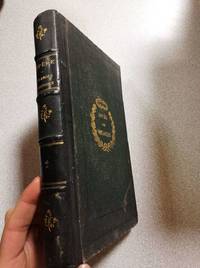
182022536Paris: Chez Crochard 1820. First Edition. Boards. Very Good. First Edition. 448 pages plus 5 plates 1 folding. 8vo. Contemporary quarter calf over marbled boards with black spine labels. Early label Coquard a Epinal on front pastedown. The entire volume of "Annales de Chimie et de Physique" Vol. Quinzieme XV 15 offered. Surface wear/damage to the leather finish resulting in minor loss to gilding and top label and minor fraying to the head/tail spine panel. Small spot of worming inside lower rear board at the gutter. Text generally bright and clean. <br /> <br /> This volume contains the original journal appearance of the separately issued "Memoires sur l'Action Mutuelle de Deux Courans Electriques" in three sections over two articles pp. 59-76 & 170-218. Section 1: "De l'Action mutuelle de deux courans electriques" pages 59-76 continued as "Suite Du Memoire sur l'Action mutuelle entre deux courans electriques entre un courant electrque et un aimant ou le globe terrestre et entre deux aimans" on pages 170-188. Section 2: "Direction des courans electriques par l'action du globe terrestre" on pages 188-196. Section 3: "De l'Action mutuelle entre un conducteur electrique et un aimant" pages 196-218. Plus plate number 4 in the rear which illustrates the articles. Boards. Ampere is today celebrated for his fundamental work in the new field of electrodynamics. The three part paper offered here established “the relationship between electric current-flow and magnetism and established the new science of electrodynamics.†Norman <br /> <br /> “In a four page circular dated Copenhagen July 21st 1820 H.C. Orsted communicated his great discovery that a closed voltaic circuit exerts forces on an adjacent magnetic needle. In more modern language: a current-carrying electric circuit gives rise to magnetic forces in its surroundings. Orsted had found the long sought affinity between electricity and magnetism. The letter reached Arago … who at the next meeting of Academie des Sciences on Sept. 11th 1820 with Ampere in attendance presented the letter and Orsted's experiment. It was indeed a memorable meeting. Already at the next weekly meeting on Sept. 18th Ampere delivered an explanation of Orsted's experiment and supported it with new experiments of his own. At every weekly meeting in the following months Ampere produced new results.†Ekelof<br /> <br /> 'In this first paper Sept. 18 he explains the law determining the position of the magnetic needle in relation to the electric current and he also makes known his intended experiments with spiral of helical wires which he predicts will acquire and retain the properties of magnets so long as the electrical current flows through them He constructed his spirals and helices and to the astonishment of all he produced magnets formed only of spools of copper wire traversed by electric currents.' Mottelay<br /> <br /> The Honeyman sale #82 notes that the paper offered here is "The first appearance of the first of a series of important papers reporting Ampere's discoveries on the electric current." Honeyman also had #83 the first separate appearance of these journal articles published as "Memoires sur l'Action mutuelle de deux courans electriques." which we believe had additional information not present in this journal appearance and hence is not a traditional "offprint" but a later state of the work. Norman notes that Ampere developed the science of electrodynamics over the next seven years publishing in a "bewildering array of journal articles offprints and revisions of earlier works.further noting some 'reprints' of Ampere's articles appear in as many as five different versions."<br /> <br /> This is an opportunity to own the original first printed appearance of Ampere's fundamentally important work in Electrodynamics. It would be an interesting collection to build the variations of Ampere's work over those seven years to see how his thought evolved. As far as we are aware there is no standard bibliographic reference for Ampere's work.<br /> <br /> LITERATURE<br /> Dibner Heralds of Science 62 first separate edition<br /> Honeyman Sale 82 original journal appearance<br /> Mottelay Bibliographical History of Electricity and Magnetism p. 472<br /> Norman 43 first separate edition. <br /> Ekelof Catalogue of Books and Papers in Electricity and Magnetism pp 284-286<br /> Sparrow Milestones of Science p33 first separate edition. Chez Crochard unknown
1527996239.Gpaperback. Good. Access codes and supplements are not guaranteed with used items. May be an ex-library book. paperback
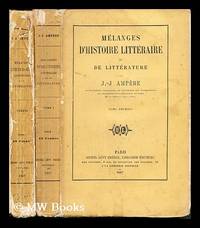
1867243366Paris : Michel Lévy frères 1867. First Edition. Softcover. Poor copy with wear tear and dust-dulling as with age. Text remains clear and without blemish. Physical description; 2 v. ; 23 cm. Subjects; French literature — History and criticism. French literature. Paris : Michel Lévy frères paperback
5001144181867. 1867. Bon état unknown
500114413Sans date. Bon état unknown
0260763829.Ghardcover. Good. Access codes and supplements are not guaranteed with used items. May be an ex-library book. hardcover
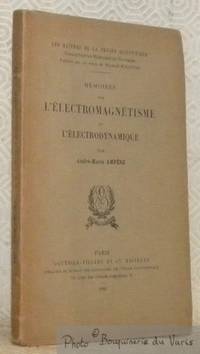
192188250Paris : Gauthier-Villars et Cie. 1921. 185x120mm. XIV - illustrations n/b in texte broch. Bon tat. 134 Gauthier-Villars et Cie. unknown
1921070178Paris France: Gauthier-Villars et Cie Editeurs 1921. Book. Very Good. Soft cover. First Edition. 12mo - over 6¾" - 7¾" tall. Stiff gray wraps lettered in black. 1st ed. xiv110 pp. Covers tanned toward edges interior tanned by age. Firm binding with minor separation along upper front joint. Text in French. Influential work by the French physicist and mathematician who was one of the founders of "electrodynamics" or classical electromagnetism and for whom the ampere is named. Quite scarce even in this reprint form. Gauthier-Villars et Cie, Editeurs Paperback
116215490X.Ghardcover. Good. Access codes and supplements are not guaranteed with used items. May be an ex-library book. hardcover
0267333560.Gpaperback. Good. Access codes and supplements are not guaranteed with used items. May be an ex-library book. paperback
0364156155.Ghardcover. Good. Access codes and supplements are not guaranteed with used items. May be an ex-library book. hardcover
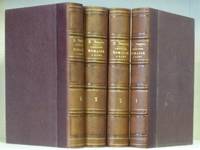
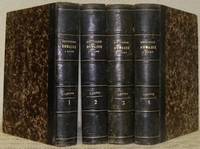
186261113Paris : Michel Lvy 1862-1865. 215x135mm. LXIII- 495 577 624 639 pages 2 cartes dpl. reliure demi-chagrin. Dos faux-nerfs auteur titre et filets dors. Bel exemplaire. 3800 Michel Lvy unknown
186276014Paris : Michel LÂŽvy FrÂres 1862-1864. 210x145mm. LXIII- 495 577 624 639 pages reliure demi-basane. 3411 Michel LÂŽvy FrÂres unknown
186640852Paris : Michel LÂŽvy FrÂres 1866 1868. 220x140mm. avec deux cartes dÂŽpliantes. rousseurs marginales. LXIII - prÂŽface 495 577 624 639 pages. Plats papier marbrÂŽ. Demi-chagrin rouge. Auteur et titre dorÂŽs au dos. Bon ÂŽtat. Bien reliÂŽ. 3690 Michel LÂŽvy FrÂres unknown
1279390964.Gpaperback. Good. Access codes and supplements are not guaranteed with used items. May be an ex-library book. paperback
1277230935.Gpaperback. Good. Access codes and supplements are not guaranteed with used items. May be an ex-library book. paperback
1850438105Paris : Didier 1850. First Edition. Hardcover. Very good copy bound in contemporary 1/2 leather over marbled boards. Gilt-blocked leather label to spine with spine bands uniformly tooled in gilt. Marbled endpapers. Spine bands and panel edges slighty rubbed and dulled as with age. Remains particularly well-preserved overall; tight bright clean and strong. Signed and inscribed by the author. Physical description; 2 v. ; 19 cm. Subjects; Literature Modern History and criticism. Paris : Didier hardcover
1271353350.Gpaperback. Good. Access codes and supplements are not guaranteed with used items. May be an ex-library book. paperback
1271038889.Gpaperback. Good. Access codes and supplements are not guaranteed with used items. May be an ex-library book. paperback
127650828X.Gpaperback. Good. Access codes and supplements are not guaranteed with used items. May be an ex-library book. paperback