Vantaggi Rosella.MareMagnum

11 042 résultats
(Codice TQ/0131) In 8° (24 cm) 96 pp. Documentario fotografico: circa 150 belle illusioni a colori. Brossura editoriale a colori, ottimo. ~~~ SPEDIZIONE IN ITALIA SEMPRE TRACCIATA
Xilografia raffigurante il porto di Ancona tratta dall'opera "De Nieuwe Groote Lichtende Zee-Fakkel", ovvero un portolano dei mari del mondo pubblicato tra il 1681 e il 1684 in cinque volumi in folio, ai quali - nel 1753 - se ne aggiunse un sesto per la navigazione lungo le coste asiatiche.Xilografia, inserita nel testo. Folio: 310x530 Xylography of the port of Ancona from the work "De Nieuwe Groote Lichtende Zee-Fakkel".
18 pages. Features: The Living Land - Roderick Haig-Brown's account of the natural resources of B.C.; A Salt Water Fishing License?; Successful fishing in the Adams River gorge - article with photo of Warren Albiston; To the Labrador (dog) Hard Work is Fun - illustrated article; Illegal bass transfer on Vancouver Island; B.C. waterfowl counts; Mailbag; Meet Bob Maxwell - most fish have - with photo of Mr. Maxwell, owner of end tackle maker Maxwell Mfg. Co.; She Fished, He Dug Bait - photo-illustrated article by L.G. (Van) Egan of Maxine Egan (as shown on cover) fishing on Vancouver Island; Clay Chips - article with photo of George Bevan of North Vancouver; Boats; Black Label beer ad inside back cover; Nice illustrated back cover ad for the new International Travelall station wagon; Many additional nostalgic ads. Unmarked with moderate wear. A quality vintage copy. Book
3639207874.Gpaperback. Good. Access codes and supplements are not guaranteed with used items. May be an ex-library book. paperback
11029Harry N. Abrams, INC., Publishers, New York Fort In-4°, reliure pleine toile écru sous jaquette illustrée, texte en Américain, nombreuses reproduction à pleine page, contrecollées parfois et dépliandes en deux ou trois volets, biographies selective, notesbel exemplaire sius tous rapports.
61431Bruxelles/Amiens (France), SODI, 1967. 13 x 19, 348 pp., quelques illustrations en N/B, broché, bon état (couverture défraîchie).
5366Paris, Ed. Albert Skira, Coll. Les trésors de la Peinture Française, s.d. – in-folio, 20 pp. – en feuilles, superbes reproductions quadrichromie contrecollées (dont Retour du marché, La Sortie de l'école, Le Bain, Les Curieux devant l'étalage, etc.).
(Codice TU/1031) In 8° 275 pp. Prima edizione. Illustrato con numerose foto su tavole fuori testo. In fine elenco nominativo deglii attivisti e dirigenti PCI nei comuni di Terni, della Centrale umbra e della Valnerina. Brossura editoriale, lieve usura agli angoli. Ottimo stato complessivo. ~~~ SPEDIZIONE IN ITALIA SEMPRE TRACCIATA
190997313Partitions sur le Militaria,Partitions sur l'Aviation Borel-Clerc 1909 approx.
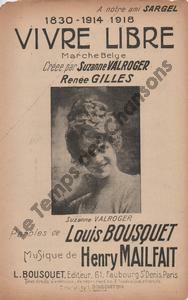
191815995Partitions sur la Première guerre Mondiale,Partitions sur la Belgique Bousquet 1918 approx.
In 16? (cm 17,5), Brossura, pagg.236-(4) cop. ill., segni del tempo alla cop., ma buon es. Collana "Urania", 1308 a cura di Giovanni Lippi. Nicoletta Vallorani (Offida, 1959), insegna Letteratura inglese all'Universit? degli Studi di Milano, autrice di saggi, scrive dal 1990 romanzi e racconti di fantascienza e noir.
19531477Lyon Impr. Hélio-Bellecour 1953 -in-4 broché plaquette in-quarto, couverture illustrée en couleurs sur le recto et ornée d'une photographie en noir sur le verso, orné de 40 illustrations photographiques en noir, non chapitré (23 pages), sans date (1953) Lyon : Impr. Hélio-Bellecour Editeur,
Jesi, Società Tipografica Jesina, 1908, in-4, br. edit., pp. 51, [1].
in-8 gr., pp. 91, bross. edit. Ritratto dell' A. in antip. inciso da G. Corelli su calcogr. di Lovera. Invio autogr. dell' A. Interessanti note sull' A. che fu politico e poi senatore del regno. [069]
In 8? (cm 22), Brossura edit., pagg.47 con ill. a colori n.t., buon es. Catalogo della mostra tenutasi a Civitanova Marche Alta, presso il Chiostro di S. Agostino (9 agosto - 8 settembre 1991). Brindisi (Roma 1918- Lido di Spina (FE), 1996), ? stato un artista impegnato in "opere civili" e fondatore del Museo Alternativo a Ferrara. Volpini, giornalista, critico letterario, saggista, nacque a Fano nel 1923.
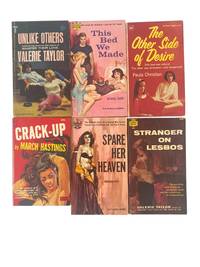
1960225421960. LGBTQ Lesbian Pulp Lesbian pulp novels published between 1960 and 1965 a crucial phase in the emergence of lesbian literature in American pulp publishing. These authors wrote about queer experience at a time when lesbian representation was largely dominated by heterosexual male writers and constrained by censorship that required publishers to present same sex desire through salacious marketing and "moralizing" tragic or heterosexual endings. Valerie Taylor Velma Nacella Young Paula Christian Yvonne MacManus and March Hastings Sally Singer were among the small group of queer women producing lesbian novels that treated relationships between women with greater emotional complexity and personal insight exploring themes of lesbian identity and the social consequences of living as an open or closeted gay woman. Several titles by these authors were later identified by lesbian bibliographer Barbara Grier as "A" tier works in The Lesbian in Literature indicating major lesbian thematic content and sympathetic narrative treatment. Archive includes: <br /> 1 Valerie Taylor Pen name of Velma Nacella Young. Stranger on Lesbos. Greenwich CT: Fawcett Crest 1960. First Crest printing February 1960. One of Taylor's most enduring works centering on Frances a discontented wife whose encounter with a vibrant lesbian social circle leads her to confront her own desires. A landmark title in Grier's A tier for its substantial lesbian content and refusal to deliver a purely punitive ending.<br /> <br /> 2 March Hastings Pen name of Sally Singer. Crack-Up. Chicago: Newsstand Library 1961. First printing. Subtitled on the cover: "The torment of a woman-frustrated in marriage-torn between desire and compassion." Hastings one of pulp's most prolific lesbian authors explores emotional collapse and the redemptive possibilities of same-sex love with more psychological nuance than the genre typically allowed.<br /> <br /> 3 Artemis Smith Pen name of Annselm Morpurgo. This Bed We Made. Derby CT: Monarch Books 1964. First Monarch edition originally published 1961. Greenwich Village-set tale of Elaine Perkins who marries to satisfy societal expectations but is drawn into a relationship with Nicole an artist's model. Back cover tagline: "Wife or Lesbian" <br /> <br /> 4 Valerie Taylor Pen name of Velma Nacella Young. Unlike Others. New York: Midwood-Tower 1963. First edition. From the author of Whisper Their Love and Stranger on Lesbos Unlike Others follows women whose relationships defy convention and societal approval. Known for infusing pulp conventions with emotional depth Taylor was one of the few openly lesbian pulp authors of her time.<br /> <br /> 5 Morgan Ives Pen name of Marion Zimmer Bradley. Spare Her Heaven. Derby CT: Monarch Books 1963. First edition. The story of Kathara a stage performer worshiped as the "Goddess of the Temple of Joy" whose allure draws both men and women into a cult-like world of pleasure. While framed through pulp's "devil or angel" dichotomy Ives weaves subversive notes of female autonomy into the sensational plot.<br /> <br /> 6 Paula Christian Pen name of Yvonne MacManus. The Other Side of Desire. New York: Paperback Library 1965. First printing. "Is it lust or love when one woman desires another woman" Carrie risks her marriage children and reputation for an affair with Kim only to find herself enslaved to "forbidden sex."<br /> <br /> The significance of these novels lies in their authorship and perspective. During the 1950s and 1960s lesbian pulp fiction formed one of the few widely distributed literary spaces where queer women could encounter representations of same sex relationships even when those narratives were sensationalized by commercial marketing. Writers such as Taylor Christian and Hastings expanded the thematic range of the genre by incorporating elements drawn from lived queer experience including emotional partnership internal conflict and the pressures of secrecy. Six volumes total. Standard mid century mass market paperback format. Moderate handling wear consistent with newsstand distribution including light edge wear and toning. Overall very good condition. unknown
In 4°, t.t. edit. con sovrac. ill., pp. 99,(5) con num. ill. b.n. e col. n.t.; ottimo es.. (L039) (spedizione standard SEMPRE tracciata con raccomandata-piego di libri, eventuale FATTURA da richiedere all'ordine)
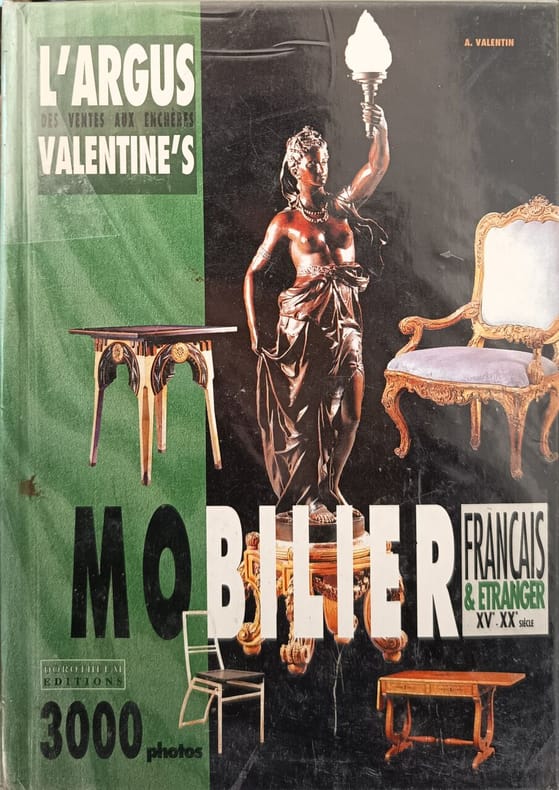
19999154Dorotheum 1999 638 pages 4x22x15cm. 1999. Reliure editeur cartonnée. 638 pages. L'Argus Valentine's est un guide de référence sur le mobilier ancien français et étranger basé sur les résultats des ventes aux enchères. Il couvre une période allant du XVe au XXe siècle et fournit des estimations de valeur pour les collectionneurs et les professionnels
8°, br. edit., pp. 52. Estratto originale. Dedica autografa dell’Autore.
<p>21 cm, brossura editoriale, p. 212. </p>
Veduta tratta dalla serie La Raccolta di le piu illustri et famose citta di tutto il mondo, edita da Francesco Valegio a Venezia verso la fine del’ 500, che comprende circa 322 piante e vedute delle principali città del mondo conosciuto. Di questo volume, si conservano diversi esemplari, tutti con numero variabile di incisioni e privi di un indice a stampa. Inoltre, gran parte delle tavole contenute nella raccolta del Valegio furono inserite nella Nuova raccolta di tutte le più illustri et famose città di tutto il mondo, curata da Donato Rasciotti, edita alla fine del sedicesimo secolo. Tuttavia, è persino incerto quale delle due raccolte venne per prima alla luce ed ignote sono le datazioni di tutte le tirature conosciute. Francesco Valegio nasce a Bologna circa nel 1560, anche se alcuni studiosi gli accreditano un’origine veronese; la sua attività di incisore ed editore calcografo si svolge tutta a Venezia, spesso in associazione con altri stampatori. Le tavole che compaiono nelle Raccolta, che senza dubbio possiamo considerare come la sua opera più importante, sono tutte prive di data, ad eccezione di quelle di Algeri, Costantinopoli e Rodi, firmate da Martino Rota, datate 1572. Le piante e le vedute firmate dal Rota, incisore nativo di Sebenico e attivo a Venezia fino al 1573, costituiscono, senza dubbio, il nucleo più antico dell’opera e fanno ritenere che questa sia stata un progetto editoriale iniziato proprio dall’incisore dalmata. In un primo momento, la presenza di queste tavole aveva portato a datare l’opera al 1579, data che sembra tuttavia molto improbabile. Molte delle immagini riprendono modelli figurativi apparsi nei primi volumi del Civitates Orbis Terrarum, editi tra il 1572 ed il 1588 (e successivamente ristampati sino al 1617) dai cartografi Georg Braun e Franz Hogenberg. Pertanto, è molto più plausibile che il Valegio iniziò verso il 1580 ad osservare le tavole incise da Martino Rota, per poi ampliare e pubblicare la raccolta, nell’ultimo ventennio del secolo. Dell’intero corpus di incisioni che compongono l’opera, 112 recano la firma o la sigla del Valegio, altrettante sono assimilabili alla mano dello stesso, mentre 69 sono ascrivibili ad altro artista, non identificato. La Raccolta ebbe un grande successo, tanto che fu la base di diverse copie nei secoli successivi. I rami del Valegio furono in seguito ristampati da Raffaello Savonarola (Lasor a Varea) nel Universus Terrarum Orbis del 1713. Il gruppo di 52 tavole riguardanti la penisola, che di seguito presentiamo, costituisce l’intero corpus di immagini dell’Italia, ad eccezione delle piante di Ascoli e Ferrara, mancanti; un elemento particolare, che caratterizza i fogli, è la presenza di un numero progressivo (da 1 a 60) ad inchiostro antico, posto nel margine bianco superiore. Pertanto, si può supporre che questi esemplari provengano dalla Raccolta delle più famose Città di Italia, che il Valegio creò alterando semplicemente il frontespizio della precedente pubblicazione. Incisione al bulino, con margini, in ottimo stato di conservazione. Molto rara. View taken from La Raccolta di le piu illustri et famose citta di tutto il mondo, published by Francesco Valegio in Venice towards the end of the XVI century, containing about 322 plans and views of the main cities of the World. There are different examples of this work, every one with a different number of plates and without an index. Many of these plates have been afterwards included in Donato Rasciotti's Nuova raccolta di tutte le più illustri et famose città di tutto il mondo, printed at the end of the XVI century. It is still, however, quite unclear whether Valegio or Rasciotti published first his collection. Francesco Valegio was born in Bologna around 1560, even though some say he might have been born in Verona; as engraver and calcographer, he worked in Venice, very often in association with other publishers. The plates of his series, which can be considered his most important work, do not bear any date, except for those of Algeri, Costantinopoli and Rodi, signed by Martino Rota, dated 1572. The city plans signed by Rota, (engraver born in Sebenico who worked in Venice until 1573), are the most ancient core of the work, which make us think that this work has been planned by Rota himself. Many plates recall the figurative models of the Civitates Orbis Terrarum printed between 1572 and 1588 (afterwards reissued until 1617) by Georg Braun and Franz Hogenberg. It is possible that Valegio started to select the plates by Rota around 1580 and afterwards enlarged his collection at the end of the century. 112 plates bear Valegio's signature or monogram and as many can be ascribed to him; 69 have been ascribed to an unkwown artist. The collection was extremely successful and became the base for the following copies. Valegio's plate have been reissued by Raffaello Savonarola (Lasor a Varea) in the Universus Terrarum Orbis in 1 713. There are 52 plates depicting the peninsula. A distinctive element of this corpus is the presence of a number (from 1 to 60) with ancient ink, on the white upper margin; that makes us presume that these examples come from another collection of Valegio, Raccolta delle più famose Città di Italia, which he created by changing the front page of his previuos publication. Copper engraving, particularly rich and with good contrast, in excellent condition. Very rare. Almagià p. 10, Cremonini p. 15/17, Valerio p. 75/87.
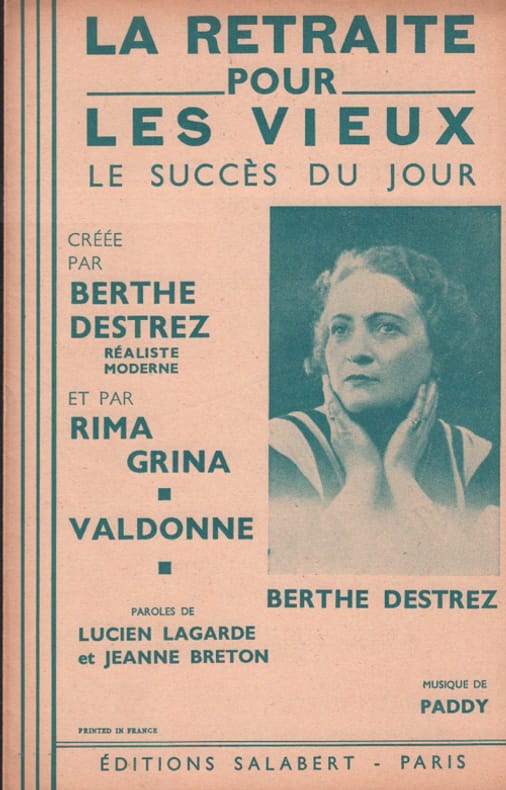
1937114067Salabert 1937
Bologna, Intern. Ass. Sedimentologists, 1981, 4° estratto (manca la copertina) pp. 207/227 con 20 illustrazioni. - !! ATTENZIONE !!: Con il termine estratto (o stralcio) intendiamo riferirci ad un fascicolo contenente un articolo di rivista, sia che esso sia stato stampato a parte utilizzando la stessa composizione sia che provenga direttamente da una rivista. Le pagine sono indicate come "da/a", ad esempio: 229/231 significa che il testo è composto da tre pagine. Quando la rivista di provenienza non viene indicata é perchè ci è sconosciuta. - !! ATTENTION !!: : NOT A BOOK : “estratto” or “stralcio” means simply a few pages, original nonetheless, printed in a magazine. Pages are indicated as in "from” “to", for example: 229/231 means the text comprises three pages (229, 230 and 231). If the magazine that contained the pages is not mentioned, it is because it is unknown to us.
4to (cm 32 x 22 ca), brossura; 40 pagine non numerate comprendenti una breve presentazione di Giovanni Vagnetti (3 pagine) e 32 riproduzioni a piena pagina di disegni dell'artista, in b/n. Esemplare n. 286 di tiratura di 500 esemplari (le copie numerate da 1 a 50 con un disegno originale); all'occhietto, dedica dell'artista a matita datata novembre 1960. Brossura leggermente brunita agli orli e con trascurabile usura in testa al dorso e alle punte; buona copia.
in 8°, pp. 140, bross. edit. con tit. e fregi in oro; "Collezione di Monografie illustrate" diretta da Corrado Ricci, con 175 ill. b/n ed 1 panorama ripiegato. 446/22