[Paris in the 1920s] Morton, BrianBiblio.com
9 052 résultats
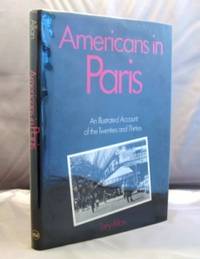
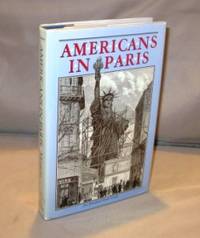
198425798<p>Ann Arbor:: The Olivia & Hill Press 1984. First Printing of the First Edition. A Fine copy in a Near Fine price-clipped dust jacket with a touch of edge wear to the spine. This historical street guide to Paris is organized by streets in alphabetical order indicating those Americans who have lived on that street. The list of Americans includes: adventurers architects musicians diplomats inventors journalists writers painters and military men. Illustrated with photographs and maps.</p> The Olivia & Hill Press, hardcover
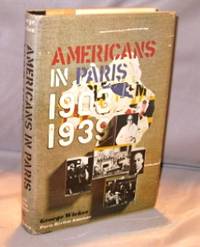
197721653Chicago: :: Contemporary Books Inc 1977. First Printing.of the First Edition. A Near Fine copy with a previous owner's inscription on the flyleaf in a Fine unclipped dust jacket. This account of the expatriate community in Paris between the wars focuses on the American writers composers and artists who made the bookstores cabarets cafes and salons their playgrounds where many of their creative endeavors were germinated. Includes 200 photographs some never before published. Contemporary Books, Inc, unknown
196923336New York:: Doubleday 1969. First Printing of the First US Edition. A Near Fine copy with a previous owner name on flyleaf in a Very Good plus clipped dust jacket with two scrapes to the front panel of the jacket. The author focuses his history of American artists in Paris on Henry Miller Ernest Hemingway Gertrude Stein e.e. cummings Man Ray and Virgil Thomson. Doubleday, unknown
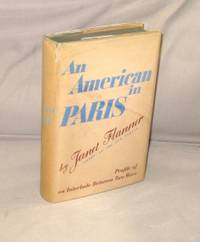
194028754New York:: Simon & Schuster 1940. First printing of the First Edition. A Very Good plus copy with teal green cloth in a Very Good plus unclipped dust jacket with a closed edge tear to the top spine fold. Flanner was The New Yorker's Paris correspondent from the 1920s through the 1970s and in this her second book she profiles the City of Light its arts community and some of the crimes that made headlines during the Crazy Years of the Twenties. Simon & Schuster, hardcover
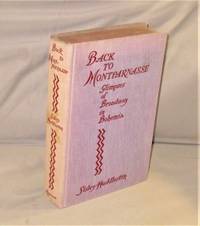
193128388<p>London:: George G. Harrap & Company 1931. First Printing of the First UK Edition. A Very Good plus copy with light fading to the spine lacking the jacket. In this guide book to the Paris artists and bohemians of the Twenties Huddleston presents Montparnasse in all its fun and glitter along with all the cosmopolitan celebrities and literati. Those included in his portraits are Ernest Hemingway Jean Cocteau Kiki Foujita James Joyce Claude Mackay Ezra Pound and scores of other American French English artists and writers.</p> George G. Harrap & Company, hardcover
193128400<p>Philadelphia:: Lippincott 1931. First Printing of the First US Edition. A Very Good plus copy with light fading to the spine lacking the jacket. In this guide book to the Paris artists and bohemians of the Twenties Huddleston presents Montparnasse in all its fun and glitter along with all the cosmopolitan celebrities and literati. Those included in his portraits are Ernest Hemingway Jean Cocteau Kiki Foujita James Joyce Claude Mackay Ezra Pound and scores of other American French English artists and writers.</p> Lippincott, hardcover
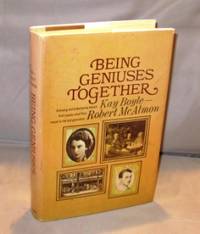
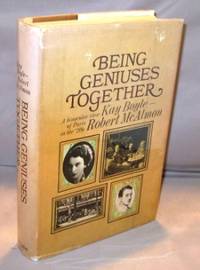
196825234<p>New York:: Doubleday 1968. First Printing of the First US Edition. A Near Fine copy in a Near Fine dust jacket. Jacket has just the slightest hint of wear to spine extremities else fine. McAlmon's importance to the literary life in Paris in the '20s is without challe nge. He was to the American expatriate community what the hub is to the wheel. He went to Paris in the spring of 1921 where he immediately met Sylvia Beach James Joyce and Exra Pound and was dubbed a "true primitive" in the American community until he left Paris in 1929 .</p> Doubleday, hardcover
196822908<p>New York:: Doubleday 1968. First Printing of the First Edition. A Near Fine copy in a Very Good price-clipped dust jacket with edge wear to spine extremities else fine. Review Copy with "With Compliments of Doubleday & Company" stamped on the front pastedown. McAlmon's importance to the literary life in Paris in the '20s is without challenge. He was to the American expatriate community what the hub is to the wheel. He went to Paris in the spring of 1921 where he immediately met Sylvia Beach James Joyce and Exra Pound and was dubbed a "true primitive" in the American community until he left Paris in 1929 .</p> Doubleday, hardcover
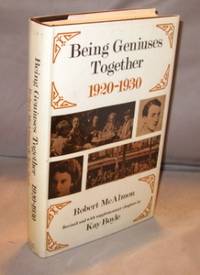
197022907<p>London: :: Michael Joseph 1970. First Printing of the First English Edition. A Fine copy in a Fine unclipped dust jacket. McAlmon was one of the central figures in the expatriate community of artists in Paris in the 1920s and in his memoirs he recount how life there unfolded. Originally published in 1938 in the UK only the true first edition is extremely rare but this revised edition whereby Kay Boyle adds her own perspective of the period alongside McAlmon's original memories that she has corrected.</p> Michael Joseph, hardcover
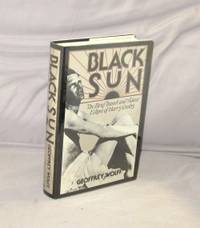
197629035<p>New York:: Random House 1976. First Printing of the First Edition. A Fine copy in a Near Fine price-clipped dust jacket. Crosby was an American heir bon vivant poet and an exemplar of the Lost Generation in American literature. During World War I he served as a volunteer ambulance driver. On November 22 1917 a German shell seriously wounded a man standing next to Crosby. As Crosby drove several wounded soldiers to a medical aid station his ambulance was destroyed by artillery fire. Miraculously Crosby was unhurt. He declared later that that was the night he changed from a boy to a man. After the war Crosby abandoned all pretence of living the expected life of a privileged Bostonian. Instead he moved to Paris with his wife and together they devoted themselves to art and poetry. Together they founded the Black Sun Press and published many important writers and poets in Paris. But because of his near death experience during the war Harry had a deep obsession with death until on December 10 1929 he and one of his many female intimates committed suicide. Some Crosby scholars maintain that Harry shot Josephine and several hours later shot himself. Others suggest that Josephine shot herself first leaving Crosby little choice but to follow suit.</p> Random House, hardcover
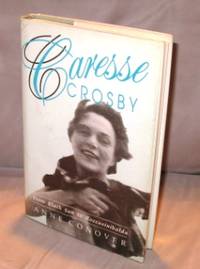
198923893<p>Paris in the 1920s Conover Anne. Caresse Crosby: From Black Sun to Roccasinibalda. Santa Barbara: Capra Press 1989. First Printing of the First Edition. ISBN: 0884963020. A Near Fine copy in Near Fine unclipped dust jacket with faint stain to bottom edge. Caresse was the wife of the poet and publisher Harry Crosby and together they founded their Black Sun Press in Paris in the 1920s. Their press would become famous for publishing such literary luminaries including Kay Boyle Hart Crane Archibald MacLeish Ernest Hemingway Robert Duncan Anaïs Nin and Henry Miller. This copy is inscribed by the biographer to Helen Simpson Seggerman the daughter of one of Caresse's closest friends and who provided valuable information for this book. Helen Simpson was a society girl from Montclair NJ who was also very active in the Paris arts scene of the 1920s. </p> Capra Press, hardcover
198922436<p>Santa Barbara:: Capra Press 1989. First Printing of the First Edition. A Fine tight copy in a Fine bright unclipped dust jacket. Caresse Crosby with her flamboyant husband Harry Crosby were a fiery couple in Paris in the Twenties--important members of the avant-garde community of expatriates. The couple launched the Black Sun Press while in Paris and published early works by Hemingway Fitzgerald D.H. Lawrence Ezra Pound and James Joyce. Among her many accomplishments she is remembered for inventing the brassiere in an attempt to liberate women from the constrictions of whalebone corsets. Her life in Paris ended when her troubled husband shot a lover in a New York hotel room then killed himself. Caresse went on to involve herself in peace and pacifist issues until she died at her Italian castle in 1970.</p> Capra Press, hardcover
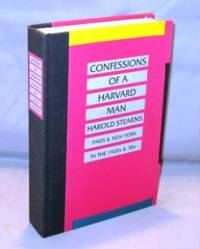
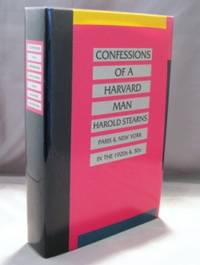
198424065<p>Paris in the 1920s Stearns Harold. Confessions of a Harvard Man. "The Street I Know" Revisited. A Journey Through Literary Bohemia Paris & New York in the 1920s &. Sutton West::: The Paget Press 1984. First Printing of the First Trade Edition. ISBN: 0920348335. A Near Fine copy without the issued mylar dust jacket. Harold Edmund Stearns critic and essayist was a member of the American expatriate group in Paris in the Twenties along with other notable exiles Ernest Hemingway Elliot Paul F. Scott Fitzgerald Glenway Wescott John Dos Passos Robert Coates. Stearns was the model for the character Harvey Stone in Hemingway's "The Sun Also Rises. Stearns was known by his intimates as a "picturesque ruin" and what he left behind him in America was "the broken promise of a brilliant career—essays in The New Republic editorship of The Dial prime mover of the famous iconoclastic symposium Civilization in the United States." He confesses in this autobiography originally published as "The Street I Know" that he made a career of drink and an occupation out of borrowing money. For many chroniclers of the era Stearns was the quintessential expatriate--a symbol of the "exile" period in American literature. While Stearns had primarily literary interests his pattern of denial and affirmation that he wove into his life took the form of rejection of American values and then a sober re-examination of them. </p> The Paget Press,, hardcover
198422158<p>Sutton West: :: The Paget Press 1984. First Printing of the First Edition. A Fine tight copy in a Fine mylar dust jacket. Harold Stearns was a prolific journalist and editor during the 20s and 30s and traveled to Paris in 1921 to become part of the expatriate community there. It was Stearns who encouraged New York publisher Horace Liveright to publish Hemingway's "In Our Time." While living in Paris Stearns wrote for the Paris Tribune eventually penning a column in the paper on horse racing called "Peter Pickem." Stearns was known for his lack of funds while living in Paris and was always hitting up friends for money so much so that Hemingway used him as a model for the indigant Harvey Stone in his novel "The Sun Also Rises."</p> The Paget Press, hardcover
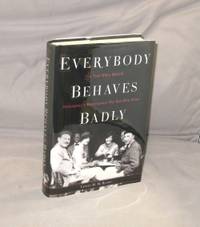
201528851Boston:: Houghton Mifflin Harcourt 2015. First Printing of the First US Edition. A Fine tight copy in a Fine bright dust jacket. In the summer of 1925 Ernest Hemingway and a clique of raucous companions traveled to Pamplona Spain for the town’s infamous running of the bulls. Then over the next six weeks he channeled that trip’s maelstrom of drunken brawls sexual rivalry midnight betrayals and midday hangovers into his groundbreaking novel The Sun Also Rises. Lesley Blume resurrects the explosive restless landscape of 1920s Paris and Spain and reveals how Hemingway helped create his own legend. He made himself into a death-courting bull-fighting aficionado; a hard-drinking short-fused literary genius; and an expatriate bon vivant. Blume’s account reveals the inner circle of the Lost Generation as we have never seen it before and shows how it still influences what we read and how we think about youth sex love and excess. Houghton Mifflin Harcourt, unknown
201529462Boston:: Houghton Mifflin Harcourt 2015. First Printing of the First US Edition. A Fine tight copy in a Fine bright dust jacket. In the summer of 1925 Ernest Hemingway and a clique of raucous companions traveled to Pamplona Spain for the town’s infamous running of the bulls. Then over the next six weeks he channeled that trip’s maelstrom of drunken brawls sexual rivalry midnight betrayals and midday hangovers into his groundbreaking novel The Sun Also Rises. Lesley Blume resurrects the explosive restless landscape of 1920s Paris and Spain and reveals how Hemingway helped create his own legend. He made himself into a death-courting bull-fighting aficionado; a hard-drinking short-fused literary genius; and an expatriate bon vivant. Blume’s account reveals the inner circle of the Lost Generation as we have never seen it before and shows how it still influences what we read and how we think about youth sex love and excess. Houghton Mifflin Harcourt, unknown
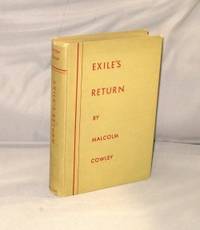
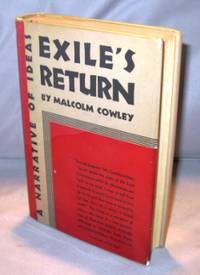
193428802New York:: Norton 1934. First Printing of the First Edition. A Near Fine tight copy without the dust jacket. Cowley was an American literary critic and social historian who chronicled the writers of the “Lost Generation” of the 1920s and their successors in "Exile's Return." He graduated cum laude from Harvard in 1920 took advanced study in France at the University of Montpellier 1922 and helped to put out the expatriate little magazines Secession and Broom. In this role he came to know the European and particularly the Parisian avant-garde. Cowley returned to the United States in 1923 and in 1934 published "Exile's Return" which is an important social and literary history of the expatriate American writers in the 1920s. In it he signaled the importance of their rediscovery of America as a source for literature. Norton, unknown
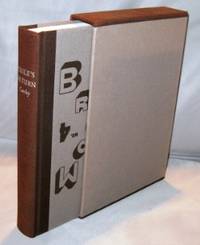
198122934<p>New York:: The Limited Editions Club 1981. Limited Edition. A Fine tight copy without the glassine cover in a Fine slipcase. One of 2000 numbered copies and signed by both Cowley and photographer Bernice Abbott. Original prospectus laid-in. Malcolm Cowley's Exile's Return was first published in 1934 by Viking Press. Subtitled "A Literary Odyssey of the 1920s" the book explores the development of literature in the early twentieth century. Cowley's work includes his own personal narratives about his relationships with many of the best writers from the start of the century. Exile's Return is particularly concerned with the movement of these authors out of America after the Great War and then back again in the 1920s. This work leads up to the 1930s and allows us to see how the 30s understood their preceding decades. The adventures and attitudes shared by the American writers dubbed "The Lost Generation" are brought to life here by one of the group's most notable members. As Cowley details in this intimate anecdotal portrait in renouncing traditional life and literature they expanded the boundaries of art.</p> The Limited Editions Club, hardcover
193422969<p>Paris in the 1920s Cowley Malcolm. Exile's Return: A Narrative of Ideas. New York: Norton 1934. First Printing of the First Edition. A Fine tight copy in a Near Fine unclipped dust jacket with a faint moisture spot on the rear panel and small hole at the fold of the spine. Reviewer and later hollywood writer Milton Merlin's penciled signature on the flyleaf. Scarce classic. Cowley was an American literary critic and social historian who chronicled the writers of the "Lost Generation" of the 1920s and their successors in "Exile's Return." He graduated cum laude from Harvard in 1920 took advanced study in France at the University of Montpellier 1922 and helped to put out the expatriate little magazines Secession and Broom. In this role he came to know the European and particularly the Parisian avant-garde. Cowley returned to the United States in 1923 and in 1934 published "Exile's Return" which is an important social and literary history of the expatriate American writers in the 1920s. In it he signaled the importance of their rediscovery of America as a source for literature. </p> Norton, hardcover
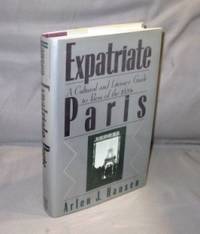
199026733New York:: Arcade Publishing 1990. First Printing of the First Edition. A Fine copy in a Fine dust jacket. This comprehensive volume revisits both the well-known and little known Parisian locales where the writers artists and entertainers of the 1920s lived worked and played. The book is broken down into 33 geographical sections and indexed by streets individuals and topics. Arcade Publishing, hardcover
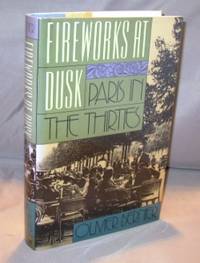
199323149Boston:: Little Brown & Company 1993. First Printing of the First Edition. A Fine tight copy in a Fine bright unclipped dust jacket. In 1930 Paris dazzled as its painters writers composers and designers invented modernity. But in 1935 the Great Depression had caught up with the French as Fascists and Communists fought in the streets and war loomed as Hitler and Mussolini grew more menacing. The author presents a cultural history of Paris in the '30s--its last brilliant moment as a world capital. Drawing on newspapers memoirs and eyewitness accounts he juggles the parallel lives of Picasso Stravinsky Cocteau Gide Josephine Baker Elsa Schiaparelli Max Ernst Janet Flanner and many others. Bernier offers withering profiles of a succession of incompetent unscrupulous politicians who contributed to France's failure of will. He shows how the rage for the modern that marked the beginning of the decade gave way to alienation anguish befuddlement and a headlong retreat into the past. Little, Brown & Company, unknown
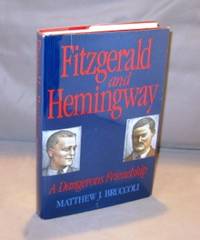
199524561<p>London:: Andre Deutsch 1995. First Printing of the First US Edition. A Fine tight copy in a Fine unclipped dust jacket. Using previously unpublished letters and other research material Matthew Bruccoli does much to deflate the mythical love/hate relationship between two of the literary giants of expatriate years in Paris. Bruccoli who is a noted expert on the lives and works of these two writers masterly analyses their jealousies insecurities and accomplishments. Hemingway and Fitzgerald first met in Paris in 1925 and Fitzgerald who had already published The Great Gatsby recommended Hemingway to his editor Maxwell Perkins. Despite Fitzgerald's literary success their relationship was based on his admiration for Hemingway who was appalled by Fitzgerald's rocky marriage to Zelda and his lack of writing discipline. Bruccoli offers excerpts from Hemingway's letters to Fitzgerald and Perkins as evidence that Hemingway's unflattering portrait of Fitzgerald in A Moveable Feast was distorted. Although Fitzgerald's alcoholism strained their friendship Bruccoli argues that Hemingway's intense dislike of Zelda whom he blamed for her husband's heavy drinking and his harsh criticism of Fitzgerald's writing also weakened the tie between them.</p> Andre Deutsch, hardcover
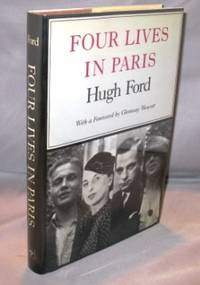
198722867<p>San Francisco:: North Point Press 1987. First Printing of the First Edition. A Fine tight copy in a Fine dust jacket. Hugh Ford profiles four creative expatriates in Paris who have been overshadowed by a host of more highly visible writers and artists: Composer George Antheil who was nicknamed the Bad Boy of Music Kay Boyle a writer whose early life in Paris was as turbulent as it was productive Harold Stearns traded the life of a social and political critic in New York for a subsistance life in Paris among the Lost Generation and Margaret Anderson left her editorship fo the Little Review in New York in search for a more spiritual life in Paris. Each of these stories shed fresh light on the glory years of Paris in the Twenties.</p> North Point Press, hardcover
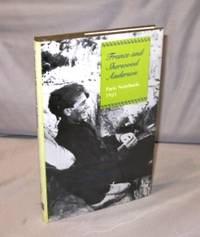
197626293<p>Baton Rouge:: Louisiana State University 1976. First Printing of the First Edition. A Fine tight copy in a Fine bright dust jacket. This slim volume 102 pages represents the first publication of Sherwood Anderson's notebook in which he documented his first trip to Paris in 1921. During this trip Anderson met Sylvia Beach James Joyce Ezra Pound Gertrude Stein and Andre Gide and his experiences in France had a profound effect on his thinking and would shape the fictional themes that would appear in his later works. The editor Michael Fanning has included excerpts from Anderson's letters and the writings of French critics as well as his own introductory and critical chapters.</p> Louisiana State University, hardcover
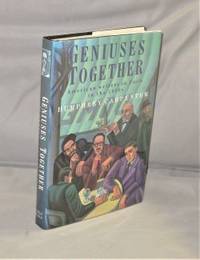
198728021London:: Unwin Hyman 1987. First Printing of the First UK Edition. A Fine copy in a Fine unclipped dust jacket . "A collage of Left-Bank expatriate life as it was experienced by the Hemingway generation" this work benefits from Carpenter's wealth of rich memoir material engaging style and acute eye for lively anecdote. He also accepts the stereotype of the Lost Generation's decade-long party chiefly remarkable for the fun it afforded the participants and subsequent myths of artistic brilliance. Unwin Hyman, hardcover