PLAN DE PARISBiblio.com
9 052 résultats
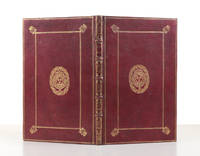
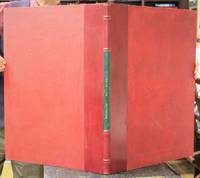
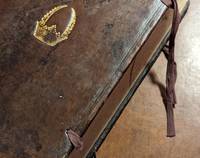
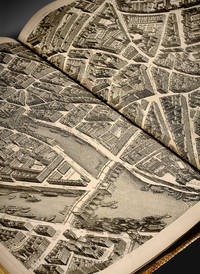
1739ABAA25-22<p>S.l. 1739.</p><p>Folio 558 x 443 mm bound in red morocco covers decorated with fleur-de-lys borders fleurs-de-lys in the corners coat of arms in the center spine ribbed and decorated with fleur-de-lys of various sizes stars and gilt fillets inner border decorated with fleurs-de-lys gilt edges. <em>Contemporary binding.</em></p><p>First issue of the most famous antique map of Paris called " plan de Turgot ".</p><p>James de Rothschild. 2312; Cohen 807.</p><p>It is composed of one plan of combination and of 20 engraved plates on double-page 800 x 515 mm representing the capital house by house in a panoramic view. " <em>We propose by making this engraved map to show at a glance all the buildings and all the streets of Paris</em> " informed the editor.</p><p>"This bird's eye map the widest of this sort ever tackled is known under the improper designation of 'Plan de Turgot'. It is composed besides the map of combination of twenty leaves that altogether form five ranks. Each leave as a surround of 79 centim. large on 50 high. The twenty assembled leaves thus form a square of about 316 centim. on 245 excluding the margin. This surface would bother more than one Parisian amateur whose allocation is way too narrow to have it in its cabinet.</p><p>The engraved title is at the bottom of the leaves 18 and 19 in the middle of a cartouche with a very circumvented shape surrounded with volutes and topped with the allegorical figure of the city of Paris resting on her shield.</p><p>This map takes usually the form of a large folio atlas; each leaf printed on thick paper is folded in two and glued on guard. It is said that most copies were bound at the time with more or less luxury to be distributed for free with no doubt to distinguished figures; all sheepskin or Levant morocco bindings are decorated in their center with the arms of Paris. Some copies were printed with wide margins.</p><p>This map ends the series of bird's eye maps and if after this period we still see some of those published it would be older maps copied or refreshed. Louis Bretez who drew it around 1734 derogated the generally admitted custom of positioning maps according to the noon mark because willing to give of Paris an image in front view he had to prefer with the model of previous geographers a system that would allow to see in front view the gates of our ancient churches so numerous still churches that for the most part had their facades directed westward. It is deplorable that the map as it was conceived wasn't created on an earlier date at least from a century. It would have been because of its dimensions of a much higher interest for the archaeologists of today.</p><p>The drawing ordered by Turgot was achieved in 1734; it represents thus the state of Paris at this time. Claude Lucas who engraved it is probably the one who worked on the maps of the districts of La Caille 1714 or perhaps his son.</p><p>The choice that was made of a bird's eye map must have led to huge costs…</p><p>The image of Paris represented here still offers I say it again a big appeal and documentation for archaeology. The few number of ancient buildings that have survived is so quickly diminishing day by day or is suffering from strange metamorphoses with the hideous mask of replastering so much that the Paris of Turgot threatened by our thousands of projects of alignment and expansion will soon have to be called in turn the 'old Paris' …. A. Bonnardot <em>Etudes archéologiques sur les anciens plans de Paris</em> pp. 199-203.</p><p>These plates remarkably engraved show in a vivid way the former layout in perspective of the Parisian sites residences and monuments.</p><p>Copy printed on thick paper illustrated with brilliant proofs preserved in a binding by Padeloup with the arms of Paris.</p><p>The title is engraved in the center of a blending of two plates. 1600 x 540 mm.</p><p><strong>FR</strong></p><p>S.l. 1739.</p><p>In-folio relié en maroquin rouge plats ornés d'une roulette fleurdelisée fleurs-de-lys aux angles armoiries au centre dos à nerfs orné de fleurs de lys de différentes tailles d'étoiles et de filets dorés coupes décorées roulette intérieure fleurdelisée tranches dorées. <em>Reliure de l'époque.</em></p><p>558 x 443 mm.</p><p><strong>Premier tirage du plus célèbre plan ancien de Paris dit Plan de Turgot.</strong></p><p>James de Rothschild. 2312 ; Cohen 807.</p><p>Il se compose d'un plan d'assemblage et de 20 planches gravées à double page 800 x 515 mm représentant la Capitale maison par maison en vue panoramique. " <em>On s'est proposé en faisant graver ce plan de faire voir d'un seul coup d'œil tous les édifices et toutes les rues qu'elle renferme</em> " avertit l'éditeur.</p><p>" Ce plan à vol d'oiseau le plus vaste en ce genre qu'on ait entrepris est connu sous la désignation impropre de 'Plan de Turgot'. Il se compose outre le plan d'assemblage de vingt feuilles qui réunies forment cinq rangs. Chaque feuille a d'encadrement 79 centim. De largeur sur 50 de hauteur. Les vingt feuilles réunies forment donc un carré d'environ 316 centim. Sur 245 non compris la marge. Cette surface embarrasserait plus d'un amateur parisien trop étroitement logé pour en garnir son cabinet.</p><p>Le titre gravé se trouve au bas des feuilles 18 et 19 au milieu d'un cartouche de forme très contournée entouré de volutes et surmonté de la figure allégorique de la ville de Paris appuyée sur son blason.</p><p>Ce plan forme le plus souvent un atlas grand in-folio ; chaque feuille tirée sur un papier fort est pliée en deux et collée sur onglet. Il paraitrait que la plupart des exemplaires furent reliés dans le temps avec plus ou moins de luxe pour être distribués gratuitement sans doute à tous les personnages éminents ; toutes les reliures en mouton ou en maroquin du Levant sont ornées au centre des armes de Paris. Il y a des exemplaires tirés sur grandes marges.</p><p>Ce plan termine la série des plans à vol d'oiseau et si passé cette époque on en voit paraitre encore quelques-uns de ce genre ce sont des plans plus anciens copiés ou rajeunis. Louis Bretez qui le dessina vers 1734 dérogea à l'usage généralement admis d'orienter les cartes selon la méridienne parce que voulant donner de Paris une image en élévation il dut à l'exemple des anciens géographes préférer un système qui permît de voir de face les portails de nos anciennes églises si nombreuses ncore églises qui pour la plupart avaient leur façade tournée vers l'occident. Il est à regretter que le plan tel qu'il a été conçu n'ait pas une date antérieure d'au moins un siècle. Il eût été à raison de sa dimension d'un bien haut intérêt pour les archéologues d'aujourd'hui.</p><p>Le dessin ordonné par Turgot était achevé en 1734 ; il représente donc l'état de Paris à cette époque. Claude Lucas qui le grava est le même sans doute qui travailla aux plans des quartiers de La Caille 1714 ou peut-être son fils.</p><p>Le choix qu'on fit du genre à vol d'oiseau dut entrainer des frais immenses…</p><p>L'image de Paris qu'il représente offre encore je le répète beaucoup d'attraits et de documents à l'archéologie. Le petit nombre de vieux édifices qui ont survécu disaparaît de nos jours si rapidement ou subit de si étranges métamorphoses sous le hideux masque du replâtrage que la Paris de Turgot en proie à nos mille projets d'alignements et d'agrandissements devra bientôt s'appeler à son tour le 'vieux Paris' …. A. Bonnardot <em>Etudes archéologiques sur les anciens plans de Paris</em> pp. 199-203.</p><p><strong>Ces planches d'une gravure remarquable montrent d'une façon très vivante la disposition ancienne en perspective des sites des demeures et des monuments parisiens.</strong></p><p><strong>Exemplaire imprimé sur papier fort orné de brillantes épreuves revêtu d'une reliure de Padeloup aux armes de la ville de Paris. </strong></p><p>Le titre est gravé au centre d'un assemblage de deux planches 1600 x 540 mm.</p> hardcover
174337021743. Woodcut royal arms on title. 1 p.l. 34 pp. Small folio cont. French red morocco panelled in gilt in the style of the “cabinet du Roi†gilt arms & ciphers Olivier 2495 fer 2 on covers with ciphers on spine a.e.g. Paris: de l’Imprimerie Royale 1743.<br/> <br/> First edition and very uncommon. This catalogue the splendid Han Fürstenberg — Otto Schäfer — Jacques Bemberg copy lists the plates made of the collections of the king including paintings medals royal chateaux fountains grottoes statues busts tapestries and jewels along with records of festivals entrances battles etc. etc. <br/> <br/> “Colbert understanding that engraving was the best means to disseminate and preserve knowledge of the undertakings of Louis XlV began to assemble a group of outstanding engravers. By 1660 they had achieved the stature of independent artists and by 1670 had become a special group under the protection of the king joined together at the Gobelins around Charles Le Brun and Sebastien Le Clerc. From 1660 André Félibien was charged with providing descriptions of maisons royales and Adam Van der Meulen and Israel Silvestre were sent to the newly conquered territories to make views of the principal chateaus and fortresses. Other commissions for the Cabinet du Roi included engravings by Chauveau of the king’s paintings at the Tuileries; copies of paintings and sculpture by Claude Mellan Rousselet and Audran in the galleries of the king; copies by Ronelet of the king’s collection of medals; and other works of art and architecture by Rousselet Silvestre Chauveau and Le Clerc. At the same time the Académie des Sciences began scholarly works commissioned by Colbert…Illustrators for these works were Abraham Bosse Sebastien Le Clerc who often made engravings for Claude Perrault Nicolas Bailly and L. de Châtillon… <br/> <br/> “From 1670 Colbert determined to join these engravings in a collection. He proposed that at the end of each year a temporary volume would be composed of all types of works with the text printed in French and Latin. At the end of ten or twelve years the collection would be subdivided by topics so that the king would have volumes separated into all the sciences and achievements of his reign… <br/> <br/> “A complete record of the king’s possessions was never achieved but the plan was continued by his successors. The engravings from the Cabinet du Roi were first published in a variety of sizes and separately. They were then collected into volumes according to Colbert’s plan but sporadically. In 1727 a new edition was published with additional plates and a catalogue. A third edition of twenty-three volumes with further additions and an index was issued in 1743. Later sets were formed with plates from various editions. The plates survive to the present day at the Chalcographie du Louvre.â€â€“Millard French Books 46. <br/> <br/> This catalogue was issued as a guide to the contents of the fifty sets of 956 plates of the 1743 edition which were prepared as gifts see Balayé La Bibliothèque Nationale des origines à 1800 pp. 226-27. Fine copy. unknown
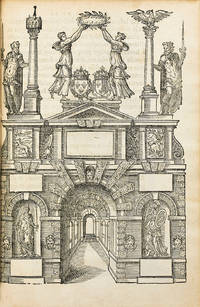
BIBLIO-LIVE-4-12Paris Denis du Pré 1572.<p>4to 235 x 157 mm of 53 ll. 1 9 full-page engravings in the text and one folding engraving out of pagination ; 10 ll. 26 2 ll. including 1 bl. 9 2 bl.ll. 6 full-page engravings in the text. Handwritten manuscript on the title. </p><p>Bound in full granite-like calf blind-stamped fillet on the covers spine ribbed and decorated mottled edges. Old restorations on the spine. <i>Early 18th century binding.</i></p><p>First edition of one of the most beautiful entries of the French Renaissance containing several plays by <i>Ronsard Antoine de Baïf Amadis Jamyn Jean Dorat Du Faur de Pibrac Pasquier</i>. in first edition.</p><p>Mortimer <i>French</i> 205-206; Rahir <i>Dutuit</i> 676; Picot <i>Rothschild</i> 3117; Brunet II 1001; Pichon 4897; Fairfax Murray <i>French</i> 152.</p><p><b>One of the beautiful French celebration books of the 16th century recounting the coronation of Queen Elisabeth of Austria wife of Charles ix and daughter of the Emperor Maximilian ii</b> which took place in the Abbey of Saint Denis as well as the entry of the sovereigns in the capital.</p><p>The work was written by the Parisian municipal magistrate<i> Simine Bouquet</i> who was charged by his colleagues at the city hall to organize the celebration and to coordinate the order of the decors; he had entrusted <i>Ronsard</i> and <i>Dorat</i> with the direction they decided the theme: the happy meeting between France and Germany. These two poets called in <i>Germain Pilon</i> for the sculptures in <i>Le Conte</i>for the carpentry's works and for the perspectives and the paintings in <i>Pierre d'Angers</i> andin<i> Nicolo dell'Abbate</i> the famous emulator of Fontainebleau's<i>Primaticcio.</i></p><p><b>The edition encloses 16 full-page woodcuts including 1 folding plate</b> made by the <i>precious stones cutter and engraver Olivier Codoré </i>abbreviated name according to Mariette of the valet and semi-precious stones engraver of the future Henry IV nicknamed <i>Coldoré</i> because of the abundance of necklaces he exhibited with pleasure.</p><p><b>The illustration depicts the ephemeral architectures triumphal arcs ivy and leaves cradles fountains…put on the royal cortege's way. </b>It is interesting as it is itself "<i>transformable</i>".</p><p>These ceremonies had been delayed for about ten years Charles IX being able to make his solemn entry in the capital only thanks to the recent Saint Germain peace conclusion on August 11th 1570 which put a temporary end to ten years of religious wars.</p><p><i>"The king's entry is illustrated with 10 figures including 9 that measure 200 x 140; the tenth bigger 208 x 212 depicts the perspective of the painting put place du Chatelet. These woodcuts offer similarities with those of the Entry of Henry II. The Entry of the Queen is illustrated with 6 woodcuts made each of two parts: the lower part is the exact reproduction of the corresponding figure of the King's entry; the upper part alone was re-engraved with different characters. The Queen having arrived 23 days after the king we had to keep the same decors and replace the allegories and inscriptions with other ones more suitable. All this decoration would be by Codoré as it is hinted in the privilege. According to Mariette Codoré would be the nickname of Fontenay Henry IV's semi-precious stones engraver."</i> Brun <i>Le Livre français illustré de la Renaissance</i> p. 181.</p><p>The volume encloses a mention of first state: the word<i>"vouloir"</i> l.34 v° wasn't added to line 7.</p><p>Brunet II 1001 mentions "<i>On some copies the page 'Simon Bouquet' is followed by a play in verse signed E. Pasquier Parisien entitled 'Au Roy Congratulation de la paix faicte par sa Majesté entre ses sujets l'onzieme jour d'Aoust 1570' 9 leaves</i>".</p><p>Our copy is one of the very few to include this play in verse by Pasquier.</p><p>The Queen being ill another celebration was held for her three weeks later. The same temporary architectures were used<i> but they were decorated with new allegorical figures.</i></p><p><b>A precious wide-margined and unwashed copy preserved in its 18th century binding. </b>Copies in ancient binding are rare most of them having been rebound –and washed at the same time– at the end of the 19th century.</p><p><br /></p><p><u>FR</u><br /></p><p>Paris Denis du Pré 1572.</p><p>In-4 de 53 ff. 1 9 gravures à pleine page dans le texte et une gravure dépliante hors texte ; 10 ff. 26 2 ff. dont 1 bl. 9 2 ff.bl. 6 gravures à pleine page dans le texte. Ex libris manuscrit sur le titre. Relié en plein veau brun granité filet à froid encadrant les plats dos à nerfs orné coupes décorées tranches mouchetées. Restaurations anciennes au dos. <i>Reliure du début du XVIIIe siècle</i>.</p><p>235 x 157 mm.</p><p><b>Edition originale de l'une des plus belles entrées de la Renaissance française contenant plusieurs dizaines de pièces de</b><i>Ronsard Antoine de Baïf Amadis Jamyn Jean Dorat Du Faur de Pibrac Pasquier</i>. <b>en édition originale.</b></p><p>Mortimer<i>French</i> 205-206 ; Rahir <i>Dutuit</i> 676 ; Picot <i>Rothschild</i> 3117 ; Brunet II 1001; Pichon 4897; Fairfax Murray <i>French</i> 152.</p><p><b>Un des beaux livres de fêtes français du XVIe siècle relatant le couronnement de la reine Elisabeth d'Autriche épouse de Charles IX et fille de l'Empereur Maximilien II </b>qui avait eu lieu à l'abbaye de Saint-Denis ainsi que l'entrée des souverains dans la capitale.</p><p>L'ouvrage est dû à l'échevin parisien <i>Simon Bouquet</i>que ses collègues de l'Hôtel de Ville avaient chargé d'ordonner la fête et de diriger l'agencement des décors ; celui-ci en avait confié la mise en scène à <i>Ronsard</i> et à <i>Dorat</i> qui en fixèrent le thème : l'heureuse rencontre de la France et de la Germanie. Ce sont ces deux poètes qui firent appel à <i>Germain Pilon</i> pour les sculptures à <i>Le Conte</i> pour les travaux de charpenterie et pour les perspectives et les peintures à <i>Pierre d'Angers</i> et à <i>Nicolo dell'Abbate</i> le célèbre émule du <i>Primatice</i> à Fontainebleau.</p><p><b>L'édition comporte 16 planches sur bois à pleine page dont une dépliante</b><b> </b>dues au <i>tailleur et graveur en pierres précieuses</i> <i>Olivier Codoré</i> nom abrégé selon Mariette du valet de chambre et graveur en pierres fines du futur Henri IV surnommé <i>Coldoré</i> à cause de l'abondance de colliers qu'il exhibait volontiers.</p><p><b>L'illustration figure les architectures éphémères arcs triomphaux berceaux de lierre et de feuillage fontaines. dressés sur le chemin du cortège royal.</b><b>Elle présente l'intérêt d'être elle-même " </b><i>à transformations</i> ".</p><p>Ces cérémonies avaient été retardées pendant une dizaine d'années Charles IX ne pouvant faire son entrée solennelle dans la capitale que grâce à la récente conclusion de la paix de Saint-Germain le 11 août 1570 qui mettait un terme provisoire à une décennie de guerres de religion.</p><p>" <i>L'entrée du roi est ornée de 10 figures dont 9 mesurent 200 x 140 ; la dizième plus grande 208 x 212 représente la perspective de la peinture dressée place du Chatelet. Ces bois offrent des similitudes avec ceux de l'Entrée de Henri II. L'Entrée de la reine est ornée de 6 bois formés chacun de deux parties : la partie inférieure est la reproduction exacte de la figure correspondantes de l'entrée du roi ; la partie supérieure seule a été regravée avec des sujets différents. La reine ayant fait son entrée 23 jours après celle du roi on avait dû conserver les mêmes décors et remplacer les allégories et inscriptions par d'autres mieux appropriées. Toute cette décoration serait de Codoré ainsi que le laisse entendre le privilège. Selon Mariette Codoré serait le surnom de Fontenay graveur en pierres fines de Henri IV.</i> " Brun <i>Le Livre français illustré de la Renaissance</i> p. 181.</p><p>Le volume comporte une remarque de premier tirage : le mot " <i>vouloir</i> " au f.34 v° n'a pas été ajouté à la ligne 7.</p><p>Brunet II 1001 mentionne " <i>A quelques exemplaires la page 'Simon Bouquet' est suivie d'une pièce en vers signée E. Pasquier Parisien intitulée 'Au Roy Congratulation de la paix faicte par sa Majesté entre ses sujets l'onzieme jour d'Aoust 1570' 9 feuillets</i> "</p><p><b>Notre exemplaire est l'un des très rares à posséder cette pièce en vers de Pasquier.</b></p><p>La reine étant souffrante une autre fête fut organisée en son honneur trois semaines plus tard. Les mêmes architectures éphémères furent employées <i>mais on les décora de nouvelles figures allégoriques</i>.</p><p><b>Précieux exemplaire grand de marges et non lavé conservé dans sa reliure du XVIIIe siècle. </b>Les exemplaires en reliure ancienne sont rares la plupart ayant été reliés à nouveau - et lavés par la même occasion – à la fin du XIXe siècle.</p> hardcover
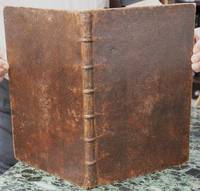
1654B66141654. small lower marginal tears at B1 2 and N2; some contemporary ink under linings; wide margin paper. Overall this rare work is in very good condition. . Binding: Contemporary full crushed brown morocco spine raised with six 6 bands; worn gilt title on two; compartments faded; all edges speckled red and green. Notes: Rare. Second augmented after the first edition published earlier the same year 1654. Text in Latin. Place printer or publisher are unidentified; printer’s device of: Troyes: Nicolas I Oudot’s heirs printer; <br>Three parts in one volume. <br>This is a rare edition of this early French astrological work printed the same year as its first edition. Some of the text especially relating to predictions was regarded exceedingly offensive immediately condemned leading to contents either to be removed or whole copies burned; the present second edition was published without the contentious contents i.e. volvelles making predictions about Islam its future development Christianity and England France and Spain; five 5 volvelles remain in this edition relating to Henry IV of France and constellations of the heavens at the time of creation.<br>Sotheby’s states: "The first two parts are attributed on their title-pages to a Francisci Alleius and comprise an explication of his 'new method of astrology' and comments and observations on 'the fate of the universe. ' The third part is a commentary on the preceding two sections by the Capuchin Yves de Paris who is presumed to be the true author of the entire work. Expurgated editions themselves very rare were printed in Paris in 1654-56 and Rennes in 1658."<br>While the contents give no indication of the publisher printer or place the printer’s device of Nicolas Oudot Troyes founder of the Bibliothèque bleue is engraved on the first title. <br>Caillet III 11557. Thorndike VIII 310ff. Peignot Dictionnaire des livres condamnés au feu II 204f. <br> Size: Folio 343x215mm. Illustration: Two illustrated titles with woodcut engraved printer’s devices the first depicting a flower filled basket the second a fruit filled bowl; woodcut engraved floral initials and head pieces at openings; moreover five astrological figures; of these twelve 12 are moveable parts and five 5 fixed; of the five three have retained their threaded marker. Provenance: Armorial bookplate on upper pasted endpaper. References: Brunet I 185; Caillet III 11557; Dorbon Bib. Estoterica 61; Houzeau and Lancaster 5217. Thorndike VIII 310ff. Peignot Dictionnaire des livres condamnés au feu II 204f. Pages: Ll: bl. vol I: 2 pp.12; vol II: pp.57 p.1; vol III: pp. 26; bl. Collation: e1-2 A1-C2; A1-N2 O1-3; A1-F2 G1; bl. with watermark Category: Book Religious Christianity; Book Europe France; Book Science & Technology; unknown
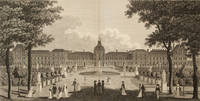
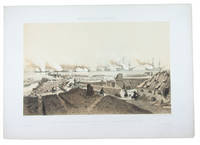
18161435761816. PARIS. Graphic Illustrations of the Most Prominent Features of the French Capital; with Characteristic Figures in the Foregrounds comprised in Twelve Stroke Engravings From Accurate Designs Taken in Paris during the Imperial Reign of Buonaparte. With Descriptive Notices and Interesting Anecdotes. 26 pp. illustrated with 12 double-page engravings. Folio 430 x 380 mm. bound in contemporary French three-quarter black morocco over marbled boards gilt title and floral vignettes on spine paper label with ms. number "20" on front cover and spine. London: Harper and Co. 1816. A fine copy of this extremely rare collection of views of Paris consisting of twelve artistically conceived views of Paris engraved by English artists. The large double-page engravings incorporate local Parisians participating in daily routines within the setting of each view. Panoramic views include: the Military School and the Church of the Invalides; View of Paris from the South Boulevard; View of Paris from Montmartre; South View of the Old and New Louvre; The Mint and The Façade of the Louvre; View of La Place de la Concorde; The Garden of the West Front of the Tuileries; Palace of the Tuileries Facing La Place du Carrousel; Garden of the Tuileries; The Luxembourg or Palais du Senat with the Gardens; The Elysian Fields Distant Gardens of the Tuileries; Entrance to Les Champs Élysées and La Place de la Concorde. Each plate is followed by two pages of text giving historical details and anecdotes about the site illustrated. Minor wear to outer edges of binding plates and text clean. Rare: OCLC lists 6 copies worldwide of which only one is held in America Bowdoin College. hardcover
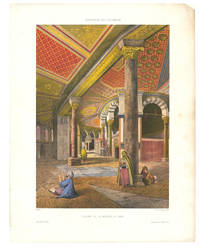
1862B6492Paris: Librairie maritime et scientifique Arthus Bertrand editeur. 1862. A near fine copy with one plate with marginal tears otherwise texts and plates are clean and crisp.<br><br>. Binding: Contemporary cloth rebacked in calf expertly title in gilt on spine spine with 4 raised bands. Notes: François-Edmond Paris 1806–1893 was a French admiral notable for his contribution to naval engineering during the rise of the steam for his books and for his role in organising the Musee national de la Marine.<br>Michel Charles Fichot 1817 - 1903 was a French painter designer illustrator and lithographer.<br>Hubert Clerget 1818 - 1899 was a French lithographer and painter.<br>Jules Gaildreau 1816-1898 was a draughtsman illustrator active in Paris.<br><br>This is the first and only edition of this beautifully illustrated work. It is an account of the 1861 visit to Jerusalem undertaken by the third French Squadron of the Mediterranean. This book is famous for the quality of its 12 hand-coloured plates including the Mosque of Omar and the El-Aqsa Mosque. François-Edmond Paris joined the French Navy in 1820 and took part in three great expeditions: the first under d’Urville abord the Astrolabe 1826-9 and two under Laplace on the Favorite 1829-32 and the Artemise 1837-40. In 1858 he was named rear-admiral and was given the command of the third French Squadron of the Mediterranean. Before publishing “Souvenirs de Jerusalem†Paris had already published two important folios on naval and marine architecture. The “Notes historiques'' provide a rich and fascinating complement to the plates providing not only historical references but also the author’s impressions as a visitor.<br><br><br> Size: Large Folio. Illustration: Illustrated with 14 full page finely coloured plates. References: Blackmer 1255; Röhricht 508. Category: Book Asia Middle East Holy Land; Book Plate Books Colour; Librairie maritime et scientifique Arthus Bertrand, editeur. hardcover
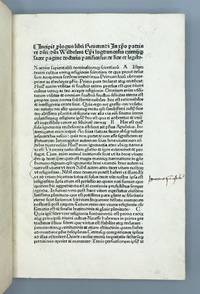
147511955Augsburg: Günther Zainer 1475. 19th-century gilt-ruled speckled calf J. Mackenzie; rubbed spine and red morocco label gilt crown neatly repaired red edges. <p> Editio Princeps of the first printed work of William of Auvergne c. 1180-1249 originally composed 1228-30 as part of his encyclopedic Magisterium divinale. In his youth William read widely in books of judicial astronomy magic and sorcery. HE WAS A FORERUNNER OF ROGER BACON AND ALBERTUS MAGNUS and "one of the first wave of thinkers in the Latin West to engage with the writings on natural philosophy and metaphysics by Greek Islamic and Jewish thinkers that had recently become available in Latin translations" Lewis et al. With these newly recovered works on the occult sciences he framed "a new philosophical vision of magic as applied knowledge" rather than demonic activity Hansen.<br /> He examines superstitions associated with i.a. the stars the elements images words names seasons new undertakings the finding of objects dreams alchemy gemstones minerals metals and seeing the future in children's fingernails. In good condition bookplate of the Bibliotheca Philosophica Hermetica.<br /> ¶Sarton Introduction to the History of Science II: 219; Lewis & Fischer "William of Auvergne" in The Stanford Encyclopedia of Philosophy Spring 2023 edd. Zalta & Nodelman online; Hansen "Bookish Magic" in Dictionary of the Middle Ages 8: 37; Quentin Naturkenntnisse und Naturanschauungen bei Wilhelm von Auvergne 19-21 & 58-60; ISTC ig00711000; Goff G-711.</p> Günther Zainer unknown
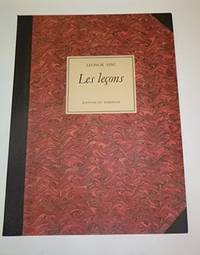
16-4020Bruxelles: Editions du Tamanoir 1976. Large folio. 27 x 20 inches. 68 x 52cm. Two board portfolios in a slipcase. One portfolio contains the text and 14 silkscreens. The second portfolio contains 12 signed and numbered color silkscreens each one of 26 signed impressions. Very heavy more than 11 kilos.12 large format silkscreen illustrations; bound in leather and marbled paper boards signed by Waldberg and Fini in matching marbled paper portfolio are contained with the book in asumptuous matching leather and paper box. Includes many of Fini's most beautiful images such as "Vesper Express" and "Guardian of the Wells." .Edition of 275 Plus 26 Artist's CopiesLes leçons édition du Tamanoir Bruxelles 1976 Ouvrage comprenant une préface de Patrick Waldberg et douze sérigraphies dimensions variées marges 68 x 52 cm très belles épreuves tirage à 275 exemplaires et 26 exemplaires de collaborateur numérotés a à z exemplaire L comprenant le livre relié avec les douze sérigraphies et une suite supplémentaire des douze sérigraphies signées et numérotées l/z très bon état général quelques usures sur l'emboîtage d'origine.Expertise by Jean-Paul Veyssière 37000 Tours France. Bruxelles: Editions du Tamanoir, 1976. hardcover
14881909070002Basel : Nicolaus Kessler 1488. First Edition. Hardcover. Good. Incunable : Textus Sententiarum magistri Petri Lombardi Basel: Nicolaus Kessler 22 September 1488. Folio 31 x 23 cm. Bound in later 1/2 leather over marbled boards. Solid binding and cover. Gothic letter printed in two columns 55 lines. Woodcut calligraphic first initial on first leaf. Rubricated lettering throughout with opening initials drawn by hand in red. Fine printer's device white on background on rear leaf. 281 leaves. Lacking 2 blank leaves 132 & 281. Collation: a10 b-i8/6 k-p6/8 q-s6 t8 lacking t6 blank A-Q8/6 Qr6 sic R6 S8 lacking one blank in this signature T6 V8 Some worming. Contemporary handwritten notes on rear blank leaf. <br> The principal work of Peter Lombard the 12th century philosopher and scholastic theologian. The work is a collection of core statements of the church fathers first written circa 1150 A.D. Lombard's work was widely read and became one of the primary work of medieval and renaissance theological scholarship. Refs: Procter 7670. Hain 10195. BMC III 766. Goff p. 491. Zehnacker 1825. Kesler. Basel : Nicolaus Kessler hardcover
1856G5DC4C01U79OParis: Arthus-Bertrand printed by Becquet frères 1856. Later half blue cloth portfolio patterned white silk sides printed in blue in period style printed spine label. 1mo 63 x 46 cm. An album of views most including ships on the river from the Battle of Kinburn in the Crimean War comprising 17 plates: 1 tinted lithographed title-page 15 tinted and double-tinted lithographed views image size 30 x 46 cm and a lithographed map. Many views also coloured by hand. A rare lithographic print series commemorating the Battle of Kinburn Kil-Bouroun on the south bank of the Dnieper River near the Crimea. On 17 October 1855 during the Crimean War the French and British navies attacked the Russian outpost there with a fleet of ironclad ships destroying the fortifications within hours and suffering only light damage. This decisive success seven years before the famous battle of the Monitor and the Merrimack in the American Civil War heralded the demise of the traditional wooden warship. Though made from the land mostly after the battle itself nearly all show maritime scenes with large and detailed depictions of the ironclad ships on the ice-bound river. They also show the ruined fortifications in great detail. With some marginal tears repaired but still in very good condition with only an occasional minor spot. The portfolio is also very good with a couple small water stains on the silk of the front board. A lovely series of views of ironclad ships on the frozen Dnieper River during the Crimean War.l Collection De Vinck 17202-17206 17209 17211-17221; WorldCat 4 copies. Arthus-Bertrand (printed by Becquet frères), hardcover
176420218Paris: Chez P. Alex. Le Prieur tomos 1 al 12 M. DCC.LXIV 1764 y 1771 y Chez P. Fr. Didot le jeune tomos 13 al 15 M.DCC.LXXIV 1774.- EN TOTAL SON 15 VOLS.: 1º con 2 h. 391 p. / 2º con 2 h. 439 p. y 6 láminas plegadas / 3º con 1 h. 479 p. y 12 láminas plegadas / 4º con CLXXIV232 p. y 4 láminas plegadas / 5º con 1 h 489 p. y 16 láminas plegadas / 6º con 1 h. 406 p. y 2 láminas plegadas / 7º con 1 h. 432 p. y 3 láminas plegadas / 8º con 1 h. 456 p. y 5 nláminas plegadas / 9º con 2 h. 516 p. y 11 láminas plegadas / 10º con 213 p. y 4 láminas plegadas / 11º con 2 h. 516 p. y 2 láminas plegadas / 12º con 2 h.388 p. y 2 láminas plegadas / 13º con XLVIII 431 p. y 9 láminas plegadas / 14º con 2 h. 534 p. 1 h. y 4 láminas plegadas / 15º con VIII 544 p. y 6 láminas plegadas Todas suman un conjunto de 89 láminas plegadas de anatomía e instrumental quirúrgico finamente grabadas al cobre; 8º menor 17 x 104 cm; Buena impresión sobre fuerte papel verjurado; Texto en francés; Plena Piel Epoca lomo cuajado en oro cortes pintados en rojo.- RARO. Las encuadernaciónes con ligeros roces en bordes y esquinasque han sido restaurados. Pequeñas faltas en las cabezas de las lomeras y los tejuelos de algunos tomos. Pero en conjunto la obra presenta un buen aspecto con el interior en excelente estado. Aunque los libros son de dos imprentas presentan un aspecto perfectamente uniforme. Según datos de la actual Académie Nationale de Chirurgie de Francia estas primeras Mémoires de l'Académie Royale de Chirurgie fueron publicadas entre los años 1743-1774. DESCRIPCION EXACTA DE FECHAS POR TOMOS: Paris Chez Le Prieur Tome I partie I 1764; Tome I partie II 1765; Tome I partie III 1743; Tomes IV V y VI 1768; Tomes VII VIII y IX 1771; Tomes X XI y XII 1768; Y Paris Chez P. Fr. Didot le jeune Tomes XIII XIV y XV 1774. CIRUGIA EN GENERAL Y TRAUMATOLOGIA Livre en français P. Alex Le Prieur y Fr. Didot le jeune hardcover
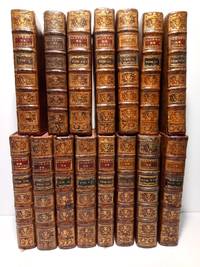
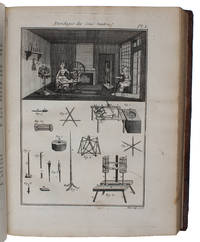
177156289Neuchatel L'Imprimerie de la Société Typographique 1771-83. 4to. Bound in 19 contemp. uniform full mottled calf. Raised bands. Gilt spines. Title-and tomelabels with gilt lettering. Spine-ends on nearly all volumes strenghtened. Stamp on title-pages. Each volume around 650 pp. With 508 fine engraved plates. <br/><br/><em>Second edition and the first 4to-edition was published in 19 volumes plus an additional volume by Jean Elie Bertrand where vol. 20 is an additional volume published much later 1799 - not present here - dealing with the art of printing. This importent collection of books on crafts was published by between 1761 and 1788. The full series comprises 113 parts cahiers in 27 folio volumes along with three supplements and "provide detailed accounts of a wide range of handcraft and manufacturing processes carried out in France at that time. The volumes are well-illustrated with precise engravings by Jean Elie Bertrand 1737-1779 a noted typographer from Neuchâtel where the printing was done. Many of them provide the background for shorter articles in Diderot's Encyclopedia which was appearing at much the same time. The project had its origin in request from Colbert in 1675 to the Academy Royal des Sciences for detailed accounts of various mechanic arts to be prepared and for new machines to be reported upon. This led to the formation of the Bignon Commission under Abbé Bignon. René-Antoine Ferchault de Réaumur 1683-1757 became editor soon after he joined the Academy. He inherited number of drawings the earliest prepared in 1693 and an illustrated manuscript on printing type and book binding which had been prepared in 1704. It was left to Réaumur's successor Duhamel du Monceau to bring about the publication of the series probably as the result of the competition from the Encyclopedia." Wikipedia.Brunet II618 ff. - Graesse II 367. </em> hardcover
195630327<p>HBDJ January 1956 1ST EDITION 2ND PRINTING VG/VG- AS-IS DJ some rub & wear & several Small chips AT EXTREMITIES DJ & Torn half the length of the rear Fold SLENDER CHIP at Spine DJ Despite this it is intact in mylar Wrapper Red cloth Cover with Gold Gilt Cover shows some fading at front from moisture in Past lite wear pgs otherwise Interior Nice Tight Clean VG/VG- AS-IS 360 pgs index</p> W. H. ALLEN London hardcover
192925344EParis: Edite Par Henri Broca 1929. First Edition. Text in French. Signed and inscribed the author at the half-title in French: “a Francis Dickie bon ami en souvenir de notre vieux Montparnasse. Sympathie de Kiki Juin 1931â€. to Francis Dickie good friend in memory of our old Montparnasse. Sympathy of Kiki June 1931 Below her inscription Kiki has drawn a nude self-portrait in which she is up to her waist in water with a small drawing of a sailor in the foreground and a sailboat in the background with birds flying overhead. She has signed her drawing “KiKiâ€. One of 250 unnumbered copies. Text in French. Original tan wrappers with dark green tape to the spine with a small black & white reproduction of a painting of Kiki by Moise Kisling to the front cover. Illustrated with photographs and paintings by Man Ray Kisling Tsuguharu Foujita Per Krohg Hermine David etc. and paintings by Kiki. A lightly toned copy with some aging edge wear and faint spotting to the edges of the first few pages. This is the memoir of Alice Prin 1901 - 1953 better known as Kiki of Montparnasse a French model chanteuse memoirist and painter during the Jazz Age. She flourished in and helped define the liberated culture of Paris during the so-called Annees folles crazy years. She became one of the most famous models of the 20th century and in the history of avant-garde art. In 1921 she met the American visual artist Man Ray with whom she had a stormy eight-year relationship during which time she became his muse as well as the subject of some of his best known images including the surrealist image Le Violon d’Ingress and Noire et blanche Black and White. A painter in her own right Kiki had a sold-out exhibition of her paintings in 1927 at the Galerie au Sacre Printemps in Paris. Long after her death she remains the embodiment of the outspokenness audacity and creativity that marked the interwar period of life in Montparnasse. Very scarce. Edite Par Henri Broca unknown
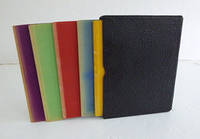
51-6549Paris: Jeanne Bucher 1934. 4to. 22.5 x 28cm. Five portfolios with different colored paper covers. Spines are faded some small tears or cuts at the edge of some covers with a small loss at the top of the cover of the 2nd notebook. Presented in an elegant black pebbled shagreen slipcase. Each one of 812 numbered copies.Five volume serial novel with 182 line blocks after collages.MoMA: A Week of Kindness Une Semaine de bonté is the most elaborate of Ernst’s inventive “collage novels.†Its 182 images were created by cutting up and reorganizing illustrations from nineteenth-century novels scientific journals and other sources. By printing these collages photomechanically Ernst transformed them into the seamless images he desired. The surreal constructions alternately dark and humorous in their subversion of bourgeois gentility are rife with suggestions of repressed sexuality violence anti-militarism and anti-clericalism. Though originally planned as seven volumes one for each day of the week the last three “days†were combined into the fifth and final volume. Ernst released them consecutively like popular serial stories.Luc Monod no. 4323. First notebook: Sunday element: Mud example: The Lion of Belfort. 3 ff. 36 engraved plates out of 18 ff 1 bl.f. Second notebook: Monday element: Water example: Water. 3 ff. 27 engraved plates out of 14 ff 1 bl.f. Third notebook: Tuesday element: Fire example: The Court of the Dragon. 3 ff. 44 engraved plates out of 22 ff 1 bl.f. Fourth notebook: Wednesday element: Blood example: Oedipus. 3 ff. 28 engraved plates out of 14 ff 1 bl.f. Last notebook: Thursday element: The Black examples: The Rooster's Laughter Easter Island Friday element: The View example: The Interior of the View Saturday element: Unknown example: The Key to the Fields. 4 ff. 16 engraved plates on 8 ff. 1 f. 10 engraved plates on 5 ff. 2 ff. 6 pl. heavy on 3 ff. 1 f. 4 pl. heavy on 2 ff. 1 f. 2 pl. heavy on 1 f. 1 f. 10 pl. heavy on 1 f. 1 f. bl. ….No. 416 of 800 on Navarre paper. Apart from the small defects on the covers a very good set well preserved and very complete. Invited to the Château de Vigolino in Italy in August 1933 Max Ernst drew on the library of his hostess the Duchess of Gramont to cut out illustrations from various works of the previous century such as Les Damnées de Paris by Jules Mary or works illustrated by Gustave Doré and thus constitute a fantastic set of 184 collages 182 of which were selected to be published in 5 booklets by the gallery owner Jeanne Bucher. Initially planned in seven booklets for each day of the week each with an element and an associated "example" the poor sales of the first four forced the condensing of the last 3 days into a 5th and final volume. This is Max Ernst's third collage novel after The Woman with 100 Heads 1929 and Dream of a Little Girl Who Wanted to Enter Carmel 1930. The original collages of an incredible degree of perfection and refinement were exhibited for the first time at the Museo de Arte Moderno in Madrid in 1936 except for 5 plates deemed too blasphemous before being rediscovered only in 2008-2009 during a series of exhibitions passing through Vienna Brühl Hamburg Madrid and finally Paris at the Musée d'Orsay provoking the enthusiasm of the public and the press… the dreamlike force the impressive disturbance of déjà vu bewitch. Each rape perpetrated by a statue from Easter Island emerging from behind a curtain each torture of a man with a bird's head each woman in a crinoline surrounded by dragons each staging of a crime that is always absurd: all this goes straight to the brain. And once seen it is impossible to forget these madnesses." Le Figaro June 30 2009 Éric Biétry-Rivierre. "In Une semaine de bonté the scenes and events that unfold over the pages form a striking contrast with the title. Power violence torture murder and catastrophes are the dominant themes. The scenes full of agitation and brutality that appear on many pages are to be linked to the alarming political situation of the time and the rise of dangers. Ernst was reacting to the establishment of dictatorships in Europe and the seizure of power by the National Socialists. His contemporary concerns are intertwined with allegories allusions to mythology Genesis fairy tales and legends but also fragments of dreams and poetic worlds. The work is also pervaded by themes dear to the author: sexuality anticlericalism the rejection of family and the bourgeoisie the refusal of patriotism. It is ultimately a certain form of society that Max Ernst seems to want to denounce…His irreverent collages reflect the state of mind of his men who returned traumatized from the First World War he himself served in the German artillery and who had to find their place in a society that was doing everything possible to forget the horrors of the conflict. He seizes upon conventional stereotypical representations of evil abjection and suffering found in newspapers magazines and novels. But by transforming them and combining them he radically diverts these images from their original message and reinforces their impact." Presentation of the Musée d'Orsay exhibition "Max Ernst 'A Week of Goodness' - The Original Collages" June 30 - September 13 2009…. Paris: Jeanne Bucher, 1934. unknown
1862ABC_48352Paris: Arthus-Bertrand 1862. Stored losely as issued in the original paper wrapper showing the title and in a modern half brown cloth portfolio with white cloth ties and a title-label lettered in gold mounted on the front of the portfolio. Large folio ca. 64 x 49 cm. With an etched and coloured vignette plan of the Church of the Holy Sepulchre mounted on the title-page and 14 lithographs including 12 printed in colour by Albert Adam Charles claude Bachelier Hubert Clerget Charles Fichot and Jules Gaildrau after François-Edmond Pâris. Elaborate album of lithographs based on drawings by Vice Admiral François-Edmond Pâris from a visit to the Holy City in 1861. The album follows Pâris' itinerary as described by him in the introductory text. Leading his squadron from Jaffa to Jerusalem Pâris drew a charming scene of pilgrims gathering at the fountain of Abu-Nabbut. Before entering the city he captured an impressive view of Jerusalem from the Mount of Olives. 52 important sights are marked in the uncoloured lithograph and described in the text. The view of the city is followed by impressions of Christian places of worship such as the Holy Grave the Prison of Christ and the Chapel of Saint Helena in the Church of the Holy Sepulchre the Tomb of the Virgin Mary the Grotto of the Nativity in nearby Bethlehem and an unusual uncoloured view of the interior of the Golden Gate Gate of Mercy. The final 3 lithographs present 2 beautiful interiors of the Mosque of Omar and one of the Al-Aqsa Mosque. All sights depicted are described in the text.François-Edmond Pâris 1806-1893 commanded the 2nd Division of the French fleet in the Mediterranean when he visited Jerusalem. Leading primarily scientific missions Pâris was a talented draughtsman who took an interest in naval architecture steam engineering and geography. Today Pâris is considered the father of modern maritime ethnography and he played an important role in the modernisation of the National Maritime Museum in Paris.The original paper wrapper is rather wrinkled with some repaired tears and restored loss to corners the title-page is a little stained and several tears in the margins have been professionally repaired. The lower right corner of the first text-sheet has been repaired without affecting the text. The lithographs have been generally well preserved but some are lightly affected by stains in the margins some occasional tears in the margins and corners of the sheets have been restored not affecting the illustrations. Otherwise in very good condition.l Blackmer 1255; Röhricht 2762; Tobler 231. Arthus-Bertrand, hardcover
176256316Königsberg und Leipzig Kanter Berlin Stettin Leipzig Rüdigern 1762-75. 4to. Bound in 13 uniform contemp. full calf. Raised bands. Richly gilt spines. Titlelabels with gilt lettering. On all boards the gilt monogram on red background of King Christian VII. A stamp on title-pages. Around 6000 pp. 4 folded tables and 366 folded engraved plates 1 plate in xerox-copy. Occassionally a few minor brownspots but fine and clean. <br/><br/><em>First German edition of this importent collection of books on crafts which is a translation of "Descriptions des Arts et Métiers." published in French between 1761 and 1788. The full French series comprises 113 parts cahiers in 27 folio volumes along with three supplements and "provide detailed accounts of a wide range of handcraft and manufacturing processes carried out in France at that time. The volumes are well-illustrated with precise engravings by Jean Elie Bertrand 1737-1779 a noted typographer from Neuchâtel where the printing was done. Many of them provide the background for shorter articles in Diderot's Encyclopedia which was appearing at much the same time. The project had its origin in request from Colbert in 1675 to the Academy Royal des Sciences for detailed accounts of various mechanic arts to be prepared and for new machines to be reported upon. This led to the formation of the Bignon Commission under Abbé Bignon. René-Antoine Ferchault de Réaumur 1683-1757 became editor soon after he joined the Academy. He inherited number of drawings the earliest prepared in 1693 and an illustrated manuscript on printing type and book binding which had been prepared in 1704. It was left to Réaumur's successor Duhamel du Monceau to bring about the publication of the series probably as the result of the competition from the Encyclopedia." Wikipedia.Brunet II618 ff. only French editions - Graesse II 367 only the French editions. - Fromm 7040. </em> hardcover
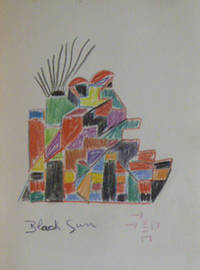
51-6513Paris: The Black Sun Press MCMXXVIII and MCMXXIX. Large 8vo. 15.5 x 24cm. 2 volumes in one: First Series: 8 141 7 2 blank leaves; Second Series: 10 104 4 1 blank leaf.Very good. Three-quarter contemporary red morocco; wraps bound in. One of 44 copies with a color drawing by the author; likely a collotype. In this copy the title in the drawing has been reworked by hand. Minkoff A11 and A20. Minkoff correctly states that the copies are not numbered as called for on the justification page. What appears as “17†beneath the drawing is apparently some other notation by Crosby. OCLC Number / Unique Identifier:458990437: Morgan Library accession number: PML 184715 Provenance: Collection of Dr. Gregory R. Bonomo Paris: The Black Sun Press, MCMXXVIII and MCMXXIX paperback
187490307Paris: Michel Lévy frèresCalmann-Lévy 1874. Fine. A handsome large-paper copy uncut complete with the scarce atlas of 30 colour maps. Michel Lévy frères Calmann-Lévy Paris 1874-1890 19.7 x 25.5 cm pour les volumes de texte & 337 x 45 pour l'atlas 7 volumes brochés et un volume d'atlas relié First edition one of the scarce copies on Holland laid paper not mentioned in the justification.The seven volumes of text are in their original wrappers with deckle edges preserved showing small marginal tears and at times minor losses to certain spines and covers.Our copy is complete with its in-folio atlas volume comprising 30 maps with outlines heightened in colour cf. Vicaire VI 397-398. F. Monaghan p. 74 no. 1157.The atlas is bound in contemporary full dark blue cloth smooth spine printed title label laid down on the spine gilt device on the upper cover a few scratches to the boards contemporary binding.This remains the finest contemporary work in French on the American Civil War all the more compelling as its author took part in the campaign: grandson of Louis-Philippe the Comte de Paris 1838-1894 enlisted in 1861 in the Federal Army alongside his brother the Duc de Chartres. He saw action at Williamsburg Fair Oaks and Gaines Mill before leaving the United States in 1862 so as not to hinder the French expedition to Mexico.The atlas bears the device of the Cercle de l'Union Artistique stamp on a front free endpaper. Founded in 1860 the society remained active until 1946 cf. Catalogue de la bibliothèque 1901 p. 121.A very rare and handsome large-paper copy uncut and complete with the scarce atlas of 30 colour maps. Michel Lévy frèresCalmann-Lévy hardcover
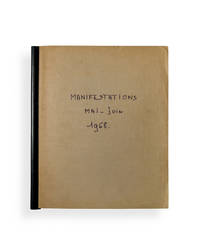
122791Paris 1968. . Album 270 x 210 mm 10¾ x 8¼ in; 49 silver gelatin photographs with locations in ink on verso map in pen and ink; brown textured covers with title in ink on upper side black plastic spine bar.<br /> The night of May 10-11 1968 known as The Night of the Barricades was marked by fierce clashes between student protesters and police in the area around the Sorbonne. After police blocked protesters from reaching the ORTF Office de Radiodiffusion Télévision Française students began tearing up cobblestones and building barricades. Around 2am on May 11 police launched a charge and a violent confrontation continued until dawn. Nearly 500 students were arrested and hundreds more were hospitalised including 250 police officers. Far from quelling support the clashes deepened public sympathy for the students. What had started as a university-led movement for educational reform soon spread to engulf all of France.<br /><br />The photographs in this album show the aftermath of the night's events with the hand drawn map showing the areas around the Sorbonne centred on rue Gay Lussac with symbols showing the location of the barricades and burnt-out cars.<br /> [Paris], [1968]. unknown
158921<p><em>Matthaei Paris Monachi Albanensis Angli historia maior a Guilielmo Conquaestore ad Ultimum Annum Henrici tertii</em>. Zurich 1589.</p><p>Folio. Contemporary calf. Gilt title. Cloth ties still attached.</p><p>A primary source for Shakespeare's <em>King John. </em>See E. A. J. Honigmann <em>King John</em> Arden Shakespeare 1954 pp. xv-xvii.</p><p>Matthew of Paris was an English Benedictine monk who was a chronicler an artist known for illuminated manuscripts and a cartographer who was based at St. Albans Abbey in Hertfordshire.</p><p>Bookplate of Roger Gates. Early annotations and manuscript underlinings throughout.</p><p>The Universal Short Title Catalogue lists only one other known copy at the Universitätsbibliothek in Basel Switzerland</p><p>Reference: USTC 1788497</p>
183238031Paris: Techener / Franck 1832-1848. 12 volumes in 11 complete. A COMPLETE SET with all of the often missing facsimile plates OF THE "ROMANS DES DOUZE PAIRS DE FRANCE" the series which under the stewardship of Paulin Paris inaugurated the publication of the Old French chansons de geste. Although the chansons de geste Old French epics constitute perhaps the most remarkable genre of medieval French literature NOT ONE had ever before been printed. This series includes 8 works in 12 volumes. ALL OF THESE WORKS ARE PRINTED HERE FOR THE FIRST TIME AND SEVERAL OF THEM ARE AMONG THE MOST IMPORTANT WORKS OF MEDIEVAL LITERATURE. 1. Li romans de Berte aus grans piés Paris: Techener 1832. Complete with two facsimiles one folding and in two states one of which is beautifully colored by hand. ONE OF ONLY 20 LARGE-PAPER COPIES ON WHATMAN WOVE PAPER OF THE FIRST EDITION OF THE FIRST OLD FRENCH CHANSON DE GESTE EVER PRINTED from a total edition limited to 210 copies. There was a second printing in 1836 from a new setting of type. 2-3. Li romans de Garin le Loherain 2 volumes. Paris: Techener 1833-1835. Complete with the facsimile plate. The first edition of the second Old French chanson de geste ever printed. Edition limited to 420 copies. 4. Li romans de Parise la Duchesse Paris: Techener 1836. Edition limited to 420 copies. 5-6. La chanson des Saxons "Saisnes": 2 volumes. Paris: Techener 1839. EXTREMELY IMPORTANT AND VERY RARE. Edition limited to 420 copies. 7. Li romans de Raoul de Cambrai Paris: Techener 1840. Edition limited to 420 copies. Extremely important. Complete with the hand-colored facsimile plate. 8-9. La chevalerie Ogier de Danemarche 2 volumes in 1. Paris: Techener 1842. ONE OF ONLY 99 COPIES PRINTED 4to ON FINE PAPER WITH THE TWO FACSIMILE PLATES PRINTED ON VELLUM AND BEAUTIFULLY COLORED BY HAND. THESE TWO PLATES ARE USUALLY MISSING. 10. La mort de Garin le Loherain Paris: Franck 1846. Edition limited to 420 copies but about half of those were reissued with a new title-page in 1862. SINCE THIS BOOK WAS NOT PUBLISHED BY TECHENER IT IS VIRTUALLY ALWAYS MISSING EVEN FROM SETS DESCRIBED AS COMPLETE. 11-12. La chanson d'Antioche Paris: Techener 1848. Edition limited to 420 copies. All volumes except the Berthe printed on extremely fine laid paper. The works were issued separately and complete sets are very rare in private hands. 8vo and 4to. Nine volumes attractively bound in late-19th-century morocco or half morocco not all bindings match the other three volumes in original boards or wraps. Slight traces of wear to a few of the bindings internally FINE AND BRIGHT. Cole 1832/1 1833/1 1836/2 1840/1 1842/1 1846/1 and 1848/1. Vicaire VI 1185. ENORMOUSLY IMPORTANT FOR THE HISTORY OF MEDIEVAL STUDIES AND VERY RARE AS A COMPLETE SET--AND EVEN MORE SO AS HERE WITH "BERTE AUS GRANS PIES" IN FIRST PRINTING AND ON LARGE PAPER "LA MORT DE GARIN LE LOHERAIN" IN FIRST ISSUE THE "OGIER DE DANEMARCHE" ON LARGE PAPER AND ALL OF THE FACSIMILE PLATES PRESENT. <br/><br/> Techener / Franck paperback
176226629Berlin Stettin und Leipzig Johann Heinrich Rüdigern 1762-75. 4to. Bound in 13 fine uniform full calf raised bands gilt backs. Remains of paperlabels on backs. Top of spine on one volume frayed. Small rubber stamp on titles. A few brownspots. A good copy. Having in all 374 of 585 fine engraved plates 1 plate supplied in xerox-copy. Plates measure around 37x24cm. <br/><br/><em>First German edition of one of the main works of the 18th century in the fields of crafts and technology as it is a translation of the famous series "Description des Arts et Metiers" issued by Academie Royale des Sciences 1760-75. The French edition was published in folio. Band 1: Kohlenbrennen Lichtziehen Ankerschmieden Nadler Papiermacher. 31 plates and 1 table;Band 2: Eisenhämmer. Teil 1-2 Wachsziehen Pergamentmachen Leder-Vergoldung Schieferbrüche. 22 plates; Band 3: Eisenhämmer. Teil 3-4 Spielkartenherstellung Seidenfärberei Pappenmacher. 29 plates 1 plate supplied in xerox-copy; Band 4: Böttcherkunst Weißgerber Ziegelstreichen Zuckersieden Silber affinieren. 30 plates; Band 5: Messingherstellung Tuchmacherkunst Lohgerberei. 33 plates. Band 6: Tuchfrisierkunst Saffianleder-Herstellung Leder auf ungarische Art Weißgerber Hutmacher Dachdecker. 19 plates; Band Band 7: Tapetenweberei Kalkbrennerkunst Ziegelstreichen in Holland Ziegelhütten Ball- und Raquettenmacher. 30 plates and 1 table; Band 8: Perückenmacherkunst Müller Nudelmacher und Bäcker. 15 plates; Band 9: Schuster Schlösserkunst. 48 plates; Band 10: Steinkohlenbergbau Indigobereiter. 22 plates; Band 11: Eisenbergwerke und Hüttenwerke in der Steiermark Leimsiederei Fischerei Teil 1. 25 plates and 1 table; Band 12: Fischerei Teil 2. 50 plates; Band 13: Fischerei Teil 3 Porzellanherstellung. 23 plates and 1 engr. frontisp.; Band 14: Glasmalerei und Glasarbeiten. Mit 13 von 14 Tafeln; Band 15: Wollenzeugfabrikant. 17 plates; Band 16: Seifensider Leinwandhandel Schneiderhandwerk Leinenmanufaktur Tabaksmanufaktur. 27 plates; Band 17: Bleiarbeiter mathematische und astronomische Instrumente Baumwoll-Samtfabrikation. 38 plates; Band 18: Stickerkunst Siebmacher Riemer und Sattler mit Kutschenbau Drahtzieherei Stahlblattmacher. 51 plates Band 19: Schiffbaukunst. 18 plates and 1 engr. frontisp.;Band 20: Zinngießerkunst. 32 plates; Band 21: der Strumpfwirkerstuhl und sein Gebrauch. 14 plates. </em> hardcover
18791693961879. PARIS Ministere de Travaux Publics. Album de statistique graphique. 1879 1880 1881 1882 1883 1885 1887 1888 1889 1890-1891 1892 1893 1895-1896. Each volume contains 12-26 colored plates of informational graphics many folding. Folio 330 x 255 mm. publisher's boards. Paris: Imprimerie Nationale 1879-1896. These splendid volumes were published by the French statistical bureau between 1870 and 1897 and are very much in the style established by Charles Josph Minard. On the outside they appear drab and undistinguished but on the inside they are alive with a profusion of dazzling coloured charts. They have been called "the finest specimens of French graphic art in the century" H.G. Funkhuser. All of the volumes are rare and the series remains largely unknown. Some wear to a couple of bindings and a few inoffensive library stamps but otherwise sound. hardcover
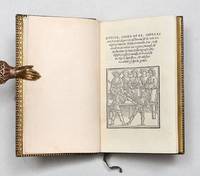
1521139884Venice: 1521. Treatise on duelling for soldiers and princes An elegant Italian edition of this important treatise on duelling laws and customs printed in italic type in the humanist octavo format made popular by Aldus Manutius. Paride del or dal Pozzo 1410-1493 called il Puteo Latinized as Paris de Puteo was a 15th-century Italian jurist. His treatise was first printed in Latin then in Italian at Naples by Sixtus Riessinger not before 1475. The two texts are rather different; the Italian which omits some matter from the Latin but expands on others appears to be an adaptation of the Latin directed at soldiers and princes rather than jurists. The Italian edition remained popular and was reset with updated spelling and punctuation and printed in Venice several times in the 16th century. This is the earliest such edition held in the British Library. Octavo 150 x 94 mm. Woodcut title device depicting a pair of duellists in front of a panel of jurists 10-line woodcut criblé opening initial 4-line woodcut initials throughout. Complete with final blank b8. Late 19th-century French black morocco by Petit spine gilt-lettered direct raised bands double gilt rules gilt inner dentelles marbled endpapers gilt edges over earlier marbling. Slight fading to sides internally clean and fresh a fine copy. Essling 2095; Sander 5414. hardcover