[MACHART (Edme Firmin Auguste)].Livre Rare Book
5 058 résultats
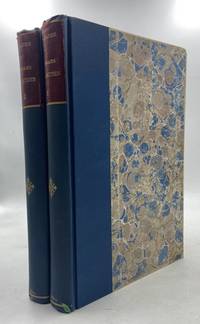
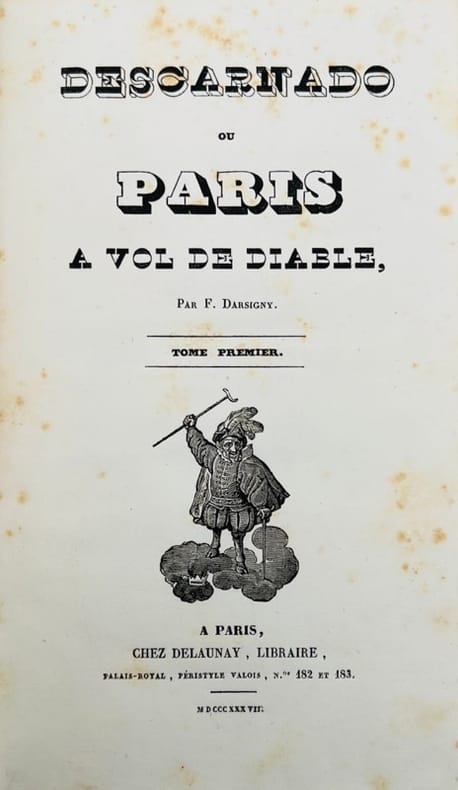
183739749Paris, Delaunay, 1837. 2 vol. in-8 de 36-(4)-304 pp. ; 342-(2) pp., demi-veau blond glacé, dos lisse orné (reliure de l'époque).
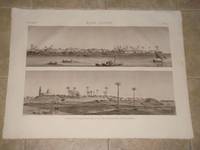
180925341Paris: Imprimerie Impériale 1809. Fine. Imprimerie Impériale Paris 1809-1829 53.50 x 70 cm une feuille Original unshaved full-page etching from the Imperial edition of the Description de l'Égypte or Recueil des observations et recherches faites en Égypte pendant l'expédition française publié par les ordres de Sa Majesté l'Empereur Napoléon le Grand A Collection of the observations and research carried out in Egypt during the French expedition published on the orders of his Majesty the Emperor Napoleon the Great'.Produced between February 1802 and 1830 on the orders of Naopleon Bonaparte and published between 1809 and 1828 1000 copies were printed and distributed to institutions on vergé paper with an 'Égypte ancienne et moderne' watermark visible when held up to the light. Light marginal spotting not touching image otherwise in very fresh fine condition. An engraving from the Description de l'Egypte one of the masterpieces of French printing and the birth of a new field: Egyptology. A gigantic survey of Egypt at the time of Bonaparte's conquests in 1798 and 1799 the work is divided into 13 volumes of engravings making up 892 plates of which 72 colored as well as presenting the splendors of the Egypt of the Pharaohs in 9 volumes. The other volumes discuss natural history and present a fascinating portrait of Coptic and Islamic Egypt as it was seen by Bonaparte's Eastern Armies. The Egyptian campaign' militarily a disaster demonstrates through the engravings of the Description d'Egypte the scientific success it nonetheless became thanks to the 167 expert members of the Commission of the Sciences and Arts of the Institut d'Egypte Egyptian Institute who followed Napoleon's army. The Institut gathered together in Egypt the mathematician Monge the chemist Berthollet the naturalist Geoffroy Saint-Hilaire as well as numerous artists engineers architects and doctors. They were tasked with re-discovering modern and ancient Egypt and displaying its natural treasures as well as the know-how of its inhabitants.This edition the so-called Imperial edition of the plates for the Description de l'Egypte was printed in four large formats two of which were specially created for it and christened Moyen-Egypte and Grand-Egypte. A special press was built to print it the process extending over 20 years from 1809 to 1829. The Imperial edition proved so popular that a second edition this time in black and white and without the Egypte ancienne et moderne watermark known as the Royal Edition was published during the Restoration by the printing house of C.-L.-F. Panckoucke Paris.The engravings of the Description d'Egypte owe a great deal to Baron Dominique-Vivant Denon illustrator diplomat collector and later Director of the Musée Napoléon the Louvre. His exploration of the South of Egypt gave Bonaparte the idea of sending the experts of the Institut there thus creating a faithful and complete portrait of the area. This was the research gathered together from 1802 in the mammoth Description de L'Egypte.Denon embarked on this story of archeological exploration at the age of 51 reaching first Alexandria and then Cairo before exploring Upper Egypt. Along with the members of the Institut d'Egypte the Natural History Museum's painter H.J. Redouté brother of Pierre-Joseph Redouté author of Roses the mineralogist Dolomiue and the draughtsman Joly Denon then explored the Nile Delta and Lower Egypt. When however he joined the 21st Light Infantry Regiment as it marched across Upper Egypt in pursuit of the retreating Mameluks in November 1798 he found himself the only civilian. In the very midst of the battle itself he reeled off sketches of the works of art that peppered his path right up to the threshold of the Sudan. He said that he had crossed a country that is apart from its name entirely unknown to Europeans and therefore everything was worth describing Voyages dans la Basse et la Haute Egypte pendant les campagnes Imprimerie Impériale unknown
180925365Paris: Imprimerie Impériale 1809. Fine. Imprimerie Impériale Paris 1809-1829 53.50 x 70 cm une feuille Original unshaved full-page etching from the Imperial edition of the Description de l'Égypte or Recueil des observations et recherches faites en Égypte pendant l'expédition française publié par les ordres de Sa Majesté l'Empereur Napoléon le Grand A Collection of the observations and research carried out in Egypt during the French expedition published on the orders of his Majesty the Emperor Napoleon the Great'.Produced between February 1802 and 1830 on the orders of Naopleon Bonaparte and published between 1809 and 1828 1000 copies were printed and distributed to institutions on vergé paper with an 'Égypte ancienne et moderne' watermark visible when held up to the light. Light marginal spotting not touching image otherwise in very fresh fine condition. An engraving from the Description de l'Egypte one of the masterpieces of French printing and the birth of a new field: Egyptology. A gigantic survey of Egypt at the time of Bonaparte's conquests in 1798 and 1799 the work is divided into 13 volumes of engravings making up 892 plates of which 72 colored as well as presenting the splendors of the Egypt of the Pharaohs in 9 volumes. The other volumes discuss natural history and present a fascinating portrait of Coptic and Islamic Egypt as it was seen by Bonaparte's Eastern Armies. The Egyptian campaign' militarily a disaster demonstrates through the engravings of the Description d'Egypte the scientific success it nonetheless became thanks to the 167 expert members of the Commission of the Sciences and Arts of the Institut d'Egypte Egyptian Institute who followed Napoleon's army. The Institut gathered together in Egypt the mathematician Monge the chemist Berthollet the naturalist Geoffroy Saint-Hilaire as well as numerous artists engineers architects and doctors. They were tasked with re-discovering modern and ancient Egypt and displaying its natural treasures as well as the know-how of its inhabitants.This edition the so-called Imperial edition of the plates for the Description de l'Egypte was printed in four large formats two of which were specially created for it and christened Moyen-Egypte and Grand-Egypte. A special press was built to print it the process extending over 20 years from 1809 to 1829. The Imperial edition proved so popular that a second edition this time in black and white and without the Egypte ancienne et moderne watermark known as the Royal Edition was published during the Restoration by the printing house of C.-L.-F. Panckoucke Paris.The engravings of the Description d'Egypte owe a great deal to Baron Dominique-Vivant Denon illustrator diplomat collector and later Director of the Musée Napoléon the Louvre. His exploration of the South of Egypt gave Bonaparte the idea of sending the experts of the Institut there thus creating a faithful and complete portrait of the area. This was the research gathered together from 1802 in the mammoth Description de L'Egypte.Denon embarked on this story of archeological exploration at the age of 51 reaching first Alexandria and then Cairo before exploring Upper Egypt. Along with the members of the Institut d'Egypte the Natural History Museum's painter H.J. Redouté brother of Pierre-Joseph Redouté author of Roses the mineralogist Dolomiue and the draughtsman Joly Denon then explored the Nile Delta and Lower Egypt. When however he joined the 21st Light Infantry Regiment as it marched across Upper Egypt in pursuit of the retreating Mameluks in November 1798 he found himself the only civilian. In the very midst of the battle itself he reeled off sketches of the works of art that peppered his path right up to the threshold of the Sudan. He said that he had crossed a country that is apart from its name entirely unknown to Europeans and therefore everything was worth describing Voyages dans la Basse et la Haute Egypte pendant les campagnes Imprimerie Impériale unknown
180925354Paris: Imprimerie Impériale 1809. Fine. Imprimerie Impériale Paris 1809-1829 71 x 53.50 cm une feuille Original unshaved full-page etching from the Imperial edition of the Description de l'Égypte or Recueil des observations et recherches faites en Égypte pendant l'expédition française publié par les ordres de Sa Majesté l'Empereur Napoléon le Grand A Collection of the observations and research carried out in Egypt during the French expedition published on the orders of his Majesty the Emperor Napoleon the Great'.Produced between February 1802 and 1830 on the orders of Naopleon Bonaparte and published between 1809 and 1828 1000 copies were printed and distributed to institutions on vergé paper with an 'Égypte ancienne et moderne' watermark visible when held up to the light. Light marginal spotting not touching image otherwise in very fresh fine condition. An engraving from the Description de l'Egypte one of the masterpieces of French printing and the birth of a new field: Egyptology. A gigantic survey of Egypt at the time of Bonaparte's conquests in 1798 and 1799 the work is divided into 13 volumes of engravings making up 892 plates of which 72 colored as well as presenting the splendors of the Egypt of the Pharaohs in 9 volumes. The other volumes discuss natural history and present a fascinating portrait of Coptic and Islamic Egypt as it was seen by Bonaparte's Eastern Armies. The Egyptian campaign' militarily a disaster demonstrates through the engravings of the Description d'Egypte the scientific success it nonetheless became thanks to the 167 expert members of the Commission of the Sciences and Arts of the Institut d'Egypte Egyptian Institute who followed Napoleon's army. The Institut gathered together in Egypt the mathematician Monge the chemist Berthollet the naturalist Geoffroy Saint-Hilaire as well as numerous artists engineers architects and doctors. They were tasked with re-discovering modern and ancient Egypt and displaying its natural treasures as well as the know-how of its inhabitants.This edition the so-called Imperial edition of the plates for the Description de l'Egypte was printed in four large formats two of which were specially created for it and christened Moyen-Egypte and Grand-Egypte. A special press was built to print it the process extending over 20 years from 1809 to 1829. The Imperial edition proved so popular that a second edition this time in black and white and without the Egypte ancienne et moderne watermark known as the Royal Edition was published during the Restoration by the printing house of C.-L.-F. Panckoucke Paris.The engravings of the Description d'Egypte owe a great deal to Baron Dominique-Vivant Denon illustrator diplomat collector and later Director of the Musée Napoléon the Louvre. His exploration of the South of Egypt gave Bonaparte the idea of sending the experts of the Institut there thus creating a faithful and complete portrait of the area. This was the research gathered together from 1802 in the mammoth Description de L'Egypte.Denon embarked on this story of archeological exploration at the age of 51 reaching first Alexandria and then Cairo before exploring Upper Egypt. Along with the members of the Institut d'Egypte the Natural History Museum's painter H.J. Redouté brother of Pierre-Joseph Redouté author of Roses the mineralogist Dolomiue and the draughtsman Joly Denon then explored the Nile Delta and Lower Egypt. When however he joined the 21st Light Infantry Regiment as it marched across Upper Egypt in pursuit of the retreating Mameluks in November 1798 he found himself the only civilian. In the very midst of the battle itself he reeled off sketches of the works of art that peppered his path right up to the threshold of the Sudan. He said that he had crossed a country that is apart from its name entirely unknown to Europeans and therefore everything was worth describing Voyages dans la Basse et la Haute Egypte pendant les campagnes Imprimerie Impériale unknown
186213540Paris: Chez MM. Rollin et Feuardent 1862. Qualche alone sulle tavole tracce di ex libris sulle sguardie mancanza sull’occhietto del primo tomo estranea al testo. Due volumi opera completa in mezza tela con titoli dorati su tassello in pelle amaranto cm 24.5 x 17 pp 4 VIII 325 1 4 376 3 complessive LXX tavole incise. In francese. Qualche alone sulle tavole tracce di ex libris sulle sguardie mancanza sull’occhietto del primo tomo estranea al testo. Edizione originale del maggior lavoro di Sabatier pubblicato come «suite et complément» dell’opera di Henry Cohen sulla monetazione imperiale romana. Da non confondersi con le ristampe novecentesche di Leipzig e Graz. Chez MM. Rollin et Feuardent hardcover
180925365Imprimerie Impériale | Paris 1809-1829 | 53.50 x 70 cm | une feuille
180925354Imprimerie Impériale | Paris 1809-1829 | 71 x 53.50 cm | une feuille
180925341Imprimerie Impériale | Paris 1809-1829 | 53.50 x 70 cm | une feuille
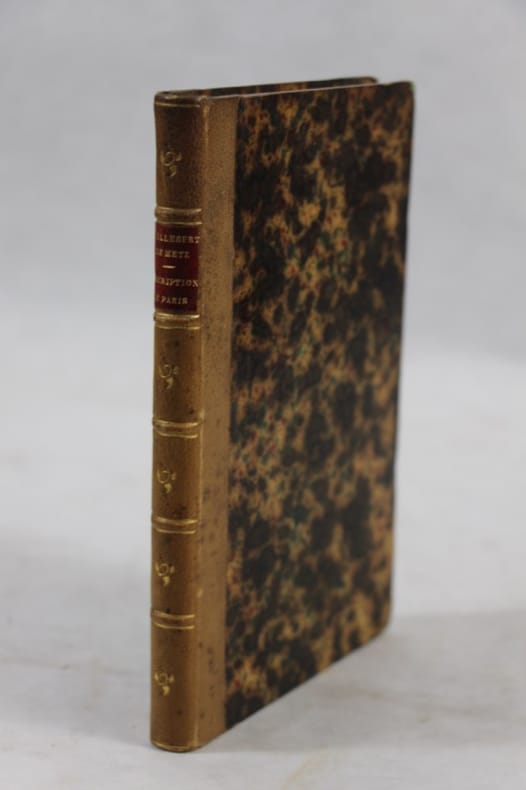
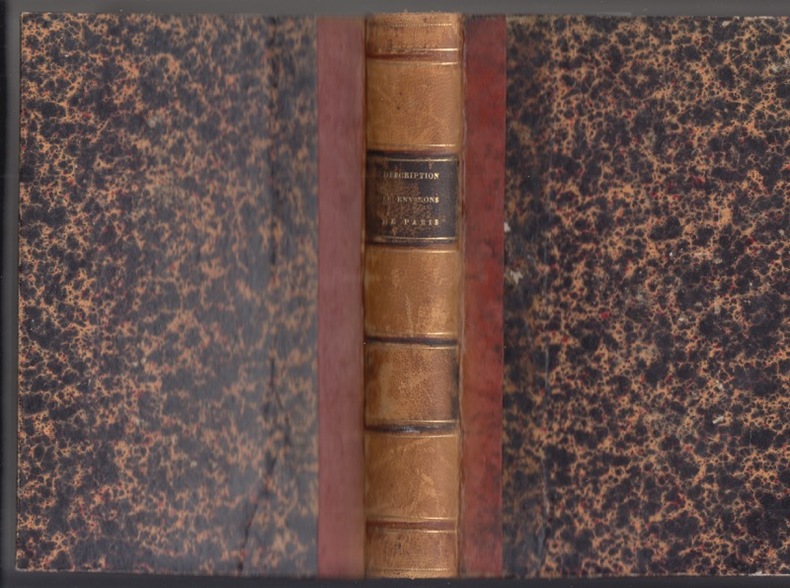
187396331873 reliure demi-chagrin rouge in-octavo, dos long (spine without raised band) nerfs (spine with raised bands) décoré or (gilt decoration) - titre frappé or (gilt title) et filets, papier marbré aux plats (cover with marbled paper), tranches jaspées (marbled edges), sans illustration (no illustration), 108+40+31+16+20 pages, 1859 à 1873 à Paris,
18538881853 1 Paris, librairie militaire de Blot, 1853, in-8 broché.
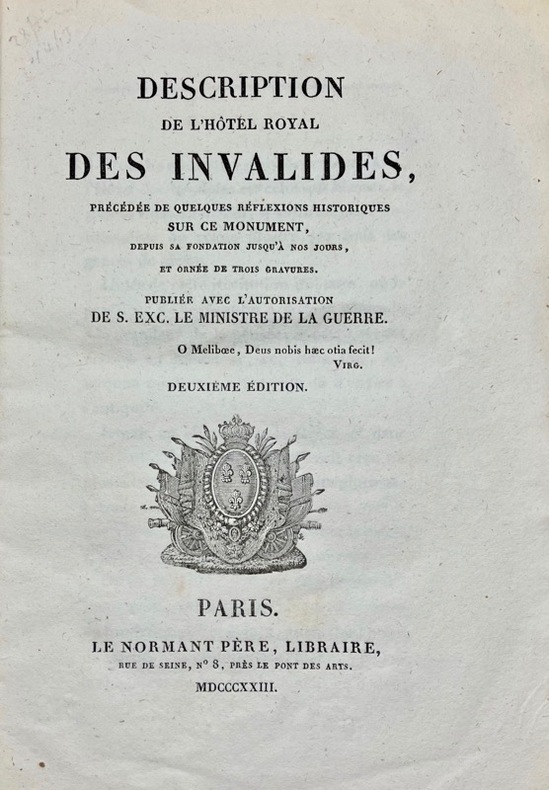
1823110391823 br. in-8, 96pp., 3 gravures en 2 planches h.t., P. Le Normant Père, 1823,
182310003Paris, Le Normant Père, 1823. In-8 broché de 93 pp., couverture imprimée, non coupé.
182035729Paris Aubry s.d. [vers 1820] in-16 en feuilles
185543398Auguste Aubry 1855 In-16, demi-maroquin havane, dos à nerfs, filets et fleurons dorés, LIV- 104 pp. Index. Très bon exemplaire.
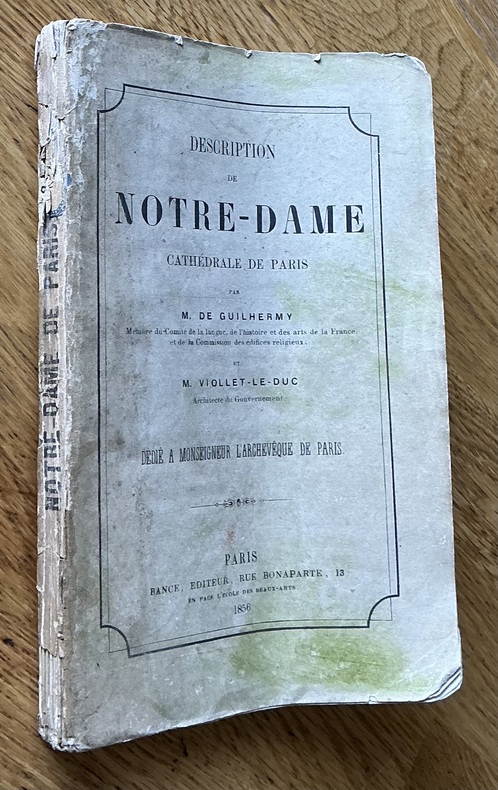
1856UUI-13165Petit in-8 broché, Paris, Rance, éditeur rue Bonaparte 13, en face de l’École des Beaux-Arts, 1856, (8) + 132 pp. + catalogue éditeur + ill. hors-texte. Plats tachés et gondolés, dos restauré avec manques conséquents, rousseurs… Fait son âge ! Exemplaire éventuellement à relier de ce titre aussi rare qu’important. Poids 140 g.
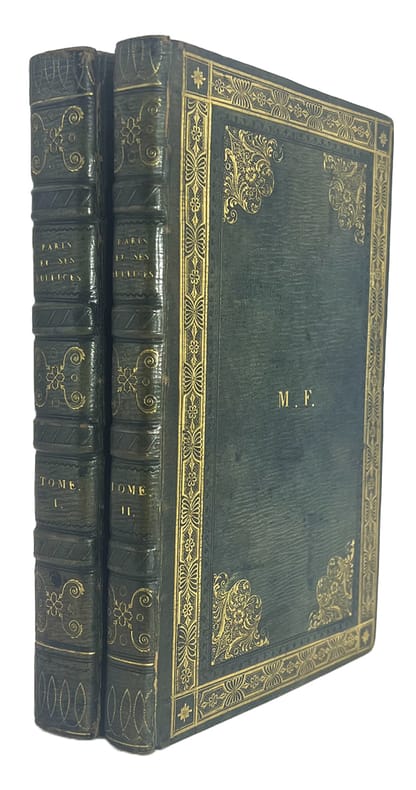
180844408Paris, Strasbourg, Treuttel et Würtz, 1808-1809. 4 parties en 2 volumes in-8 de 211-94 pp., plan replié et 50 planches numérotées hors texte ; 102-48 pp., 48 planches numérotées hors texte, maroquin vert à grains longs, dos orné à nerfs, chiffre, écoinçons et frise dorés d'encadrement sur les plats, gardes de soie, tranches dorées (reliure de l'époque).
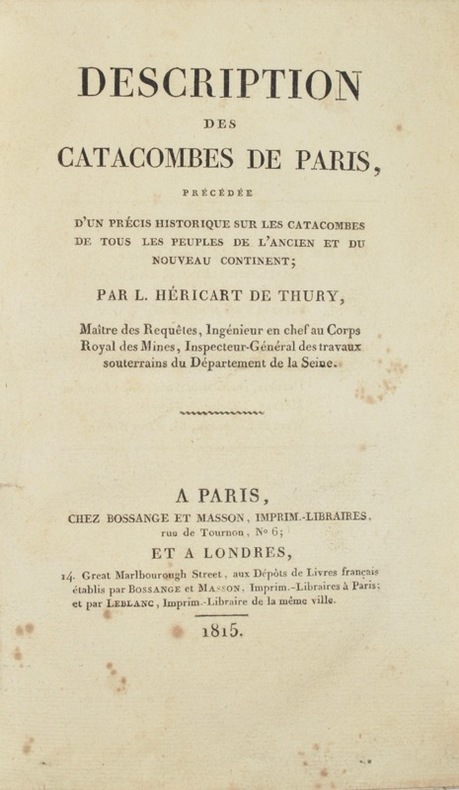
181514361Paris, Bossange et Masson, 1815. In-8 de XXXVI-382 pp., demi-veau brun, dos lisse orné de filets dorés (reliure de l'époque).
1842257901842 Paris : Treuttel & Würtz, 1842- un volume relié demi veau tabac ,pieces de titre en noir,dos un peu passé- XII, 468 p.,tache en coin aux 30 premieres pages,rousseurs éparsses,rare édition.Avec une carte dépliante (tachée en coin) et 58/62 gravures représentant les plans, coupes, élévation des principaux édifices et les vues pittoresques des sites les plus remarquables.
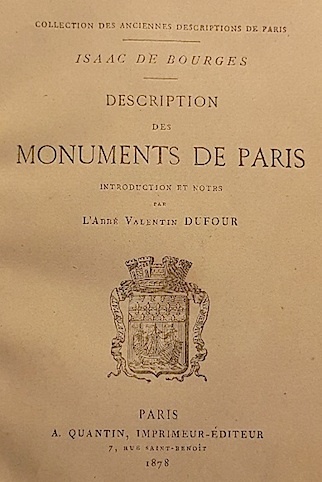
187813507Quantin Paris 1878 1 vol. In-8 de 3 ff.n.ch. VII 156 pp., demi-maroquin grain long à la bradel, dos lisse, tête doré, couverture imprimée conservée.
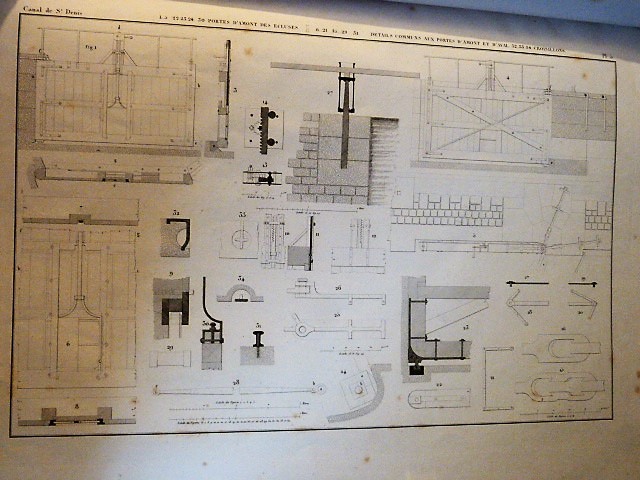
18262109Paris, Carillan-Goeury, 1826. In-folio, 42,5 x 59,5 cm. Reliure de l'époque en demi-maroquin vert à grain long, dos lisse, grand titrage sur papier dans un encadrement orné collé sur le premier plat. 14 planches. Album complet de ses 14 planches gravées représentant des plans généraux, détaillés, profils, écluses, chardonnets, batardeau mobile, portes d'amont et d'aval, passerelles, ponts-levis en pierre, tournant, machines à mortier, égouts, aqueduc, etc. 8 planches sont consacrées au Canal de Saint-Denis et 6 planches sont consacrées au Canal Saint-Martin. Album de toute rareté, seul, sans son volume de texte. Cependant, ce dernier a été scanné par la BnF, et est donc facilement accessible.
1854135791854 une plaquette, brochée in-octavo, 1ère de couverture ornée d'un encadrement gravé et d'une vignette de titre représentant l'Hôtel des Invalides, gravés sur bois en noir, titre en noir avec cachet de "Colportage" à l'encre bleue (trace de pliure centrale), la quatrième de couverture est orné d'un encadrement gravé et d'une vignette centrale aux armes de l'Empereur Napoléon (déchirure centrale sans manques sur 3 cm), orné d'un bandeau tête de chapitre en noir, d'une vignette portrait de Napoléon in-texte en noir et d'un culs-de-lampe gravé sur bois en noir in-fine , 14 pages, sans date (1854) Paris Ledoyen et Cie Editeur,
1835143901Paris, Edmond d’Ocagne 1835 In-8 22 x 13,5 cm. Bradel éditeur beige, auteurs & titre en noir sur le dos et le premier plat de couverture, 685 pp., notes, table des matières, table alphabétique. Ouvrage peu courant. Bradel défraîchi, intérieur assez frais.
1861167601861 un dessin à la mine de plomb, format : 12,3 x 8,5 cm, noté en bas à droite de la main de Félix Benoist : Boulevard des Italiens Paris, croquis ORIGINAL pour "PARIS DANS SA SPLENDEUR" pour Henri Charpentier Editeur 1861, non signé mais provenance sure : fonds Charpentier Nantes,
1861167611861 un dessin à la mine de plomb, format : 13,5 x 10,3 cm, noté en bas à gauche de la main de Félix Benoist :SAINT-ÉTIENNE DU MONT (PARIS), croquis ORIGINAL pour "PARIS DANS SA SPLENDEUR" pour Henri Charpentier Editeur 1861, non signé mais provenance sure : fonds Charpentier Nantes,
1867207545Berlin und New York, Janke und Schmidt, 1867. Titel, 1 Blatt (Inhalt), 952 Spalten. 28 cm. Halbleinenband der Zeit mit marmorierten Deckeln.