73 résultats
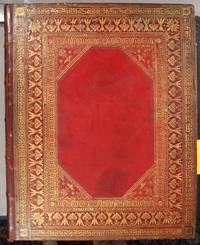
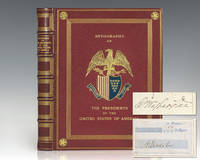
17831253841783-1956. Elaborately bound collection of Presidential autographs containing the autograph of each of the first 34 Presidents of the United States from George Washington to Dwight D. Eisenhower. Quarto bound in full red morocco by Riviere & Son with gilt titles and ruling to the spine in six compartments within raised gilt bands gilt presidential seal to the front panel with white and blue morocco onlays gilt arms and motto of George Washington to the rear panel with white and blue morocco onlays and his gilt signature in facsimile centerpieces within quintuple gilt ruling with star emblems at each corner blue morocco doublures with multiple gilt presidential signatures blue silk endpapers. This complete series of autographs of the first 34 Presidents of the United States contains the signature of each mounted on an album leaf opposite a loosely tissue-guarded engraved portrait of each. The collection includes: the signature of George Washington on an envelope addressed to Major General Knox as Secretary <span class="match">of</span> <span class="match">the</span> Society <span class="match">of</span> <span class="match">the</span> Cincinnati November 3 1783; a clipped signature of John Adams; clipped signature of Thomas Jefferson; the signature of James Madison on an envelope addressed to Reverend Frederick Freeman of Manayunk Pennsylvania; and inscription signed by James Monroe; the signature of John Quincy Adams on an envelope addressed to William Plumer jun. Esq. in Epping New Hampshire; a partially printed land grant signed by Andrew Jackson dated 1831 registering <span class="match">the</span> purchase <span class="match">of</span> 20 acres in Detroit by Peter Aldrich; clipped signature of Martin Van Buren; clipped signature of William Henry Harrison; signed inscription from John Tyler; signed inscription from James Polk; clipped signature of Zachary Taylor dated Baton Rouge March 5 1841; clipped signature of Millard Fillmore; clipped signature of Franklin Pierce; clipped signature of James Buchanan on a document dated July 18 1858; clipped signature of Abraham Lincoln; endorsement signed by Andrew Johnson as President; clipped signature of Ulysses S. Grant; card signed by Ru<span class="match">the</span>rford B. Hayes; inscription signed by James Garfield; large card signed by Chester A. Arthur and dated May 22 1884; autograph noted signed by Grover Cleveland declining an invitation dated November 16 1890; an Executive Mansion card signed by William McKinely; clipped signature of <span class="match">The</span>odore Roosevelt; clipped signature of William Howard Taft; clipped signature of Woodrow Wilson; typed letter signed by Warren G. Harding as President dated June 4 1923 on White House letterhead; card signed by Calvin Coolidge; White House card signed by Herbert Hoover; typed letter signed by Franklin D. Roosevelt as Assistant Secretary <span class="match">of</span> <span class="match">the</span> Navy February 15 1917. Laid in is a typed letter signed by Harry S. Truman as President June 30 1950 on White House stationery and a typed letter signed by Dwight Eisenhower. TLS as President November 13 1956 on White House stationery. In fine condition. Housed in a custom folding chemise and half morocco slipcase. An exceptional collection and presentation. unknown books
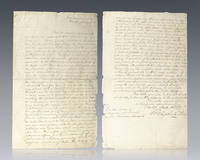
1781125872April 10 1781. Exceptionally rare autograph letter signed by George Washington as Commander-in-Chief of the Continental Army to French ally Jean-Baptiste Donatien de Vimeur comte de Rochambeau whose military assistance in the Siege of Yorktown essentially ended the Revolutionary War. The body of the letter is entirely in the hand of Alexander Hamilton and dated 10 April 1781. In the spring of 1781 officials from Massachusetts approached Rochambeau with a proposal to attack the British post at the mouth of the Penobscot river which had been established in June 1779 to secure timber for shipyards in Halifax and to protect Nova Scotia from any American advance. On April 6 Rochambeau informed Washington that he was willing to send a detachment of troops and that Admiral Destouches would offer naval assistance but observing that he was under Washington's command he would await his approval before approving the action Rochambeau to Washington 6 April 1781 Papers of George Washington Library of Congress. Washington here responds offering his gratitude that Destouches who had only recently lost a naval engagement with the British in an unsuccessful attempt to relieve Lafayette in Virginia would be willing "to undertake the expedition to Penobscot and to you for your readiness to furnish a detachment of troops for the same purpose. The object is certainly worth attention and if it can be effected will be very agreeable to the States particularly to those of the East." He trusts that Destouches "can best judge from the situation of the enemy's fleet how far it may be attempted with prudence and Your Excellency from the information you have recently received what number of troops will be sufficient for the enterprise--I am persuaded it will be calculated how far it is probable the enemy may follow with a part of their fleet--whether the post can be carried by a coup de main or may require so much time as to make it likely the operation will be interrupted before its conclusion--in case of a superior squadron being sent by the enemy what possibility there is of protection or a safe retreat for the ships and even for the land force through an unsettled country in which numbers perished for want of provision in a former attempt--All these are points too important not to have been well weighed and your conversations with the Massachusetts deputies will have been able to enlighten you upon them." Here he is referencing the unsuccessful attempt by Massachusetts in 1779 to destroy the post abandoned when British ships with reinforcements forced an arduous overland retreat by the Americans. Despite his assurances that <span class="match">Rochambeau</span> and Destouches had matters well in hand <span class="match">Washington</span> took the "liberty to remark on two things--one that it appears to me frigates without any ships of the line will answer the purpose as well as with them and less will be risked than by dividing the body of the fleet. Frigates especially the forty fours will afford a safe escort to the troops against any thing now in those Seas and with respect to a detachment from the enemy's fleet it would be always proportioned to the force we should send and if we have two sixty fours they would even be an object for their whole fleet. The other observation I would make is that dispatch being essential to success it will in my opinion be adviseable not to depend on any cooperation of the Militia but to send at once such a force from your army as you deem completely adequate to a speedy reduction of the post. The country in the neighbourhood of Penobscot is too thinly inhabited to afford any resource of Militia there and to assemble and convey them from remote places would announce your design--retard your operations and give leisure to the enemy to counteract you. Indeed I would recommend for the sake of secrecy to conceal your determination from the State itself." On 15 April <span class="match">Rochambeau</span> replied to <span class="match">Washington</span> observing that while he had sufficient troops to spare "your Excellency's observations upon the Separation of our fleet and upon the danger to be interrupted by superior forces during the course of the Expedition which Mr Destouches does not Look on as possible to be undertaken with his frigates only are the motives which cause this project to be Laid aside for the present moment." <span class="match">Rochambeau</span> to <span class="match">Washington</span> 15 April 1781 Papers of George <span class="match">Washington</span> Library of Congress. Soon <span class="match">Washington</span> and <span class="match">Rochambeau</span>'s attention returned again to Virginia and within months their combined forces would be closing in on Yorktown. In near fine condition. Exceptionally rare and desirable being the only communication between the storied commanders of the Yorktown campaign to appear at auction in more than a century. In 1780 French nobleman Jean-Baptiste Donatien de Vimeur comte de Rochambeau was appointed commander of land forces as part of the project code named Expedition Particuliere. He was given the rank of Lieutenant General in command of some 7000 French troops and sent to join the Continental Army under George Washington during the American Revolutionary War. He landed at Newport Rhode Island on 10 July but was held there inactive for a year due to his reluctance to abandon the French fleet blockaded by the British in Narragansett Bay. The College in the Colony of Rhode Island and Providence Plantations now known as Brown University served as an encampment site for some of Rochambeau's troops and the College Edifice was converted into a military hospital now known as University Hall.3 In July 1781 the force left Rhode Island and marched across Connecticut to join Washington on the Hudson River in Mount Kisco New York. Washington and Rochambeau then marched their combined forces to the siege of Yorktown and the Battle of the Chesapeake. On 22 September they combined with the Marquis de Lafayette's troops and forced heavily outnumbered and trapped Lord Cornwallis to surrender on 19 October. The siege of Yorktown was a decisive victory for the American Continental Army and proved to be the last major land battle of the American Revolutionary War in the North American region as the surrender by Cornwallis and the capture of both him and his army prompted the British government to negotiate an end to the conflict and ultimately resulted in the Treaty of Paris of 1783. unknown books
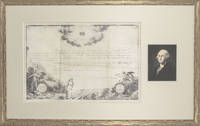
1784101412Philadelphia May 5th 1784. Rare autograph document signed by George Washington as President of the Society of the Cincinnati during the first general meeting of the Society and 5 years prior to his election and inauguration as the first President of the United States of America. One page partially printed on vellum with engraved vignettes by Auguste L. Belle after Jean-Jacques <span class="match">And</span>re LeVeau depicting America in knight's armor trampling upon the British st<span class="match">and</span>ard <span class="match">and</span> the American eagle casting the British lion <span class="match">and</span> Britannia out to sea with thunderbolts engraved seal of the Order of the Cincinnati. The document reads: Be it known that Lieutenant William Andrews is a member of the society of the Cincinnati instituted by the Officers of the American Army at the Period of Dissolution as well to commemorate the great Event which gave Independence to North American as for the laudable Purpose of inculcating the Duty of laying down in Peace Arms assumed for public Defence and of uniting in Acts of brotherly Affection and Bonds of perpetual Friendship the Members constituting the same. In Testimony whereof I the President of the said Society have hereunto set my hand at Philadelphia in Pennsylvania this fifth day of may in the Year of our Lord One Thousand Seven Hundred and Eighty Four and in the Eighth Year of the Independence of the United States. By Order " "H.<span class="match">Knox</span>" Secretary "G. Wahsington" President. William <span class="match">And</span>rews was commissioned a lieutenant on 1 January 1777 with the Third Continental Artillery. His regiment wintered at Valley Forge <span class="match">and</span>the following June <span class="match">And</span>rews was captured <span class="match">and</span> held by the British in New York until he was exchanged in September 1781. In fine condition. Double matted and framed with an engraved portrait of Washington. The entire piece measures 36 inches by 23 inches. An exceptional example. Conceived of by Henry Knox in an effort to establish a fraternal organization for all officers who had served in the American War for Independence The Society of the Cincinnati was founded in early May 1783 at the headquarters of General Friedrich Wilhelm von Steuben at Verplanck House in Fishkill New York. The three guiding principles of the organization were: First "An incessant attention to preserve inviolate those exalted rights and liberties of human nature for which they have fought and bled. ." Second "An unalterable determination to promote and cherish between the respective States that union and national honor so essentially necessary to their happiness and the future dignity of the American empire." And third "To render permanent the cordial affection subsisting among the officers. This spirit will dictate brotherly kindness in all things and particularly extend to the most substantial acts of beneficence according to the ability of the Society towards those officers and their families who unfortunately may be under the necessity of receiving it." The concept of using Cincinnatus as an emblem of the Order was particularly resonant with Americans since the life of this mid-fifth century Roman nobleman and farmer closely paralleled that of many who had served with George Washington in the vanguard. Lucius Quinctius Cincinnatus was called upon to repel two hostile tribes that threatened Rome. He issued his orders which were efficiently carried out and vanquished the enemy. Although elected a dictator for six months and voted a triumph by the Senate Cincinnatus stepped down just after fifteen days and returned to private life on his farm. Similarly at the conclusion of hostilities Washington returned to his plantation at Mount Vernon. hardcover books
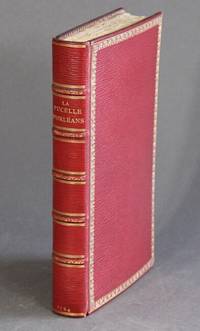
176424563Londres: aux depens de la compagnie 1764. 8vo pp. xvi 384; engraved frontispiece and 20 engraved plates; 20th-century full crimson straight-grain morocco by Zaehnsdorf decorative gilt border on covers gilt-paneled spine and preserving the original blue printed wrappers which are bound in. First published without plates at Louvain in 1755. This is likely a 'variorum' edition probably Dutch based on the first authorized edition of 1762 Geneva with variant readings from earlier piracies. Bengesco 491. <br/><br/> aux depens de la compagnie unknown books
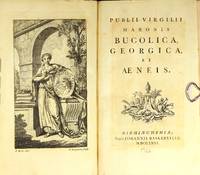
176632438Birmingham: Johannis Baskerville 1766. 8vo pp. 2 388; engraved frontispiece; contemporary red straight-grain paneled morocco gilt-lettered direct on smooth gilt-decorated spine interlocking gilt border on covers a.e.g.; pages foxed a little wear at the extremities but in all a nice copy with a painting on the fore-edge of a country manor house atop a knoll surrounded with trees; the painting seems a trifle faded but it is likely 19th century possibly done at the time this book was given as a prize to William Semicot Brickwell Trinity College Oxford 1818. With a later engraved bookplate of R. Nash Brickwell. Gaskell 34. <br/><br/> Johannis Baskerville unknown books
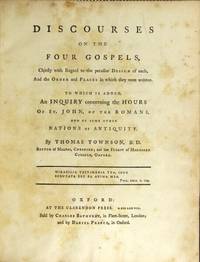
177833016Oxford: at the Clarendon Press: sold by Charles Bathurst London; and by Daniel Prince Oxford 1778. First edition 4to pp. 4 vi 2 250; contemporary full red goat elaborate gilt floral borders on covers incorporating urns smooth gilt spine in 6 compartments green morocco label on 1 gilt edges and turn-ins a.e.g.; minor wear prelims moderately foxed else a fine bright copy. A binding perhaps made for presentation. The book reached a 5th edition by 1844. <br/><br/> sold by Charles Bathurst, London; and by Daniel Prince, Oxford unknown books
179747940London: printed for P.W. Tomkins . the letter-press by T. Bensley. The types by V. Figgins 1797. Large folio 18½" x 14¾" pp. 12 244; engraved title and dedication pages 21 engravings throughout 6 full-page contemporary full red straight-grain paneled morocco by Kalthoeber with his ticket 4 elaborate gilt borders of varying designs on covers almost imperceptibly rebacked with gilt-lettering direct on gilt-decorated spine a.e.g. inner gilt dentelles blue pastepaper endpapers with printed gilt borders and fleurons in the corners; the covers slightly soiled and bit worn with some minor loss of the leather at the edges the whole but generally a very good sound copy. Engraved armorial bookplate of Chas. Forbes. The subscriber's list contains nearly 300 names. The engravings are dated 1792-98. The German-born Christian Samuel Kalthoeber who operated a bindery in London from 1782-1808 "was an outstanding craftsman and was responsible for the introduction of a number of new binding styles" Glaister's Glossary of the Book p. 265. Abbey Life 252; Lowndes p. 2671; Ebert 22907: "This edition ornamented with very neat vignettes and 4 sic large plates is very fine but it has too small a margin for the largeness of the size. A repitition with the same vignettes appeared Lond. 1807 lg. 4to." An old bookseller's pencil note on the flyleaf states "The finest edition of Thomson's Seasons published / only 10 copies like this at 40 guineas each / cost 20 guineas binding." <br/><br/> printed for P.W. Tomkins ... the letter-press by T. Bensley. The types by V. Figgins hardcover books
175148822Glasguae: In aedibus academicis excudebant Robertus et Andreas Foulis 1751. 12mo pp. 282 xxiv 282 6; contemporary full vellum manuscript titling on spine; vellum a bit soiled else very good. The final 3 leaves consist of advertisements for Foulis books and proposals for an edition of Plato. Gaskell 218. <br/><br/> In aedibus academicis excudebant Robertus et Andreas Foulis hardcover books
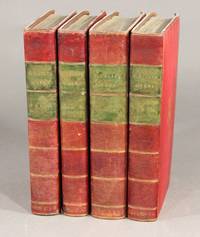
179024336Londini: sumptibus editoris excudebant M. Ritchie & J. Sammells 1790. 4 volumes 8vo stipple-engraved frontispiece portrait in volume I engraved vignette arms of the editor Henry Homer on the title pages; slightly later full red straight-grain morocco gilt supralibros of Homer on all covers and enclosed by double gilt rule gilt-paneled spines with green morocco labels faded and at one time retouched; a very good set. of an "elegant and a correct edition with an elaborate index" DNB. A pencil note on the flyleaf states that this was Homer's own set but in the absence of other evidence we make no attribution. The works of Tacitus were not published in their entirety until the 1515 Rome edition and all editions afterwards stem from this although its editor Beroaldi apparently deviated "from the true ancient reading" Dibdin. "A very beautiful and correct edition forming a conspicuous figure in the list of classics published by the . . . excellent scholar the late Mr. Homer: it exhibits the pure text of the author and is accompanied with a copious and valuable index. Some copies are struck off on large paper and bring a considerable price" Dibdin II 458. This copy with the bookplate of John Sparrow. <br/><br/> sumptibus editoris excudebant M. Ritchie & J. Sammells unknown books
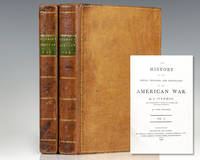
179499225London: Printed for the Author and Sold by J. Murray et al 1794. First edition wide-margined copy of Stedman's massive contemporary two-volume History of the American Revolution-- "the standard work on the subject" --containing 15 military maps and plans 11 folding the largest nearly 20 by 30 inches. Two volumes handsomely bound in contemporary calf green morocco labels half-titles to both volumes. In very good condition rebacked laying down the original backstrips. Rare and desirable with the half-title pages. Philadelphia-born military historian Charles Stedman was a Loyalist who served "with the British at Lexington and Bunker Hill later became commissary to the army of Sir William Howe and was with Cornwallis in the South" New International Encyclopedia 21:485. Taken prisoner by American forces he was sentenced to be hanged as a rebel but escaped. At war's end Stedman moved to England where he authored this authoritative two-volume History--"considered the best contemporary account of the Revolution from the British side" Sabin 91057. As "the standard work on the subject" Stedman's History especially benefits from eyewitness accounts of many campaigns DNB. In addition "the military maps and surveys in the History are of great interest and value" Allibone 2231. Here Stedman argues that Britain's defeat was largely due to the failure of its politicians and ministers and "the military genius of Britain was unimpaired; she rose with elastic force under every blow." Ultimately he concludes that the American Revolution "came as a surprise to the world. no invading army in the present enlightened period can be successful in a country where the people are tolerably united" 449. These two volumes feature folding strategic plans of the Battle of Bunker Hill attacks on Forts Clinton and Montgomery and the Sieges of Charleston Savannah and Yorktown along with maps of Long Island and the Catawba River. Printed for the Author and Sold by J. Murray, et al unknown books
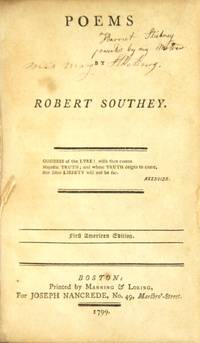
179946120Boston: Manning & Loring for Joseph Nancrede 1799. First American edition small 8vo pp. 8 9-132; very nice Boston binding of full red sheep double gilt-rules on covers smooth gilt-decorated spine laid out in 6 panels with urns and anacanthus leaves green morocco label in one gilt-decorated board edges marbled endpapers; first free flyleaf excised; a few minor scuff marks but a very good copy in a handsome 18th-century American binding. Presentation in an early hand on the title page: "Harriet Stickney presented by my mother Miss Mary Stickney." Among the poems are a short poem to Mary Wollstonecraft poems on the slave trade and Botany-Bay Ecologues. The last 7 pages consist of ads and publisher's announcements. Evans 36345; NCBEL III 255. <br/><br/> Manning & Loring for Joseph Nancrede unknown books
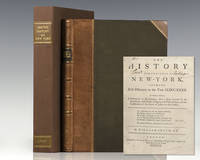
1757102864London: Thomas Wilcox 1757. <span class="match">First</span> edition <span class="match">of</span> <span class="match">the</span> "<span class="match">first</span> and classic <span class="match">history</span> <span class="match">of</span> New York" Streeter illustrated with the folding plate view <span class="match">of</span> Fort Oswego on Lake Oswego. Quarto bound in three-quarters calf over brown cloth-covered boards gilt titles to the spine morocco spine label. In very good condition with some small repairs to the verso of the map signature to the title page late 18th century manuscript poem <span class="match">from</span> <span class="match">the</span> New York Daily Gazetteer <span class="match">of</span> November 16 1790 on p. vi. Housed in a custom clamshell box. Howes S 703; Sabin 84566; Church 1023; ESTC T36514. William Smith a Loyalist who graduated from Yale in 1745 became the justice of the province of New York but left the country after the Revolution for Lower Canada where he became chief justice. Smith's work was based "chiefly on the Provincial Laws the Minutes of the Council the Journals of the General Assembly and other government records. He also acknowledges his indebtedness to Colden's History of the Five Indian nations and to Charlevoix. "Within the period subsequent to the English Revolution Smith is still without a successful rival. This work ranks with Smith's Virginia and Hutchinson's Massachusetts as one of the worthiest examples of historical literature produced in later colonial times" Larned. Thomas Wilcox hardcover books
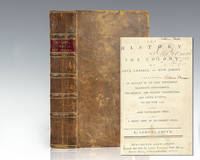
1765115584Burlington New-Jersey: James Parker 1765. First edition of the first published historical account of the state of New Jersey; one of only 600 copies printed by James Parker on a press owned by Benjamin Franklin. Octavo bound in full contemporary calf with a red morocco spine label lettered in gilt and raised bands to the spine. In very good condition. From the library of George and Rebecca Burr with their ownership names to the title page and front free endpaper and later their grand-nephew Alfred Burr with his bookplate to the pastedown. In very good condition. One of the rarest and most valuable of the Jerseyana group Smith's history was published in 1765 at Burlington by James Parker who had moved his printing press temporarily from Woodbridge for the purpose. David Hall of Philadelphia whose name appears on the title page sold the book at his shop. A century later a second edition was published containing a brief sketch of its author and a map engraved by William Faden London 1777. The original edition had no map. A third edition of the history was printed by the state of New Jersey and distributed to the schools and elsewhere in 1893. Samuel Smith was born of Quaker patronage at Burlington in 1720. He held important official positions in the province and in addition to writing his history of New Jersey he prepared material for a history of Pennsylvania which was never published. James Parker hardcover books
179545416London: T. Becket.S. J. Neele sculpt. Strand 1795. 8vo pp. 8 95; engraved title page; 19th-century full green gilt-ruled morocco gilt spine in 6 compartments 4 of which adorned with small red lozenges t.e.g. others uncut red glazed endpapers; upper cover and front free endpaper separated textblock fine. A piracy the paper watermark dated 1795. ESTC T220624. <br/><br/> T. Becket...S. J. Neele, sculpt. Strand unknown books
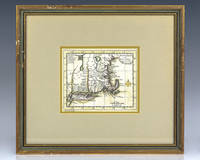
1703123177London: Seller Price & Senex 1703. Rare 17th century John Seller map of New England and New York from Daniel Fenning's A New System of Geography. One page with intricate topographical details and hand-colored borders the map displays the eastern portion of New York and New England and includes Long Island Martha's Vineyard Nantucket Block Island and Rhode Island. In near fine condition. Seventeenth century English cartographer compass maker and map seller John Seller was appointed hydrographer to the King in March of 1671. In that year he published his first volume of charts and sailing directions The English Pilot which would run through many editions until the end of the eighteenth century. The trade in maritime maps and charts had until then been dominated by the Dutch. Seller additionally published several textbooks and nautical almanacs including Practical Navigation 1669 and A Pocket Book Containing Several Choice Collections in Arithmetic Geometry Surveying Dialing &c. 1677. Seller, Price & Senex unknown books
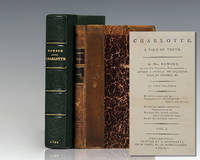
1794125183Philadelphia: Printed by D. Humphreys for M. Carey 1794. Exceedingly rare first American edition and the earliest obtainable example of the first American bestseller. Octavo two volumes bound into one in three quarter calf over marbled boards morocco spine label lettered in gilt marbled endpapers. Although it was preceded by the first English edition published in 1791 no examples of the first English edition have been traced at auction. In very good condition. Bookplate to the pastedown bibliographic description tipped in. Housed in a custom cloth chemise and half morocco clamshell slipcase. Exceedingly rare with only one other example of the first American edition traced at auction in the last 75 years. Susana Rowson's best-selling novel Charlotte Temple relates the tale of 15-year-old English schoolgirl Charlotte Temple who is lured away from her prestigious boarding school by British army officer John Montraville. While en route to New York Montraville seduces Charlotte who he swiftly abandons upon arrival to his post and after a downward spiral into remorse illness poverty and the birth of a child she dies. Seduction novels were popular in the 18th century and the widely read Charlotte Temple went through more than 200 editions. Rowson a committed republican used the success of the novel to protest the sexual double standard that ruined the lives of women like Charlotte. Later in life she wrote a sequel that was published posthumously. Printed by D. Humphreys for M. Carey hardcover books
176558364Birmingham: printed by John Baskerville 1765. First and only edition 18mo in sixes 96 leaves †2 a-c6 d2 B-N6 O2; later half brown morocco over marbled boards bound by George A. Zabriskie with his armorial bookplate on upper pastedown gilt decorated spine in five compartments gilt-decorated dentelles marbled endpapers; boards rubbed and bumped title page chipped losing the "V" in vocabulary with contemporary inscription moderate foxing good and sound. A dictionary in the "hard words" tradition omitting "the common words of the language" and designed for the use of "young ladies and gentlemen too who have not had the advantage of a liberal or learned education" Preface. Halkett & Laing Kennedy and Alston attribute the work to Baskerville himself - an attribution of which I've always been dubious. In the noted dictionary collector Tom Rodger's copy of Alston he attributes it to Joseph Priestley. George A. Zabriskie was an antiquarian of many talents and in addition to being a successful businessman collector Grolier Club member was a prolific and capable amateur binder. Many of the books in his library were bound by his own hand. Gaskell 31; Vancil p. 245; Kennedy 6264; Alston V 237. <br/><br/> printed by John Baskerville hardcover books
176934124London: T. Becket and P. A. De Hondt 1769. 2 volumes 8vo; pp. xxviii 4 320; 4 386; preliminary blanks preserved engraved title pages; together with: Comedies of Plautus translated in familiar blank verse by the gentleman who translated The Captives. London: T. Becket and P. A. De Hondt 1772-4. 3 volumes 8vo pp. 6 viii 400; 4 399 1 ads; 6 416; preliminary blanks preserved engraved title pages; uniformly bound in handsome contemporary tree calf smooth gilt decorated spines with 6 panels black and green morocco labels in 2 circular tools incorporating a harp a sceptre and a cornucopia in the others; very slightly rubbed else a fine attractive set. Early 19th century oval Stradbroke bookplates. Second edition of the first two volumes and first edition of the last 3. This is the first complete translation into English of the early Roman comedies of Plautus. This project was begun by Thornton near the end of his life an appropriately witty man whom Samuel Johnson found highly diverting. Thornton was inspired by the edition of the plays of Terence prepared by his friend George Coleman the elder. Two volumes appeared in 1767 just before Thornton's death; these contained 5 plays translated by Thornton himself one by Coleman and one by Richard Warner. In the end it was Warner a literary scholar and botanist who undertook to complete the project; his final text as represented here provides one of the most successful English translations from the Latin in the 18th century. "Thornton's versions are held to be the best being highly praised by Southey for their playfulness and ingenuity" DNB. "The language of Plautus is all his own; here his claims to greatnesss are undeniable. No one ever exploited more fully the resources of Latin for expressions of endearment and abuse for animated dialogue and effective repartee" OCD. <br/><br/> T. Becket and P. A. De Hondt unknown books
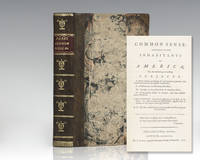
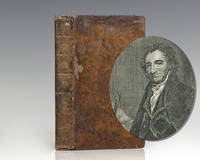
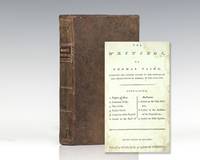
177696237J. Almon J.S. Jordan and J. Stockdale: London 1776-1793. Finely bound collection of the works of Thomas Paine including the rare first British editions of Common Sense and Plain Truth London: J. Almon 1776 second editions of Rights of Man Parts I & II London: J.S. Jordan 1791-1792 complete with half-titles present and a rare early printing of John Quincy Adams' response to Paine's Rights of Man London: J. Stockdale 1793 attributed to his father John Adams and written when John Quincy Adams was 26 years old. Octavo bound in three quarters morocco over marbled boards with gilt titles and tooling to the spine red morocco spine label all edges speckled black. In near fine condition. A rare and desirable collection. One of the founding fathers of the United States Thomas Paine authored two of the most influential pamphlets at the start of the American Revolution which ultimately inspired the 1776 Declaration of Independence. Virtually every American rebel read Paine's powerful pamphlet Common Sense which crystallized the American Revolution and demand for independence from Britain. John Adams asserted "without the pen of the author of Common Sense the sword of Washington would have been raised in vain." London hardcover books
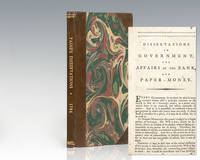
1786104062Philadelphia: Printed by Charles Cist 1786. First edition of Paine's defense of the Bank of North America. Small octavo bound in three quarters leather over marbled boards with gilt titles and tooling to the spine. Rare. "Another time that tried men's souls occurred in 1780 when the American troops were at the end of their patience because of lack of pay and scarcity of supplies. Serious features of mutiny and sedition had already appeared. A tone of discouragement swept through the Pennsylvania Assembly for the treasury was empty. One member said 'We might as well give up first as last.' But Paine did not agree and when he drew his meager salary he took $500 and started a subscription for the relief of soldiers. Robert Morris and many others followed and by June 18 1780 had raised 300000 pounds and started a bank which supplied the army through the campaign.When the bank came under attack by those who favored inflation after the war Paine rushed to its defense with this pamphlet."Gimbel 45. In very good condition with the title page backed with some restoration period ownership signature stamp to the verso of page 53 notations throughout. Printed by Charles Cist hardcover books
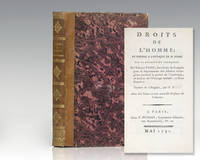
179196176Chez F. Buisson: Paris 1791. First French edition of Thomas Paine's classic statement of faith in democracy and egalitarianism. Octavo bound in contemporary one quarter calf over marbled boards. In very good condition. From the library of Virginia bibliophile and historian Christopher Clark Geest with his bookplate to the pastedown. Rare and desirable. "One of the most remarkable political writers of the modern world Thomas Paine wrote both parts of Rights of Man with the United States in mind Celebrating America and the extension of the struggle for liberty equality and democracy to France Rights of Man became a phenomenal success in America" Kaye 4 97-9. Paine finished the first part of Rights of Man on his 54th birthday January 29 1791 and the following day handed the manuscript to Johnson a London publisher "who set about printing it in time for the opening of Parliament and Washington s birthday on February 22." Fearing governmental reprisals Johnson halted its release compelling Paine to find another London publisher J.S. Jordan. Paine entrusted friends to supervise the publication and "packed his trunk for Paris where he planned to arrange a French translation." The London edition of Rights of Man finally saw publication on March 13 1791 and "made Paine the most controversial public figure of the day" Keane 304-6. Paine then in France had "brought with him from London a copy of the original sheets for translation into French" Woodward 199. With the publication of a new French edition of Common Sense and in May 1791 the appearance Droits de l Homme Rights of Man French newspapers declared Paine "the most determined champion of republican principles." Paine's objective in Part I of Rights of Man "was to defend the cause of individual rights and liberty" Fruchtman 250-1. Rights of Man stands as "the earliest complete statement of republican principles. It set forth the fundamental ideas on which the American republic was founded" Woodward 211. Shortly after publication of Part I of Rights of Man Paine began work on Part II which appeared in February 1792. Paris hardcover books
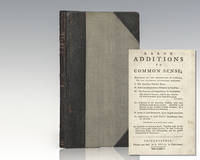
1776106523Philadelphia: Printed and sold by R. Bell in Third-Street 1776. Scarce 1776 separate edition of the Large Additions to Common Sense. The title reads in full: Large Additions To Common Sense: Addressed To The Inhabitants Of America On The Following Interesting Subjects. I. The American Patriot's Prayer. II. American Independancy defended by Candidus. III. The Propriety of Independancy by Demophilus The dread of Tyrants and the sole resource Of those that under grim Oppression groan. Thomson. IV. A Review of the American Contest with some Strictures on the King's Speech. Addressed to All Parents in the Thirteen United Colonies by a Friend To Posterity And Mankind. V. Letter to Lord Dartmouth by an English American. VI. Observations on Lord North's Conciliatory Plan by Sincerus. To Which Is Added And Given An Appendix to Common Sense; Together with an Address to the People Called Quakers on their Testimony concerning Kings and Government and the Present Commotions in America. Octavo bound in three quarters morocco over boards gilt titles and five raised bands to the spine marbled endpapers. In very good condition internally very clean. Rare with only two examples appearing at auction in the last 80 years. One of the founding fathers of the United States Thomas Paine authored two of the most influential pamphlets at the start of the American Revolution which ultimately inspired the 1776 Declaration of Independence. Virtually every American rebel read Paine's powerful pamphlet Common Sense which crystallized the American Revolution and demand for independence from Britain. John Adams asserted "without the pen of the author of Common Sense the sword of Washington would have been raised in vain." The 1776 Large Additions lends insight into the fascinating publishing history of the most important and popular tract of the American Revolution. After the publication of the first edition of Common Sense by Bell in 1776 in a small edition of 1000 copies Paine was greatly disappointed when Bell advised him there were no profits. He had intended to donate the proceeds to the causes of liberty and independence. Paine and Bell 44 had an immediate falling out and Paine subsequently hired Bradford to print a competing edition. This naturally infuriated Bell who included an attack on the still anonymous author in his next printing. The controversy between Bell and Paine played out in the press over the next several weeks and in no small part helped further ignite the popularity and widespread dissemination of Common Sense. Bell tried to compete against Bradford with a second unauthorized edition and gathered these additions to differentiate his work for the purpose of marketing. Nevertheless Bell could not easily compete since Paine refused to copyright the work and granted free permission for anyone to reprint it. Howes P22 states that "Paine was not the author of these Additions; they were gathered from various sources by Bell to make his edition 3 times larger than the enlarged edition issued at Philadelphia by Bradford to whom Paine had turned after his estrangement from Bell. Some copies were issued separately - and paged" as in the present example " . to permit their being bound with the first and second editions of Common Sense. Printed and sold, by R. Bell in Third-Street hardcover books
1792122960London: H. D. Symonds J. S. Jordan J. Ridgway et al 1792-1793. Sammelband collection of early printings of the treatises of Thomas Paine. Octavo bound in full contemporary tree calf with gilt tooling to the spine engraved frontispiece portrait of Paine. The collection includes: Rights of Man: Being an Answer to Mr. Burke's Attack on the French Revolution Part I London: Printed for H. D. Symonds 1792; Rights of Man Part the Second. Concerning Principle and Practice London: Printed for J. S. Jordan 1792; Letter Addressed to the Addressers on the Late Proclamation London: Printed for H. D. Symonds 1792; Dissertations on First Principles of Government London: Printed for the Proprietors; Common Sense; Addressed to the Inhabitants of America London: Printed for H. D. Symonds 1793; A Letter Addressed to the Abbe Raynal on the Affairs of North America London: Printed for J. Ridgeway 1712 1792; Miscellaneous Articles of Thomas Paine London: Printed for J. Ridgway 1793. In very good condition. One of the founding fathers of the United States Thomas Paine authored two of the most influential pamphlets at the start of the American Revolution which ultimately inspired the 1776 Declaration of Independence. Virtually every American rebel read Paine's powerful pamphlet Common Sense which crystallized the American Revolution and demand for independence from Britain. John Adams asserted "without the pen of the author of Common Sense the sword of Washington would have been raised in vain." H. D. Symonds, J. S. Jordan, J. Ridgway et al unknown books
179281112Albany New York: Charles R. & George Webster 1792. Nine of Paine's writings gathered each pagination with a separate title page. Octavo bound in contemporary calf. One of at least four issues with variant title pages for this work this apparently the first without the addition of "Rights of Man Part the Second. In very good condition with some light foxing. Rare and desirable. One of the founding fathers of the United States Thomas Paine authored two of the most influential pamphlets at the start of the American Revolution which ultimately inspired the 1776 Declaration of Independence. Virtually every American rebel read Paine's powerful pamphlet Common Sense which crystallized the American Revolution and demand for independence from Britain. John Adams asserted "without the pen of the author of Common Sense the sword of Washington would have been raised in vain." Charles R. & George Webster unknown books
172643856London: J. Darby and 8 others 1726. First English edition 5 volumes 12mo; woodcut initials and head- and tail-pieces; full contemporary calf recently rebacked gilt spines red and black gilt spine labels all edges red; some minor scuffing else a very attractive near-fine set. Memoirs of Queen Anne by "the Queen Regent's chief Companion and Confident and who has likewise added an Account of the Troubles of King Charles I. not to be met with in Clarendon or any other English writer being the Substance of several Conversations betwixt his Queen then in Exile at the French Court and the Author of the Memoirs." See Brunet III 1929-30 for the first Amsterdam 1723 edition; 3 copies in OCLC none outside the United Kingdom. <br/><br/> J. Darby [and 8 others] unknown books